Posted in History, Non-fiction, Teen, Tween Reads

A Weird and Wild Beauty tells the story of Yellowstone

yellowstoneA Weird and Wild Beauty: The Story of Yellowstone, the World’s First National Park, by Erin Peabody (Feb. 2016, Sky Pony Press), $14.99, ISBN: 978-1-63450-204-7

Recommended for ages 12+

A beautiful book with stunning photo and a powerful ecological and historical message, Erin Peabody’s A Weird and Wild Beauty tells the story of the founding of Yellowstone National Park. She tells us about the hard journey and oftentimes grueling expedition West; about the lives of the men who explored and risked their lives to bring the natural beauty of Yellowstone to the rest of the post-Civil War United States; and provides breathtaking photos and paintings of the natural wonder that is Yellowstone.

More than just a book on the beauty of Yellowstone, readers will discover that there was a fight to keep Yellowstone’s lands untouched: from Jay Cooke, a robber baron who wanted to build a transcontinental railroad that would cut through the lands, to the Native American tribes who wanted their tribal homelands to remain untouched.

A welcome addition to tween and teen nonfiction, A Weird and Wild Beauty is a lovely addition to collections in classrooms, libraries, and homes. I’ll have to booktalk this one to let the kids know it’s on the shelf – nonfiction, especially in the YA area, tends to go unnoticed – but with summer vacation coming, I could pick any picture out of this book and talk about dream destinations. History fans will love the narrative storytelling voice Peabody assumes, and art fans need to know about this book because of the stunning work by the expedition’s photographer, William H. Jackson, and the painter, Thomas Moran. Readers will learn the complex processes behind each photo – there were no negatives in the early days of photography, so photographers (and their poor pack animals) had to carry hundreds of pounds of equipment, including glass plates of different sizes to capture different images – and painting, or woodcut. It’s a beautifully artistic book that art students should not miss.

"Crater of the Giant Geyser", illustration from "The Wonders of the Yellowstone"; NP Langford; May/June 1871 issue of Scribner's Monthly
“Crater of the Giant Geyser”, illustration from “The Wonders of the Yellowstone”;
NP Langford; May/June 1871 issue of Scribner’s Monthly, from Yellowstone’s Photo Collection

The book includes maps, a guide to Yellowstone’s hydrothermal features, complete endnotes, sources, photo credits, and an index. Make sure to consider this beautiful resource for your collections.
Posted in Early Reader, Non-Fiction

Follow a penguin chick’s daily adventures One Day on Our Blue Planet… in the Anarctic

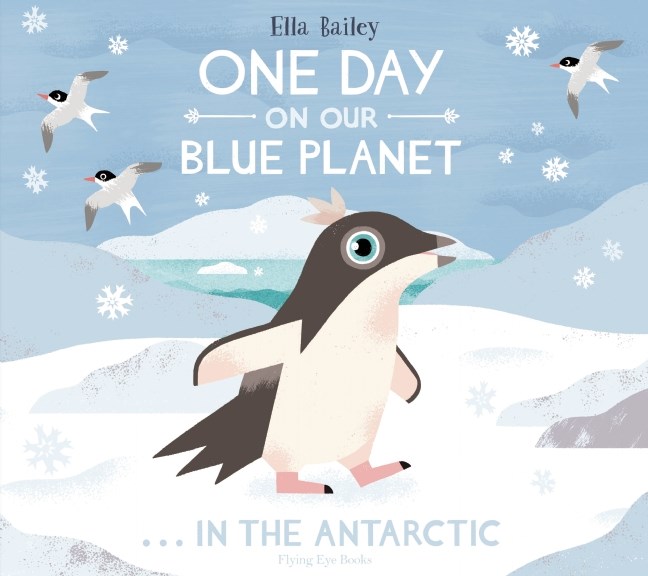
antarctic_1One Day On Our Blue Planet… In the Antarctic, by Ella Bailey (April 2016, Nobrow), $16.95, ISBN: 9781909263673
Recommended for ages 3-7
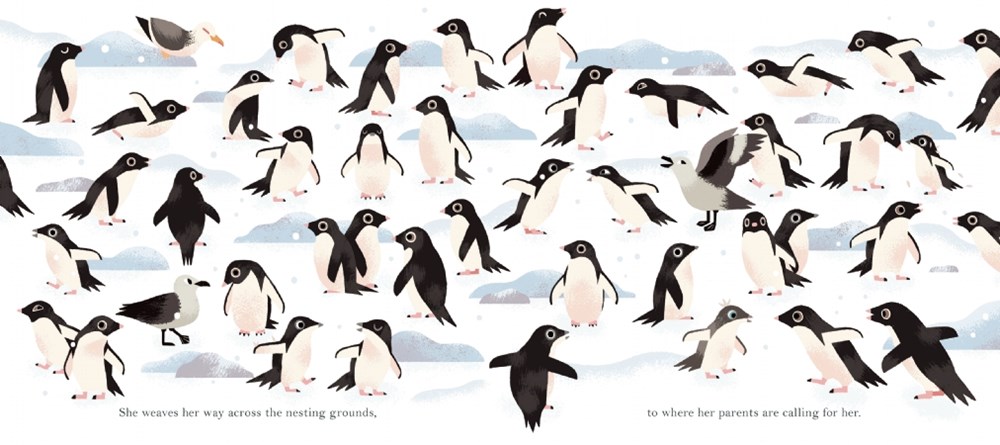
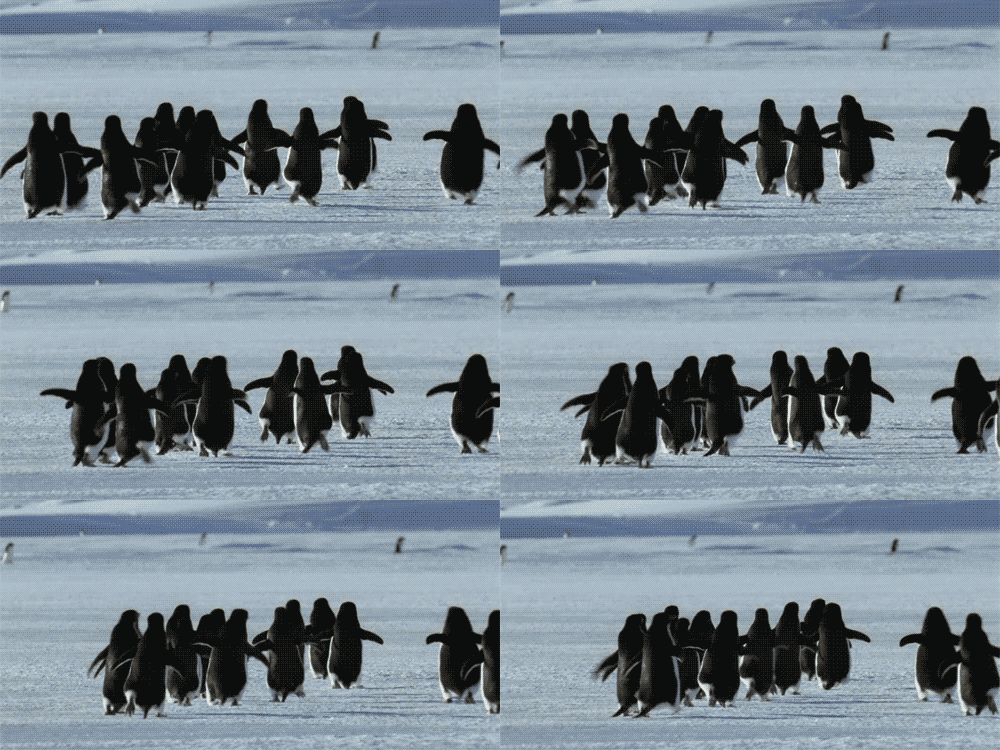
Join an Adélie penguin chick as she gets breakfast from her mother and heads out into the giant world on her own! We see her jump into the water and swim, searching for food, encountering whales and seals, and making sure to avoid becoming someone else’s dinner! Along the way, readers learn about how penguins like our little Adélie friend will travel for years before returning to solid land, how penguin bodies develop to keep warm, what they eat, and meet other types of penguins and sea animals.
Adorable, child-friendly, cartoony illustrations introduce us to all sorts of sea life, including a warty squid porpoise, Antarctic krill, leopard seal, and humpback whale. This is a fun introduction to the Antarctic for young audiences, with an animal kids already love: Penguins! Books like this help turn kids on to nonfiction – pair it with some Salina Yoon for a great penguin storytime, or have a nature read-aloud by pairing with the first book in the series, One Day On Our Blue Planet… In the Savannah.
penguins

Ella Bailey is an illustrator and writer. You can see more of her illustrations at Ohh Deer, and you can see some more art from One Day On Our Blue Planet… In the Antarctic right here.

antarctic_2


antarctic_5

Posted in Animal Fiction, Early Reader, Fiction, Fiction

Moon’s Messenger carries a beautiful and powerful message.

Moon is a young girl, sitting on the beach, when a sea turtle approaches her, beckoning her to join him in a journey through our planet. He quietly shows her the havoc people have wreaked on our environment: extinction, oil spills and pollution, global warming among a mere few of the methods. A message of hope and rebirth infuses Moon with purpose and action to protect the environment, and just as importantly, the living creatures we share it with.

moons messenger

Moon’s Messenger, by Virginia Kroll/Illustrated by Zusanna Celej (March 2016, Cuento de Luz), $16.95, ISBN: 9788416147205.
Recommended for ages 5-10

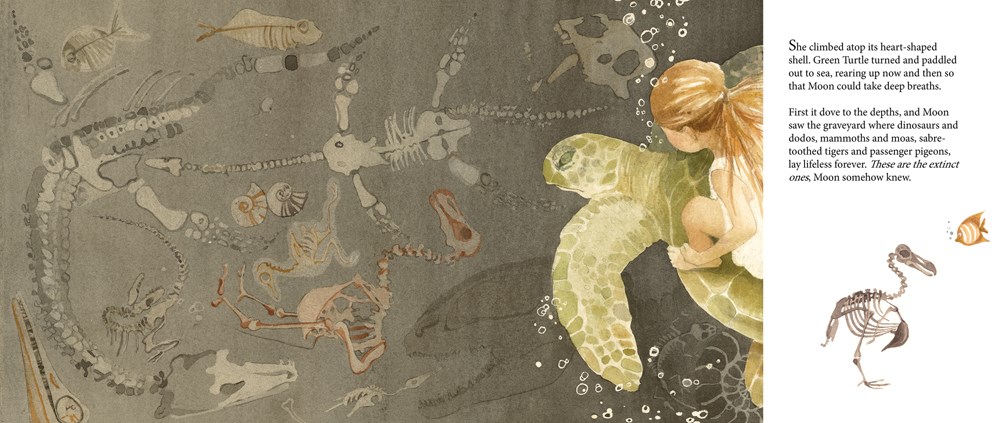
Moon’s Messenger is a powerful tale about conservation and activism, relying on watercolor images that are as heartbreaking as they are beautiful: a tired polar bear, trying to find an iceberg to rest on; local wildlife, deer and raccoons, ransacking residential garbage because their habitats are disappearing, giving way to more and more homes for people; sea life covered in oil and suffocating. And then, the turtle lays its eggs, and it’s beautiful again. There’s hope in the world, because there’s life, and now, one child knows what she has to do.

moons messenger_1

The text and images are not subtle – the author and artist are not hiding their message, and they are appealing to our next generation. Endpapers alternately draw you in and warn you about what you’re going to read – an ocean floor with the skeletons of extinct animals to bring you in, and to lead you out, the same image, but with information about green sea turtles, the dangers they face in our environment, and a call to action to readers: What will you do to help?

I loved this book, I loved the message, and I’m going to make sure it’s an Earth Day (April 22) storytime for my little ones. The small, black font takes nothing away from the images, and reading this aloud may be a bit of a challenge unless you’ve familiarized yourself with the story a couple of times. The text and ideas are better for a Kindergarten – Grade 2 audience, and pairing a reading with a reduce/reuse/recycling activity will let kids see how they can contribute to making the world a better place with their own two hands. Teach the kids in your life to respect nature, respect biodiversity, and respect our planet, and use this book as a valuable guide. I’d love to see an educators’ guide to this book with further resources and exercises for younger kids.

moons messenger_3

Posted in Fiction, Preschool Reads

Toshi’s Little Treasures: An adorable Search and Find story

9781771385732_fe9f5Toshi’s Little Treasures, by Nadine Robert/Illustrated by Aki, (Apr. 2016, Kids Can Press), $17.95, ISBN: 9781771385732

Recommended for ages 3-7

Growing up, I loved Highlights magazine; one of my favorite features in the magazine was the hidden pictures page. When my own children were big enough to start getting Highlights, I’d pitch in and help them find some of the more challenging hidden pictures. When I came across Toshi’s Little Treasures, I was thrilled – it’s a seek and find storybook!

Toshi is a little boy who loves to take walks with his grandmother. During their walks, they discover new little treasures that Toshi can store in his brand new backpack. Toshi and his grandmother explore six places in this book: the riverbank, the town, the forest, the country, the park, and the beach. An introductory page to each location shows kids the treasures they can expect to discover, and a full spread of each spot promises fellow treasure seekers a good hunt. There are activities that help identify the treasures from each place by matching them to related items. An answer key at the back of the book provides interesting facts about Toshi’s treasures and the animals he and his grandmother encounter, really rounding out the experience and giving kids and parents a chance to learn more, together.

The art is very calming, relaxing readers and encouraging them to take their time searching for hidden objects. You’re a guest on a walk with Toshi and his grandmother, there’s no rush! There’s also a quiet nod to diversity with the renderings of Toshi and his grandmother, which I loved.

By offering facts about the animals in each location Toshi and his grandmother visit, the book also offers educators (and parents!) the opportunity to start discussing habitats and the environment with little readers and listeners. It could also inspire a fun field trip to discover treasures of your own.

Toshi’s Little Treasures will be in stores in April. Keep an eye on their website, too: Kids Can Press offers some great learning resources to accompany their books; I’m looking forward to seeing what they develop for this title.

Posted in Animal Fiction, Fantasy, Fiction, Fiction, Graphic Novels, Intermediate, Middle Grade, Steampunk

Tailwands – Epic Animal Fantasy for your younger readers!

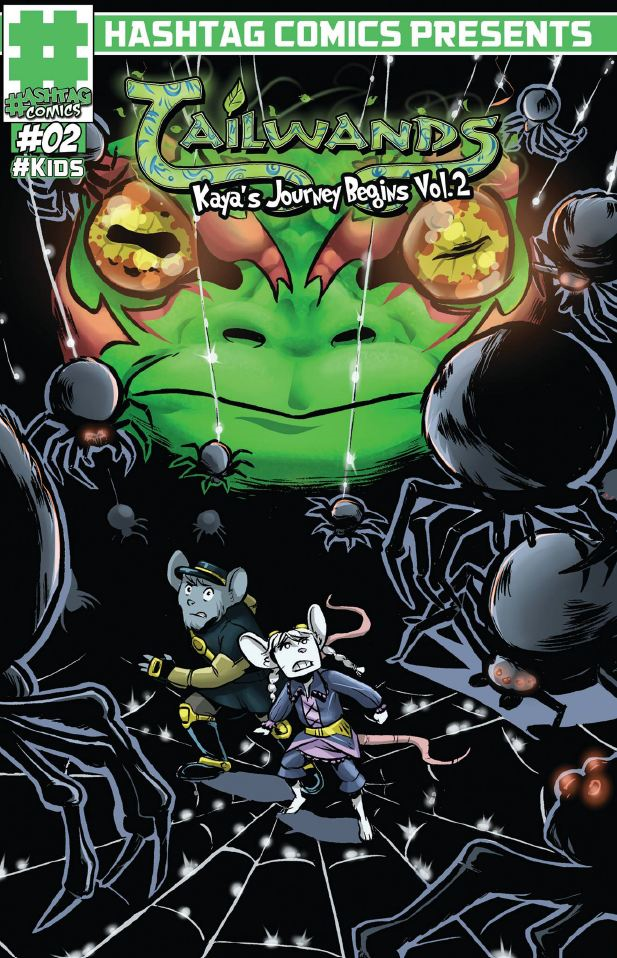
I don’t normally review standalone comic book issues here at MomReadIt – that’s the purview of my WhatchaReading writing, really – but I had to talk about Tailwands, which is putting out its second issue shortly. It’s great animal fiction, it’s an epic tale, and it’s perfect for young readers who are in the mood for fun, clean, epic fantasy storytelling.

tailwands_1       tailwands_2

I’ve written reviews for both issue 1 and issue 2 over at WhatchaReading. There is a subscriber exclusive, if your kids like the books, so you don’t have to chase them down. Hand these books to your younger readers, and tuck in with them – you’re in for a great adventure.

Posted in Non-Fiction

Creepy Crawlies and the Scientific Method is perfect for educators, fun for kids!

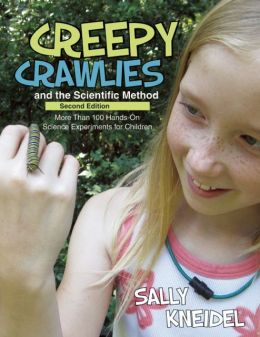
creepy crawliesCreepy Crawlies and the Scientific Method, by Sally Kneidel (2015, Fulcrum Publishing), $24.95, ISBN: 9781938486326

Recommended for 16+

Who said science has to be boring? Kids love to play in the dirt, right? The dirt is FILLED WITH SCIENCE. Sally Kneidel brings a love of her subject – she’s got a Ph.D. in Biology and has written extensively on the environment, natural history, and teaching science to kids- to this updated version of her book, Creepy Crawlies and the Scientific Method. She explains that everyone can find a creepy crawly or two to learn more about, whether you live in a building or out in the middle of nowhere – it’s all about looking under a rock, or between some leaves.

More than finding and experimenting, Dr. Kneidel stresses environmental responsibility. She urges children and adults alike to respect nature, to be kind and humane, and to release our test subjects once we’ve observed them. Do no harm isn’t just part of a doctor’s oath; we all need to remember and take this mantra to heart. We share the planet with “creepy crawlies”, but what do we know about them? Dr. Kneidel knows a lot, and that’s why we need to listen to her.

Written more for adults that work with or enjoy kids in their lives, Creepy Crawlies and the Scientific Method has extensive profiles on various “critters”: bugs and insects – to give adults and children alike a background from which to work. She outlines the five steps of the scientific method: question, hypothesis, methods, result, and conclusion, and provides activities and questions that will stimulate fun and creative thinking among kids. Beautiful photographs and in-depth descriptions of various critters, including different appearances at different life stages, make this book a hugely valuable resource for any STEM library. Bring this book to your backyard, the park, or on vacation to learn science and have a great time doing it.

This book is absolutely going on my order lists for my teaching libraries! I can’t wait to hear the teachers talk about their field trips.

Dr. Kneidel’s webpage is a great additional resource, with photographs and blog entries on nature, the environment, and social responsibility. You can follow her on Twitter @sallykneidel.

Posted in Early Reader, Fiction

Four Little Witches: A Tale of Friendship and Mother Earth

4_witches_coverFour Little Witches, by T.J. Perkins/illus. by Eimi Pinero (2015, Schiffer Publishing), $12.99, ISBN: 978-0-7643-4943-0

Recommended for ages 2-6

Four Little Witches is a sweet little story about four friends who control the elements: Fiona, the Earth witch, Gale, the Air witch, Blaze, the Fire witch, and Marrie the Water witch. One day, an accident sets off a potential disaster, but the girls come together and use their powers to protect and heal the Earth.

This book works on several fronts: it’s a charming look at friendship and the power of working together, and it’s a good way to introduce the the elements to young children. Fire, water, earth, and air are powerful elements, and we see both their potentially destructive AND their healing powers here. It’s a loving look at nature and can provide a good Nature storytime read. I’d get some leaves for a fun nature craft afterward for my little group.

Eimi Pinero’s art provides an idyllic setting to go with the story, using muted pastels and vibrant colors together to communicate the beauty and power of nature. The story uses a simple black font in the white space on each page, making it both a good read-aloud choice and inviting a new reader to discover some new words.

4_witches_a

Four Little Witches makes a nice addition to a Nature bookshelf, providing a new way to explain the elements and engender a respect for Mother Earth.

Posted in Early Reader, Graphic Novels, Non-Fiction

We Dig Worms is a great intro to science for young readers!

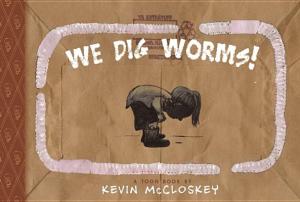
wedigwormsWe Dig Worms, by Kevin McCloskey (Apr 2015, TOON Books), $12.95, ISBN: 978-1-935179-80-1
Recommended for ages 4-8

Worms are so much more than those squiggly things you pull out of the dirt and put on a fish hook. Kevin McCloskey has put together a great little graphic novel that appeals to a range of young readers, illustrating just how worms help us. There’s so much to appeal to kids here – a cartoon side story involving a bird that wants to say hello to a worm and invite him to lunch (wink, wink, nudge, nudge), a Q&A about worms that gives us answers involving worm poo (it’s good for the soil!), and a detailed map of a worm’s interior and exterior.

WRM-slideshow-3The illustrations – originally painted on recycled grocery bags, which give a great look and feel to the book – are cartoony and kid-friendly, with simple facts and explanations. The map of the worm can be made even simpler for the youngest readers by just explaining that it is a map of the worm – that’s how I read it to my toddler, who loves this book and demands it be read to him every night.

WRM-slideshow-4

This is a great entry into graphic nonfiction, and a book that belongs on library, school, and children’s bookshelves. I’m making sure this one gets into my libraries; I’ve had great luck with TOON Books this far and look forward to adding to my collection. Take a look at some of the artwork, from the TOON Books website, where you can also pre-order copies.

WRM-slideshow-1

WRM-slideshow-2


Posted in Fantasy, Preschool Reads

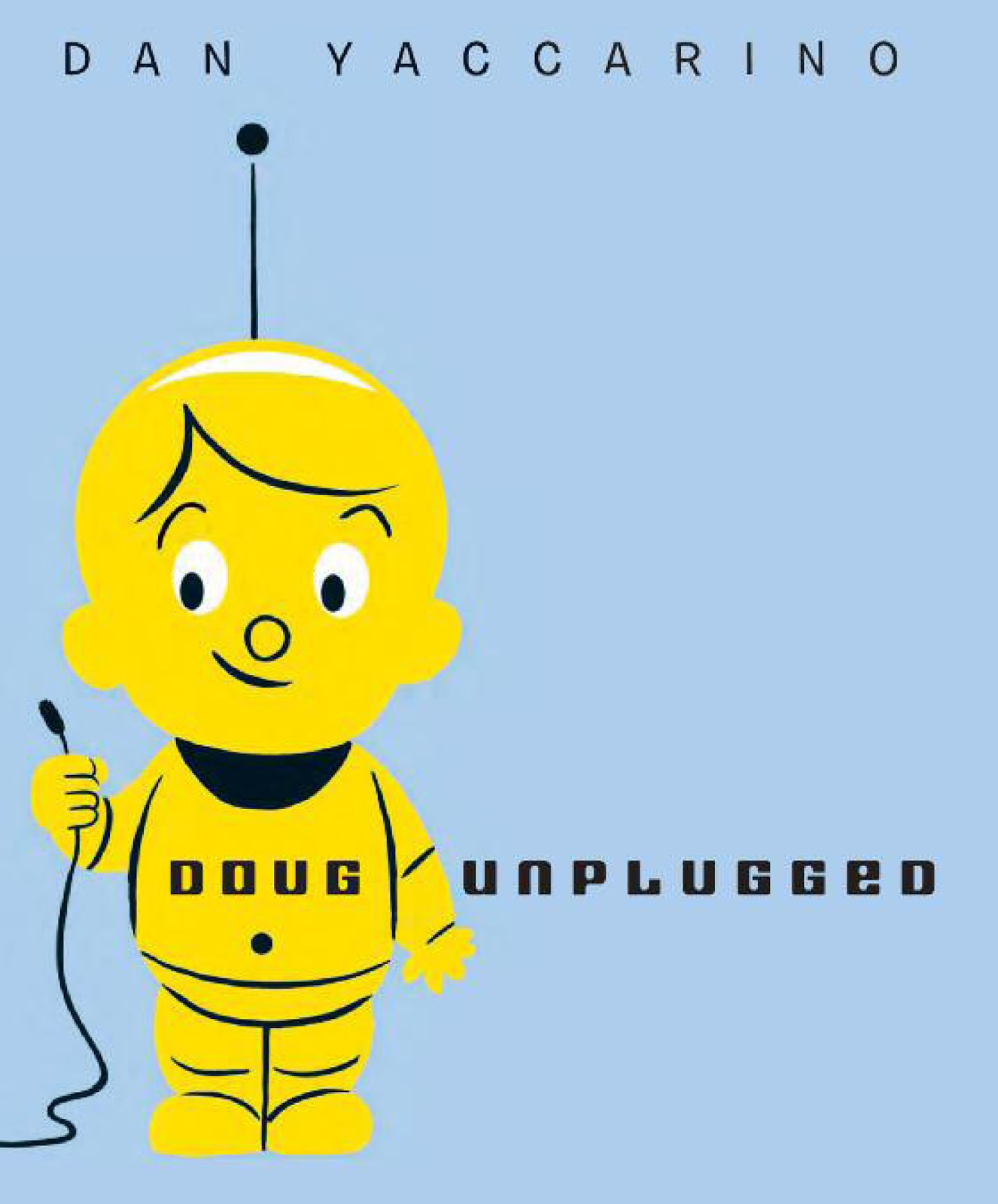
Book Review: Doug Unplugged, by Dan Yaccarino (Knopf, 2013)

Recommended for ages 4-8

Doug Unplugged!-1

This fun, retro story by Dan Yaccarino tells the story of a little robot boy who decides to “unplug” one day and explore the world. Little Doug is a robot boy whose parents plug him in every day so that he can learn while they head to work. One day, while learning about the city, Doug spies a pigeon at his window, and he’s fascinated. He unplugs himself and heads off on a day of exploration where he rides the train, scales a skyscraper, and makes a friend. After reuniting his friend with his parents, Doug decides to head home and tell his parents about his exciting day.

The story is sweet and packs a powerful message in our highly technological society. When most of our kids spend their days behind their iPads and computer screens, this simple message – unplug and learn by getting outside and doing – is a welcome sigh of relief. Packed with Yaccarino’s fun, adorable retro-futuristic artwork, Doug is a little boy on a big adventure that kids will enjoy living through vicariously. He may be a robot, but he’s easily distracted – there are many kids who can relate to the excitement of a pigeon landing on the windowsill at school or while doing homework at home. He spends a day exploring the city, yet manages to find a friend, and knows that he must go home at the end of the day. The art consists primarily of blues, greens and yellows, with other colors showing up to punch up the landscape. I read the digital version of this book, but encourage adult readers to use the physical storybook, which has smaller black font (it’s a great read-aloud book), usually at the bottom of the page or individual pictures so as not to detract from the artwork.  There are whole spreads and chunked panels throughout the book, giving a fully-fleshed-out feeling to this story. 

This would be a fun addition to a storytime on robots and would provide a more human perspective on a robot read-aloud. There are many robot printables and crafts online, and the author’s website offers information about his books, blog, social media, and speaking engagements.

Posted in Preschool Reads, Toddler Reads

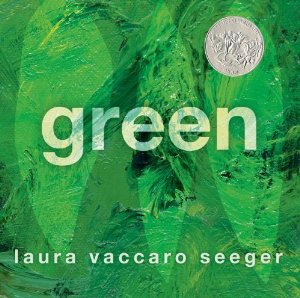
Book Review: Green, by Laura Vaccaro Seeger (Roaring Brook Press, 2012)

greenRecommended for ages 2-6

This award-winning concept book provides an illustrated explanation of the many shades of the color green, with  beautifully depicted scenes in painted oils interpreting the color’s many nuances. The text, written in rhyme, explains the shade illustrated in each spread: “forest green, sea green, lime green, pea green”. There are references to what is “never green”, like a stop sign, and there are “wacky” greens like a green zebra. Die cuts on each spread add a level of complexity and playfulness, making the leaves in the “forest green” spread the outlines of the fish in the “sea green” spread. The white and black bold text simply describes each scene. Little hands will enjoy exploring the pictures and diecuts, but it could lead to accelerated wear and tear on the book.

Green received 2013 Caldecott Honors and has been designated as a Kirkus Best Children’s Book of 2012 and a Booklist Editor’s Choice for Youth.

This would be a great addition to a color-related read-aloud. Bright Hub Education’s and Preschool Express’ websites offer songs about color, many sung to the tunes of popular nursery rhymes, which children will enjoy. Printing out pictures of various objects – an apple, a leaf, a banana – and letting children color them in would be a fun coloring craft. Enchanted Learning has free printable color books that children can color in and take home.

The author’s website offers information about the author and her books, with some interviews and book trailers.