Posted in Fiction, Fiction, Graphic Novels, Intermediate, Middle Grade, Non-fiction, Non-Fiction, Tween Reads

Science Comics explores Volcanoes

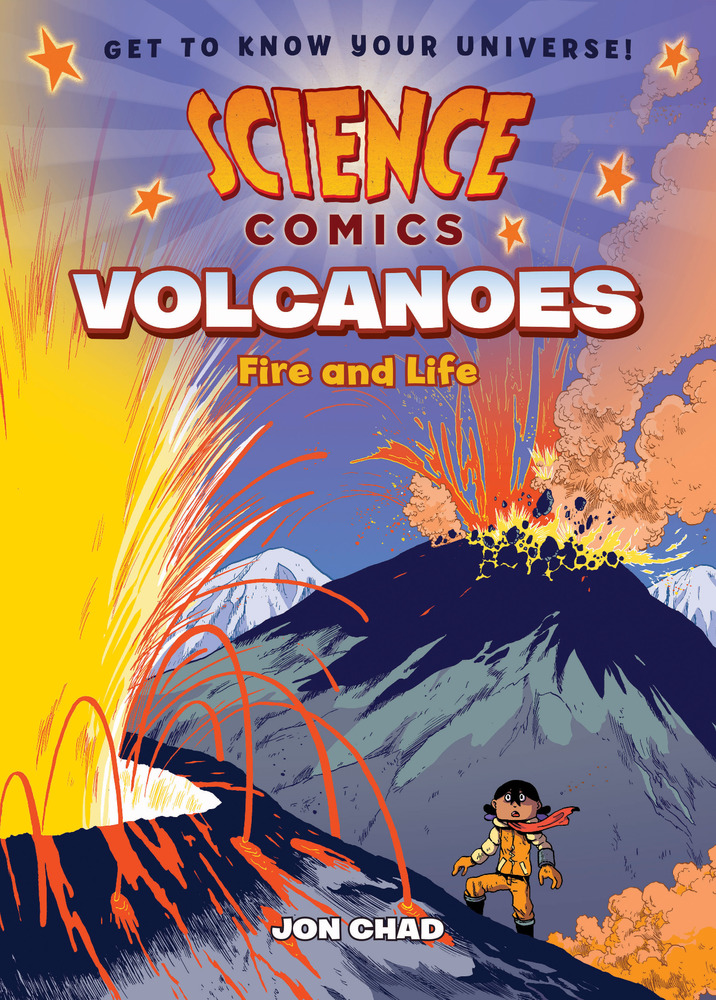
volcanoesScience Comics: Volcanoes-Fire and Life, by Jon Chad, (Oct. 2016, First Second), $12.99, ISBN: 9781626723603

Recommended for ages 8-12

Earlier this year, we got a look at First Second’s two Science Comics, Coral Reefs and Dinosaurs. There’s great science and fun art wrapped up in each of these comics, so I was super-psyched when I met a First Second rep at the PLA Conference this year, and she told me that there were more Science Comics coming. True to her word, we’re getting Volcanoes in just a couple of weeks.

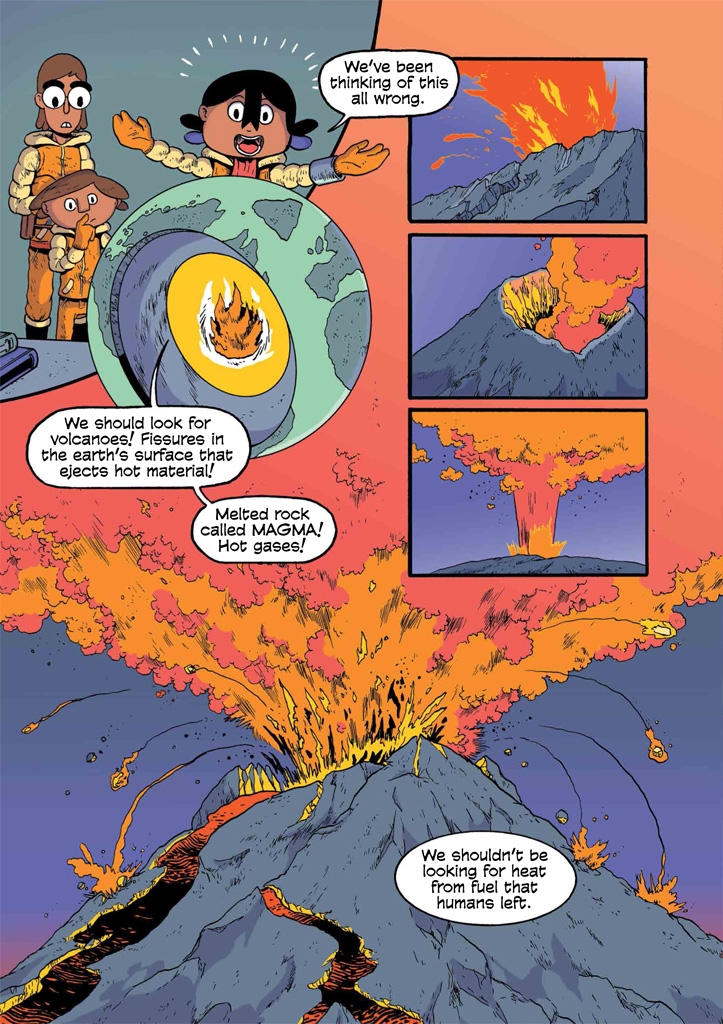
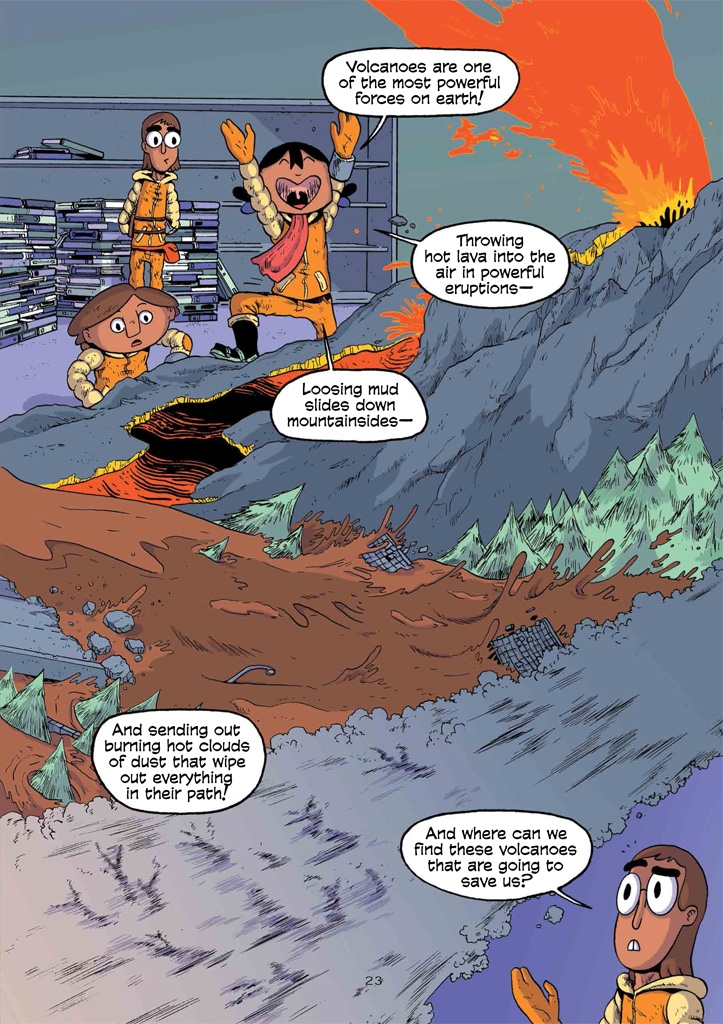
Similar to Coral Reefs, Volcanoes wraps information about volcanic activity into a story: there’s been some sort of environmental cataclysm, and Earth is freezing. A tribe is scanning books when Aurora, one of the kids, discovers a book about volcanoes; she is HOOKED. She’s saved her tribe! The power to warm the planet is right underneath their feet!

From there, Aurora becomes the reader’s guide through a look into the activity bubbling under the earth’s crust: there are magma vents, shifting tectonic plates, and volcanic eruptions. Volcanoes create just as much as they destroy: there are entire land masses that owe their existence to a volcanic eruption, just as there are entire cities that have been wiped out by them.

Posted in Intermediate, Middle Grade, Non-Fiction, Non-fiction, Non-Fiction, Tween Reads

Road Trip! Ranger Rick’s Travels: National Parks

ranger-rickRanger Rick’s Travels: National Parks!, by Stacy Tornio & Ken Keffer, (Aug. 2016, Muddy Boots), $14.95, ISBN: 9781630762308

Recommended for ages 8+

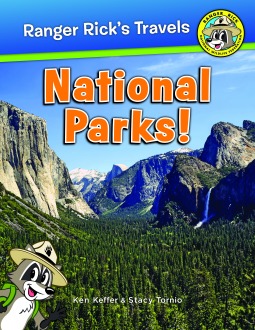
In a fabulous love letter to the National Parks of America and the National Park Service, the folks at Ranger Rick Magazine – remember them? They have books now! – put together this beautiful book, featuring each one of the 58 National parks across America. Ranger Rick and his best friend, Deputy Scarlett, appear throughout the book to join readers on a countrywide sightseeing tour.

The book opens with a map of the United States, including Hawaii, Alaska, and the US Virgin Islands. Each park is numbered and corresponds to the Table of Contents, which organizes the parks into 9 groups: Eastern Parks, Midwest Parks, Mountain West Parks, Southwest Parks, Utah and Nevada Parks, California Parks, Pacific Northwest Parks, Pacific Island Parks, and Alaska Parks. Each park’s profile includes stunning photos and facts that will make readers want to pack their bags and take a month or six off from work or school!

rangerrick-rickandscarlettEach park feature provides information in quick bites that read like a tourism guide. About the Park provides a quick overview and basic facts; What to Watch For are Ranger Rick’s top nature picks on what plants and animals to keep an eye out for. Ranger Rick’s Top Things To Do is a bucket list for each park – don’t leave without seeing Old Faithful in Yellowstone Park, naturally, but also make sure not to miss out on a hike through the park! Finally, Ranger Rick’s Amazing Facts are the “WOW” factor for each park: did you know that you can only reach Northwest Alaska’s Kobuk Valley National Park by foot, dogsled, snowmobile, or air taxi? Now you do!

This is a great book to have in collections and to have available when you’re talking about the U.S. There’s 100 years of history in the National Parks Service, but there are far more years in the history of these parks; there are petrified trees, dinosaur footprints and bones, and formations carved out of rock thousands of years ago, here for all to enjoy. Families planning a vacation or two can use this as a jumping off point (I know I am).

Don’t forget to head to the Ranger Rick website, where kids can read more about nature and the environment, play some games, and get craft ideas. Educator resources included lesson plans and webinars.

Ranger Rick and Scarlett image courtesy of Photobucket.
Posted in Early Reader, Intermediate, Non-Fiction, Non-Fiction

Animal Planet’s Animal Bites series is great for young readers!

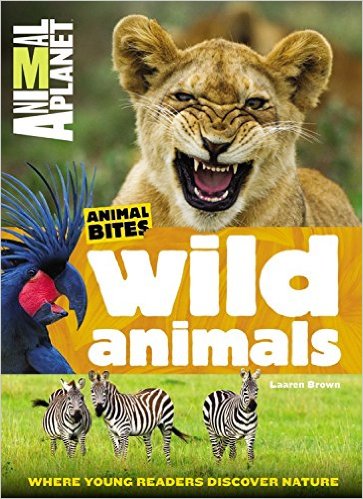
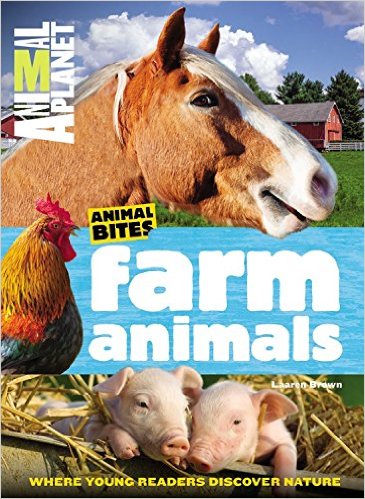
Animal books are KING with younger readers. I gush constantly about the NatGeo books, but I’ve just been made aware of Animal Planet’s Animal Bites series: books spotlighting animals from different habitats, like Farm Animals and Wild Animals, and loaded with bite-sized info (see what I did there?), questions for discussion, and yes, outstanding photos.

wild animalsEach book is organized to guide readers through information about family relationships, animal bodies, ecosystems, play time, conservation, and so much more. Check boxes throughout prompt discussion about whether these animals are friendly or would make good pets (bears, not so much; horses, yes) and discussion questions ask kids to compare themselves with animals: do you like to play games, like a border collie does? We get infographics on featured animals, including geographic location, weight, and height, and to help younger kids form a more solid frame of reference, a comparison to something most of us see every day, from a truck to a computer printer.

I love the emphasis on conservation, particularly in the Wild Animals book. Features on animals that have been saved from the brink of extinction, like the gray wolf, make very real the idea that conservation works when there is awareness.

Each book ends with a quiz, an activity and a craft, and a robust list of resources, a glossary, and an index. Endpapers lead readers in and send them off with a gorgeous photo of an animal.

There are over 200 photos in each book, along with infographics, maps, and informative Quick Bites. Other books in the series include Animal Planet Polar Animals and Animal Planet Ocean Animals.farm animals

Further committing to conservation, a portion of the proceeds benefits Animal Planet’s R.O.A.R. (Reach Out. Act. Respond.) campaign that partners with leading animal organization to make the world a better place for domestic and wild animals.

My 4 year old LOVES these books: trying to get them back so I could refer to them for this review was fun (he’s at school right now). Every page is a new discovery, something waiting for him to find and explore. Sometimes, he plays with his animal toys, showing me his horses when I read the section on horses; he’ll show me a lion when I get to a spotlight on lions. If he asks why his shark is missing, I’ll explain that I have to buy him a copy of Ocean Animals. 😉

Kids love animals. Animal Planet books make it easy for you to bring more animals into their lives, and even more importantly, to discuss humane treatment of animals and the importance of conservation of our planet with them. The books are a nice, sturdy softcover, perfect for tucking into your tote bag when you’re traveling (or sneaking your kid’s copy out so you can read it on the way to work), and it’ll hold up to repeated reads.

Animal Planet: Animal Bites – Wild Animals, by Laaren Brown (Animal Planet, June 2016), $12.95, ISBN: 978-1618934147

Animal Planet: Animal Bites – Farm Animals, by Laaren Brown (Animal Planet, June 2016), $12.95, ISBN: 978-1618934130

Recommended for ages 4-8

Posted in Middle Grade, Non-Fiction, Non-fiction, Tween Reads

NatGeo’s 2017 Almanac is jam-packed!

almanac_coverNational Geographic Kids Almanac 2017 (May 2016, National Geographic), $14.99, ISBN: 978-1426324178

Recommended for ages 8-13

NatGeo’s 2017 almanac is packed with content from their kids’ magazine, their collection of books, and their NatGeo Kids website. It’s chock full of articles, facts, games, and digital extras, including an invitation to the Newsmaker Challenge, where kids can submit their own time capsule artifact photos to be featured in next year’s almanac. Features on animals encourage kids to get involved in the Summer Mission Animal Rescue Challenge, increasing awareness about endangered species and how they can play a part in helping do their part toward conservation and protection.

Information is broken out into 10 sections, covering current events, animals, going green, world cultures, adventure, fun and games, science and nature, history, and geography. Each section is loaded with breathtaking photos, top 10 lists, homework help and research ideas, and a quiz.

These books are a great idea for kids who love trivia, and they’re great for introducing readers to the world outside their doors. Like I’ve said before, NatGeo books are a win with the kids in my library, my own kids, and the kids in my extended family. There’s so much to love!

Posted in Early Reader, Non-Fiction, Preschool Reads

Ocean Animals from Head to Tail is SO MUCH FUN!

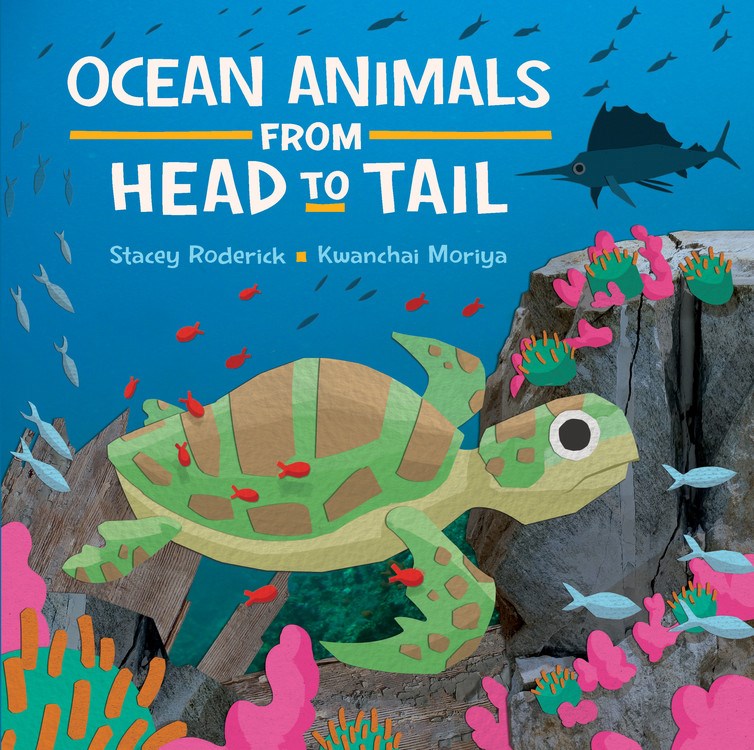
ocean animalsOcean Animals from Head to Tail, by Stacey Roderick/Illustrated by Kwanchai Moriya, (Sept. 2016, Kids Can Press), $16.95, ISBN: 9781771383455

Recommended for ages 3-7

Does anyone love Steve Jenkins’ Actual Size and Prehistoric Actual Size as much as I do? They are the perfect non-fiction read-aloud for elementary school class visits; the kids go berserk when they see a life-sized Goliath beetle, or watch me put a dinosaur’s claw to the back of my head to illustrate how it could pick me up like a grape. Less terrifying, but just as amazing for the younger set – especially those Octonauts fans out there! – is Ocean Animals from Head to Tail, by Stacey Roderick and illustrated by Kwanchai Moriya.

Ocean Animals introduces readers to eight different ocean animals, focusing on a unique body part. First, we see a close-up of the animals in question – the scalloped head of a hammerhead shark, a colossal squid’s eye, a blue whale’s mouth with a focus on its baleen – and a question: What ocean animal has a head like this? What ocean animal has eyes like this? What ocean animal has a mouth like this? The body part in question is highlighted with a gray font to call attention to it, and the following spread answers the question, zooms out to illustrate the animal in its natural environment, and provides interesting and quick facts about the animal. We learn that the squid’s soccer ball-sized eyes are the largest of any animal, and help the squid see in areas where there’s very little light. The blue whale’s baleen act as a huge sieve to catch the tasty krill it loves to eat. A spread at the end introduces kids to eight more ocean animals.

Not featured in actual size, but still in huge detail, the kids will LOVE this book. Kwanchai Moriya’s paper collage art is bright and interesting, popping off the page and adding depth to the spreads. My three year-old loves this book (as well as the Actual Size books) and has me read this to him constantly. (It came in handy at the doctor’s office today!) With shows like Octonauts and Wild Kratts generating interest in animals, nature, and conservation, this is a great book to have on home, school, and library shelves. It’s a great storytime book, too: pair it with a Rainbow Fish story, Shark in the Dark, Mr. Seahorse – any underwater theme will do! Show an episode of Octonauts that stars one of the featured animals, and let the kids color some pictures of underwater animals that appear in the book.

This is the second in the Head to Tail series: Dinosaurs from Head to Tail was published in 2015, and Bugs From Head to Tail will be coming in 2017.

Great book for easy nonfiction collections.

Posted in Intermediate, Middle Grade, Non-Fiction, Non-fiction, Non-Fiction, Tween Reads

NatGeo’s Awesome 8 has the lists kids love!

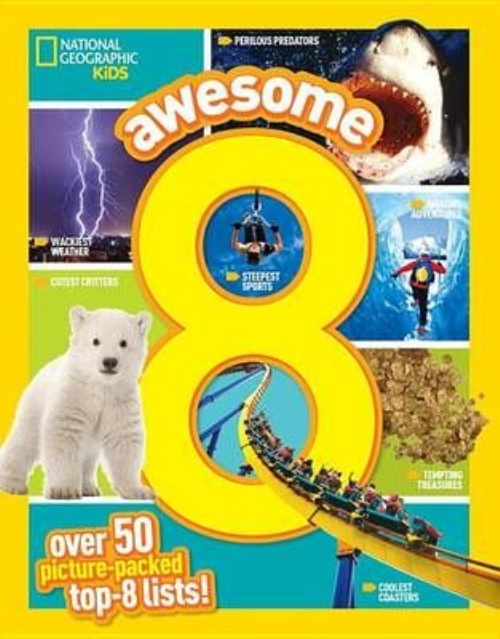
awesome8Awesome 8: 50 Picture-Packed Top 8 Lists! (National Geographic Kids), by Jen Agresta & Sarah Wassner Flynn, (May 2016, National Geographic), $12.99, ISBN: 978-1426323379

Recommended for ages 7-12

I love lists. I make them, I read them, it’s just a fun thing that people do. It gives you some cool insight into people, like when you read lists of their favorite books, foods, or things; it can make short work of a project, when you have a list of best books or coolest science fair projects. Bottom line, lists are helpful and fun. NatGeo Kids has taken that idea and run with it, giving us Awesome 8: 50 Picture-Packed Top 8 Lists!

This book is loaded with lists of the wildest things, from the most hair-raising roller coasters (that new Joker one at Six Flags Great Adventure may have to be in an updated version, tho’) to the the most bodacious buried treasures. Lists cover wild nature, history, food, and fun. Plan a trip to see some ridiculous roadside attractions (there really is a giant ball of string) and travel in the wackiest of ways, like on a monster school bus. Fun facts pop up throughout the book, as do extended features on some of the lists, like the spread discussing how icebergs flip, following Eight Awesome Things in Antarctica.

It’s a NatGeo book, so you know the pictures are stunning and the information covers different cultures and different parts of the world.There’s a full index in the back and a companion website, the Awesome 8 Hub, where you can find more Awesome 8 lists and log into NatGeo’s Kids portal, which offers resources for educators and homework help resources.

flipped-iceberg-antarctica_88301_990x742Icebergs can flip! Who knew? (from NationalGeographic.com)

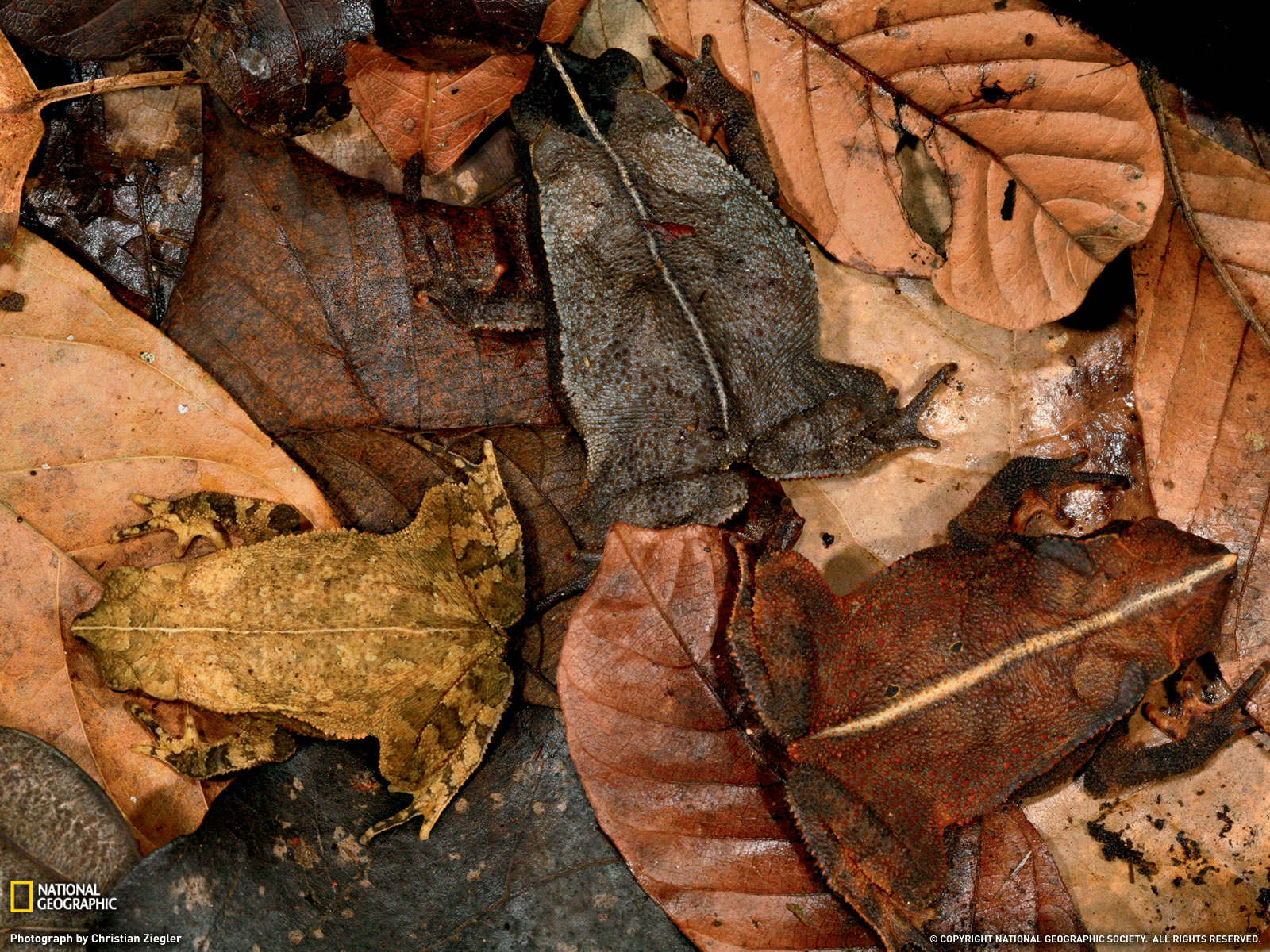
I’m a huge NatGeo Kids fan, with good reason: the kids embrace the books, which are fun, factual, and contain beautiful photographs of the world around us. Know a kid who loves cool stuff? Consider this book. Looking for a summer program to put together on the spot? Maybe a spot the camouflaged creature game – there’s an Awesome 8 list dedicated to Coolest Camouflage, including this picture of three toads – can you find them?

toadsphoto from NationalGeographic.com


Posted in Intermediate, Middle Grade, Non-fiction, Non-Fiction

National Geographic talks Angry Birds!

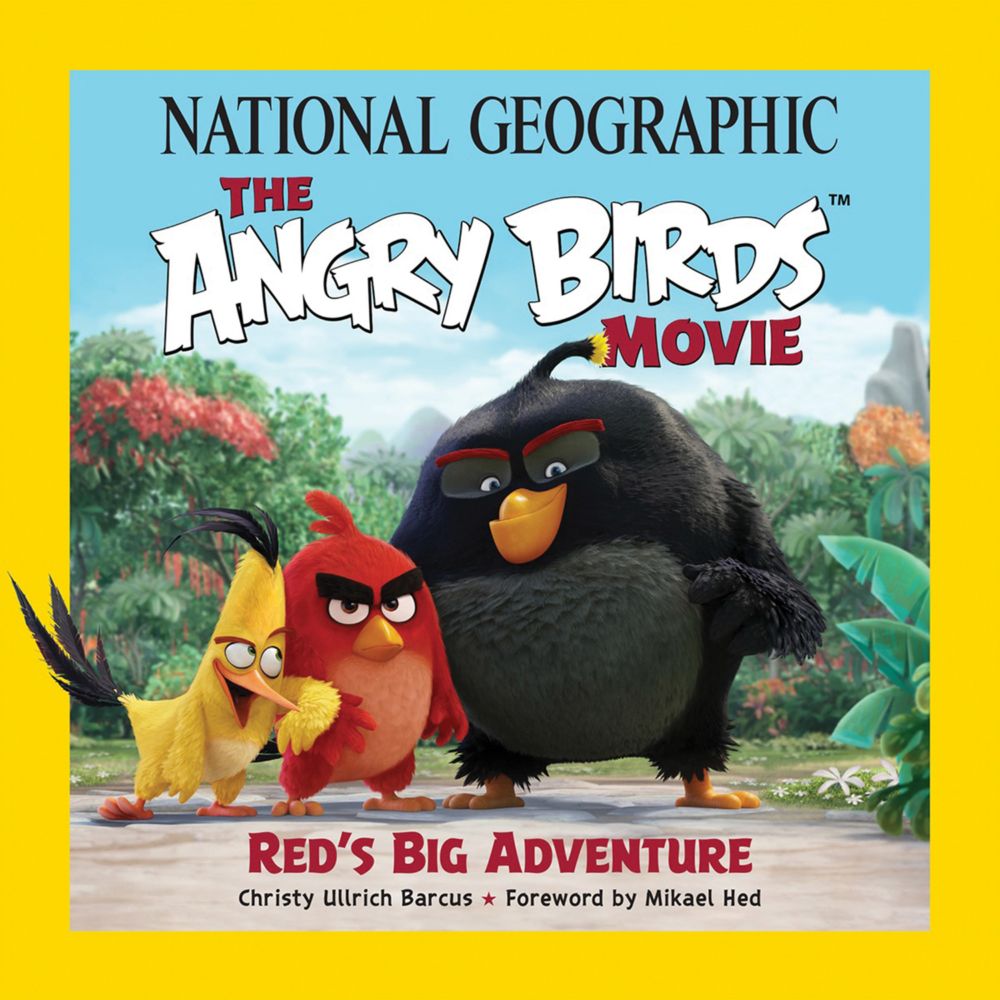
angrybirds_natgeoNational Geographic: The Angry Birds Movie-Red’s Big Adventure, by Christy Ullrich Barcus (Apr. 2016, National Geographic Children’s Books), $14.99, ISBN: 978-1426216848

Recommended for ages 8-12

The Angry Birds have arrived on the big screen, and NatGeo Kids is there to celebrate with the release of their twelfth and latest Angry Birds title, Red’s Big Adventure. The book, set in the world of the Angry Birds movie, is set up in four levels: Bird Island, Bird Village, The Search for Mighty Eagle, and Beyond the Island, readers are introduced (or, really, familiarized with – they likely know most of these birds already) to the Angry Birds: Red, Matilda, Chuck, Bomb, Terence, Judge Peckinpah and Cyrus, the Mighty Eagle, and that rascally pig, Leonard. Each character gets a spotlight and a bio, and Red’s adventure is a thread that runs through the course of the book.

What we also get are breathtaking pictures and facts on  the animals and plants, the environments and natural wonders of the world’s islands, from Greenland to Galapagos. Learn how a bird’s beak is better than a Swiss Army knife in terms of multi-purpose use: it’s a weapon, a utensil, a mating signal, and a sensory organ. Learn about mountain ranges and how glaciers are formed; learn to create maps or navigate using the stars, like our forefathers did. Find out about some of the biggest animal migrations in history, or discover an island inhabited by pigs (is that were Leonard and his friends came from?)!

I love the NatGeo books. They have the perfect combination of fun and learning, whether it’s their handy, schoolbag-sized fun facts books, like the Angry Birds and the Weird But True books, their sticker books (my living room coffee table currently has all the Dino Sticker Activity book stickers on them, like it’s a mini-Jurassic Park), the First Big Books, or their atlases and almanacs. The photos are incredible, and the information is easily digestible and exciting in its presentation. My kids love them, and the kids at my library go berserk for them. I celebrated the Angry Birds movie release with an Angry Birds Treasure Hunt around the children’s room, where they had to locate different pictures of the birds and pig for a prize. I honestly wasn’t sure how it was going to go over: were younger kids that into Angry Birds anymore? The answer was a resounding YES.  About 30 kids took part in the treasure hunt, ensuring that this book and the 11 other NatGeo Angry Birds books will be in my next ordering cart.

Add to collections where nature books and Angry Birds are popular. You’ll be happy you did!


Posted in Early Reader, Fantasy, Fiction, Preschool Reads

Suite for Human Nature is a musical folktale made art

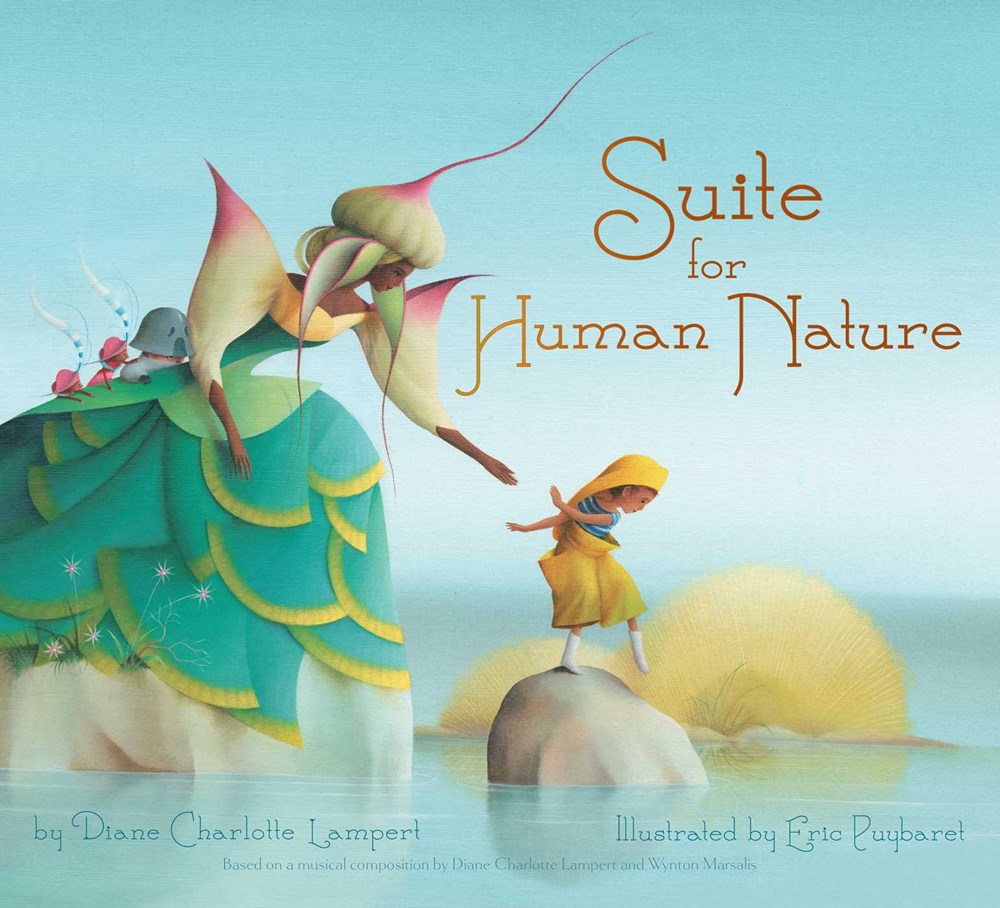
suite for human natureSuite for Human Nature, by Diane Charlotte Lampert/Illustrated by Eric Puybaret (May 2016, Atheneum/Caitlyn Dlouhy Books)$17.99, ISBN: 9781416953739

Recommended for ages 4-10

A musical collaboration between legendary songwriter Diane Lampert and Jazz legend Wynton Marsalis becomes a beautifully illustrated parable on humanity in this gentle story about Mother Nature and her challenging children.

Mother Nature is busy. She’s got seasons to change, flowers to wake up and put to bed, and all of Earth’s creatures to care for. But she really longs for children of her own, so using bits and pieces of nature – sticks, stones, seeds, leaves – she ends up making five children: Fear, Envy, Hate, Greed, and Fickle. Each time, she’s taken aback when she realizes how tough it is to raise a child, and asks humans – the creatures that can’t fly, swim, roar, or gallop – to keep an eye on her unruly children once she buzzes off to tend to another season. Each time she returns, she creates another child, hoping to even things out, and each time, things get a little more complicated, especially when the children’s personalities start rubbing off on the humans. When she takes some advice from the Winds, and creates Twins, though, things change.

Suite for Human Nature is told in old folktale tradition, telling the story of human nature; its strengths and its weak spots, and the one thing that conquers all. Breathtaking acrylic and linen illustrations by Eric Puybaret make this a joy to read and gaze at. This is a better read-aloud for slightly older listeners, who can sit for a little longer and use their imaginations to fly away with this story. Ask your listeners to draw their feelings – what materials would they use? What colors would they give them? Older kids doing a unit on fairy tales and mythology could compare this story to the myth of Pandora’s Box.

Absolute must for collections. I would love to get hold of the actual music.

Diane Lampert (1924­–2013) was a renowned songwriter who contributed to lyrics for artists from The Beatles to Brenda Lee and over twenty movie title tracks such as The Snow Queen, I’ll Take Sweden, Billie, and Silent Running, as well as songs for The Wild and the Innocent, and Trees Lounge, and for Bob Hope, Gary Grant, and Buster Keaton, among others. Suite for Human Nature first debuted at a concert at Jazz at Lincoln Center, with the world-famous Boys Choir of Harlem.

Eric Puybaret has illustrated many children’s books, including Suite for Human Nature; the bestselling Puff, the Magic Dragon; The Night Before Christmas; Over the Rainbow, as well as many others in his native country, France. Eric’s critically acclaimed work was praised by The New York Times as “elegantly rendered” and Publishers Weekly calls it “graceful [and] whimsical.”

Have a look at some of Eric Puybaret’s beautiful art:


suite for human nature_2

suite for human nature_3


Posted in Graphic Novels, Middle Grade, Non-Fiction, Non-fiction, Tween Reads

First Second brings you Science Comics!

First Second’s got a line of Science Comics coming to stores beginning in May with the releases of Coral Reefs and Dinosaurs. The books are beautifully illustrated and bring nonfiction to the next level with information, wit, and fun for readers.

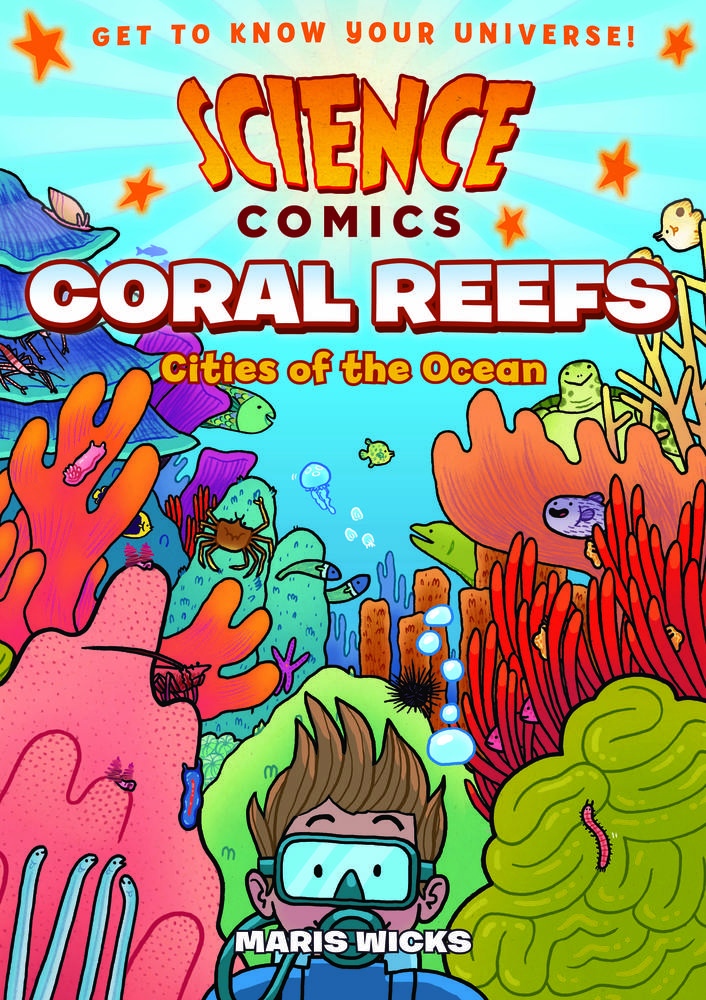
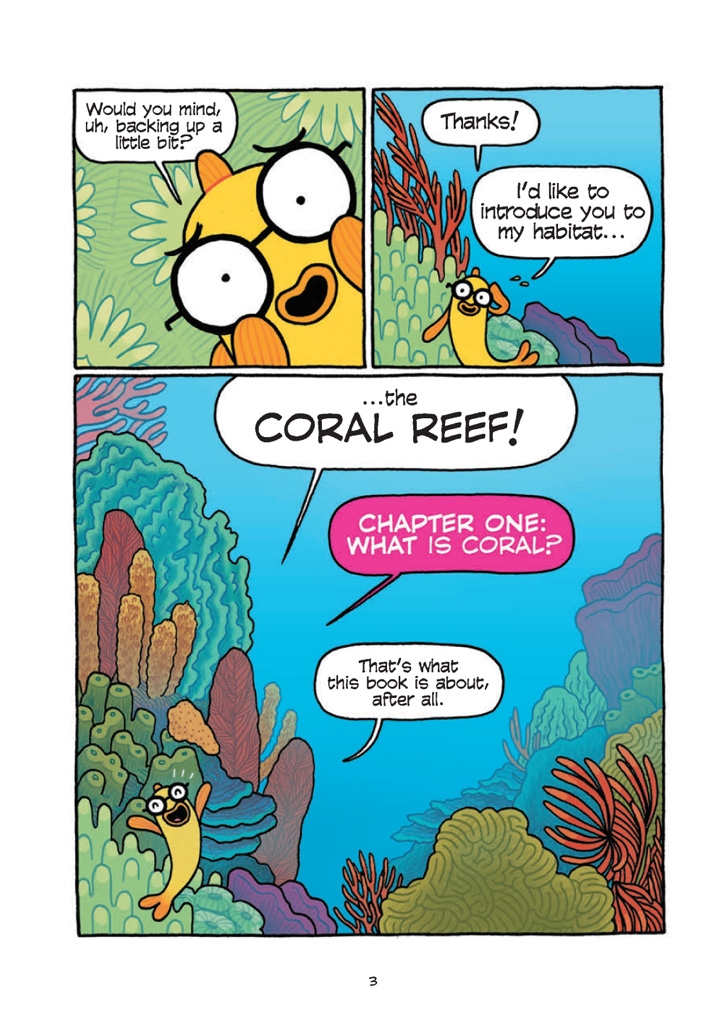
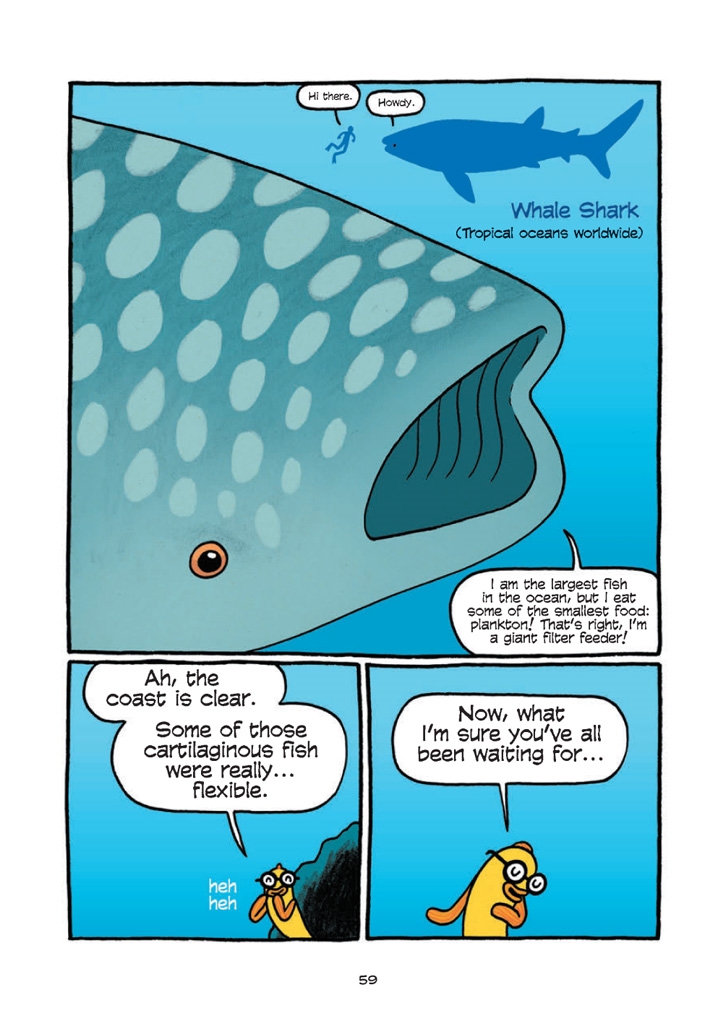
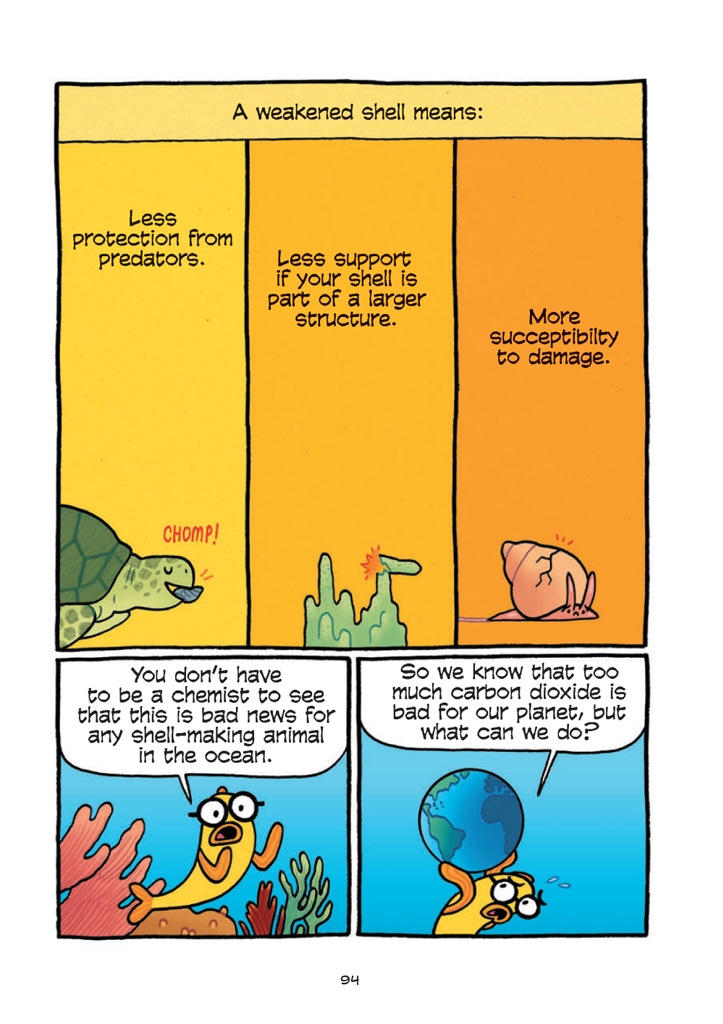
coral reefsCoral Reefs, by Maris Wicks ($9.99, ISBN: 9781626721456) introduces readers to the world of coral reefs! With an adorable fish acting as emcee and guide, readers get a look at the biology of coral, the different types of reefs, sea creatures that live in and around the reefs, and the ecological importance that the reefs play in our world. Maris Wicks, who also gave us the brilliant and informative Human Body Theater last year, is back with her combination of smart and funny writing and eye-catching, bright art.

The science is solid and there are tons of take-away facts for kids and adults alike. Did you know that some reefs take millions of years to grow?  That coral reefs are home to a quarter of all the animals found in the ocean? Wicks also discusses climate change and its impact on the environment, with emphasis ramifications like coral bleaching and ocean acidification. Anyone can help in any way; Wicks provides examples that include reducing carbon emissions (take a walk! carpool! bike ride!); reusing and recycling plastics; composting, and planting trees and flowers. There’s a great message about environmentalism and conservation to be told here, and Wicks ends on an upbeat note: “Caring for ourselves and our environment is the first step to caring for the rest of the world.” With a foreword from Randi Rotjan, Ph.D., Associate Research Scientist with the New England Aquarium, a glossary, bibliography, and additional resources, Science Comics: Coral Reefs is a great companion to any unit on the oceans, sea life, conservation, and ecology. Strongly recommended for public, school and home collections.

Check out Maris Wicks’ website for fiction and nonfiction artwork!


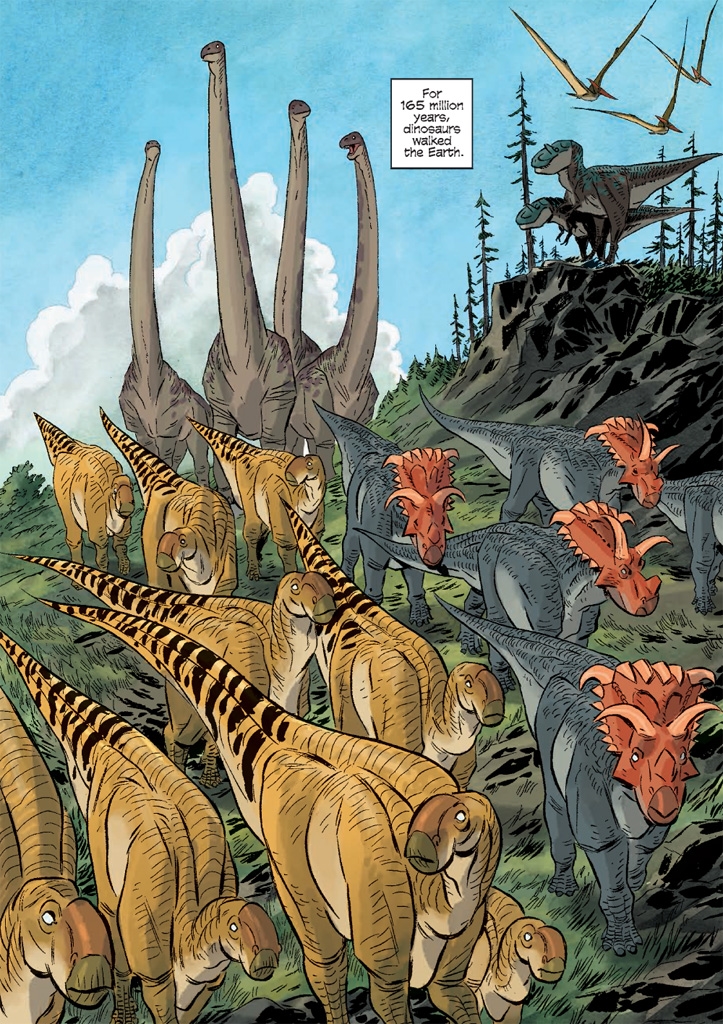
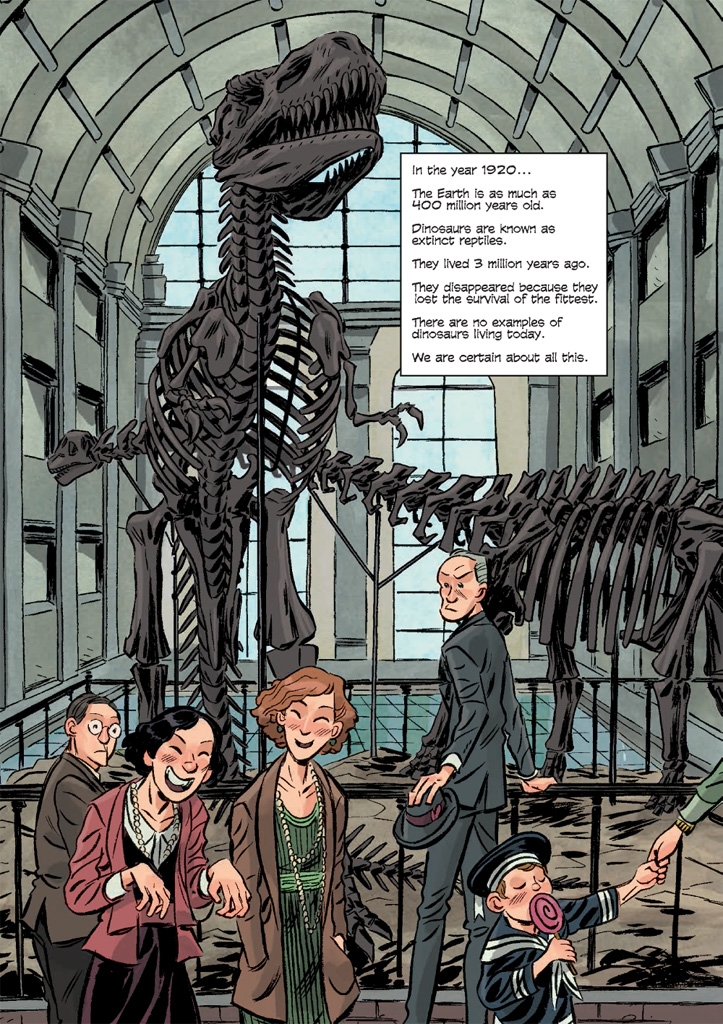
dinosaurs_cScience Comics: Dinosaurs, by award-winning author MK Reed and illustrated by Joe Flood ($9.99, ISBN: 9781626721432) takes an omniscient narrator approach, walking readers through the history of paleontology, including the many rivalries between scientists that led, in some cases, to some major classification errors, like the poor Brontosaurus, a victim of the infamous Bone Wars between paleontologists O.C. Marsh and Edward Drinker Cope, whose bitter rivalry and rush to beat one another to publishing led them to create a dinosaur that didn’t really exist – it was later discovered that an Apatosaurus body had a Camarasaurus head stuck onto the skeleton, in a rush to complete the work.

With a series of repeated timelines that show facts that society “definitely knew” at different times, we see how much we’ve really learned about the true age of the earth, the fossil record, and the origins of dinosaurs themselves. Joe Flood’s art is less cartoony than Maris Wicks, but captures the tremendous scale and brightly colored dinosaurs that we now understand roamed the earth. There are some incredible graphs and charts in here, illustrating common ancestors and evolutions. A foreword by Leonard Finkelman, Ph.D., Associate Professor in Philosophy of Science at Linfield College, plus a glossary, additional charts, and further resources make this a must-have for any dinosaur collection. Buy two – you know kids love their dinosaurs.

So much more than simple graphic novels, Science Comics is a series that deserves a place in any nonfiction section AND any graphic novel section. The next book in the series, Volcanoes, is due out in October. Recommended for ages 8 and up.

MK Reed’s author webpage has more information about the author and her books, including a link to her anthology on women gamers, Chainmail Bikini.

Sneak peek at Coral Reefs:

coral reefs_1coral reefs_2coral reefs_3coral reefs_4coral reefs_5coral reefs_6coral reefs_7coral reefs_8

Sneak peek at Dinosaurs:

dinosaurs_1dinosaurs_2dinosaurs_3dinosaurs_4dinosaurs_5dinosaurs_6dinosaurs_7dinosaurs_8


Posted in Early Reader, Preschool Reads, Toddler Reads

Follow a fish’s journey to the sea in The River

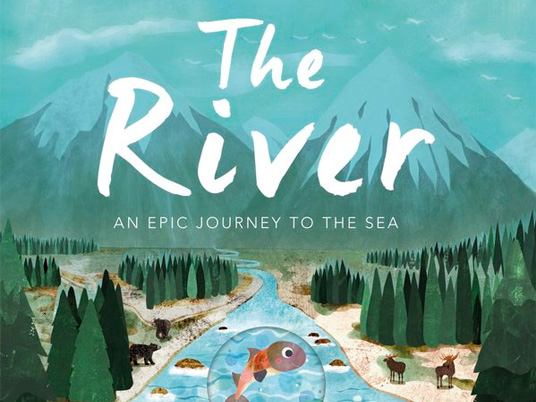
the_river_cover_croppedThe River: An Epic Journey to the Sea, by Patricia Hegarty/Illustrated by Hanako Clulow (March 2016, Kane Miller), $12.99, ISBN: 978-61067-468-3

Recommended for ages 3-6

A little fish begins her journey in the snowcapped mountains, traveling downriver and passing through forests, past animals going about their days and nights, until finally reaching the sea in this rhyming tale with a little something extra to capture little eyes and minds: the book is die-cut, with a lenticular window that gives the illusion of a three-dimensional swimming fish!

Beautifully illustrated by Hanako Clulow, each spread depicts a different scene in nature, progressing through the seasons as the fish makes her journey. We see the wildlife, weather, and surroundings change, and the gentle, rhyming text sets the reader in each location; whether watching geese fly overhead, beavers scamper, and an owl, hooting softly in the moonlight. The moving fish is a constant, ever swimming toward her destination.

The pages are sturdy and will hold up to multiple readings, which is a good thing – I’m pretty sure this book will demand it! This book has entered my 3 year old’s regular rotation, and we’re at the point where he now “makes the fish swim” by holding the book as I read. I’ll be bringing this to my toddler storytime this Thursday, where I’m sure it will get rave reviews: anything to hold their attention!

I love this book and would love to see more in a series for little ones. It’s a great way to introduce nature and nonfiction in a fun, interactive way. I am a little worried about how this would hold up in circulation, because of the die-cut and the lenticular fish, because the kids at my library are very enthusiastic readers. That said, I’m going to give it a shot and order a couple of copies to test the waters. I think it will be a great read-aloud for my class visits, too; the teachers I’ve seen lately have asked for more nonfiction books during the read-aloud portion of the visit, and I think this would be a fun, educational read for the Kindergarteners.

Enjoy the book trailer for The River, and consider adding this one to your collections.

Illustrator Hanako Clulow’s webpage has more of her illustrations, links to her Etsy shop, and a cover reveal for her upcoming book, “Above and Below”.