Posted in Non-Fiction

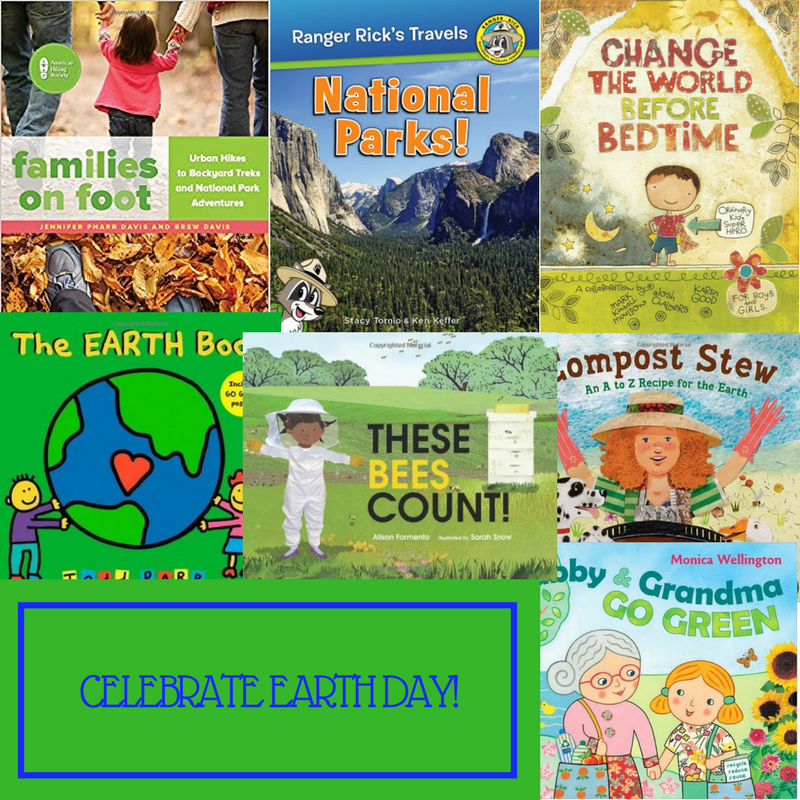
Celebrate Earth Day! Books about our big, blue dot.

Families on Foot: Urban Hikes to Backyard Treks and National Park Adventures, by Jennifer Pharr Davis & Brew Davis, (March 2017, Falcon Guides), $17.95, ISBN: 978-1-4930-2671-5

I’ve been waiting to talk this one up! Published in partnership with the American Hiking Society, this is the book you want if you want to start – or already are a fan of – hiking and taking nature walks with your family. You’ll find tips and information on hiking etiquette, packing, safety, urgent matters like diaper blowouts, using technology like smartphone apps and GPS, activities to keep all ages engaged, and 9 tasty trail mix recipes that are nature-friendly. There’s information on hiking with special needs children and seniors; comprehensive online resources, and a state-by-state directory of family-friendly trails. Full color photos and first-hand stories from the trail will have you packing a bag and getting ready to hit the road.
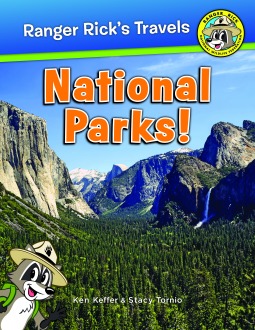
 

Ranger Rick’s Travels: National Parks!, by Stacy Tornio & Ken Keffer,
(Aug. 2016, Muddy Boots), $14.95, ISBN: 9781630762308

Now that you’re ready to hit the trail, Ranger Rick’s Travels: National Parks will tell you where to go! Ranger Rick and his friend Deputy Scarlett take readers on a scenic tour of America’s 58 national parks, which profiles including stunning photos and facts, top nature picks on plants and animals to look for, and a bucket list for each park.
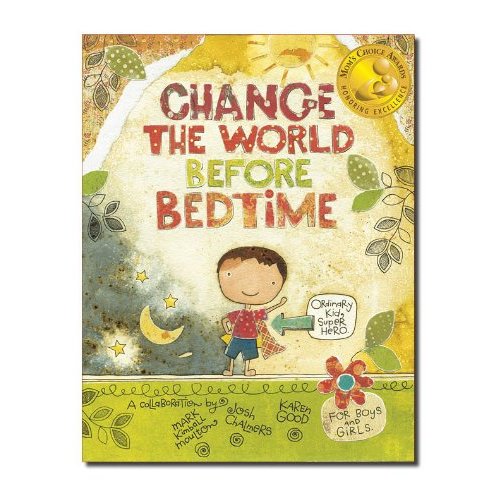
 

Change the World Before Bedtime, a collaboration by Mark Kimball Moulton, Josh Chalmers, and Karen Good (Schiffer Publishing, 2012). $16.99, ISBN: 978-0764342387

I tend to think of Change the World Before Bedtime as an accompanying read to 10 Things I Can Do To Help My World, by Melanie Walsh. The story tells kids that anyone, big or small, can do things to bring about positive change. Over the course of one day, a group of children make positive decisions and take action to brighten the world around them, tying on their “hero capes” and eating a healthy breakfast, spending the day doing random good deeds, like picking up litter, visiting a sick friends or family, donating clothing, toys, and food to the needy, and keeping a positive mindset.


The Earth Book, by Todd Parr, (March 2010, Hachette), $11.99, ISBN: 9780316042659

Who does social justice better than Todd Parr? The Earth Book – printed with recycled material and nontoxic ink – empowers kids to work together to make the Earth feel good, from planting a tree to reducing, reusing, and recycling. The Earth Book is great for toddlers and preschoolers, who may otherwise feel left out of the action.
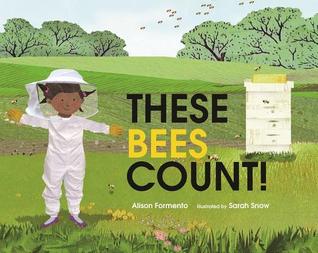
 

These Bees Count!, by Alison Ashley Formento/Illustrated by Sarah Snow,
(March 2012, Albert Whitman), $16.99, ISBN: 9780807578681

I love this book and its companions, These Seas Count!, These Rocks Count!, and This Tree Counts! In These Bees Count, kids learn the importance of bees to our society by helping pollinate flowers and producing honey. There’s a counting aspect to the books, too, making it accessible to preschoolers and possibly younger; introduce the counting concepts and talk about the good things bees do.
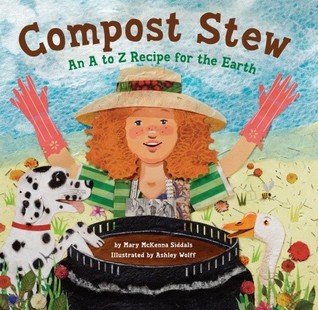
 

Compost Stew: An A to Z Recipe for the Earth, by Mary McKenna Siddals/Illustrated by Ashley Wolff,
(March 2010, Tricycle Press), $15.99, ISBN: 9781582463162

What’s composting? Glad you asked! This A -to-Z explains composting, how to make a compost pile: what to throw in? what to keep out?, and how composting helps keep gardens growing healthy and happy. It’s great for toddlers and preschoolers who can learn their ABCs through gardening, after they practice their 123s with the bees (above)!

Gabby and Grandma Go Green, by Monica Wellington,
(March 2011, Dutton), $10.99 via Kindle, ASIN: B01F2IJRXA

If you can buy this through a third-party seller or see it in a bookstore, it’s worth it to make the purchase. I really hope this one comes back into print, because I love this story. It’s a good intergenerational story, with young Gabby and her Grandma going green by sewing their own cloth bags, buying veggies at the Farmer’s Market, and recycling their bottles. I love this book and use my battered old copy during my Earth Day storytimes.

These are just a few great Earth Day titles. For today, go out and enjoy the planet! Tomorrow, go to your library or bookstore and check a few out for yourself and your family.

Posted in Early Reader, Non-Fiction, Non-fiction, Non-Fiction, Preschool Reads

Welcome #NationalPoetryMonth with Animal Ark

Animal Ark, created by photographer Joel Sartore/text by Kwame Alexander, (Feb. 2017, National Geographic), $15.99, ISBN: 978-1-4263-2767-4

Recommended for ages 3+

Newbery Award winning author Kwame Alexander lends his voice to award-winning National Geographic photographer Joel Sartore’s beautiful book of wild animals. Animal Ark is inspired by the National Geographic Photo Ark: a project between Sartore and the National Geographic Society to document every species in captivity, with the goal of raising awareness and protecting these animals for future generations.

Kwame Alexander writes amazing verse. If you’ve read The Crossover or Booked, you know this. His Animal Ark verse is at once playful and a call to action; paired with Sartore’s visually stunning photos, they pack a powerful punch to the psyche. A full-page photo of a wolf’s face in profile proclaims, “Howl like you mean it… the world is listening”; brightly colored beetles stand out against a black background, reading “Color me ancient and sacred”. The words placement is also playful, winding across the page and around the animals, to create a full visual experience for the reader. Several gatefolds throughout the book surprise the reader with a “chorus of creatures”, collages of photos. Here, the text reminds us of what we have and not to squander our gifts: “There are too few remaining/in the rain forest/in the big blue sea/in the whole wide world/because of you and me”.

Joel Sartore has photographed more than 6,000 species for the PhotoArk project, more than 100 of which are featured in Animal Ark. A companion adult book, National Geographic The Photo Ark: One Man’s Quest to Document the World’s Animals (March 2017) includes more photographs and a foreword by Harrison Ford.

This is a perfect book to read and display for National Poetry Month (starting April 28), and for Earth Day (April 22nd). It’s a beautiful photo book with lovely verse that will draw readers in. Animal Ark received a starred review from School Library Journal and the companion adult book received a starred review from Publisher’s Weekly.

Have a look at the blooper reel – photographing animals isn’t always easy!

Posted in Early Reader, Fiction, Preschool Reads

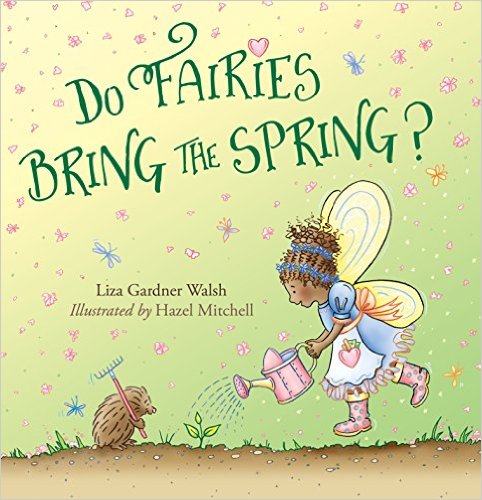
Do Fairies Bring the Spring? Let’s find out!

Do Fairies Bring the Spring?, by Liza Gardner Walsh/Illustrated by Hazel Mitchell, (Feb. 2017, Down East Books), $16.95, ISBN: 978-1-60893-633-5

Recommended for readers 3-7

Do fairies bring the spring? This adorable picture book poses the question while infusing nature with a little bit of magic, as Liza Gardner Walsh’s rhyming text suggests that fairies are behind the scenes, working to bring spring to the world. Suggestions for attracting fairies to your own gardens in the spring, at the end of the book, encourage you to dig into nature with your little ones and take care of your little corner of the world.

Hazel Mitchell’s illustrations of diverse, adorable little fairies and their woodland friends infuse this Spring story with all the charm and wonder that makes a preschool/Kindergartner story a success.

Invite some magic into your life this spring with this sweet springtime story! Little ones will love the soothing rhyme and the adorable pictures. Encourage parents to get outside with their little ones and enjoy nature while respecting it –  no littering, please! This is a great story to read and follow up with a planting activity, whether it’s going out in the yard with your little one, or planting some seeds in recyclable egg cartons and bringing them home to start a container garden. Hand out fairy coloring sheets, or print small fairy pictures out on card stock, let the kids color them in, and mount them on popsicle sticks to give your new  plants extra fairy protection!

Liza Gardner Walsh is a former librarian (whoo hoo!) and has a companion book, Where Do Fairies Go When It Snows? (2015). Her website, Moss & Grove, encourages parents and kids to get outside and embrace nature. See more of illustrator Hazel Mitchell’s work at her website.

Posted in Early Reader, Non-Fiction, Preschool Reads, Toddler Reads

Adorable animal books for toddlers and preschoolers!

Anita Bijsterbosch has two adorable animal books out this month and next, perfect for toddlers who love to explore their books.

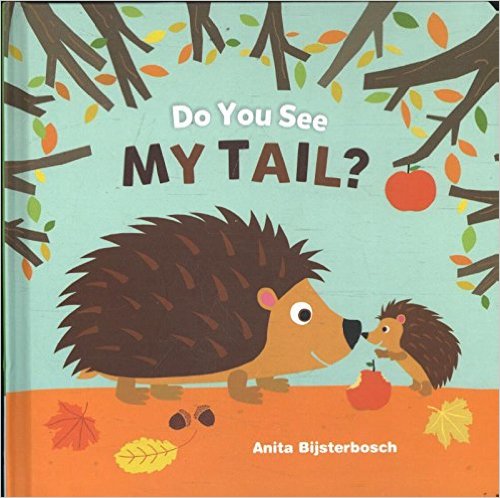
do-you-see-my-tailDo You See My Tail? (March 2017, Clavis Books, $12.95, ISBN: 978-1605373201) introduces readers to seven animals – well, seven animal tails; the rest of the animals are hidden behind local flora. The text drops a hint, and a gatefold reveals the full answer: an animal family! The repetitive question/answer format, and greeting to the animals and their babies, creates a fun discovery experience for little hands. An extra challenge: find the little ladybug hiding on every spread.

Preschoolers will like being able to control finding out more about the animals and learning about animal habitats: beavers play in a nest of tree trunks and branches, rabbits in a hole under the ground. Toddlers will love the excitement of discovery and the very cute artwork.

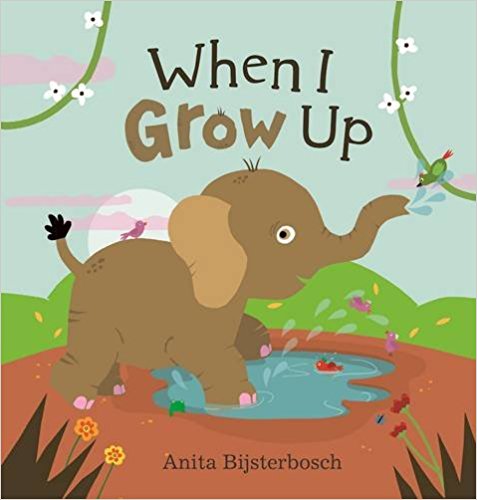
Whewhen-i-grow-upn I Grow Up (April 2017, Clavis Books, $14.95, ISBN: 978-1605373348) features six young animals who dream about what they’ll be able to do once they grow up: a little lion who can only growl softly now will be a big lion whose roar will be heard by all the animals; a little giraffe whose nose barely touches the leaves in a tree will one day be able to reach everything with his long neck. Die cut pages let readers flip the page to reveal the adult animal in the young animal’s place within the same setting.

As with Do You See My Tail?, When I Grow Up offers toddlers the excitement of discovery, with something new on every page. The pages are sturdy and will hold up to multiple page flips (always a concern in my library). Preschoolers can focus on habitats, food, and other animals sharing the living spaces.

Originally published in 2016 in Belgium and Holland, these are fun new choices to bookshelves and collections.

Posted in Early Reader, Non-Fiction, Non-Fiction, Preschool Reads

Do you like to play? Animals do, too!

animals-doAnimals Do, Too!, by Etta Kaner/Illustated by Marilyn Faucher, (May 2017, Kids Can Press), $16.95, ISBN: 9781771385695

Recommended for ages 4-8

Do you like to dance? Do you like to play leapfrog? Play tag? Well, guess what: animals do, too! This fun book features pictures of families at play on one spread, and a corresponding spread on the next two pages, with a group of animals engaged in the same fun. The alternating question and answer format engages kids right away, and the activities that we humans do for fun, while animals do them to find food and care for their young will spark discussion with young learners.

Animals Do, Too! features animals that differ from the usual farm and jungle animals kids meet in their books. Sure, we’ve got bumblebees and frogs, but we also meet cattle egrets and marmosets, gazelles and leaf-cutter ants. A spread at the back of the book provides fast facts about each animal in the book.

There is some lovely watercolor work here, featuring lovely nature scenes. The families are enjoying one another, and the animals are playful while completing their everyday work. The parallels between humans and animals should engender interest and empathy in kids and will start some great conversations – ask the kids around you to think of animals they see every day: what does a cat do that a person does? (Stretching is a good one!) What does a dog do that a person does? (Jump and play!) You can create matching games that match the activity with the animal, for younger learners; bonus: they get to color.

The question and answer pattern of the text invites kids to interact with the text and gives them a chance to contribute before revealing the answer on the following spread. This is a good additional purchase for nature, life science, and animal collections.

Posted in Early Reader, Graphic Novels, Intermediate, Non-Fiction, Non-Fiction

Something’s Fishy introduces kids to fishy fun

fishy_1Something’s Fishy, by Kevin McCloskey, (April 2017, TOON Books), $12.95, ISBN: 978-1-943145-15-7

The man behind Toon’s Easy to Read Giggle and Learn series is back again with his fun blend of science and art. Something’s Fishy teaches young readers about fish – from the ABCs (there’s a fish for every letter of the alphabet), to biology, to the history of keeping goldfish as pets, Mr. McCloskey uses his acrylic and gouache artwork to illustrate all kinds of fish. He also discusses responsible pet ownership by mentioning that some fish, while popular film characters, aren’t really supposed to be pets: they’re much happier in their natural environments. A just-about-actual-size rendering of a foot-long goldfish will make readers giggle… and learn!

I love the trend of graphic novels as nonfiction texts, and Kevin McCloskey’s work for young readers and listeners are among some of my favorites. We Dig Worms and The Poop On Pigeons are in constant rotation at my library, and I can’t wait to introduce kids to fish with Something’s Fishy. His books make for excellent nonfiction storytime reading and pair nicely with picture books. You can very easily pair Something’s Fishy with Rainbow Fish, Lois Ehlert’s Rain Fish, or any number of fish or sea life-related stories. This is a fun add to nonfiction collections and a great gift for your younger Nemo and Octonauts fans.


Posted in Early Reader, Fiction, Fiction, Intermediate

A boy and his friend must act fast to save The Last Tree

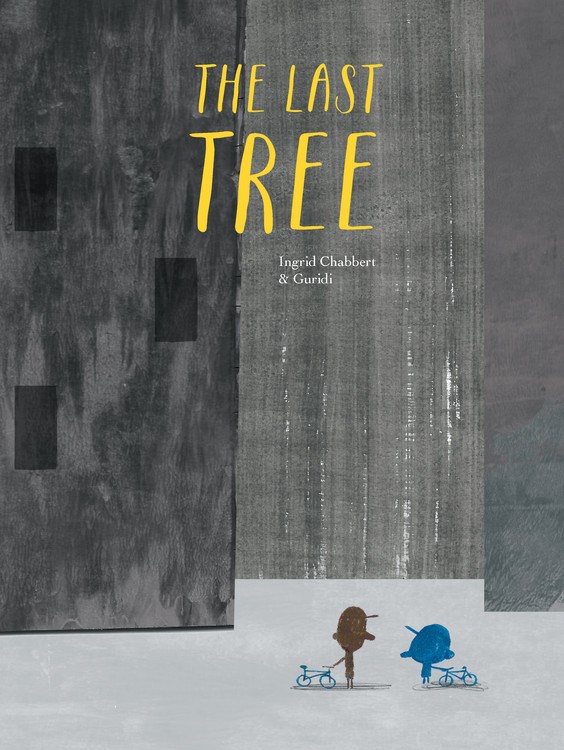
last-treeThe Last Tree, by Ingrid Chabbert/Illustrated by Guridi, (April 2017, Kids Can Press), $17.95, ISBN: 9781771387286

Recommended for ages 4-7

A boy listens to his father describe running and playing in the grass as a child, but has only a concrete playing area with a diminishing patch of grass available to him. One day, the boy and his friend discover a baby tree – a sapling, really – hidden behind a wall and are amazed: it’s the first tree they’ve ever seen up close. The boy goes home and discovers, to his horror, that a luxury condo complex is scheduled to begin construction right in the very spot where the tree is growing, and the boys spring into action to save the last tree.

This is a powerful look at how lack of green spaces affects children. Ingrid Chabbert’s narrator is an adult, looking back on his childhood, and how important saving that tree was to him and his friend. It sends a message about the importance of conservation and preservation today, and offers some hope for tomorrow. Artist Guridi communicates this message using charcoal, gravure ink, gouache, pencil, and digital art to create a spark of hope in the grey, bleak future that faces us as we see more green spaces disappear under development.

A strong addition to collections for Earth Day, conservation units, and to empower kids who may not understand that they can have a long-lasting impact on the world with the smallest and kindest of acts. The Last Tree invites a discussion on empathy by examining the boys’ actions and asking children to contribute by sharing a time when they took action to help someone or something that needed it.


Posted in Graphic Novels, Middle Grade, Non-Fiction, Non-fiction, Tween Reads

Science Comics Explores Bats

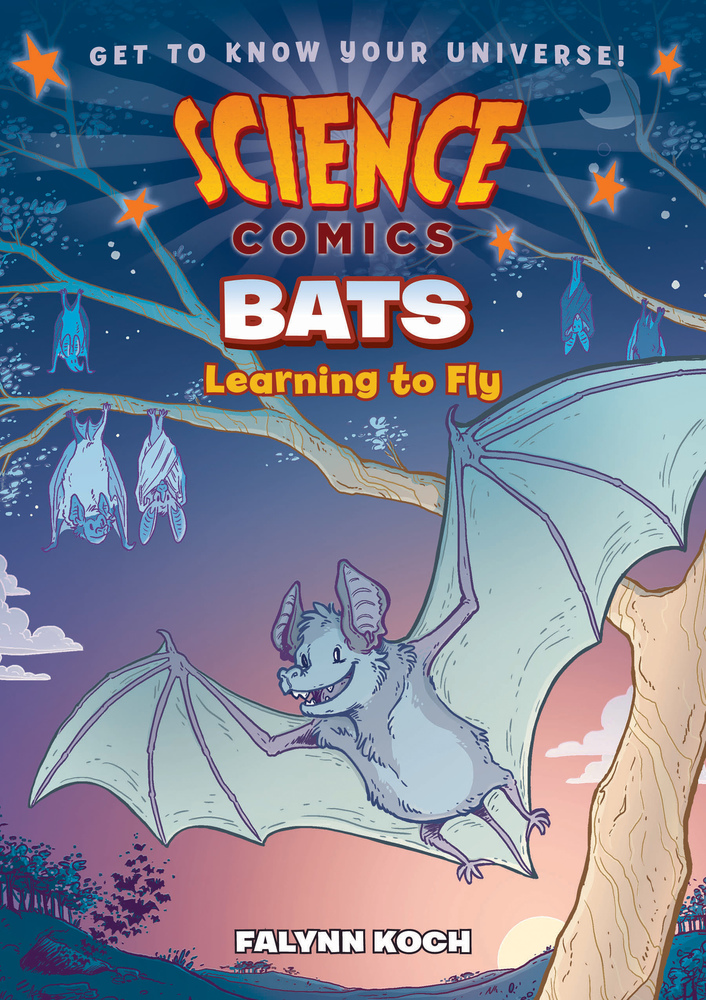
batsScience Comics: Bats – Learning to Fly, by Falynn Christine Koch, (Feb. 2017, First Second), $12.99, ISBN: 9781626724082

Recommended for ages 8-13

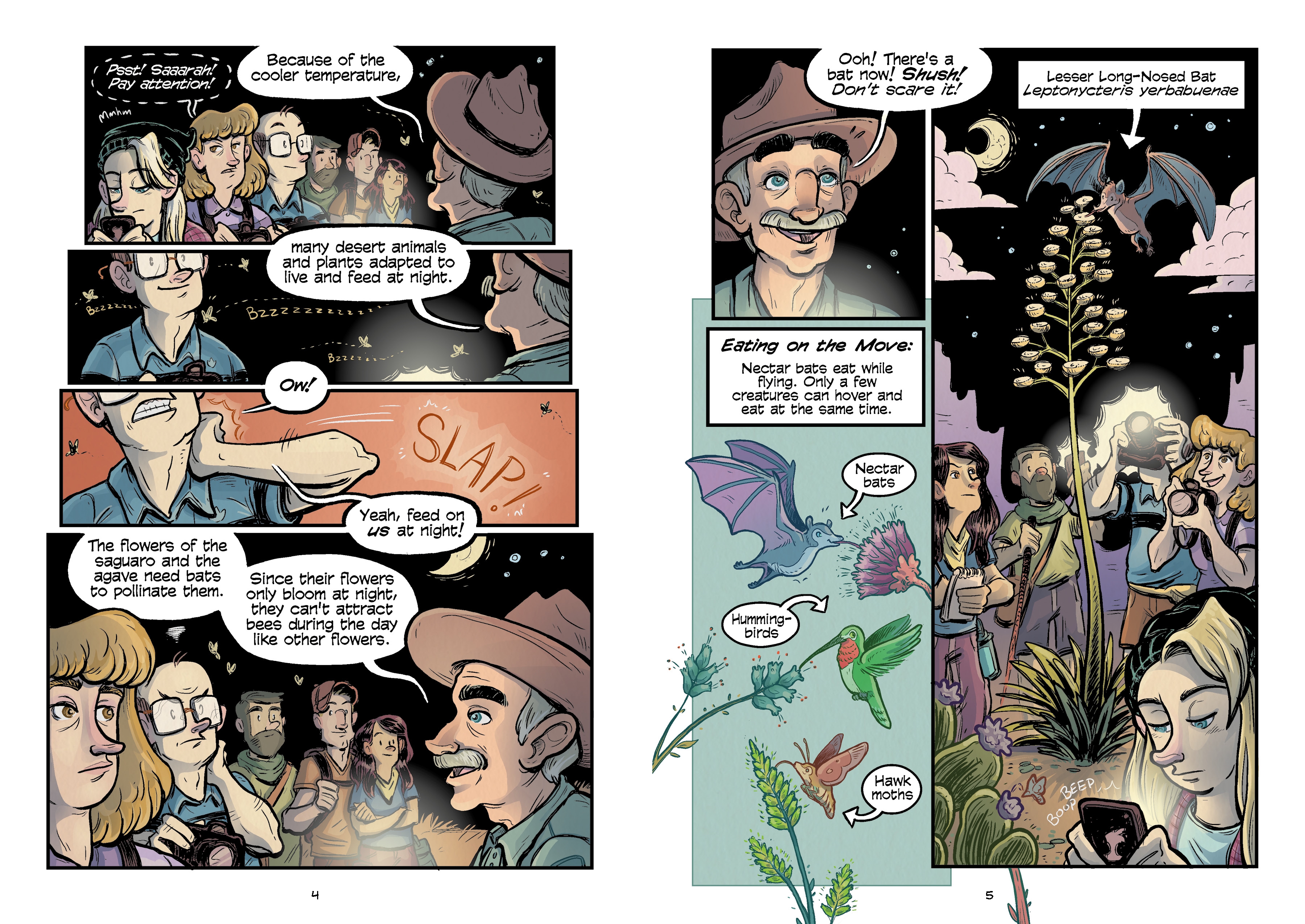
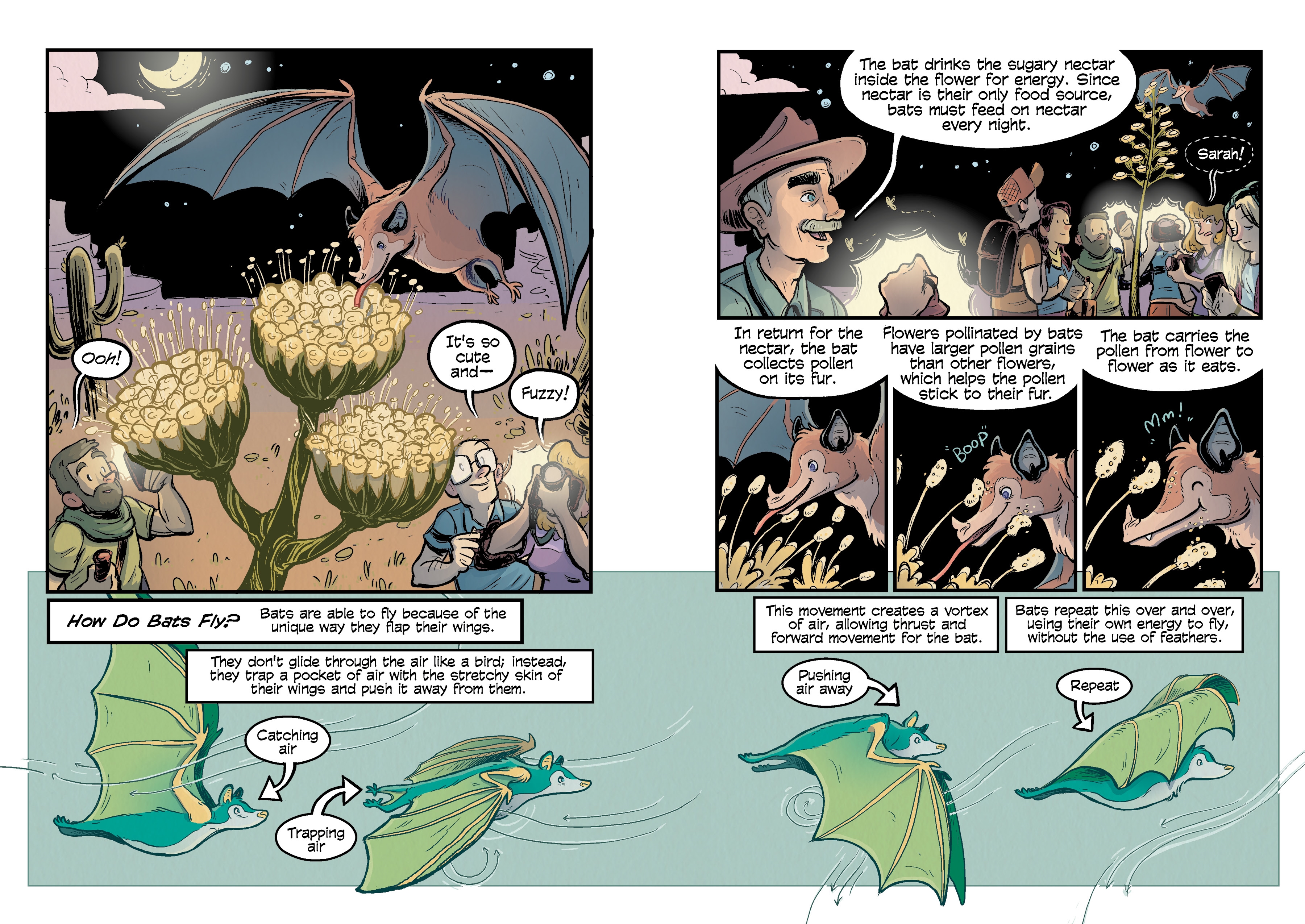
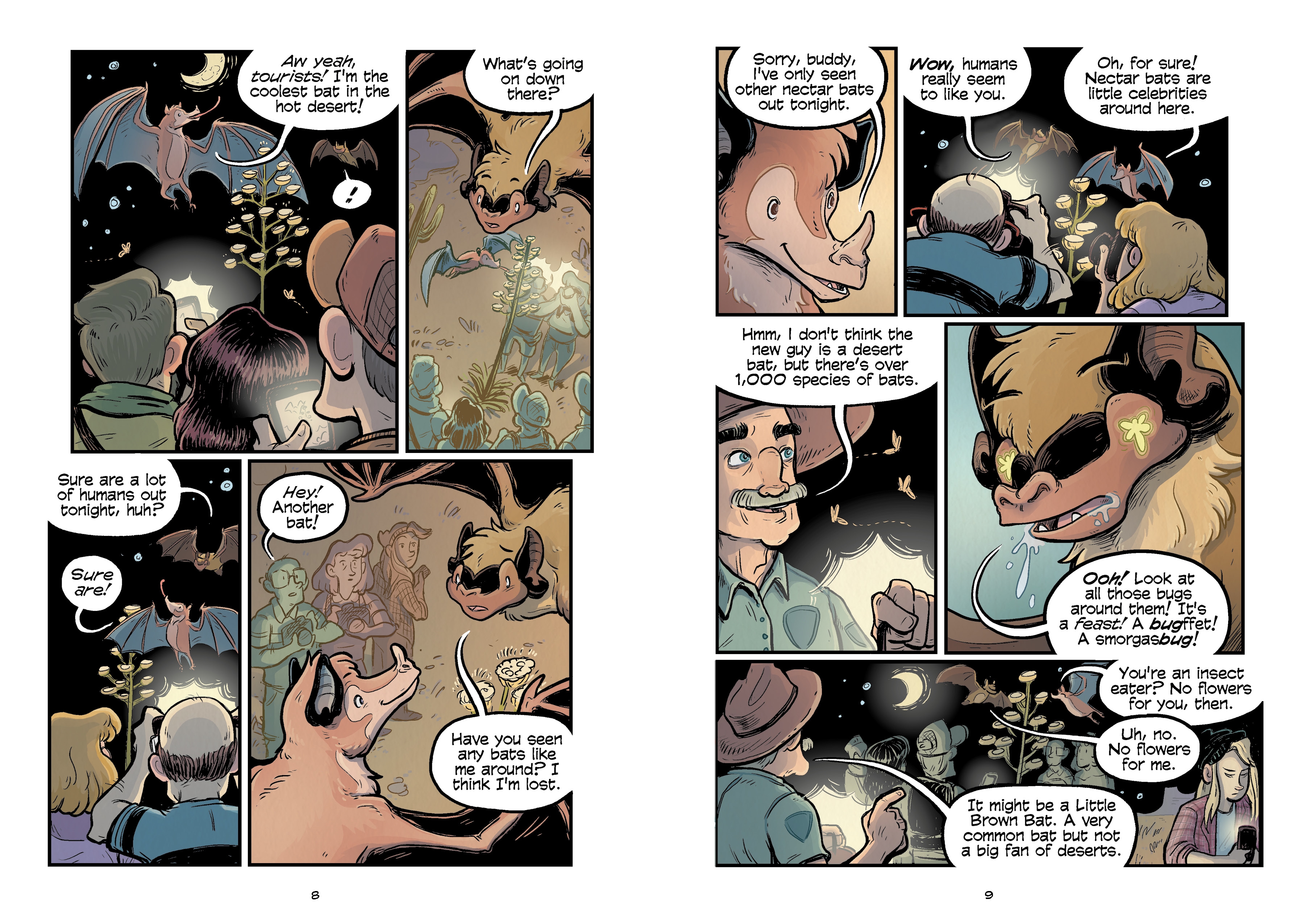
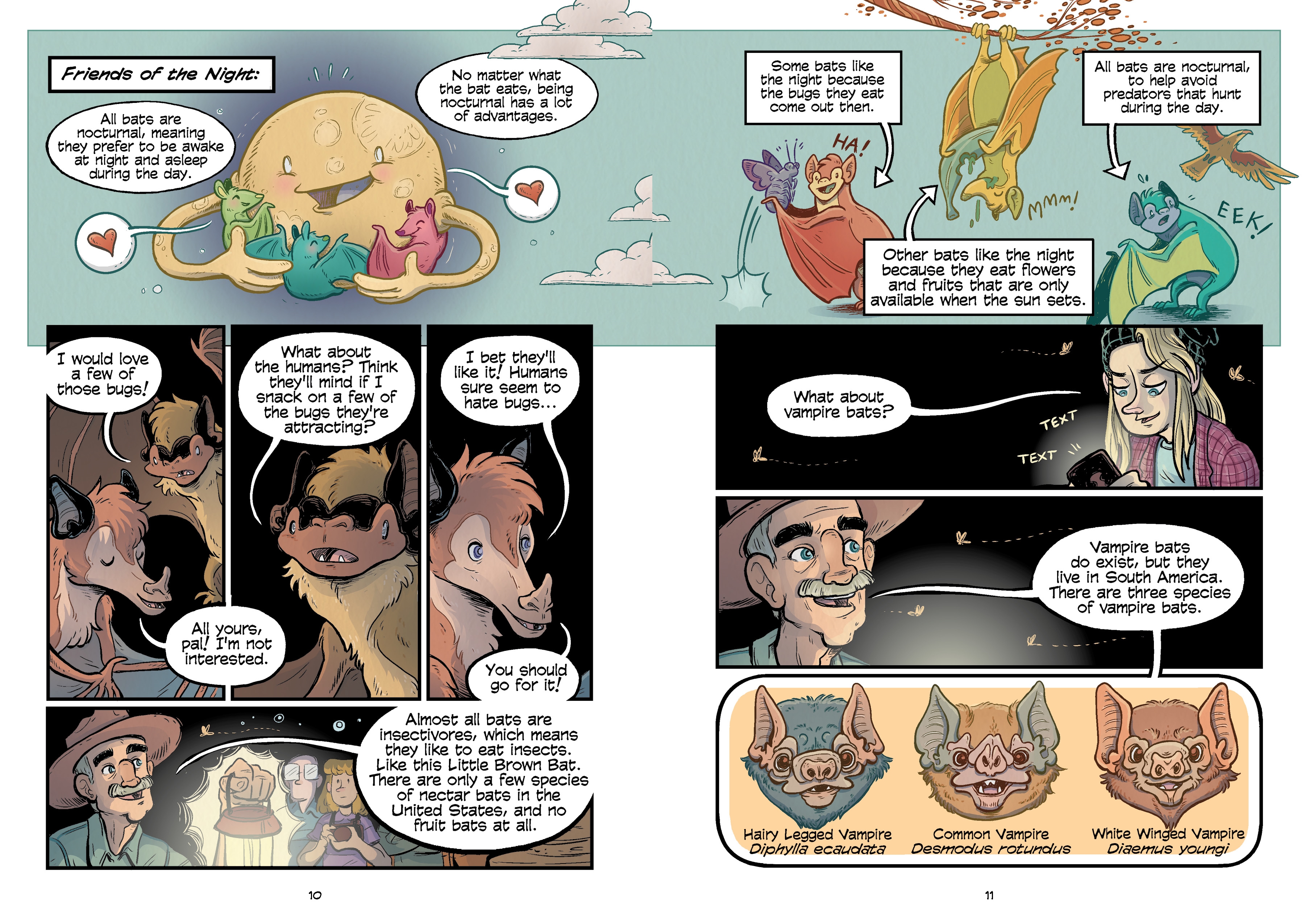
The latest volume of Science Comics introduces kids to bats. The information is pulled together with a story about a little brown bat whose wing is injured by humans on a nature hike. He’s taken to a rehabilitation center, where he meets bats of different species. Little Brown, as he’s called by the other bats, learns what the other bats eat, how they fly, live, and sadly, how their homes are invaded by humans. The information is comprehensive and there’s a call to conservation and preservation for kids, which I always appreciate.

I enjoy Science Comics because it’s easily an digestible, thorough introduction to a subject that doesn’t talk down to kids, nor does it speak over their heads. The illustrations are interesting and technically on point, and the fictional narrative that ties each volume together is interesting and fun, keeping the reader’s attention. I’ve got every issue of Science Comics (Coral Reefs, Dinosaurs, Volcanoes) so far, and Bats will join them on my shelves. I display mine with related series nonfiction, lest kids worry about a “comic book” not satisfying their research requirements, and I booktalk them every chance I get. If you’re a teacher, have these in your classroom and use them when you cover these topics – your kids will thank you.

bats_1bats_2bats_3bats_4

Posted in Intermediate, Middle Grade, Non-Fiction, Non-fiction, Non-Fiction, Tween Reads

Holiday Shopping: Nature

First tech, now nature. This latest round of holiday gift ideas looks at science and nature books. These are perfect for the kid who loves to be outdoors and wants to know more about our world and the animals he or she shares it with.

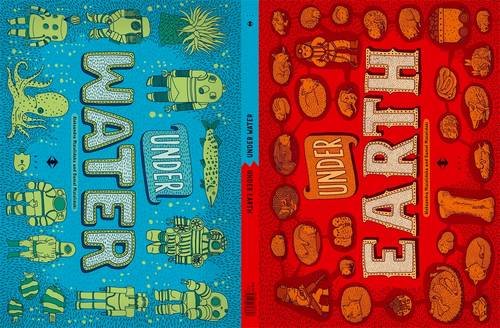
underwater_2Under Earth, Under Water, by Aleksandra Mizielinska and Daniel Mizielinski, (Oct. 2016, Candlewick Press), $35.00, ISBN: 978-0-7636-8922-3

Recommended for ages 7-12

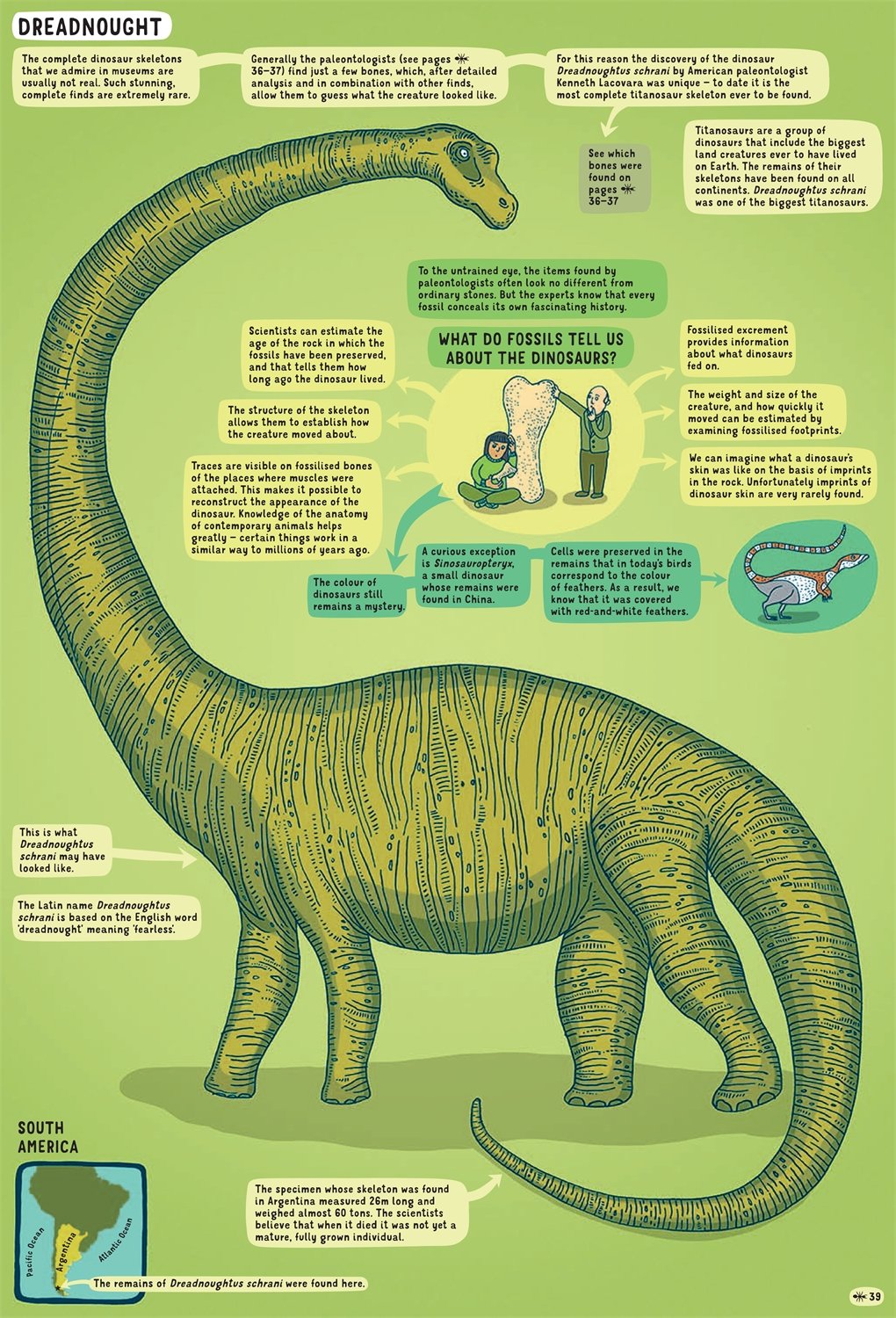
This book is stunning. It’s two books in one, each examining our worlds just below the surface: water and earth. The illustrations are amazing, and kids will flip as they see the inside of an anthill, take a look at an archaeological dig, check out a history of submarines, or tag along for a tour of the Mariana Trench. I can’t get enough of this book, and kids who love natural science won’t, either. Check out this spread on a Dreadnoughtus schrani!

underwater_5


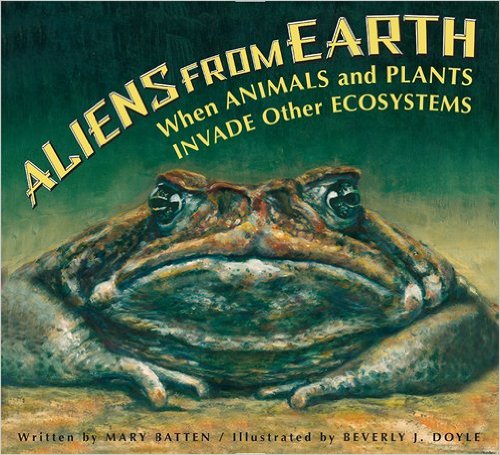
aliens-from-earthAliens From Earth: When Animals and Plants Invade Other Ecosystems, by Mary Batten/Illustrated by Beverly J. Doyle, (March 2016, Peachtree Publishers), $16.95, ISBN: 978-1-56145-900-1

Recommended for ages 9-12

Aliens From Earth takes a fascinating look at what happens when animals or plants invade a new habitat, upsetting an ecosystem’s balance. Fire ants, gypsy moths, even the cute little starlings that I see every morning when I head to work are all in here. Introducing an invasive species into an ecosystem unprepared for it can be responsible for the spread of disease, loss of habitat for current inhabitants, and reduction of natural resources for an area. This volume is beautifully illustrated by artist Beverly J. Doyle, whose acrylic paintings make me feel like I’m walking through a museum exhibit as I read. Previously published in 2006, Aliens from Earth is an Izaak Walton League of American Conservation Book of the Year. Give this to kids who are interested in environmentalism, preservation, and conservation.


oceanpediaUltimate Oceanpedia, by Christina Wilsdon, (Nov. 2016, National Geographic Children’s Books), $24.99, ISBN: 978-1426325502

Recommended for ages 7-13

Know a kid who would live in the aquarium if she or he could? Fascinated by fish, crazy for sea turtles, smart about sharks? The Ultimate Oceanpedia is the book for them. Stunning photos accompany entries on earth’s oceans, sea life, exploration, weather, the coast, and conservation of our underwater habitats and saving sea life. There are fast facts, stats, food webs, and maps galore. Sections on climate change and offshore drilling take on today’s big issues and present the facts without bias, letting readers form their own opinions. A call to action provides simple ways kids can help make the world a better, cleaner, healthier place to live. A glossary and in-depth resources encourage kids to keep learning and changing the world around them for the better.

These books are all available right now and are dying to go home with you! Shop your local bookseller, or click on over to Amazon, Barnes & Noble, Books-a-Million, or Indie Bound to buy.

Posted in Intermediate, Middle Grade, Non-Fiction, Non-fiction, Non-Fiction

Extreme Wildfire takes kids to the front lines of fire fighting!

extreme_wildfire_coverExtreme Wildfire: Smoke Jumpers, High-Tech Gear, Survival Tactics, and the Extraordinary Science of Fire, by Mark Thiessen, (Aug. 2016, National Geographic Kids), $12.99, ISBN: 9781426325304

Recommended for ages 8-12

It can go from a spark to a flame in almost no time. It can devour homes and forests alike, leaving destruction and devastation in its path. NatGeo Kids brings readers to the front lines of wildfires, and the people – largely volunteers – who fight them, in Extreme Wildfire.  Author Mark Thiessen is a NatGeo photographer and certified wildland firefighter has photographed countless fires over the last 20 years; Extreme Wildfire represents part of a lifelong project: to create a visual record of what these firefighters do.

Extreme Wildfire discusses the science behind wildfire; how firefighters battle the flames and how lookouts spot potential fires on the horizon; the equipment used in combating fire, the devastation – and nature’s adaptation – that fire leaves in its wake, and how communities come together to help one another. Chock full of facts and call-out boxes with more information, plus an emphasis on fire safety and prevention to finish up the book, this a good addition to nonfiction collections. There’s a glossary, list of resources, and index.

The kids in one of my library’s neighborhood schools have a unit on natural disasters every year. I’ve ordered two copies of this book – my Corona Kids know how much I love NatGeo books – to have available for them when the time comes around this year. It’s also a good book to have on display if you have fire safety talks. There are some good fire safety and education resources online, including Science for Kids Club and The Kids Should See This.

extreme_wildfire_14-151Photo courtesy of Chat With Vera.