Posted in Intermediate, Non-Fiction

Explore our natural world with Wilderness: Earth’s Amazing Habitats

Wilderness: Earth’s Amazing Habitats, by Mia Cassany/Illustrated by Marcos Navarro, (Apr. 2019, Prestel Publishing), $19.95, ISBN: 9783791373720

Ages 6-12

There are incredible wildernesses all over the world. Wilderness: Earth’s Amazing Habitats is an introduction to 16 rare plant and animal habitats across the world, from the Amazon Rainforest in South America to the Tropical Rainforest of New Guinea. It’s also a call to action, reminding readers that these wildernesses require protection to keep them safe; Mia Cassany cites deforestation and human intervention as having a disastrous impact on the habitats and the species that live within. So let’s take a look at, as author Mia Cassany says, “the most stunning nature show on earth”!

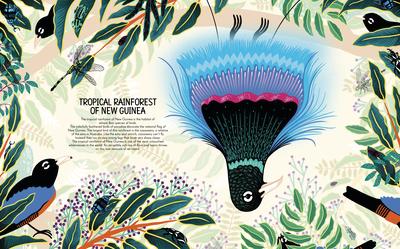
Beautifully illustrated endpapers bring you into the book with large, colorful tropical leaves – and eyes peeking out of the darkness – drawing you into the wildnerness from the beginning. An opening spread contains an author note on the importance of conservation and preservation, and a world map includes illustrated points where habitat is located. Two-page spreads feature stunning, full-bleed illustrations of every habitats; a brief description gives readers an idea of location and species inhabiting each spot, but it’s the art that’s front-and-center here. Bright, colorful, and lush, we see lowland gorillas peering out of the brush in Kahuzi-Biéga National Park in the Congo; a colorful, day-glo spread starring a panda, wild golden monkeys, and golden pheasants in China’s Qinling Mountains, and a stunning gecko camouflaged against leaves in the tropical rainforest in Madagascar. Back matter provides animal names, locates them on the page (they can be hard to spot!), and a brief, informative paragraph on each.

This is a beautiful coffee table book, and a nice addition to your natural history collections. It’s not a standalone book, but a gorgeous companion book to any unit on habitats and nature studies.

 

Posted in Early Reader, Non-Fiction, picture books, Preschool Reads

Natural world nonfiction for young learners: See to Learn: Forest

See to Learn: Forest, by Kate Moss Gamblin/Illustrated by, Karen Patkau, (March 2019, Groundwood Books), $16.95, ISBN: 9781554988792

Ages 4-7

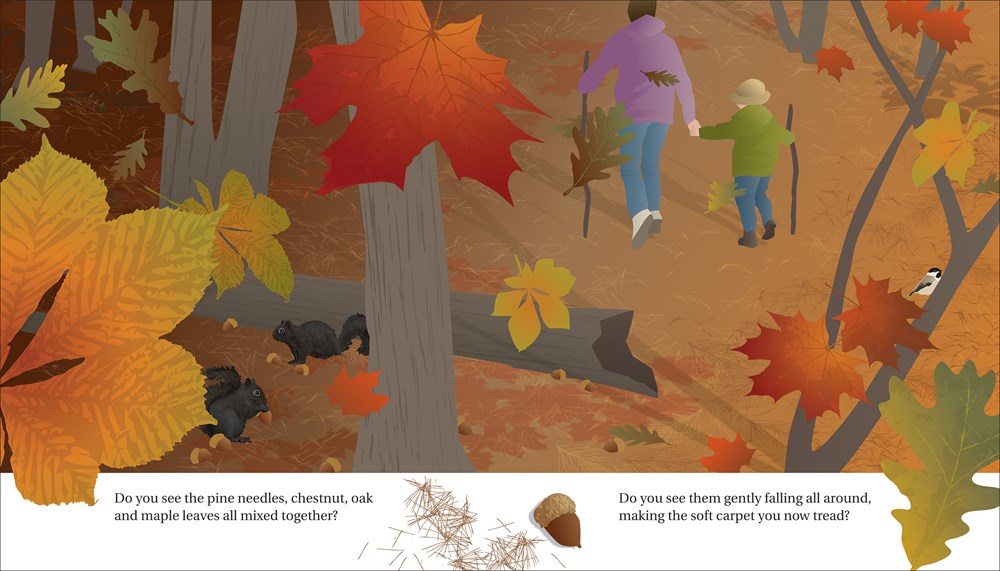
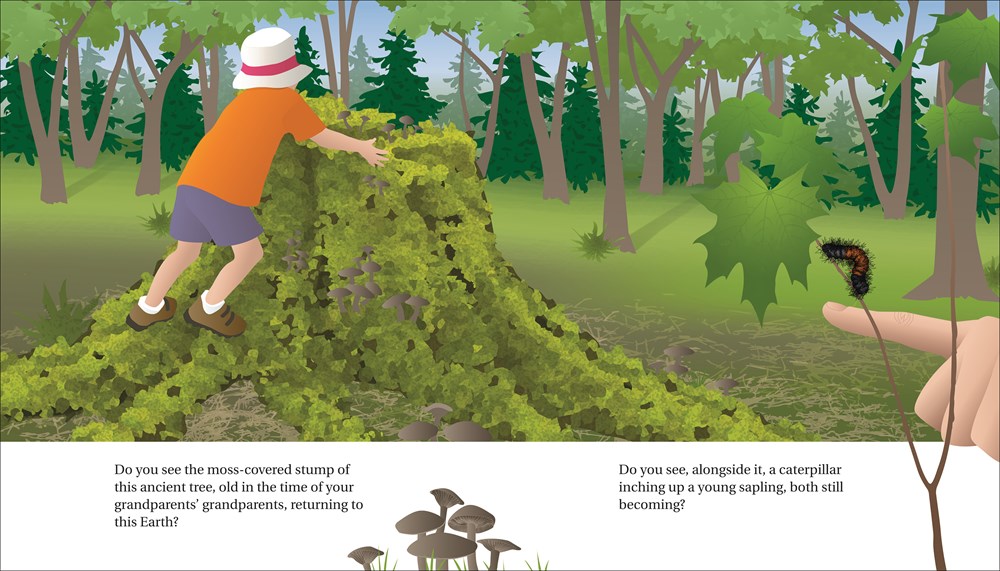
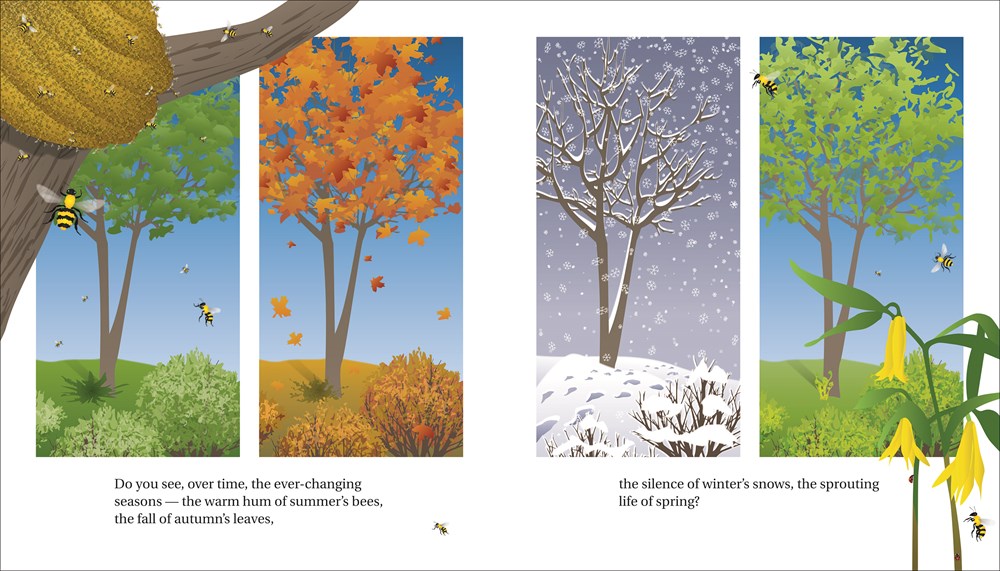
This first book in a new nonfiction picture book series encourages little learners to look at a location – in this case, a forest – and really see: see different footprints that travel the forest floor; the different leaves carpeting the ground; moss covering a stump. Forest encourages readers to think: is that moss older than your grandparents? What changes do seasons bring with them? What happens during the passage of day to night?

The quiet text promotes introspection, curiosity, and presence, and the interrelationships between nature – trees are referred to as our “cousins” – and our planet. Everything here exists for readers to observe and ponder, and Forest encourages them to think of nature, the world, and their place in it.

This is a great way to talk about the natural world and basic concepts with kids: talk about colors, talk about different functions, talk about different stages of life, whether you’re a human grandparent or a young caterpillar. We all age; we all exist; we all interact with the natural world. Let kids see themselves in nature, and they’ll respect it and care for it. Further reading provides additional resources for younger and middle grade readers. An author’s note explains the rationale and thinking points for the series.

I’m looking forward to more books in this series. See to Learn: Forest is a great addition to primary and elementary science collections and programming. This will fit nicely with Kate Messner’s nonfiction books, Over and Under the Snow, Over and Under the Pond, and Up in the Garden and Down in the Dirt, for elementary readers; for primary readers, you can’t miss with Laura Vaccaro Seeger’s books, Green and Blue; and Denise Fleming’s In the Tall, Tall Grass, and In the Small, Small Pond.

Posted in picture books, Preschool Reads

A search for the Biggest Puddle in the World and a lesson on the water cycle!

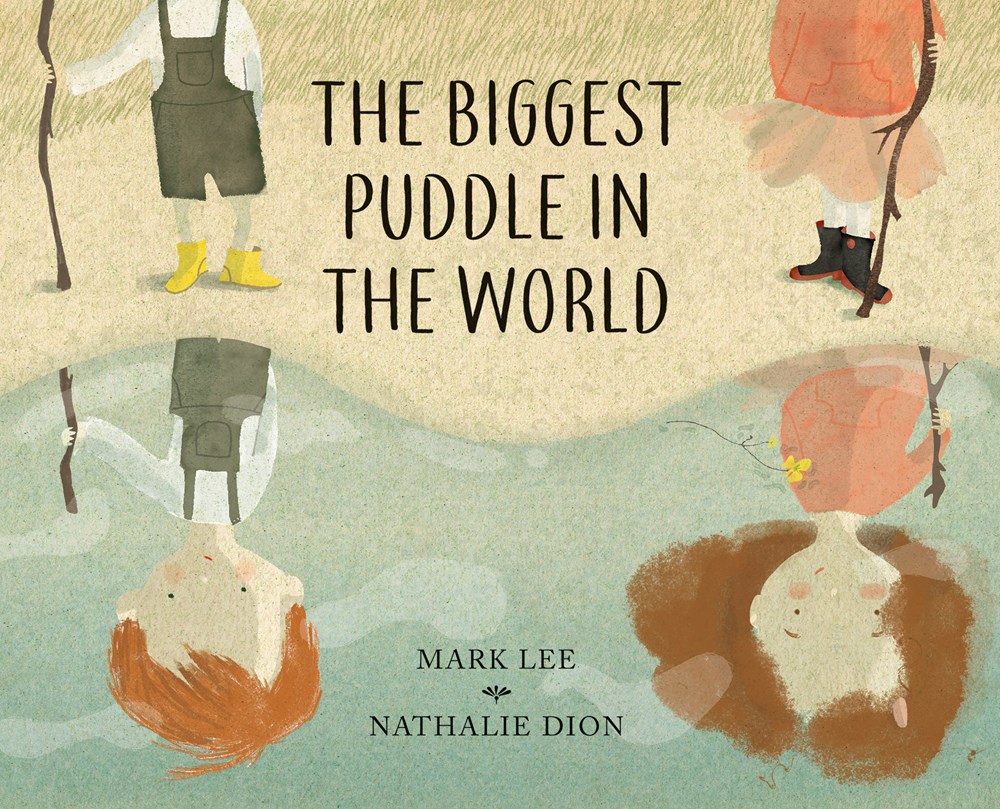
The Biggest Puddle in the World, by Mark Lee/Illustrated by Nathalie Dion, (March 2019, Groundwood Books), $18.95, ISBN: 9781554989799

Ages 4-7

Siblings Sarah and Charlie go to stay with their grandparents for six days; at first, it rains, allowing the two to explore the old house, but they’re itching to get outside and wander. Finally, the weather lets up, and they head out, with their grandfather, on a nature walk. Big T, their grandfather, promises to show them the biggest puddle in the world, and encourages Sarah to keep a puddle map; all the while, explaining the water cycle: the rain comes down and collects in the puddles; the water in the air become the clouds in the sky. The clouds are made up of water from ponds and rivers and the biggest puddle in the world, which, the kids discover, is the ocean!

This is a great way to lead in to a discussion and/or lesson about the water cycle. The story and illustrations are all about the joy of being a kid: they enjoy spending time with grandparents; jump in puddles; explore nature, and find ways to keep themselves occupied when stuck inside on rainy days. Big T gives them a simple, illustrative way to understand the water cycle and how puddles collect, form bigger puddles, and eventually, become part of the clouds, which bring the rain. He encourages learning, and invites the kids to use hands-on learning by exploring and mapping their day.

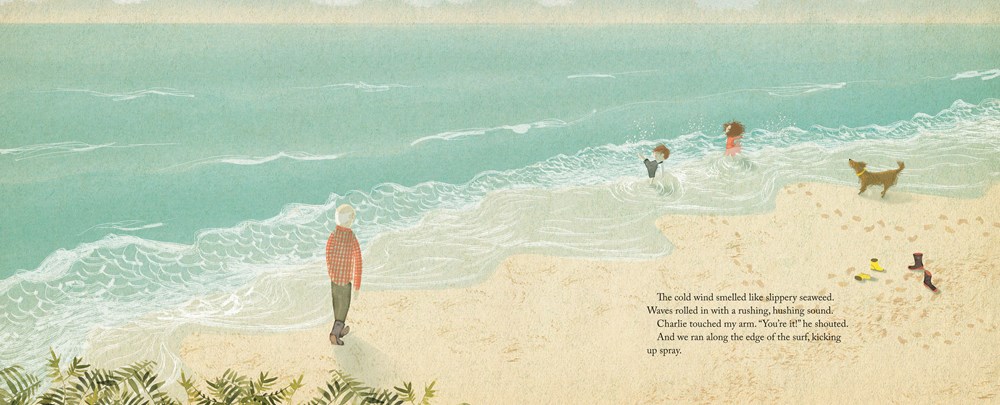
The real and digital watercolor artwork is soft, with earth tones and faded colors, allowing nature to calmly take its place as the focal point of the story. Grasses gently move in an imagined breeze; the ocean stretches across a spread as Big T watches his grandchildren and their dog play, boots left on the sand.

A nice bridge between fiction and nonfiction, and a good addition to science storytime.