Posted in Early Reader, Non-Fiction, picture books, Preschool Reads

¡Más libros en español: peces y insectos! / More books in Spanish: Fish and Insects!

When I got back to my library just under two months ago, I discovered some bookmail waiting for me: two books in Spanish, courtesy of Peachtree Publishing! They’ve been wonderful about keeping me updated on their bilingual and Spanish nonfiction books, and I’ve loved the “About…” series they’ve sent me so far, so I wanted to make sure I gave these two books the love they deserve (and a place on my Spanish collection shelves).
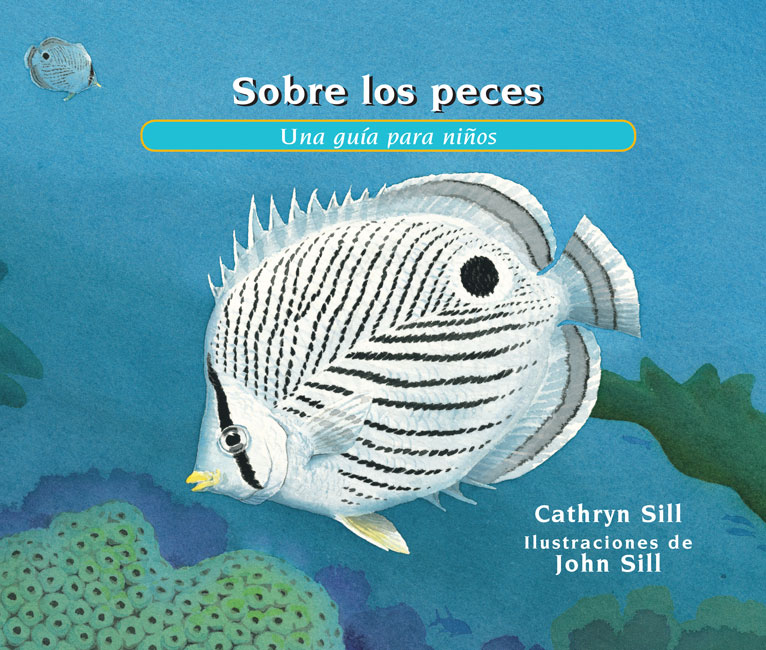
Sobre los peces, by Cathryn Sill/Illustrated by John Sill, (Feb. 2020, Peachtree Publishers), $8.99, ISBN: 978-1-68263-154-6

Ages 3-7

Great early reader nonfiction. Sobre los peces is entirely in Spanish, and offers readers a look at the basics of fish: where they live, how they adapt to their environment, what they eat, how they reproduce. The text is written in easy-to-read, easy-to-understand, simple sentences, and each spread includes colorful, realistic paintings of different fish throughout. The text is presented in bold, black font against a white background, not competing for the reader’s attention; each painting includes the name of the fish, to increase understanding and forward the fact that there are a LOT of fish out there! Back matter includes more information about each spread: did you know that tropical fish are usually more vibrantly colored than fish from cold waters? It helps them camouflage better in their surroundings! A glossary and bibliography offer more resources for curious readers.

Peachtree includes a link to a free, downloadable Teacher’s Guide for the whole series. The guide is in English, but pair with some Spanish-language information like this page on National Geographic España, this story on sharks from TeachersPayTeachers creator, The Storyteller’s Corner, and this graphic organizer from TeachersPayTeachers creator Dual Language, Dual Fun.


Sobre los insectos, by Cathryn Sill/Illustrated by John Sill, (Feb. 2020, Peachtree Publishers), $8.99, ISBN: 978-1-68263-155-3

Ages 3-7

More great books in translation from Peachtree! About Insects is translated entirely into Spanish, with easy-to-read, easy-to-understand sentences introducing readers to the basics about insects: how many legs they have (it’s 6, not 8!), their hard exoskeletons, how they change forms as they get older, what they eat and how they eat, and how they are helpful to us humans (and how some are just plain pests). Colorful paintings by John Sill are realistic and detailed, making a naturalist out of every reader; the environments are textured, often lush, and there’s always something to draw your eye, from the movement of water as a trout jumps to catch a fleeing mayfly to the shadowy leaves in the background as a katydid leaps. Details on each painting, a glossary, and bibliography make up the back matter.

While the Teacher’s Guide is currently available in English, you can find more information about insects at National Geographic España, and there are copious free resources on TeachersPayTeachers, including a reader about The Hungry Insects from The Spanglish Senorita, bilingual bug bingo from onlinefreespanish, and a  counting sheet from The Spanish Amigo.

Thanks again, Peachtree!

Posted in Middle Grade, Non-Fiction, Non-fiction, Tween Reads

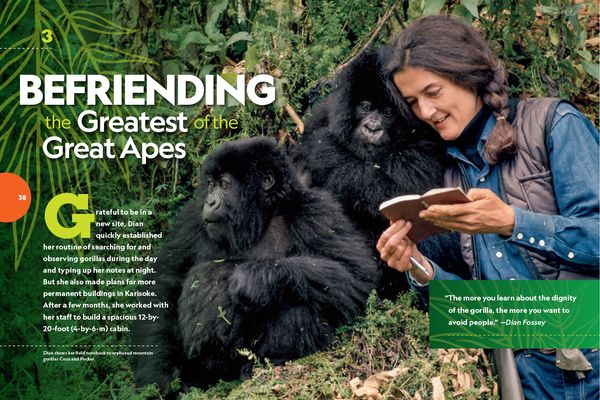
Unforgotten: The Wild Life of Dian Fossey remembers a conservationist icon

Unforgotten : The Wild Life of Dian Fossey and Her Relentless Quest to Save Mountain Gorillas, by Anita Silvey, (June 2021, National Geographic Kids), $18.99, ISBN: 9781426371851
Ages 8-12
Primatologist, conservationist, and advocate for mountain gorillas, Dian Fossey, brought to the screen by Sigourney Weaver in the 1988 film Gorillas in the Mist, is introduced to new audiences with Unforgotten: The Wild Life of Dian Fossey and Her Relentless Quest to Save Mountain Gorillas. Companion to Anita Silvey’s books on Jane Goodall (Untamed) and Biruté Mary Galdikas (Undaunted), Unforgotten is a testament to Dian Fossey’s life advocating for mountain gorillas and fighting against the poachers who would slaughter them. The book touches on Dian’s special connection to the gorillas, with gorgeous photos featuring Dian with them, cuddling and carrying orphaned babies and interacting with guides and children, all in her quest to educate everyone around her about the amazing creatures we share the planet with. The book discusses her murder and the work that continues to this day, in her name. Colorful maps and profiles on apes that Dian befriended, like Uncle Bert and Poppy, run throughout the book, as do callouts and spreads on the lives of mountain gorillas. Back matter on Dian’s legacy and her gorilla fund, a gorilla scrapbook with photos and biographies of the gorillas she lived with, and a timeline of Dian Fossey’s life will give readers an understanding and, hopefully, a love for the world Dian Fossey fought to protect. An excellent biography and book on conservationism.
Unforgotten has a starred review from Shelf Awareness. Read more about Dian Fossey’s Gorilla Fund here, and at the Gorilla Fund.
Posted in picture books, Preschool Reads

Read a book, hug the Earth, it’s Earth Day!

Some more books to love our Big Blue Dot by…

The House of Grass and Sky, Mary Lyn Ray/Illustrated by E. B. Goodale (April 2021, Candlewick Press), $17.99, ISBN: 9781536200973

Ages 4-8

The touching story of a house that wants to be a home will appeal to little ones and their grownups alike. Once, the house “smelled of sunshine and new lumber”, and a family filled its days and nights with love and laughter. Families came and families went, but the house always waited, knowing a new family was on the way. Until there wasn’t. The house quietly waited, and bit by bit, nature claimed the area. Lonely, the house keeps its vigil… and is rewarded when a new family moves in, reclaiming the home, filling it with love, laughter, and family once again. It’s a gentle, moving story of memory, nature, and embracing renewal. The mixed media illustrations make the home as much a character of the story as the people in it. One spread shows the house standing alone, among shadows of memories: someone playing ball, a child with a wagon; someone on a tree swing. Mary Lyn Ray’s prose makes the house become real with sentences like, “The house learned about babies being born and babies growing up. It learned about bedtime stories and birthday parties.” Endpapers display an older wallpaper, giving a nice feel to the story. Just a beautiful, touching book that makes you want to find an old house and fill it with the love you have to give. Think about all the ways you can show your home love: plant some new plants, even if you live in an apartment. Repurpose old t-shirts and make them into throw pillows or quilts. There are so many things you can do!

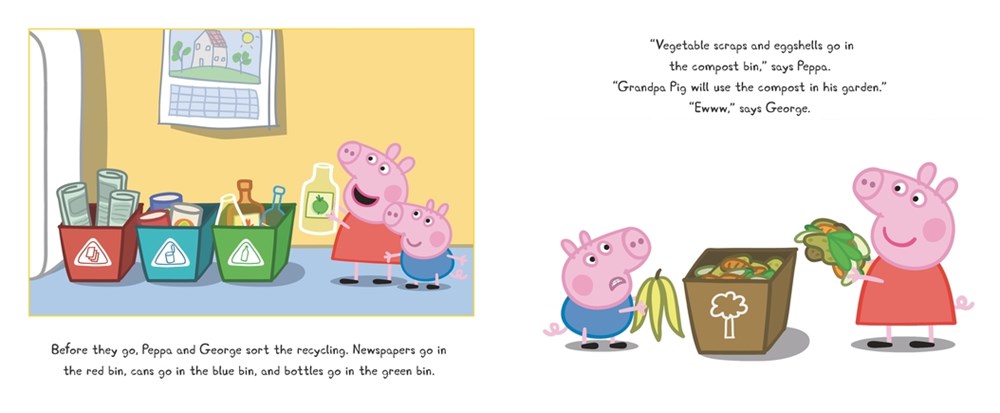
Peppa Pig and the Earth Day Adventure, by Candlewick Press, (March 2021, Candlewick Press), $12.99, ISBN’: 9781536218985
Ages 2-5
It’s a new Peppa PigI! Today is Earth Day, and Peppa and her family are off to the Botanical Gardens once they finish sorting the recycling and composting. They get into Roger, the electric car, and head off for a fun day of learning how bees and flowers work together, see a Venus flytrap eat a fly, and play in the children’s garden! The kids in my library system love Peppa Pig, and this book will circulate like wildfire. Visit Peppa Pig’s website for Peppa news and activities.
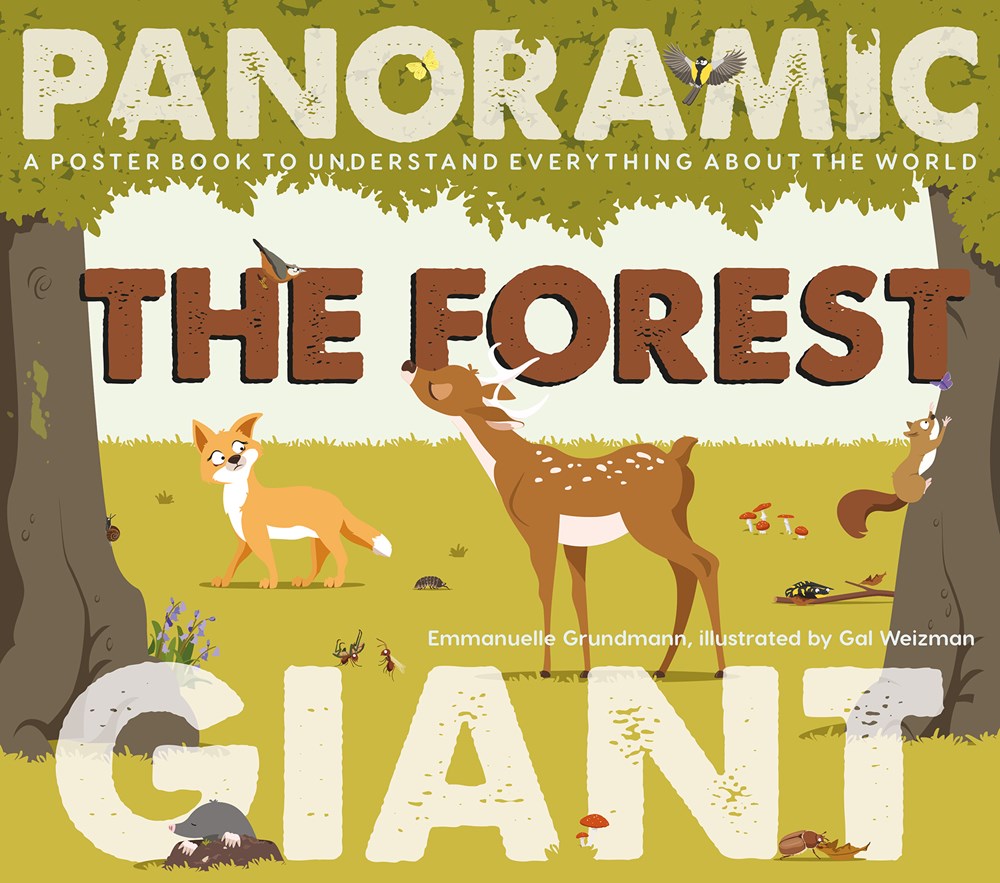
The Forest : A Poster Book to Understand Everything about the World, by Emmanuelle Grundmann/Illustrated by Gal Weizman (March 2021, Schiffer Kids), $14.99, ISBN: 9780764360992
Ages 5-8
It’s a poster book! It’s a giant fold-out book! It’s both! Unfold each page to read a new piece of information about the forest, and enjoy a seek and find that continues on each section. The book opens up into a giant poster that spans more than 2 feet! Great for a science club/Discovery Club program, kids will love watching you unfold page by page as you read about ants, frogs, badgers, and more forest friends.
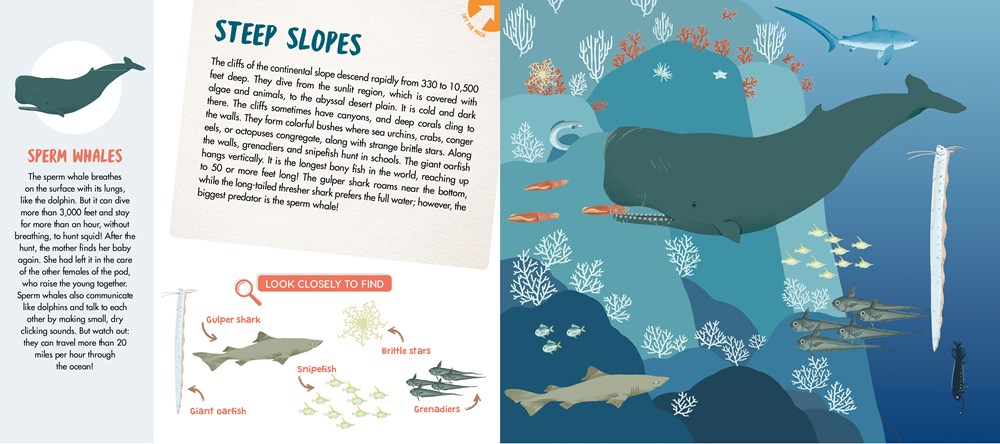
The Sea: A Poster Book to Understand Everything about the World, by Véronique Sarano/Illustrated by Anine Bösenberg & Loris F. Alessandria (March 2021, Schiffer Kids), $14.99, ISBN: 9780764361005
Ages 5-8
The companion to The Forest, The Sea is another panoramic poster book. Seek and find fish and urchins and learn about underwater cliffs, and underwater life like plankton, krill, dolphins, and sperm whales. The poster unfolds into a giant underwater scene, seek and finds leading the way with a turn of the page. Great for science programs, and keep at least one copy in your Reference section while you put one in circ – it may get beaten up, despite the sturdy pages. The Panoramic series is a fun way to explore the world!
Posted in Fiction, Intermediate, Middle Grade, Non-Fiction, Non-fiction, Non-Fiction, Tween Reads

Earth Day essentials!

Earth Day is getting closer, friends! I’ve got more fun to celebrate Earth Day every day!

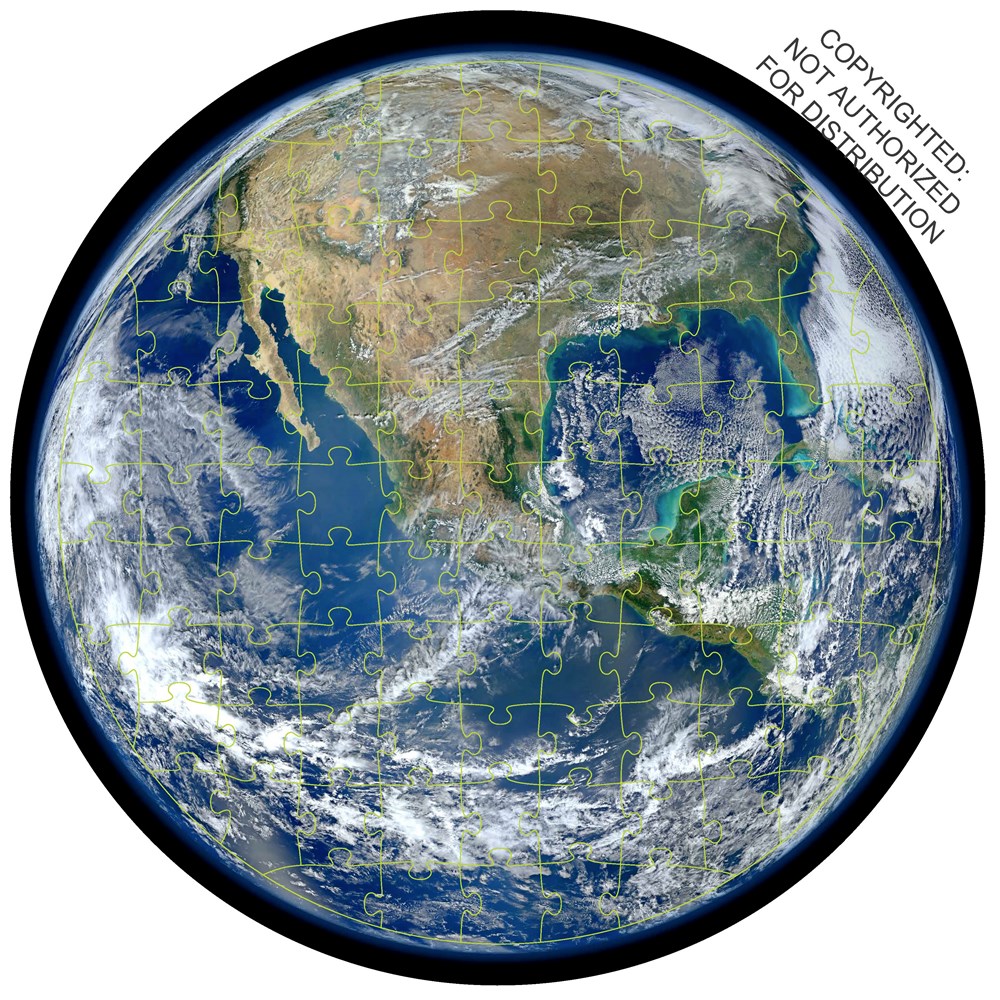
Earth: 100 Piece Puzzle (Featuring Photography from the Archives at NASA), (April 2021, Chronicle Books), $19.99, ISBN: 9781797202723

Ages 6+

This is a slight deviation from books, but how can you go wrong with an Earth-shaped puzzle of the Earth, using a NASA photo? The puzzle is a nice size, at 2 1/2 feet in diameter; pieces are large and sturdy, as is the storage container. It’s a beautiful shot of Earth from space that will delight you as it comes together. This puzzle is a companion to Chronicle’s Moon and Mars puzzles, for anyone interested in building their own universe. A fun, hands-on way to support astronomy and science learners! My Kiddo and I have been trying to put it together for a few weeks now, and it’s coming along; I’ll have to post the finished product.


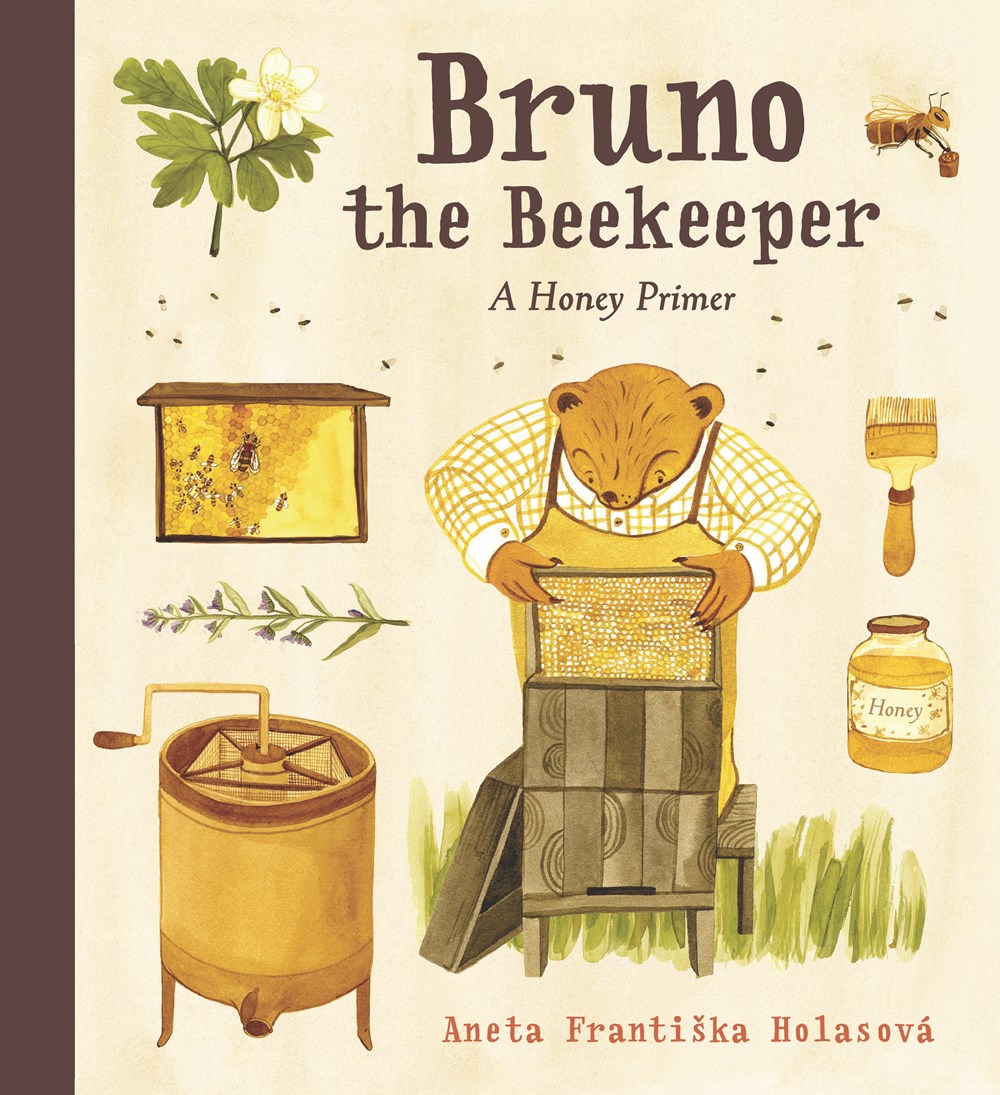
Bruno the Beekeeper: A Honey Primer, by Aneta Frantiska Holasová, (March 2021, Candlewick Press), $19.99, ISBN: 9781536214611

Ages 7-10

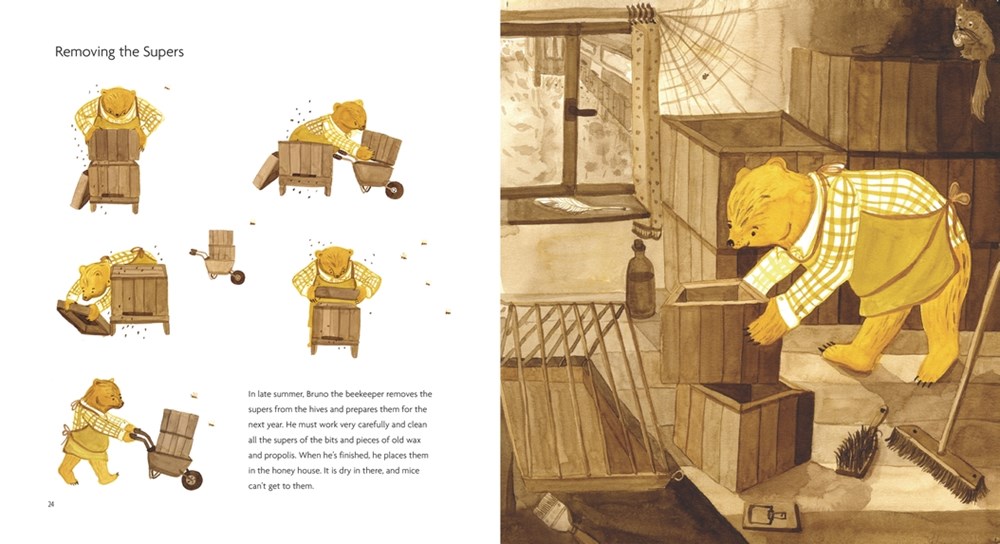
Bruno is a beekeeping bear, having inherited his grandfather’s apiary. Together with his human Grandma, he spends his time caring for the bees and harvesting their honey in this introduction to beekeeping and the life cycle of bees. Organized into seasons, with warm, honey-colored illustrations, readers learn the different types of bees and their functions within the hive; parasites and predators to watch out for, and they watch Bruno as he goes about the business of cleaning and preparing the hives for the next year. Side notes about Grandma’s part in the beekeeping: helping Bruno prepare the hives, making beeswax candles, and delicious gingerbread cookies with the harvested honey! A lovely book about beekeeping and bees for the season, with a gingerbread cookie recipe and an index. Display with Katherine Pryor’s Bea’s Bees, Maribeth Boelts’s Kaia and the Bees, Candace Fleming and Eric Rohmann’s award-winning Honeybee: The Busy Life of Apis Mellifera, and Alison Formento’s These Bees Count! for a nice bee-related display.


And coming soon…

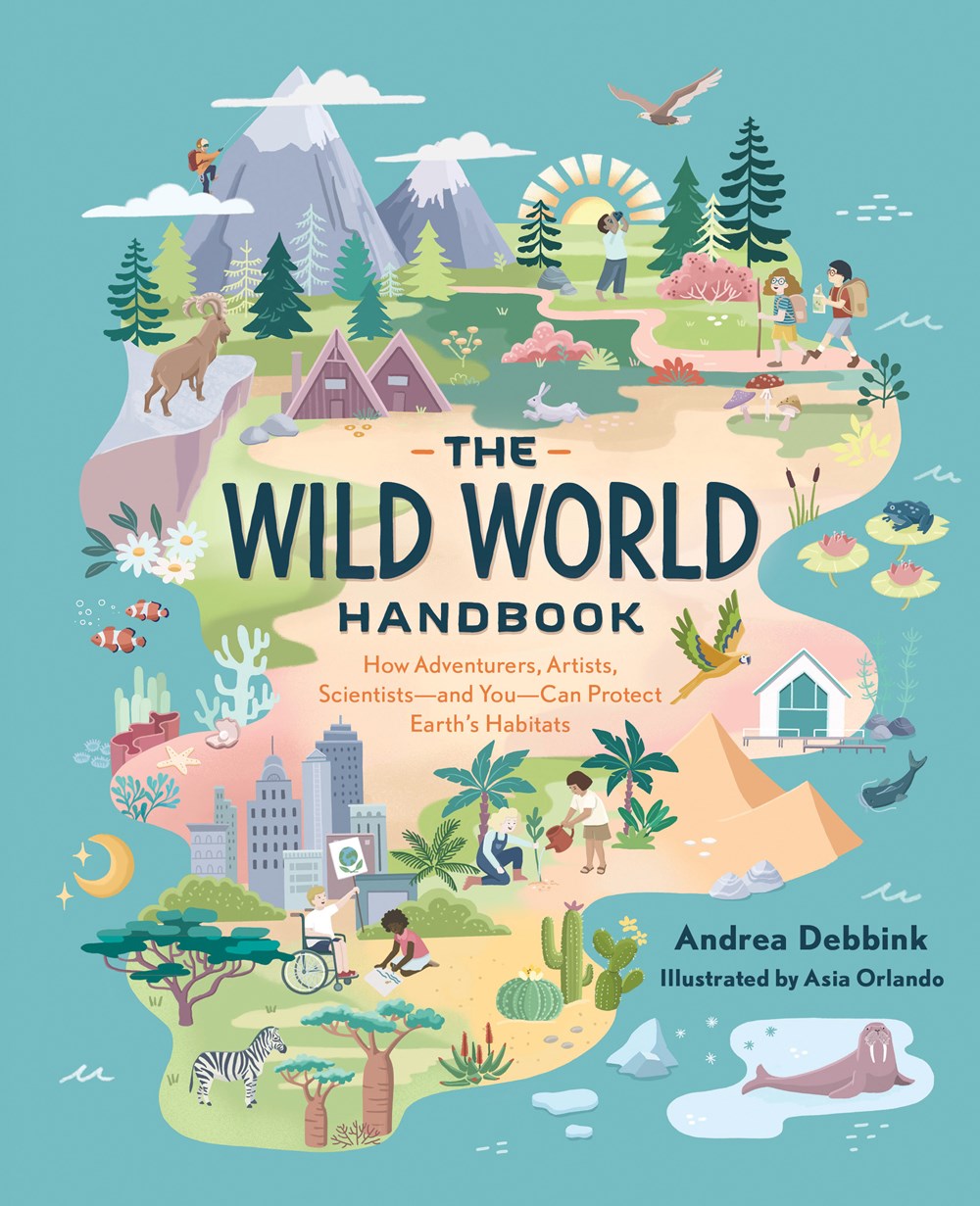
The Wild World Handbook: How Adventurers, Artists, Scientists – and You – Can Protect Earth’s Habitats, by Andrea Debbink/Illustrated by Asia Orlando, (May 2021, Quirk Books), $19.99, ISBN: 9781683692461

Ages 8-12

The first in a new middle grade series, this volume of The Wild World Handbook focuses on habitats. Organized into nine habitats, from mountains to grasslands, the handbook includes biographical profiles on outdoor scientists, artists, and activists; DIY crafts to give kids a hands-on learning experience and understanding of their world, natural wonders to be found in each habitat, and ways kids can take part in being stewards for the planet. Plan an expedition to the Himalayas or visit an underwater world; make a desert or rainforest biome or learn to press flowers and plants. This is another program-in-a-book treasure for us librarians, and a beautiful, full-color guidebook to earth advocacy for kids. Just in time to get the kids out and about for summer, make sure to display with the upcoming Outdoor School series from Macmillan and Odd Dot.

Posted in Early Reader, Non-Fiction, Preschool Reads

Two nonfiction titles get updates ¡en español!

Peachtree Publishing has been rolling out more Spanish-language and bilingual children’s titles. They’ve started translating their Stanley the Hamster series into Spanish this year, and I just received early copies of two of their nonfiction titles, coming in 2021. I’m so excited to talk them up!

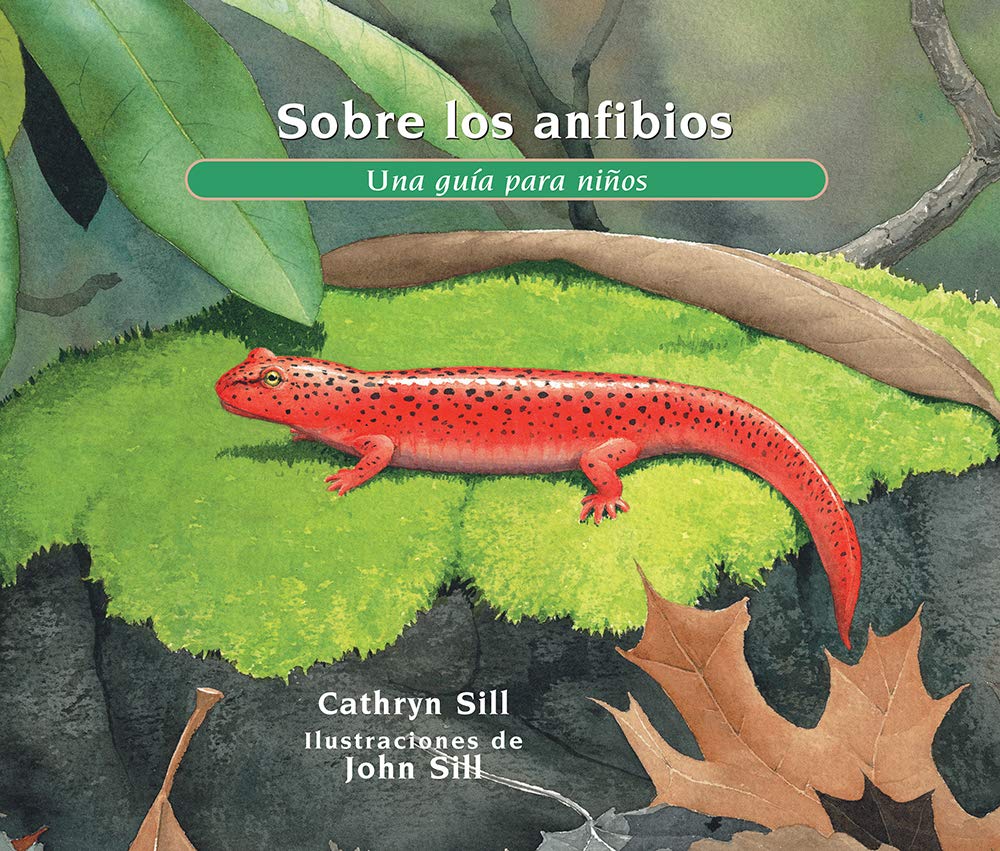
Sobre los anfibios: Una guía para niños, by Cathryn Sill/Ilustraciones de John Sill, (Feb. 2021, Peachtree Publishing), $8.99, ISBN: 9781682632307

Ages 4-6

The first up is About Reptiles: A Guide for Children, a 2016 titles by Cathryn Sill and John Sill. Great reading, perfect for pre-k and emerging Kindergarten readers, this book is illustrated in full color, with incredibly detailed pictures of salamanders, frogs, and toads. Each page has a brief sentence in Spanish that introduces readers to different aspects of amphibians: “Los anfibios tienen la piel suave y húmeda” (“Amphibians have smooth, moist skin”); “La mayoría de los anfibios pasa parte de su vida en el agua y parte en la tierra” (“Most amphibians spend part of their lives in water and part on land”). The text goes on to describe how they are born; life cycles; appearance; predators and defense mechanisms; habitat, and eating habits. A word about protecting their habitats is a nice opportunity to talk about the environment and habitat protection. Each page includes the name of a featured amphibian and maps to a numbered series of photos in the back matter, which provides more information for more confident readers, and parents/caregivers/educators who want to provide a deeper dive into a lesson. A glossary, web sources, and additional books provide a nice go-to for readers who want to learn more.

There is a teacher’s guide available via the publisher’s website; it’s currently in English, but I know they are developing materials in Spanish and will update as I learn more.


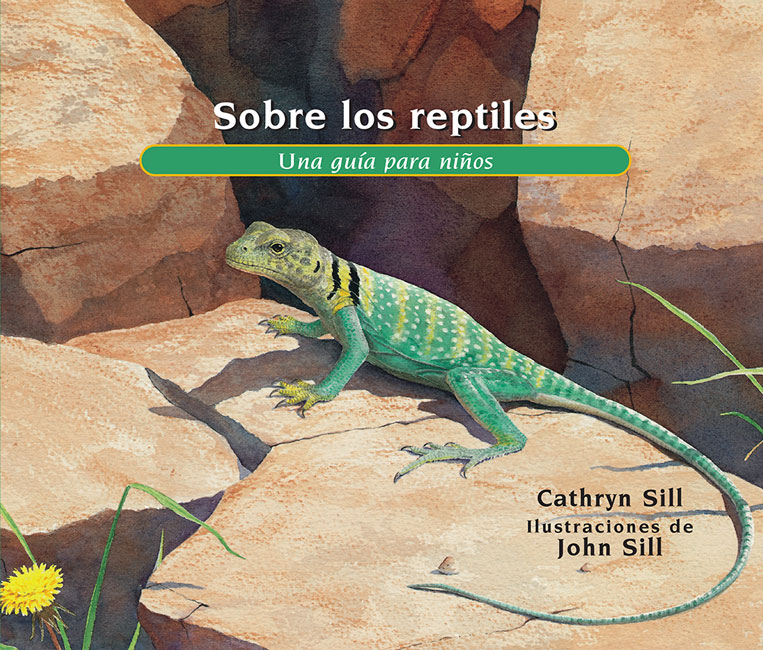
Sobre los reptiles: Una guía para niños, by Cathryn Sill/Ilustraciones de John Sill, (Feb. 2021, Peachtree Publishing), $8.99, ISBN: 9781682632314

Ages 4-6

About Reptiles: A Guide for Children, also by Cathryn Sill and John Sill, provides the same easy text and lifelike animal illustrations. The translation is flawless, and communicates the important, basic properties of reptiles for kids: “Algunos repitles están cubiertos de placas duras como huesos” (“Some reptiles are covered in hard plates like bones”); “Los reptiles tienen las patas cortas o simplemente no tienen patas” (“Reptiles have short legs or simply no legs”); “Se muevan reptando o nadando” (“They move by crawling or swimming”). There’s more to work with here; reptiles can include snakes, tortoises and turtles, lizards, and crocodiles, which can live on land, in water, or move between both. Great, fast facts, easy reading, and further information available makes this series a huge relief for my easy nonfiction collection.

There’s a real need for Spanish-language nonfiction in my library’s community, and these books fit the bill. I love having easy picture book nonfiction available that can be used in a Discovery/STEM club readaloud, a storytime (come on, you know you want to read this along with Jump Frog, Jump!), even using flannels to let readers discover the natural world. With an $8.99 price tag for these softcovers, this is an affordable way to add series nonfiction to my Spanish collection. I’m thrilled that Peachtree is working on expanding their Spanish language collection: there are other bilingual editions at the end of the books, letting readers know what other titles are coming.

Posted in Non-Fiction, Tween Reads

Where’s the Coolest Stuff on Earth? In this book.

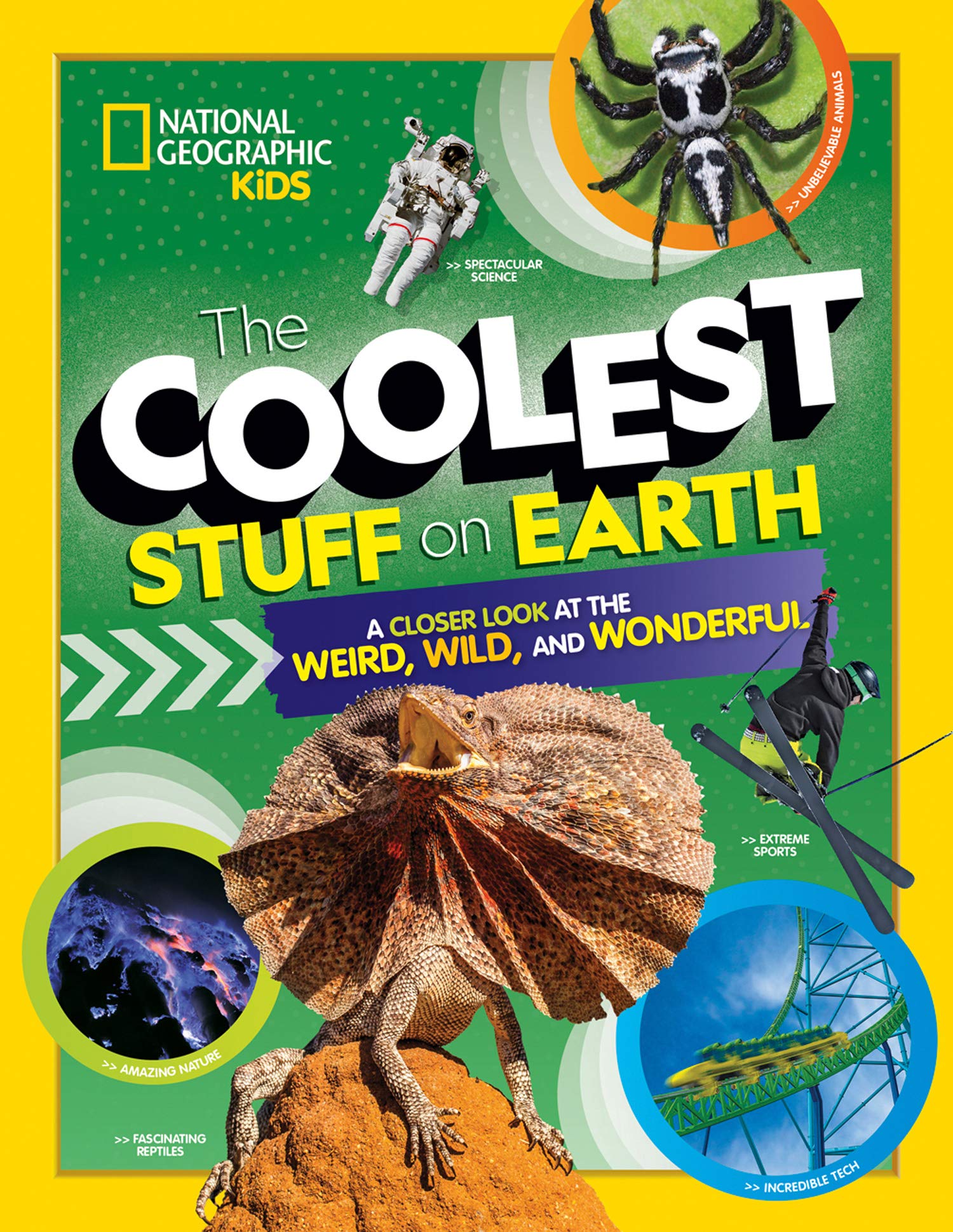
The Coolest Stuff on Earth: A Closer Look at the Weird, Wild, and Wonderful, by Brenda Scott Royce, (Nov. 2020, National Geographic Kids), $19.99, ISBN: 978-1426338588

Ages 8-13

More fantastic facts and photos from NatGeo Kids! Kids can take an armchair world tour with The Coolest Stuff on Earth. Organized into nine areas, kids can learn through stories, photos, infographics, Q&A with expert, and maps: Magnificent Marvels looks at world wonders, where readers can dive into the Secrets of Stonehenge. Travel Unraveled is all about the wacky and wild sites worldwide, and Extraordinary Animals profiles everything from dolphin language to what happens when animals hibernate. History’s Mysteries looks at ancient Pompeii through to California’s Golden Gate Bridge, and Shocking Science offers info about astronauts and technology. Peculiar Planet is all about the natural world, and Spectacular Sports shows readers the science of physical movement. Money Decoded features the secrets of the U.S. $1 bill, and Epic Extremes – one of the most popular reading areas for my library’s kids – is all about the coolest, most extreme stuff going, like deep-ocean robotics and giant sequoia forests. Back matter includes a full index.

The NatGeo books are always popular for a reason. Great gift idea, essential collection development, all around fun. Display and booktalk with Atlas Obscura: Explorer’s Guide for the World’s Most Adventurous Kid, by Dylan Thuras and Rosemary Mosco/Illustrated by Joy Ang.

Posted in picture books, Preschool Reads

The Blue Giant needs your help to save the oceans!

The Blue Giant, by Katie Cottle, (June 2020 Pavilion), $16.95, ISBN: 9781843654452

Ages 3-7

A young girl named Meera and her mother head to the beach to have a relaxing day, when a large, friendly, blue giant emerges from the water. He’s made up of water and sea life, and he tells them that he needs their help! Meera and her mom put on their scuba gear and head underwater, where the giant swirls around, showing them all the pollution underwater: bottles, plastic bags, fast food containers, it’s just a mess! Meera and Mom immediately start pitching in, but they realize this is too big a job for just two people: once back on land, Meera and Mom recruit others, who also recruit others, to clean up the beaches. Like the book says, “…when everybody helps out… even the biggest messes can be fixed!” A note at the end offers ways to reduce single-plastic usage, including easy ways for kids to help out, like taking a canvas bag to the store or carrying a reusable water bottle.

This is a companion to Katie Cottle’s 2019 book, The Green Giant, and examines a different area of pollution this time; where The Green Giant looks at deforestation and destruction of green spaces, The Blue Giant pleads the case for our waters, which are horrifically polluted, primarily by single-use plastics.

The illustrations are primarily rendered in shades of blue, with sweeping underwaterscapes that show incredible levels of junk floating around. A particularly moving panel shows the Blue Giant swirling around Meera and her mother, stirring up a whirlwind of garbage to surround them. Keep both this book and The Green Giant together for natural-world storytimes and Earth Day storytimes, activism and social justice storytimes.

Posted in Middle Grade, Non-fiction, Tween Reads

STEAM into Summer!

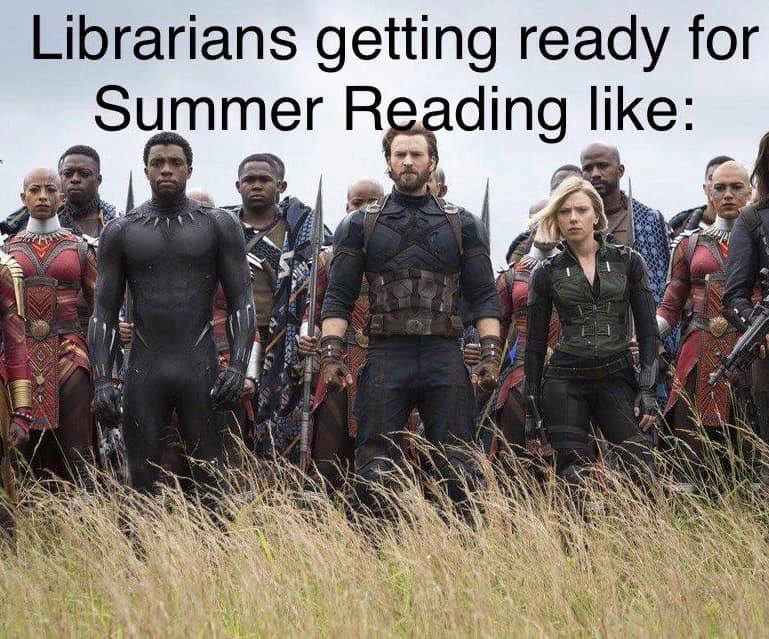
Summer Reading is the best – and craziest – time for librarians. We’re planning intense levels of programming, ordering books and putting lists together like mad, and just waiting for that last day of school, when the kids will storm the library like… well, let the Avengers tell you.

It’s real.

NatGeo Kids was kind enough to send some books my way to check out and talk up for my STEM programs this summer. Let’s take a look!


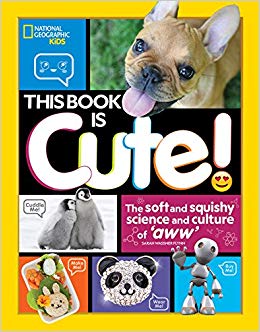
This Book is Cute! The Soft and Squishy Science and Culture of Aww, by Sarah Wassner Flynn,
(March 2019, National Geographic Kids), $12.99, ISBN: 9781426332944
Ages 5-12

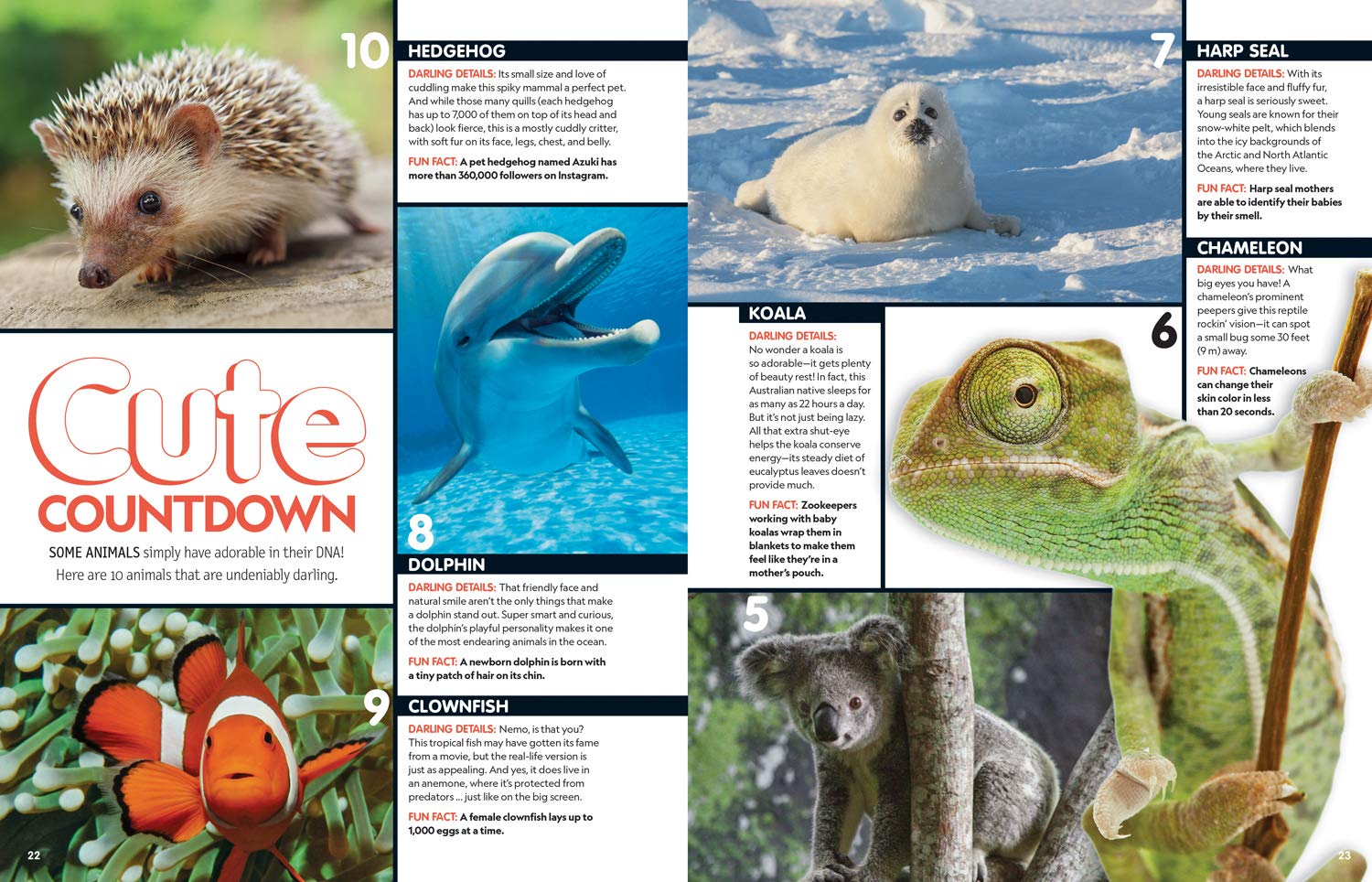
Can you believe there’s a science to cuteness? Of course NatGeo Kids would get to the bottom of this! Cute foods! (More attractive to eat!) Cute (human and animal) babies! (Trigger emotions in us that make us protect and care for them!) Cute clothes and toys! (We can’t get enough of ’em!) This Book is Cute is 112 pages of high-pitched squealing, science, and lists of cute animals, cutest jobs ever (I would like to apply for the Cat Cuddler spot, please), even appliances. Put up a bulletin board and see how many cute animals or food your kids can identify, or test their Cute IQ using the quiz in the book. This Book is Cute! is absolutely adorable; kids will go crazy for it and so will you.

Ages 8-12
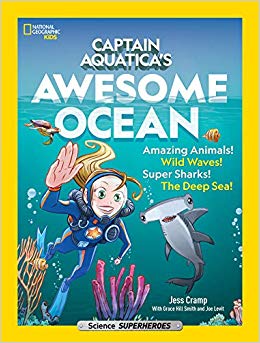
A companion to Dr. E’s Super Stellar Solar System and Dirtmeister’s Nitty Gritty Planet Earth, Awesome Ocean takes readers underwater exploring with cartoon superhero Captain Aquatica and her hammerhead shark sidekick, Finn. Shark researcher and marine conservationist Jess Cramp is the real-life version of Captain Aquatica, and leads readers through chapters on the ocean; waves, tides, and water; sharks and marine life; underwater technology; ecosystem engineering, and the critical importance of conservation. Moving back and forth between a comic book adventure and factual explanation, the book is loaded with incredible photos, fact boxes, and easy experiments that kids and families can do at home. There are scientist profiles – I love these, because they introduce readers to even more scientists than they’ll meet in our biography aisles – a glossary, index, and book and website resources for more exploration. NatGeo books are amazing because they always make sure to empower kids to make the world a better place, providing ways to get involved and start making changes. Their photos are consistently fantastic, and I love having as many of their books as possible in my library. If a parent or kid comes in looking for nonfiction about the natural world or animal book suggestions, I bring them to NatGeo books first. Display this set together, if you have them, and direct your readers to a series that looks at the big picture: earth, ocean, and space.
Luna: The Science and Stories of Our Moon, by David A. Aguilar,
(June 2019, National Geographic Kids), $17.99, ISBN: 9781426333224
Ages 8-12
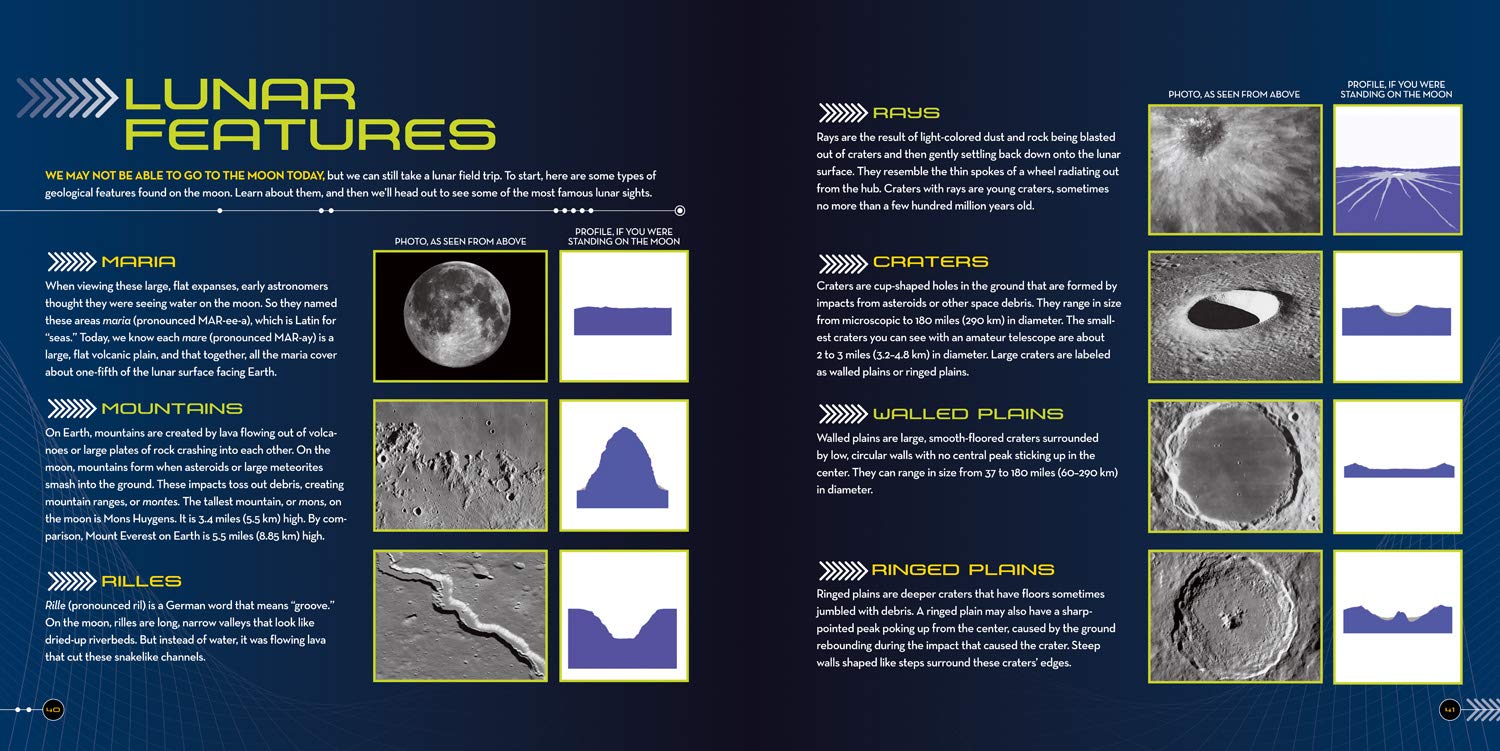
NatGeo wouldn’t let a Summer Reading theme go by without a book for us to give to the kiddos! Luna is all about our friendly satellite, the Moon. It’s a compact volume, at 64 pages, packed with all the info a middle grade space enthusiast could want. There are beautiful photos, callout quotes and facts, and full-color diagrams, and thought-provoking chapters cover topics including moon myths and hoaxes; the famous “dark side” of the moon; how our moon stacks up against other moons; lunar phases, and – naturally! – the 1969 lunar landing. There’s a fun make the moon activity (get your old t-shirts on; this one involves Plaster of Paris), a viewing guide, and tips on drawing the moon. There’s an index and a list of additional resources. This is one of the best middle grade volumes on the moon that I’ve read since Elaine Scott’s Our Moon (2015), and a solid add to your 520s. Mine are always in high demand (along with my dinosaurs), and with the outer space theme for this year’s Summer Reading, I imagine I’ll need a second copy of my own to use for programming.
Thanks again to NatGeo for always keeping nonfiction interesting and fun!
Posted in Early Reader, Fiction, Graphic Novels, Preschool Reads

Mouse takes a trip to the top of a volcano… but when can he get pizza?

A Trip to the Top of the Volcano with Mouse, by Frank Viva, (May 2019, TOON Books), $12.95, ISBN: 9781943145362

Ages 4-7

Mouse and his friend are off to explore Italy and climb Mount Etna in this second Mouse adventure! The explorer can’t wait to go start the adventure, but all Mouse can think of is pizza. Together, the friends lay out the plan: supplies (walking sticks, warm gloves, strong mountain boots, thick sweaters, and cool sunglasses) and set out for the mountain. They discover the different foods that grow at the base of the mountain (but not pizza), hike to the top, and see what types of wildlife wander around the area, before ending their day with a trip to the pizzeria.

A Trip to the Top of the Volcano is a fun mix of fiction and nonfiction, with stylish, vibrant graphics. There’s a beautiful cross-section spread, showing not only how plant life grows up the mountain, but the parts of the volcano, including the magma chamber, vents, and crater. There is information about local wildlife, plant life, and volcano characteristics, all communicated with simple, straightforward sentences that new readers will love reading and pre-readers will love listening to.

This is the second Mouse adventure from Frank Viva and TOON; the first, A Trip to the Bottom of the World with Mouse, sees the two friends off on an expedition to Antarctica. A Trip to the Top of the Volcano with Mouse has a free, downloadable Teacher’s Guide.

Posted in Non-Fiction, picture books, Preschool Reads, Toddler Reads, Toddler Storytime

Birds, Birds, Birds: Hello, I’m Here! A new bird greets the world, and Carme Lemniscrates’s Birds

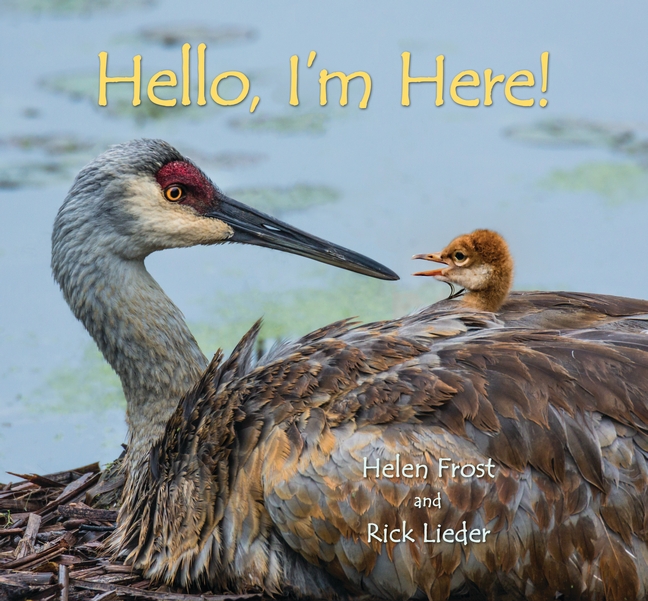
Hello, I’m Here!, by Helen Frost/Photographs by Rick Lieder, (March 2019, Candlewick Press), $16.99, ISBN: 9780763698584

Ages 2-5

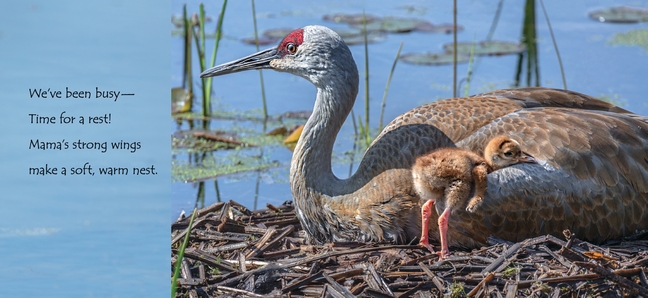
With rhyming text accompanying beautiful wildlife photos, Hello, I’m Here! is the story of an adorable sandhill crane chick hatching and exploring its new world. The hatchling and its sibling splash around in the water and enjoy some bugs and snails under the watchful guidance of their Mama and Papa, always nearby. The photographs are beautiful, allowing readers to enjoy the fuzzy, long-legged chicks and the stunning adult birds’ coloring. The photos have incredible texture; the birds’ feathers look like they’d ruffle under one’s hand, and the chicks look so fuzzy, you’ll want to run your finger across their heads. The photos of the birds in flight are stunning. The text is sweet and has a comforting cadence; the sentences are short and put readers in the chick’s place as it discovers the world around it. An author note about sandhill cranes has some great additional information for readers: did you know that parents and chicks communicate while the chicks are still in their eggs? That went over really well when I told the parents! I love being able to add little facts like that in a storytime. The endpapers have beautiful photos of a baby sandhill crane and its parent, and of four cranes flying across the sky at sunset. Absolutely breathtaking.

I tried Hello, I’m Here! out in a recent storytime, and the kids and parents alike loved it. The parents gestured to the pages quite often, impressed with the photos, and the little ones loved hearing about the little bird taking its first steps, flapping around with its sibling, and watching other cranes fly overhead. This is a great choice for a nature/discovery/science storytime, a spring storytime, and just a plain, good storytime for the little ones. I would also read Alex Latimer’s Am I Yours? as a companion to this one: it’s got dinosaurs, but the whole story of a baby dino in its egg talking to prospective parents is just too cute to pass up.

Hello, I’m Here! has a starred review from Kirkus. This is the fifth book that Helen Frost and Rick Lieder have collaborated on; all of which have received starred reviews from Kirkus.


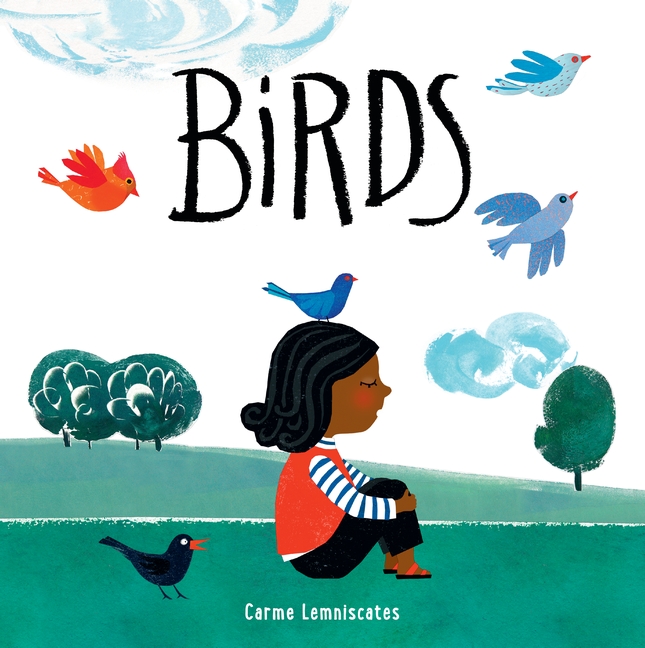
Birds, by Carme Lemniscates, (March 2019, Candlewick Press), $14.99, ISBN: 9781536201789

Ages 2-5

Next up, I read Birds, by Carme Lemniscates. It’s a nonfiction book of a different sort, with bright, bold mixed media illustrations of various birds and two children enjoying their company. The text reads like a poetic ode to birds, starting first with descriptive sentences: “Some birds are really big/Others are tiny/Some like to show off, while others would rather watch”, moving into more illustrative musings: “A bird’s song is like the loving words of a friend/A happy song that greets us every morning/And our hearts sing, too, because birds are like good news coming”. Eagles, owls, peacocks, and hummingbirds all find a home here, as do parrots, toucans, and Canadian geese. It’s a celebration of birds, of spring, and of nature. The endpapers feature bright and bold feathers, some that you’ll recognize right away, like the peacock’s; some, you may have to guess at (is that black and white spotted one a woodpecker or a guinea fowl?). Let the kids color some feathers of their own as an after-storytime craft.

Birds went over nicely in storytime. The kids loved the bright colors and enjoyed calling out birds they recognized. We made some bird sounds (honking for the Canadian geese went over well, as did the parrot caws) and spread our arms to soar and flap like the birds do. It’s a nice addition to picture books where nature and birds are popular.