Posted in Middle Grade, Non-fiction

Be an Absolute Expert with NatGeo Kids

NatGeo Kids rolled out a new series of books. The Absolute Expert series helps kids become experts on a favorite, high-interest topic: current topics are Dolphins, Dinosaurs, Volcanoes, and Soccer. Experts in the field act as guides, leading readers through the info-packed books. Stunning photos, facts, and activities make each volume a great reference for science and STEM collections, and great desk references for kids who just can’t get enough of their favorite topics.
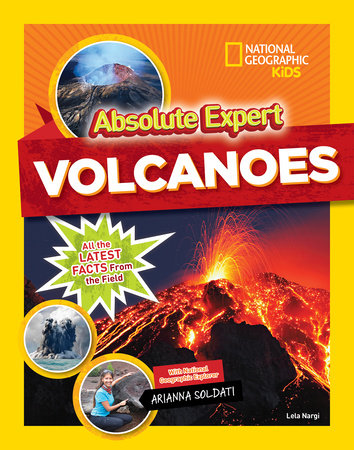
Absolute Expert: Volcanoes, by Lela Nargi and Arianna Soldati, (Aug. 2018, National Geographic Kids), $14.99, ISBN: 9781426331428

Ages 8-12

Volcanologist Arianna Soldati guides readers through a solid volume on volcanoes. Kids learn about ocean volcanoes, volcanoes in space, and deadliest eruptions (psst… Vesuvius isn’t #1!) The book explains plate tectonics and features a world map noting explosive volcanoes, and gives readers a heads-up on staying safe during a volcanic eruption, including an evacuation plan strategy exercise. Four “Get in the Flow!” sections provide activities that will take kids deeper; from building and cataloging a rock collection to creating a volcanic (soda) eruption of one’s own. Resources for further reading and an index finish up this book.

I buy all the volcano/natural disaster books I can get my hands on, because the schools here do a science unit on natural disasters, and the kids raid our libraries, usually heading for the volcano books first. I remember my first year as a librarian, hosting a class trip, and having the teacher ask me where those books were. I pointed out the shelf, and the kids swarmed me. TWO SHELVES. EMPTY. Since then, I don’t play games with my natural disaster books, and neither should you.

The writing is geared for middle grade to early middle school, with scientific terms that may send kids to the dictionaries (and good for that!) for new terms, while photos and illustrations provide a look at volcanoes in various stages of being, from quiet to very, very active. If seeing lightning hit a volcano spewing lava doesn’t inspire an awesome respect for nature, I don’t know what will.
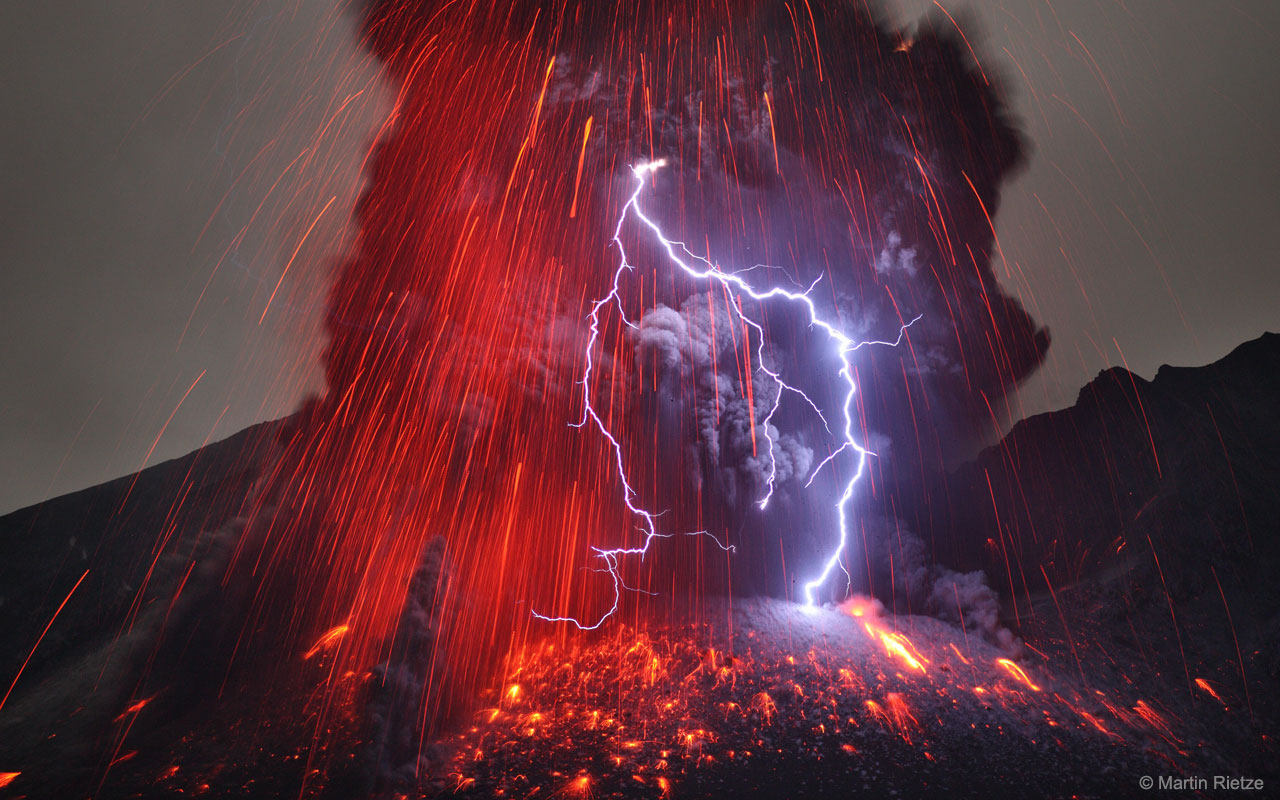
NASA’s Astronomy Picture of the Day in 2013, similar to the one found in Absolute Expert: Volcanoes


Absolute Expert: Dinosaurs, by Steve Brusatte and Lela Nargi, (Aug. 2018, National Geographic Kids), $14.99, ISBN: 9781426331404

Ages 8-12

Paleontologist Steve Brusatte combines forces with author Lela Nargi to make dino EXPERTS out of readers. My favorite section? The little callout box that tries to unravel the mystery of T-Rex’s itty bitty arms. Turns out, they were incredibly strong, and have to have served some purpose, but what? We still don’t know, but there will be countless memes to entertain us until we do. There are details on some of the biggest and smallest dinosaurs; a dinosaur family tree that shows how dinosaurs evolved as history marched on, and a nice section dedicated to feathered dinosaurs, including the evolution of dinosaur feathers, with a picture of a fossilized archaeopteryx feather! Photos of fossils and dino digs make this a perfect volume for budding archaeologists, and beautiful illustrations help readers put faces to those bones they see in the museums. (Jurassic Park does a pretty good job of that, too, but the dinos are usually trying to eat people; this is much less threatening.) A world map spread points out where dino evidence has been found, worldwide, and four “Dig In” sections teach kids about dino tracking, offer quizzes, and invite kids to make their own dinosaur teeth and paleontologist field kits.

Do I even need to say this book is a given in your collections? It’s NatGeo, and it’s dinosaurs. Put this NatGeo dino page on your reference resources list of links: there are videos, activities, and games, and there’s a YouTube video playlist of nothing but dinosaurs! That is a program all by itself!


Absolute Expert: Dolphins, by Jennifer Swanson and Justine Jackson-Ricketts, (May 2018, National Geographic Kids), $14.99, ISBN: 9781426330100

Ages 8-12

Marine biologist Justine Jackson-Ricketts serves as the guide in this volume, taking readers deeper into the world of dolphins. A world map spread shows kids the waters where dolphins tend to spend their time. There are tips on becoming a dolphin trainer, what to do if one encounters a stranded animal, and important life lessons dolphins have to impart (“Thanks for the all the fish” is not one of them). As Justine Jackson-Ricketts’ research involves ecology, there’s substantial information on preservation and conservation of our waters and of our dolphins; the authors also shed some light onto the captivity debate. Four “Dolphin Deep Dive” sections help kids design a dolphin study, offers suggestions on how to move and like a dolphin, tests kids’ ability to find dolphin figures in everyday objects, and organize a beach clean-up. Resources for further reading and an index are included.

There are wonderful pictures of dolphins and orcas in here, sure to please animal fans and make some new ones. There are great call-out facts here – perfect for adding to projects and classroom/library displays, too! There’s good scientific writing that challenges readers, and some information on the National Geographic Pristine Seas Initiative; National Geographic’s commitment to explore and help save the last wild places in the ocean. This is a good site to keep in your reference links: there are videos taken on the Initiative’s expeditions, mission descriptions, and updated news events as they unfold. Conservation projects and ocean research projects can get a nice boost from this site.


Absolute Expert: Soccer, by Eric Zweig and Mark Geiger, (May 2018, National Geographic Kids), $14.99, ISBN: 9781426330087

Ages 8-12

Professional soccer referee Mark Geiger is here to talk soccer with author Eric Zweig. Conversation goes into supporting one’s team and the different ways fans around the world show their love, including the now-famous vuvuzela; soccer jargon and the 17 Laws of the Game. There are maps of the field and the positions’ places on the field, an explanation of the penalty cards, and a history of “the beautiful game”. A Soccer Around the World section celebrates the diversity of the game and its fans, and since this is a book on sports, there are World Cup numbers, results by nation, and a US map of MLS teams, for us Americans just getting on the soccer bandwagon. Facts and stats throughout give readers some extra street cred knowledge, and four “Get in the Game” activities encourage kids to make up their own game and offer quizzes. There are great photos and illustrations of soccer players and equipment through history, and there are callout biographies on major players throughout. The text is easily readable by middle grade and middle schoolers; this is a volume that soccer fans are going to love.

Check out the National Geographic World Cup 2018 website for vintage photos, World Cup facts, and articles on the science of sport. This 2014 National Geographic blog post, Why the World Cup is About More Than Soccer, puts into words how the sport brings people together, worldwide.

NatGeo, keeping it real for my nonfiction section.

Posted in Intermediate, Middle Grade, Middle School, Non-Fiction, Non-fiction, Non-Fiction, Tween Reads

BIG Summer Nonfiction Reads Roundup!

From sharks, to space, to stories of survival in the wild, I’ve got books for all sorts of nonfiction tastes! Let’s start with the oogie stuff and go from there.

They Lost Their Heads! What Happened to Washington’s Teeth, Einstein’s Brain, and Other Famous Body Parts, by Carlyn Beccia, (Apr. 2018, Bloomsbury), $18.99, ISBN: 9780802737458

Recommended for readers 10+

If you have readers who loved Georgia Bragg and Kevin O’Malley’s books, How They Croaked: Awful Ends of the Awfully Famous, and How They Choked: Failures, Flops, and Flaws of the Awfully Famous, this is a home run! Learn what happened to the famous body parts of 17 famous folks, and pick up some knowledge about other body parts and how they influenced science medicine. If you’ve ever ever wanted to know what happened to Thomas Edison’s last breath or Van Gogh’s missing ear, this is the place to go. You also learn cool stuff like what rots first after you die (psst… it’s the intestines). Loaded with black and white drawings, funny footnotes, sources, an index, and a bibliography. This one’s a hit for upper elementary readers, all the way through high school. They Lost Their Heads! has a starred review from Booklist.

StarTalk with Neil DeGrasse Tyson (Young Readers Edition), by National Geographic, (March 2018, National Geographic), $17.99, ISBN: 9781426330872

Recommended for readers 10+

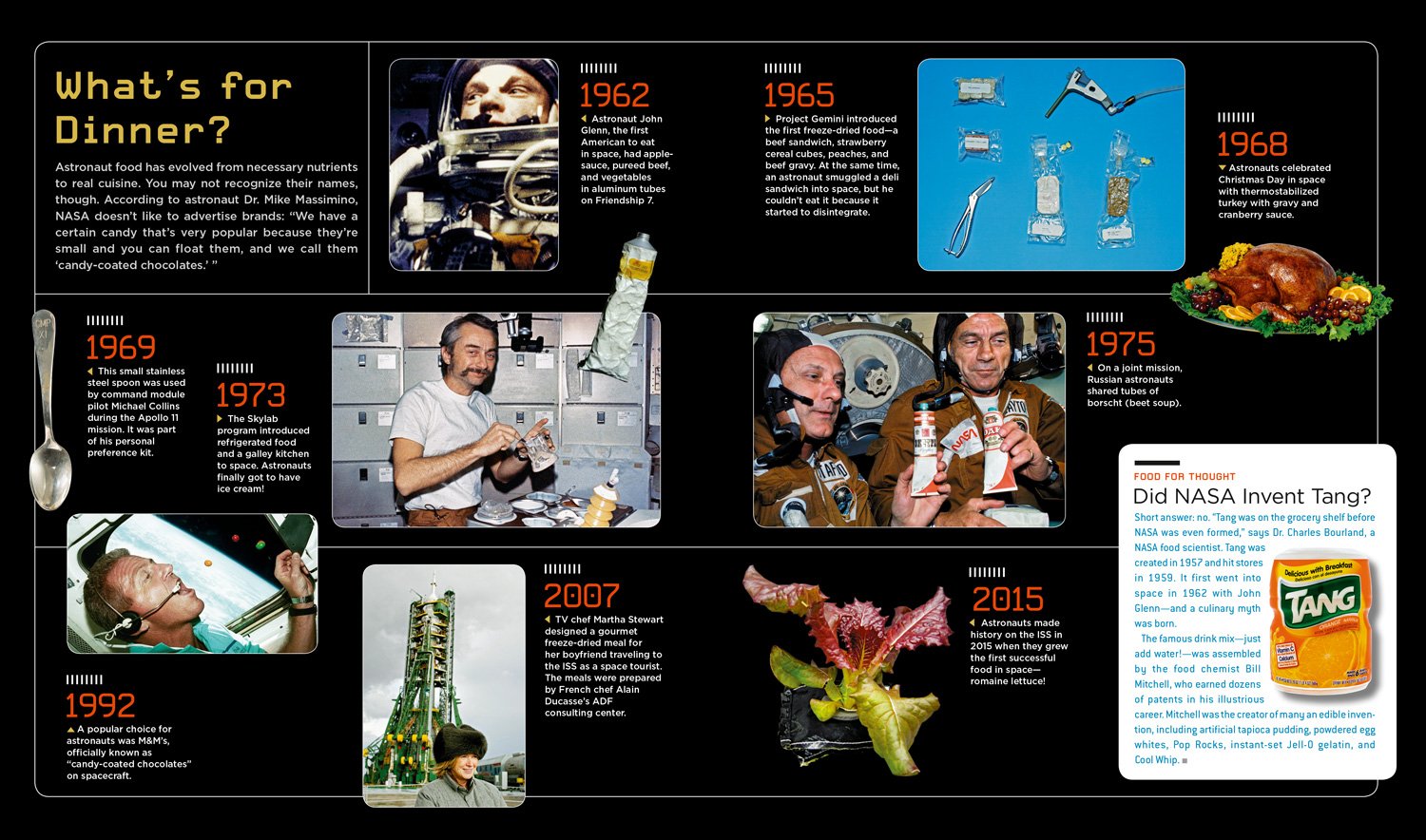
I LOVE Neil DeGrasse Tyson and evangelize his StarTalk Radio podcast any chance I get. (Seriously, it’s great stuff.) NatGeo’s Young Readers edition of the StarTalk book is must-booktalk summer reading. Get your Summer Reading budget and buy some astronaut ice cream; while you and the kids feast, read the section on why you can’t get a pulled pork sandwich in space; find out what the Vomit Comet is; and read mini-bios on scientists like Carl Sagan. Not so much with the food? There are also sections on zombies and superheroes. Debate the eternal question: Could the Death Star really blow up a planet? There’s so much to discover in this book that every kid is darn near guaranteed to find something to interest him or her. (Psst… get an extra copy for yourself. You’ll thank me.)


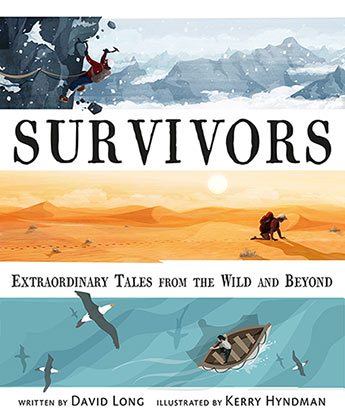
Survivors: Extraordinary tales from the Wild and Beyond, by David Long/Illustrated by Kerry Hyndman, (Sept. 2017, Faber & Faber), $19.95, ISBN: 9780571316014

Recommended for readers 9-13

Do you know fans of Lauren Tarshis’ I Survived series? I’ve never been able to keep those books on the shelves, no matter which library I’ve been at. Middle graders go berserk for that series, and they’ll LOVE this oversized, illustrated anthology of true survival tales. There are 23 stories in here; the most famous being explorer Ernest Shackleton, who saved his crew when a 1914 Antarctic expedition put their lives in danger. There’s also the story of Hugh Glass, a “fur trapper and adventurer” who made the critical error of surprising a mother bear and her cubs by the Missouri River in 1823, or Mauro Prosperi, a runner competing in the 1994 Marathon of the Sands through the Sahara Desert, found himself in the middle of a sandstorm. Not crazy enough for your readers? There’s also a Hollywood pilot who crashed INSIDE a Hawaiian volcano in 1992. The stories are fast-paced, beautifully illustrated in color, and are perfect for adventure fans. Best part? All the stories are TRUE.


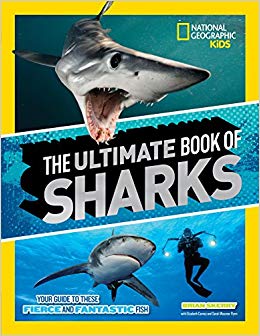
The Ultimate Book of Sharks, by Brian Skerry, Elizabeth Carney, & Sarah Wassner Flynn, (May 2018, National Geographic Kids), $19.99, ISBN: 9781426330711

Recommended for readers 7-13

Kids love sharks. This is a fact. The Ultimate Book of Sharks has all the info and pictures your shark-loving fans crave, just in time for Shark Week, which kicks off on July 22 (get your printables and programs lined up – I’ll do a separate post about Shark Week as it gets closer). The NatGeo folks bust myths about sharks, give us a look at shark anatomy, and – as always – provide loads of information about conservation and preservation, and how we can all help keep sharks, and our waters, safe and clean. This volume is chock full of fast facts and lists, with Up-Close Encounters, where marine wildlife photojournalist and author Brian Skerry shares some of his stories with readers. There’s an index at the end. This volume is an absolute must-add to your science and nature collections.


Red Alert! Endangered Animals Around the World, by Catherin Barr/Illustrated by Anne Wilson, (July 2018, Charlesbridge), $17.99, ISBN: 9781580898393

Recommended for readers 7-11

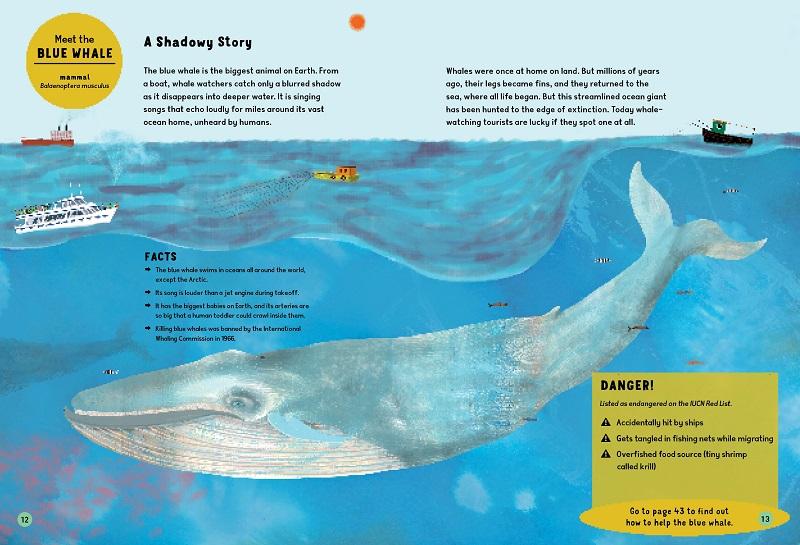
This is such a fun book. Think of a Choose Your Own Adventure about endangered animals, and you’ve got Red Alert! Red Alert! profiles 15 animals on the International Union for Conservation of Nature’s (IUCN) list. A beginning note explains the organization’s “Red List”: a list of endangered plants, animals, and fungi, and lists some of the categories mentioned in the book. Colorful endpapers start the fun: the first, a map of the world, with the 15 profiled animals drawn into their world regions; final endpapers highlight a plethora of endangered animals. From here, readers can pick a place to explore: deserts, forests, mountains, grasslands, rivers, or oceans; pick a creature from each of these regions, and go to its page to read further. You can also read the book straight through. Spreads include the animals’ scientific names, facts, endangered category, and factors contributing to the endangerment of the species. A section at the end provides resources for more information on taking conservation action. A solid introduction to environmental action for younger readers.


National Geographic Kids Almanac (2019 Edition), (May 2018, National Geographic Kids), $14.99, ISBN: 9781426330131

Recommended for readers 8-13

Another guaranteed must-have from NatGeo Kids, this latest edition of their Kids Almanac shows readers a baby animal “tweet-off” between several zoos and aquariums (it’s from 2017, but who doesn’t want to revisit that simpler, lovelier time?), talks about updates in robotics and technology, dwarf planets, and has a Special Gross Edition of their Just Joking feature. Facts, quizzes, updated maps and stats, and homework help ideas all in one volume? This is one desk reference every kid should have – put one on your shelves, and keep one in your reference area, to be on the safe side.


How’s that for a start? Next time a kid comes in, stressed about needing a nonfiction book, consider yourself ready.

Posted in Middle Grade, Non-fiction, Teen, Tween Reads

To Explore Strange New Worlds…

Pop quiz! We know that outer space is still largely unexplored, but did you know that we’ve explored less than five percent of the world’s oceans? There are some great new books on space and sea exploration for middle graders to dive into (see what I did there?). Read on!

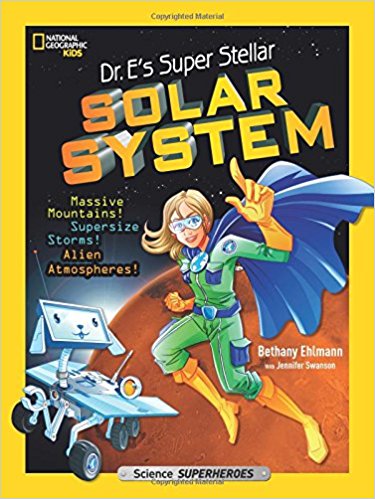
Dr. E’s Super Stellar Solar System, by Bethany Ehlmann with Jennifer Swanson, (Jan. 2018, National Geographic Kids), $12.99, ISBN: 978-1-4263-2798-8

Recommended for readers 8-12

Planetary geologist Dr. E (Bethany Ehlmann) and her sidekick, Rover, take readers on a trip around the universe, filled with activities, photos, facts, and comics. Readers will learn about space exploration and how our big blue dot fits in with our cosmic neighbors: who else has volcanoes and sand dunes; how plate tectonics work; how craters are formed. There’s information about robots and rovers; space exploration and technology; and how learning about space helps us learn more about Earth. Each chapter begins with a 2-page comic spread, following Dr. E and Rover on an adventure related to chapter material. There are scientist profiles throughout the book, thought-provoking questions to generate discussion, and incredible photos. A glossary, list of book and web resources, and index makes this a solid book to have in space collections and a fun gift for kids who love science.


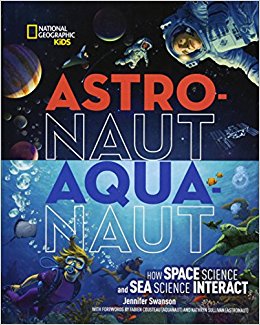
Astronaut-Aquanaut: How Space Science and Sea Science Interact, by Jennifer Swanson, (Jan. 2018, National Geographic Kids), $18.99, ISBN: 978-1-4263-2867-1

Recommended for readers 8-12

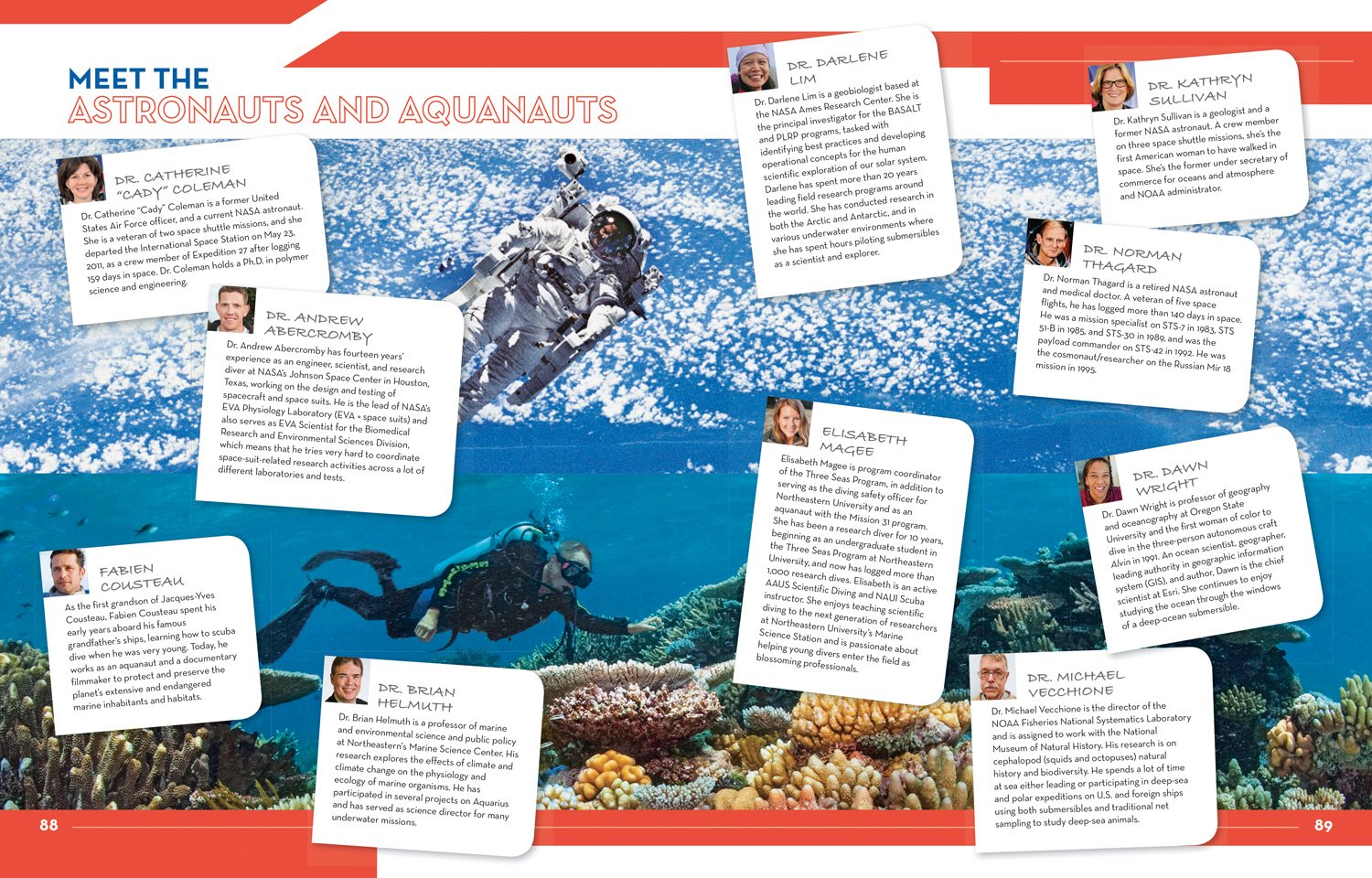
What do space and the ocean exploration have in common? SO much. There’s a reason we’re still trying to figure out how to explore both. Extreme pressure, temperatures and climates are all considerations scientists have to make when planning missions up above or far below. Author Jennifer Swanson (she’s co-author on Dr. E’s book, above!) gets a new generation of explorers ready for action with discussions about buoyancy and gravity; the shapes used in space and sea exploration (shape counts!); creating livable habitats; similarities and differences in each form of travel, and more. There’s consideration given to preservation and conservation for both sea and space: we leave a lot of garbage behind, and we need to stop that. Explorer’s Notebook callouts give readers a quick run-down on different topics, like training for a trip and how to create successful living and working environments – ideas that readers can apply to their daily lives while getting ready to be explorers. Activities give readers hands-on opportunities to learn about concepts like docking the International Space Station. There are detailed illustrations and color photos throughout, astronaut and aquanaut profiles, fun facts, resources, a glossary, and an index. NatGeo never disappoints: I love how Jennifer Swanson brings these two areas of exploration together; maybe it will inspire kids to become both astronauts AND aquanauts!


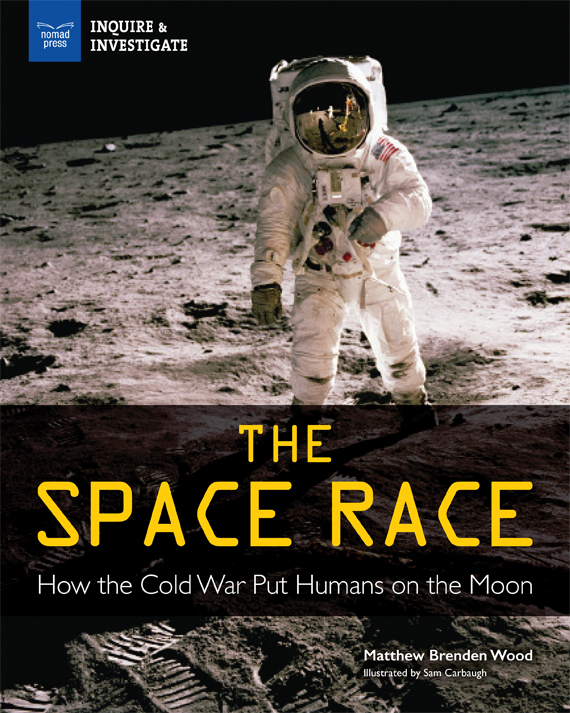
The Space Race: How the Cold War Put Humans on the Moon, by Matthew Brenden Wood/Illustrated by Sam Carbaugh, (May 2018, Nomad Press), $17.95, ISBN: 978-1-61930-663-9

Recommended for readers 12-15

The Cold War between the U.S. and Soviet Union led to a race for dominance, and space was best place to push for that dominance. Matthew Brenden’s book, The Space Race, is an interactive chronicle of this pivotal point in history. Beginning with a timeline to give readers background, Brenden takes us from the 1917 Russian Revolution, through World War II (when Russia was our ally) and the Cold War, to July 20, 1969: the date Neil Armstrong and Buzz Aldrin became the first people to walk on the moon.

A  comic strip running throughout the book illustrates and encapsulates the big ideas in the book, adding a little mental break for readers. There are loads of callout boxes, enhanced with QR codes that lead to historical reference and further learning; some topics include McCarthyism, duck-and-cover nuclear war drills, and the first anniversary of the Berlin Wall. Blast Fact callout boxes provide quick facts, and Inquire and Investigate sections provide rich inspiration for projects and research. Questions throughout the text challenge readers to think deeper about the material and would provide a great jumping-off point for book group or class discussions, and Vocab Lab sections offer new words to learn, all defined in the glossary at the end of the book. There are black-and-white and color photos throughout, providing a strong connection to history. Thankfully, there’s a metric conversion table, since science is metric and I’m not; there are additional resources, source notes, and an index.

I love Nomad Press’ books; there are so many entry points for students in each book. This one is a valuable reference for Science or History: in fact, The Space Race is one in a set of four Nomad books exploring great events of the 20th Century (others include Globalization: Why We Care About Faraway Events; The Vietnam War; and World War II: From the Rise of the Nazi Party to the Dropping of the Atomic Bomb).

The Space Race skews slightly older than the NatGeo books above: Nomad recommends this one for ages 12-15, but I think it can go a year or two younger, especially in my children’s room, where it will see more circ than in our teen section. Your library’s mileage, and your kids’ reading interests may vary. It’s a Guided Reading level Z, which can go as young as 9; I’d suggest at least 10 or 11.


Posted in Middle Grade, Non-Fiction, Non-fiction, Tween Reads

Catch up on U.S. History with NatGeo Kids

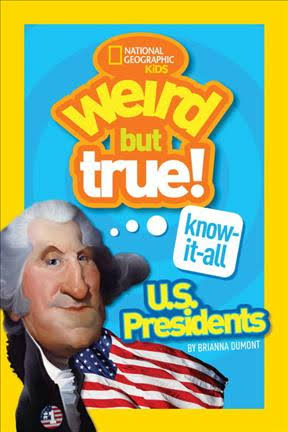
Weird But True! (Know-It-All) U.S. Presidents, by Brianna Dumont, (July 2017, National Geographic Kids), $12.99, ISBN: 978-1426327964

Recommended for readers 8-12

I love these NatGeo Kids’ facts-at-a-glance books. I learn something new every time, and I have a good time reading them. I’m pretty sure my library kids agree with me, because these books fly off the shelves. In this latest Weird But True, NatGeo gives readers a quick rundown of the U.S. Presidency: fun facts, a renovation timeline, an overview of the three branches of government and the powers of the Supreme Court, Congress, and the President; from there, we get a profile of each President, from Washington through to 45. Profiles run between 2 and 8 pages, outlining high points (Oval Awesome), low points (Oval Awful), and fun facts (Why He’s Weird!). It’s a fun read, loaded with caricature art and photos. Also a nice little supplement for reports and projects down the line.


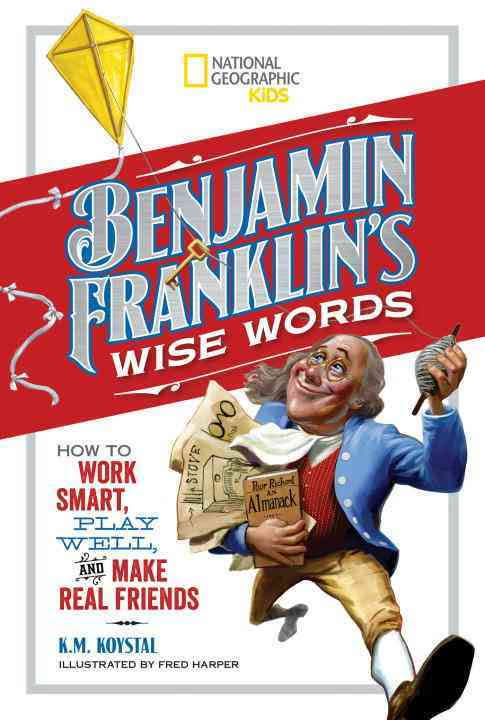
Benjamin Franklin’s Wise Words: How to Work Smart, Play Well, and Make Real Friends, by K.M. Kostyal/Illustrated by Fred Harper, (Jan. 2017, National Geographic Kids), $16.99, ISBN: 978-4263-2699-8

Recommended for readers 8-12

Think of this as a “Life’s Little Instruction Book” for middle grade history fans. Ben Franklin’s sage advice is organized into quotes on tranqulity, industry, order, humility, resolution, sincerity, and moderation. Readers may be surprised at how many sayings they’re familiar with: “there are no pains without gains”, “haste makes waste”, and “honesty is the best policy”. There are 50 of Franklin’s quotes in this book, each with an accompanying caricature illustration with loads of physical comedy to appeal to middle graders. Quotes receive a more modern, accessible translation and a story about Franklin’s life, which may cause a disconnect to anyone who expects the story to illustrate the quote. It’s a fun look at one of U.S. history’s more fascinating characters, but unless you have a dedicated Franklin fan or two, it’s a supplemental or secondary add to your collection.

Posted in History, Non-Fiction, Teen, Tween Reads

The Last Civil Rights March of the 60s: The March Against Fear

The March Against Fear: The Last Great Walk of the Civil Rights Movement and the Emergence of Black Power, by Ann Bausum, (Jan. 2017, National Geographic), $18.99, 978-1-4263-2665-3

Recommended for readers 12+

In June 1966, activist James Meredith set out to walk from Memphis to Jackson, Mississippi. He called it his Walk Against Fear; he wanted to conquer his own fears of walking through his home state; he wanted to encourage fellow African Americans to become voters: the Voter Registration Act had passed the year before, but the majority of African Americans had not yet registered, still living in fear of consequences they faced. Two days into his walk, James Meredith was shot in an assassination attempt. While Meredith recuperated, his cause was taken up by civil rights leaders of the day: Martin Luther King and Stokely Carmichael, and the ensuing March Against Fear became an historic march that included 15,000 people, resulted in 4,000 black voter registrations in Mississippi, and saw the rise of the Black Power movement.

Author Ann Bausum, who has connections to this history, captures the strife in Mississippi as whites and blacks clashed over civil rights. She looks at Meredith’s frustration at how his private stand grew into a full-scale movement, and at the discord between Stokely Carmichael and Martin Luther King: Carmichael’s desire for Black Power frightened whites who saw the movement as a possible militant uprising; King wanted to promote a nonviolent, peaceful march. Bausum also looks at why this march, of all marches, seems to have disappeared from history books – I certainly never learned about this one in school – and how we are still “trying to establish the essential truth that Black Lives Matter”.

An essential read for everyone. An essential addition to history classes in high school and college.

For more information about The March Against Fear, check PBS’ American Experience page on the Civil Rights Movement and the National Archives webpage on James Meredith and March Against Fear.

The March Against Fear received starred reviews from Kirkus, School Library Journal, and Publisher’s Weekly.

Posted in Intermediate, Middle Grade, Non-Fiction, Non-fiction, Non-Fiction, Tween Reads

Holiday Shopping: Nature

First tech, now nature. This latest round of holiday gift ideas looks at science and nature books. These are perfect for the kid who loves to be outdoors and wants to know more about our world and the animals he or she shares it with.

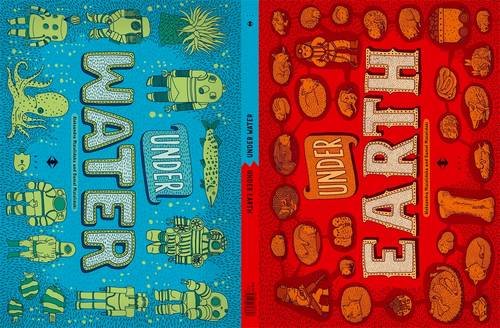
underwater_2Under Earth, Under Water, by Aleksandra Mizielinska and Daniel Mizielinski, (Oct. 2016, Candlewick Press), $35.00, ISBN: 978-0-7636-8922-3

Recommended for ages 7-12

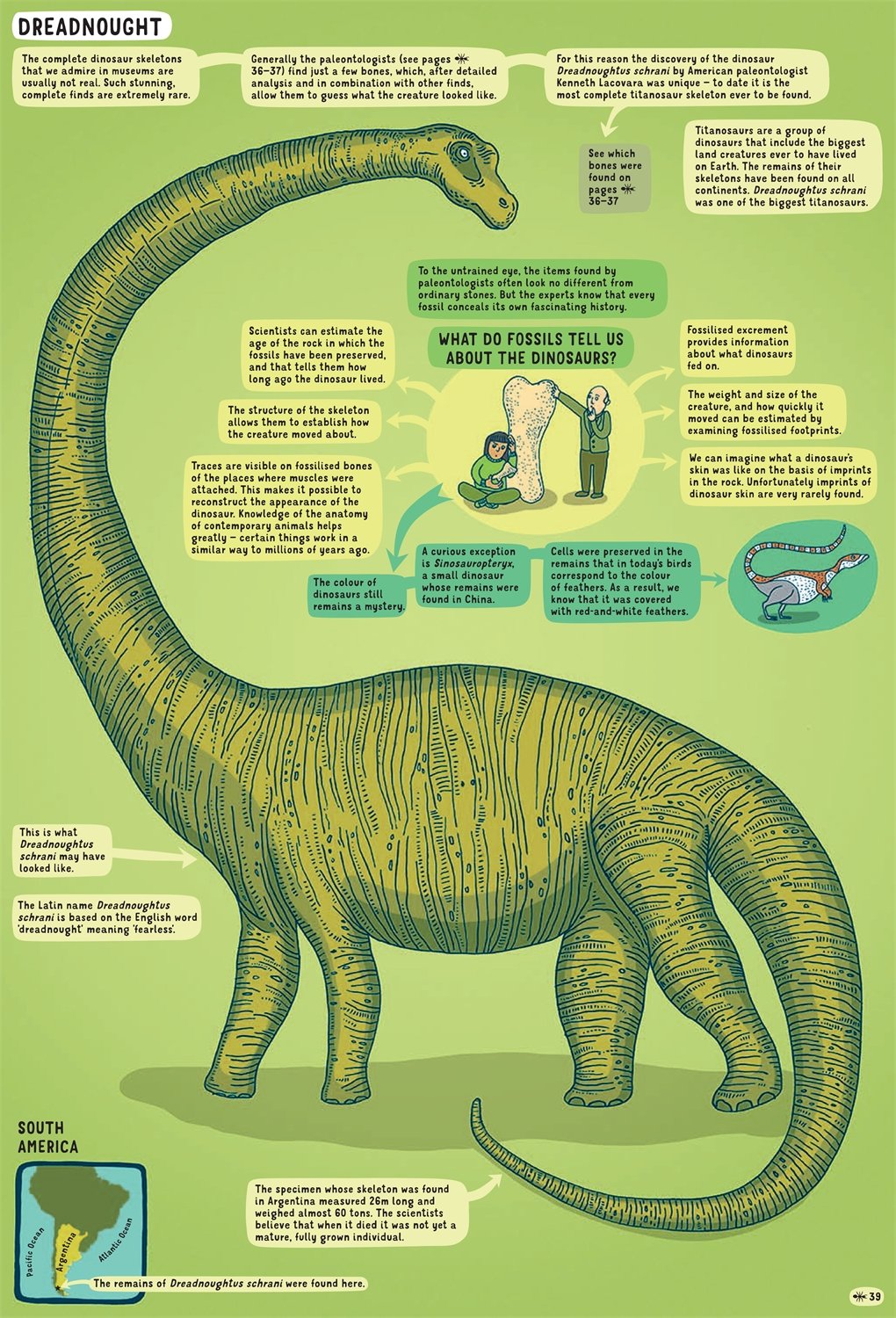
This book is stunning. It’s two books in one, each examining our worlds just below the surface: water and earth. The illustrations are amazing, and kids will flip as they see the inside of an anthill, take a look at an archaeological dig, check out a history of submarines, or tag along for a tour of the Mariana Trench. I can’t get enough of this book, and kids who love natural science won’t, either. Check out this spread on a Dreadnoughtus schrani!

underwater_5


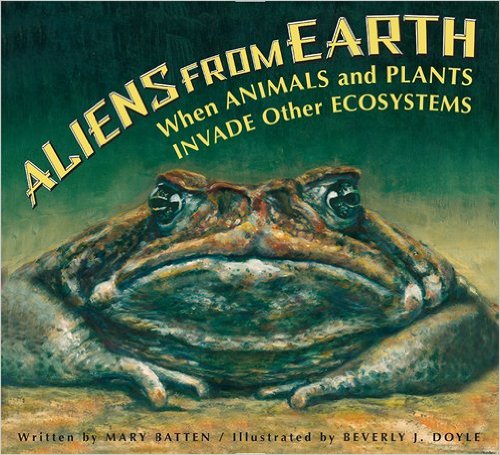
aliens-from-earthAliens From Earth: When Animals and Plants Invade Other Ecosystems, by Mary Batten/Illustrated by Beverly J. Doyle, (March 2016, Peachtree Publishers), $16.95, ISBN: 978-1-56145-900-1

Recommended for ages 9-12

Aliens From Earth takes a fascinating look at what happens when animals or plants invade a new habitat, upsetting an ecosystem’s balance. Fire ants, gypsy moths, even the cute little starlings that I see every morning when I head to work are all in here. Introducing an invasive species into an ecosystem unprepared for it can be responsible for the spread of disease, loss of habitat for current inhabitants, and reduction of natural resources for an area. This volume is beautifully illustrated by artist Beverly J. Doyle, whose acrylic paintings make me feel like I’m walking through a museum exhibit as I read. Previously published in 2006, Aliens from Earth is an Izaak Walton League of American Conservation Book of the Year. Give this to kids who are interested in environmentalism, preservation, and conservation.


oceanpediaUltimate Oceanpedia, by Christina Wilsdon, (Nov. 2016, National Geographic Children’s Books), $24.99, ISBN: 978-1426325502

Recommended for ages 7-13

Know a kid who would live in the aquarium if she or he could? Fascinated by fish, crazy for sea turtles, smart about sharks? The Ultimate Oceanpedia is the book for them. Stunning photos accompany entries on earth’s oceans, sea life, exploration, weather, the coast, and conservation of our underwater habitats and saving sea life. There are fast facts, stats, food webs, and maps galore. Sections on climate change and offshore drilling take on today’s big issues and present the facts without bias, letting readers form their own opinions. A call to action provides simple ways kids can help make the world a better, cleaner, healthier place to live. A glossary and in-depth resources encourage kids to keep learning and changing the world around them for the better.

These books are all available right now and are dying to go home with you! Shop your local bookseller, or click on over to Amazon, Barnes & Noble, Books-a-Million, or Indie Bound to buy.

Posted in Intermediate, Middle Grade, Non-Fiction, Non-fiction, Non-Fiction

Extreme Wildfire takes kids to the front lines of fire fighting!

extreme_wildfire_coverExtreme Wildfire: Smoke Jumpers, High-Tech Gear, Survival Tactics, and the Extraordinary Science of Fire, by Mark Thiessen, (Aug. 2016, National Geographic Kids), $12.99, ISBN: 9781426325304

Recommended for ages 8-12

It can go from a spark to a flame in almost no time. It can devour homes and forests alike, leaving destruction and devastation in its path. NatGeo Kids brings readers to the front lines of wildfires, and the people – largely volunteers – who fight them, in Extreme Wildfire.  Author Mark Thiessen is a NatGeo photographer and certified wildland firefighter has photographed countless fires over the last 20 years; Extreme Wildfire represents part of a lifelong project: to create a visual record of what these firefighters do.

Extreme Wildfire discusses the science behind wildfire; how firefighters battle the flames and how lookouts spot potential fires on the horizon; the equipment used in combating fire, the devastation – and nature’s adaptation – that fire leaves in its wake, and how communities come together to help one another. Chock full of facts and call-out boxes with more information, plus an emphasis on fire safety and prevention to finish up the book, this a good addition to nonfiction collections. There’s a glossary, list of resources, and index.

The kids in one of my library’s neighborhood schools have a unit on natural disasters every year. I’ve ordered two copies of this book – my Corona Kids know how much I love NatGeo books – to have available for them when the time comes around this year. It’s also a good book to have on display if you have fire safety talks. There are some good fire safety and education resources online, including Science for Kids Club and The Kids Should See This.

extreme_wildfire_14-151Photo courtesy of Chat With Vera.


Posted in Intermediate, Middle Grade, Non-Fiction, Non-fiction, Non-Fiction, Tween Reads

Road Trip, Part Deux: NatGeo’s 125 Wacky Roadside Attractions

wacky125 Wacky Roadside Attractions, by National Geographic Kids, (May 2016, National Geographic Kids), $12.99, ISBN: 9781426324079

Recommended for ages 8+

Maybe your road trips tastes run a little more… unique. National Parks are beautiful, but what if you want to drive through a giant tree or see a giant boxing crocodile? If that’s the case, then NatGeo Kids’ 125 Wacky Roadside Attractions is just for you.

Part of the “125” series that includes 125 Cute Animals, 125 Cool Inventions, and 125 Amazing Pets, Wacky Roadside Attractions brings readers the craziest, wildest roadside hotels, statues, and other landmarks from all over the world. A world map labels and numbers all the attractions, should you want to start sticking pins in the places you want to go. Features cover anywhere from 1/2 a page to 2-page spreads, providing a brief description, location, and fast facts about each landmark. I was excited to see Wisconsin’s House on the Rock, which I first encountered in Neil Gaiman’s American Gods, and seeing Pedro from South of the Border brought me back to the road trips down to Florida that I’d take with my parents.

This book is just too much fun. It’s a crazy, fun road trip around the world that families will love to take together. Great photos and fun text against bright backgrounds make every page an eyecatcher. Add this to your collections, and vote on future attractions at NatGeo’s site.

south-of-the-border_1Me, my dad, and a gorilla at Fort Pedro, South of the Border, mid-80s


south-of-the-borderPedro welcomes you South of the Border! (image courtesy of The Dillon Herald)

This book is doing gangbusters at my library! The kids think it’s hilarious (the giant water fountain and the T-Rex you can hang out in are big favorites). I’m trying to think of a fun program – because that’s what I do with good books – that would incorporate the road trip mentality with a staycation budget. Maybe the kids and I will armchair travel every week, and put a pin in a different attraction on the map? Maybe we’ll find some new, wacky attractions along the way, or make up some of our own? I’ll let you know when we figure it out.

Posted in Middle Grade, Non-Fiction, Non-fiction, Tween Reads

Give your brain a workout with NatGeo Kids’ MASTERMIND!

mastermindMastermind, by Stephanie Warren Drimmer/Puzzles by Julie K. Cohen, (May 2016, NatGeo Kids), $12.99, ISBN: 978-1-4263-2110-8

Recommended for ages 8-12

Loaded with over 100 games, tests, and puzzles designed to “unleash your inner genius,” Mastermind is huge fun – and you learn stuff, too.

Guided through the book by cartoon characters Ima Genius and her canine sidekick Astro, Mastermind is all about the brain: each section is devoted to a different part of our brains and features sections like How it Works, where readers are guided through a step by step process of each part of the brain makes operations like sight, muscle movement, smell, and memory happen; fun facts and wild photos help break it all down for readers. Time Trials challenge readers to solve puzzles while timing themselves, and a final quiz in each chapter, called Test Your S.M.A.R.T.S. (Superior Mental Acuity and Rationality Testing System), pop up in each section, so budding geniuses can witness themselves becoming smarter with each section. A fun Mastermind Meter lets you track the progression of your genius through the book.
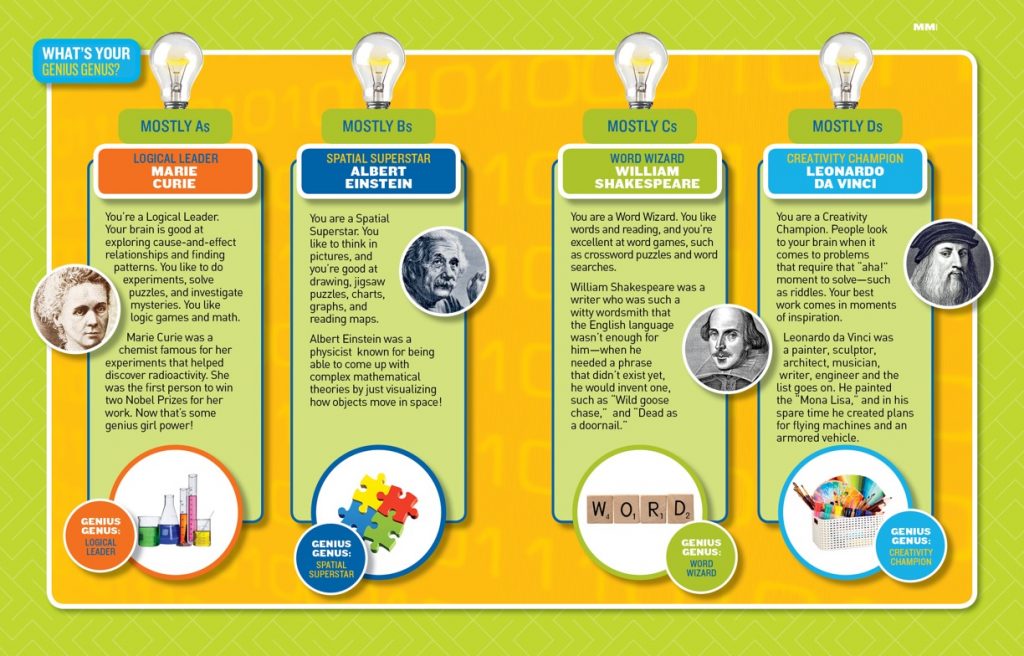
I had a great time reading and playing the games in Mastermind. The facts and real-life stories are interesting and fun, and there’s a ton of information to be learned here. Each section of the book looks at a different part of the brain and how we use them, from our senses, to identifying sounds, to mental map making and memory. Beginning with a maze through a highlighted part of the brain (to get your brains ready, naturally), readers learn how animals use their brains for similar purposes, and Weird Science introduces us to people living with brain issues that make them see things differently; for instance, hemospatial neglect causes someone to ignore things on one side – imagine only shaving half your face?

This will be destroyed in circ, because kids are meant to write in this book, but it won’t stop me from adding it as a great birthday or holiday gift to a few budding geniuses on my list. There are tons of ideas in this book for teachers and librarians, though; you can get the kids fired up with your own timed code challenges or have them figure out which genius they gel best with. The Mastermind website offers two downloadable puzzles, and a genius personality quiz kids can take online. All in all, Mastermind provides some fun and makes you think, which is really what learning should be all about.

mastermind_1

Posted in Intermediate, Middle Grade, Non-Fiction, Non-fiction, Non-Fiction, Tween Reads

Need to know about sports? NatGeo’s got you covered.

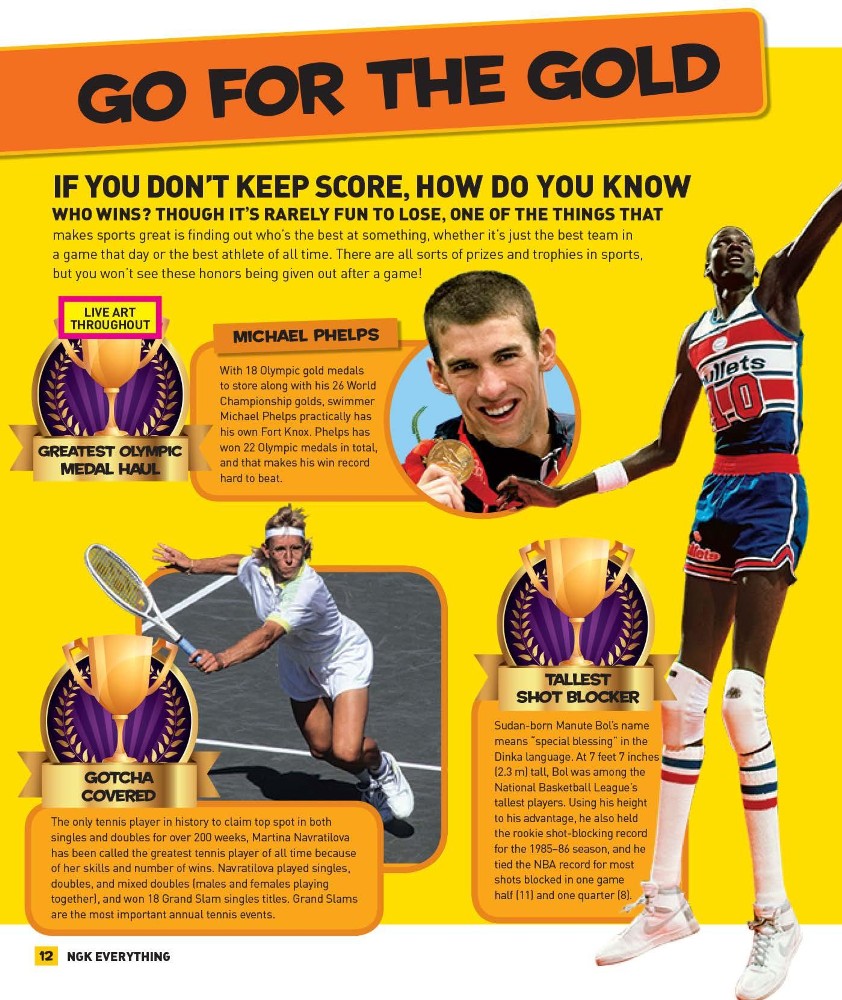
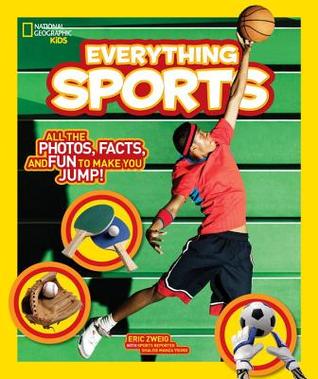
sportsNational Geographic Kids: Everything Sports, by Eric Zweig with Shalise Manza Young, (March 2016, National Geographic Kids), $12.99, ISBN: 9781426323331

Recommended for ages 8-12

I am not a big sports girl, often to my husband’s chagrin. Don’t get me wrong, I love watching the Olympics, and there are sports I enjoy watching, like fencing and gymnastics, but it’s not often that I get to watch those (usually, just during the Olympics). Many of the kids in my library are big sports fans, though, so I need to become better versed in some general sports books, so I can booktalk and show them books that may appeal to them. As always, I start with NatGeo Kids, because 1) their books fly off my shelves; 2) they’re comprehensive, with beautiful photos, and 3) they have little fact tidbits that always help with a booktalk or party talk.

Everything Sports is a great go-to for general sports info, especially for newbies who want to learn more, like me. The book is only 64 pages – not a huge commitment to a history of every sport ever played – and written by two sports journalists who also have a gift for making their complete understanding of sports readable and digestible to all. Sharlise Manza Young shares her knowledge throughout the book in her “Explorer’s Corner” feature, providing a little more background info on some of our most popular sports. There are fun activities and quizzes throughout -kids can make their own sports cards, which opens up a world of program possibilities for me, especially during World Cup season, because my Corona Kids are also devoted soccer (ahem… “football”) fans.

Everything Sports is a great add to where you’re building a strong sports collection. Display with David Stabler’s Kid Athletes and your seasonal sports books, plus any biographies on popular atheletes in your community. Just coming off of a fantastic Olympics showing, you can display from gymnastics books and talk up recent Olympians, including the Fabulous 5 (also a great opportunity to talk up the amazing diversity on this season’s team), Olympic swimmers Simone Manuel, Katie Ledecky, and Michael Phelps, and since yes, there is fencing in the book (yay!), let’s talk about Ibtihaj Muhammad, who set the strip on fire in Rio!

sports_1sports_2

Photos courtesy of DogoBooks.com