Posted in Early Reader, Fiction, Preschool Reads, Toddler Reads

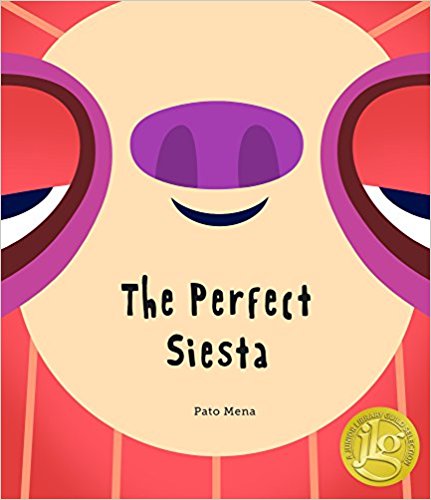
The jungle heat begs for The Perfect Siesta

The Perfect Siesta, by Pato Mena, (June 2017, NubeOCHO), $15.95, ISBN: 978-84-945415-3-7

Recommended for readers 3-7

It’s a hot day in the jungle, so when a lovely, cool breeze blows through, a jaguar seizes the moment to take a nap. He has things to do, though, so he asks a coati to wake him in 10 minutes. The coati doesn’t want to say no to a jaguar, out of a healthy sense of self-preservation, but that breeze is just sooo nice… so he asks a cockatiel to wake him up in 10 minutes, who then goes on to ask a sloth. The poor sloth feels the pressure to stay awake, but can’t fight it anymore and lets out a giant SNORE that keeps everyone’s promise!

The Perfect Siesta has entered regular storytime reading at home, and I’m planning a great nap-centric read-aloud to debut this one at my library. It’s hilarious and I love the art, especially the giant, sleepy sloth’s eyes (shown on the cover). Snoring is up there with farts in terms of read-aloud humor, so let your loudest snore rip when you’re reading – the text will support you!

The collage-style artwork will catch readers’ attention and makes for a great read-aloud to large groups as well as small groups. The animals are native to South America, so this also makes for a good rainforest storytime, with extra fun if you have plush or flannels to add to the atmosphere.

Originally published in Spanish, The Perfect Siesta translates hilariously into English and makes for a fun bedtime, naptime, anytime read. The Perfect Siesta is a Junior Library Guild selection.

Posted in Early Reader, Fiction, Preschool Reads

A mother’s love letter to her daughter: When I Carried You In My Belly

When I Carried You In My Belly, by Thrity Umrigar/Illustrated by Ziyue Chen, (Apr. 2017, Running Press Kids), $16.99, ISBN: 978-0-7624-6058-8

Recommended for readers 3-7

A mother explains where all of her daughter’s wonderful qualities were born: as she grew in her mother’s belly. Her mother laughed so hard that baby laughed, too; that’s why she has a great laugh today. Her grandmother’s loving hands built her crib, and grandfather made sweets to eat; that’s why she dreams softly at night and is so sweet. Her mother sangs joyful songs in different languages, and that’s why the girl feels at home anywhere in the world. It’s a sweet love story between mother and daughter, but also illustrates the love and importance of family.

This is a first picture book for author Thrity Umrigar, who hopes that children will come away understanding the importance of family and the importance of being kind and generous. Her text – a mother lavishing praise on her daughter while reminiscing about her pregnancy – combined with Ziyue Chen’s joyful illustrations featuring multicultural characters, invites children to laugh and play together, part of a world community.

This is a great baby shower gift: the story embraces motherhood, empowers mothers to love their bodies (mom happily belly dances with a beautiful bare midriff), and encourages mother-child interaction from the womb. I remember the little tickles and wiggles I felt with each of my boys even now. I remember playing with them, pushing on my belly in one spot and the delight in seeing a little hand (or foot) push back in response. It’s also a good reading choice for a discussion group, to get moms talking with one another, and their children, about their own pregnancies and what they love about their children. When I Carried You in My Belly is a love letter from mother to child, and a love letter to mothers everywhere.

Display this with books on family and individuality. I like Mary Ann Hoberman’s All Kinds of Families, Everywhere Babies, by Susan Meyers, The Family Book, by Todd Parr, and What I Like About Me, by Allia Zobel-Nolan.

Thrity Umrigar is the bestselling author of a memoir and six novels, including The Space Between Us, If Today Be Sweet, and The Story Hour. Her books, articles, and more information is available via her website. Ziyue Chen’s work has been recognized in the 3×3 Picture Book Show (2014), SCBWI’s SI Scholarship (2013), the Society of Illustrators’ Student Scholarship Show (2013), and Creative Quarterly (2012). You can see more of her illustration at her website.

Posted in Animal Fiction, Humor, Preschool Reads

Welcome to New York. Now, STOP FEEDIN’ DA BOIDS!

Stop Feedin’ the Boids!, by James Sage/Illustrated by Pierre Pratt, (Apr. 2017, Kids Can Press), $16.95, ISBN: 978-1-77138-613-5

Recommended for readers 4-8

A young girl named Swanda moves to Brooklyn. Missing all the local wildlife she used to enjoy, she spots a pigeon on a rooftop and decides to set up a feeder on her fire escape. Since Swanda appears to be new to New York living, she has no idea what can of worms she’s opened, and before she can say, “bagel”, pigeons swarm the fire escape. New Yorkers know all too well what a horde of pigeons brings, and sure enough, Swanda’s neighbors find themselves under siege as the pigeons leave their mark as literally as they do figuratively.

Stop Feedin’ Da Boids is a love letter to New York. Sage and Pratt capture the city’s diversity by giving us a heroine of color, and in the bustling community. The pages are loaded with representatives of different cultures and colors; Hasidim and Rastafarian, women with rollers in their hair, kids running through the street, men chatting with one another. Pratt even captures the New York pigeon to perfection, with the bright yellow eyes that target lock on any scrap of food in the birds’ vicinity, and the grey/black bodies with a hint of color, usually green. Sage nails the New Yawk accent so well when Swanda’s beleaguered neighbors gather together to tell Swanda, “YOU GOTTA STOP FEEDIN’ DA BOIDS!” that any reader, anywhere, will hear it, as clear as a clanging bell.

This makes a great read-aloud – you can go to town with the voice! – and invite the kids to give their best New York accents a whirl. Let them feel like part of the city! There are oodles of New York-centric books to add to a New York/New Yawk storytime: Mo Willems’ Knuffle Bunny books spotlight Mo’s art over black and white photos of Brooklyn, home of Swanda and the pigeons; Mommy Poppins has a nice list of New York-related books to choose from, and I also love Christoph Niemann’s Subway and Bryan Collier’s Uptown. You could also have a pigeon read-aloud, which gives you an excuse to read Mo Willems’ Pigeon books. (Not that anyone needs an excuse to read Mo.) A fun storytime craft that may or may not get you in trouble: a bird feeder. Or you can do the sticker/coloring sheet thing, too.

Stop Feedin’ Da Boids! received a starred review from Kirkus.

Posted in Early Reader, Fiction, Fiction, Intermediate

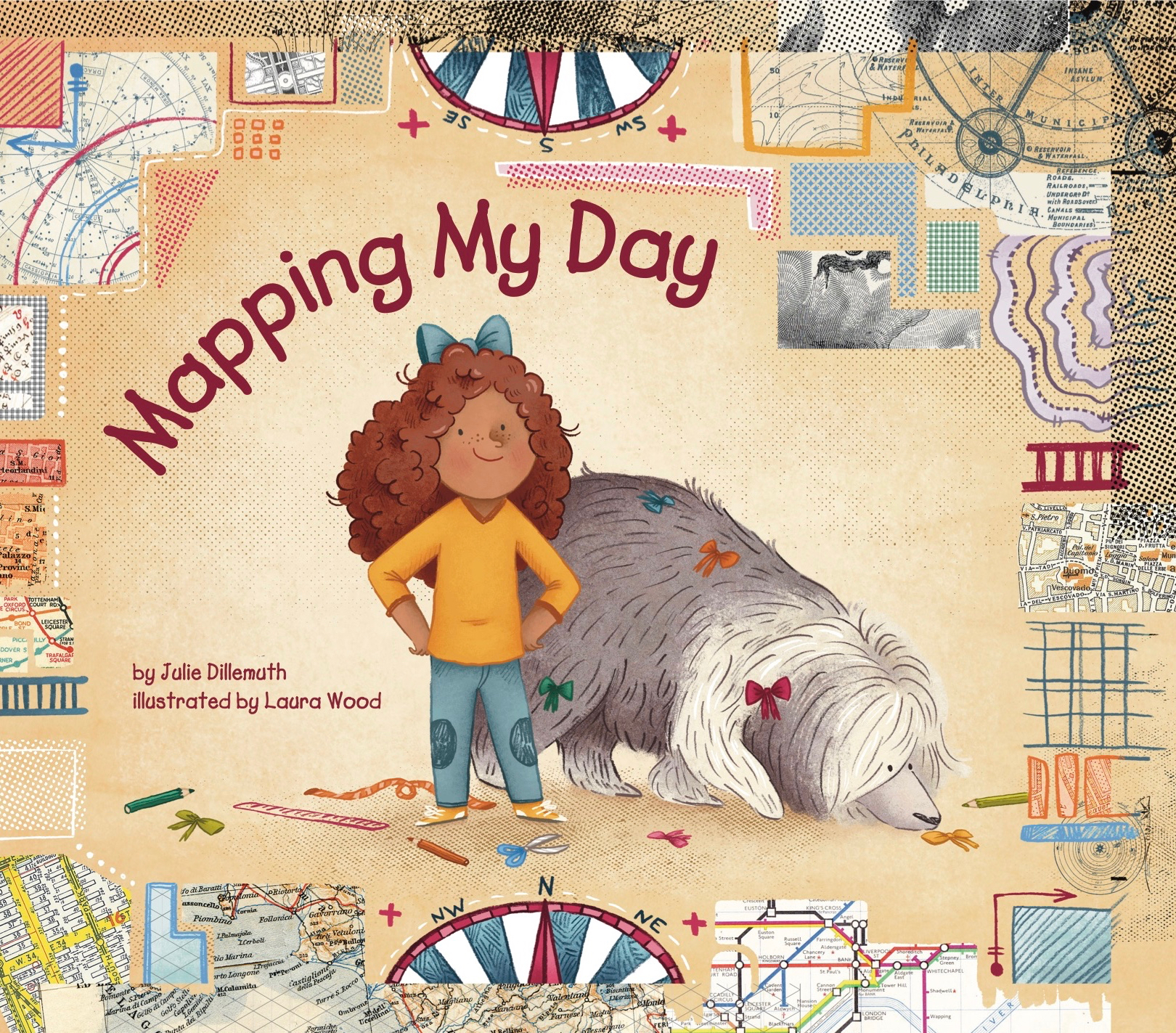
Mapping My Day brings back the lost art of mapmaking

Mapping My Day, by Julie Dillemuth/Illustrated by Laura Wood, (March 2017, Magination Press), $15.95, ISBN: 978-1-4338-2333-6

Recommended for readers 5-10

Flora is a girl who loves making maps. From sun-up to sundown, Flora maps her day and invites readers to see how she does it! Starting with an early morning wake-up thanks to the sun streaming through her bedroom window, Flora explains and illustrates terms like cardinal directions, map scales, landmarks, even seating plans.

I remember when I was a kid and learning about maps in Social Studies. That whole one inch = 1 mile thing made me want to bang my head against the desk in frustration. If I’d had a book like Mapping My Day to start me off, things would have gone a lot easier with those issues of Scholastic News. The book brings readers right into Flora’s circle. It’s like having a friend show you her journal, where she writes out how she watches her grandmother’s show poodles train on their obstacle course, or map out her school playground, or how she manages to beat her brother to the bathroom in the morning.

There are no frustrating measurements, no rulers necessary. It’s a great invitation to start mapping out our world – something that may be seen by some as a dying art in this age of GPS, but is a critically important skill to have. We should all know how to lay out a space; what our cardinal directions are and how to find them, and the importance of landmarks when you’re finding your way. For librarians and teachers, this is a lesson or a program in a book: the activities at the end of the book are even available for download so you can get a head start on planning. A note to parents, caregivers, and professionals explains the importance of mapping, diagramming, and understanding spatial relations, and includes ideas for incorporating them into kids’ play.

The art is friendly and fun. Flora is a biracial child from a multiethnic family. The family eats at the table together and enjoys time with extended family members. Spreads move between Flora’s story – driving in a car with family, eating at the table with family, playing at school – and Flora’s maps, which have a hand-drawn/handwritten appearance. Key words appear bolded.

Julie Dillemuth was mystified by maps until she figured out how to read them and make them, and it was a particularly difficult map that inspired her to become a spatial cognition geographer. She lives with her family and writes children’s books in Santa Barbara, California, where the west coast faces south. Visit her at her website: http://juliedillemuth.com.

One lucky winner will receive a copy of MAPPING MY DAY (U.S. addresses). Enter this giveaway for your chance!

https://goo.gl/forms/yiZyHr8CNDC7iVWg1

Posted in Infant/Baby, Storytime

Baby Storytime: A World of Love and Fun

I’ve been enjoying my month of lapsit storytimes. Being part of a 3-librarian children’s room, March was my turn with the babies; for April, one of my colleagues takes over and I’ll have time to craft more storytimes. I’ve been using the same songs each week, which has been great; I’ve seen the parents get the hang of the songs and fingerplays and we’ve had a great time together.

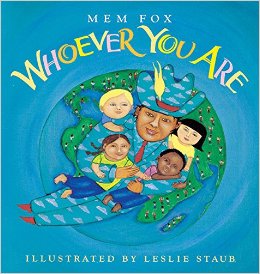
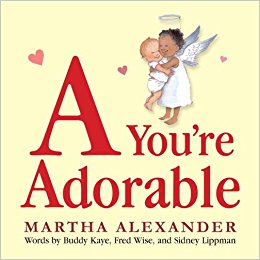
I’ve been trying to stick less to a story-specific theme, more of an overall theme of using one concept book, one fun book, and one book that addresses diversity. This week, we read Shhh! This Book is Sleeping, by Cedric Ramadier; Wherever You Are, by Mem Fox; and A You’re Adorable, by Martha Alexander. The families loved the interactivity of Shhh! This Book is Sleeping. As I read Whoever You Are, there was plenty of opportunity for families to cuddle, and seeing my storytime group of families from all over the world playing not only with their own little ones, but the little ones around them, made my morning. I was amazed at how well A You’re Adorable went over: families repeated each verse after me, bouncing, kissing, and tickling their babies as we went along.


It’s been a lovely month of storytimes, and I’ve come away with an excited new perspective, thanks to Storytime Underground. I’ll be working on toddler and preschooler themes next.


Posted in Early Reader, Fiction, Preschool Reads, Realistic Fiction

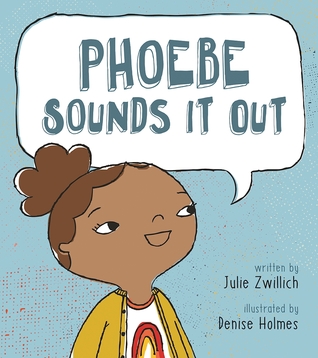
Fun with Phonics: Phoebe Sounds It Out

Phoebe Sounds It Out, by Julie Zwillich, (Apr. 2017, Owl Kids), $16.95, ISBN: 978-1-77147-164-0

Recommended for readers 3-7

Phoebe’s teacher announces that the children are going to learn to write their names today. All they have to do is sound it out. Phoebe doesn’t quite agree. First of all, Mama sewed her name on her school bag, and she’s convinced that she made a mistake: Phoebe’s name begins with a P, but that’s not the sound her name makes! She dawdles as the teacher encourages the class to sound it out, and finally, she gives it a shot. Her encouraging teacher tells her that it’s a great start – she did sound it out, after all!

I enjoyed so much about this book. I love that there’s a child of color main character and the diversity reflected in the classroom. One of the two teachers is also a person of color, and there is diversity in the classroom, including a classmate in a wheelchair. I enjoyed Phoebe’s thought process while the rest of the class works on their assignment: she fidgets, she goofs off, she “borrows” a letter from a classmate’s name to jazz up her name as she sounded it out. Kids will recognize themselves in Phoebe.

I’ve seen comments questioning whether a teacher would let Phoebe’s misspelling stand. I tend to say yes, especially for this first attempt. The point of the story is to sound out a word, and Phoebe does just that. When my older kids were in elementary school, the practice for teachers was not to correct spelling errors on similar assignments; the kids were expected to catch on eventually, and they did, through vocabulary words, spelling tests, and reading and being read to.

Denise Holmes’ art is rendered in ink and colored using Photoshop, and it’s very cute. There are bright colors and fun patterns, and sweet touches, like the children’s pictures on their cubby spaces and the handwritten children’s work.

This book presents a fun chance for a similar Sound It Out activity, complete with glitter glue to finish up your kids’ work. Let them sound out their names, or other fun words around them.

Julie Zwillich is a television personality with shows on Food Network Canada. You can see more of Denise Holmes’ illustration at her website.

c

Posted in programs, Storytime, Toddler Reads

Baby Storytime: Imagination, Love, Fun

We have honest to goodness baby storytimes here at the new library, so it’s challenged me to work with books and songs that will work for lapsits. It’s been fun, reading board book after board book and learning what will work with my littlest audiences versus my toddlers and preschoolers. I’m also keeping the Social Justice theme in my head as I put these together; making sure my books reflect the diversity in my neighborhood and introducing the kids and parents to other cultures. Since this community has a strong Asian, Southeast Asian, and Latinx community, I’ve introduced both Spanish and Chinese songs (so far), and they’ve gone over really well!
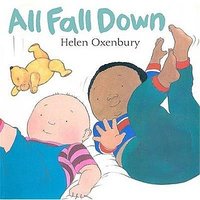
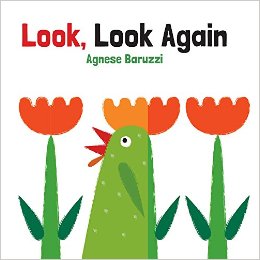
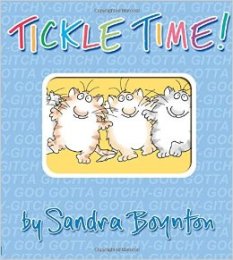
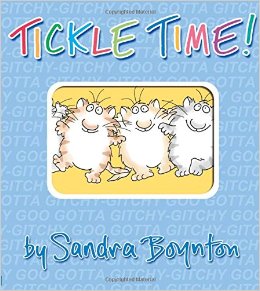
all-fall-down  look-look-again  tickle-time

I chose one book that reflected diversity, a fun fold-out book that challenges the way we see things, and finally, one of my favorites, that gets parents tickling and little ones giggling.

Hello song: “If You’re Ready for a Story”
If you’re ready for a story, take a seat
Clap your hands and stomp your feet
Make your hands all nice and neat
If you’re ready for a story, take a seat
Source: https://storytimekatie.com/songs-rhymes/openingclosing-songs/

Hello song: “We’re So Glad to See You”
Where is [insert kids name]?
There s/he is.
There s/he is.
We’re so glad to see you
Peek-a-boo, Peek-a-boo.
Source: Storytime Katie

I was afraid when I first used this song, to be honest; I didn’t know whether the large group would get tired before I got through every child’s name, but it worked very nicely, and the parents all welcomed the little ones happily and with loads of clapping and hugging.

Action Rhyme: “Acka Backa”
Acka backa soda cracker, acka backa boo! (Rock or bounce your baby)
Acka backa soda cracker, I love you! (Hug your baby!)
Acka backa soda cracker, acka backa boo! (Rock or bounce your baby)
Acka backa soda cracker, up goes you! (Raise your baby up, or put their hands in the air)
Source: Storytime Katie

Story

Action Rhyme: “Choo Choo Train”
This is a choo choo train, going down the track (Bend your arms and move them)
Now it’s going forward, now it’s going back (Lean forward, lean back)
Now the bell is ringing, (Ring your bells!)
Now the whistle blows (Blow on your baby’s head!)
What a lot of noise it makes, (Cover your ears)
Everywhere it goes! (Spread out your arms!)
Source: The Essential Lapsit Guide

Song: Two Little Tigers (Mandarin)
Liǎng zhī lǎohǔ, Liǎng zhī lǎohǔ,
Pǎo de kuài, Pǎo de kuài,
Yī zhī méiyǒu ěrduo, Yī zhī méiyǒu wěibā,
Zhēn qí guài, Zhēn qí guài.

Two little tigers, Two little tigers,
(They) run very fast, (They) run very fast,
One has no ears, One has no tail,
Very strange, Very strange.
Source: http://www.fluentu.com/chinese/blog/2015/03/18/chinese-songs-for-kids/

This was my first attempt at singing a song in Chinese. I watched a lot of YouTube videos to get the rhythm and pronunciation right, and the families were very generous with me. 🙂 This one will stay in the rotation.

Story

Action Rhyme: “Dos Manitas/Diez Deditos”
Dos manitas, diez deditos,
dos manitas, diez deditos,
cuéntalos conmigo.

Uno, dos, tres deditos,
cuatro, cinco, seis deditos,
siete, ocho, nueve deditos,
y uno más son diez.

It was nice to get back to a song I knew! This one always goes over well, no matter who the audience is. Waving hands and wiggling fingers makes lapsitters happy!

Song: “Yo te amo”
Yo te amo, yo te amo, all day long, I sing this song to you,
Yo te amo, yo te amo, darling, I love you.

Wo ai ni, wo ai ni, all day long, I sing this song to you,
Wo ai ni, wo ai ni, darling, I love you.

Āmi tōmāẏa bhālōbāsi, all day long I sing this song to you,
Āmi tōmāẏa bhālōbāsi, darling, I love you.
I love you, I love you, all day long, I sing this song to you,
I love you, I love you, darling, I love you.
Source: Jbrary

I’ve added Bengali in here, but haven’t had the chance to sing it yet – hoping my upcoming storytime will be the charm. In the meantime, more chance to practice!

Fingerplay/Song: Zoom, Zoom, Zoom!
Zoom, zoom, zoom
We’re going to the moon.
Zoom, zoom, zoom
We’re going to the moon.
If you want to take a trip
climb aboard my rocket ship.
Zoom, zoom, zoom
We’re going to the moon.
In 5, 4, 3, 2, 1
Blast off!
Source: Jbrary

Nursery Rhyme/Song: “Baa Baa Black Sheep”
Baa, baa, black sheep, have you any wool?
Yes sir, yes sir, three bags full!
One for the master,
One for the dame,
And one for the little boy
Who lives down the lane
Baa, baa, black sheep,
Have you any wool?
Yes sir, yes sir,
Three bags full…

Gotta have an original classic in there! This one is a favorite, everywhere I go.

Story

Closing Rhyme: “With My Little Hands”
With my little hands I go clap, clap, clap
With my little feet I go tap, tap, tap
With my little arms I wave bye, bye, bye
With my little legs I kick high, high, high
With my little eyes I play peek-a-boo
With my little mouth I say “I love you”
Source: Storytime Katie

Closing Rhyme: “Tickle the Clouds”
Tickle the clouds
Tickle your toes
Turn around
And tickle your nose
Reach down low
Reach up high
Storytime’s over
So wave goodbye!
Source: Storytime Katie

I think I’m off to a good start. I’ll swap in three new books every storytime, and keep most of the songs and rhymes, introducing a new one and swapping it back and forth with a previous one, to give the families familiarity with them, so they can do them at home.
Posted in Early Reader, Intermediate, Non-Fiction, Non-Fiction, Non-Fiction

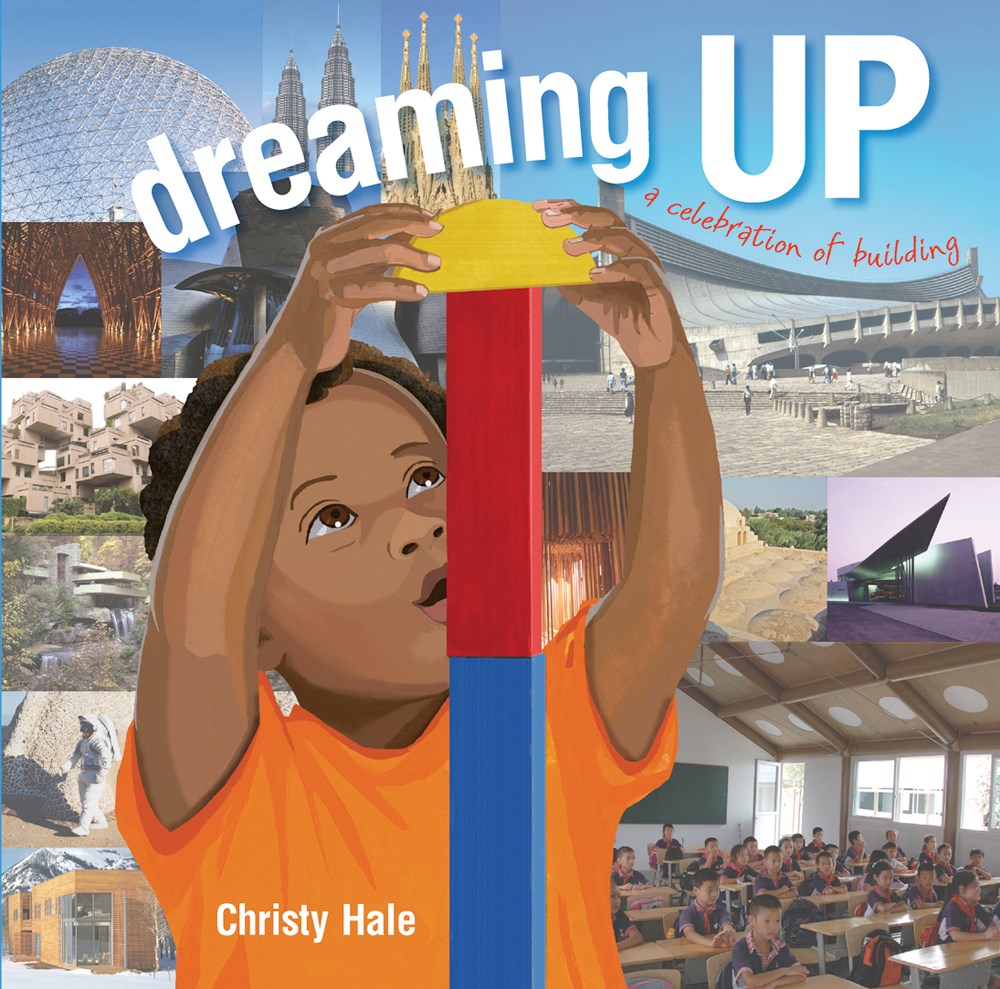
Tales from the Backlist: Christy Hale’s Dreaming Up

dreamingup_1Dreaming Up: A Celebration of Building, by Christy Hale, (2012, Lee & Low Books), $18.95, ISBN: 9781600606519

Recommended for ages 5-10

When I started at my current library last year, the younger kids were in the middle of a school project on architecture. I was able to give them books like the most current picture book retelling of Robert Louis Stevenson’s poem, Block City and Byron Barton’s Building a House, but after I exhausted the fiction section, I was stumped. Luckily, a quick tour of my nonfiction section brought me to Christy Hale’s beautiful book, Dreaming Up: A Celebration of Building.

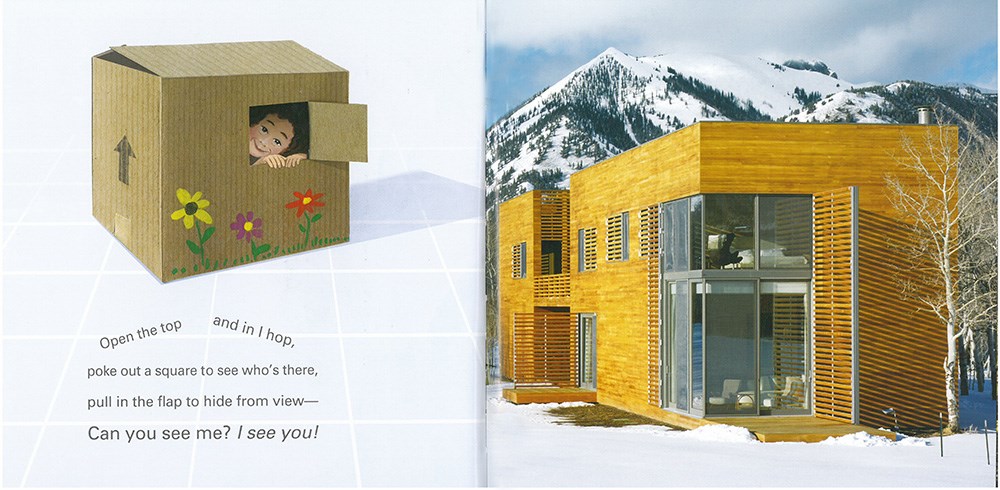
Dreaming Up combines illustrations of multiethnic children at work on their own constructions, with rhyming text building and swirling in construction of its own, and pairs each illustration with a photo and description of a notable work of architecture. Kids will experience the works of Frank Lloyd Wright and Antoni Gaudi, and they’ll see such masterpieces as the open-air church in Cartegena, Columbia, inspired by Gothic cathedrals; a temporary Chinese school constructed by students and teachers from plywood and recycled paper tubes, and New York City’s Gugghenheim Museum. It’s an exciting way to experience the world and emphasizes the importance of play in the creative process.

dreamingup_2

I put this book out during a storytime for my preschoolers, and just read the rhyming text. After storytime, I brought out stacking cups, blocks, and foam building pieces, and let the kids go to work. Watching the little ones work with their parents was amazing; there were walls, buildings, and winding roads by the time they were done. This is a great book for school-age kids, but you can easily modify it for younger ones. Booktalk it, let them draw or work with their hands, and see what the kids can create for you.

dreamingup_3

Dreaming Up has received multiple awards and honors, including Boston Globe-Horn Book Award Honors, the International Reading Association (IRA) Children’s and Young Adult Book Award Honor, and the 2012 California Book Award. It has been designated a Notable Children’s Book by the American Library Association (ALA) and was included on the Read! Build! Play! Summer Reading list of Books that Inspire Play, ALSC (Association for Library Service to Children) and LEGO.

dreamingup_4

Posted in Early Reader, Intermediate, Non-Fiction, Non-Fiction, Non-Fiction

Celebrate diversity with The Barefoot Book of Children!

barefoot_1The Barefoot Book of Children, by Tessa Strickland and Kate DePalma/Illustrated by David Dean, (Oct. 2016, Barefoot Books), $19.99, ISBN: 9781782852964

Recommended for ages 3-8

“Every morning, millions of children open their eyes and start another day.”

Using broad statements and insightful questions about how we live, love, and play,  The Barefoot Book of Children introduces readers to children all around the world. David Dean’s bright, hand-painted illustrations show how families around the globe live; dress; and pray and worship. We get glimpses into the treasures we all keep, the stories we all have to tell, the meanings behind our very names. With questions like, “How do you share your love?” and “What will happen in your story?”, the book invites kids to come together and talk about their lives and their families, learning how we are unique and the same, all at once. Illustrated notes at the end of the book provide a deeper examination of the book, focusing on homes, special places, and hobbies featured in the book.

I’m from Queens, New York; one of the most diverse places in the country. The Barefoot Book of Children is what every library, every school, in my borough should be reading and making available to the kids we serve, because every child here will see themselves in this book. That’s tremendous. It brings us together by introducing us to other cultures through the familiar: play, family, home. The bright artwork is so inviting, you can’t help but pull up a comfortable seat and spend some time getting to know your world better.

I loved this book, and I think parents, educators, and most importantly, kids, will, too. Take a look at more of the book and consider adding it to your wish lists.

barefoot_5

barefoot_6

barefoot_4


Posted in Uncategorized

Cuddle your kids all over the world with How Far Do You Love Me?

how far_1How Far Do You Love Me?, by Lulu Delacre, (2013, Lee & Low Books), $11.95, 9781600608827

Recommended for ages 4-8

Based on a bedtime game the author played with her daughters, “How Far Do You Love Me” takes readers all over the world, comparing their love to the 13 breathtaking sights and locations in the modern world. “I love you… to the place where the eagle is lost gliding along the rim of the sky”, reads one spread, with a parent holding a child above her head, the Peruvian mountains of Maccu Picchu surrounding them. Each spread takes readers to a different locale and illustrates adults and children together, enjoying the natural beauty around them and each other’s company.

This is a great bedtime book, and paired with a similar “I love you” book like Sam McBratney’s Guess How Much I Love You, gives kids a loving sense of security and a wink and nudge to their competitive nature. My little guy and I have extended our game to the planets these days: he loves me to Pluto and back, and I love him three times around the sun and back. We name the planets we encounter along the way, adding a little bit of science to our I Love You game. You can bring in a similar game here, going further around the world, naming famous places (“I love you to the Empire State Building… I love you to the Grand Canyon!”), states, or countries.

The art is colorful, with a spread for each location. The colors are bright but subdued, realistic, and with shadowing that gives each landscape a breathtaking depth. A nice addition to bedtime stories and books about the world around us.

Lee & Low offers a comprehensive teacher’s guide for How Far Do You Love Me?, including discussion questions, ELL activities, and ways to expand on the story.

Lulu Delacare also authors the Raffi y Rosi easy readers series. Her author webpage contains information about author visits, her books, and links to educator guides for several of her books.