Posted in picture books, Preschool Reads

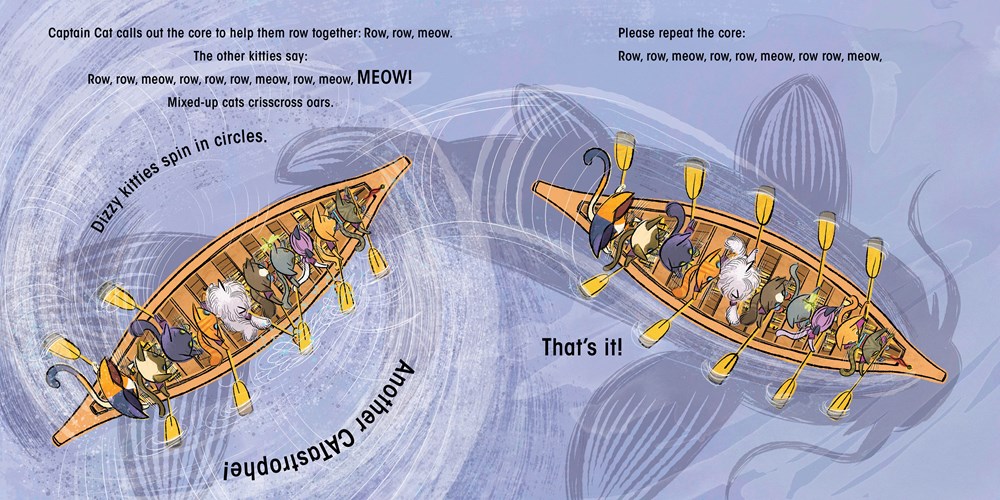
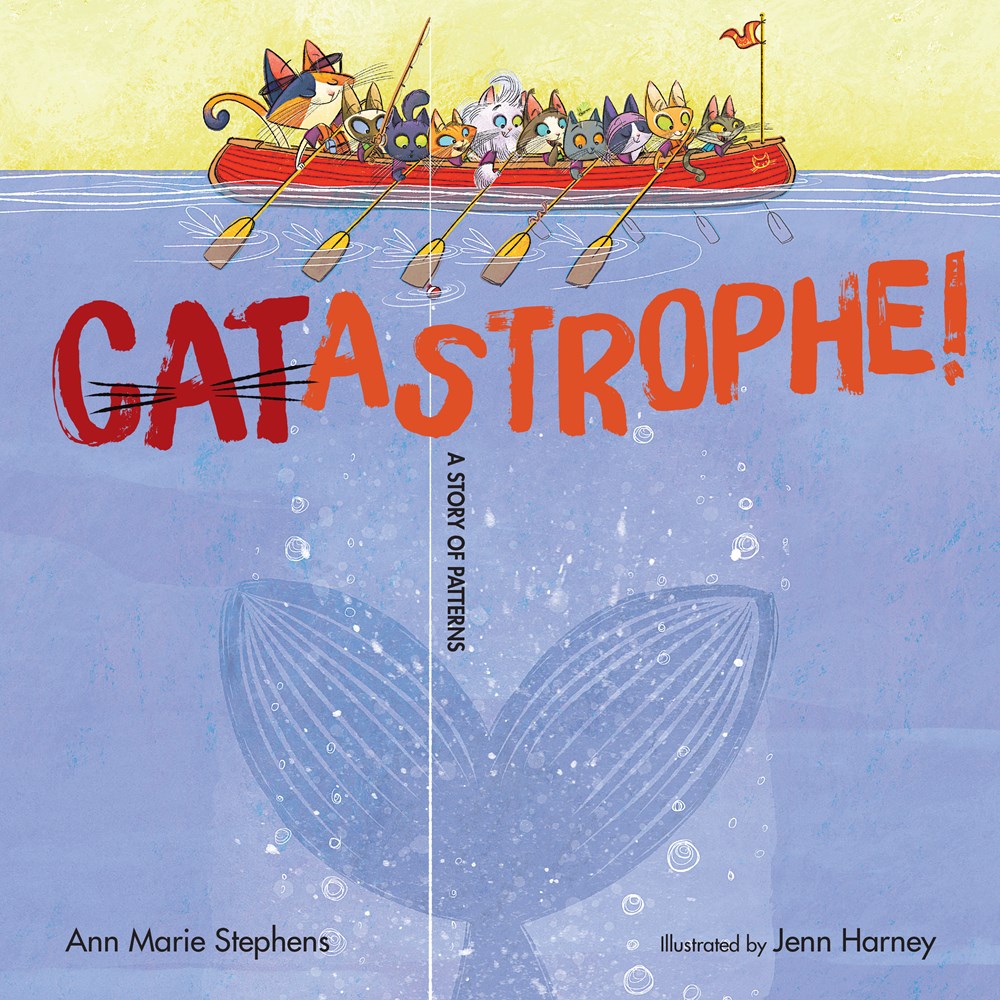
CATastrophe! teachers readers to spot patterns

CATastrophe! : A Story of Patterns, by Ann Marie Stephens/Illustrated by Jenn Harney, (Aug. 2021, Boyds Mill Press), $17.99, ISBN: 9781635923216
Ages 4 to 8
Nine kittens set out on a fishing adventure to catch some dinner, but – OH NO! – they’re running into some trouble! Luckily, the Captain is there to help them out, by organizing them and calling out patterns for them to follow: row, row, meow; heave, heave, ho; Captain calls out the code, and the kittens follow, creating an organized unit where they can paddle their boat and catch their fish. Using math as a code-building foundation, this is a great way to introduce patterns and coding to younger kids. Rhyming and wordplay, a fun story, adorable artwork, and a fun story makes mathematical concepts accessible and fun to learn and easy to remember. A fun side challenge has readers searching for a dragonfly and a worm that each appear 20 times throughout the book.
A fun companion to Ann Marie Stephens’s Arithmechicks series and Josh Funk’s How to Code books, bring the math fun early on this school year.
Posted in Middle Grade, Non-Fiction, Non-fiction, Tween Reads

Holiday Goodies: Gift book shopping guide!

I hope everyone enjoyed their holiday break! If you celebrate Thanksgiving, I hope you had a wonderful and safe holiday. And now, the shopping season heats up, so let’s get another gift guide together. This one is all about the gift books, and remember: today is Small Business Saturday, so if you’re able to, please support a local business!


Anatomicum (Welcome to the Museum), by Jennifer Z. Paxton/Illustrated by Katy Wiedemann, (Sept. 2020, Big Picture Press), $35, ISBN: 9781536215069

Ages 8-13

The Welcome to the Museum series is a great nonfiction series that lets readers recreate a museum in their own homes. Every museum wing you can imagine has a book: Dinosaurs, Animals, History, and so many more; many of the books have companion workbooks. The latest book, Anatomicum, dives  into the inner workings of the human body: how our cardiovascular systems and respiratory systems work, how facial muscles contribute to facial expressions, the development of a baby in the reproductive system, and how our immune and lymphatic systems help fight disease are just a few areas readers will explore. Katy Wiedemann’s scientific drawings in 2-color sepia-tones are detailed and Jennifer Z. Paxton’s accompanying text provides factual explanations and overviews on each area. Think of this as a Grey’s Anatomy for younger readers; artists and budding biologists and medical professionals alike will love this.


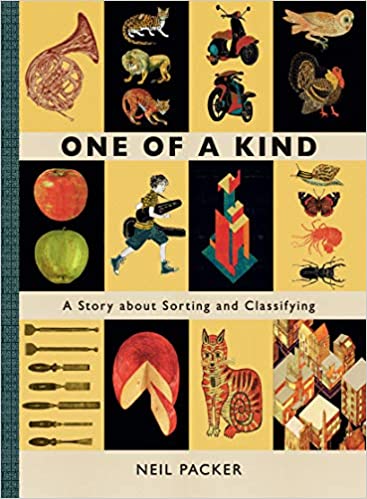
One of a Kind: A Story About Sorting and Counting, by Neil Packer, (Oct. 2020, Candlewick Studio), $22.99, ISBN: 9781536211214

Ages 7-10

A story wrapped within a book on classification, this is an excellent introduction to scientific classification and organization for kids. Readers meet a boy named Arvo, and get a look at his family tree. They meet his cat, Malcolm, and see his family tree, too. As Arvo moves through his day, readers discover how many ways there are to classify and organize information: as he learns to play the violin, we see where it fits into a grouping of musical instruments; when he needs to fix his bicycle’s tire, we get a look at different types of tools. Arvo visits the library, where the books are laid out by subject: can I get a print of this for my library? Back matter describes the classifications discussed throughout the story, and the mixed media art is interesting; each piece looks like a museum piece. What a great next step for sorting and classifying for kids!

The Language of the Universe, by Colin Stuart/Illustrated by Ximo Abadía, (Oct. 2020, Big Picture Press), $24.99, ISBN: 9781536215052

Ages 8-12

A visually stunning of the intersection of math and science, The Language of the Universe examines the history and application of math in the natural world. Discover the Fibonacci sequence in a sunflower and investigate the atom patterns in the periodic table; lift with levers and use math to encrypt messages. The text is easy to understand and lends itself to fun new projects for readers to think up. The art is colorful and there’s always something exciting to look at. Another great addition to shelves for young scientists and artists everywhere.


Space Encyclopedia: A Tour of Our Solar System and Beyond, by David A. Aguilar, (Nov. 2020, National Geographic), $24.99, ISBN: 978-1426338564

Ages 8-12

The latest update of NatGeo Kid’s Space Encyclopedia is out just in time for the holidays! The latest updates on our universe, all accompanied by breathtaking, full-color photographs, wait for readers in these pages. Sections on the stars, a tour of the solar system, life on other planets, and our future inclue Amazing Space! Milestone timelines, fun facts, and easy-to-read quick data bursts throughout. Spotlights on key figures in space exploration include Galileo Galilei, Albert Einstein, and Copernicus. The book is indexed and includes resources for additional reading and websites. A great gift idea for your budding astronomers and astrophycisists.

Posted in picture books

#HomesCool: Picture Book Math

How’s everyone doing with blended learning, in-person learning, or remote learning? Third grade math has been interesting to revisit, to say the least, so I decided it was time to enjoy some picture book math: let the games begin.

Sir Cumference Gets Decima’s Point, by Cindy Neuschwander/Illustrated by Wayne Geehan, (Oct. 2020, Charlesbridge), $16.99, ISBN: 978-1-57091-764-6

Ages 7-10

If you haven’t discovered the Sir Cumference series of books, you are missing out. I was introduced to them a few years ago, as a new librarian working with a student educator on a STEM/Discovery Club in our library. There are now 11 books and a book of classroom activities in the series, which follows a knight named Sir Cumference and the people he encounters, all named after math concepts. Each adventure takes on a new math problem, and the adventures use storytelling and mathematics to teach concepts like radius and diameter, area and perimeter, decimals, and more.

In this latest Sir Cumference adventure, Pia of Chartres, the best baker in Camelot, has been kidnapped by ogres! But they’re only borrowing her because they need her help: they are holding their annual feast and want her to make her famous Crème de la Crumb for the event. When Sir Cumference and the rest of the rescue party arrive on the scene and realize that Pia is in no danger, they all set to work baking and devising a way to make sure there’s enough food for everyone: ogres and surprise guests alike! The story introduces the decimal system in a way that blends easily into a story about baking and portions (for younger readers, think of Pat Hutchins’s The Doorbell Rang) as it explains tenths, hundreths, and thousandths. The warm, colorful artwork will draw readers right into its medieval fantasy world. Get the set and leave lots of scrap paper around; invite your littles into the kitchen with you and let them figure out portions of brownies and cakes as you bake!


Jefferson Measures a Moose, by Mara Rockliff/Illustrated by S.D. Schindler, (Aug. 2020, Candlewick Press), $17.99, ISBN: 9780763694104

Ages 6-9

Thomas Jefferson was a big fan of numbers; he measured, counted, and journaled things he was interested in, like how much it cost to see a monkey (11 pence) or how long it took to grow a pea (85 days). When he caught wind that a famous French naturalist, the Count de Buffon, published a book saying that America was a “miserable, cold, damp place where nothing good could grow”, he had to answer back. Not only were Buffon’s observations mean, they were wrong. He’d never seen the animals in America, let alone weighed them, measured them, or listened to them! He sent a book of his numbers to Buffon, but the Frenchman would not be swayed. So Jefferson called on his friend, James Madison, to help: he needed to get hold of a moose. A humorous look at a moment in math, U.S., and natural history, Jefferson Measures a Moose is about a former President’s mania for math and the truth. Back matter includes more information on Jefferson’s passion for numbers, and primary and secondary sources. Colorful ink and watercolor illustrations bring humor and history to the story. This is a fun choice for a readaloud to a STEM or Discovery Club project on weighing and measuring. Publisher Candlewick has a free Teacher Tips sheet available.

Want more math fun for kids? AMP has math, science, and other lesson plans incorporating their 8-Bit Warrior series.

Posted in picture books, Preschool Reads, Toddler Reads

#HomesCool: Storytelling Math RULES!

Charlesbridge Publishing has a new series that’s just in time for school, whether you’re fully remote, homeschooling, unschooling, or blended learning. Storytelling Math is all about looking at math a little differently. The authors and illustrators are diverse, their characters speak different languages, and they all speak the universal language of mathematics. The series was developed in collaboration with math experts at STEM education non-profit TERC, under a grant from the Heising-Simons Foundation.

Let’s start with award-winning author/illustrator Grace Lin’s new math board book series!
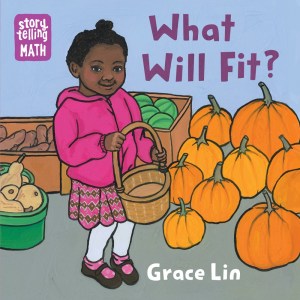
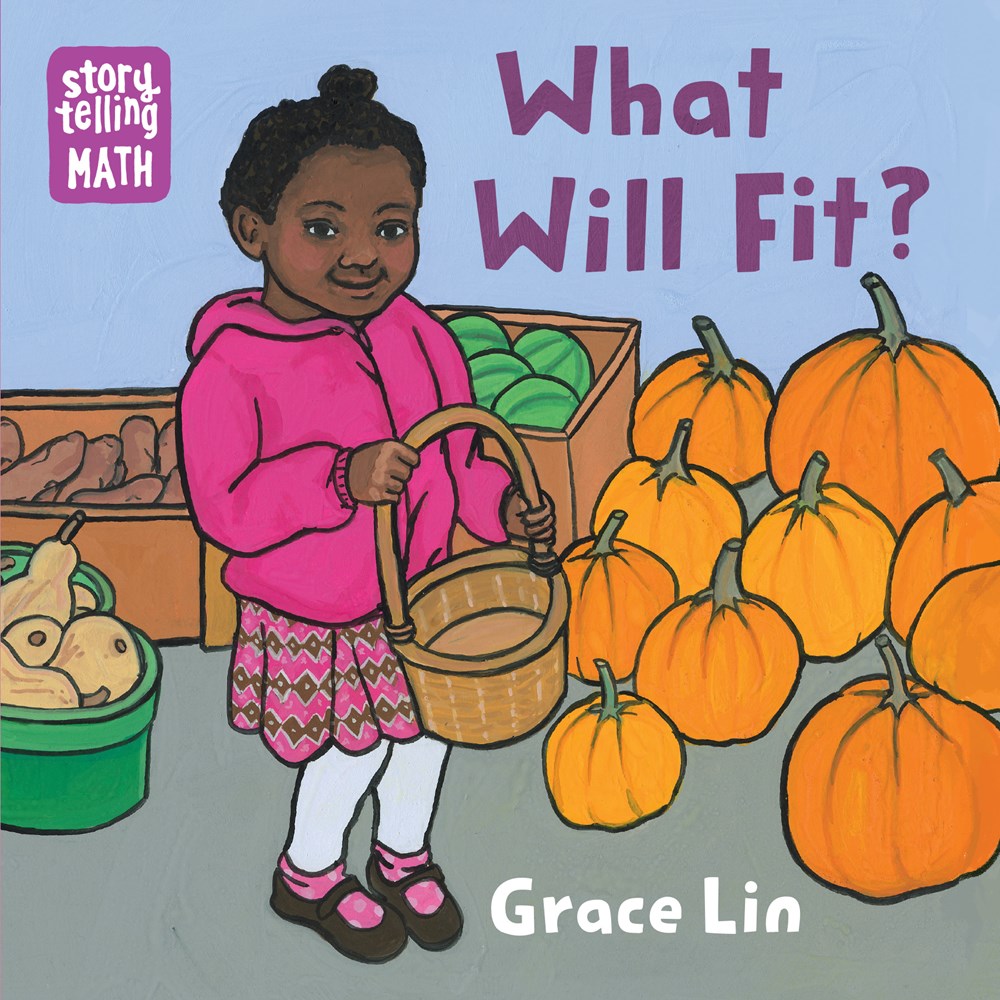
What Will Fit?, by Grace Lin, (Oct. 2020, Charlesbridge), $6.99, ISBN: 9781623541255

Ages 0-3

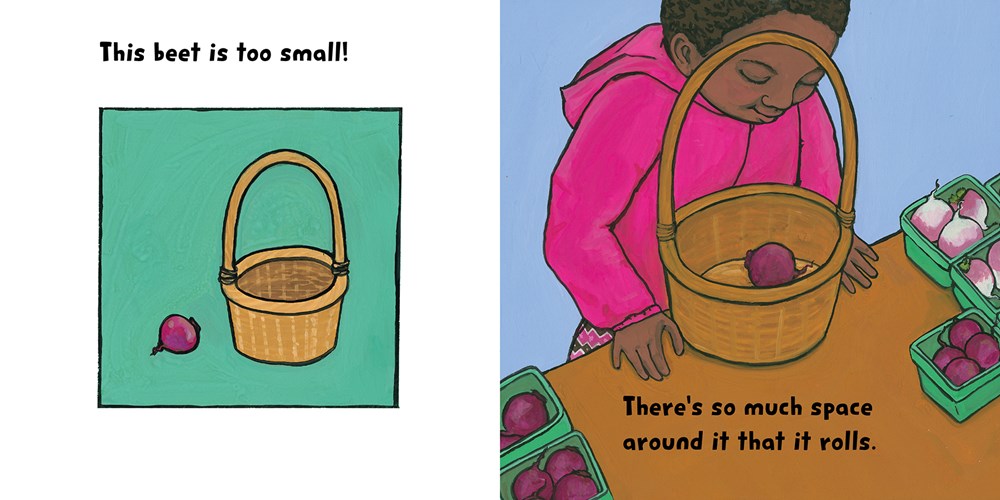
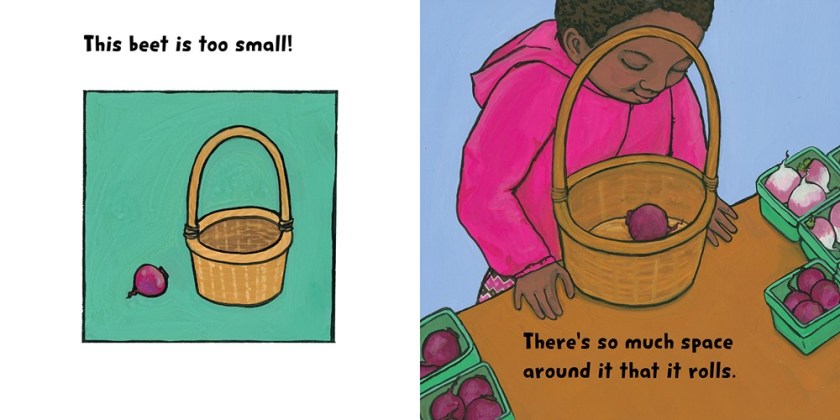
Olivia, a little girl, heads to a farmer’s market, ready to fill her basket with good food. What will fit? The beet just rolls around, but the zucchini is too long, and just sticks out. How will Olivia find the best fit and bring home some healthy food? What Will Fit? is all about spatial relations. A section called Exploring the Math explains the math – in this case, spatial sense and how things fit – in the context of the story. A Try This! section offers easy activities that parents and caregivers can incorporate lessons into a child’s day. Exploring Math and Try This are written by Douglas Clements, Kennedy Endowed Chair and Professor at the University of Denver and executive director of the Marsico Institute for Early Learning and Literacy.

Grace Lin’s artwork is always so colorful and fun. Setting What Will Fit? in a farmer’s market allows her to let her character, a young girl of color, wander through a colorful setting, with delicious foods that kids can identify, count, and name shapes and colors.
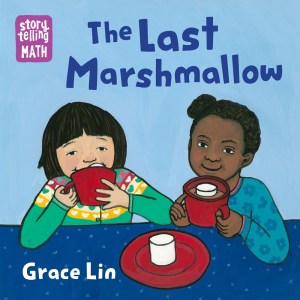
 

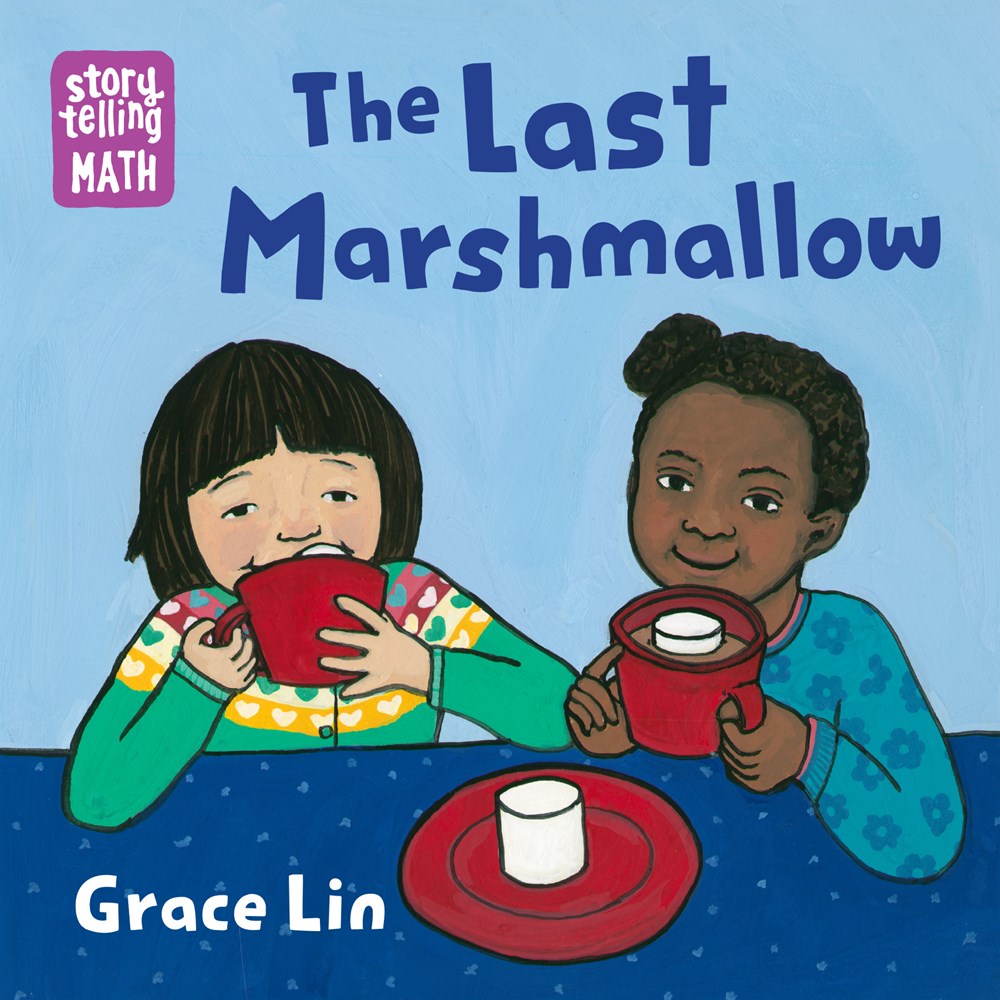
The Last Marshmallow, by Grace Lin, (Oct. 2020, Charlesbridge), $6.99, ISBN: 9781623541262

Ages 0-3

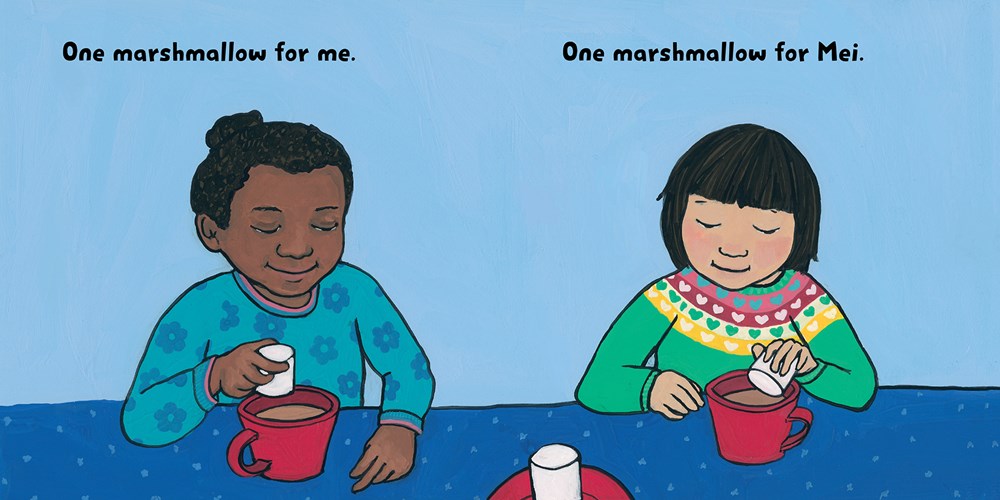
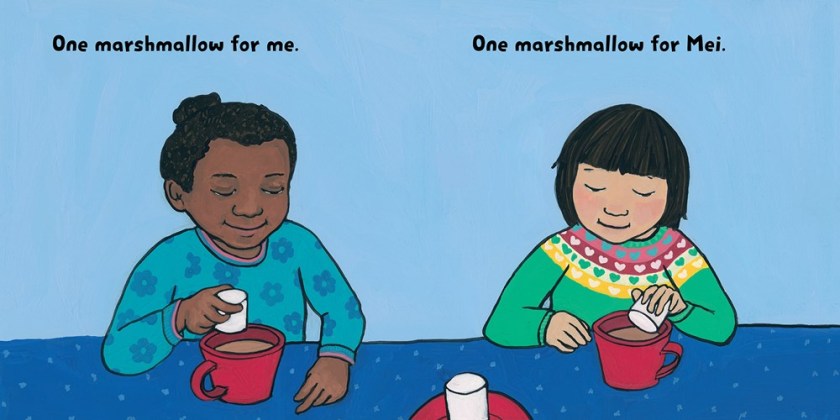
It’s a cold day out, and Olivia and Mei warm up with some hot chocolate. There are two friends, and three marshmallows: who will get the last marshmallow? All about division and fractions, The Last Marshmallow is also about sharing and friendship. Exploring the Math explains how sharing leads to a real-world understanding of fractions and division, and Try This! suggests having kids figure out how to share food in different increments in a way that’s fair to everyone.

The artwork is cheerful and focuses mainly on Olivia and Mei, with two yummy cups of hot cocoa, and three plump marshmallows to split between them.
 

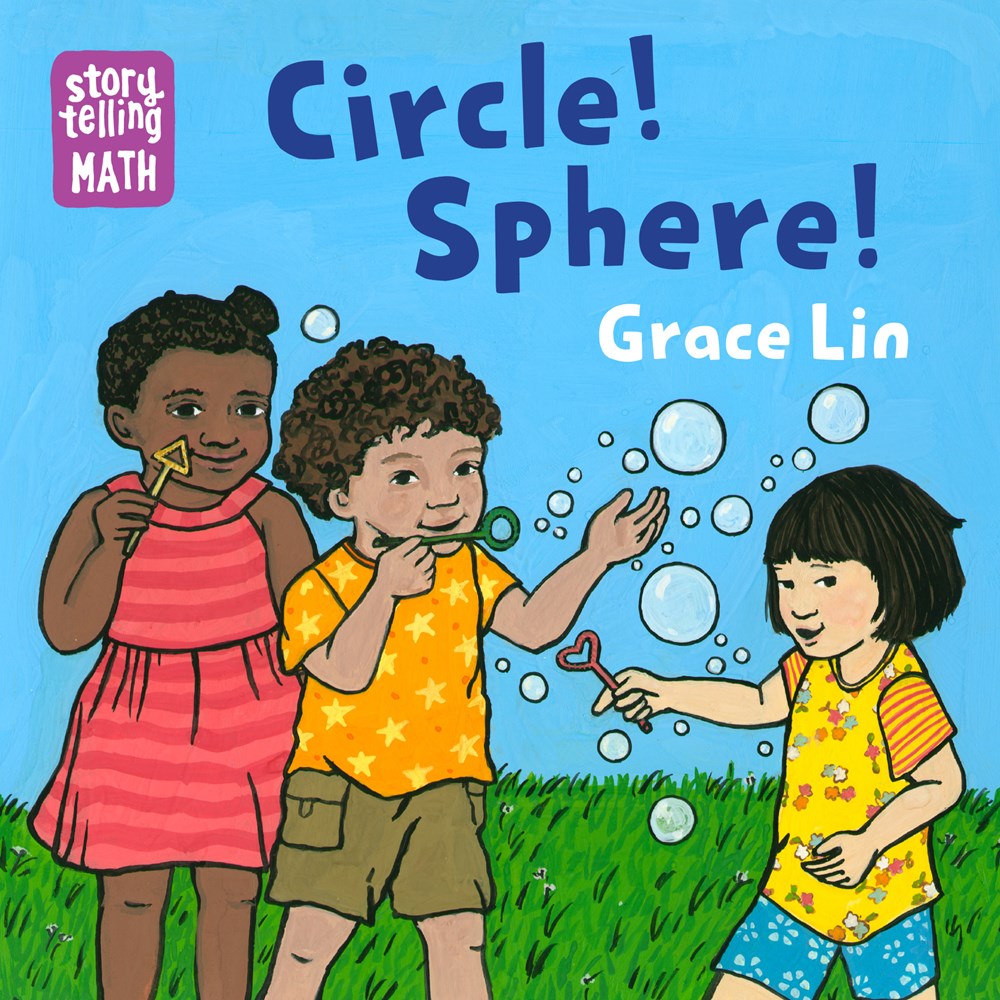
Circle! Sphere!, by Grace Lin, (Oct. 2020, Charlesbridge), $6.99, ISBN: 9781623541248

Ages 0-3

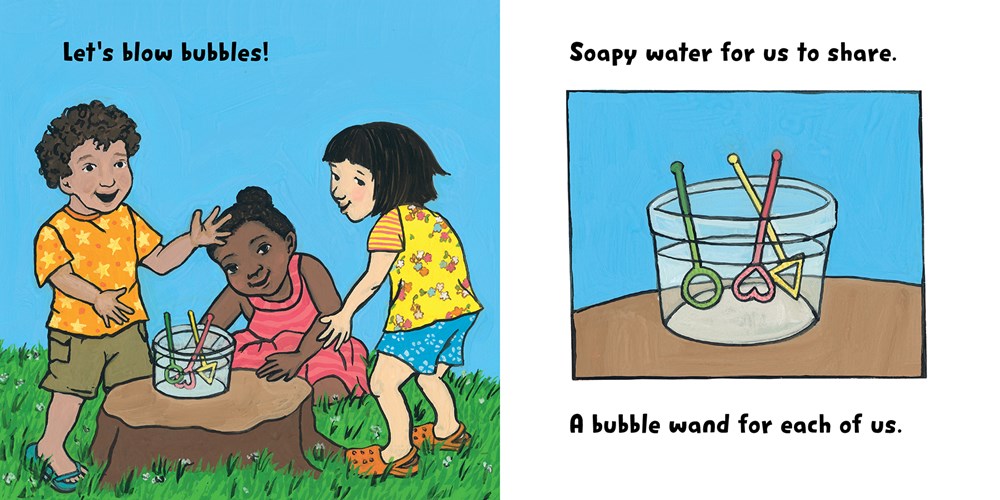
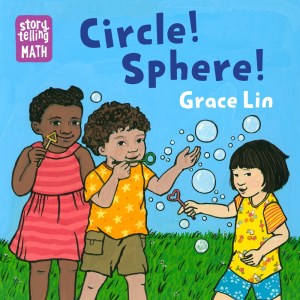
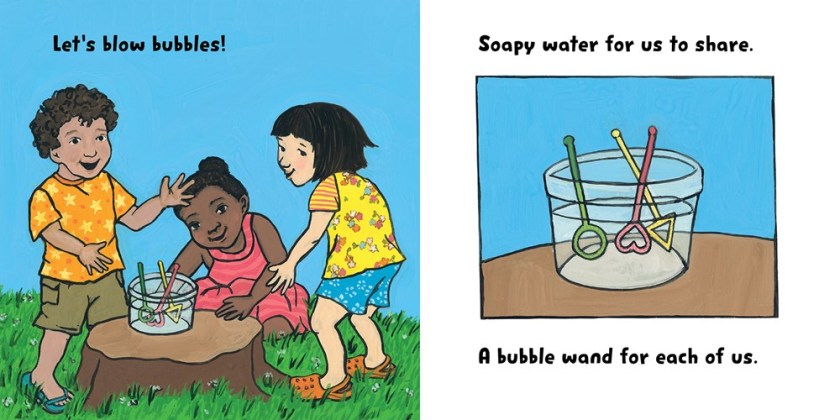
Manny, Mei, and Olivia are playing outside together and want to blow bubbles. There are three bubble wands; one for each friend. Each wand has a different shape, but they all blow spherical bubbles! Teaching children the foundation of geometry, Circle! Sphere! looks at shapes and 3-dimensional objects using a day outside, spent blowing bubbles with friends. Exploring the Math explains how the story helps build that mathematical foundation, and Try This! introduces new vocabulary words, including sphere, circle, and round, along with suggestions for encouraging children to think about shapes.

The artwork is cheery , depicting three friends playing outside on a warm day. Bubbles and wands offer the chance to go over shapes and colors with little learners.
 

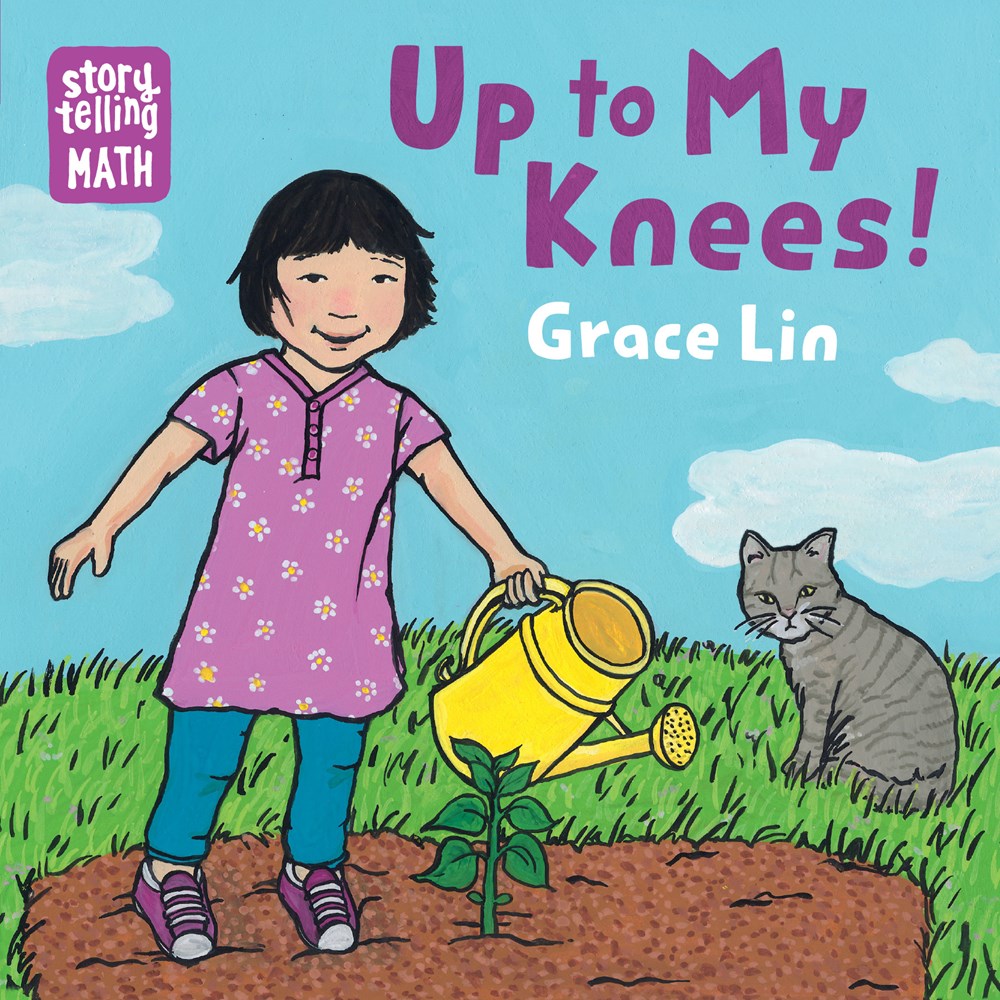
Up to My Knees!, by Grace Lin, (Oct. 2020, Charlesbridge), $6.99, ISBN: 9781623541231

Ages 0-3

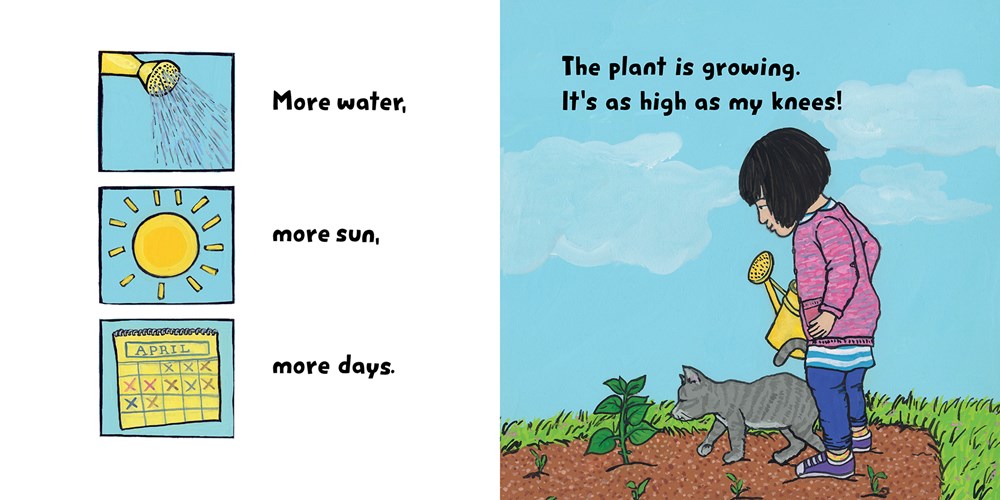
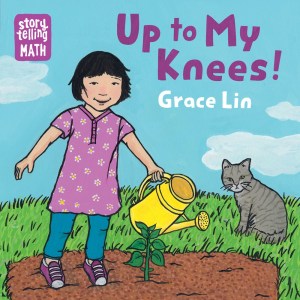
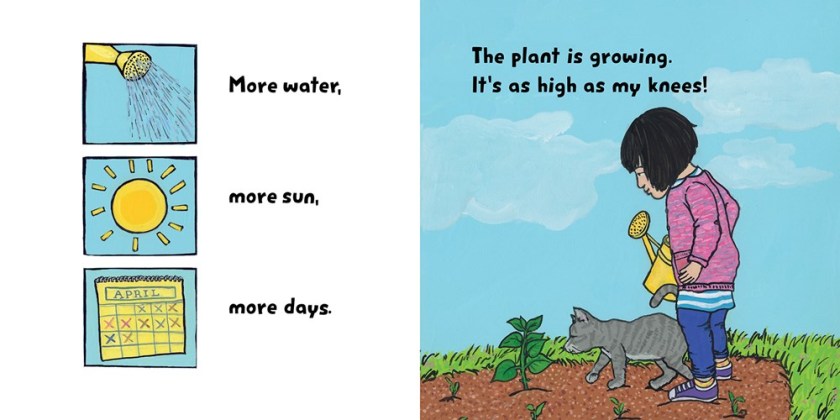
Mei celebrates the spring by gardening! She plants a seed and waits for it to grow. With water, sun, and time, the plant grows and grows: first it’s as tall as her toe; then, her knees; her shoulders, and finally, when summer arrives, the sunflower is in full bloom and taller than Mei! Up to My Knees introduces height and measurement in a story about plants, growing, and the seasons. Explore This explains how stories like Up to My Knees set the stage for understanding measurements and, eventually, using tools like yardsticks and rulers. Try This! encourages parents and caregivers to work with kids to measure things in their homes and environs, and introduces vocabulary words like longer and taller.

The artwork is cheery and bright: it’s spring and summer! Mei is out in the open air, gardening and growing a lush green plant that blooms into a bright sunflower.
Setting the stage for everyday math concepts, Grace Lin’s board book series features diverse characters and tells deeper stories of sharing and friendship. While Grace Lin’s website doesn’t have anything about the Storytelling Math books up yet, she does have some great resources available for parents, caregivers, and kids. The Storytelling Math website has author Q&A and videos; I’m hoping we get some educator and parent resources soon, too.
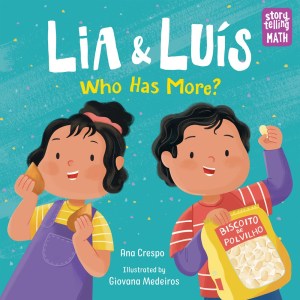
 

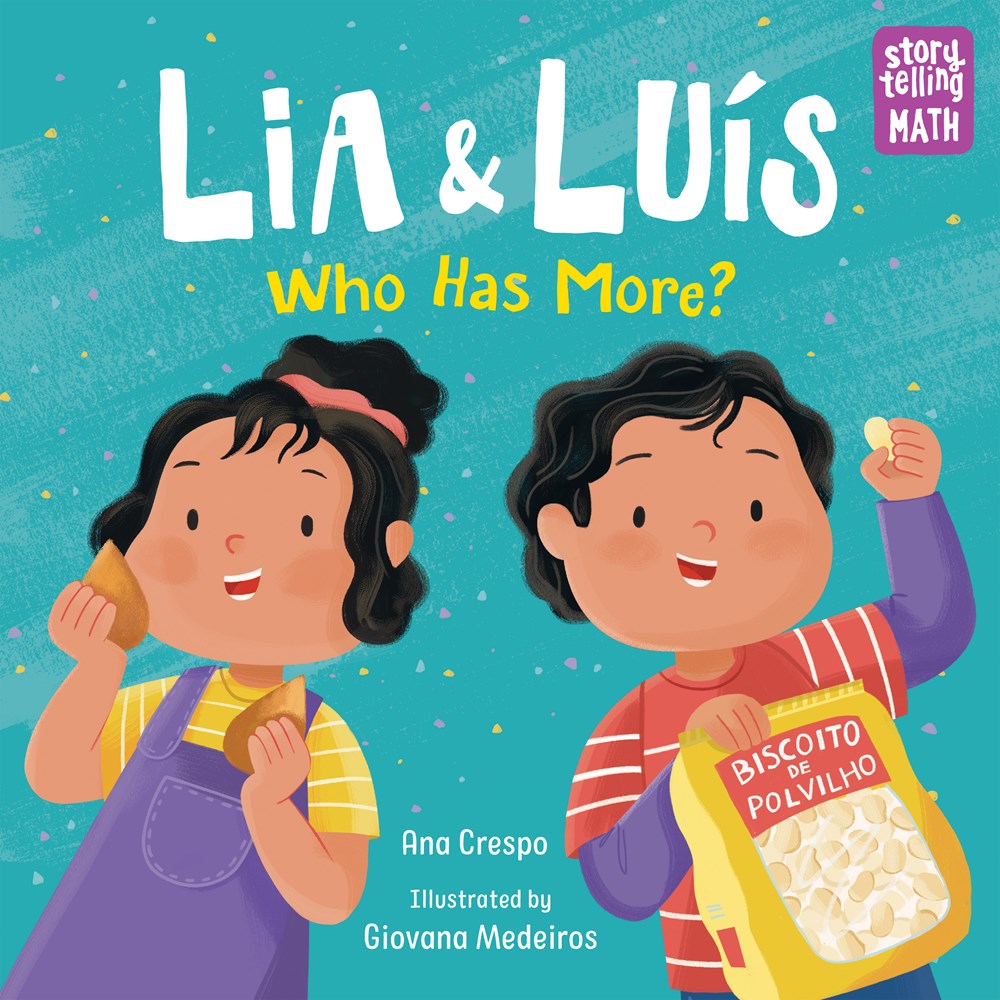
Lia and Luis: Who Has More?, by Ana Crespo/Illustrated by Giovana Medeiros, (Oct. 2020, Charlesbridge), $15.99, ISBN: 9781623541279

Ages 3-6

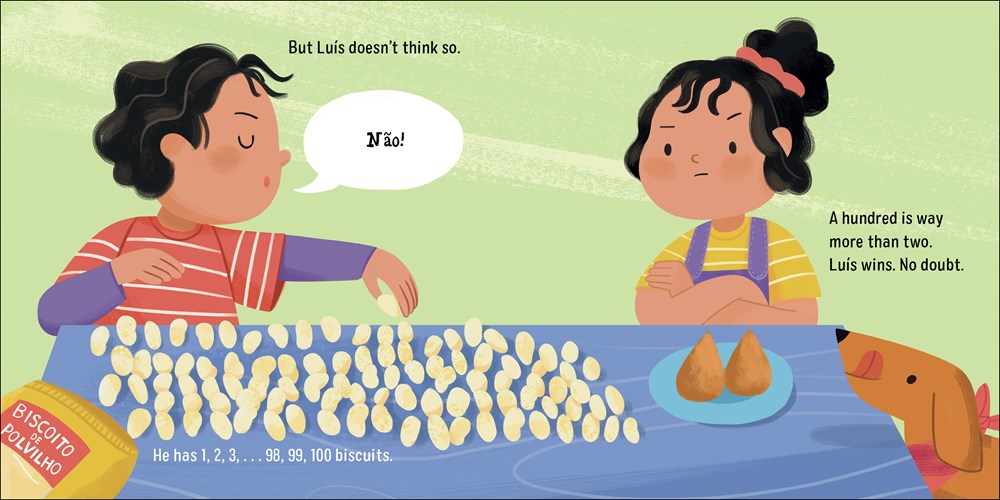
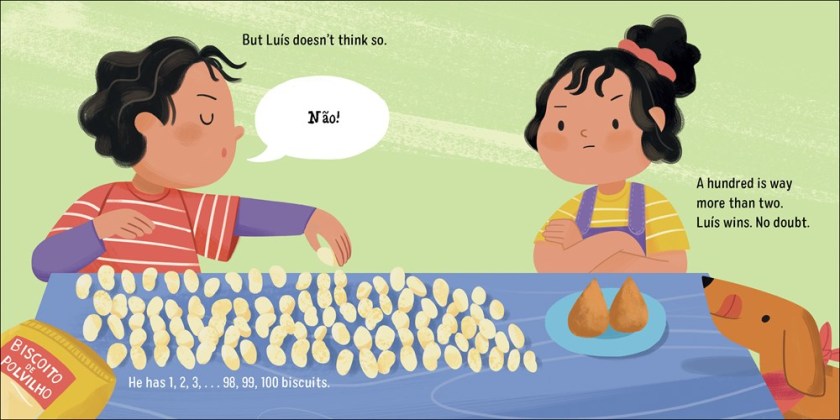
Twins Lia and Luis try to one-up one another when it comes to their favorite snacks. Lia’s got two chicken croquettes, and Luis has a bag of tapioca biscuits. So who has more? Depends on how you look at it: if you’re counting, a bag of chips has a lot more than just two; but if you weigh them, two chicken croquettes weigh more than a light bag of chips. So how do they even things out without anyone feeling bad?

The twins use the math concepts of comparing, measuring, and counting to work out who has “more”: depending on what you consider more, the answer is going to be different, as they learn. They learn that quantity and weight are two very, very different things! It’s an easy way to put learning into practice: the next time you go to a grocery store, show your kids how different packaging doesn’t necessarily mean there’s more of something; point out how the weight really makes the difference, especially when it comes to getting the best deal for your money.  A Try This! section at the end of the story, by Sara Cordes, Ph.D., Associate Professor of Psychology at Boston College, offers practical ways to help kids put this story into practice.

This is a fun story made even more fun by the fact that Lia and Luis speak Portuguese! The narrative text of the story is in English, and Lia and Luis, who are Brazilian, speak Portuguese to one another. A glossary of phrases is there for readers (but they’re largely understandable in context). Friendly characters, warm colors, and an exciting new language lesson make learning math even more enjoyable!
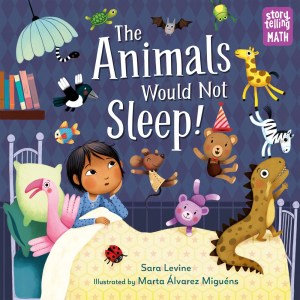
 

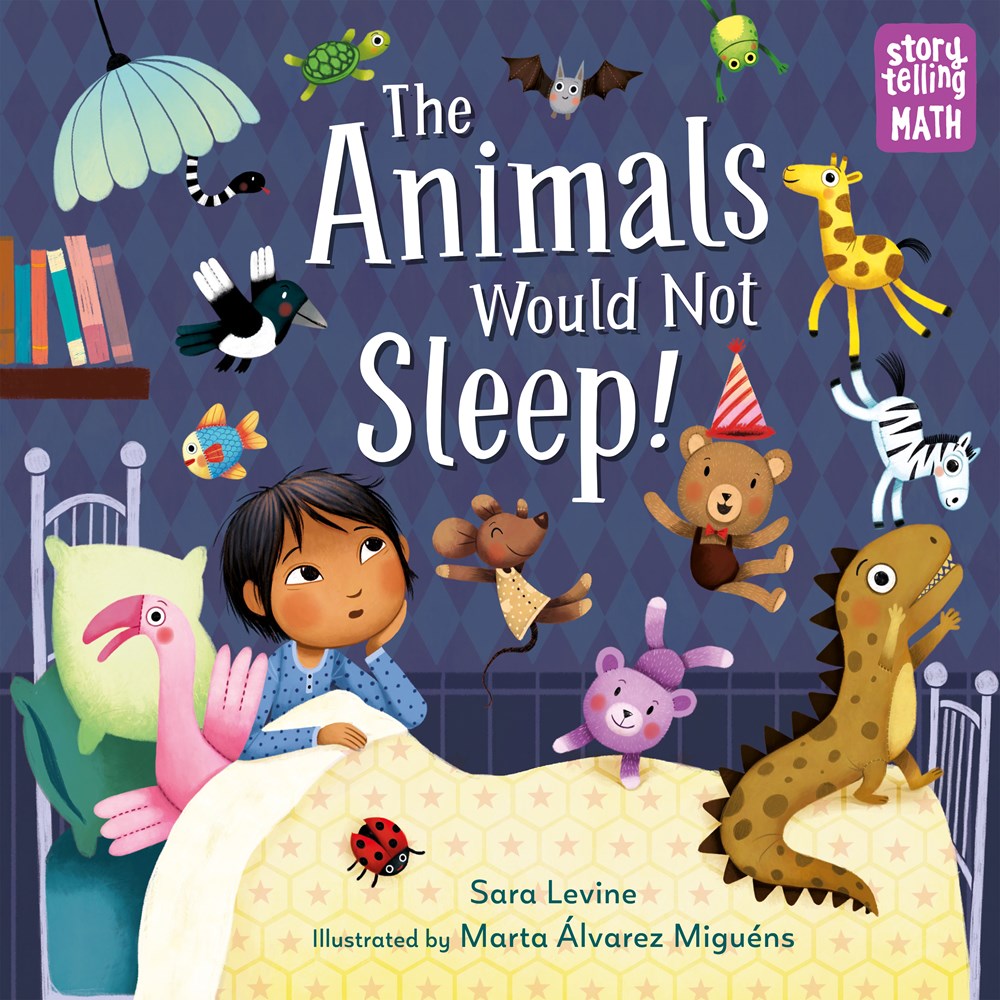
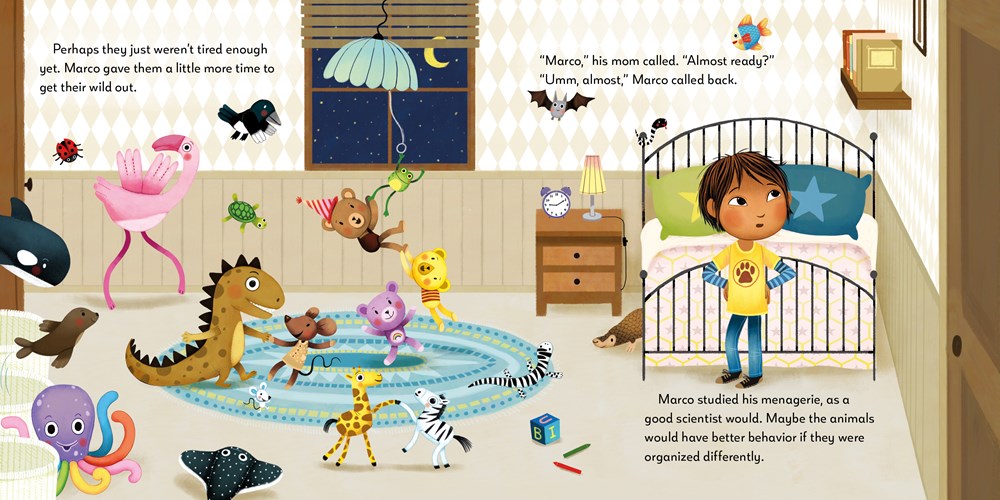
The Animals Would Not Sleep, by Sara Levine/Illustrated by Marta Alvarez Miguens, (Oct. 2020, Charlesbridge), $15.99, ISBN: 9781623541286

Ages 3-6

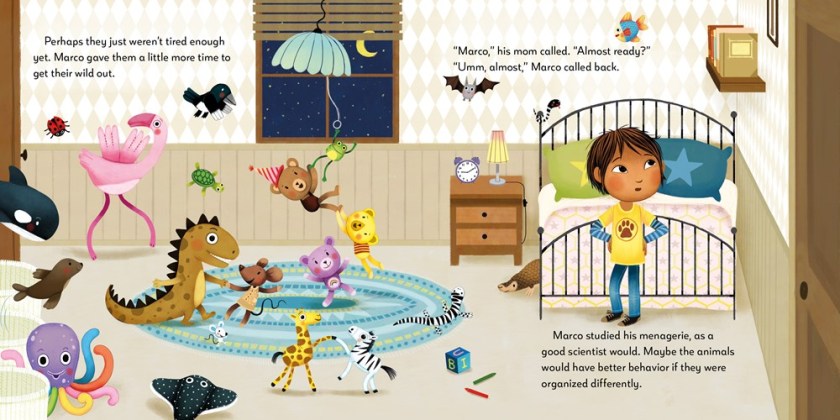
Marco has to get ready for bed, but his stuffed animals are causing a ruckus! He tries to sort them into bins to get ready for bed, but they aren’t happy! He attemps different classifications to sort by – he IS a scientist, after all! – and finally arrives at an arrangement that works well for everyone. Incredibly relatable – my Kiddo loved this, because it mirrors has bedtime arrangement – and sweetly affectionate, The Animals Would Not Sleep is a good bedtime story, but it’s also a great way to start talking about the concepts of classification, sorting, and characteristics. Each time Marco classifies and sorts his animals, he’s spot on – some are flying animals, some move on land, some swim – but they complain. He changes them up according to size, and then color, but someone is always feeling left out. His last arrangement takes everyone’s feelings into consideration and leads to a good night’s sleep.

Back matter talks about sorting in science, and a sections on Exploring the Math and Try This! by Karen Economopoulos, Co-Director of the Investigations Center for Curriculum and Professional Development at TERC, introduces ways to bring sorting and classifying into your homes. Encourage your kids to sort some of their toys or school supplies and explain what led them to their decisions. Encourage scientific thinking!
Most Storytelling Math books are available in both English and Spanish, which makes me very happy.
Posted in Intermediate, Non-Fiction, picture books, Preschool Reads

Nonfiction rundown: October and November

Picture book nonfiction just gets better and better. In October and November, we get two more biographies on people of color that have, until now, been largely overlooked by history. It’s disheartening on one hand, but I choose to be glad that books are coming forward now to liven up our nonfiction shelves and give readers even more role models across all walks of life to learn about and be inspired by. I’ve also got some fun alphabet books and some nature and science. Pull up a chair, brew a warm beverage of your choice, and enjoy!


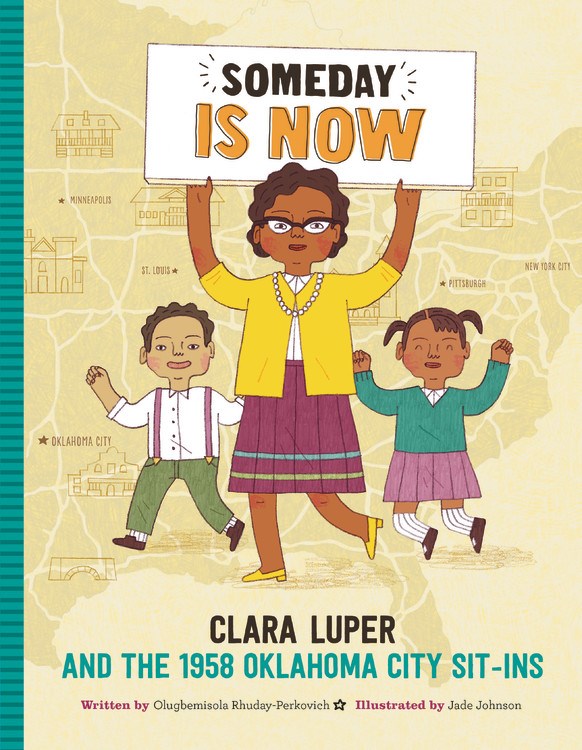
Someday is Now: Clara Luper and the 1958 Oklahoma City Sit-Ins, by Olugbemisola Rhuday-Perkovich/Illustrated by Jade Johnson, (Aug. 2018, Seagrass Press), $17.95, ISBN: 9781633224988

Ages 6-9

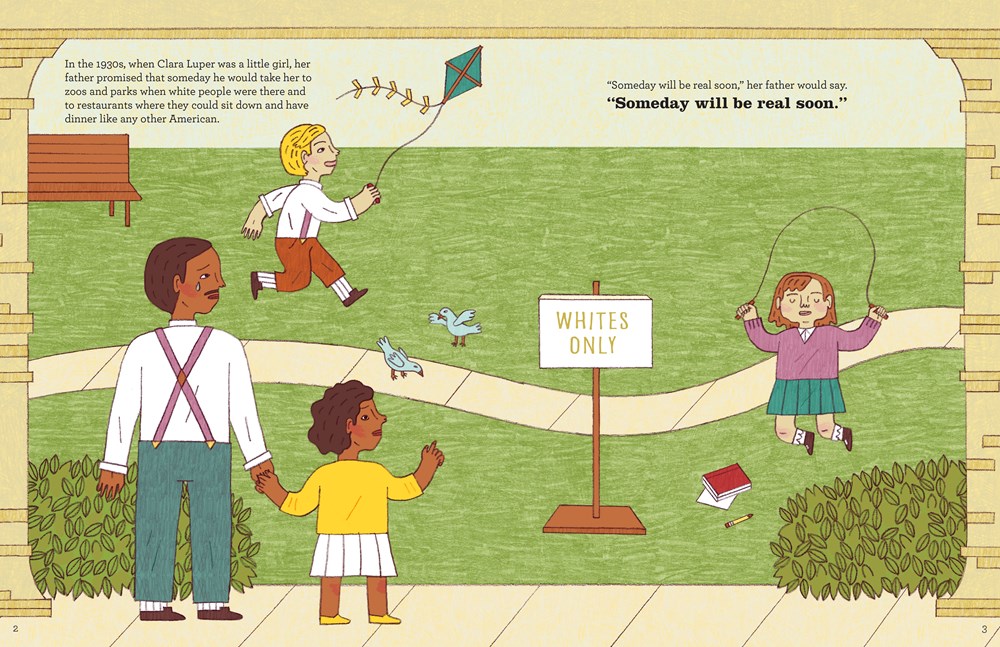
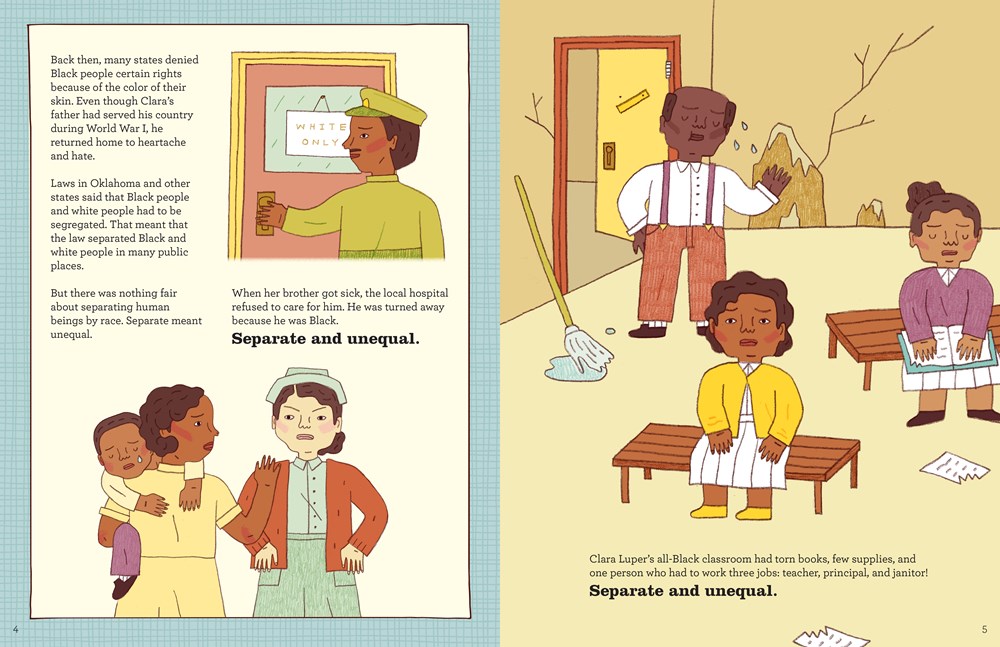
I missed this one the first time around, but I’m glad I caught it when I went back through my Edelweiss account to check up on my TBR. This picture book biography of civil rights activist Clara Luper (nee Clara Mae Shepard) is a great addition to your picture book biographies. Growing up in segregated Oklahoma, Clara saw her World War I veteran father diminished by the very country he fought for: her brother turned away from a local hospital because it was a whites-only facility; she was educated in a run-down classroom with torn books and a teacher who also served as the principal and janitor; restaurants dictated where Blacks could eat. Everywhere she looked, Clara saw things were “separate and unequal”, a phrase repeated throughout the book in bold, large font to drive home the message. Ms. Luper became a teacher who pushed for change, working with the NAACP Youth Council and participating in lunch counter protests with her students after a trip to non-segregated New York. Back matter includes an encapsulated biography of Ms. Luper.

This is the first picture book biography on Clara Luper: everything else I found online is decades old. Let’s get more civil activist bios into the hands of our kids, so they can see for themselves how many voices led to change. Someday is Now has a starred review from Kirkus.

Author Olugbemisola Rhuday-Perkovich is the co-author of the NAACP Image Award nominated Two Naomis and the forthcoming Naomis Too and is the editor of The Hero Next Door, an anthology from We Need Diverse Books. You can see more of Jade Johnson’s illustration work, including downloadable coloring pages, on her website.


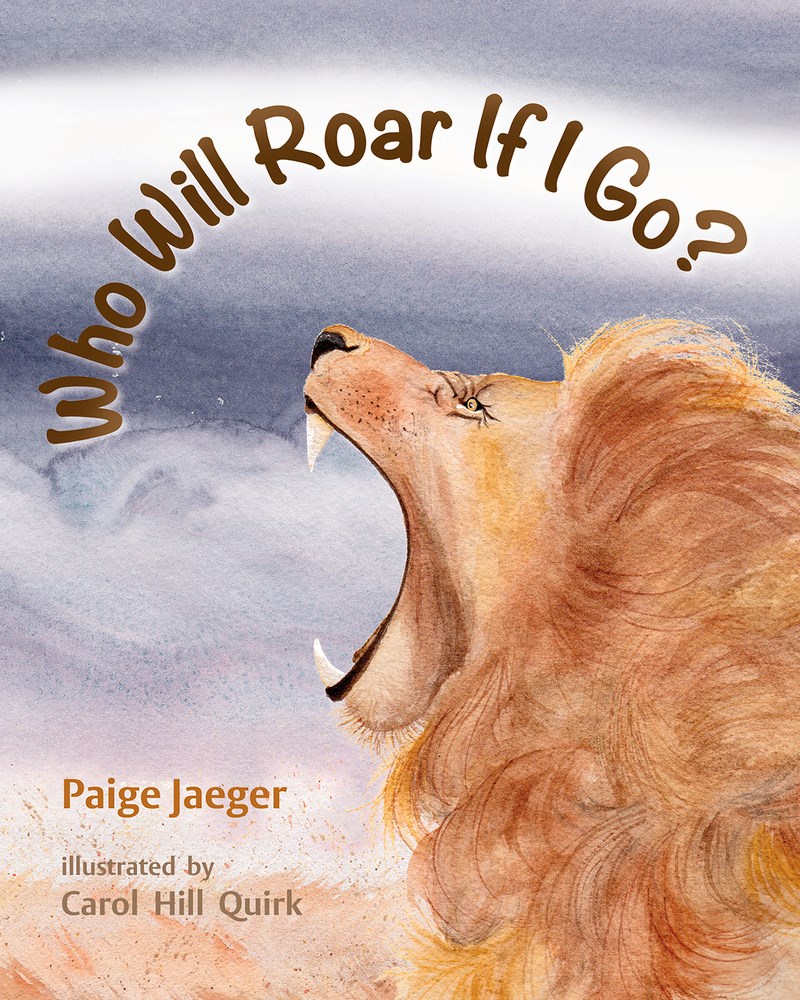
Who Will Roar If I Go? (If We’re Gone, Book 1), by Paige Jaeger/Illustrated by Carol Hill Quirk, (June 2018, Boutique of Quality Books), $18.95, ISBN: 9781945448157

Ages 5-7

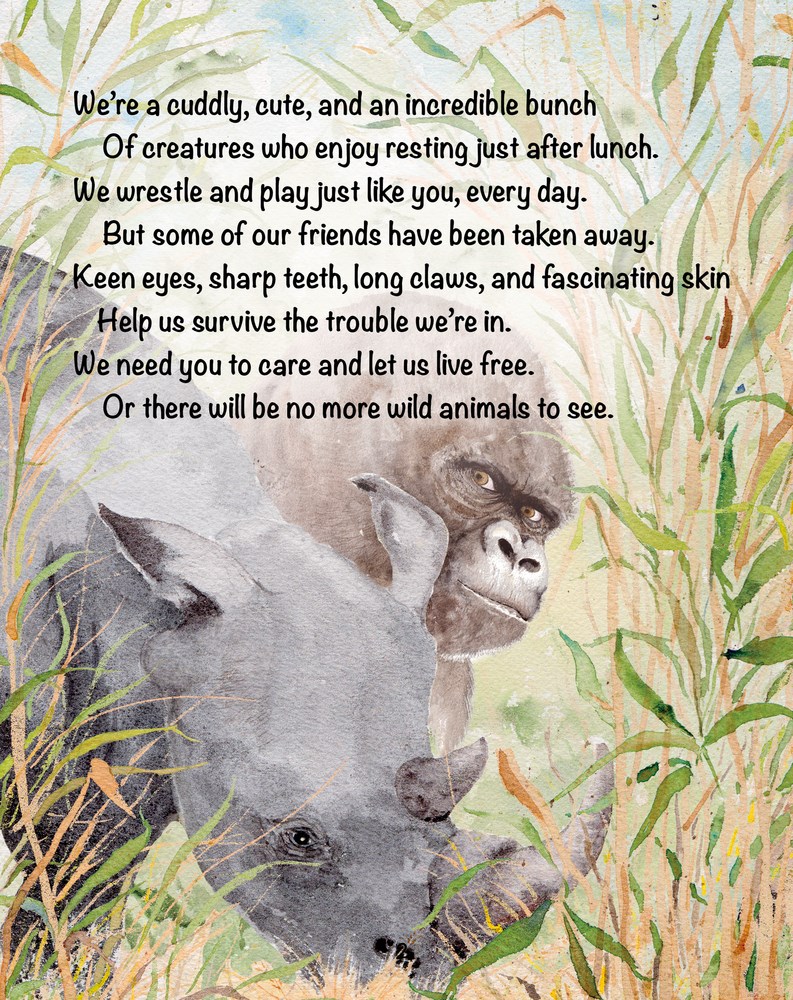
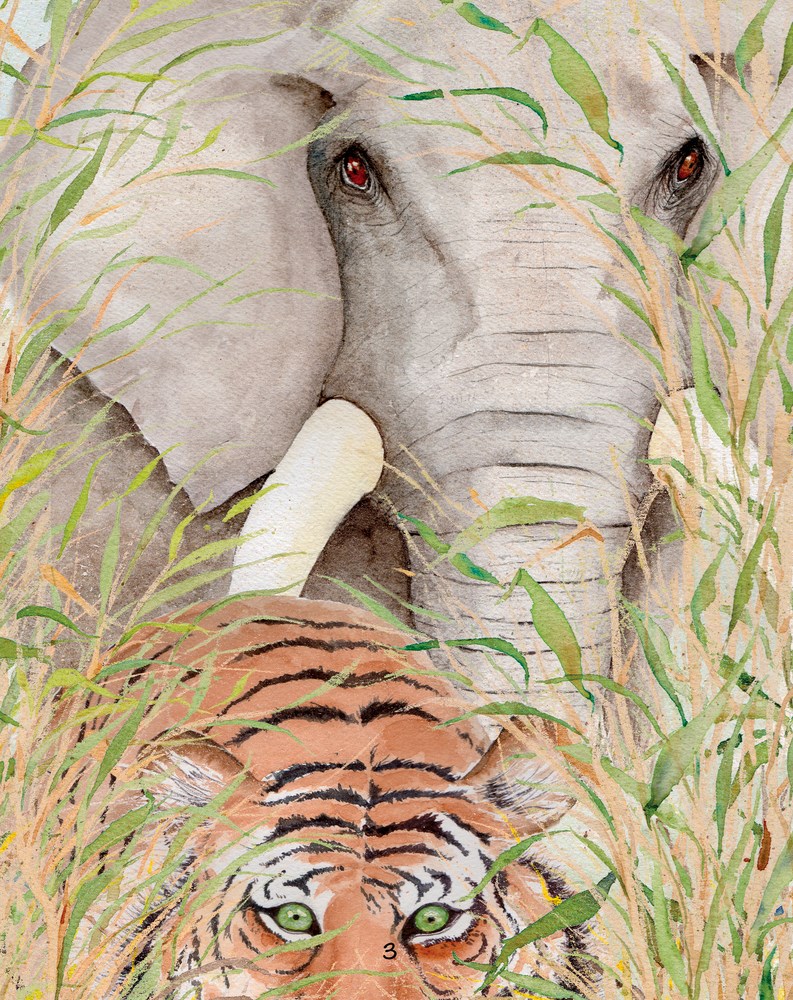
This rhyming story, the first in a planned series, is a plea to readers from endangered animals suffering from a multitude of human-based maladies, most commonly, the disappearance of their habitats and hunting, be it for trophies or luxury dining. Thirteen animals ask humans for help in their quest for survival; each rhyme provides readers with a little background on the animal and why it needs help. The elephant’s page reads: “I sure am an enormous creature; With ivory tusks my most attractive feature; For these long, tapered tusks that I hold dear; Thousands of friends were lost last year; No one needs my tusks but me; Go make some in a factory”.

Back matter includes a glossary of terms and an animal footprint guessing game. Each animal gets its own spread, including its geographic location and footprint, related to a game in the back matter. The watercolor artwork is realistic and showcases each animal in its natural environment. Who Will Roar If I Go? is a good introduction to endangered animals and the need for conservation and preservation; it’s a good additional add to your picture book nonfiction.

The Who Will Roar webpage offers free, downloadable educator resources.


P is for Paris, by Paul Thurlby, (Oct. 2018, Sourcebooks Jabberwocky), $19.99, ISBN: 9781492668152

Ages 5-8

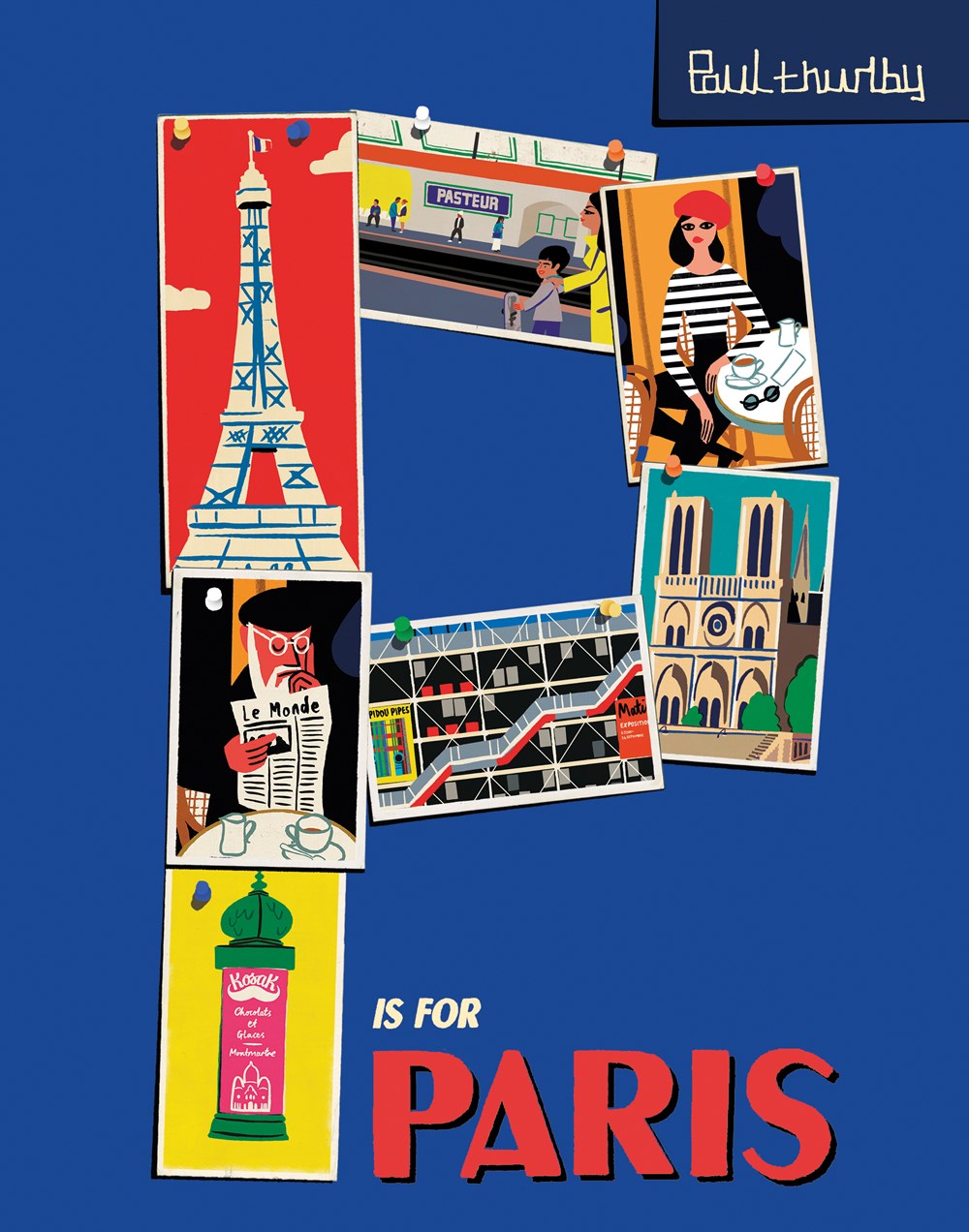
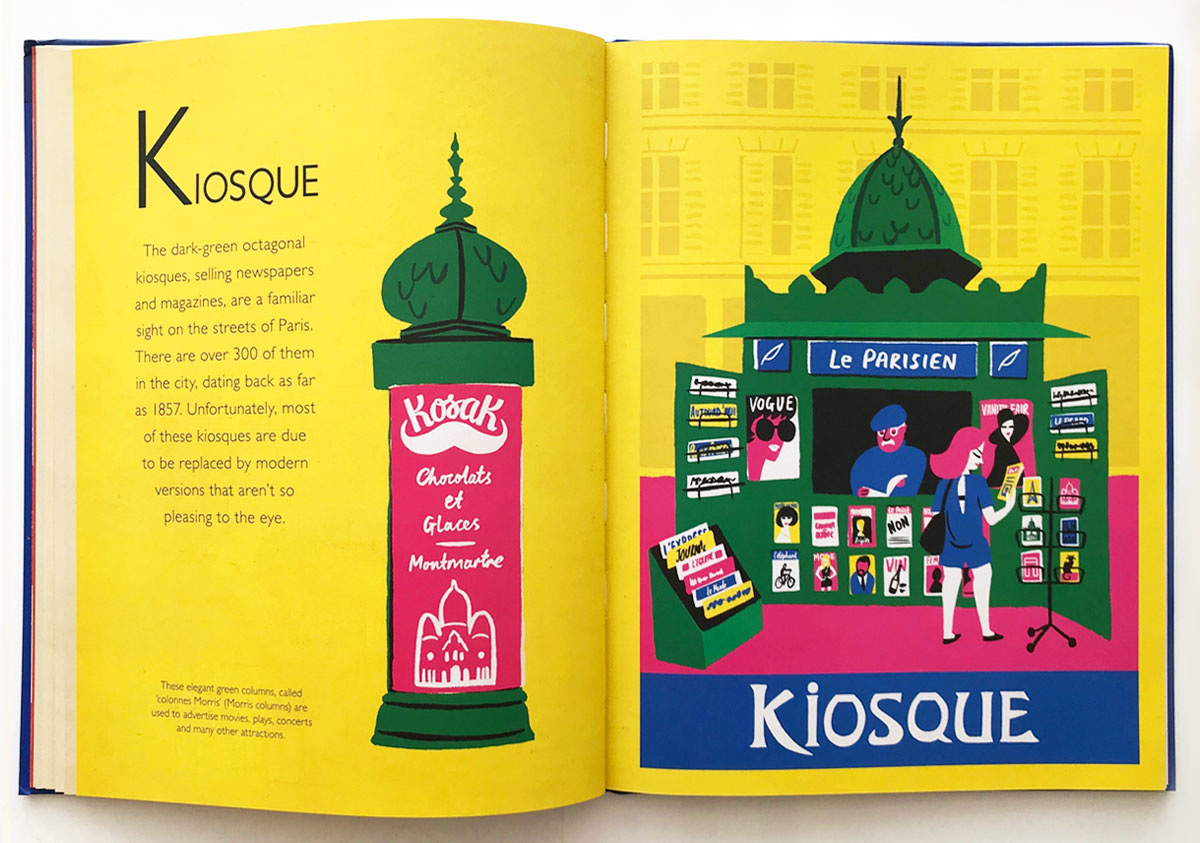
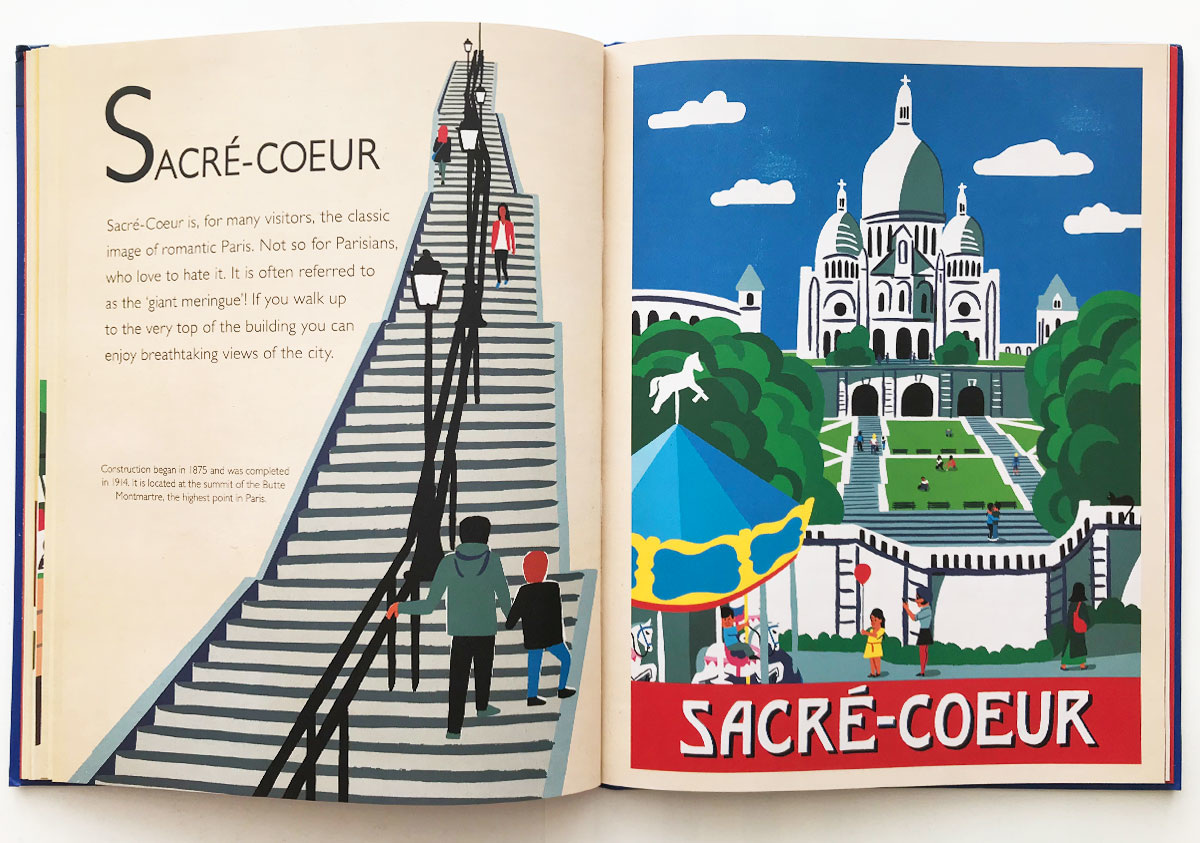
The latest book in Paul Thurlby’s ABC Cities series brings readers on an alphabetical tour of the City of Lights: Paris. Beautiful, bright artwork brings to mind vintage travel posters, and little bites of Parisian history on each page make this a fun addition to your picture books and world sections. Adults will enjoy this one as much as the kids will; references are equally accessible to kids and grownups. From the Abbesses to the Zoo De Vincennes, this is a nice addition to Thurlby’s Cities set. Endpapers provide a map to Paris, with attractions throughout the book numbered for reference. The author provides a concise explanation of the city’s organization into arrondissments. This easily works for both concept sections and geography sections, but don’t mistake this for a beginner’s abecedary; it’s a little more complex and better for Kindergarteners and up.

Check out Paul Thurlby’s webpage for more artwork and information on his other books. Take your armchair travelers on a picture book trip around the world with Thurlby’s books and Miroslav Sasek’s books.


Flow, Spin, Grow: Looking for Patterns in Nature, by Patchen Barss/Illustrated by Todd Stewart, (Oct. 2018, OwlKids), $18.95, ISBN: 9781771472876
Ages 5-7

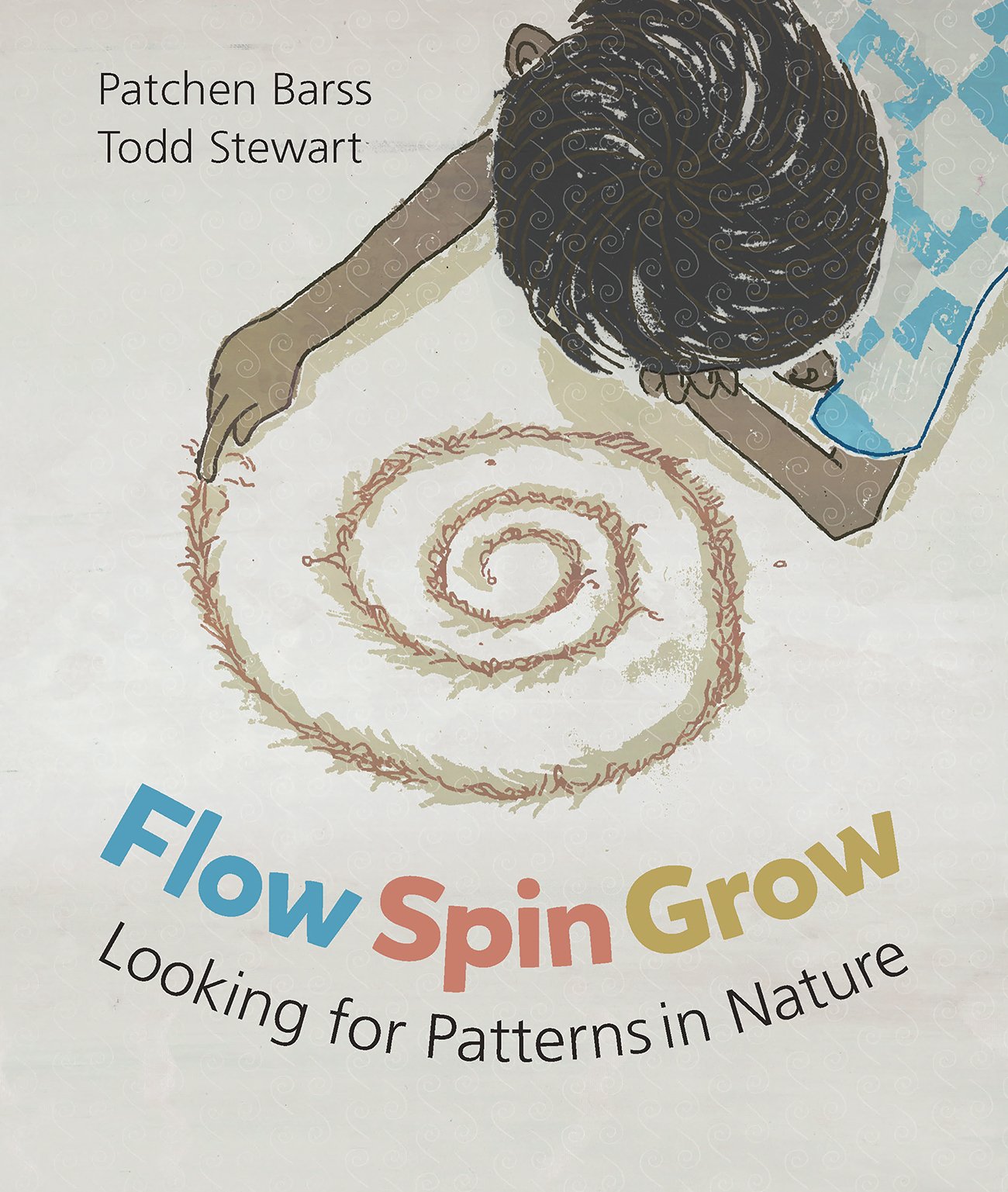
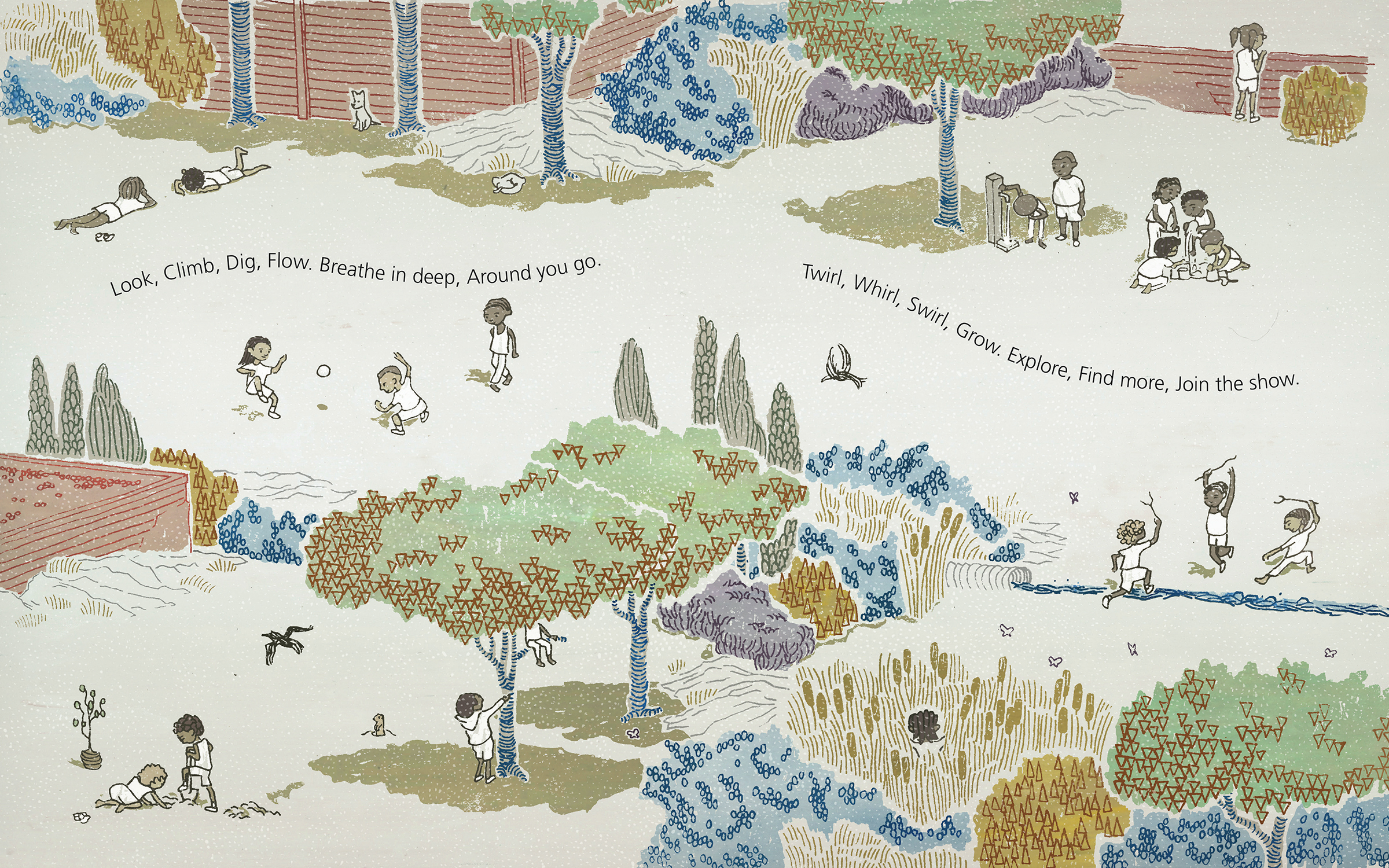
Readers are encouraged to explore patterns in nature in this mindful rhyming book. A diverse group of children play and relax in an open park area in the opening spread. The text playfully crawls around the scene, encouraging kids to “Look, climb, dig, flow. Breathe in deep, around you go. Twirl, whirl, swirl, grow. Explore, find more, join the show.” The text inspires readers to look for patterns everywhere: observe, dig, explore, climb; a tree trunk splits, branches split, and below the ground, roots split and grow; water branches off into smaller bodies of water, and our own lungs have little branches like mini-trees, reaching for air. Nature twirls and whirls, like the galaxies in space or two friends at play; pine cones, storm clouds, and snail shells all swirl. It’s an interesting way to introduce scientific inquiry to burgeoning scientists. An author’s note goes further into the “secret code” hidden in the shapes of things, and suggests additional resources for more reading.

The artwork is the star in this book. Multilayered screen prints and muted colors create a setting where patterns gently emerge, waiting for readers to spot them: triangles on a tree or bush; cracks in the dirt and roots underground reach out. Flow Spin Grow is a good purchase for primary science collections; I also love Joyce Sidman and Beth Krommes’ award-winning Swirl by Swirl: Spirals in Nature, and Jane Brocket’s Spotty, Stripy, Swirly: What Are Patterns?

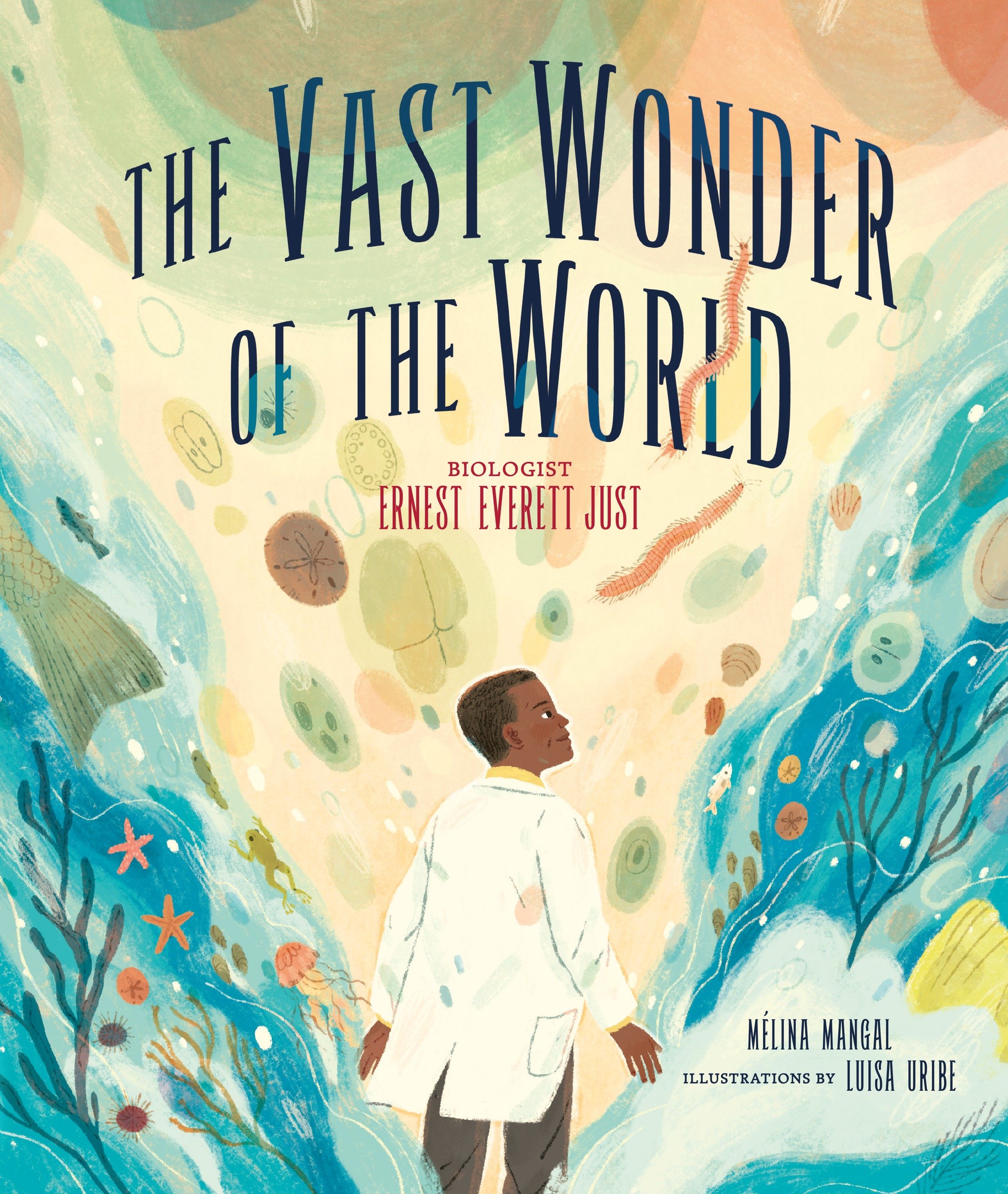
The Vast Wonder of the World: Biologist Ernest Everett Just, by Mélina Mangal/Illustrated by Luisa Uribe, (Nov. 2018, Lerner Publishing Group), $19.99, ISBN: 9781512483758

Ages 7-9

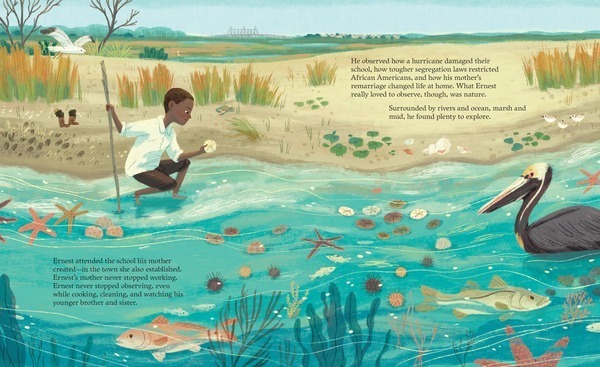
This bio on biologist Ernest Everett Just is just what your picture book biography section needs. He came of age in the Jim Crow South, paying his way through Dartmouth College while supporting his siblings after his mother’s passing. He “unlocked the mysteries of how the different parts of the cell worked together as new life developed”, and found success as a Howard University professor, embryologist, and cytologist, working in both Europe and the States. The Vast Wonder of the World tells his story, introducing him to a new generation of budding scientists who will be inspired by his determination and success in the face of racism and adversity. The muted pencil and digital artwork, in shades of blue, creates a sense of wonder and beauty, giving readers a real appreciation for Just and his place in science history. An author’s note, a timeline, and source notes complete this solid addition to science biography sections. Display and booktalk – PLEASE – with Gwendolyn Hudson Hooks and Colin Bootman’s Tiny Stitches: The Life of Medical Pioneer Vivien Thomas, and – if you can find it (can we please get this book back in print?) – May Chinn: The Best Medicine, by Ellen Butts and Joyce R. Schwartz, illustrated by Janet Hamlin.

The American Society for Biochemistry and Molecular Biology (ASBMB) has a good feature story on Dr. Just, with references to further reading, by W. Malcolm Byrnes.

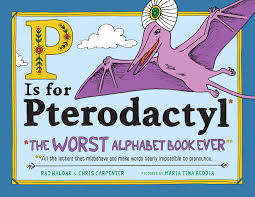
P is for Pterodactyl, by Raj Haldar & Chris Carpenter/Illustrated by Maria Beddia, (Nov. 2018, Sourcebooks Jabberwocky), $17.99, ISBN: 9781492674313

Ages 6-10

Calling itself “The Worst Alphabet Book Ever”, P is for Pterodactyl is a smirk, wink, and nudge at rebel words in the English language: words that don’t follow the rules. The book uses humor, alliteration, and amusing artwork to get its point across, as with E is for Ewe, which depicts sheep at a wake: “Eileen the ewe was so euphoric with wolves were eaten, she even gave the eulogy” (keep reading the book for more on Eileen); or L is not for Elle, which shows an elevated subway car transporting some elephants across the city of El Paso: “An elephant named Elle rode the el train halfway to El Paso and dined on hearts of palm with her folks”. It’s not a basic concept book for new learners, but it’s sure fun to read it out loud and watch kids laugh and play with language. My 6-year-old cracks up at this one, and it helps when he tries to figure out new words.

P is for Pterodactyl has a starred review from Foreword Reviews.


Posted in Fiction, Middle Grade, Middle School, Realistic Fiction, Tween Reads

The Miscalculations of Lightning Girl is wonderful!

The Miscalculations of Lightning Girl, by Stacy McAnulty, (May 2018, Random House), $16.99, ISBN: 978-1-5247-6757-0

Recommended for readers 8-12

I am so excited to talk up this book, because it is SO GOOD. I was lucky enough to be on author Stacy McAnulty’s “street team”, so I have evangelized this book to my library kiddos, bending the ear of everyone I talk to (including grownups) at the library and at home, and generally shoving this book at people to tell them that they need to read it immediately.

Lucy is a gifted tween, thanks to a lightning strike at age seven that left her with savant abilities in math. She loves math. She sees and smells the numbers and equations; they reveal themselves to her and tell them all their secrets, but social relationships have eluded her. She struggles with OCD behaviors and has been homeschooled by her grandmother, who finally decides that Lucy develop socially, and enrolls her in middle school, which doesn’t really go over so well with Lucy, who’s more ready for college applications. But Lucy promises her grandmother that she’ll make one friend, join one activity, and read one book that isn’t a math textbook. Lucy’s OCD automatically makes her a target to the local mean girl, but she persists, finding ways to use her talents in a class project, and making two pretty good friends, while she’s at it.

I can’t find enough great things to say about Lightning Girl. Stacy McAnulty gives us a strong, funny, sweet, and complex group of characters that reader will recognize bits of themselves in; supportive parental figures that are doing their best, and parents that need a bit more work. It’s a glimpse at everyday life with a touch of the extraordinary, and it’s a touching look at the power of caring about something bigger than oneself. Lucy goes through tremendous upheaval, but she rides it out, and grows through the course of the book. Before the events that form the narrative, she sees life as a series of problems that can be worked out, but learns that some of the toughest problems bring rewarding solutions. Even if the final answer isn’t correct, the work to get there makes a difference.

The Miscalculations of Lightning Girl is compulsively readable, discussable, and perfect middle grade reading. Teachers, PLEASE put this on your Summer Reading lists, so I can hand this book to every middle grader I see this summer. Lightning Girl has starred reviews from School Library Journal, Kirkusand Publisher’s Weekly. Author Stacy McAnulty is on a book tour for Lightning Girl right now: head to her author webpage for a schedule!


Posted in Preschool Reads, Toddler Reads

Build that Baby STEM Library! The ABCs of Mathematics and Physics

Quantum theorist and Dad Chris Ferrie adds two more board books to his Baby University library: The ABCs of Physics and The ABCs of Mathematics!

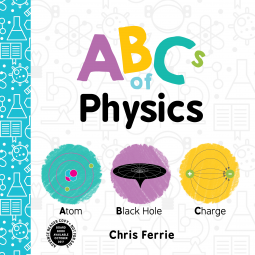
The ABCs of Physics, by Chris Ferrie, (Oct. 2017, Sourcebooks Jabberwocky), $9.99, ISBN: 9781492656241

A is for Atom; B is for Black Hole; C is for Charge… The ABCs of Physics is a bright, entertaining introduction to physics. Not your run of the mill ABCedary, The ABCs of Physics works for all ages – for babies and toddlers, it’s a pretty board book with all sorts of interesting pictures to look at. For older kids and adults, it’s an intro to physics terms and concepts. I am here to tell you, unabashedly, that I found this book fascinating. Did you know that a newton is a standard unit of force? I did NOT. I also learned that my little book scanner works thanks to photons – and you can trust and believe that I will pass on little bits of this information in my day to day at work and at home.


The ABCs of Mathematics, by Chris Ferrie, (Oct. 2017, Sourcebooks Jabberwocky), $9.99, ISBN: 9781492656289

The ABCs of Mathematics is even more little one-friendly, because it introduces basic concepts that our kids are going to be learning soon enough. A is for Addition: Addition is the mathematics of counting. D is for division: Division is the mathematics of fair sharing. It’s wonderfully to the point, and illustrations help reinforce simpler concepts like union: a Venn diagram, something that most school-age kids are familiar with, or addition, which stacks apples over numbers to illustrate the concept.

Want to close that word gap? Introduce some of these terms to your little ones. Let them explore and play with the books. Just expose them to the words and ideas in the books; if they hear it enough, it won’t be a scary thing when they hear it in school. Any book that teaches me something as much as it does my kids is a good book.

Posted in Intermediate, Middle Grade, Non-fiction, Non-Fiction

Launch a Rocket into Space – boost your math skills!

launch a rocket into spaceLaunch a Rocket Into Space (You Do the Math Series), by Hilary Koll & Steve Mills, (June 2015, QED Publishing), $17.95, ISBN: 9781609927295

Recommended for ages 8-12

Called “Math That’s Out of this World!”, this latest entry into QED’s You Do the Math series gets kids acting like rocket scientists – for real! The book takes kids all the way through the steps involved in a rocket launch – from astronaut selection to the return from space – and the math needed to complete each step. No nuclear physics here, just solid math skills designed to strengthen every student’s math familiarity. Astronaut Selection works on interpreting tables; Getting Ready for Launch reinforces comparing weights; Going Into Space looks at temperature and negative numbers.

All operations are attached to a particular area of mathematics, presents a scenario, asks questions (answers are included in the back of the book), and challenges readers to apply similar skills to their own lives. For instance, when looking at astronaut selection, kids are asked to compare their own heights against those of their friends; comparing weights in space asks kids to figure out their own weights when in orbit. The book also includes a timeline of key events in the history of rocket ships, a glossary, and an index.

This book isn’t meant to teach your kids math, but it’s a helpful book to have on hand to help them reinforce concepts they’re learning in school, and showing them the useful side of mathematics; because, you know every generation asks, “But what will I need to know this stuff for?” Well, now you know. So put on an episode of Big Bang Theory, pull out this book, and get your rocket scientist ready for MIT. (Psst… Math teachers… good ideas for extra credit abound!)