This is such a fun series with recurring characters and fun, smart science know-how. For readers that may be a little young for Science Comics, Dogs Do Science fits the bill nicely. Read on for more.
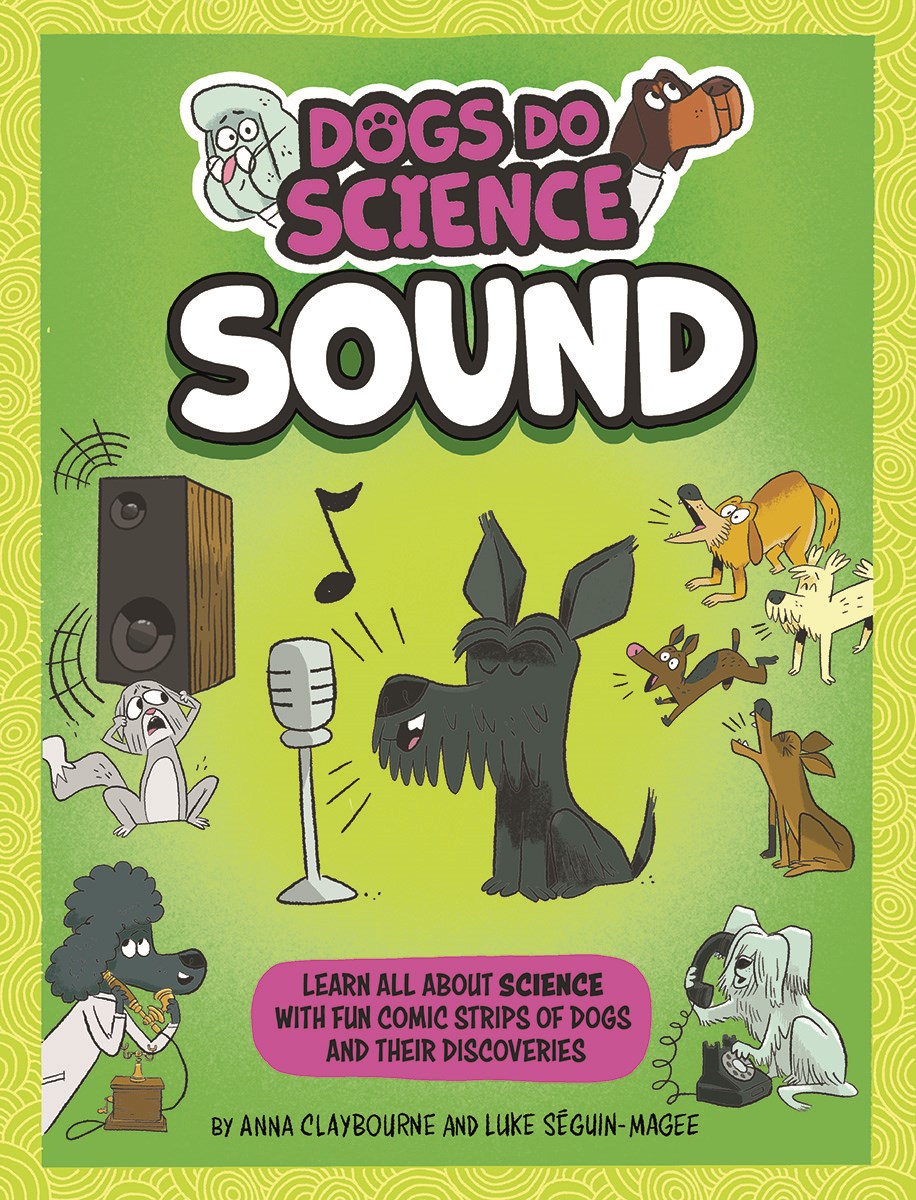 Dogs Do Science: Sound, by Anna Claybourne/Luke Séguin-Magee, (March 2024, Kane Miller), $12.99, ISBN: 9781684647804
Ages 7-10
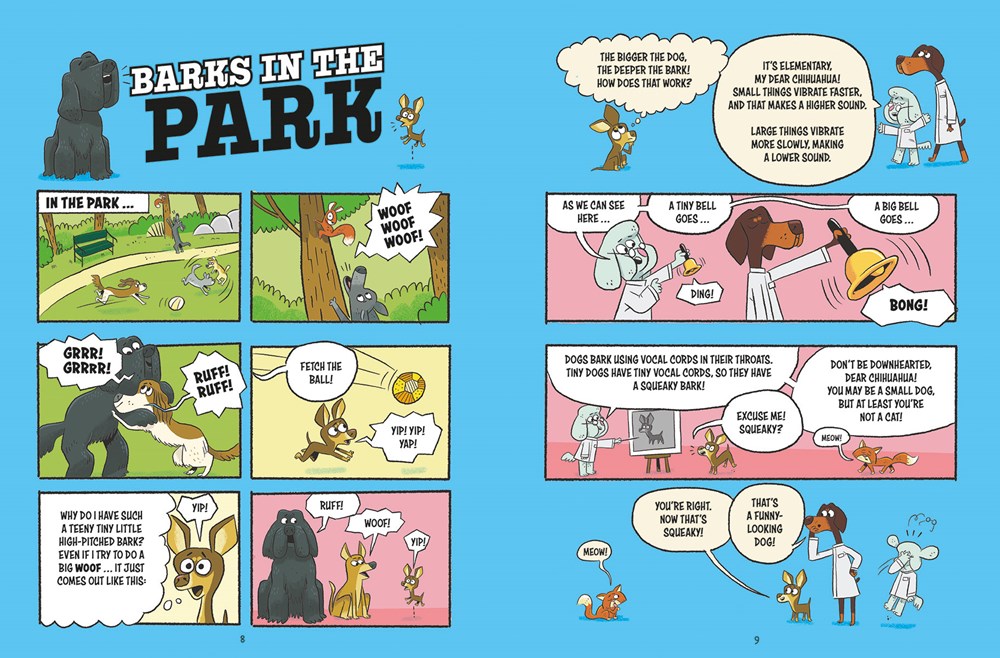
Meet Professor Pooch: a learned and fluffy Bichon Frisé, they’re also the main character fo the Dogs Do Science graphic novel series. In Dogs Do Science: Sound, Professor Pooch is here to explain how sound works, using dogs and their superior hearing as examples for readers. Explained through a series of graphic novel sections featuring different breeds of dogs, readers will love the fun comics and easily understandable explanations of sound: why do dogs go berserk when the postman arrives? Why do our dogs come running when we think we’re shaking that food quietly? Why do chihuahuas have that sharp little bark? It all comes down to science! (By the way: tiny dogs have tiny vocal cords, hence the squeaky barks.) A “Sound Roundup” and pop quiz in the back matter help summarize and test readers’ knowledge. Cartoon illustrations keep things moving.
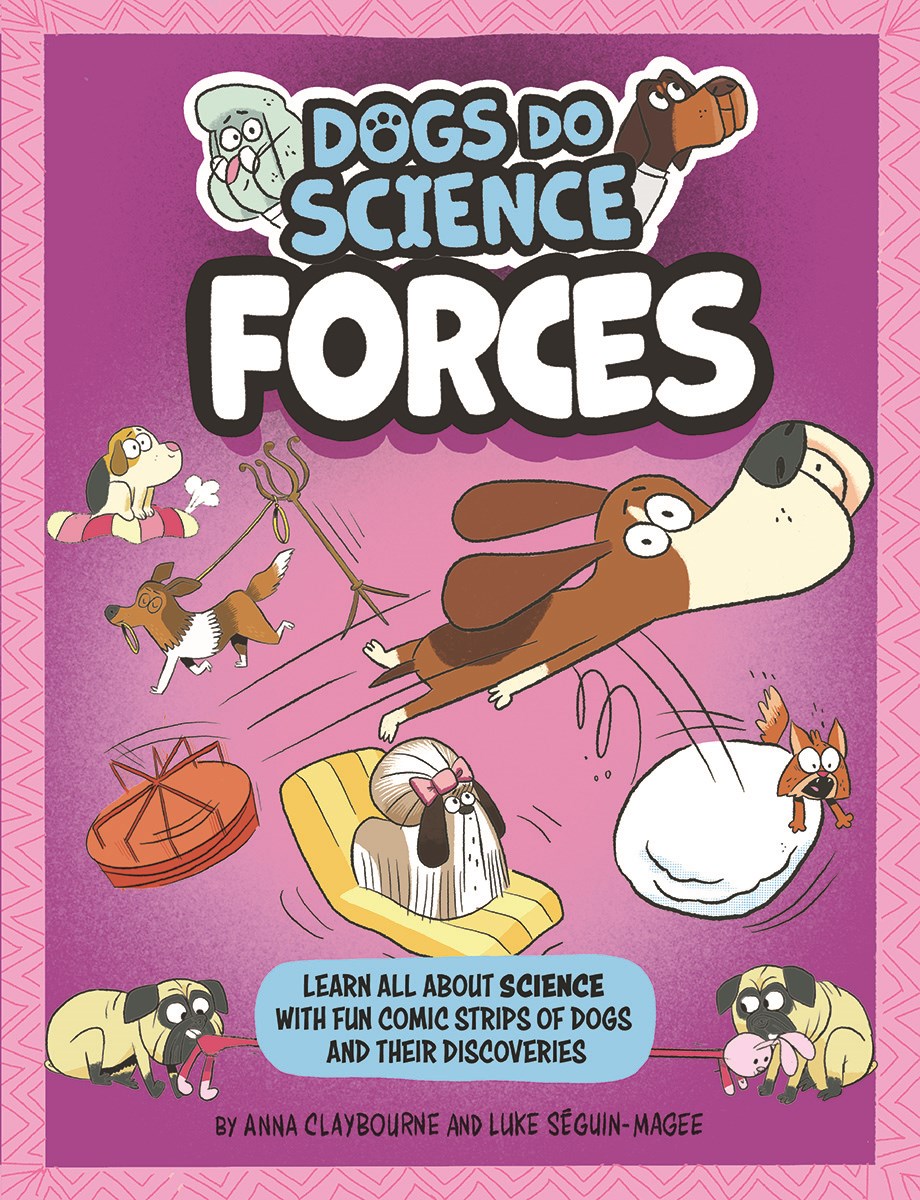 Dogs Do Science: Forces, by Anna Claybourne/Luke Séguin-Magee, (March 2024, Kane Miller), $12.99, ISBN: 9781684647798
Ages 7-10
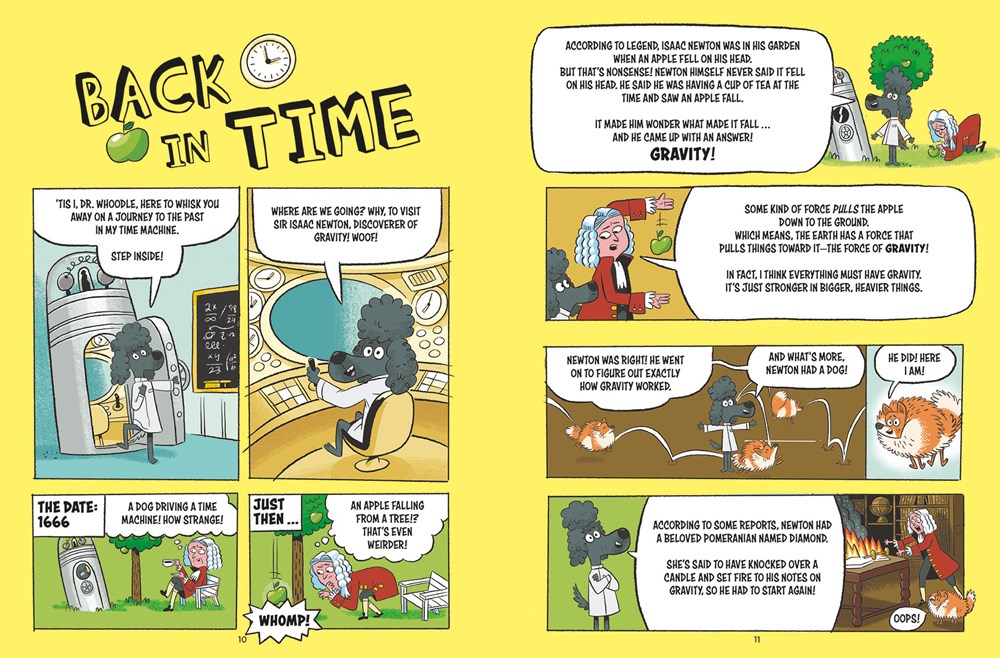
This volume is all about force: “pushes, pulls, and other forces make things move – or stop, or change direction, or fall over”, as Professor Pooch puts it. A trip back in time with Dr. Whoodle the Poodle introduces readers to Sir Isaac Newton and a discussion on gravity; other comic strips teach readers about centrifugal force, air pressure, and intertia. A section called Spot the Spaniel’s “Spot the Difference” offers a fun activity where readers can search before and after pictures for signs of gravity. A “Force Roundup” and pop quiz summarize and reinforce readers’ knowledge.
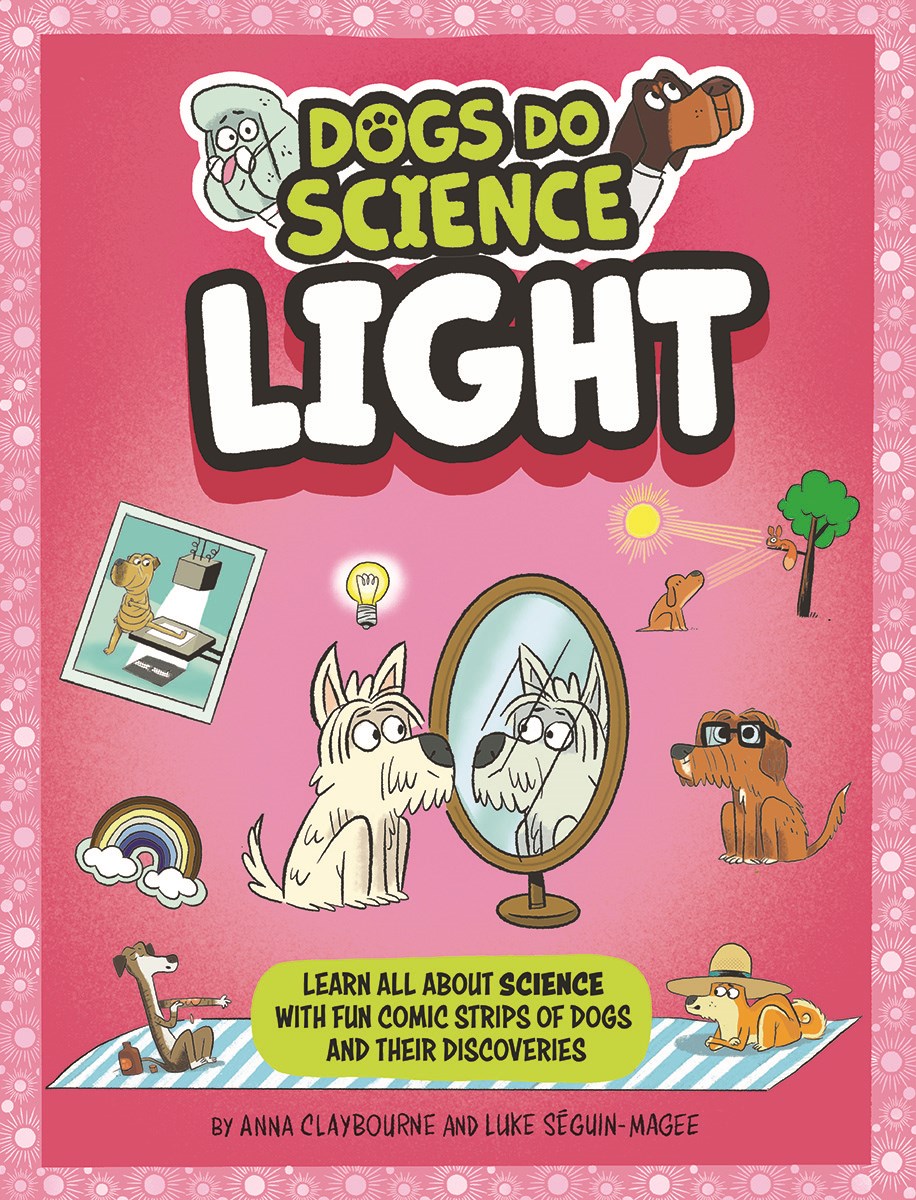 Dogs Do Science: Light, by Anna Claybourne/Luke Séguin-Magee, (March 2024, Kane Miller), $12.99, ISBN: 9781684647811
Finally, we have Light, which starts off with the bright shiny thing that comes through the windows and wakes our dogs up every morning… and sometimes, shiny things blink outside the window. Professor Pooch and their amusingly dull Doberman assistant are here to help, shedding light on the mysteries behind shadows, reflections, and how dogs see colors differently from humans. A recurring “Dogs in Space” comic takes how light travels in space. Spot the Spaniel has a fun shadow matching activity, and Professor Pooch’s Light Roundup and Poodle’s Pop Quiz complete the volume.
All in all, the Dogs Do Science series is fun, and works well with graphic novel collections where nonfiction is helpful and popular, aka History Comics and Science Comics.


 Mom Read It