Posted in Middle Grade, Non-Fiction, Non-fiction, Teen, Tween Reads

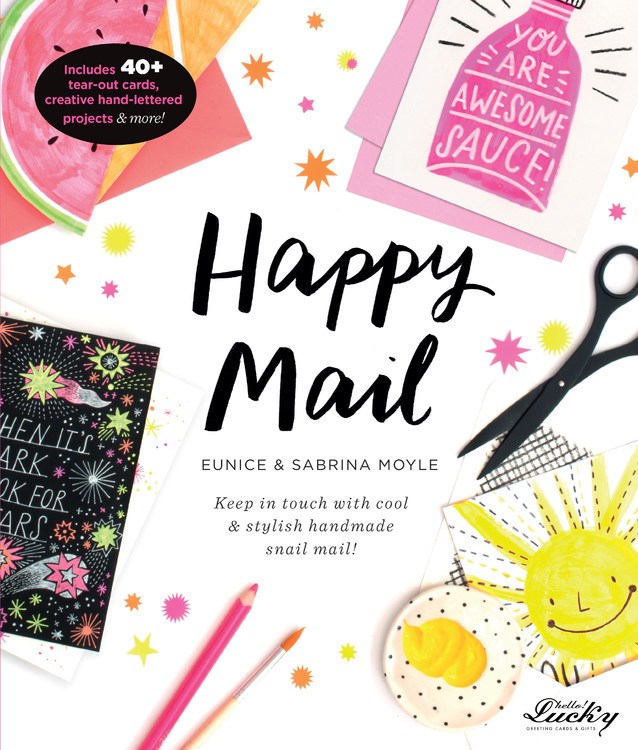
Happy Mail rejuvenates the lost art of letter-writing

Happy Mail, by Eunice Moyle, Sabrina Moyle/Photographs by Alex Bronstad, (Sept. 2017, Walter Foster Jr.), $14.95, ISBN: 9781633223677

Recommended for readers 9-13

Remember pen pals? Remember passing notes to your friends in class, or writing letters to your friends over summer vacation? I see kids with smartphones, texting one another now, and miss the creativity that came from letter writing. Letters between my pen pals and I were works of art, customized for the recipient. Luckily, handmade seems to be making a comeback, and Happy Mail is a book that wants to bring the art of “snail mail” back.

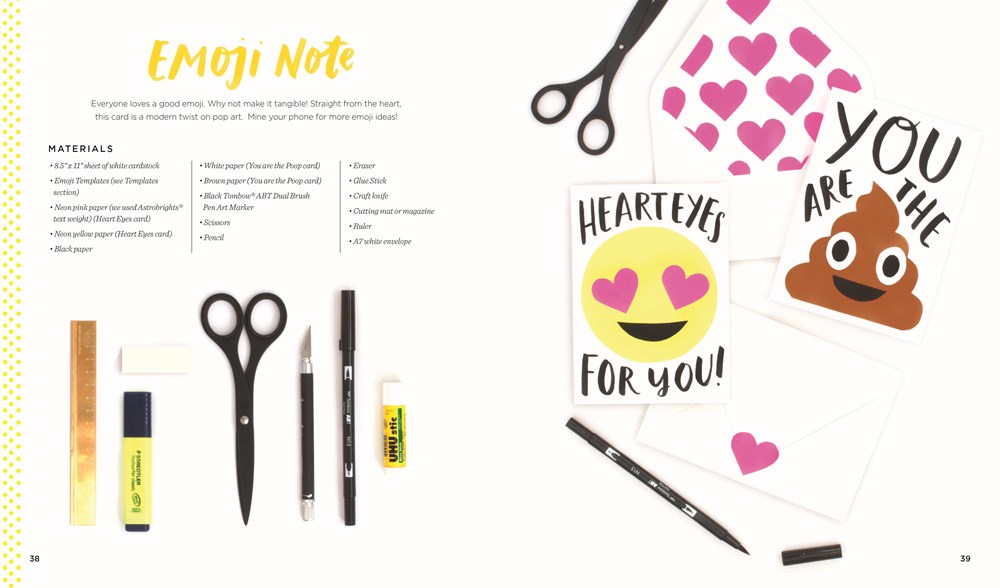
Part workbook, part guide to writing letters, Happy Mail includes over 40 tear-out cards, projects, and writing prompts to get kids’ creative juices flowing. A section on tools introduces readers to different types of pens and markers, for decorating letters; there are worksheets that let kids practice different lettering styles, and there are templates that kids can cut out to create emoji-based notes. (Heads-up: yes, this is a middle grade book, but there’s a poop emoji demonstrated on a card that reads, “You are the…” – get the meaning of my meaning? – but it’s cute, and overall, very kid-friendly.) I love the “list letter” idea, where you cut a piece of paper into strips to list all the great things about your friend, that will unfold as they open the card and read. There are fun techniques, like watercolor washing paper or masking fluid and watercolor paint to create your own personalized stationery style.

This isn’t a great choice for libraries, for obvious reasons, but it IS a great choice to give to kids, to get them in the habit of writing again. Have them write to a cousin, a friend, a relative who could use a pick-me-up. I want to create a program where the kids in my library write letters to the kids in one of my coworkers’ libraries – as soon as we work the logistics of that out, I’ll blog about it. In the meantime, maybe I’ll just go back to writing letters to my friends again. Remember how awesome it was to get mail that wasn’t bills?
Posted in Early Reader, Fiction, Fiction, Intermediate

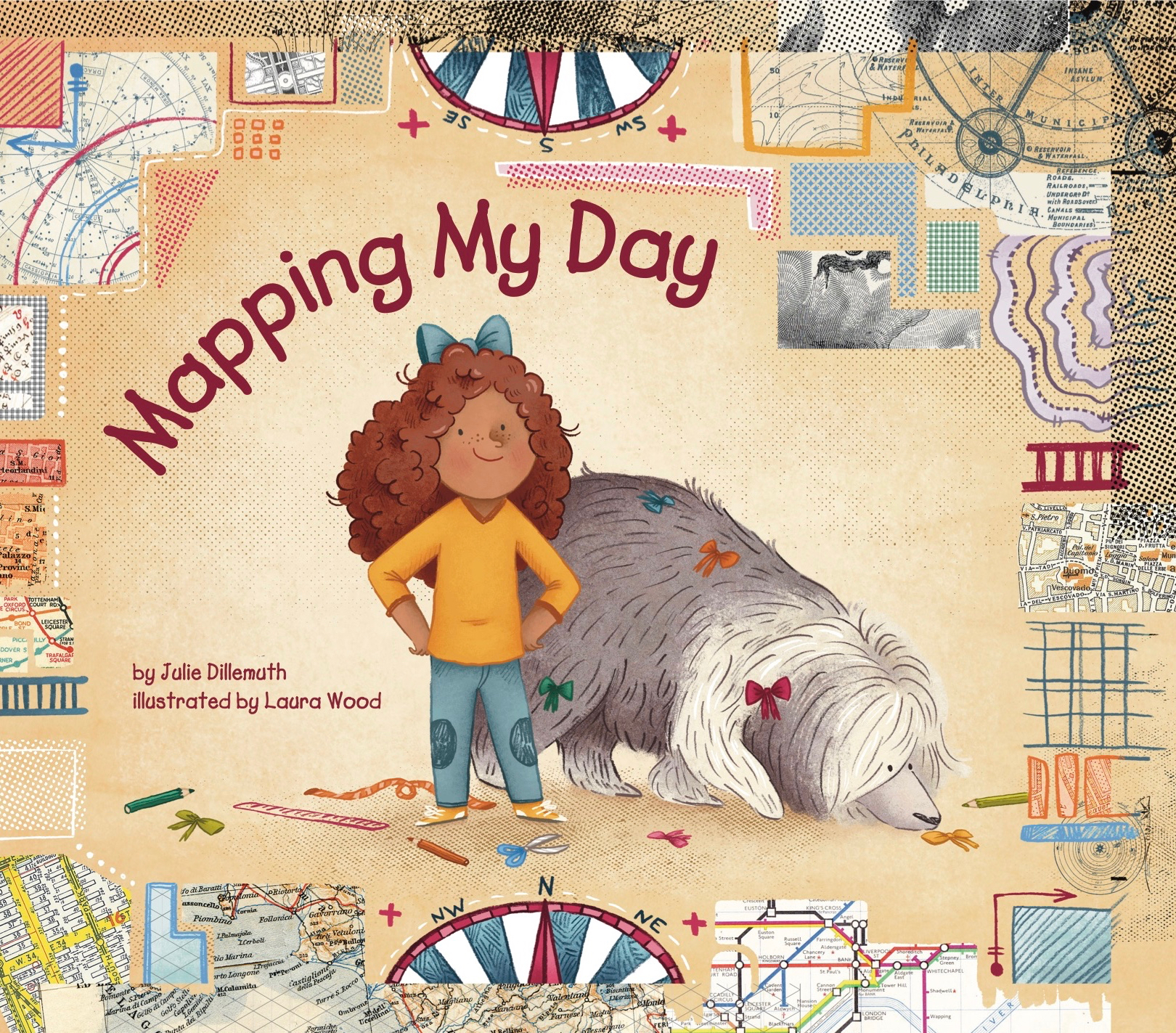
Mapping My Day brings back the lost art of mapmaking

Mapping My Day, by Julie Dillemuth/Illustrated by Laura Wood, (March 2017, Magination Press), $15.95, ISBN: 978-1-4338-2333-6

Recommended for readers 5-10

Flora is a girl who loves making maps. From sun-up to sundown, Flora maps her day and invites readers to see how she does it! Starting with an early morning wake-up thanks to the sun streaming through her bedroom window, Flora explains and illustrates terms like cardinal directions, map scales, landmarks, even seating plans.

I remember when I was a kid and learning about maps in Social Studies. That whole one inch = 1 mile thing made me want to bang my head against the desk in frustration. If I’d had a book like Mapping My Day to start me off, things would have gone a lot easier with those issues of Scholastic News. The book brings readers right into Flora’s circle. It’s like having a friend show you her journal, where she writes out how she watches her grandmother’s show poodles train on their obstacle course, or map out her school playground, or how she manages to beat her brother to the bathroom in the morning.

There are no frustrating measurements, no rulers necessary. It’s a great invitation to start mapping out our world – something that may be seen by some as a dying art in this age of GPS, but is a critically important skill to have. We should all know how to lay out a space; what our cardinal directions are and how to find them, and the importance of landmarks when you’re finding your way. For librarians and teachers, this is a lesson or a program in a book: the activities at the end of the book are even available for download so you can get a head start on planning. A note to parents, caregivers, and professionals explains the importance of mapping, diagramming, and understanding spatial relations, and includes ideas for incorporating them into kids’ play.

The art is friendly and fun. Flora is a biracial child from a multiethnic family. The family eats at the table together and enjoys time with extended family members. Spreads move between Flora’s story – driving in a car with family, eating at the table with family, playing at school – and Flora’s maps, which have a hand-drawn/handwritten appearance. Key words appear bolded.

Julie Dillemuth was mystified by maps until she figured out how to read them and make them, and it was a particularly difficult map that inspired her to become a spatial cognition geographer. She lives with her family and writes children’s books in Santa Barbara, California, where the west coast faces south. Visit her at her website: http://juliedillemuth.com.

One lucky winner will receive a copy of MAPPING MY DAY (U.S. addresses). Enter this giveaway for your chance!

https://goo.gl/forms/yiZyHr8CNDC7iVWg1

Posted in Uncategorized

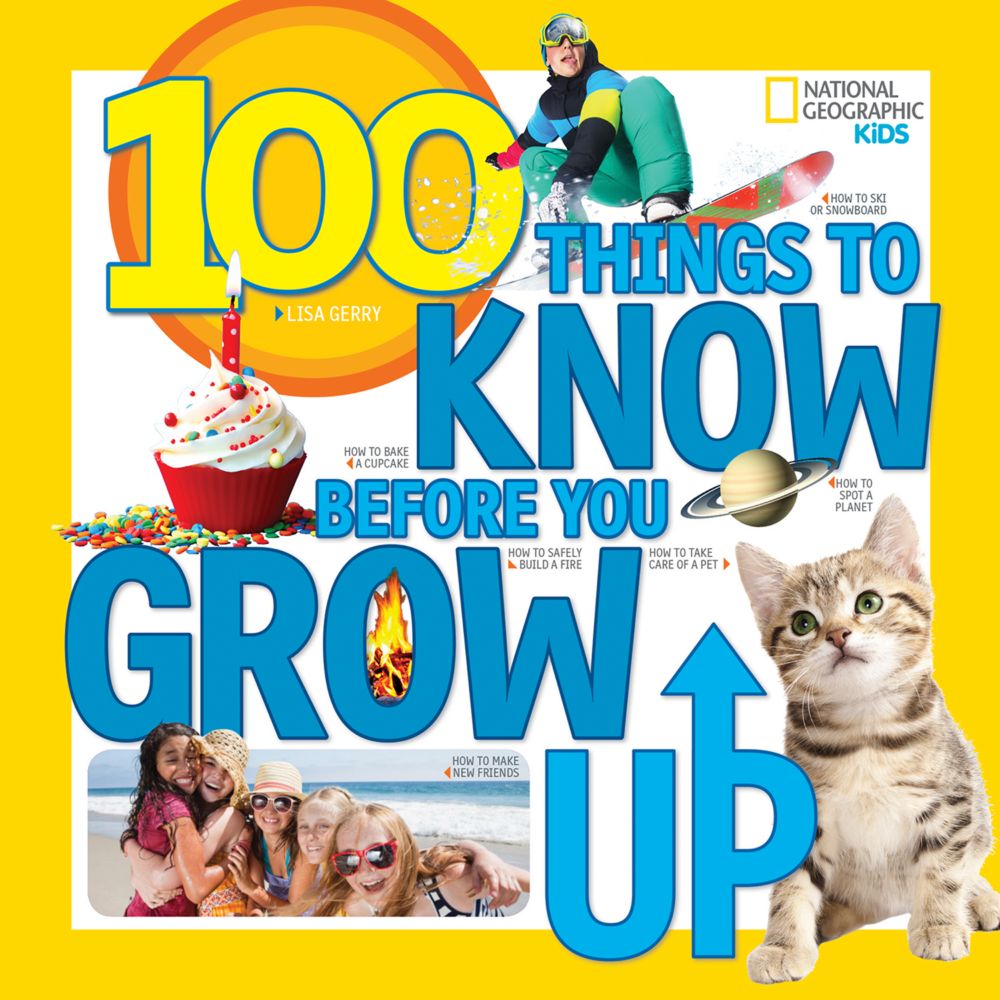
Know Before You Grow: 100 Things to Know Before You Grow Up

100 things to know100 Things to Know Before You Grow Up, by Lisa M. Gerry, (March 2016, NatGeo Kids), $9.99, ISBN: 9781426323164

Recommended for ages 8-12

It’s a NatGeo week this week, because their publicists were kind enough to send me a bunch of books to check out for my blog (and, by extension, my library collection). Today, I’m looking at one of the latest in their 100 Things series, 100 Things to Know Before You Grow Up, by Lisa M. Gerry. Think of it as a life skills primer: there are icons coding each of the 100 things, related to attitude (curiosity, responsibility, empowerment), skills (observation, communication, collaboration, problem-solving), and knowledge (our human story, our living planet, critical species, and new frontiers). Together, all of these things help readers become well-rounded, responsible teens and, eventually, adults.

There are fun skills, like making snow ice cream, how to fold origami, and how to create papier mâché; practical skills, like pumping gas, doing laundry, and writing checks, personal growth explorations like being tolerant, resolving conflict peacefully, and apologizing. Whether you see this as a summer challenge for your kids or patrons (complete any five skills for a prize this summer!), a bucket list for your pre-adolescence, or just a good guide to being the best person you can be, there are some great tips in here, combined with beautiful photos and interesting facts.

100 Things to Know Before You Grow Up is a good grad gift for elementary and middle schoolers, and it’s a good add to tween collections.