Posted in Early Reader, Fiction, Preschool Reads

Spork shows readers that there’s a place for everyone

sporkSpork, by Kyo Maclear/Illustrated by Isabelle Arsenault, (Apr. 2017, Kids Can Press), $8.95, ISBN: 978-1-77138-805-4

Recommended for ages 4-8

One of the most maligned utensils in history has its moment in the sun with Kyo Maclear’s Spork. His mom’s a spoon. Dad’s a fork. And poor Spork doesn’t fit in with either group, no matter how hard he tries. He tries to cover up his tiny tines, to fit in with the spoons; he wears a pointy hat to emphasize those tines to hang with the forks – neither attempt works. Just as he’s resigned to languishing in the utensil drawer, someone comes along that shows Spork that everyone has a place and a purpose.

Spork is adorable. It’s a story about standing out and finding your own value, just as you are. It’s a sweet story with a strong message about distinctiveness and the beauty of diversity. Isabelle Arsenault’s illustrations are soft, sweet, adorable; loaded with personality and feeling, love, and ultimately, joy.

Put this one in your collections, for sure. Read it, have a spork workshop where kids can personalize their own Spork. File down the edges – some of those plastic sporks can be a little sharp; for younger readers, print out a paper spork template, like this fun one from the Kingdom Hearts Wiki, or this really cute stock photo. Put out crayons, yarn, pom poms, stickers, whatever you have to let the kids personalize their Spork. Enjoy!

spork_6_1600x800px

Image source: KyoMaclearKids.com

Author Kyo Maclear has an author webpage with a book trailer for Spork and some fun Spork facts. Kids Can Press has great educator resources, including a One-of-a-Kind certificate you can hand out after your Spork workshop and discussion points for before, during, and after the storytime.

Previously published in hardcover, Spork received a starred review from Kirkus and multiple awards, including the 2011 Bank Street Children’s Committee Best Children’s Book of the Year and the 2010 Outstanding Book for Young People with Disabilities.

 

Posted in Early Reader, Fiction, Preschool Reads, Realistic Fiction

What is it that Lou can’t do?

louThe Thing Lou Couldn’t Do, by Ashley Spires, (May 2017, Kids Can Press), $17.95, ISBN: 9781771387279

Recommended for ages 3-7

Lou and her friends are adventurers! They run faster than airplanes, build mighty fortresses, and rescue wild animals. One day, though, Lou’s friends decide to make a nearby tree the location of their pirate ship, and Lou balks. She’s never climbed a tree before. She likes her adventures to be down, on the ground. Her friends scurry up the tree, but Lou’s not going. What will it take for Lou to get up that tree?

Kids will recognize themselves in Lou, whose got a vibrant imagination, a great group of friends, and a healthy fear of a climbing a tree, which – let’s be honest – can be a pretty scary thing. Like most kids, Lou tries to divert her friends’ attention by suggesting “not-up-a-tree games” and stalling (changing her shoes, claiming an injury, spotting an asteroid heading right for them). With her friends’ encouragement, Lou does attempt that climb – and when she doesn’t make it, her friends are right there for her, heading for a playground to continue their game. Is Lou defeated? Nope. She’s going to try again, maybe even tomorrow. Showing a child overcome her fear and her self-reliance when she doesn’t succeed the first time sends a positive message to kids who may struggle with anxiety over new situations; surrounding her main character with supportive friends sends a message to all kids, to support one another and to compromise.

The digital art is fun and will appeal to all kids; the group of friends is diverse and no one is relegated to “girl” or “boy” roles here – they’re all pirates, race car drivers, or deep sea divers. They’re kids, playing together, like kids do.

I loved Ashley Spires’ award-winning book, The Most Magnificent Thing, and her Binky the Space Cat series has been a winner at any library I’ve worked at. I love her positive messages of self-reliance and the power of imagination, and I can’t wait to get this book on the shelves next to my other Spires books. A great book for elementary collections and kids who are learning that it’s okay to be scared sometimes.

Check out Ashley Spires’ website for more of her artwork and information about her books.

Posted in Early Reader, Fiction, Fiction, Intermediate

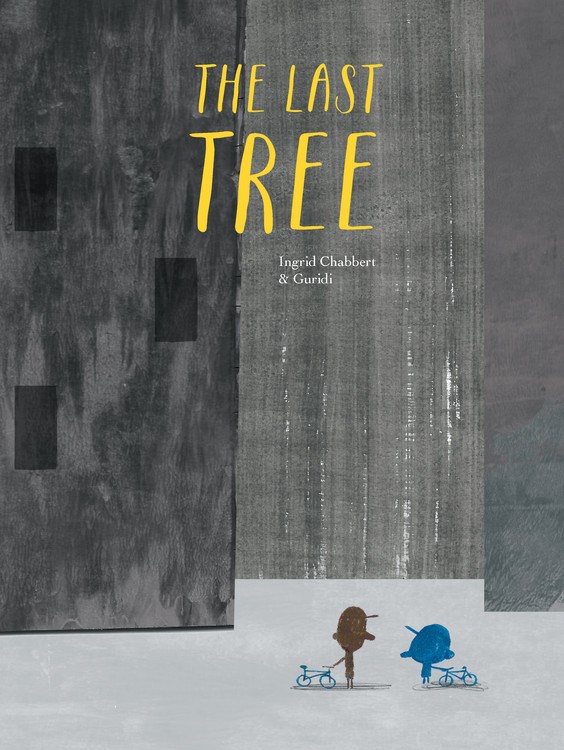
A boy and his friend must act fast to save The Last Tree

last-treeThe Last Tree, by Ingrid Chabbert/Illustrated by Guridi, (April 2017, Kids Can Press), $17.95, ISBN: 9781771387286

Recommended for ages 4-7

A boy listens to his father describe running and playing in the grass as a child, but has only a concrete playing area with a diminishing patch of grass available to him. One day, the boy and his friend discover a baby tree – a sapling, really – hidden behind a wall and are amazed: it’s the first tree they’ve ever seen up close. The boy goes home and discovers, to his horror, that a luxury condo complex is scheduled to begin construction right in the very spot where the tree is growing, and the boys spring into action to save the last tree.

This is a powerful look at how lack of green spaces affects children. Ingrid Chabbert’s narrator is an adult, looking back on his childhood, and how important saving that tree was to him and his friend. It sends a message about the importance of conservation and preservation today, and offers some hope for tomorrow. Artist Guridi communicates this message using charcoal, gravure ink, gouache, pencil, and digital art to create a spark of hope in the grey, bleak future that faces us as we see more green spaces disappear under development.

A strong addition to collections for Earth Day, conservation units, and to empower kids who may not understand that they can have a long-lasting impact on the world with the smallest and kindest of acts. The Last Tree invites a discussion on empathy by examining the boys’ actions and asking children to contribute by sharing a time when they took action to help someone or something that needed it.


Posted in Early Reader, Fiction, Humor

The Pruwahaha Monster gives kids a little jump!

pruwahahahaThe Pruwahaha Monster, by Jean-Paul Mulders/Illustrated by Jacques Maes, Lise Braekers (Oct. 2016, Kids Can Press), $15.95, ISBN: 9781771385664

Recommended for ages 5-8

A cute story about a boy and his dad outside enjoying the autumn, The Pruwahaha Monster is a story the father tells his son while the son plays on a swing. It may be a bit high-concept for younger readers – it took me a couple of reads to put it all together – so I’d suggest reading it to school-age (Kindergarten-Grade 2) kids, rather than toddlers or preschoolers.

A dad tells his son a story about the Pruwahaha Monster – a stinky, ugly, terrible monster with a taste for children – but when the monster tracks down a little boy, all he does is laugh! The last picture in the story tells you everything you need to know about the monster and his relationship with the boy.

Originally published in Belgium, this is a sweet story about a father and son, and the joy of storytelling: especially spooky storytelling! A fun additional add to collections where kids are ready for a scary story that ends up being very safe, after all. Teach the kids how to make shadow puppets on a wall when you’re done, and let them make their own monsters!

There’s a lot of visual interest here, with bright orange artwork drawing the reader’s attention to woodland animals and leaves. Spooky monster paws fade into and out of existence. There are beautiful spreads and pages of work against light blue, bright orange, and beige backgrounds. There are so many little elements to look at and notice in each spread – you’ll find something new every time.

Jean-Paul Mulders is a Flemish journalist and writer, and the author of several books for adults; The Pruwahaha Monster is his first book for children.Jacques Maes & Lise Braekers are a graphic design, web design and illustration duo from Belgium. The Pruwahaha Monster is their first book for children.
Posted in Early Reader, Non-Fiction, Preschool Reads

Take a trip around the world with Metropolis!

metropolisMetropolis, by Benoit Tardif (Oct. 2016, Kids Can Press), $17.95, ISBN: 9781771387217

Recommended for ages 3-8

Take a trip to all the world’s major cities without leaving your library! Benoit Tardif has created a colorful, exciting profile of the world’s biggest cities with Metropolis. See the famous Opera House in Sydney, Australia, or go whale watching in Auckland, New Zealand. Go for rides on the London Eye and the Ancol Dreamland Amusement Park in Jakarta, Indonesia – with 34 cities to cover, you’ll have your passport punched in no time!

Mr. Tardif’s images are exciting, bright, and pop off the pages. More than just a collection of buildings, Metropolis uses both digital and traditional artwork to create mini-tourism posters for each location. We see cartoon-like characters selling bagels (Montreal) and seafood (Vancouver); baseball players in New York and Chicago; bridges, sporting venues, and natural sights.

This is a great addition to any collection. It’s perfect for young readers – I’d shelve this with concept books as easily as I’d display it with the Good Night Our World series of board books by Adam Gamble. I’d make it available to elementary students who need information on world cities and landmarks. I’d give it to a graduating student, to provoke some wanderlust!

Enjoy more of Benoit Tardif’s illustration at his website.

A solid investment for your shelves.

Posted in Early Reader, Fiction, Preschool Reads, Realistic Fiction

The Branch gets a new lease on life after a storm

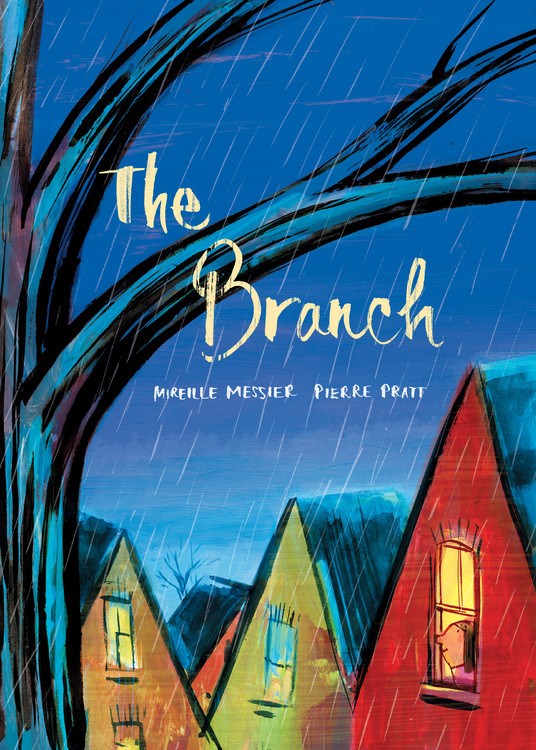
thebranchThe Branch, by Mireille Messier/Illustrated by Pierre Pratt (Sept. 2016, Kids Can Press), $16.95, ISBN: 9781771385640

Recommended for ages 3-7

A little girl’s favorite tree branch comes clattering down during an ice storm. A neighbor teaches her how to repurpose the branch, to create new memories.

What a great book to communicate so many ideas! First, we have the imagination of the tree branch. As the little girl says, the branch,”was my castle, my spy base, my ship…”, and she experiences the grief of losing the branch when she spies it on the sidewalk. She doesn’t want to part with it right away, so her mother allows her to hold onto it for a little while – long enough for the girl to encounter her neighbor, who tells her that the branch is “full of potential! …it means it’s worth keeping”, and we learn that he builds things from salvaged wood, and encourages the little girl to think about what the branch could become. When she uses her imagination and reaches into herself to reimagine the branch, she and the neighbor work together to give the branch new life.

In addition to imagination, we’ve got reusing/recycling, which is great for the environment; showing a child unwilling to discard a tree branch as a casualty of the storm, and finding ways to recreate it will get kids thinking about what they could create with objects in the world around them: cereal boxes could become robots or cities for superheroes to protect; old cans can become pencil holders; soda bottles can become terrariums. There are thousands of ideas on the Internet, so there’s no need to wait for Earth Day to come around again to make kids aware of the fun things they can make when they reduce/reuse/recycle.

Finally, we’ve got making: the whole creative process is here: sketching out plans, sawing, planing, drying the wood, waiting, waiting, waiting. It’s a great book to feature with The Most Magnificent Thing, HowToons, and fun nonfiction books, like those in the Make series. Encourage kids and parents to work together on anything from paper airplanes (great use of catalog paper) to repurposing a tree branch – large or small – of your own.

Mireille Messier is a Toronto-based author who’s had over a dozen books published in French. She’s also one of the French reviewers for the National Reading Campaign. Her website is available in English or French and offers information about her books, school visits, and her blog. Pierre Pratt is an award-winning illustrator of over 50 books for children. He lives and works in Montreal, Quebec, and in Lisbon, Portugal.


Posted in Fiction, Humor, Middle Grade, Realistic Fiction, Tween Reads

Memoirs of a Sidekick – good guys don’t always finish last

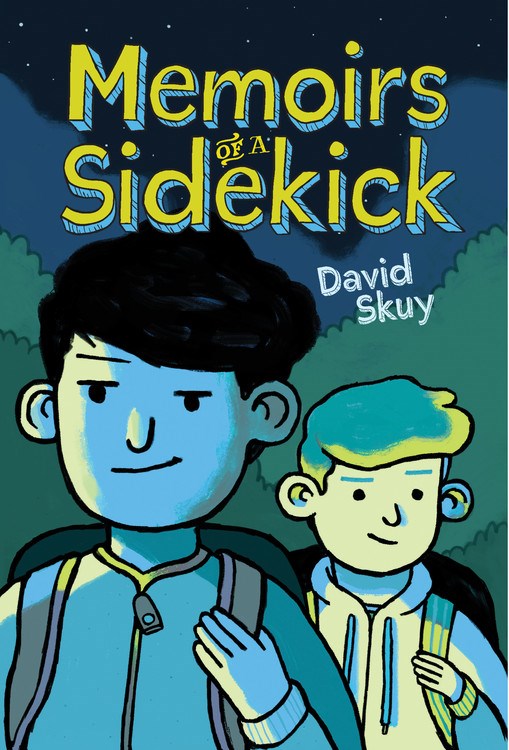
memoirsMemoirs of a Sidekick, by David Skuy, (Oct. 2016, Kids Can Press), $16.95, ISBN: 9781771385688

Recommended for ages 9-12

Boris Snodbuckle and his best friend, Adrian, are two students at Bendale Public School. They’re not exactly the most popular kids; Boris and his harebrained plans often put him at the mercy of school bullies and teachers alike, and Adrian’s parents aren’t exactly thrilled with Boris, either. But Boris – “the B-ster” – is endlessly optimistic and just happens to see things differently. He decides to run for student council president, because he wants to make positive changes happen for all the kids across every grade. But Robert, Boris’ chief tormentor, also decides to run, and sets about stealing Boris’ ideas, taking all the credit, and getting the student body to promise their votes to him! Can Boris’ latest wild scheme turn things around?

Memoirs of a Sidekick is built on good values: persistence, optimism, and loyalty, for starters; there’s a strong vein of altruism, with Boris’ desire to take a stand for others. The novel touches on bullying and school social groups, and being a good citizen in the world at large, and there’s a nice emphasis on honesty being the best policy. The book meanders a bit at points, and Boris’ adherence to the Rules he and Adrian live by is relatable, if at times frustrating. Readers will appreciate Boris’ unique way of looking at the world and Adrian’s unflinching loyalty to his best friend.

Memoirs of a Sidekick is a good additional purchase for realistic fiction collections.

Posted in Intermediate, Middle Grade, Middle School, Non-Fiction, Non-fiction, Non-Fiction, Tween Reads

Inside Your Insides puts you under a microscope

inside your insidesInside Your Insides: A Guide to the Microbes That Call You Home, by Claire Eamer/Illustrated by Marie-Eve Tremblay, (Sept. 2016, Kids Can Press), $17.95, ISBN: 9781771383325

Recommended for ages 8-12

This interesting nonfiction book takes a look at the microbes that live on our bodies: in our hair, on our skin, and the ones we pick up everywhere we go. We’re microbiomes: a walking, talking collection of microbes, and Inside Your Insides introduces us to some of the most common microbes we share our surroundings with. We learn about bacteria, archaea, viruses, fingu, protists and mites; their preferred environments; and all the places they live on and around us. Complete with brightly colored, cartoony illustrations, makes this a good introduction or companion for middle grade science students.

There are some good callout facts and groan-worthy jokes scattered throughout the book, and a glossary and index round everything out. Kids will learn that not all bacteria are bad for you: you don’t need everything antibacterial, and it may be doing more harm than good, anyway! A section dedicated to saving our microbes goes into detail on how to take care of ourselves to attract the “good” microbes: play outside, eat lots of fruits and vegetables, and explore your world. The combination of clear, instructional writing with a humorous bent, and the eye-catching illustrations, kids will get a kick out of this intro to microbiology. It’s a good additional purchase for collections where science books circulate.

You can also direct kids to the Genetic Science Learning Center’s Human Microbiome site. There are teacher resources, interactive simulators, informative videos, and information that’s written in a clear, interesting way to get kids excited about learning more.


Posted in Early Reader, Fiction, Fiction, Historical Fiction, Intermediate, Realistic Fiction

Mother Jones is on her way to Oyster Bay – join the march!

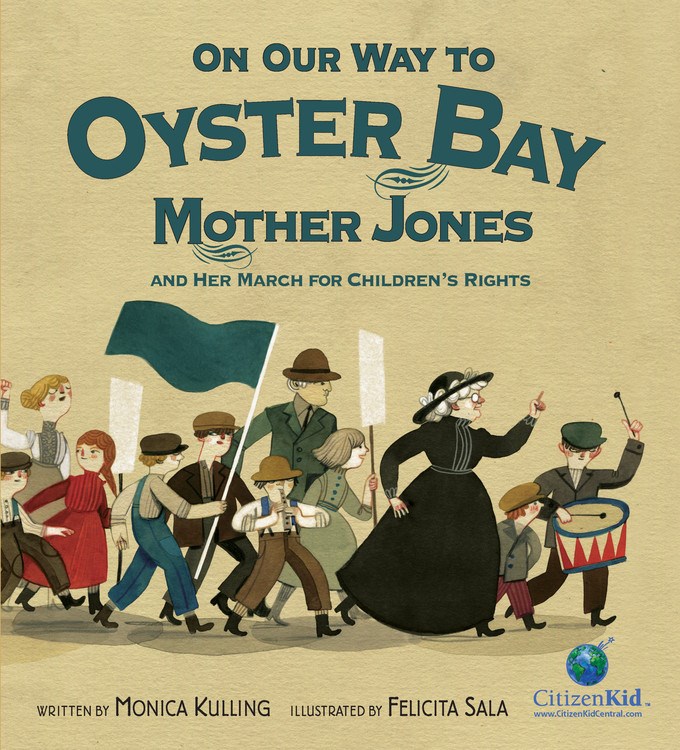
on our wayOn Our Way to Oyster Bay: Mother Jones and Her March for Children’s Rights, by Monica Kulling/Illustrated by Felicita Sata (Sept. 2015, Kids Can Press), $17.95, ISBN: 9781771383257

Recommended for ages 7-11

Eight year old Aidan and his friend, Gussie, want to go to school, but they have to work instead, to help their families. When the millworkers go on strike, Aidan and Gussie join the picket line; that’s when they meet Mother Jones, a feisty activist who wants to take action against child labor. She organizes a children’s march that will take them all the way to President Theodore Roosevelt’s summer home in Oyster Bay, New York!

In 1903, child labor was a harsh reality for many children like Aidan and Gussie. Instead of going to school, children toiled for up to 12 hours a day, six days a week, in factories; they experienced unsafe conditions and many were injured, disfigured, or even died doing their work. On Our Way to Oyster Bay is a fictionalized account of the very real story of activist Mother Jones’ March of the Mill Children, beginning in Pennsylvania and going all the way through the streets of Manhattan, ending up on President Roosevelt’s Oyster Bay lawn. While the President refused to meet with Mother Jones and her brigade, the march raised awareness of child labor, leading to the 1904 formation of the National Child Labor Committee.

On Our Way to Oyster Bay is a great story for younger kids about a period in history that doesn’t get as much love as it should. If you ask any given kid you encounter whether or not they know Mother Jones, you’re likely to get a blank stare, and that needs to be remedied. We still work in a world where child labor is a reality for many – I constantly remind kids that kids have fought and died for the right to go to school and do the same things they complain about every day – and a book like this lends itself to some important discussions about our own history of child labor and unsafe conditions, as well as the chance to brainstorm some ideas about what kids can do to help other kids around the world. Being a CitizenKid book – an imprint I love – there’s loads of information about child labor, suggestions for getting involved, and discussion points. Kids Can Press has a winner with this imprint; the books bearing the CitizenKid stamp empower kids to learn about the world around them and to take action, just like the kids in their books do. These books give them the information and the tools to take action, putting the power in their hands.

The artwork is vibrant, with movement coursing through the illustrations. The march through Manhattan thrums with activity, and I found myself bouncing up and down on my seat as Mother Jones made things happen! This is great for a read-aloud or a read-alone, but it needs to be read. Add this to your collections, read it to your kids, and make things happen. Talk about social justice, everyday activism, and being a good citizen, globally and locally.


Posted in Early Reader, Non-Fiction, Preschool Reads

Ocean Animals from Head to Tail is SO MUCH FUN!

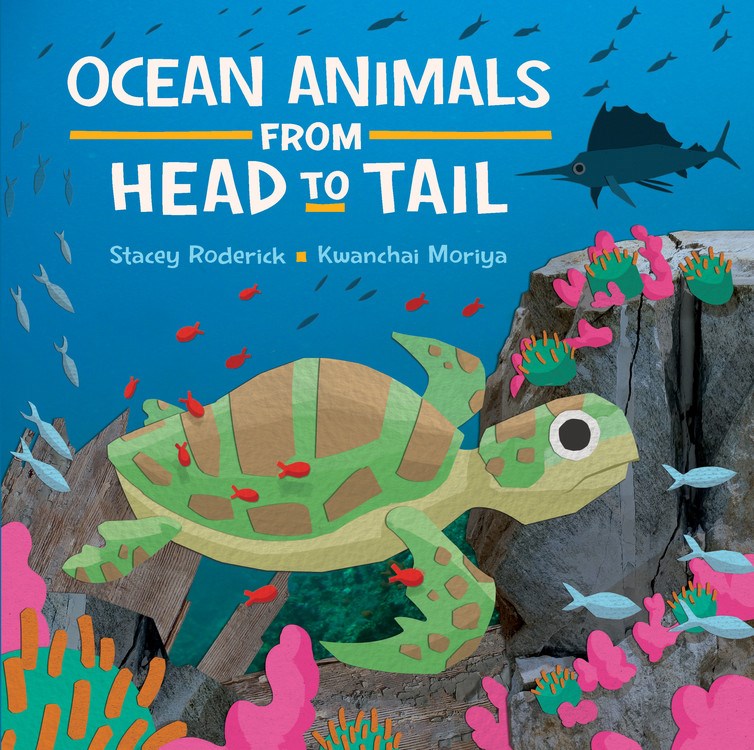
ocean animalsOcean Animals from Head to Tail, by Stacey Roderick/Illustrated by Kwanchai Moriya, (Sept. 2016, Kids Can Press), $16.95, ISBN: 9781771383455

Recommended for ages 3-7

Does anyone love Steve Jenkins’ Actual Size and Prehistoric Actual Size as much as I do? They are the perfect non-fiction read-aloud for elementary school class visits; the kids go berserk when they see a life-sized Goliath beetle, or watch me put a dinosaur’s claw to the back of my head to illustrate how it could pick me up like a grape. Less terrifying, but just as amazing for the younger set – especially those Octonauts fans out there! – is Ocean Animals from Head to Tail, by Stacey Roderick and illustrated by Kwanchai Moriya.

Ocean Animals introduces readers to eight different ocean animals, focusing on a unique body part. First, we see a close-up of the animals in question – the scalloped head of a hammerhead shark, a colossal squid’s eye, a blue whale’s mouth with a focus on its baleen – and a question: What ocean animal has a head like this? What ocean animal has eyes like this? What ocean animal has a mouth like this? The body part in question is highlighted with a gray font to call attention to it, and the following spread answers the question, zooms out to illustrate the animal in its natural environment, and provides interesting and quick facts about the animal. We learn that the squid’s soccer ball-sized eyes are the largest of any animal, and help the squid see in areas where there’s very little light. The blue whale’s baleen act as a huge sieve to catch the tasty krill it loves to eat. A spread at the end introduces kids to eight more ocean animals.

Not featured in actual size, but still in huge detail, the kids will LOVE this book. Kwanchai Moriya’s paper collage art is bright and interesting, popping off the page and adding depth to the spreads. My three year-old loves this book (as well as the Actual Size books) and has me read this to him constantly. (It came in handy at the doctor’s office today!) With shows like Octonauts and Wild Kratts generating interest in animals, nature, and conservation, this is a great book to have on home, school, and library shelves. It’s a great storytime book, too: pair it with a Rainbow Fish story, Shark in the Dark, Mr. Seahorse – any underwater theme will do! Show an episode of Octonauts that stars one of the featured animals, and let the kids color some pictures of underwater animals that appear in the book.

This is the second in the Head to Tail series: Dinosaurs from Head to Tail was published in 2015, and Bugs From Head to Tail will be coming in 2017.

Great book for easy nonfiction collections.