My holds are in! I’ve got Kwanzaa books for everyone! (Okay, for kids. But that’s the most important audience here, right?) Let’s start the fun.
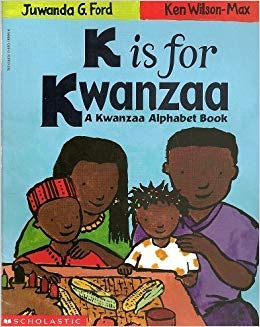
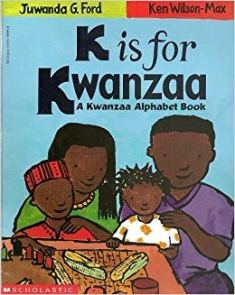 K is for Kwanzaa: A Kwanzaa Alphabet Book, by Juwanda G. Ford/Illustrated by Ken Wilson-Max, (Nov. 1997, Scholastic), $10.95, ISBN: 0-590-92200-9
Ages 3-7
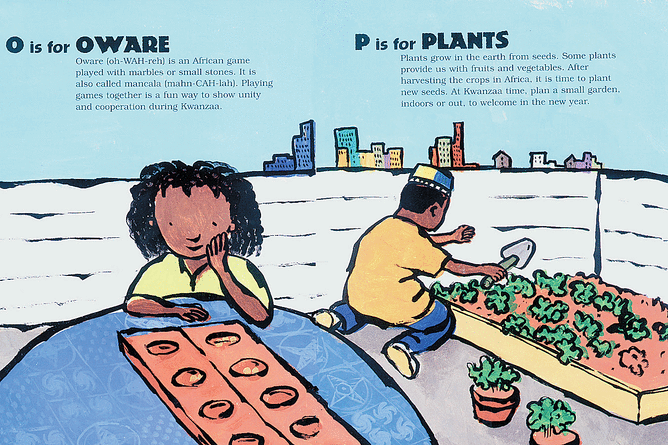
This holiday abcedary starts off with a history of the Kwanzaa holiday and the seven Kwanzaa principles, then journeys into the alphabetic aspects of Kwanzaa. Using English and non-English words, readers learn a Kwanzaa vocabulary, from Africa to Zawadi. There are phonetic pronunciations for all African words, which is a huge help for readers just learning about Kwanzaa and its icons, and Juwanda G. Ford explains each aspect of the holiday simply and fully enough for a child to understand, appreciate, and learn: the mkeka is a special mat used when setting a Kwanzaa table, and mazao are the fruits and vegetables symbolizing the harvest, set on the mkeka; neighborhoods are part of the Kwanzaa celebration, promoting community, working together, and respecting where we live, to make the world a better place. Gele, the cloth that African and African-American use as a headwrap, shows pride in African heritage, as does Jewelry, which also allows families to practice the creativity principle, Kuumba.
Ken Wilson-Max’s illustrations are lovely, featuring African-American families and African icons, instilling a pride in the beauty of African heritage. His illustrations are boldly outlined and feature bright colors, appealing to little eyes. Each letter and its corresponding word are emphasized with bold, black font that let the words pop off the page. The alphabet
K is for Kwanzaa lets kids learn about the holiday from A to Z, and is an enduring holiday book. It’s a strong introduction to Kwanzaa, and to African heritage.
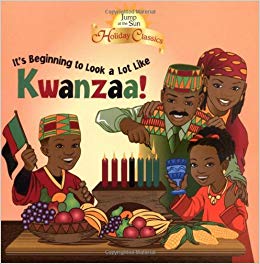
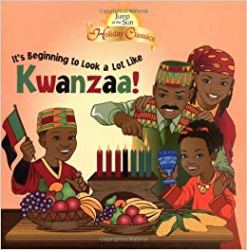 It’s Beginning to Look at Lot Like Kwanzaa!, by Rex Perry, (Sept. 2004, Jump at the Sun), $3.50, ISBN: 0-7868-0924-8
If the holiday standard, “It’s Beginning to Look at Lot Like Christmas” is stuck in your head as you read this Kwanzaa carol, don’t worry – I found myself reading along with a similar cadence, adjusting for some of the text. Families together, snow falling, and the repetitive phrase, “It’s beginning to look at lot like Kwanzaa!” invites readers to join this book’s family as they prepare for the holiday. The family wears Kwanzaa colors and kente, share food, and gifts, and touch on all of the holiday principles in the text. As Kwanzaa’s end nears, the family reflects on the holiday and the promises made for the year, and looks forward to the new year.
The artwork is bright, with bold outlines and warm colors that draws readers right into the story. Family members hold and dance with one another, having fun and showing affection, making the warmth contagious. You’ll want to cuddle your little ones as you read this rhyming story, guaranteed. The story focuses less on the facts and iconography – although they are present and alluded to in the text – and more on the family and togetherness theme of the season. A nice add to your holiday sections.
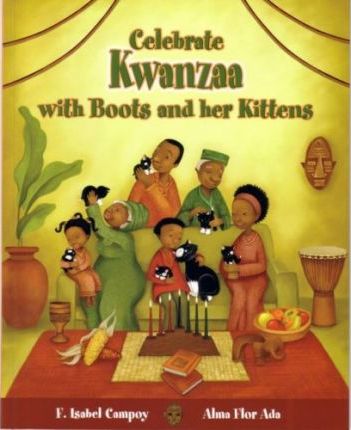
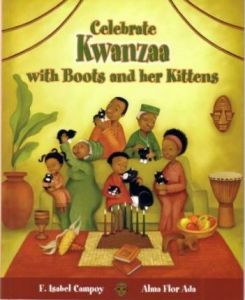 Celebrate Kwanzaa with Boots and Her Kittens, by Alma Flor Ada & F. Isabel Campoy/Illustrated by Valeria Docampo, Translated by Joe Hayes & Sharon Franco, (Feb. 2007, Alfaguara), $11.95, ISBN: 9781598201352
Ages 4-8
It’s time to come together and celebrate Kwanzaa, but wait! Boots the Cat is missing! A young boy and his family pull together and put the principles of Kwanzaa to work as they spend each day searching for the cat – with a sweet surprise on the last day.
Celebrate Kwanzaa with Boots and Her Kittens is half fiction, half non-fiction. The first half is the story of Boots and her family. The family dresses in African garb and have African decorations, including drums and masks, displayed in their home. The colors are warm and earthy. A page-a-day calendar and family members holding scroll with the day’s principles teach readers about each day’s principle and message.
The non-fiction section of the book uses photos and artwork to provide information about Kwanzaa, its place in African-American family homes, and how different families celebrate.
The combination of fiction and non-fiction in one spot makes this a good addition to your holiday shelves. It’s hard to find now, but check your local libraries for a copy!
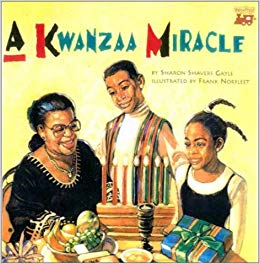 A Kwanzaa Miracle, by Sharon Shavers Gayle/Illustrated by Frank Norfleet, (Sept. 1996, Troll Communications), $3.50, ISBN: 0-8167-4182-4
Ages 5-9
This touching story is all about families. Ashley and Darryl Parker are siblings who are excited for the holidays; their parents are on the planning committee for their building’s Kwanzaa celebration, but their grumpy neighbor, Mrs. Parker, doesn’t seem to be interested in anything other than snapping at the kids. When Ashley and Darryl have a snowball fight and hit Mrs. Parker’s window, they expect to feel her full fury – and discover that their neighbor is a kind, loving person. With this new development, they work with the families on the planning committee to honor Mrs. Parker and reunite her with her sister.
This is a loving, kind story that will touch any reader. It busts that “mean old neighbor” trope and reminds kids – and adults! – that everyone has their own challenges. Darryl and Ashley are good kids who build a bridge between their neighbor, their building (community), and her sister. It’s a great story, and the oil painted artwork by Frank Norfleet gives us realistic characters and settings, with warm colors and expressive, kind faces and body language. The principles of Kwanzaa, explained in the back matter, are communicated through the characters’ actions, opening up the chance to discuss with your readers, and see if they can find examples of each.
I wish this was still in print! It’s such a wonderful book – check your local libraries, and third party sellers have some available.
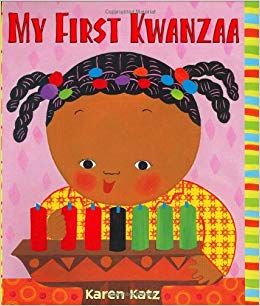
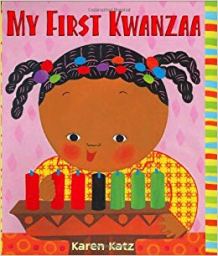 My First Kwanzaa, by Karen Katz, (Nov. 2003, Square Fish), $7.99, ISBN: 9781250050465
Ages 3-6
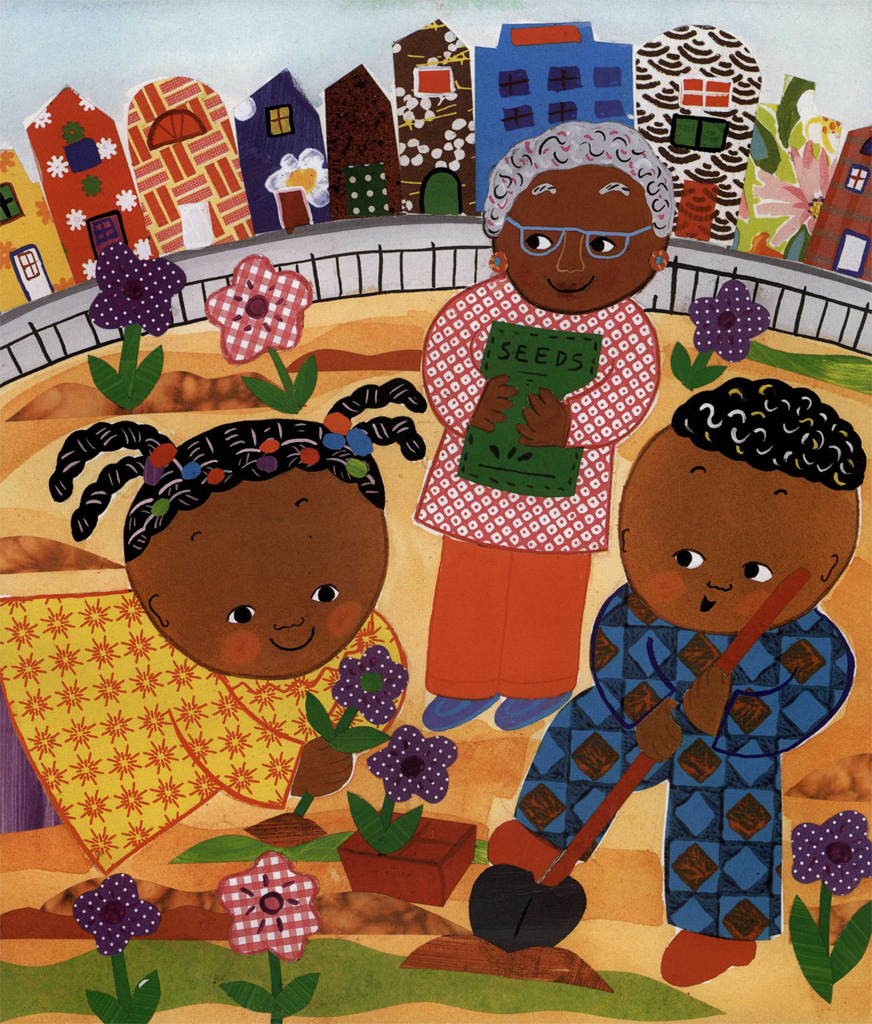
Karen Katz brings her adorable collage and mixed-media artwork to this adorable celebration of Kwanzaa. The text is spare but informative, speaking directly to children about each day of Kwanzaa, and how our protagonist – a young African-American girl – celebrates it. Phonetic pronunciation of the principles and and terms help introduce new vocabulary, and each explanation is empowering, offering ways for kids to take part in the celebration. From asking her mother to braid her hair “in a fancy African way” on the second day of Kwanzaa (kujichagulia – self-determination) and feeling pride in her heritage, to dreaming of being an African dancer like her Aunt Tasha on the fifth day (nia – purpose), to painting clay pots and weaving baskets on the sixth day (kuumba – creativity), there’s something for every child to take to heart.
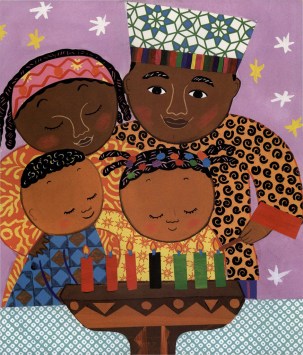
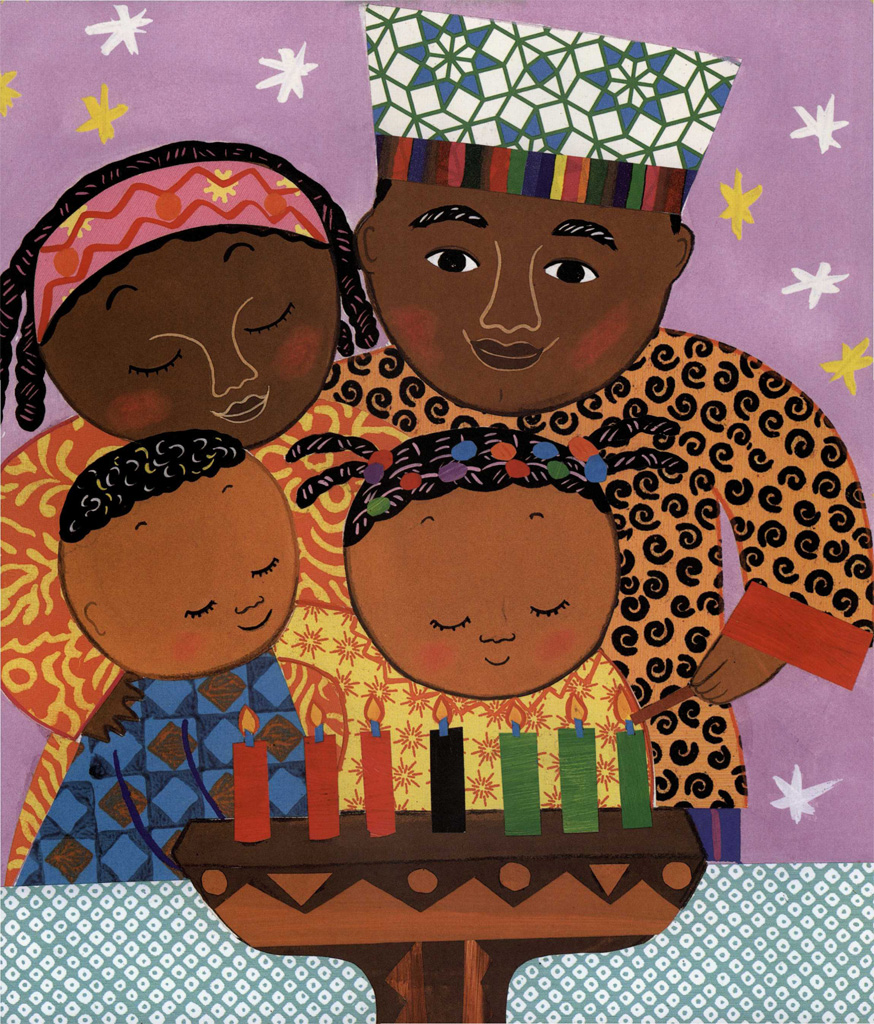
Karen Katz’s illustrations are precious. Her characters have round, sweet faces with gentle expressions. They all wear bright colors and have braided, beaded, and natural hair. A kinara appears on every spread, another candle lit, to visually represent the days of Kwanzaa. Holiday cuteness for littles and bigger kids alike.
So that’s my Kwanzaa book wrap-up! What have I learned from this year and last year’s roundups? That we need more Kwanzaa and Hanukkah books: published more frequently, in greater volume, and that stay in print longer. How can we make that happen next year?
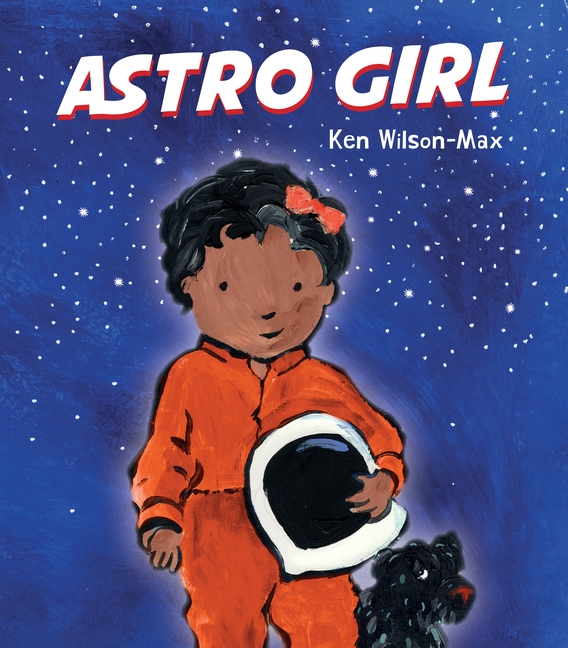 Astro Girl, by Ken Wilson-Max, (Sept. 2019, Candlewick Press), $16.99, ISBN: 9781536209464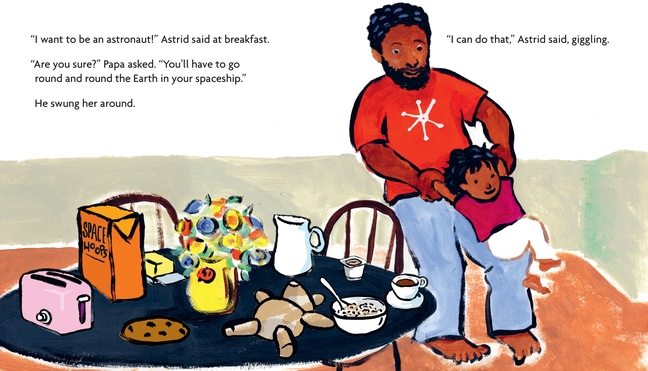
 Mom Read It