Posted in Fiction, Fiction, Historical Fiction, Middle Grade, Realistic Fiction, Teen, Tween Reads

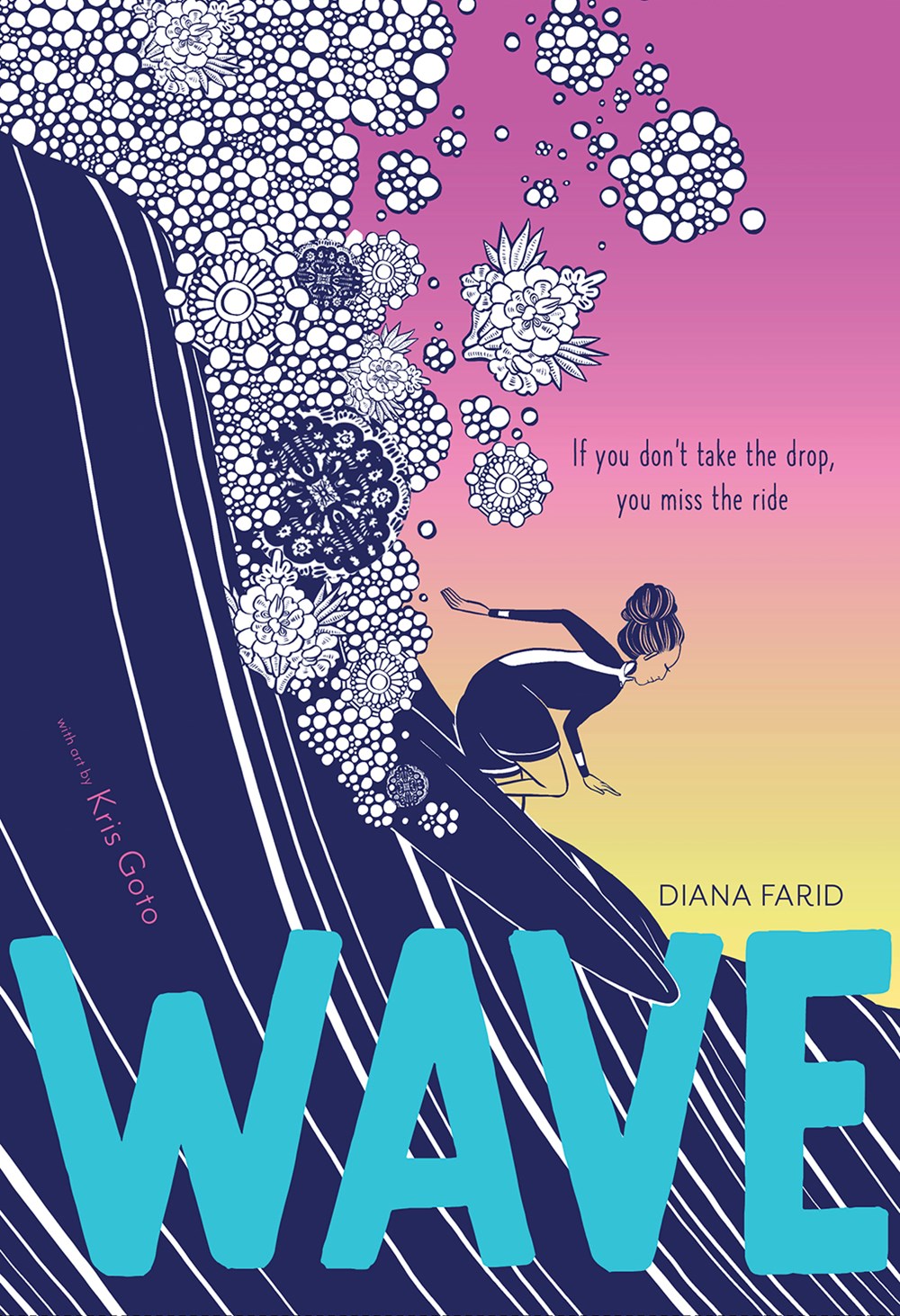
Wave: A girl rides life’s ebbs and flows

Wave, by Diana Farid/Illustrated by Kris Goto, (March 2022, Cameron Kids), $18.99, ISBN: 9781951836580

Ages 10-14

Ava is a 13-year-old Persian-American girl who loves to surf, hang out with her friends, and read poetry by Rumi. She’s about to graduate eighth grade and looks forward to the summer until her mother, a prominent doctor, signs her up to volunteer at the hospital, in hopes that Ava will be inspired to follow a career in medicine. Frustrated by her distant father and her mother’s expectations, Ava’s world begins to fall apart when Phoenix’s – her best friend – cancer returns. Ava processes her feelings and emotions through the music of the ’80s, and the story, told by Ava in the first person through free verse, is a heart-breaking, resonant, gorgeous story. Blackwork illustrations throughout present Wave as a peek into Ava’s journal, making the experience of reading it personal. Ava experiences racism, grief and loss, anxiety, and frustration and communicates it all through spare, lyrical verse; readers will see themselves and their friends in her words. Set in the mid-1980s, music and mixtapes are wonderful touchstones, particularly through the music and mixtapes; references to the 1970s Iranian cultural revolution provide historical context and make Ava, her mother, and her extended family fully realized characters.  Ask your readers to create their own Spotify playlists that they’d share with a friend or family member. Ava’s and Phoenix’s mixtapes are included in the back matter, as are endnotes, information about Rumi, and lyrics. A gorgeous book.

Have a copy of Marjane Satrapi’s Persepolis available to booktalk to readers interested in learning more about the Iranian revolution and its impact on the women of Iran. Visit author Diana Farid’s webpage for more information about her books, her poetry, and essays.

Posted in Middle Grade, Non-Fiction, Non-fiction, Teen, Tween Reads, Women's History

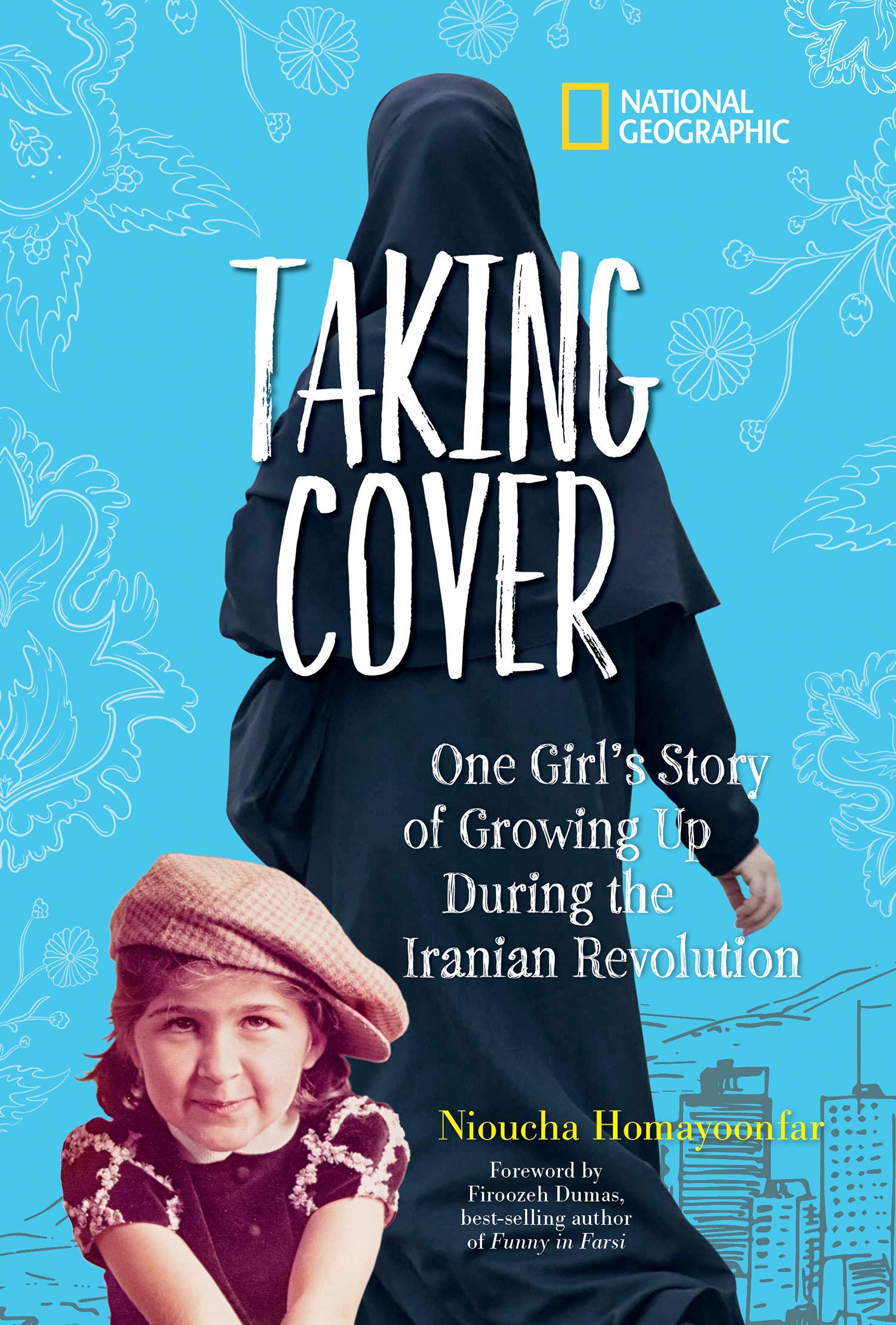
Taking Cover: Growing up during the Iranian Revolution

Taking Cover: One Girl’s Story of Growing Up During the Iranian Revolution, by Nioucha Homayoonfar, (Jan. 2019, National Geographic Kids), $18.99, ISBN: 9781426333668

Ages 10-14

Nioucha Homayoonfar’s memoir of life in Iran during the Iranian Revolution is equal parts joyful and heartbreaking. In 1976, at the age of 5, her family moves from Pittsburgh to Iran, where her father can be with his family again. For several years, Nioucha and her expat friends are educated in a progressive French-Persian school and enjoy the things most kids do, including listening to music, dancing, and swimming. But the revolution changes all that. Nioucha and her friends are segregated; they have to wear robes and hoods that cover their hair (and are threatened with burning in Hell, hanging on every visible thread of hair), and live in fear of being kidnapped by the Moral Police: a group called the Zeinab Sisters. Nioucha refers to them as The Black Crows, which brings a colorful, tongue in cheek image to mind, but these women are anything but humorous. The women patrol the streets in a van, capturing women and teens they deem immoral, hiding them in prisons, and beating them until they feel redemption is earned.

But there are wonderful moments of family and friendship in Taking Cover, too. Nioucha recalls her first Iranian Christmas, when she hopes Santa Claus will remember that she’s moved to Iran, so she’ll get her presents, and her family decorates her aunt’s house with a beautiful tree and presents. She talks about her relationship with her grandparents, who adore her and comfort her during her first sleepover away from her parents; going to concerts and driving around with her cousin, Sara, even learning French in an underground school run by her mother and her best friend’s mother. In the midst of explosions and oppression, Nioucha and her family managed to take joy where they found it.

Parallels to Persepolis are expected, and should be encouraged. Taking Cover is an excellent memoir and lead-in to Persepolis, allowing middle graders to expand their worldview and start a conversation on how the Iranian Revolution changed the world. The book includes a map of Iran and surrounding areas, and a timeline of Iranian history. There is a free, downloadable Educator’s Guide available.

Posted in Fiction, Historical Fiction, Realistic Fiction, Teen, Tween Reads

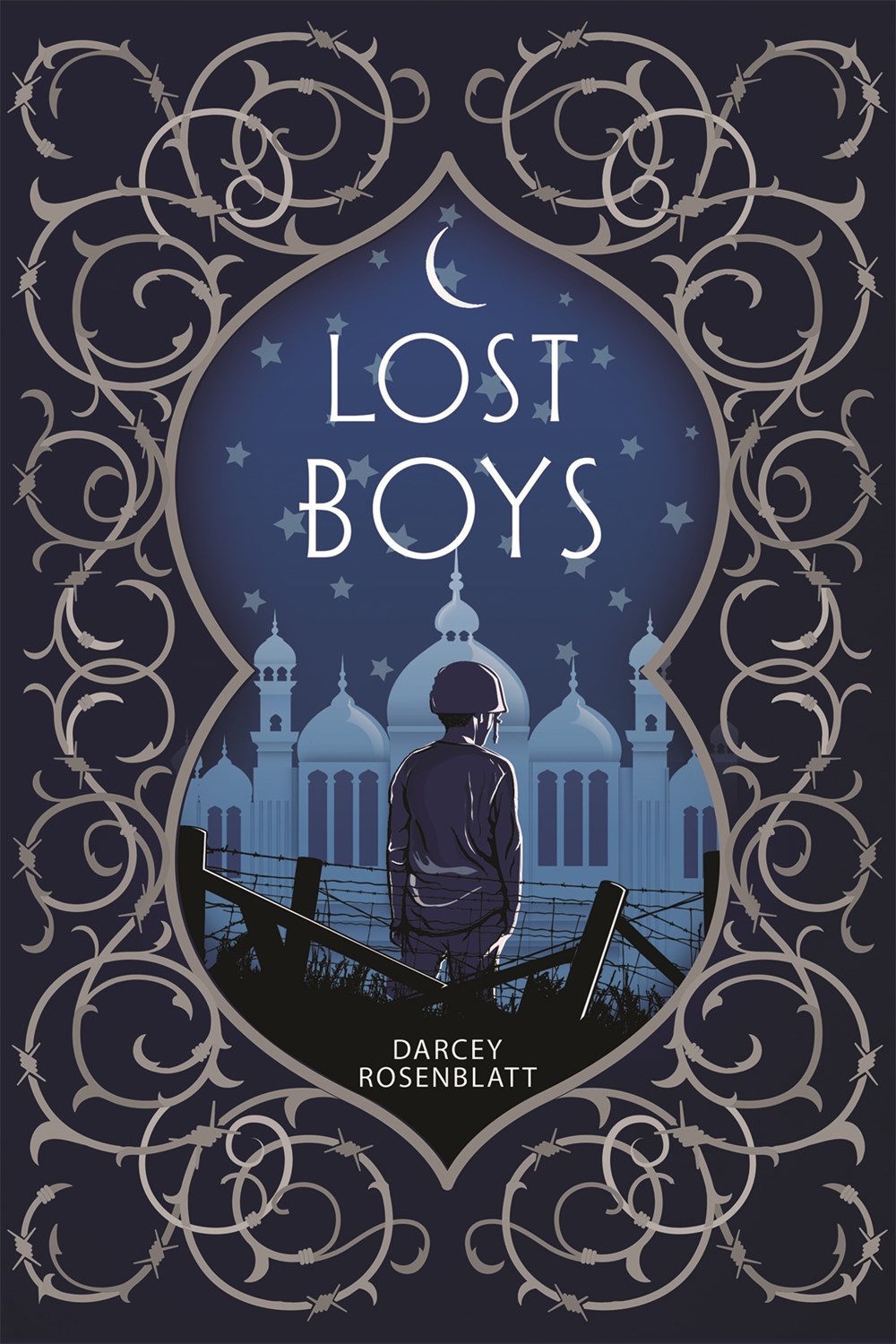
Lost Boys chronicles the Iran-Iraq War through a boy soldier’s eyes

Lost Boys, by Darcey Rosenblatt, (Aug. 2017, Henry Holt & Co), $16.99, ISBN: 9781627797580

Recommended for readers 9-14

Twelve year-old Reza is a musical prodigy living in 1982 Iran. He lives with his widowed, fundamentalist mother, and craves visits from his Uncle Habib; a member of the resistance, he also encourages Reza’s love of music by slipping him cassettes of artists from Stevie Wonder to Thelonious Monk. His mother pushes him to join the war effort, telling him she would be proud to have her son die in service of Allah. Reza wants nothing to do with the conflict, but when his uncle is killed and his best friend, Ebi, signs up to serve, Reza feels he has nothing left without his best friend, and signs on. He and Ebi receive their “keys to heaven” – plastic keys that serve as symbols that they will achieve paradise when they die in service to Iran and the Ayatollah – and are sent into battle. War is not the glorious battle that Ebi dreamed about; it’s not full of exciting moments like he and Reza have seen in the movies. The boys are fodder for the minefields – tied together and sent into battle to clear the way for older troops. Reza is injured and sent to a prisoner of war camp, where he meets other boys his age and desperately tries to learn Ebi’s fate as he endures abuse at the hands of a sadistic prison guard.

I couldn’t put Lost Boys down, choosing instead to disregard my normal sleep schedule until I finished the last page. Reza is a heart-achingly real character based on far too many child soldiers. He and his classmates are promised glory and fed lies; in the end, all he lives for is the hope that he’ll be reunited with his best friend and live to enjoy music again. Set in 1982, the story is more relevant now than ever, as children are still pressed into service all over the world. Booktalk Lost Boys with Marjane Satrapi’s Persepolis for tween and teen readers; booktalk with Child Soldier: When Boys and Girls Are Used in War, by Jessica Dee Humphreys and Michel Chikwanine to illustrate the worldwide epidemic of using children as combatants. This article from Global Citizen shines a light on seven countries that still use child soldiers, and what we can do to help stand against the practice.

Lost Boys is an important book that sparks outrage and empathy, and is a must-add for collections. I’d love to see this on next summer’s reading lists.