Posted in Uncategorized

Happy Book Birthday to Miya Wears Orange

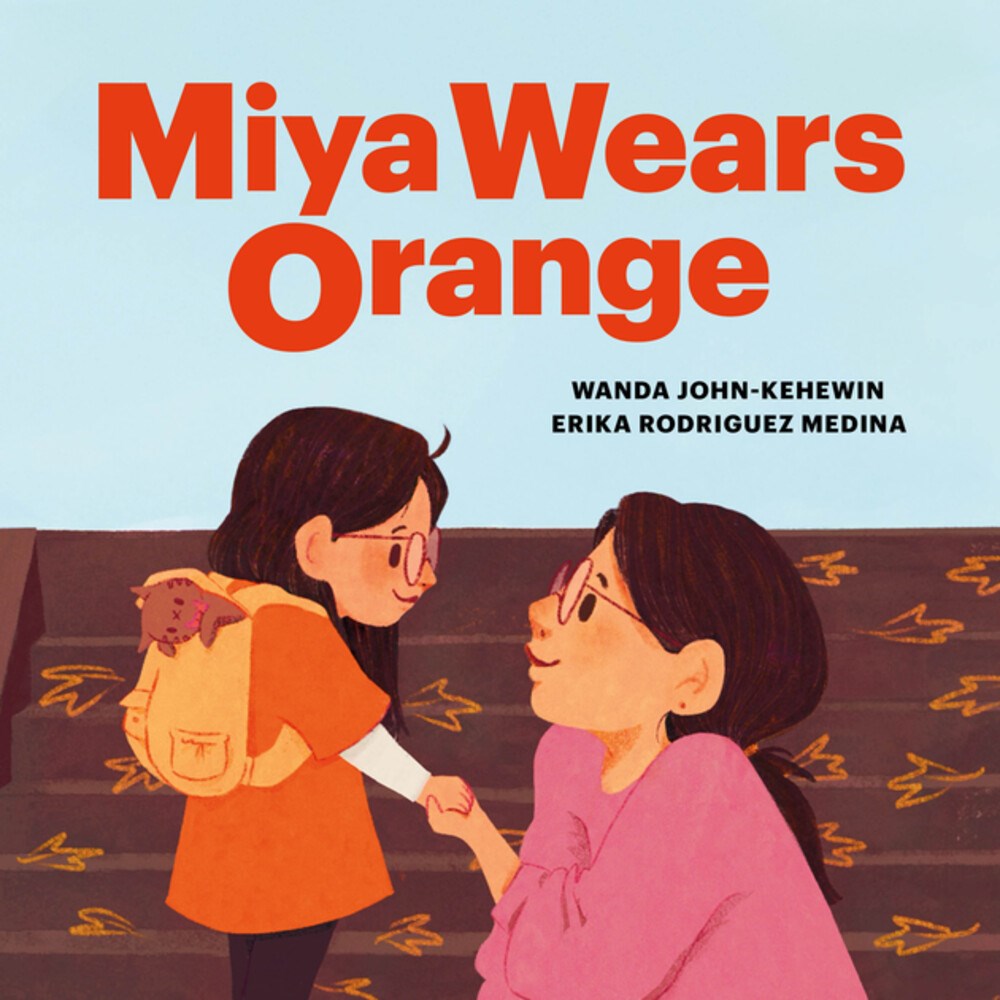
Miya Wears Orange, by Wanda John-Kehewin/Illustrated by Erika Rodriguez Medina, (Aug. 2025, Highwater Press), $18.95, ISBN: 9781774921258

Ages 6-8

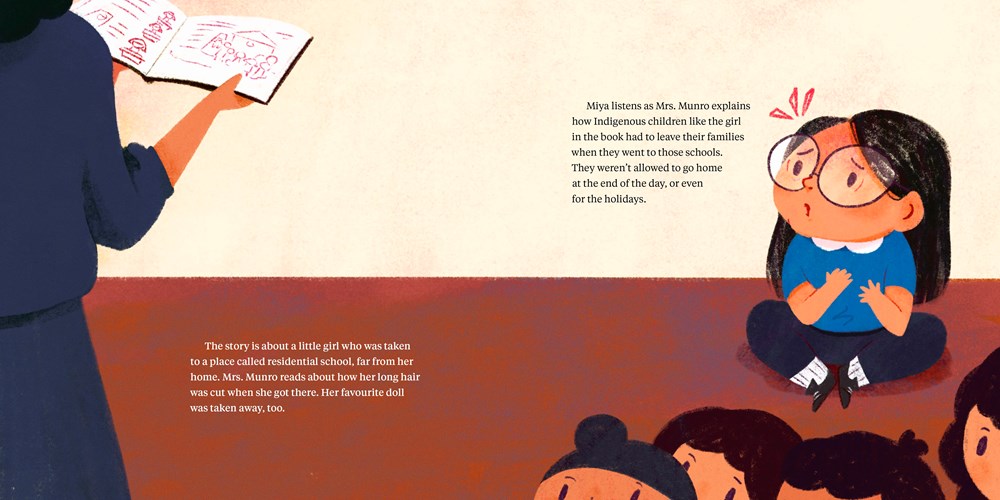
A young Indigenous girl learns about residential schools in her class, making her fear that she will be sent to one. When Miya arrives at home from school, she reluctantly tells her mother about her concerns; her mother assuages her fears, telling her that the schools have closed and she will never have to attend one. When Miya questions why her teacher read a book about them, Mom notes that “We all need to understand the truth of what happened, so we can make sure it never happens again”.  Mom tells Miya about wearing an orange shirt as a way of remembering the struggles of Indigenous children, and Miya proudly wears when she returns to school. John-Kehewin shows the intergenerational trauma wreaked by the schools and how it reaches the current generation. Medina’s illustrations have cultural details and her characters are inclusive and expressive. An author’s note mentions her inspiration for Miya’s story. A powerful and moving story about residential schools as seen through the modern-day eyes of an Indigenous girl, Miya Wears Orange belongs in library collections everywhere.

Learn about the National Day for Truth and Reconciliation here.

Posted in picture books

A childhood memory brought to the page: Herring to Huckleberries

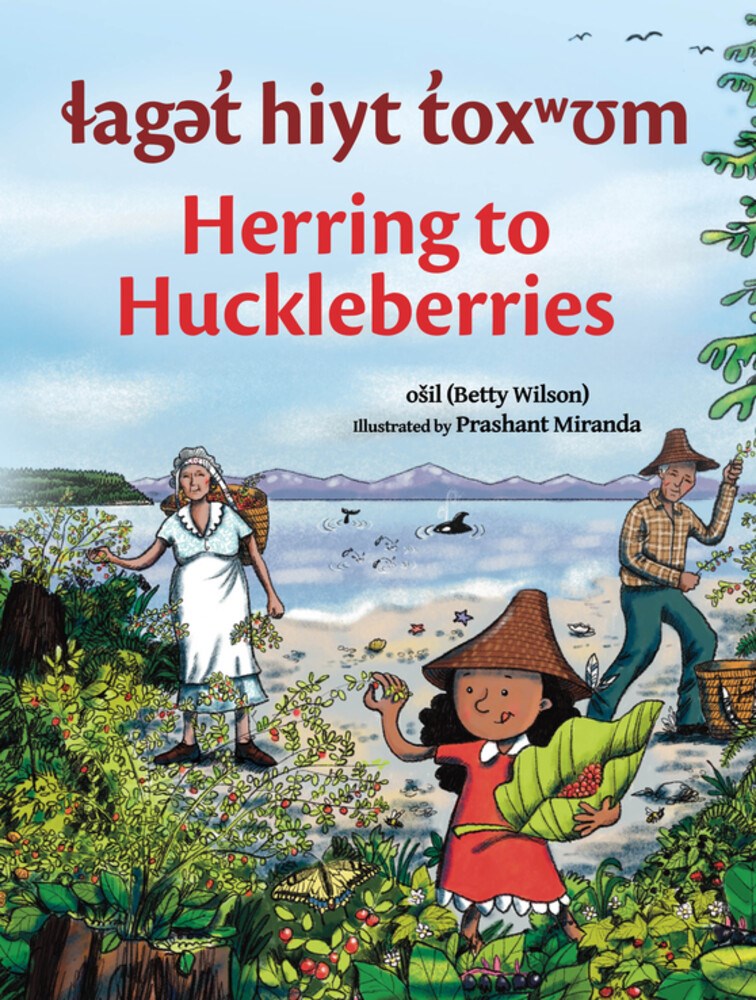
ɬagət̓ hiyt t̓oxʷʊm / Herring to Huckleberries, by ošil betty wilson/Illustrated by Prashant Miranda, (April 2025, Highwater Press), $21.95, ISBN: 9781774921180

Ages 6-8

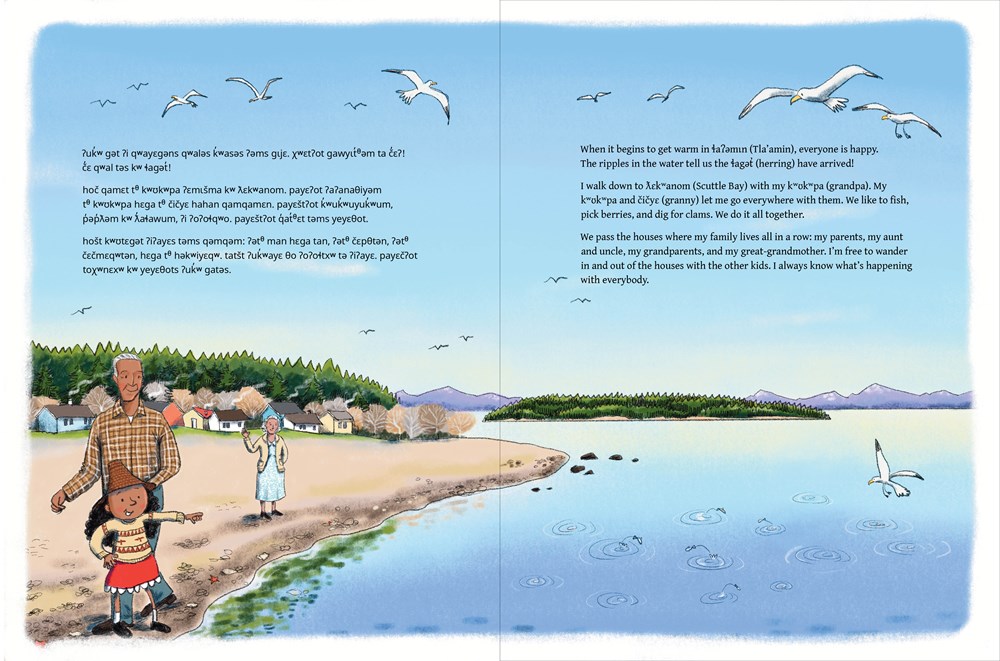
Inspired by author ošil’s childhood as a member of the ɬaʔəmɩn (Tla’amin) Nation, Herring to Huckleberries is a bilingual picture book, written in the the ɬaʔəmɩn language and in English. Ošil’s favorite time of the year is spent with her grandparents on the southwest coast of British Columbia, harvesting foods from the sea and land. They fish, pick berries, dig for clams, and curl up together to fall asleep under the stars. ošil’s descriptions are vivid, so filled with an infectious joy, wonder and respect for the land. It’s a warm memory of time spent with family beautifully illustrated by Miranda, who uses deep natural colors to create the coastal setting. The characters are expressive and affectionate, portraying a loving family. A glossary and pronunciation guide, a map, author’s note, and list of traditional foods round out the back matter. Recommended for collections.

For more information about the ɬaʔəmɩn (Tla’amin) Nation, visit the Tla’amin Nation’s webpage and British Columbia’s Assembly of First Nations’ webpage.


Posted in picture books, Uncategorized

Enjoy the seasons from an Indigenous perspective: Dad, is it Time to Gather Mint?

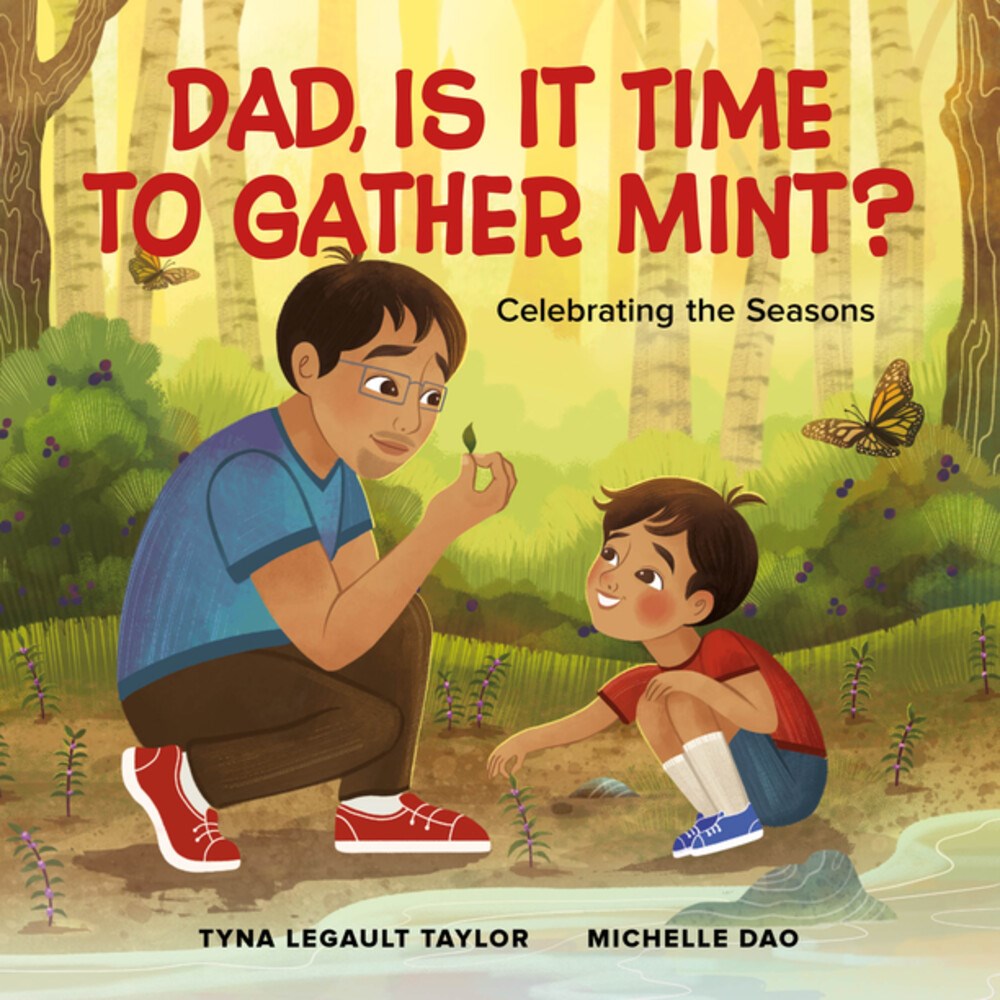
Dad, is it Time to Gather Mint?: Celebrating the Seasons, by Tyna Legault Taylor/Illustrated by Michelle Dao, (May 2025, Highwater Press), $18.95, ISBN: 9781774921227

Ages 5-8

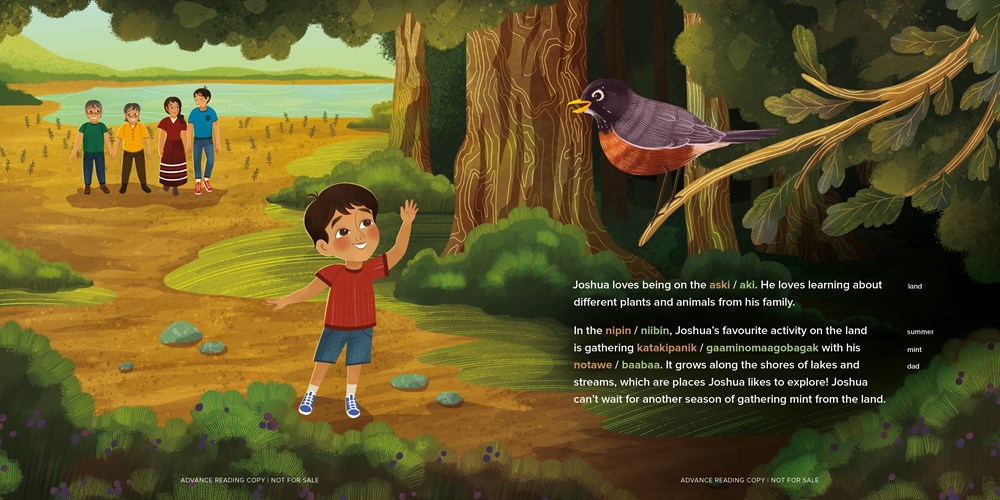
Dad, is it Time to Gather Mint? celebrates the relationship between humans and the land as a First Nations child and his family move through the seasons. Told in three languages: English, Swampy Cree (n-dialect), and Anishinaabemowin, the story is narrated by Joshua, a young boy who revels in his relationship to the land; his favorite time of year being mint-gathering season. Josh and his dad spend time together in nature through Fall, Winter, and Spring; he drinks in the colors and feels of the surroundings of each time of year. In the Fall, he sees the leaves change color and animals prepare for the winter; in the Winter, the cottony snow brings the cold. In Spring, he sees the animals return and the land come back from a winter’s sleep, and in Summer, he feels the longer, warmer days and rejoices in the green around him. Each season he asks Dad if it’s time to gather the mint, and each time, his father describes what other work must be done: hunting moose and partridge in the Fall; ice fishing in the Winter; hunting geese and fishing for rainbow trout in the Spring. Finally, the Summer arrives, and with it, the time to gather mint! It’s a moving story of family and stewardship to our world. Vocabulary in Swampy Cree and Anishinaabemowin are color-coded in brown and green throughout, with English translations in the margins. Back matter includes a glossary and pronunciation guide along with a recipe for Mint from the Land Iced Tea, just like Joshua’s mother makes. A moving and important addition to season books for collections.

For more information and resources on the Swampy Cree, visit the Saskatchewan Indigenous Cultural Center and the Swampy Cree Tribal Council. For information on the Ojibwe, who speak Anishinabemowin, visit the Minnesota Historical Society the Gladue Rights Research Database of Legal Aid Saskatchewan. Always check in with Debbie Reese’s American Indians in Children’s Literature website for recommendations on Indigenous creators and works.


Posted in Non-Fiction, picture books, Preschool Reads

Earth Day and Every Day Reading: I Love Salmon and Lampreys!

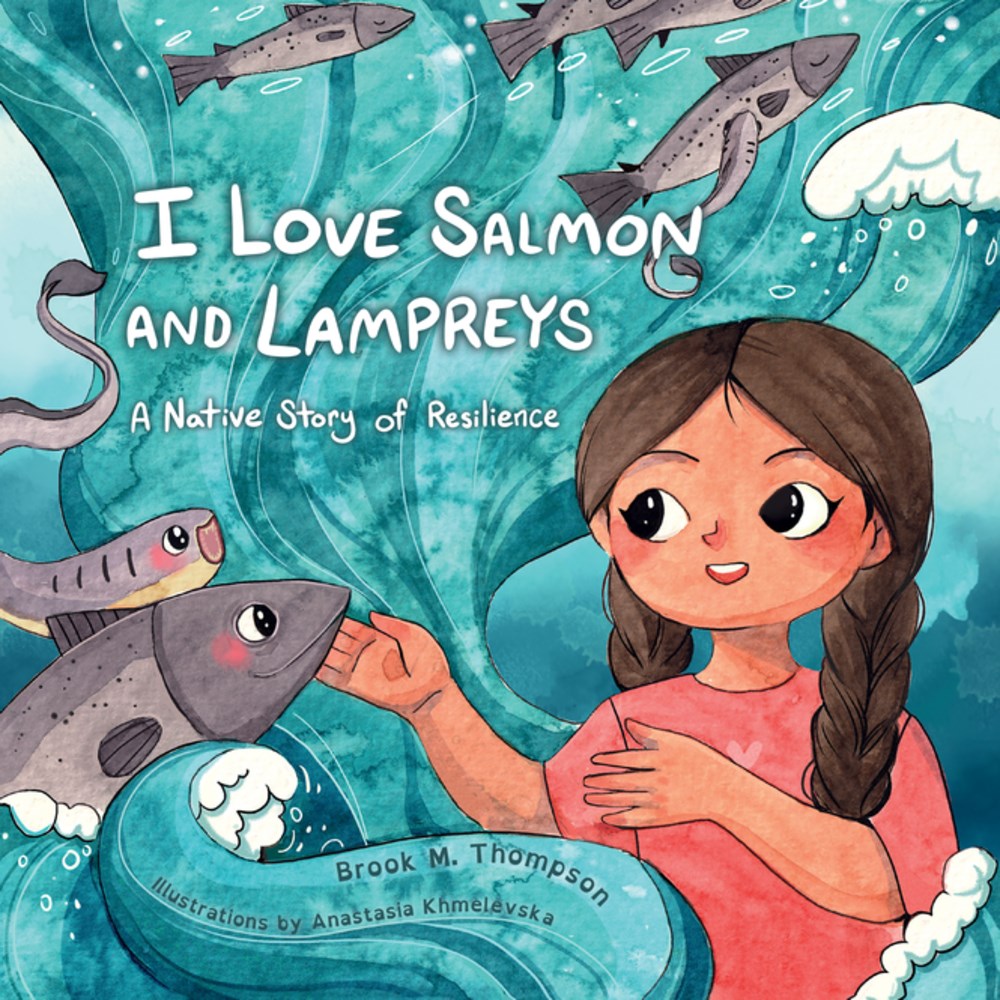
I Love Salmon and Lampreys: A Native Story of Resilience, by Brook S. Thompson/Illustrated by Anastasia Khmelevska, (Feb. 2025, Heyday), $20, ISBN: 9781597146685

Ages 4-8

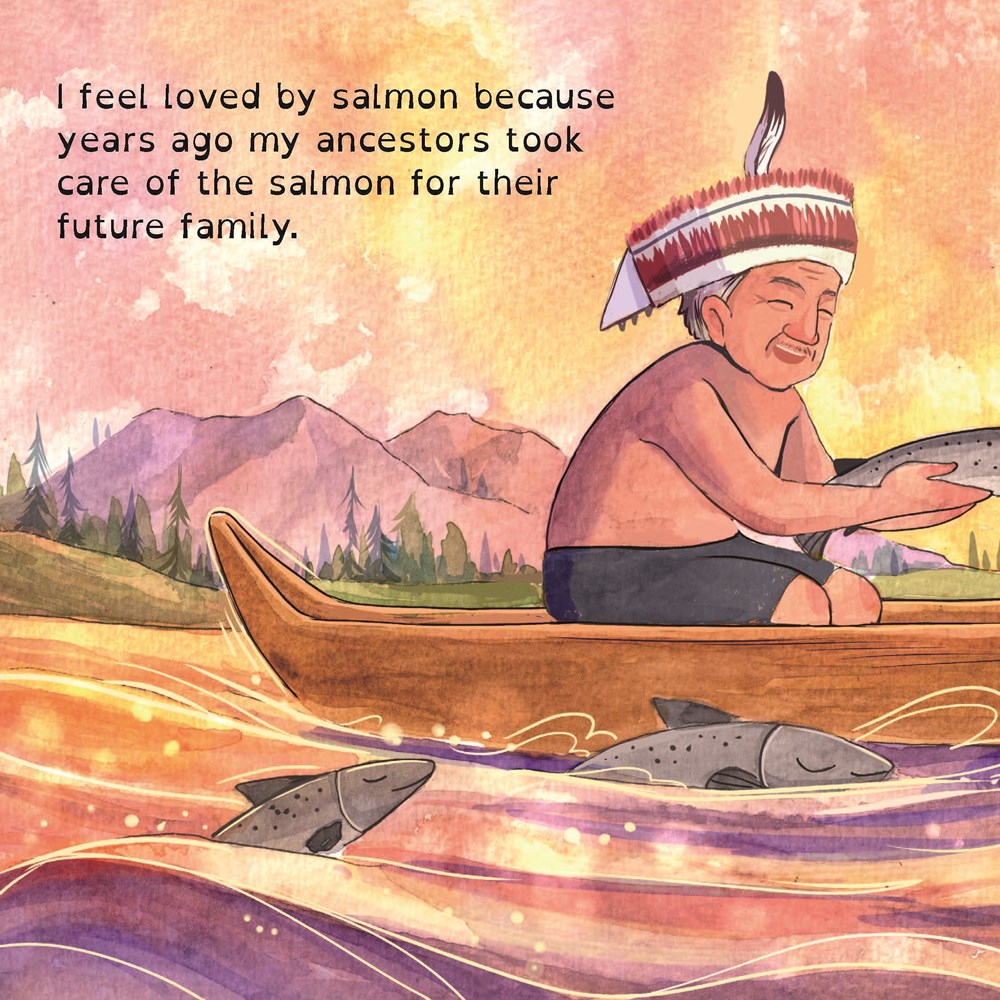
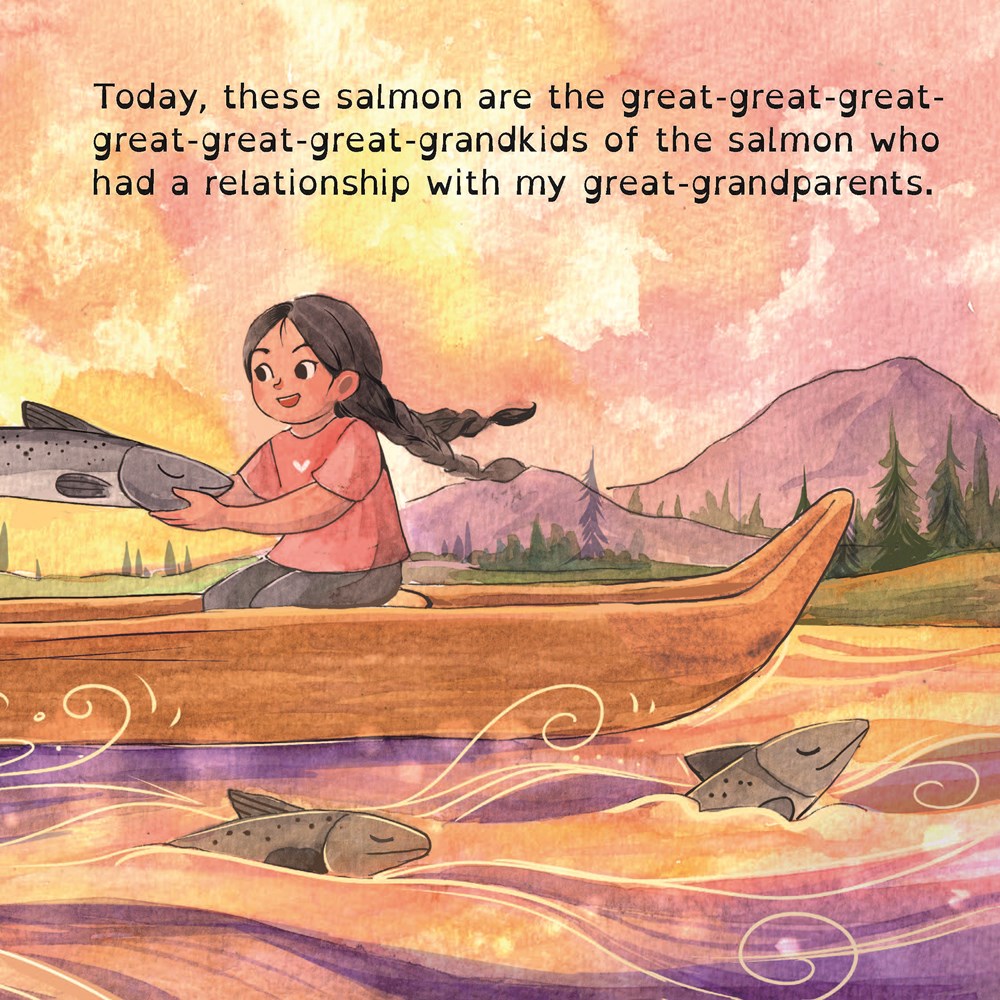
Growing up, Brook Thompson loved fishing with her family and hearing their stories; she also learned to care for the salmon and lampreys that sustained generations of her family. The dams along the Klamath River in Northern California endangered the fish, leaving the fish susceptible to “ich”, a parasite, that killed over 60,000 salmon. A member of the Yurok and Karuk Tribes, Thompson joined the tribal members and community that protested the dams until several were removed. Thompson’s story goes beyond the biographical to explain how the story of the fish mirrors her own journey to becoming a scientist and engineer; their pasts are rooted together in history, starting with the fish sustaining her ancestors. Like the salmon and lampreys, Thompson explored a life away from home, returning after receiving an education that will allow her to “take care of fish for people in the future, like my ancestors did for me in past years”. Khmelevska’s endearing artwork is rich with warm colors and expressive faces. A rendering of a grown-up Thompson wears a dress readers will recognize in an author photo from the back matter. Back matter includes fun facts, maps, and a note about the Klamath River dams. The book’s text utilizes a font called OpenDyslexic, making it easier for readers with dyslexia to enjoy. A good additional purchase for picture book biographies. Pair with We Are Water Protectors for Earth Day displays.

Posted in Fiction, Middle Grade, Science Fiction, Tween Reads

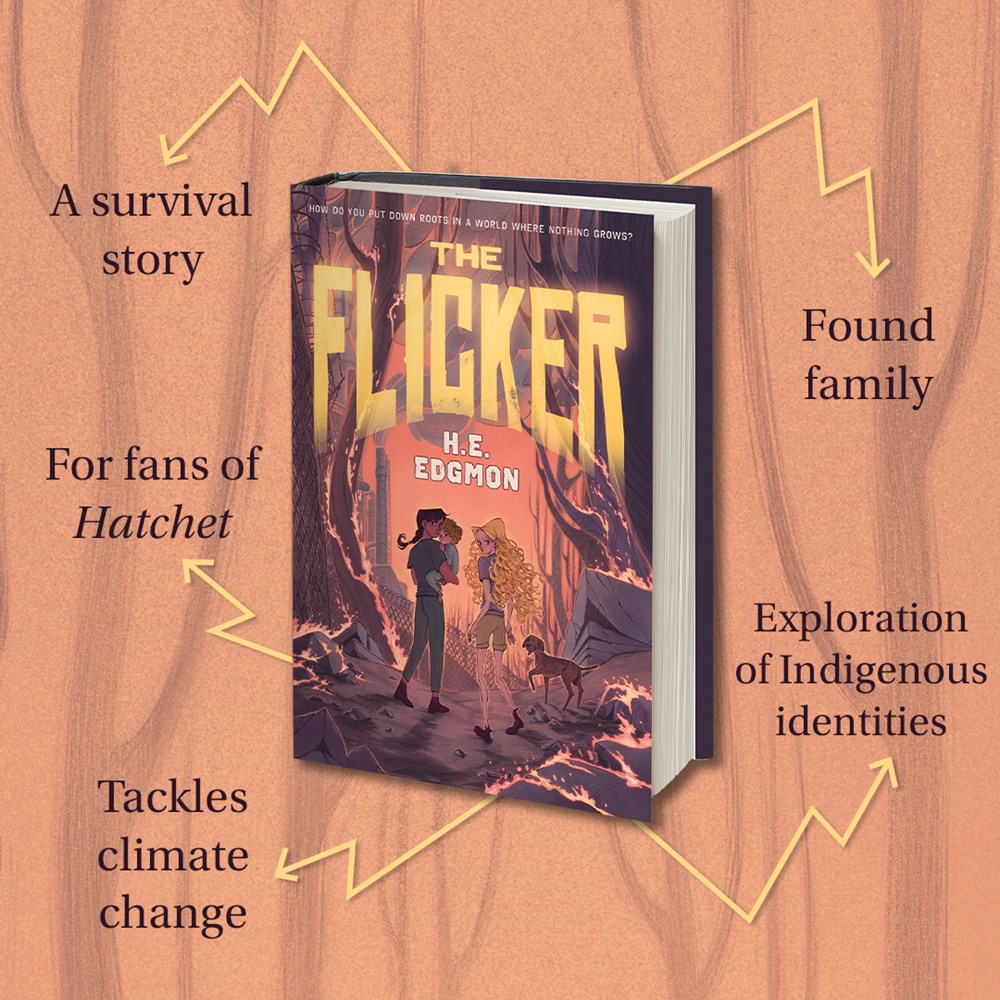
Native American Heritage Month Books Worth Reading: The Flicker

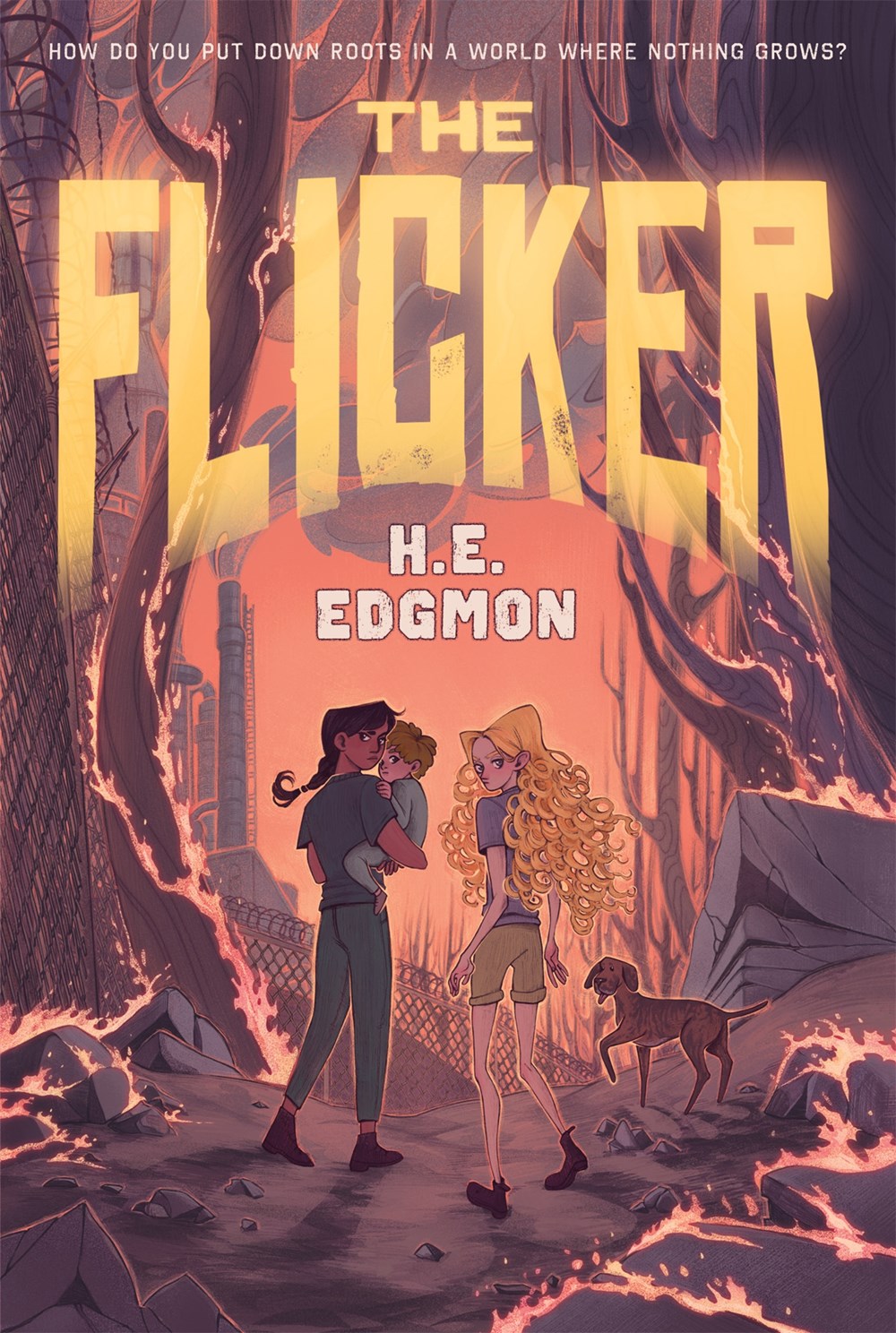
The Flicker, by H.E. Edgmon, (Sept. 2024, Feiwel & Friends), $9.99, ISBN: 9781250873965

Ages 9-12

A year after a solar flare – The Flicker – scorched the Earth and ended life as we know it, step-sisters Millie and Rose are orphaned. Millie, convinced her grandmother – a Seminole elder – is alive, convinces Rose to join her and their baby half-brother, Sammy, on the journey. Rose isn’t sure about how she feels, but joins Millie and Sammy, hoping to find the location of the rumored Sanctuary she hears codes from over the radio. They meet a group of kids called The Lost Boys and their leader, Ben, who was their counselor at theatre camp when the flare hit; Ben agrees to give them a lift to Millie’s grandmother’s home, but the land is full of terrors. Aside from the scorching heat and risk of wildfires, there’s The Hive: a shadowy corporation that militarized during the flare. The Hive’s soldiers hoard supplies so their people can live as if nothing ever happened, and they’ll go to any lengths to keep their people comfortable. Edgmon excels in his middle grade debut, exploring Indigenous identity through Millie and her memories of her grandmother, who has strong ties to the land. Edgmon introduces us to fully realized characters that readers will want to spend time with; Millie, though outwardly strong, is tender and vulnerable, locking all her feelings “deep inside her belly”; Rose wears her feelings on the outside for everyone to see, much to Millie’s aggravation. Sammy unites the two in their determination to protect him. Touching on themes of climate change, gender identity, and survival, The Flicker is unputdownable. An essential for middle grade collections, especially where survival fiction is popular. I loved this book.

The Flicker has starred reviews from Publishers Weekly and School Library Journal.

Posted in Intermediate, Non-Fiction, picture books

Reading for Indigenous People’s Day? Add these to your list.

October 10th is designated as Indigenous People’s Day, when we honor Native American history and culture. It is a holiday that has been a long time coming; consider spending the day learning from the best resources.

Dr. Debbie Reese’s American Indians in Children’s Literature website is an excellent resource, with analyses on books and resources on indigenous people in literature: Dr. Reese provides insight on the good, the bad, and the downright ugly.

If you are interested in research the indigenous land you occupy, and you are in the United States, you can text your zip code or your city and state to a number that will respond with the names of the Native lands that correspond to your region. I live and work on land taken from the Canarsie, Munsee Lenape, and Matinecock nations. Thanks to Code for Anchorage and Native Land for this service.

Support Indigenous presses. Highwater Press was kind enough to send me two beautiful picture books from their Sk’ad’a Stories Series, which I’ll be talking about below. Highwater is an imprint of Portage & Main Press and they publish stories by Indigenous writers and illustrators.
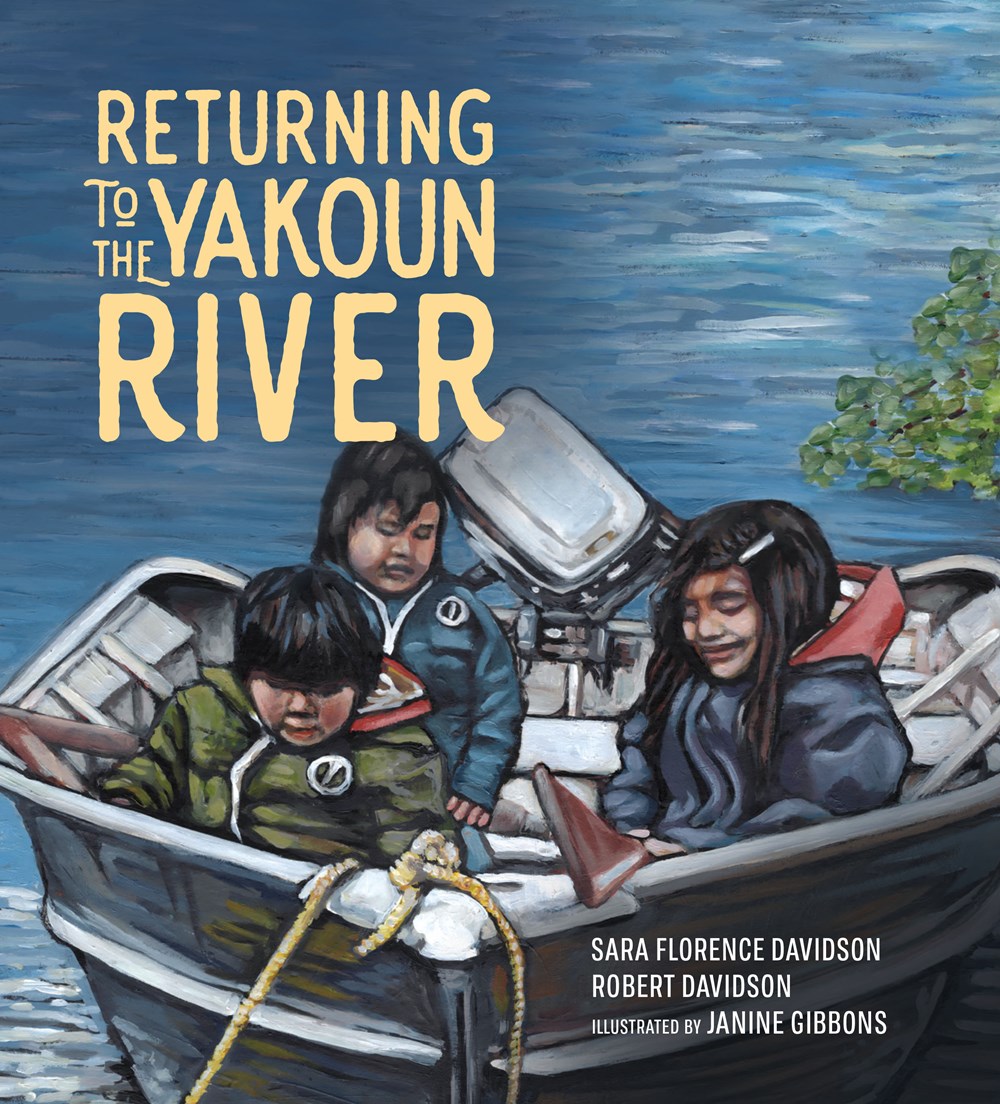
Returning to the Yakoun River, by Sara Florence Davidson & Robert Davidson/Illustrated by Janine Gibbons, (Sept. 2022, Highwater Press), $21.95, ISBN: 9781774920213

Ages 6-8

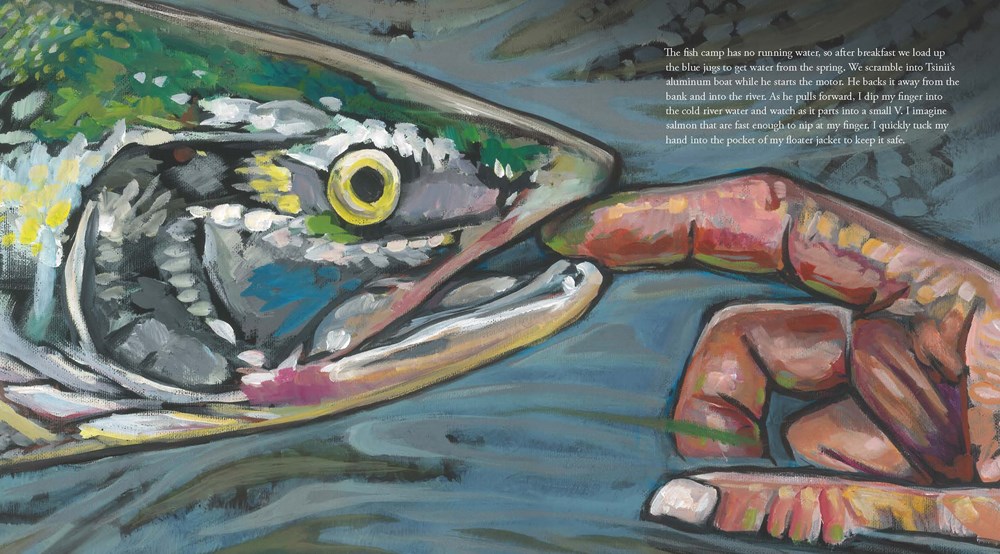
Returning to the Yakoun River is based on author Sara Florence Davidson’s childhood memories of a Haida fish camp. Seen through the eyes of a young girl, a family travels to the Yakoun River to fish for salmon and spend time with their Tsinii (grandfather). The artwork unfolds like a dream; the art appears to be oil painting; Haida artist Janine Gibbons draws from nature for her palette, with early morning blues and grays moving into cool weather steel blues and and greens; food and cheerful faces warm up the spreads. Endpapers show a calm river scene in the early morning. Sara Florence Davidson, a Haida/Settler Assistant Professor in Indigenous Education, draws heavily on themes of family and connection to the ancestors in her work. Her father, co-author Robert Davidson, is of Haida descent and is one of the most respected and important contemporary artists in Canada. The story is a peaceful meditation on intergenerational relationships and family and on recognizing the importance of ritual and connection. A gorgeous book for collections and an excellent purchase.


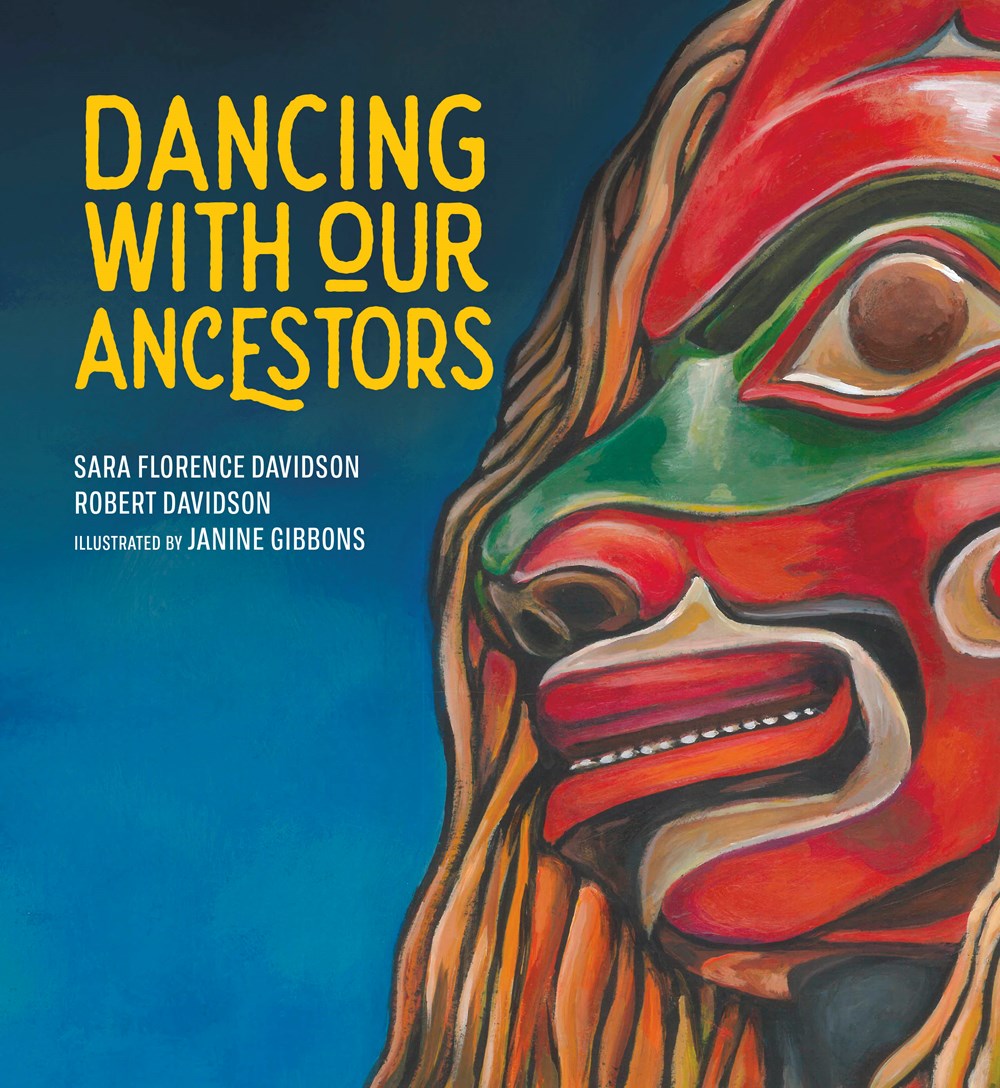
Dancing With Our Ancestors, by Sara Florence Davidson & Robert Davidson/Illustrated by Janine Gibbons, (Sept. 2022, Highwater Press), $21.95, ISBN: 9781774920244

Ages 6-8

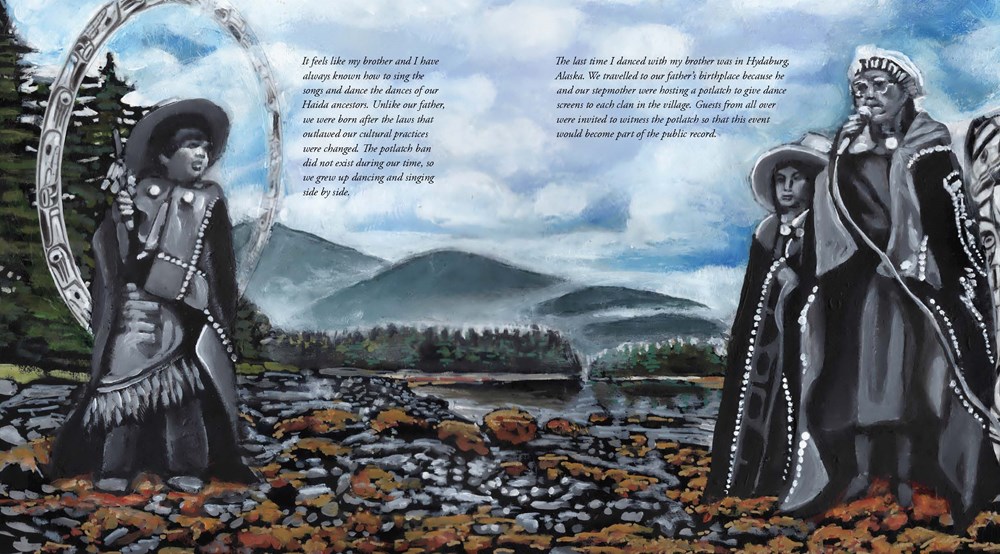
A potlatch is an important ceremony to First Nations in the Northwest and parts of Canada. In Dancing With Our Ancestors, Sara Florence Davidson remembers the last time she danced with her late brother, all the while bringing the importance, excitement, and joy of a potlatch to younger readers. What most stands out in the narrative is the determination to continue tradition in the face of adversity: “Unlike our father, we were born after the laws that outlawed our culture practices were changed. The potlatch ban did not exist during our time, so we grew up dancing and singing side by side”; “They wanted us to stop being Haida”; “Today we dance with our children so our culture cannot be stolen again”. Joy and pain live side by side in the storytelling. Davidson beautifully describes the excitement and anticipation, with attendees arriving by boat, plane, and cars and RVs; the community makes “mountains of food” and set up the gym where the event is being held. Janine Gibbons’s illustrations show a crowd that spans generations, with bold, vibrant regalia and a sense of wonder that comes through. Endpapers show bold, colorful crests and masks, proudly displayed during the potlatch. An author’s note provides context to the story and a note on Ben Davidson, the author’s brother, is a lovely tribute. An absolutely essential purchase.


For the complete Sk’ad’a Stories Series list, visit Highwater’s page. Highwater also sells a Teacher’s Guide available for working with the Sk’ad’a Stories on their website.

Posted in picture books, Preschool Reads

Magnolia Flower introduces children to Zora Neale Hurston

Magnolia Flower, by Zora Neale Hurston, Adapted by Dr. Ibram X. Kendi/Illustrated by Loveis Wise, (Sept. 2022, Amistad Books), $19.99, ISBN: 9780063098312

Ages 4-8

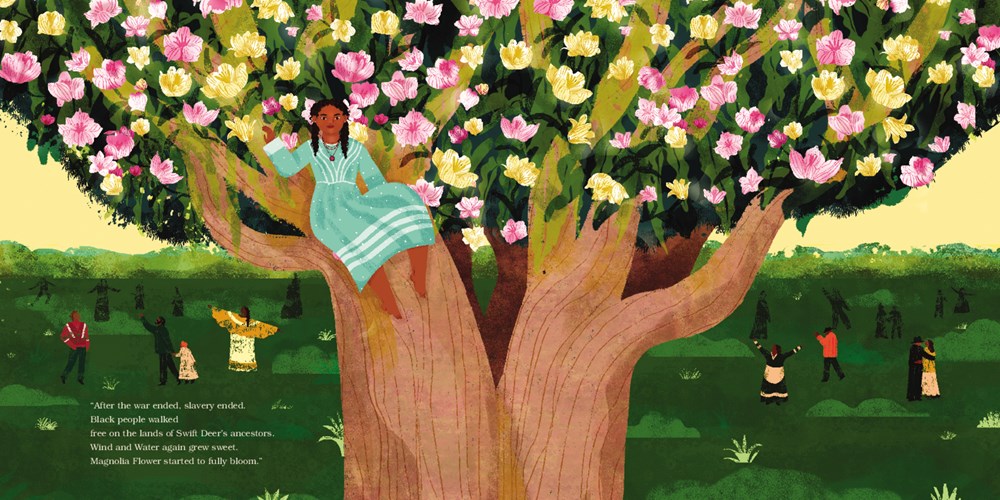
National Book Award Winner Dr. Ibram X. Kendi adapts Zora Neale Hurston’s short story, “Magnolia Flower”, for children in this gorgeous tale of an Afro-Indigenous girl and the man she loves. Magnolia Flower is the daughter of an escaped slave named Bentley and an Indigenous woman named Swift Deer, who “had fled her own trail of tears”. Their daughter, Magnolia Flower, falls in love with a man of letters, but Bentley wants more for his daughter and tries separating the two; Magnolia Flower makes a decision to follow her heart. Dr. Kendi beautifully retells Hurston’s tale for young audiences, assuring that her legacy will continue. Loveis Wise’s digital illustrations have a gorgeous folk art quality to them, with vibrant color and a strong connection to nature. Colorful magnolias embellish the endpapers. Back matter includes a historical note on the setting of “Magnolia Flower” and an author’s note on Hurston’s work. This is the first of six classic works by Hurston that Kendi will adapt for younger audiences. A breathtaking book that deserves a place in any collection.

For more information about Zora Neale Hurston, including reading group guides, excerpts, and syllabi, visit the official website of Zora Neale Hurston’s estate.

Magnolia Flower received starred reviews from Publishers Weekly and Kirkus.

Posted in Fantasy, Graphic Novels, Middle School, Teen, Tween Reads

Happy Book Birthday to Goblin by Eric Grissom and Will Perkins!

Goblin, by Eric Grissom/Illustrated by Will Perkins, (June 2021, Dark Horse Books), $14.99, ISBN: 9781506724720

Ages 10-14

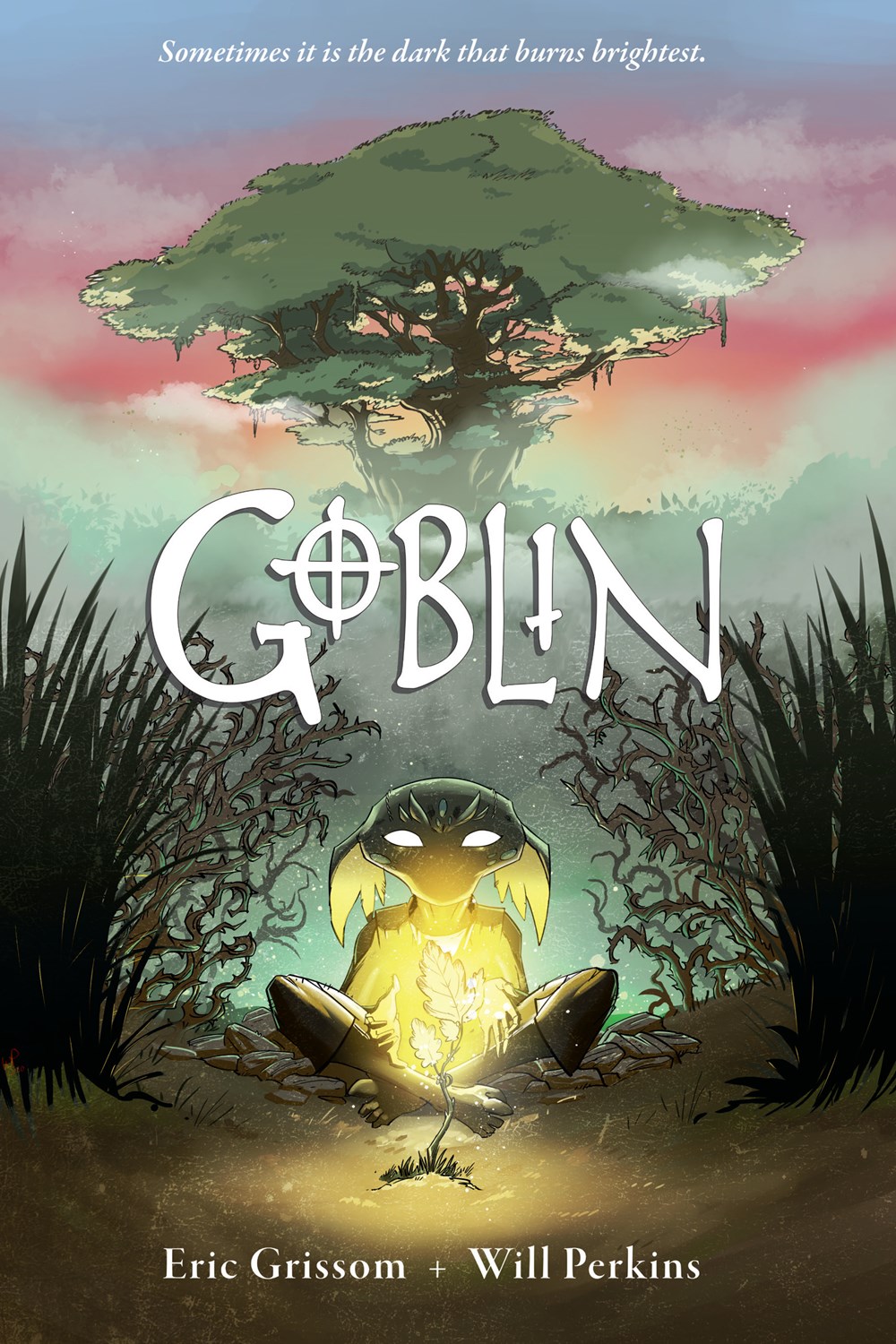
Rikt is a stubborn young goblin who argues with his parents and storms off to bed. He wakes to the smell of smoke, and discovers his home is under attack by a raiding party of humans. His parents are slain, and he’s forced to run into the woods to escape with his life. Angry, grieving, alone, Rikt vows revenge, but where does he begin? A benevolent deity intervenes and sets him on a path to what he thinks will give him the tools to exact vengeance – but along the way, he meets friends and learns a great deal about himself.

Goblin is a gorgeously illustrated fantasy graphic novel. The colors are as incredible as they are horrible at points: the insidious curling of the smoke around Rikt when he awakens; the firelight as his home burns; the colors dance across the page, looking almost real. Will Perkins brings Rikt’s grief and terror to the page, using color and shadow, to hit readers in the feelings. The majesty of the Goddess as she appears to Rikt is one of the best panels I’ve read so far this year.

Let’s talk about Eric Grissom’s writing: his dialogue is wonderful, with humor, pathos, and wisdom throughout the book. He expertly addresses negative stereotypes, and the damage it wreaks, in a fantastic setting. Think of your own literary biases: when you think of a goblin, do you think of a loving family? A sweet, typical kid? Probably not: and that’s the point of the story. Rikt often hears that goblins are “filthy monsters”, or “dirty filthy thieves”. Grissom touches on the cycles of violence that cause generation after generation to kill (see Jason Reynolds’s Long Way Down for a brilliant, meditation on this cycle) and even hints at the violence against indigenous populations, with the murder of Rikt’s family. There is an incredible amount of wisdom waiting in this book. Perfect for fantasy fans and middle schoolers. A must-add to your shelves.


Posted in picture books

Zonia’s Rain Forest is perfect for Earth Day

It’s Earth Day! Give your Mother Planet a hug!

Zonia’s Rain Forest, by Juana Martinez-Neal, (March 2021, Candlewick Press), $17.99, ISBN: 9781536208450

Ages 4-8

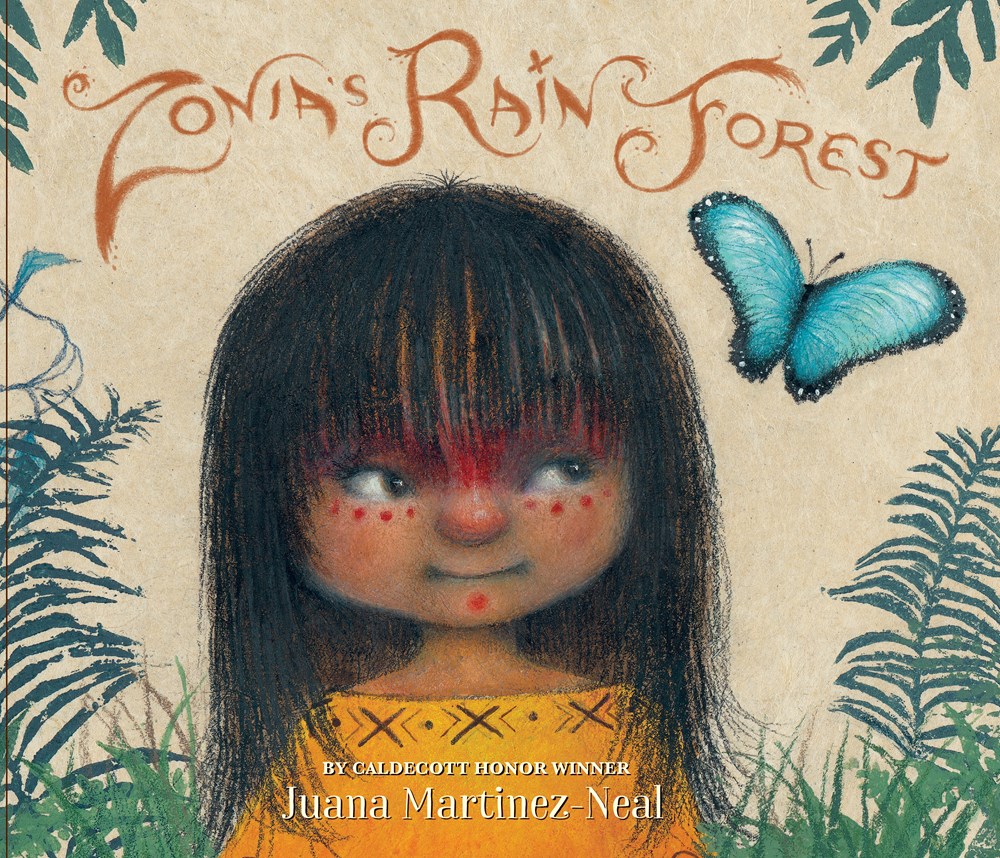
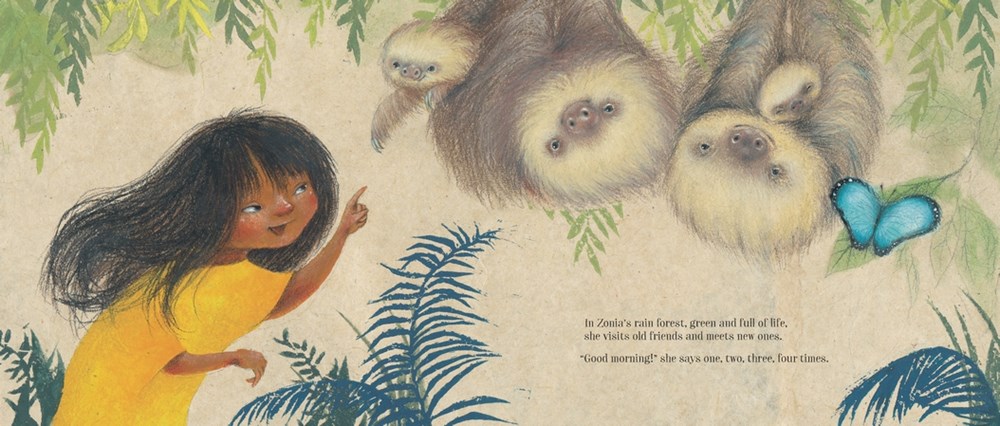
Zonia is a little girl who lives in the rain forest with “those she loves”. She visits her animal friends, enjoying their company and learning from them; when she heads home, she discovers, in horror, a landscape destroyed: trees chopped down; the land brutalized. She runs to her mother, telling her the forest needs help, and her mother responds that she must answer. Sagely, the little girl acknowledges that we all must answer. There is so much beauty in this book, it’s almost indescribable: Juana Martinez-Neal uses mixed media on handmade banana bark paper to create a textured, stunning rainforest landscape. Zonia, a member of the Peruvian Amazonian Indigenous Asháninka, wears plant-based paint on her face on the cover; inside, her rosy cheeks and little smile give her a playful expression that invites readers to befriend her. Zonia’s mother nurses her baby brother as she sees Zonia off for the day’s adventures. The rainforest colors are vibrant, alive, on the page, and a bright blue butterfly is our guide – is us – following Zonia through her interactions. When she encounters the pillaged rainforest, her horror, her confusion, reaches out and touches readers. When she speaks her final line in the book: “We all must answer”, it’s more than a call to action. It’s an accounting. Powerful, beautiful, and necessary for collections. Endpapers are an orange-on-orange swarm of butterflies flying across the spreads. Back matter includes a word about the Asháninka people in both English and Asháninka, with a link to Juana Martinez-Neal’s webpage, which contains an Asháninka translation to Zonia’s Rain Forest. The book also includes facts about the Amazon, threats to the Amazon, selected sources, and the names of Zonia’s animal friends.

Juana Martinez-Neal is a Caldecott Honor winner. Her author webpage has a wealth of resources about Zonia, including a teacher guide and links to videos and podcasts.

Zonia’s Rain Forest has starred reviews from School Library Journal and Booklist.

Posted in Intermediate, Non-Fiction, picture books

#HomesCool Reads: Math & Nature

There are so many great books that have come out, and are coming out in the next couple of months! With school having started for some kids (NYC doesn’t go back until after Labor Day), I’m transitioning #SummersCool into #HomesCool, since a lot of us will be learning in either a blended or completely remote environment. For everyone who’s back in a classroom, or had to make the decision on how to schedule your children for learning, hang in there. And thank you, teachers!

Up this time, we’ve got folk tales using math and logic; we’ve got lion queens in India, and an archaeologist who discovered Peru’s ancient cultures. Let’s go!

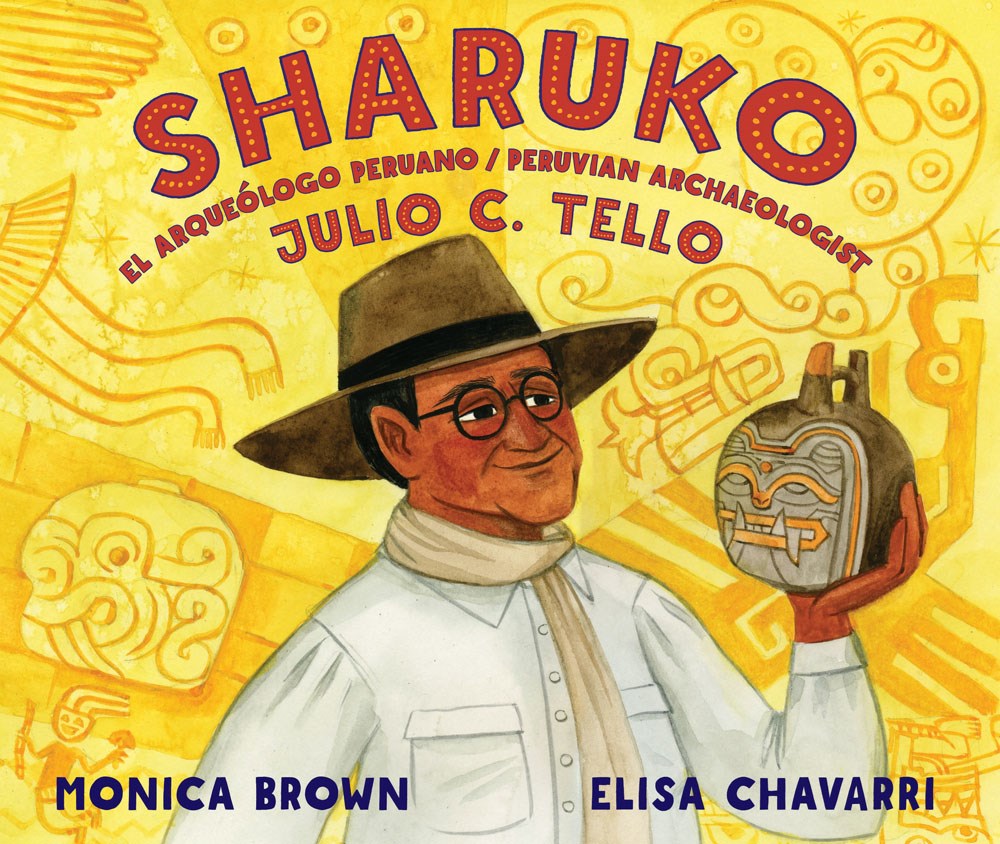
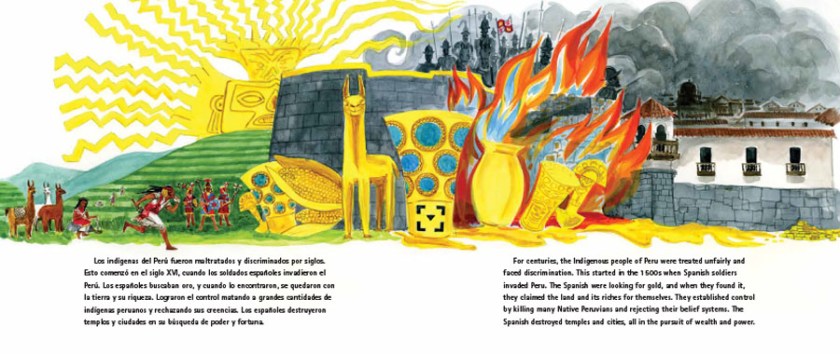
Sharuko: El arqueólogo peruano Julio C. Tello/Peruvian Archaeologist Julio C. Tello, by Monica Brown/Illustrated by Elisa Chavarri, Translated by Adriana Domínguez, (Aug. 2020, Lee & Low Books), $19.95, ISBN: 9780892394234

Ages 7-11

This bilingual (English/Spanish) biography of Peruvian archaeologist Julio C. Tello, nicknamed “Sharuko”, is a beautifully written, illustrated, and translated story of Julio Tello, an Indigenous boy growing up in late 1800s Peru, who became a leading expert in Peru’s Indigenous culture. As a boy, Sharuko – a nickname meaning “brave” in Quechua, the language spoken by the Indigenous people of Peru – explored caves and burial grounds in the Peruvian Andes. As he got older and continued his education, he read articles about skulls he had found as a child, which were sent to the city of Lima to be further studied. The article inspired Julio to devote his medical school training to study Peru’s indigenous history; going on to prove that Peru’s Indigenous culture was established thousands of years before, not inherited from other countries, as was the pervasive belief. He awakened pride in his country’s ancestry and its cultural legacy and became a hero to the people of Peru.

Elisa Chavarri’s watercolor and gouache artwork is colorful, with maps, beautiful landscapes, and artifacts all coming together to tell Julio Tello’s story. Author Monica Brown tells Tello’s story in a way that will captivate readers and possibly inspire new generations of archaeologists and anthropologists. The Spanish translation is parallel to the English text, which helps learning readers (like me!) learn the flow of the language, be it Spanish or English. Back matter includes an afterword a note on the illustration, and additional sources. I need more picture book biographies in my Spanish/bilingual collection. Happy to add this one.

Sharuko: El arqueólogo peruano Julio C. Tello/Peruvian Archaeologist Julio C. Tello has starred reviews from The Horn Book, Booklist, and School Library Journal.
 

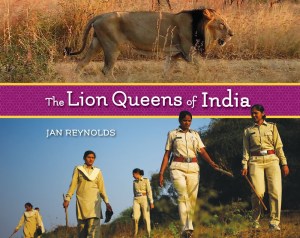
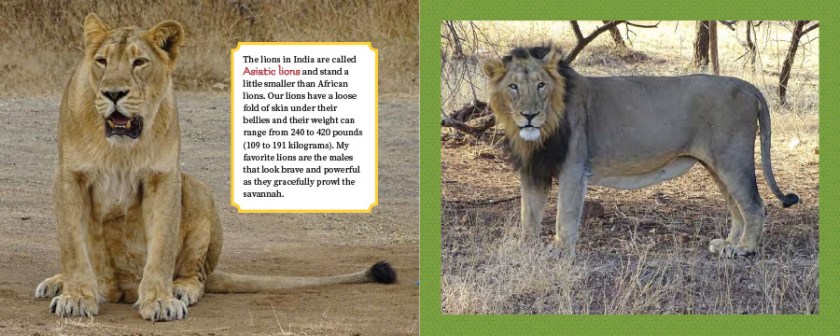
The Lion Queens of India, by Jan Reynolds, (Sept. 2020, Lee and Low Books), $18.95, ISBN: 9781643790510

Ages 6-8

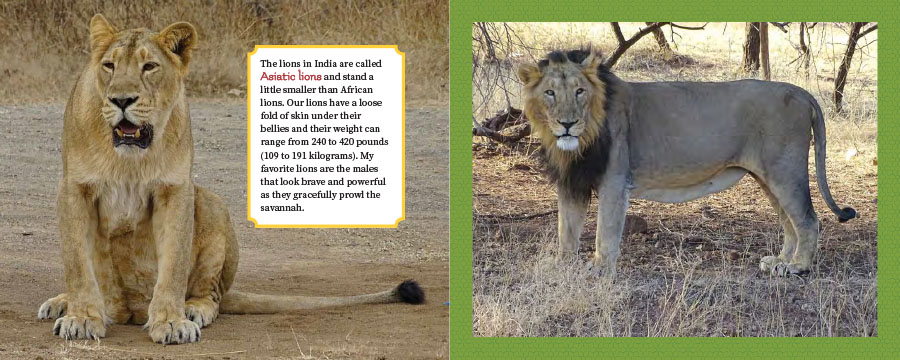
Award-winning photojournalist Jan Reynolds introduces readers to the Lion Queens – a group of female forest guards who track and protect the lions in the Gir Sanctuary. Narrated by Rashila, the first Lion Queen, readers learn about a day in the life of the Lion Queens; from patrolling areas on motorcycle to checking on food and water availability for the lions. There are facts about lions throughout, and Rashila talks about the different lions’ personalities, the “Web of Life” balance in the Gir, and the growing lion population, coming back from the brink of extinction. The Queens work with communities to educate and inform; they discuss conservation and preservation and how to live alongside the lions without hurting the habitats that both human and lion rely on to survive. Back matter includes an author’s note and bibliography. The book is filled with beautiful photos of the lions of the Gir Sanctuary and Rashila and her fellow Lion Queens, and the sentences are brief and to the point, making this a great nonfiction book for emerging readers and for storytimes. It’s an exciting subject to introduce to kids – especially on a Career Day! Consider looking up the Lion Queens of India documentary from Animal Planet to have on hand.
 

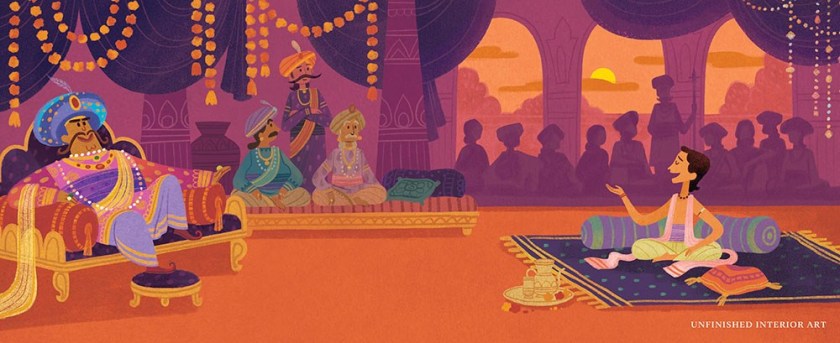
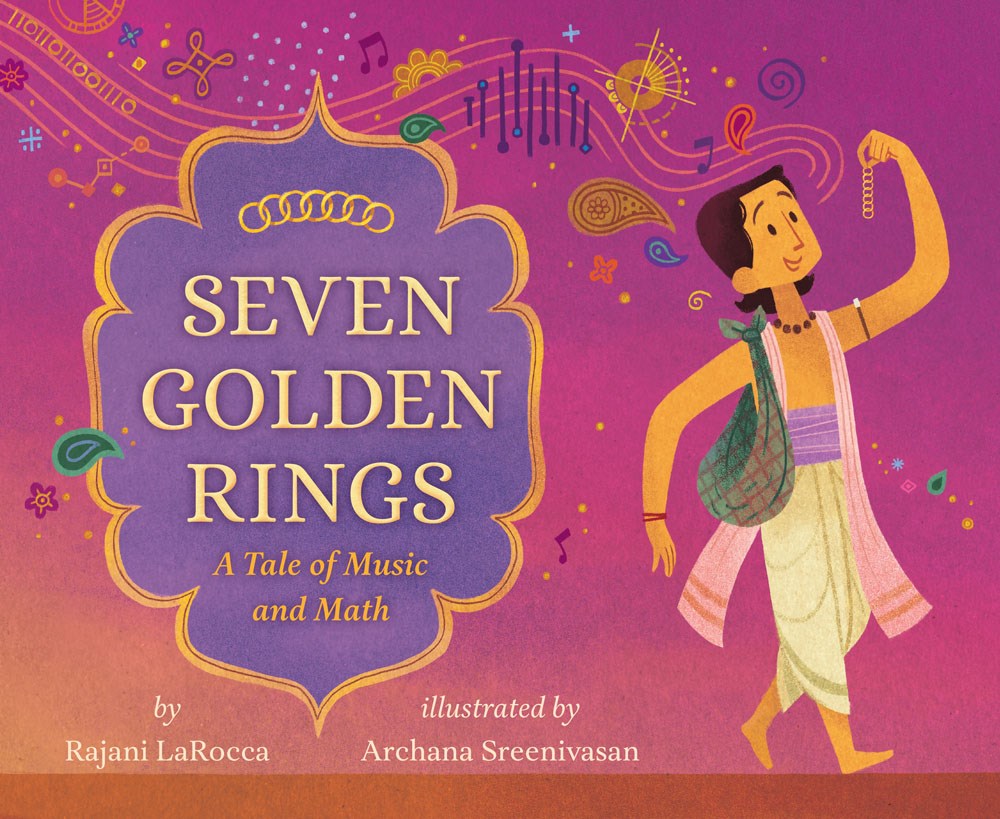
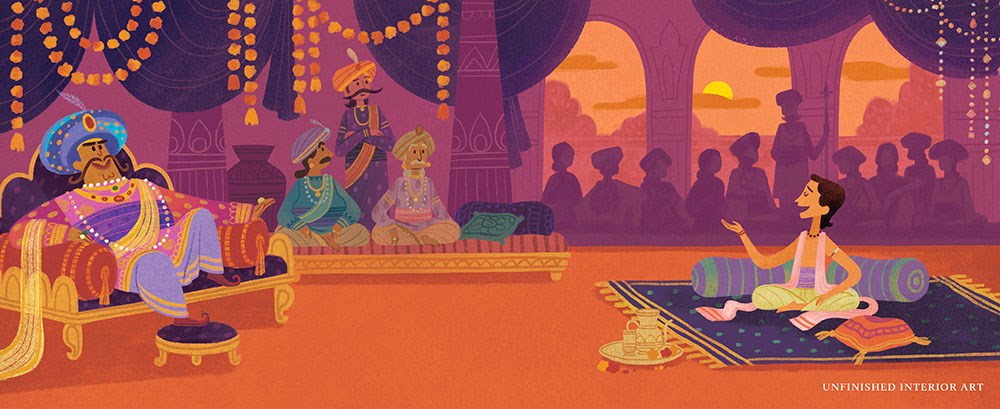
Seven Golden Rings: A Tale of Music and Math, by Rajani LaRocca/Illustrated by Archana Sreenivasan, (Oct. 2020, Lee and Low Books), $19.95, ISBN: 9781885008978

Ages 6-10

Set in ancient India, Bhagat is a boy living with his mother. They are poor and they are hungry, but a chance to win a place at the Rajah’s court as a singer gives Bhagat some hope for bettering their circumstances. As he leaves for the Rajah’s city, his mother gives him the last of their wealth – seven gold links from her wedding necklace – to pay for his food and lodging, and Bhagat knows he must be careful in budgeting, as he doesn’t know how long it will take for the Rajah to see him and he doesn’t want to overpay and run out of money. Bhagat uses math to work out how to safely pay his way and keep the innkeeper satisfied, and his math skills lead to a happy resolution.

There are lessons in computational thinking and mathematics, and has the building blocks for coding units here. An author’s note explains the mathematics at work in the story, touching on binary numbers, base 10, and the history of mathematics in the ancient world. The digital artwork is bright, warm, and attractive, with clear illustrations explaining Bhagat’s use of the golden rings. A solid addition to your fables/folk tales and math tales like the Sir Cumference series, One Grain of Rice, and The Grapes of Math.