Posted in Early Reader, Fiction, Preschool Reads

The Blue Songbird discovers her song

The Blue Songbird, by Vern Kousky, (Apr. 2017, Running Press Kids), $22.49, ISBN: 9780762460663

Recommended for readers 4-8

A young blue songbird wishes that she could sing like her sisters. She wants to sing along with them, but she can’t seem to sing like they do. Her mother encourages her to go and find a special song that only she can sing, and the little bird sets off in search of her special song. She meets other birds and experiences the world, only to discover that, upon reaching home again, her song was inside of her all along.

The sweet story of self-awareness also shows readers that your experiences help make you who you are. The songbird’s song is influenced by her travels and who she met; the music was inside of her all along, but venturing out – and returning home – helped shape the music into a song.

The watercolor artwork is beautiful to look at. The colors are soft and the depiction of the music, as a spray of notes and color, is lovely and stirring. The text encourages kids to explore their world, even if, at a young age, that world is their backyards, their playgrounds, their friends’ homes. At the same time, it reassures kids that they can always return home.

There are so many ways to enjoy and extend the lessons put forth in this story. The little birds can be recreated with thumbprint art. Have little readers make their own songbird families by using watercolor paint, dipping their thumbs into a color, and giving their own songbirds adventures in finding their songs. Encourage kids to go on scavenger hunts – I love this idea for scavenger hunt bags and plan to go on an adventure with my little guy once this crazy NYC weather lets up – to explore the world around them.

Good readalikes for this book include A Song for Papa Crow, by Marit Menzin, and the classic Over in the Meadow. Over the Meadow also makes a good singalong and flannel play.

Vern Kousky is an adjunct professor of English for Touro College and the author of the award-winning book, Otto the Owl Who Loved Poetry. You can see more of his artwork, including some interior art from The Blue Songbird, at his website.
Posted in Early Reader, Fiction, Fiction, Graphic Novels, Intermediate, Preschool Reads

Have visual vocabulary fun with Wordplay!

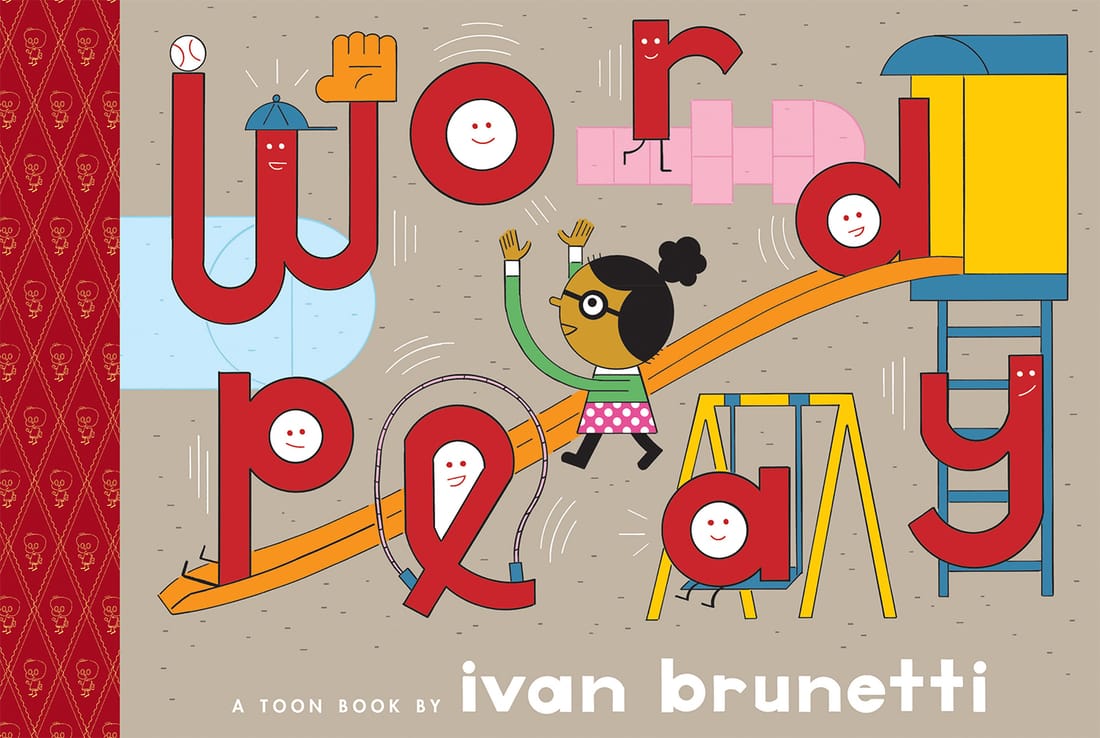
Wordplay, by Ivan Brunetti, (May 2017, TOON Books), $12.95, ISBN: 978-1-943145-17-1

Recommended for readers 3-8

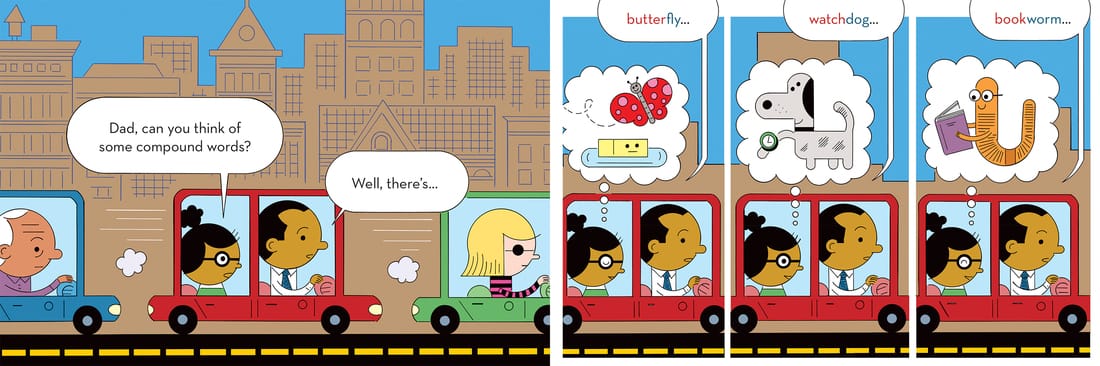
Kids learn about compound words – two words that come together to form a whole new word, like housework – in this visual feast for the eyes. Ever see a house vaccuming? A moon in an easy chair, reading under a bright light? You will here, as the kids in the story think up and visualize compound words that will make kids (and you) laugh and think.

This book is made for classrooms and programs. Ask your kids what compound words they can come up with – then draw it! Make a bookmark for one of the easiest compound words: Bookworm! The fun, bold art leaps off the page, and bright white word balloons make for dialogue that you can ask kids to read out loud, turning the book into a performance. Display Wordplay with other fun word books, like Lynne Truss’ younger readers’ version of Eats, Shoots and Leaves and Patricia Byers’ One Sheep, Two Sheep: A Book of Collective Nouns. Wordplay is a TOON Level 1; Levels E-J in Guided Reading. Teachers’ Resources are forthcoming.

Wordplay received a starred review from Kirkus.


Posted in Animal Fiction, Humor, Preschool Reads

Welcome to New York. Now, STOP FEEDIN’ DA BOIDS!

Stop Feedin’ the Boids!, by James Sage/Illustrated by Pierre Pratt, (Apr. 2017, Kids Can Press), $16.95, ISBN: 978-1-77138-613-5

Recommended for readers 4-8

A young girl named Swanda moves to Brooklyn. Missing all the local wildlife she used to enjoy, she spots a pigeon on a rooftop and decides to set up a feeder on her fire escape. Since Swanda appears to be new to New York living, she has no idea what can of worms she’s opened, and before she can say, “bagel”, pigeons swarm the fire escape. New Yorkers know all too well what a horde of pigeons brings, and sure enough, Swanda’s neighbors find themselves under siege as the pigeons leave their mark as literally as they do figuratively.

Stop Feedin’ Da Boids is a love letter to New York. Sage and Pratt capture the city’s diversity by giving us a heroine of color, and in the bustling community. The pages are loaded with representatives of different cultures and colors; Hasidim and Rastafarian, women with rollers in their hair, kids running through the street, men chatting with one another. Pratt even captures the New York pigeon to perfection, with the bright yellow eyes that target lock on any scrap of food in the birds’ vicinity, and the grey/black bodies with a hint of color, usually green. Sage nails the New Yawk accent so well when Swanda’s beleaguered neighbors gather together to tell Swanda, “YOU GOTTA STOP FEEDIN’ DA BOIDS!” that any reader, anywhere, will hear it, as clear as a clanging bell.

This makes a great read-aloud – you can go to town with the voice! – and invite the kids to give their best New York accents a whirl. Let them feel like part of the city! There are oodles of New York-centric books to add to a New York/New Yawk storytime: Mo Willems’ Knuffle Bunny books spotlight Mo’s art over black and white photos of Brooklyn, home of Swanda and the pigeons; Mommy Poppins has a nice list of New York-related books to choose from, and I also love Christoph Niemann’s Subway and Bryan Collier’s Uptown. You could also have a pigeon read-aloud, which gives you an excuse to read Mo Willems’ Pigeon books. (Not that anyone needs an excuse to read Mo.) A fun storytime craft that may or may not get you in trouble: a bird feeder. Or you can do the sticker/coloring sheet thing, too.

Stop Feedin’ Da Boids! received a starred review from Kirkus.

Posted in Fiction, Fiction, Graphic Novels, Intermediate, Middle Grade

She’s full of glitter, she’s wielding a glue gun… She’s The Amazing Crafty Cat!

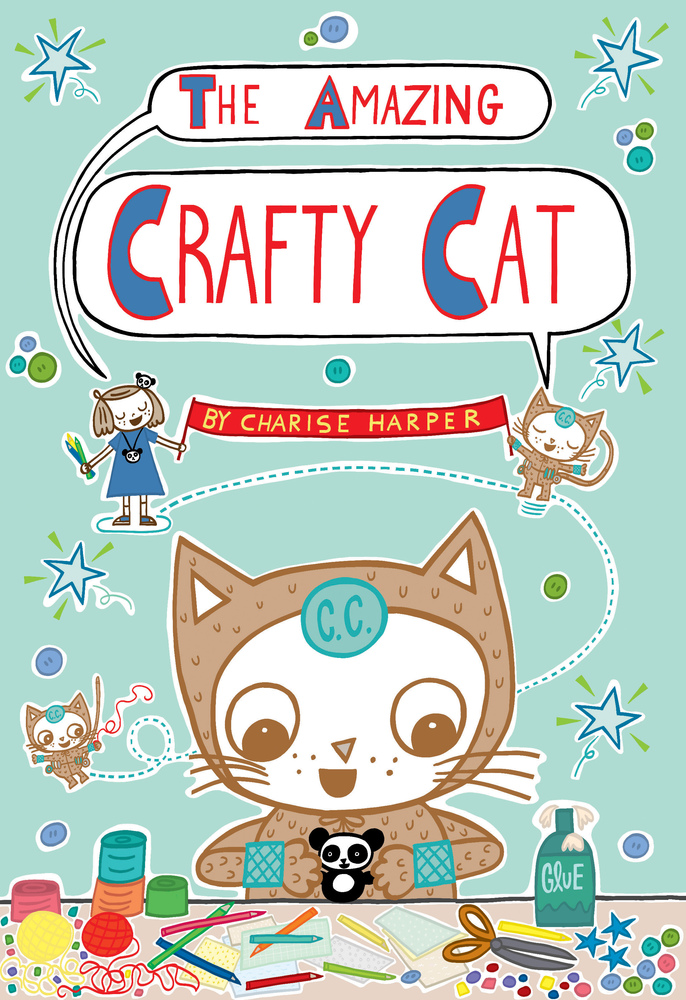
crafty-cat_1The Amazing Crafty Cat, by Charise Mericle Harper, (Apr. 2016, First Second), $13.99, ISBN: 9781626724860

Recommended for ages 7-10

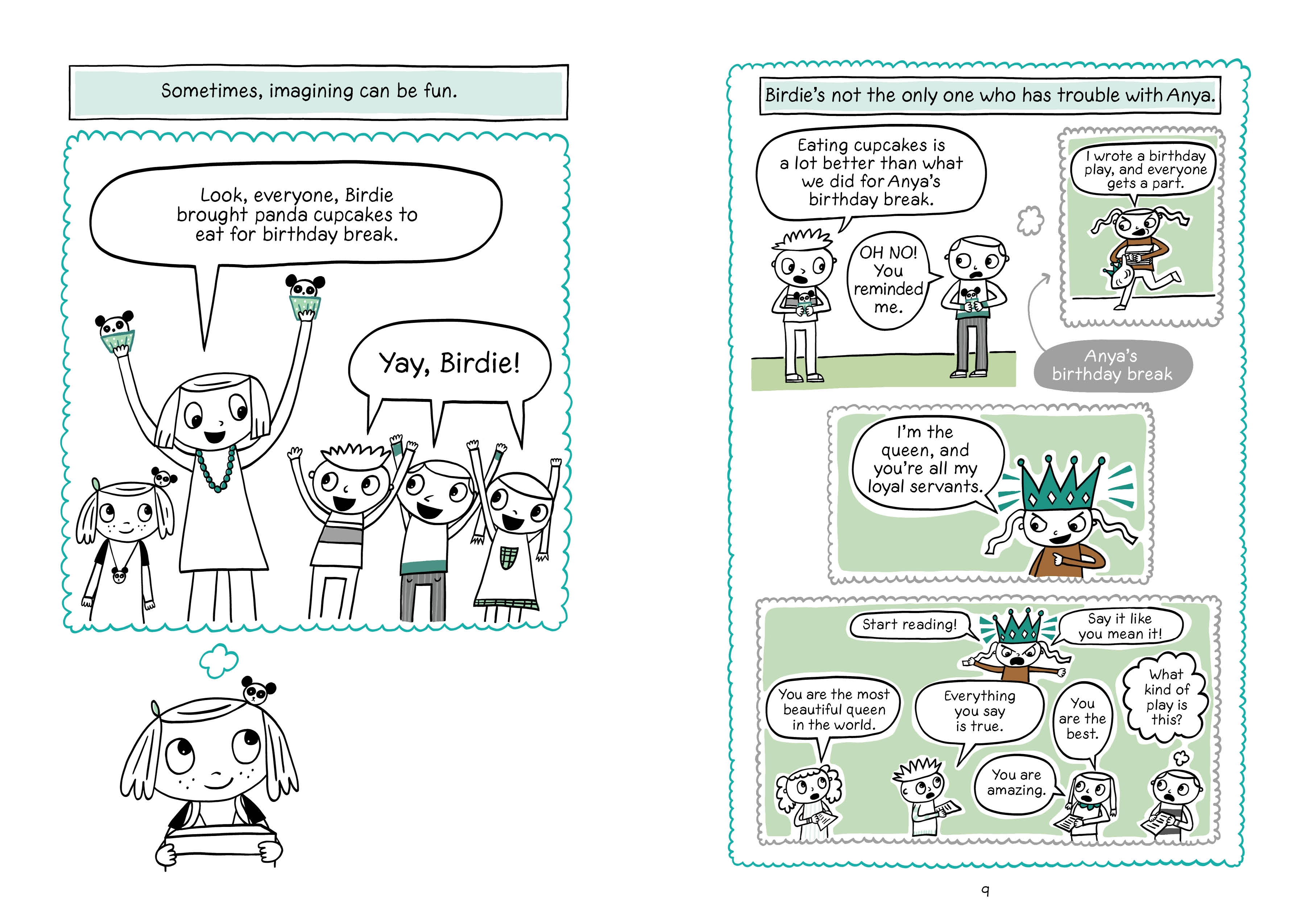
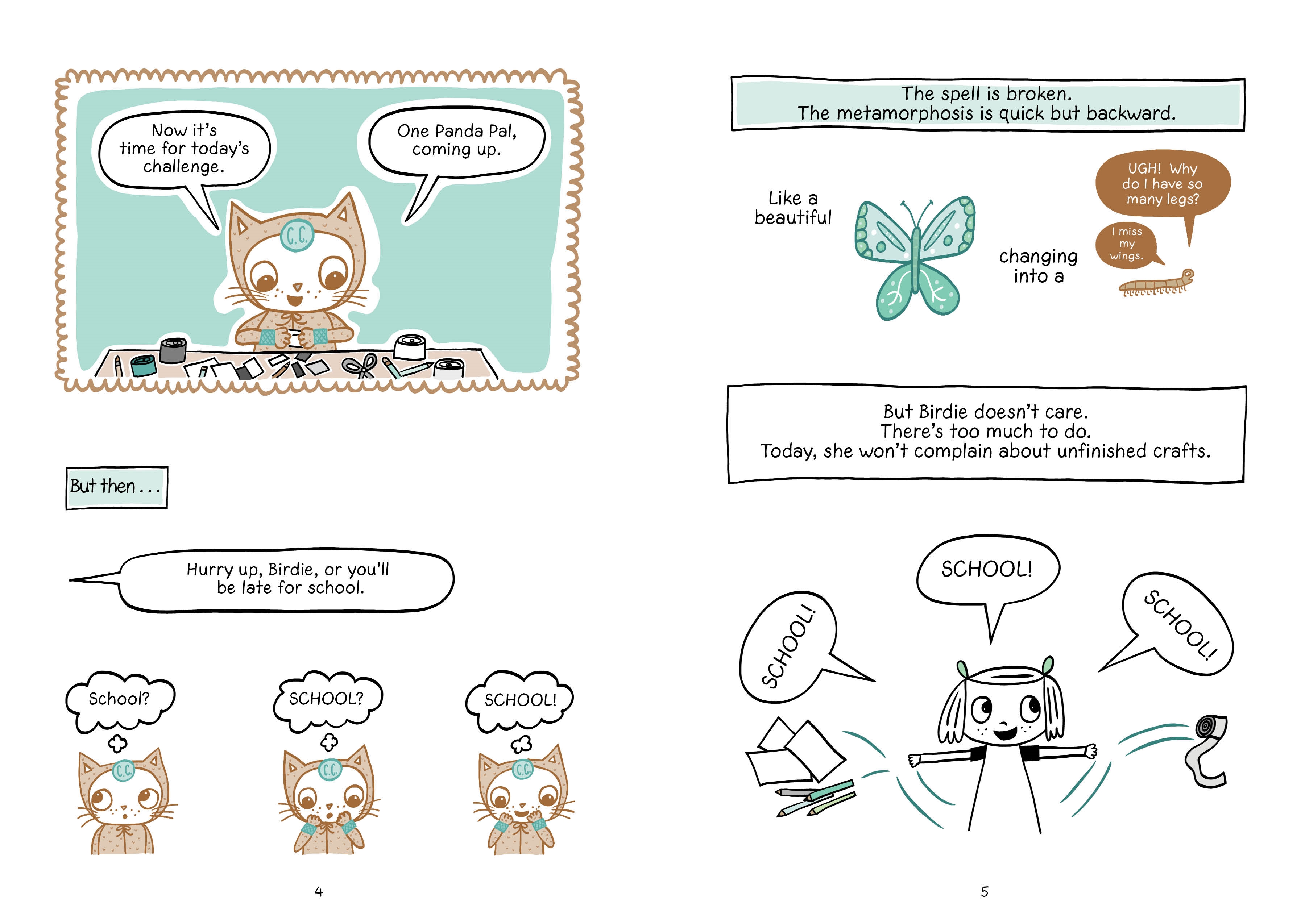
Bridie is a little girl who loves, loves, LOVES to craft: so much, that she has an alter ego: the Amazing Crafty Cat! Crafty Cat can craft anything, anytime! Crafty Cat becomes Bridie again so she can go to school; she’s excited because it’s her birthday and she’s got special panda cupcakes for everyone during birthday break – even Anya, the class bully. She just knows these cupcakes will make her the school star… and then, Bridie falls, sending the cupcakes flying. She gets stains on her dress trying to pick up the cupcakes. Grandpa is supposed to come to the rescue, bringing something to hand out snack time, but that’s just a disaster. Things aren’t supposed to go wrong on her birthday! What is Bridie going to do? She’s got hungry classmates! Looks like a job for… THE AMAZING CRAFTY CAT.

The first book in the Fashion Kitty/Just Grace author’s new trilogy is just too much fun. There’s a great message about teaching kids resiliency and how to fall back on Plan B… and Plan C, if necessary. Plus, there are craft ideas and template at the end of the book! You know what I’m going to say… it’s a program in a book! Make Crafty Cat your next book talk/activity; do your scanning and photocopying ahead of time, and let your kids work on the crafts as you talk about things that went wrong for them (and you), and how you all bounced back from them. Such a fun addition to graphic novel and intermediate collections, you’ll never keep them on the shelf.  Now, we just need a Crafty Cat website with some videos…

crafty-cat_2crafty-cat_3crafty-cat_4crafty-cat_5

Posted in Preschool Reads

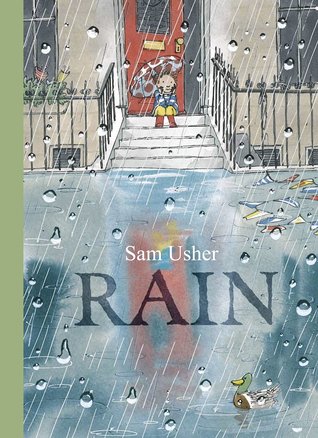
Sam Usher’s Rain explores patience and celebrates imagination

Rain, Sam Usher, (March 2017, Candlewick), $16.99, ISBN: 978-0-7636-9296-4

Recommended for readers 3-7

It’s raining out – and the young boy sitting inside can’t wait to go outside and have an adventure! Grandpa suggests they wait for the rain to stop, and putters around the home while the boy fidgets and waits for the weather to let up. When the rain finally lets up, Grandpa and grandson go out to mail a letter, and have their own adventure together.

I adore the quiet adventure of Rain: it’s got a soothing repetition while pulsing with the excited impatience a child knows all too well when waiting for an adult to give him or her the go-ahead to do something fun. The boy tries to talk his grandfather into heading outside by talking about things one can do in the rain (catch raindrops splash in puddles) and expressing a desire to go on adventures, like voyaging with sea monsters or visit a floating city. Grandpa, unruffled, continues to tell the boy to wait for the rain to stop. We feel the boy’s impatience when he repeats, “But did the rain stop? NO!” When it’s finally time to venture out, the excursion is every bit as exhilarating as the boy expected. When they return home, grandfather and grandson sit together, with warm socks and hot chocolate, sharing a perfect moment together, complete with the dispensing of grandfatherly wisdom: “…the very best things are always worth waiting for”.

Sam Usher’s art reminds me of some of my favorite British illustrators, Tony Ross and Quentin Blake. His use of watercolor makes grandfather’s home warm and cozy, and the rain outside looks almost dewy and real as seen from the boy’s window. His rainy scene spreads are properly gray and stormy, with sparks of imagination wandering into the picture to prepare readers for what’s coming: a prow of a boat here, an upturned umbrella there. The endpapers extend the story, with puddles and birds, and a cameo by the penguin from Usher’s previous book, Snow.

This is the second in a four-part celebration of the seasons. Snow (2015) saw the boy trying to get Grandpa out of bed to adventure in the snow. I can’t wait to see what Mr. Usher has in store for the next two seasons.

This is a great read-aloud for toddlers and preschoolers alike, and a wonderful companion to nonfiction books about weather and the seasons. Ask the kids what their adventure in the rain would look like; talk about what to wear in the rain (raincoats, boots), and let them decorate their own umbrellas. I really like this one from MamaJenn that incorporates glue raindrops.

Posted in Early Reader, Fiction, Preschool Reads

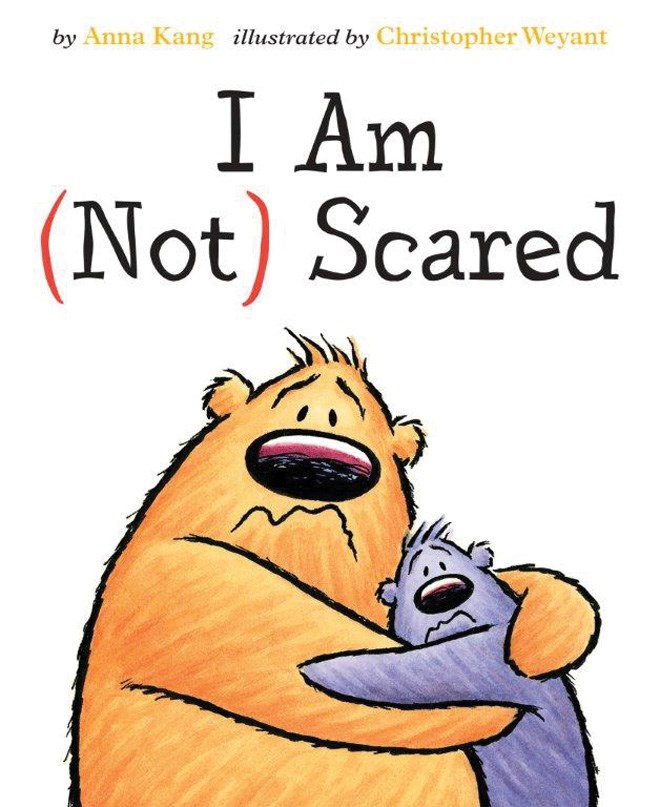
Blog Tour and a Giveaway: I Am (Not) Scared

How many times have you heard (or said) that famous boast? Anna Kang and illustrator Christopher Weyant bring their fuzzy buddies back for a third installment of fun and friendship. This time, the friends are at an amusement park, psyching one another up to brave a ride on a roller coaster. What’s scarier than a roller coaster? Lots of things: Snakes, a tub of hairy spiders, or a pan of fried ants, for starters!

I Am (Not) Scared, by Anna Kang/Illustrated by Christopher Weyant,
(March 2017, Two Lions/Amazon), $17.99, ISBN: 978-150-3937-45-1

I Am (Not) Scared is perfect for preschoolers and young readers because kids will see themselves in the two friends who learn that there are fun ways to be scared – especially when you’re with a friend. The friends brave a roller coaster with a newfound friend, and let themselves admit to being scared, which brings a giggly kind of relief, doesn’t it? Once the group has conquered their fear, they’re ready to go back and enjoy the thrill of being scared all over again.

Christopher Weyant’s ink and watercolor illustrations are bold, expressive and sweet. The bears are cuddly and friendly, inviting kids to join them on their adventures. The art, along with the bold, black text, makes this a great read-aloud, too. Invite kids to tell you what they think is scarier than fried ants or snakes on roller coasters and watch the wacky responses roll on in. There’s a great activity kit available via Anna Kang’s website, complete with discussion questions, a roller coaster-y maze, courage bracelets to give out, and more!

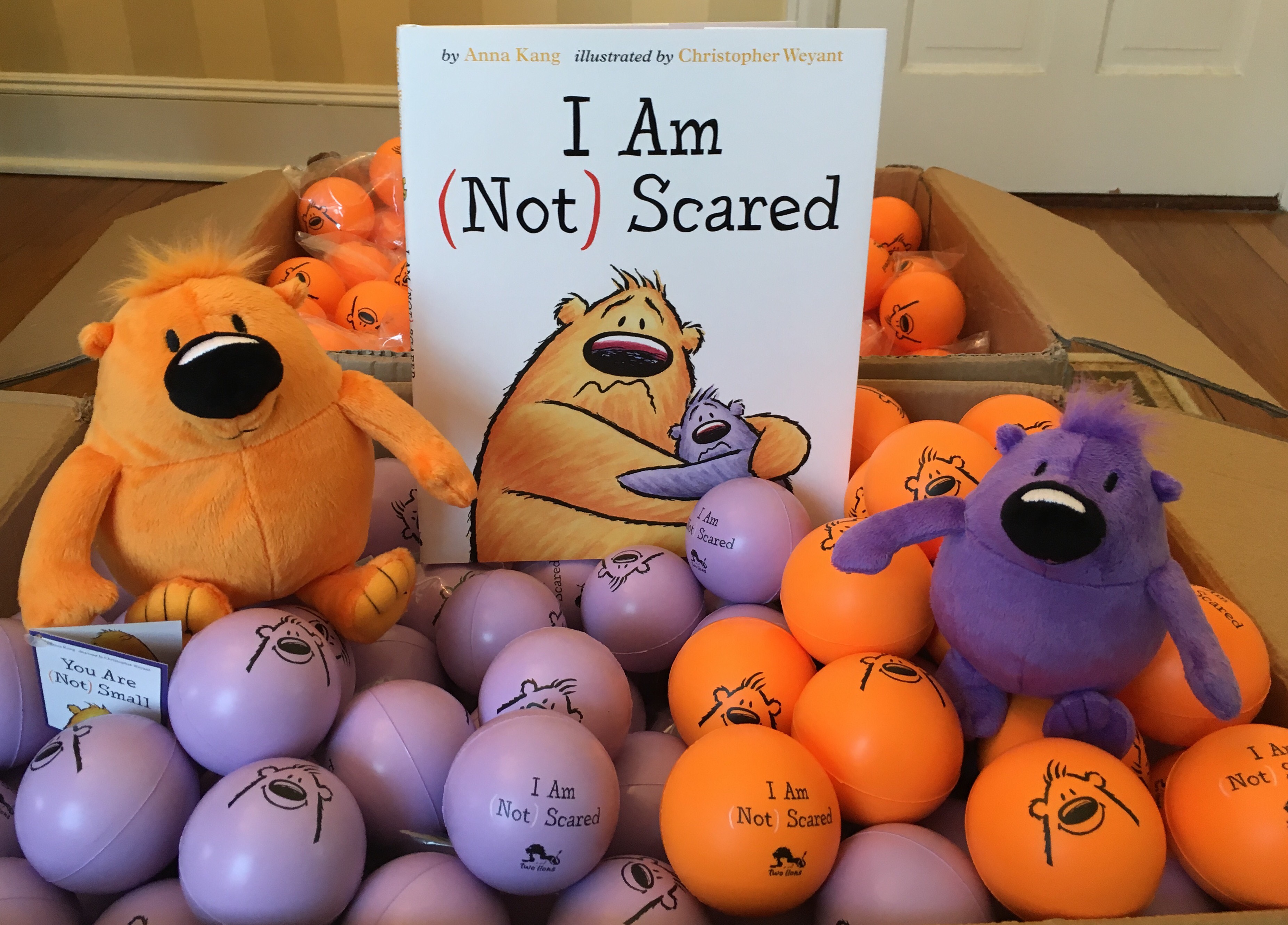
Get in on the fun with an I Am (Not) Scared giveaway! One winner will receive an I Am (Not) Scared gift pack: a set of squeezable stress balls, two adorable plush characters, and a copy of I AM (NOT) SCARED courtesy of Two Lions (U.S. addresses). Enter this Rafflecopter giveaway for your chance!

Wife and husband team Anna Kang and Christopher Weyant are the creators of two other books featuring these characters: Theodor Seuss Geisel Award winner You Are (Not) Small and That’s (Not) Mine. Christopher’s work can be seen regularly in The New Yorker magazine and his cartoons are syndicated worldwide. This husband-and-wife team lives in New Jersey with their two daughters and dog, Hudson. Visit them at www.annakang.com and www.christopherweyant.com.


Posted in Early Reader, Fiction, Fiction, Intermediate

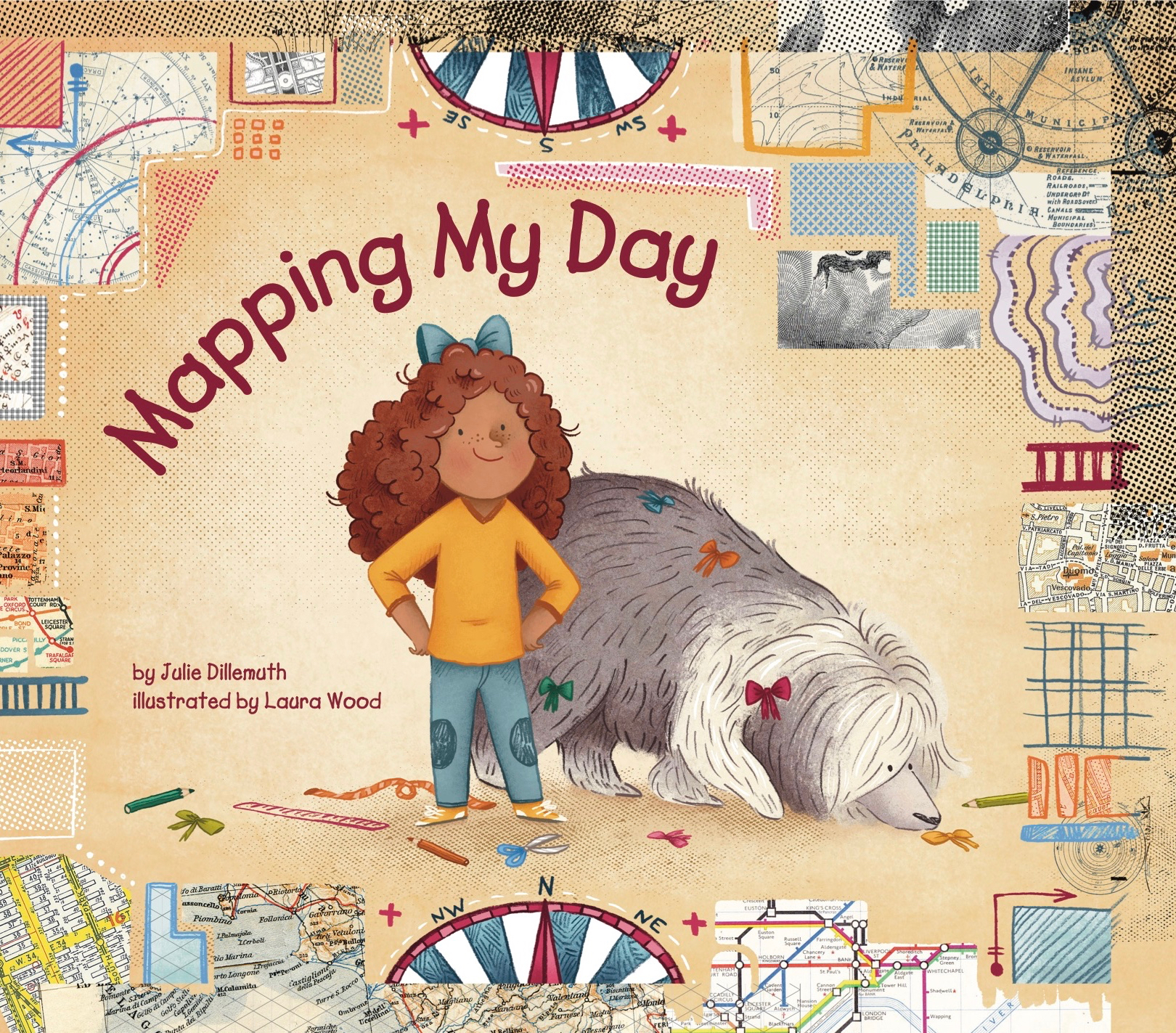
Mapping My Day brings back the lost art of mapmaking

Mapping My Day, by Julie Dillemuth/Illustrated by Laura Wood, (March 2017, Magination Press), $15.95, ISBN: 978-1-4338-2333-6

Recommended for readers 5-10

Flora is a girl who loves making maps. From sun-up to sundown, Flora maps her day and invites readers to see how she does it! Starting with an early morning wake-up thanks to the sun streaming through her bedroom window, Flora explains and illustrates terms like cardinal directions, map scales, landmarks, even seating plans.

I remember when I was a kid and learning about maps in Social Studies. That whole one inch = 1 mile thing made me want to bang my head against the desk in frustration. If I’d had a book like Mapping My Day to start me off, things would have gone a lot easier with those issues of Scholastic News. The book brings readers right into Flora’s circle. It’s like having a friend show you her journal, where she writes out how she watches her grandmother’s show poodles train on their obstacle course, or map out her school playground, or how she manages to beat her brother to the bathroom in the morning.

There are no frustrating measurements, no rulers necessary. It’s a great invitation to start mapping out our world – something that may be seen by some as a dying art in this age of GPS, but is a critically important skill to have. We should all know how to lay out a space; what our cardinal directions are and how to find them, and the importance of landmarks when you’re finding your way. For librarians and teachers, this is a lesson or a program in a book: the activities at the end of the book are even available for download so you can get a head start on planning. A note to parents, caregivers, and professionals explains the importance of mapping, diagramming, and understanding spatial relations, and includes ideas for incorporating them into kids’ play.

The art is friendly and fun. Flora is a biracial child from a multiethnic family. The family eats at the table together and enjoys time with extended family members. Spreads move between Flora’s story – driving in a car with family, eating at the table with family, playing at school – and Flora’s maps, which have a hand-drawn/handwritten appearance. Key words appear bolded.

Julie Dillemuth was mystified by maps until she figured out how to read them and make them, and it was a particularly difficult map that inspired her to become a spatial cognition geographer. She lives with her family and writes children’s books in Santa Barbara, California, where the west coast faces south. Visit her at her website: http://juliedillemuth.com.

One lucky winner will receive a copy of MAPPING MY DAY (U.S. addresses). Enter this giveaway for your chance!

https://goo.gl/forms/yiZyHr8CNDC7iVWg1

Posted in Early Reader, Fantasy, Fiction, Fiction, Intermediate

An overscheduled princess takes a day off: Princess Cora and the Crocodile

Princess Cora and the Crocodile, by Laura Amy Schlitz/Illustrated by Brian Floca, (March 2017, Candlewick Press), $16.99, ISBN: 978-0-7636-4822-0

Recommended for readers 4-8

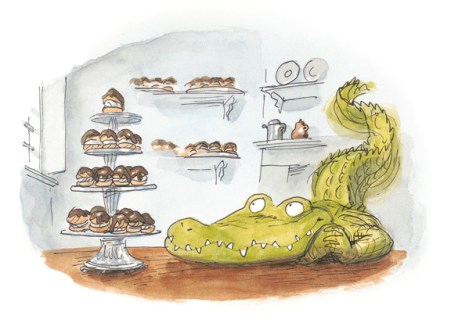
A king and queen have a baby that they coo and marvel over – until they realize that she’s clearly not ready to run an entire kingdom. From that moment on, Princess Cora’s life is a nonstop schedule of lessons, physical training, and nonstop bathing (seriously, her nanny’s got a bit of a complex). Cora writes to her fairy godmother in desperation, and the response, while not necessarily what Cora expected, is exactly what she needs. A crocodile shows up to take Cora’s place for a day; while Cora takes a day off to enjoy being a kid, the crocodile sets to teaching the king, queen, and nanny a thing or two.

Newbery Medalist Laura Amy Schlitz and Caldecott Medalist Brian Floca have joined their considerable forces to create a book that parents need to read (cough, cough, and education administrators, cough, cough) as much as their children do. Princess Cora and the Crocodile is all about the stresses our kids face today: the lack of time to enjoy being a kid, doing kid things. The king and queen are so stressed out about what Cora’s not ready for, they strip the joy not only from Cora’s childhood, but rob themselves of the chance to enjoy watching Cora grow up; of playing on the floor with her as an infant, climbing trees and running around their considerable lands with her, of reveling in the carefree fun that parents should embrace.

When Cora’s fairy godmother sends a crocodile to her family, the croc immediately – if a bit roughly – sets to whipping Cora’s family into shape, with hilarious results. While the croc wreaks havoc at home, Cora spends the day picking strawberries, climbing trees, even stepping in a cow pie, and enjoying every moment of it. Every. Unscheduled. Moment. Brian Floca’s ink, watercoor, and gouache artwork is fun, hilarious, and every bit as free and joyful as the story’s text.

Image courtesy of Brian Floca

Parents, read this one. Please. It’s as much for us as it is for our kids. Schlitz and Floca created this fairy tale to let kids know that it’s okay to be a kid, but the message here is for us adults, because we’re the ones who can make the changes kids need to be happy – to be kids – again.

Princess Cora and the Crocodile received starred reviews from School Library Journal, Booklist, and Publisher’s Weekly.

Illustrator Brian Floca has a fantastic webpage, with lots of online extras, information about school visits, and upcoming events.

Posted in Early Reader, Preschool Reads

A mirror unites a boy’s homes in The Mirror in Mommy’s House/The Mirror in Daddy’s House

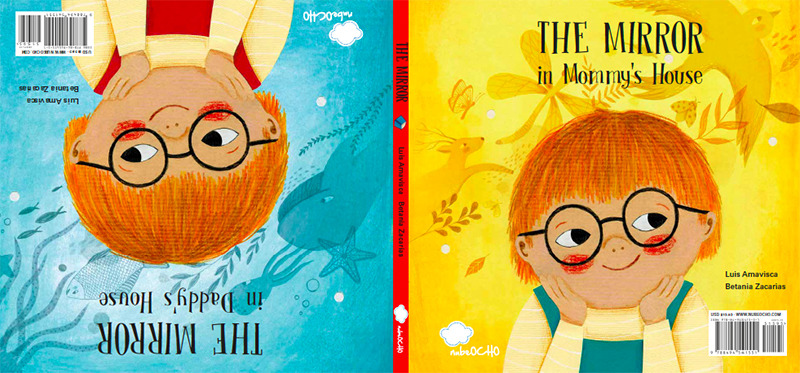
The Mirror in Mommy’s House/The Mirror in Daddy’s House, by Luis Amavisca/Illustrated by Betanía Zacarías, (Apr 2016, nubeOCHO), $15.95, ISBN: 978-84-945415-5-1

Recommended for readers 4-8

A child talks about growing up in a home in the midst of a marital breakup, and how a mirror provided an escape into a wonderful land with no arguing parents. Now that the child lives in two houses, things are much better. Mom and Dad are happier, and so is the child. There are pictures of the entire family at both houses, and a very special mirror at each house; plus, Mom and Dad each share something very special: their child!

We don’t need to talk about the 51% divorce rate to illustrate the need for books like The Mirror. This is a positive book for families going through divorce for a number of reasons: it illustrates the stress on kids living with parents who argue constantly; it’s not singling out either gender – the child can easily be male or female; and the parents care enough about their child to make sure that photos of the entire family – rather than a single parent with the child – have real estate in the child’s room, along with the special mirror that’s become a touchstone. The book is a two-in-one, giving kids a chance to read about each parent’s home and what makes it special. When you finish reading about the mirror in Mommy’s house, just flip it over to read about the mirror at Daddy’s house.

The art appears to be mixed media, with some artwork appearing to be drawn in crayon; it gives the book a comfortable feeling, as if the child created these books himself or herself.

Originally published in Spanish in 2016, nubeOCHO published The Mirror book(s) in English this year and still makes the Spanish language edition available (978-84-945415-6-8). Additional books for families going through divorce to read with young children include Dinosaurs Divorce, by Laurie Krasny Brown and Marc Brown, Nancy Coffelt’s Fred Stays with Me, and Karen Stanton’s Monday, Wednesday, and Every Other Weekend.

Posted in Early Reader, Fiction, Preschool Reads

Do Fairies Bring the Spring? Let’s find out!

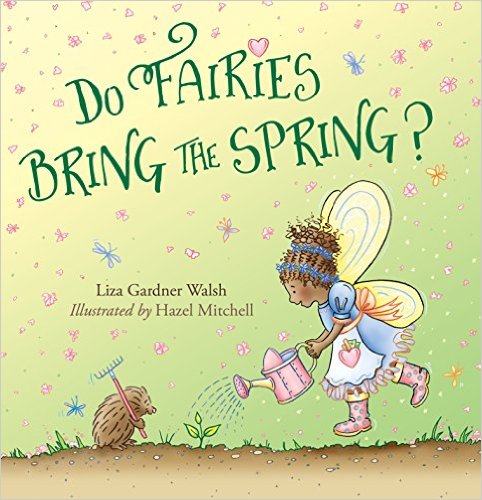
Do Fairies Bring the Spring?, by Liza Gardner Walsh/Illustrated by Hazel Mitchell, (Feb. 2017, Down East Books), $16.95, ISBN: 978-1-60893-633-5

Recommended for readers 3-7

Do fairies bring the spring? This adorable picture book poses the question while infusing nature with a little bit of magic, as Liza Gardner Walsh’s rhyming text suggests that fairies are behind the scenes, working to bring spring to the world. Suggestions for attracting fairies to your own gardens in the spring, at the end of the book, encourage you to dig into nature with your little ones and take care of your little corner of the world.

Hazel Mitchell’s illustrations of diverse, adorable little fairies and their woodland friends infuse this Spring story with all the charm and wonder that makes a preschool/Kindergartner story a success.

Invite some magic into your life this spring with this sweet springtime story! Little ones will love the soothing rhyme and the adorable pictures. Encourage parents to get outside with their little ones and enjoy nature while respecting it –  no littering, please! This is a great story to read and follow up with a planting activity, whether it’s going out in the yard with your little one, or planting some seeds in recyclable egg cartons and bringing them home to start a container garden. Hand out fairy coloring sheets, or print small fairy pictures out on card stock, let the kids color them in, and mount them on popsicle sticks to give your new  plants extra fairy protection!

Liza Gardner Walsh is a former librarian (whoo hoo!) and has a companion book, Where Do Fairies Go When It Snows? (2015). Her website, Moss & Grove, encourages parents and kids to get outside and embrace nature. See more of illustrator Hazel Mitchell’s work at her website.