Posted in Graphic Novels, History, Non-Fiction, Teen, Tween Reads

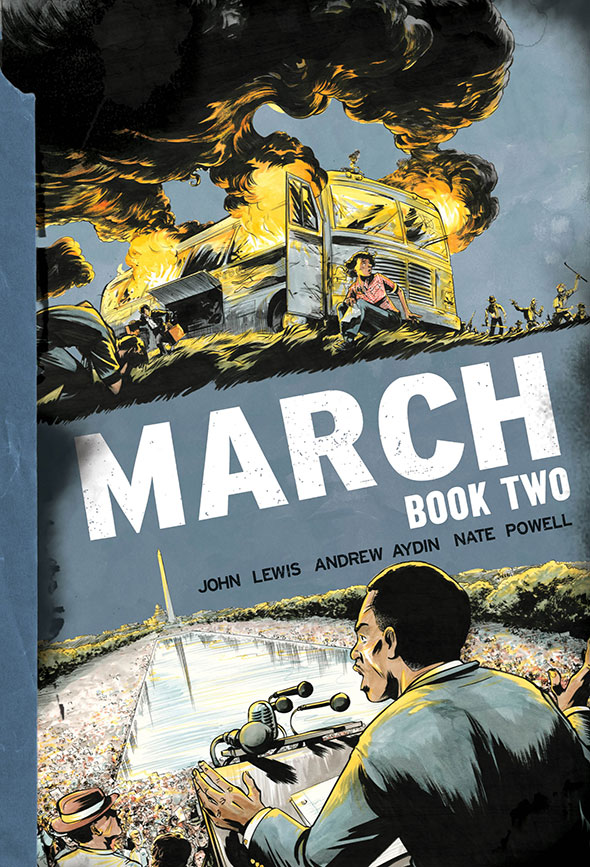
March: Book Two cover revealed!

jI’ve made no secret that Rep. John Lewis’ MARCH: BOOK ONE was one of the best books I read last year, and that I was excited about the next book in the series. Well, we’re one step closer – Top Shelf just revealed the cover earlier today!

March Book Two

US Congressman and civil rights icon John Lewis made history with the release of March: Book One, his award-winning and #1 bestselling graphic novel memoir co-written with Andrew Aydin and drawn by Nate Powell. Aside from the unprecedented factor of such a major figure using the graphic novel format, the book has been embraced as both a true work of literature and also a much-needed tool for reaching new generations with the history and lessons of the civil rights movement.

Today, for the first time, we’re revealing the gorgeous cover design of March: Book Two, the much-anticipated second part of the March trilogy. It’s scheduled for release in early 2015, so we’re still half a year away — but the interest in this title is so tremendous that we wanted to showcase something special now, as we head into Comic-Con next week.

Book Two will be significantly longer than Book One, taking a step forward into the tumultuous events of 1961-1963 while continuing the framing narrative of President Barack Obama’s inauguration in 2009. Major plot lines include the famous journey of the Freedom Riders, imprisonment at Mississippi’s Parchman Penitentiary, and young John Lewis’ involvement in helping to plan and lead the legendary 1963 March on Washington.

Nate Powell’s powerful cover showcases (on top) the Freedom Riders’ bus set on fire by a white supremacist mob in Anniston, AL, May 14, 1961, and (on bottom) Lewis’ fiery speech at the March on Washington, August 28, 1963.

Check out this great piece from CNN featuring Rep. Lewis, Andrew Aydin, and author Brad Meltzer!


Posted in Fantasy, Fiction, Teen, Young Adult/New Adult

Beautiful Creatures – I finally join the bandwagon.

Beautiful Creatures Book CoverBeautiful Creatures, by Kami Garcia & Margaret Stohl, Little Brown (2009). $17.99, ISBN: 978-0316231657

Recommended for ages 14+

I’ll admit it – I’m not a Twilight fan. It’s not my book. And Beautiful Creatures felt, to me, like a Twilight type of book, so I didn’t pick it up. I was recently approved to read the latest, upcoming book in the Beautiful Creatures, though, (Dangerous Creatures – the review’s coming!) so I figured I should at least read the first book, so I could have some idea of what’s going on.

I was wrong, folks. Beautiful Creatures was great. This was my book, just waiting for me to pick it up.

The story involves Lena Duchannes and Ethan Wate, two teenagers in Gatlin, South Carolina. Ethan is a high school basketball player who can’t wait to get out of Gatlin. He’s in with the in crowd, but really doesn’t care anymore. He just want out of the everyday sameness of life in a small, Southern town. Lena is the new girl in school, and she just doesn’t fit in with the Southern beauty queen/mean girls who run the school. When Ethan realizes that Lena looks exactly like the mystery girl he’s been dreaming about, he’s got to find out who she is.

The story weaves a YA romance in with a complex, fascinating tale of witchcraft and Southern history that kept me turning pages, demanding to know what was going to happen next. I love the idea of factions within the “Caster” – they’re not witches and wizards, and this isn’t Harry Potter – community. There are different types of magic, and everyone is born to something different. When Casters reach the age of 16, they are “claimed” by either the light side of magic or the dark side – and wrapped up in this claiming is a mystery that runs through the book as an engrossing subplot.

There’s something here for everyone. There’s paranormal romance, history, mystery, and drama. We meet characters that will take on greater roles in subsequent books. All in all, Beautiful Creatures sold me – and I’m glad I picked it up. I’ve heard the movie is subpar compared to the book, so I’ll keep that in mind and just enjoy the books.

Posted in Graphic Novels, Middle School, Non-Fiction, Tween Reads

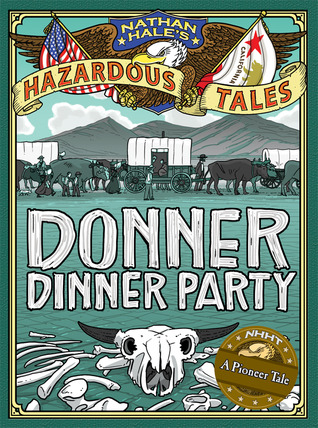
Book Review: Donner Dinner Party, by Nathan Hale (Nathan Hale’s Hazardous Tales), Abrams, 2013

Recommended for ages 8-13

donner

Colonial spy Nathan Hale is sentenced to death by hanging – but WAIT! He’s got stories to tell! His executioner and the British soldier standing guard are intrigued. Off he goes into yet another Hazardous Tale from history, this time, about the infamous Donner Party.

You’ve heard of the Donner Party, if only as a horrific joke. During the Westward Expanion, they were a group of pioneers headed for California who got caught in the brutal winter of 1846 and resorted to cannibalism to survive. Nathan Hale’s book tells the story of the Donner-Reed party, focusing primarily on James Reed, whose “shortcut” caused the doomed wagon train to stray off course into brutal territory.

Written as a graphic novel, this book is a great read for middle schoolers and even the reluctant high schooler. The story cuts between Nathan Hale, the British soldier and the executioner as Hale tells the story, and the story of the Donner-Reed party. The characters are detailed, and kids will love the executioner, who really, REALLY doesn’t want to hear bad news about any of the animals in the story. There are well-drawn diagrams and graphics teaching readers about the members of the party, maps of the territory traveled, and informational bits that enhance the story for all.

Hale doesn’t shy away from the more brutal aspects of this story, but he doesn’t glorify them, either. He presents the facts, even illustrating a specter of death coming for the travelers, with their names, as they pass away, listed on Death’s cloak.

This was my first Hazardous Tale from Mr. Hale, but it certainly won’t be my last. Stock this book in your bookshelves, teachers and parents, and watch kids scramble to learn about history.

Mr. Hale’s website offers information about his other books, his blog (which includes sneak peeks at his artwork for future books!), and a section dedicated to Correction Baby, who helps edit all of his books. Check it out!

DonnerSpread

Posted in History, Non-Fiction, Tween Reads

Book Review: Chasing Lincoln’s Killer, by James L. Swanson (Scholastic Press, 2008)

Recommended for ages 12+

Chasing Lincoln’s Killer is the story of the plot to kill President Abraham Lincoln, the assassination and ensuing manhunt for John Wilkes Booth and his fellow conspirators. Author James L. Swanson based this YA version on his previous book, Manhunt: The 12-Day Chase for Lincoln’s Killer (William Morrrow, 2006).

A lifelong Lincoln aficionado who shares the 16th President’s birthday, the author wanted to bring his story to a younger audience. He never dumbs down the narrative to reach this audience; rather, he makes it more accessible by featuring over 70 photos of artifacts, newspapers and photos taken from various archives; he summarizes trial manuscripts and interviews, and moves the events along at a pace that younger, less patient readers will enjoy and stick with.

Scholastic’s website offers free teaching resources to use with the book including an audio book excerpt, video interview with the author, and printable Wanted! poster for Booth.

Manhunt received an Edgar Award for the best true crime book of the year in 2007; Chasing Lincoln’s Killer has received recognition as a Young Adult Library Services Association (YALSA) Best Book for Young Adults. Mr. Swanson holds a seat on the advisory council of the Ford’s Theatre Society. He has collected books and artifacts on President Lincoln since he was 10 years old and has written a photographic history, Lincoln’s Assassins: Their Trial and Execution.

Posted in Historical Fiction, Tween Reads

Book Review: My Brother Sam is Dead, by James Lincoln Collier & Christopher Collier (Scholastic, 1974)

Recommended for ages 12+

My Brother Sam is Dead is a look at the Revolutionary War that readers don’t normally get: like the Civil War, this war divided families. We also see a side of the American soldiers that we don’t usually hear about in History class – “our” soldiers weren’t always acting like the good guys, especially to their own countrymen if they weren’t supporters of the cause.

We hear about the Tories and they are demonized. We laugh at stories of them being tarred and feathered, but what My Brother Sam brings home is that Tories were the same Americans that the Revolutionaries were, but they just believed in a different ideal. To the Tories, there was no reason to split with Mother England, who provided for them and protected them. Taxes were a fact of life. Quartering soldiers was a fact of life. To rebel was treason and it was just wrong. When looking at the acts of the Revolutionaries – stealing from, kidnapping and murdering fellow Americans who were Tories – it is difficult to say anyone involved was 100 percent right or wrong. We learn that the Revolution was a black and white issue; My Brother Sam goes beyond that thinking and shows readers that the War was made up of many, many shades of grey.

Tim Meeker is the son of a Connecticut tavern owner whose older brother, Sam, joins the Revolutionary Army under Benedict Arnold while away at college. The relationship between Sam and their father appears to have been conflicted to begin with, as both are stubborn men with strong opinions, and this act leads to a schism within the family that leaves Tim wondering who’s right and who’s wrong Torn between his love for his brother and his love and loyalty to his family, he finds himself stuck in the middle of a far larger conflict when he’s asked to keep secrets about Sam and when his battalion is in the area. Tim sees firsthand the brutality of the American soldiers to his Tory neighbors and he sees the cruelty of the British soldiers. Is there a right or wrong?

My Brother Sam is Dead won the 1975 Newbery Honor and was nominated for a National Book Award that same year. It has also been designated as an ALA Notable Children’s book and was the twelfth most frequently challenged book from 1990-2000 (ALA).

The History of Redding website has extensive information about the novel; Redding, Connecticut is the setting for the story. A 2005 Scholastic edition of the book has an AfterWords bonus feature which includes an interview with the authors, where they compare their story to fellow Newbery winner and Revolutionary War story Johnny Tremain, and discuss parallels between their work, written after the VietNam conflict, and Johnny Tremain, written after World War II.

Posted in Adventure, Fiction, Tween Reads

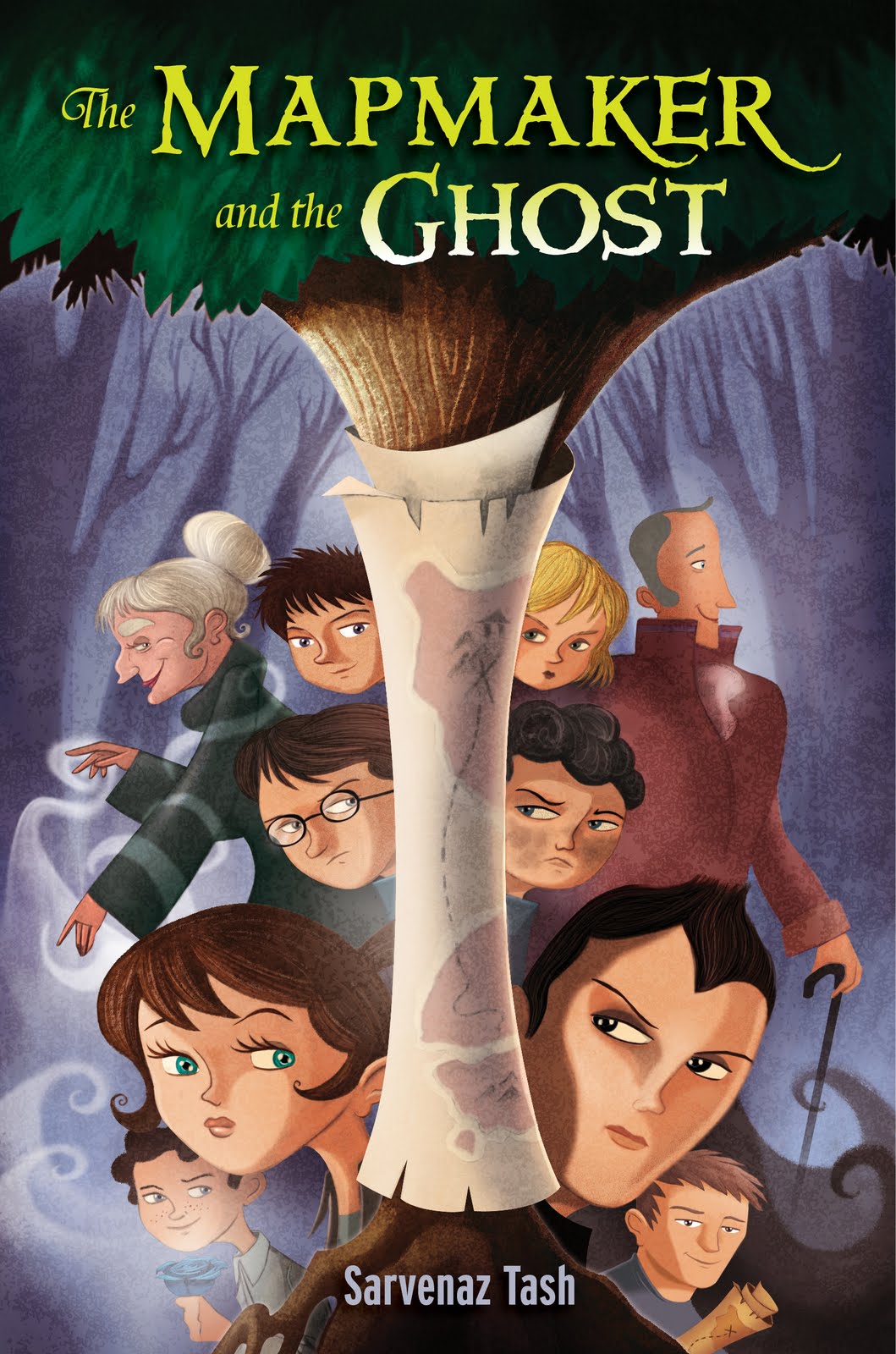
Book Review: The Mapmaker and the Ghost, by Sarvenaz Tash (Walker Books for Young Readers, 2012)

Recommended for ages 9-12

Goldenrod Moram wants to be an explorer and mapmaker like her hero, Meriweather Lewis (of Lewis & Clark fame). When she decides to spend her summer making a map of the forest behind her home, she stumbles into an adventure that has been over a hundred years in the making. Before her summer vacation is over, she will find herself in trouble with a local group of troublemakers, The Gross-Out Gang, and she will meet a strange old lady with an interesting family connection. She will also meet her idol face to ghostly face!

The Mapmaker and the Ghost gives readers a new heroine in Goldenrod Moram. She’s smart and gutsy, like many ‘tweenage characters these days, but she is not on the hunt for treasure – she just wants to make maps like her idol, Meriweather Lewis. And how often do you hear Lewis and Clark coming up as a literary and historical idol? Readers get a look at an important figure in American history and learn a little more about who he is.

 
Some of the characters are predictable. The Gross-Out Gang, for instance, is made up of kids who come from a multitude of mixed backgrounds: the rich parents who have no time for their children; the divorced father in a deep depression who cannot focus on his daughter; and the kid who’s been bounced around from foster home to foster home are all here. The ending is predictably light, but it gives the reader hope that every situation, when you use your brains and bring understanding and honesty to the situation, can work out for the best.
 
This is Ms. Tash’s first book. Her website offers information about the book and a link to her blog.
Posted in History, Non-Fiction

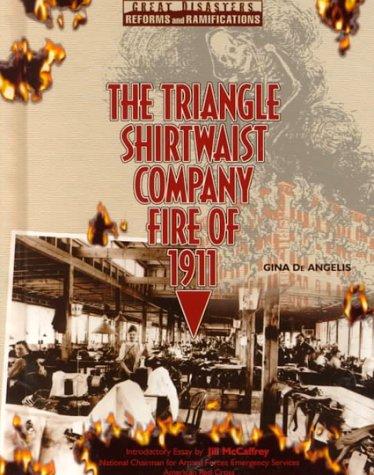
Book Review: The Triangle Shirtwaist Factory Fire of 1911, by Gina De Angelis (Chelsea House, 2001)

Recommended for ages 10+

The shirtwaist was a high-necked, long-sleeved blouse design popularized by the iconic Gibson Girl image in the early 1900s. At this time, New York boasted about 450 shirtwaist factories, but building codes and labor laws left a lot of room for interpretation. As a result, on March 25, 1911, a fire broke out in the Triangle Shirtwaist Company in the Asch Building in downtown Manhattan. Multiple factors – locked doors to prevent workers from leaving early or stealing materials; ineffective and too few fire escapes and elevators, and crowded office conditions among them – caused the deaths of 146 workers, mostly women, many recent immigrants. The fire and the ensuing trial – which exonerated the company’s owners – gave rise to movements pushing for stronger building safety standards and unionization of garment workers, which would help them lobby for better working conditions and better pay.

The Triangle Shirtwaist Company Fire of 1911 tells the story of the fire and the aftermath. Black and white photos taken at the scene and the makeshift morgue bring home the pain of the event and drive home the magnitude of the fire. Readers learn that the owners, Max Blanck and Isaac Harris, went on to continue business and continue the business violations that caused so many deaths at the Asch Building, having been cleared of any wrong doing because the Asch Building was legally sound. The owners made money after the insurance settlement, causing an outcry among the deceased’s family members. The book also details the story of the garment workers labor movement and takes the reader into present-day sweatshop conditions and the continued fight for safe working conditions and a living wage. 

Cornell University’s Kheel Center for Labor Documentation’s web exhibit with primary and secondary sources, a link to a transcript of Blanck and Harris’ trial, and a bibliography. Nonprofit organization Remember the Triangle Fire Coalition, seeking a permanent memorial to the victims, offers an open archive where contributors add their own modern-day remembrances and information and a names map which lists the name, country of origin, New York address, and final resting place of the identified victims.

Short PBS documentary on the Triangle Fire.

Posted in History, Non-Fiction, Tween Reads

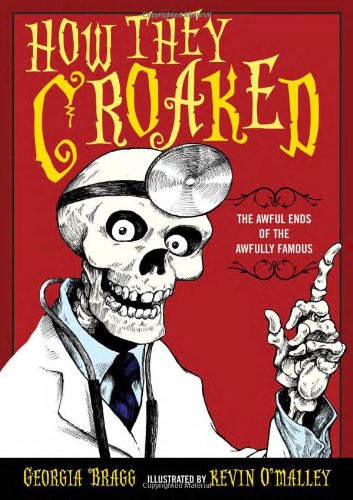
How They Croaked: The Awful Deaths of the Awfully Famous, by Georgia Bragg; illustrated by Kevin O’Malley (Walker Books for Young Readers, 2011)

Recommended for ages 10-13
 
Most school-aged kids know who King Tut, George Washington, and Napoleon were, but what they may not know is how they died. How They Croaked delivers the full-on details of how these historic figures and 16 others met their makers in gloriously gory detail.
 
Along the way, Bragg dispels famous myths – Cleopatra did not meet her doom at the fangs of an asp – and provides insight on how modern medicine may have saved a few of these famous lives. George Washington, for instance, could have survived if only he had access to antibiotics.
 
Bragg provides morality in her profiles. We learn that Pocahontas was exploited from the minute she saved Captain John Smith from the axe, and that Robert Carter, the “explorer” who discovered King Tut’s tomb, wasn’t much more than a grave robber on a grander scale. We also learn some amusing details along the way, including famous last words, what cupping was all about, and some gross information about Marie Antoinette’s three-foot hairdo.
 
Kevin O’Malley, writer and illustrator of children’s books such as Animal Crackers Fly the Coop! and Mount Olympus Basketball, gives the reader his macabre best while still keeping it on a level that younger readers won’t shy away from, including a a distended Henry VIII and a shrieking Julius Caesar.
 
For reluctant readers and kids (or grownups!) who just want a fun read that makes you squeal with squeamish delight, How They Croaked is a perfect addition to your history library.