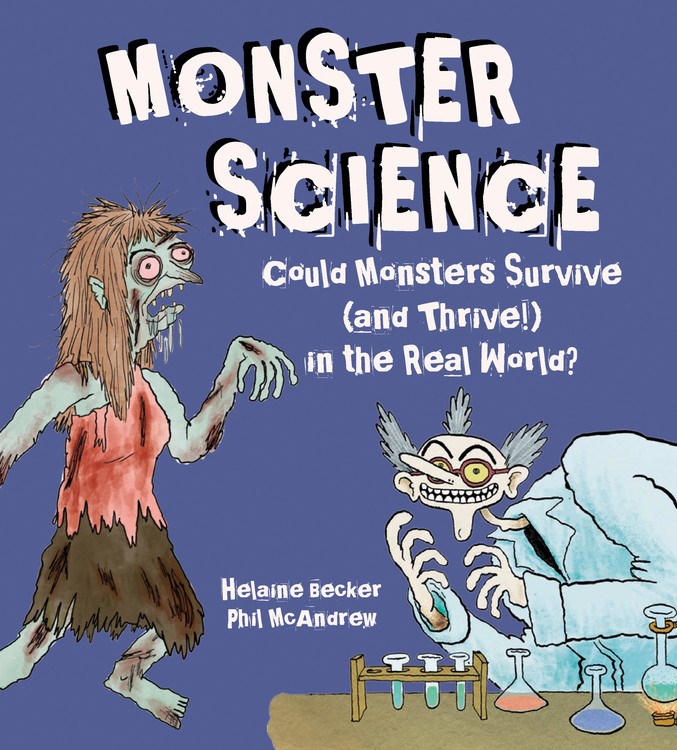
 Monster Science, by Helaine Becker/Illustrated by Phil McAndrew, (Sept. 2016, Kids Can Press), $18.95, ISBN: 9781771380546
Recommended for ages 8-12
Monster Science takes a look at some of our favorite monsters – Frankenstein’s Monster, vampires, Bigfoot, werewolves, zombies, and sea monsters – and, using science smarts, discusses the plausibility of these monsters’ ever being able to exist in our world. If you’ve ever wondered whether or not you should really start stockpiling food and weapons for the upcoming zombie apocalypse, or stared for a little too long at those blurry pictures of Bigfoot and Nessie, the Loch Ness Monster, you’ll love this book.
The book devotes a chapter to each monster, provides background info, incorporating the history of the monsters, and using science, history, literature, myths and legends, helps readers work through whether or not these creatures could have ever existed or could exist today. There are colorful, cartoony illustrations, seriously groan-worthy jokes, and pop up facts throughout the book, and a quiz tests finishes up each chapter and challenges readers to remember what they’ve just read. There are enough gross facts – the stages of decay; electric shock bringing making dead body parts jerk and move, dead people who sat up at their own funerals – presented with a humorous bent, to delight middle graders who want something fun and gross to read, yet will also give them some cool facts to bring to their science class.
This is the kind of book I love booktalking to kids, because my awesome nonfiction selections are sadly underappreciated. When I put a coding book out, I get interest, because I have a library full of Minecraft mouse potatoes, but when I try to get them excited about science, I usually get eyerolls, or – zounds! – blank stares. A book like this will help me explain how wonderful and gross science can be! We can talk about The Walking Dead (no, they’re not old enough to read the comics, but you know they’re watching it at home), we can talk about Dracula and Frankenstein, and I can terrify them with repeated viewings of Mad Monster Party and the Groovie Ghoulies, because ’70s monster claymation and cartoons are aces with me, but they leave the kids bewildered. They don’t know what they’re missing.
In all seriousness, the book is fun leisure reading and a good companion to science, history, or ELA classes. There’s so many interesting facts, presented in a fun, light, manner, that kids will end up reading and remembering more information than they can imagine. Add it to your library collections, or make it a fun gift for a monster fan you know and love.
 Mom Read It