Posted in picture books, Preschool Reads

Taste the rainbow with How Do You Eat Color?

How Do You Eat Color?, by Mabi David/Illustrated by Yas Doctor/Translated by Karen Llagas, (March 2025, Eerdmans Books for Young Readers), $18.99, ISBN: 9780802856388

Ages 4-8

Spend a day eating color: wake up and “sample sunshine in yellow, in a bite of pineapple”; by noon, brown like a banana. Enjoy and orange sunset as you see a melon moon rise, and tuck yourself in like a yam. Two kids and their chameleon wander through a rainbow of color, sampling food and enjoying their day. A nice twist on the “eat the rainbow” concept, David talks textures in a way that will bring a smile to readers and listeners: “Do you know how red tastes? / Does it tickle the tongue? / Is green sweet and cold like your / favorite sorbet?” As someone who grew up associating the flavor “green” with my favorite ice pop, I greatly appreciated this. Doctor deftly incorporates food into the landscapes, letting the group frolic among leafy greens and walk past carrot heads casting a shadow at dusk. Back matter includes some notes on additional colorful foods, why eating the rainbow is important, and tips on getting families to eat more colors together. Originally published in the Philippines, How Do You Eat Color is a good purchase to picture book collections and food storytimes. It will work really well with the Color Our World Summer Reading Theme (if you’re part of CSLP).

The Whole Kids Foundation has Eating the Rainbow printables available to share with families.

Posted in picture books, Preschool Reads

See what’s growing at Amara’s Farm!

Amara’s Farm, by JaNay Brown-Wood/Illustrated by Samara Hardy, (Sept. 2021, Peachtree Publishing), $16.99, ISBN: 9781682631652

Ages 3-6

The first in a new series from Peachtree, Amara’s Farm introduces readers to a little girl and invites them to help her find pumpkins for her get-together. Amara is hosting a potluck for her friends, and needs pumpkins. First, we take a moment to consider what we know about pumpkins. Using that knowledge, we set off on a series of spreads, guiding readers through different crops that share some properties with pumpkins, but not all. Will Amara find her pumpkins in time? Using a question-and-answer format and descriptive explanations, this is an excellent introduction to properties, concepts, and farm food for kids that may recognize different foods they’ve seen on their own tables, at a farmer’s market, or in a grocery store, while introducing others to new foods like persimmons, figs, and eggplant, and showing kids how they grow: on trees, on vines, even underground. Cheery illustrations are colorful and have beautiful texture, giving readers a real feel for their food’s origins and appearance. Amara is an adorable young girl of color, with a friendly, expressive face and beautifully textured hair and clothing. Back matter includes a molasses pumpkin bread recipe to make with a grownup helper.

I really like this first entry into the new Where in the Garden? series! Being in an urban library system, this is a great way to communicate to my kids about food and how it grows, what they look like, where they can be found. You can explain concepts like shape, color, and textures as you go, and – since I’m fortunate enough to have several fruit markets and a weekend farmer’s market in my library’s community – invite the kids to visit these places with their grownups and describe what they see there. I can’t wait to see more from this series!

Posted in Intermediate, Middle Grade, Non-fiction, Non-Fiction

September Non-Fiction: Engineering, Nutrition, and the Planets

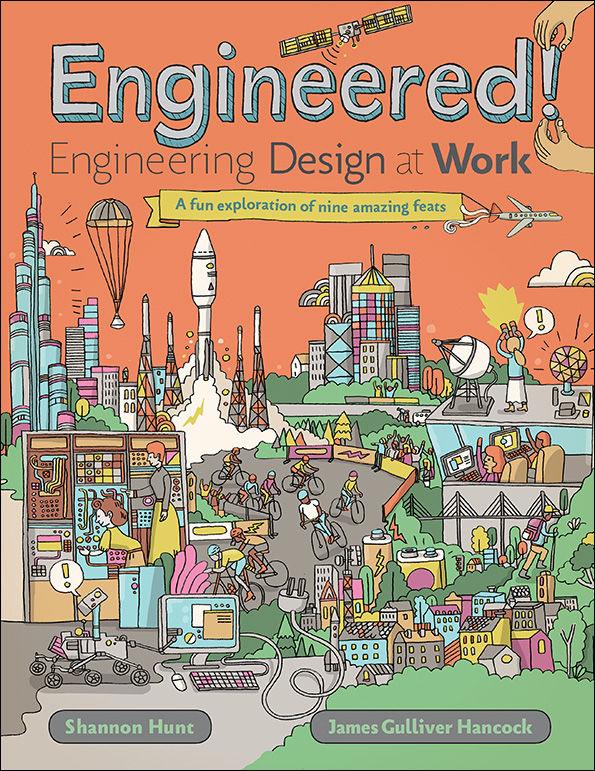
Engineered! Engineering Design at Work, by Shannon Hunt/Illustrated by James Gulliver Hancock, (Sept. 2017, Kids Can Press), $18.99, ISBN: 9781771385602

Recommended for readers 9-13

Nine engineering specialties -Aerospace Engineering, Biomedical Engineering, Chemical Engineering, Mechanical Engineering, Electrical Engineering, Civil Engineering, Geomatics Engineering, Computer Engineering, and Environmental Engineering – in this look at engineering design, which introduces readers to the step-by-step process by using eye-catching icons and nine case studies, one for each field. Team member bios that introduce kids to new scientists and what they do; new fields of engineering, like geomatics, are explained and illustrated, as are new technologies, like the incorporation of 3-D printing into biomedical engineering. Cartoony illustrations make the science more appealing to anyone who may think they can’t *do* science. Kids will learn that engineering can be found everywhere, from sending the rover to Mars, to saving animals from extinction, to replacing a sewer system to clear pollution from a lake. A glossary helps with new engineering terms readers come across.

Engineered! is a fun introduction to the basics of engineering and can be used equally in a science class, makerspace, or on career day.
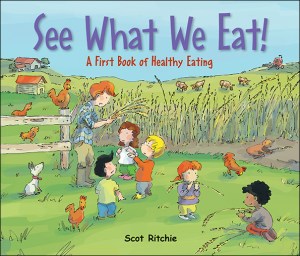
 

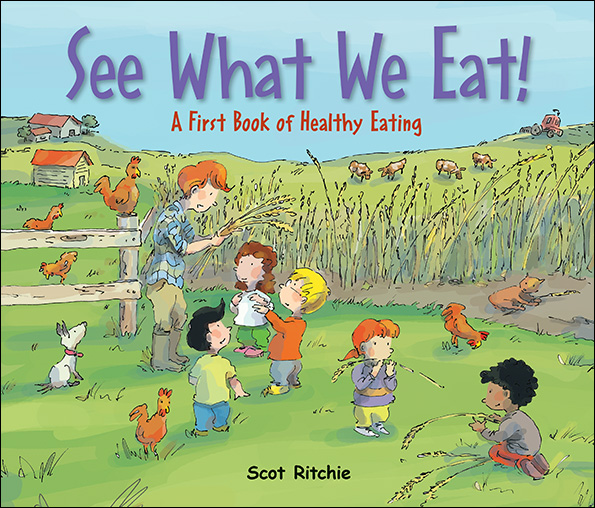
See What We Eat! A First Book of Healthy Eating, by Scot Ritchie, (Sept. 2017, Kids Can Press), $16.99, ISBN: 9781771386180

Recommended for readers 5-8

A group of friends takes a trip to a farm, run by one girl’s aunt. They’re there for pick apples and make an apple crisp for the potluck harvest dinner. Yulee’s aunt takes them on a tour of the farm, teaching the kids about growing grains and vegetables, getting enough nutrients, dairy, and protein – and addresses food allergies and alternative methods of getting those nutrients. Kids learn about transporting food to farmer’s market, stores, and all over the world. Ritchie addresses composting and recycling, and includes a tasty Harvest Apple Crisp recipe to try. A glossary helps readers with new words like pasteurize, carbohydrate, and nutrient.

The illustrations are soft, cartoony realistic, with a multicultural group of friends coming together to learn and eat. The room where the Harvest Celebration takes place has a line of hanging global flags as the families dine on pierogies, tamales, and apple crisp. With bolded facts and questions to encourage deeper thinking, this is a fun introduction for younger learners to nutrition and sustainability.
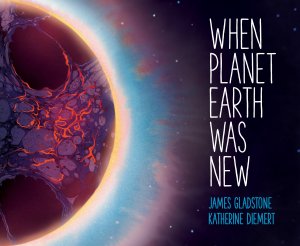
 

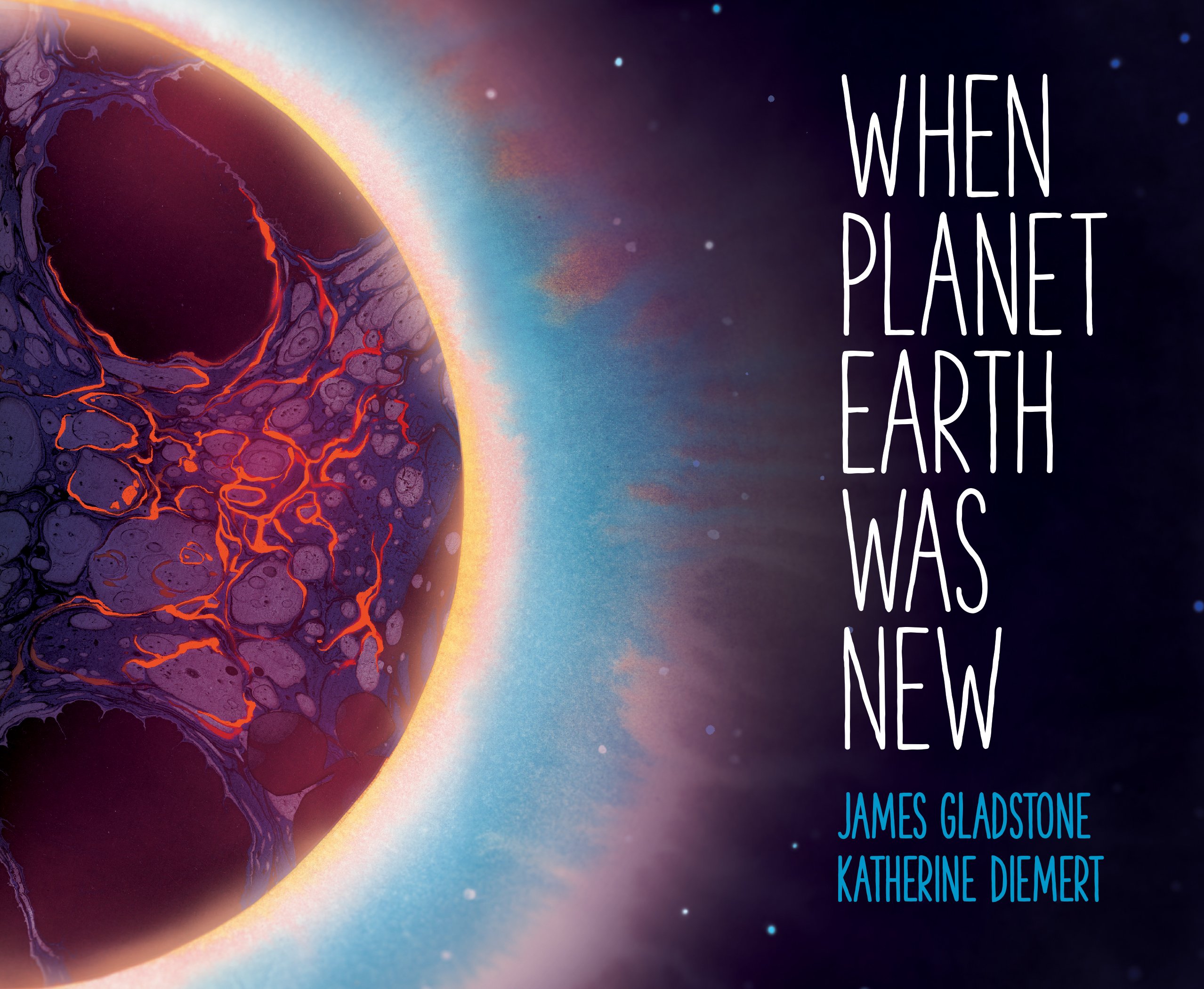
When Planet Earth Was New, by James Gladstone/Illustrated by Katherine Diemert, (Sept. 2017, OwlKids Books), $18.95, ISBN: 9781771472036
Recommended for readers 4-7
Take a trip through time and space and discover how our planet – and life on our planet – evolved. Beginning billions of years ago when Earth was forming, When Planet Earth Was New follows our planet’s formation through volcanoes and comet bombardment; through the formation of the oceans and evolution of life in the oceans and on the land. Beautiful, digitally-enhanced watercolor spreads showcase colorful artwork of each moment captured, with brief descriptive text that preschool and early elementary audiences will find breathtaking. A gorgeous spread showcases life on Earth today: a blue whale, birds flying overhead, and a marching line of animals, including a human being. A section at the end of the book presents each spread in thumbnail format, with additional explanatory text, and a glossary and list of sources round out this introduction to astronomy for young readers.
My 5 year-old loves this book; the spare text is just right for him and he’s fascinated with the changes our planet went through on its journey to the present. It’s a beautiful-looking book, and a great addition to elementary nonfiction collections. I can’t wait to display a copy in my library.


Posted in Middle Grade, Non-Fiction

DK shows kids how to eat the rainbow with Eat Your Greens, Reds, Yellows, and Purples!

eat your redsEat Your Greens, Reds, Yellows, and Purples: Children’s Cookbook, by DK Children (May 2016, DK Children), $12.99, ISBN: 9781465451521

Recommended for ages 8-12

Article after article tells adults and kids alike to “eat the rainbow”, but what does that really mean? Skittles, after all, tells us to “taste the rainbow”, but I’m pretty sure that’s not exactly the same thing. Simply put, to eat the rainbow means to eat a variety of fruits and vegetables; each color comes with different benefits. DK’s newest cookbook, Eat Your Greens, Reds, Yellows, and Purples teaches kids and adults alike what it means to eat the rainbow, with fun facts and 25 vegetarian recipes for kids to try. There’s a section on food prep: how to slice an avocado, seed a tomato, or dice an onion. Knife skills and cooking instructions are noted with an exclamation point, so readers know to get an adult to help.

There’s something for everyone here – honest! Detailed, step by step instructions and photos let readers know what materials we need – equipment as well as food! – and tasty recipes, including spinach and phyllo tarts, black bean and guacamole quesadillas, red pepper hummus, cornbread, and mango-pineapple ice pops.

Helpful callout signs and arrows provide fast facts on the benefits of each food color; for instance, did you know that greens like spinach and broccoli provide vitamins and fiber, while red foods like tomatoes and cherries protect your body’s cells? Purples help fight disease, yellows boost the immune system, and oranges contain beta-carotene, which helps keep your eyes, skin, hair, bones, and teeth in working order.

A good addition to a children’s collection where you have older kids that are ready and able to start making simple recipes with adult assistance. You can also check out this printout from the Whole Kids Foundation on “eating the rainbow”. It would make a good class handout!