Posted in Early Reader, Intermediate, Non-Fiction

Wild Animals of the South – beautiful animals, beautiful artwork

wild_1Wild Animals of the South, by Dieter Braun/Translated by Jen Calleja, (March 2017, Nobrow), $35, ISBN: 9781909263970

Recommended for ages 5+

This gorgeous companion to Braun’s Wild Animals of the North (Nobrow, 2016) introduces readers to animals in the Southern hemisphere. Organized by continent: South America, Africa, Asia, Australia, and Antarctica, readers will enjoy the beautiful, colorful illustrations. The emphasis here is on the illustrations, making this a great starter book for younger children; caregivers can read the short passages on featured animals, which offer fun facts. For example, while most know that a male lion’s mane is his crowning glory, did you know that female lions prefer males with more beautiful and lustrous manes? And that other males will hold back when a male with a more impressive mane appears?

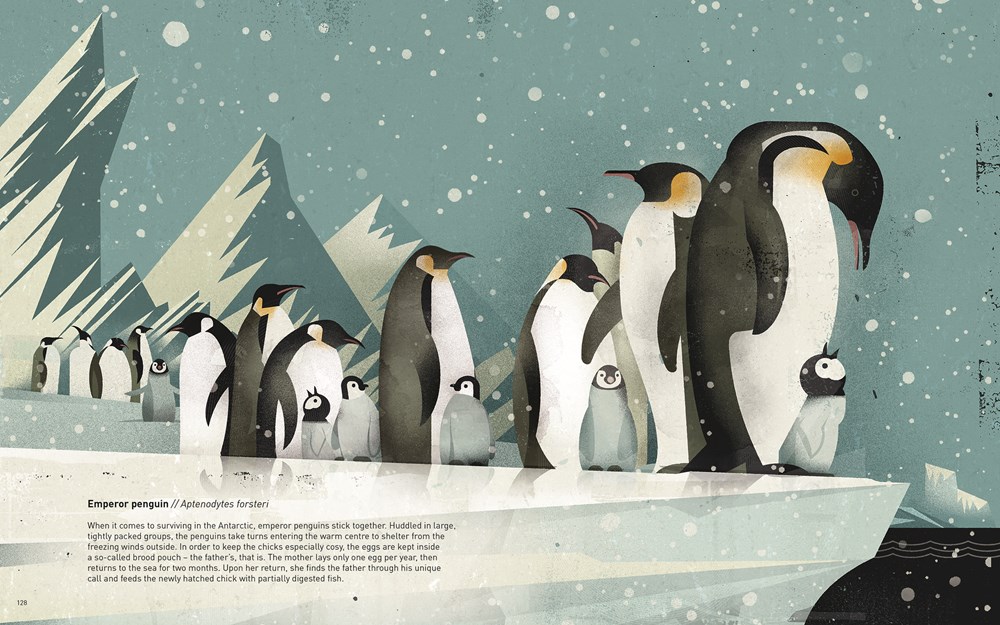
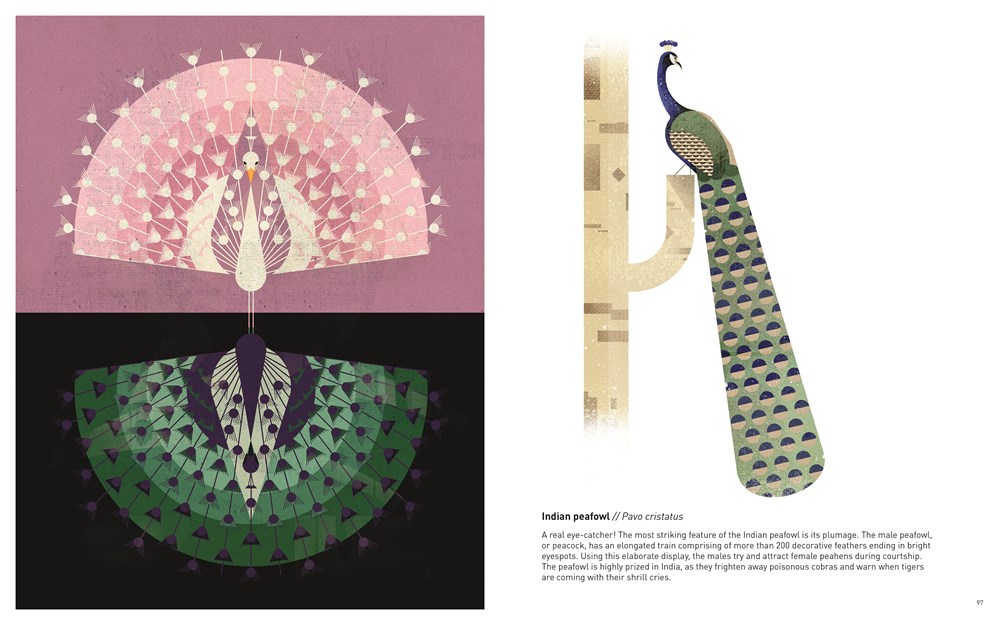
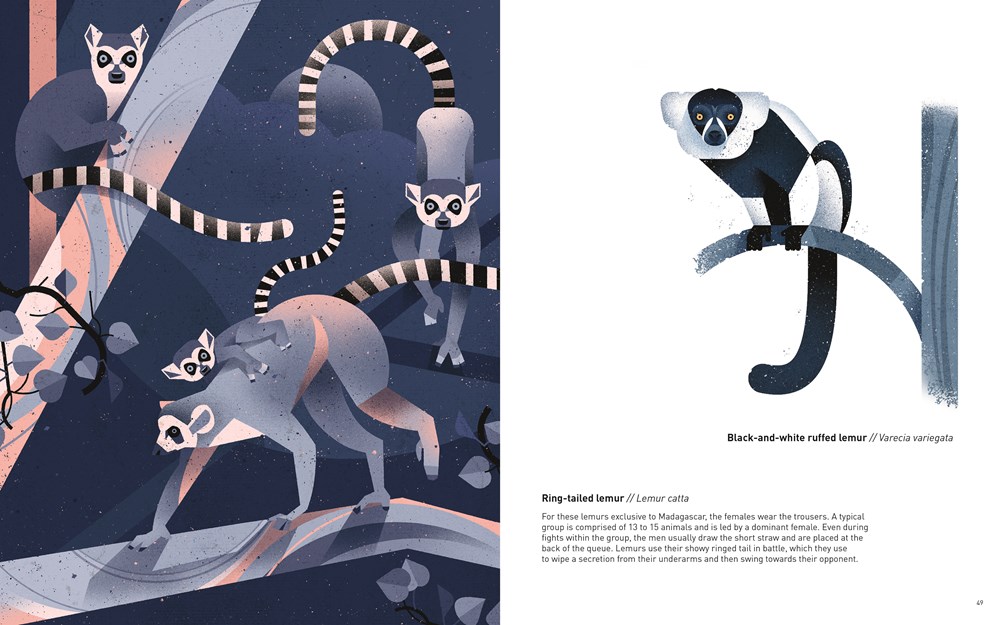
The art is stunning. Braun’s illustrations are geometric, with strong lines and rich colors. There is a wry sense of humor in some – the lion’s lush mane, for instance – while others, like the breaching humpback whale, are breathtaking. A waddle of penguins, under a snowy sky, stand in the stark shadow of glaciers. Braun captures habitats with the same beauty the he sees in the animals themselves.
wild_5

The $35 price tag may be a bit steep for some readers, especially those who are looking for more information than artwork (but that’s what libraries are for!), but this book is gorgeous for wildlife lovers and art lovers. For more of Dieter Braun’s illustrations, make sure to visit his website.
wild_4wild_3

wild_2


Posted in Intermediate, Middle Grade, Non-Fiction, Non-fiction, Non-Fiction

Animal Planet’s Animal Atlas is a passport to the world’s habitats

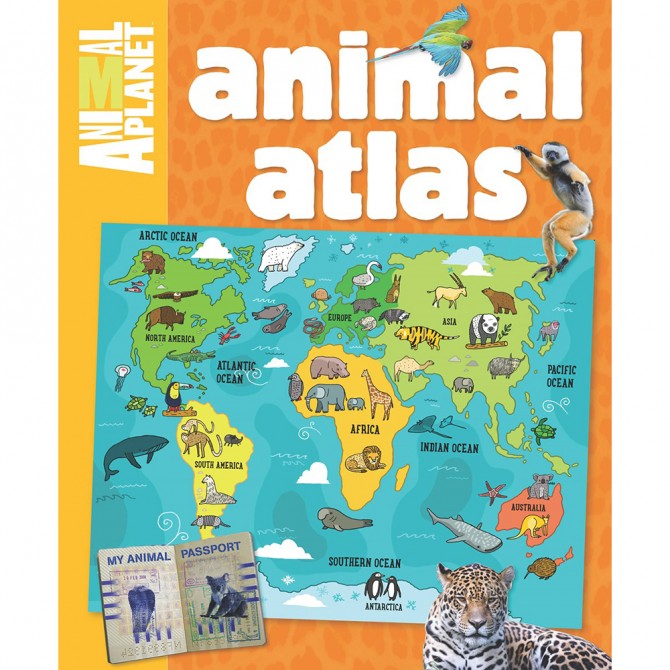
animal-planet-animal-atlas-hardcover-book-658_670Animal Planet Animal Atlas, by Animal Planet (May 2016, Animal Planet), $17.95, ISBN: 978-1618931658

Recommended for ages 7-10

I have tons of animal nonfiction books in my library, and I have a bunch of really good books on habitats, too.  What Animal Planet’s Animal Atlas does it bring together explanations of different biomes/habitats, and the animals who live in them on each continent and in the oceans of our world.

The atlas begins with a map to present the major biomes of the world, and describes each biome: alpine, desert, marine, grassland, rain forest, temperate forest, tundra, and taiga. Animal tour guides for each continent take readers through a look at different animals that inhabit each biome on each continent, and features like ROAR (Reach Out. Act. Respond.) – Animal Planet’s initiative, dedicated to improving the lives of animals worldwide – empower kids with knowledge about how humans are working to change the world for the better through conservation and protective measures. Surprisingly Human boxes provide facts about the similarities between animals and people. Each continent section ends with a spotlight on an animal from the area, giving readers a close-up look at animals like the bald eage, anaconda, or Sumatran tiger. Spotlights include a Where in the World section, where maps detail the animals’ living areas; Animals Facts, and information on what they eat and how animals adapt best to their environments.

Combining colorful illustration and full-color photographs of over 200 animals, the atlas is a great resource for young readers. It’s got information ready at a glance for my Corona Kids, who come in asking for books about various habitats and then, what animals live in those habitats. It’s a strong companion book for slightly bigger kids, who will need more in-depth books to complete a report, but it’s a great starting point for anyone who wants a little more info on different habitats, and who may not realize that different continents have so many different biomes. A brief glossary and index round it all out.

This is a good addition to primary nonfiction collections if you have strong books that provide more detail that kids can jump to if they want to go further into a topic. Or, if you’re like me, and your kiddo just loves learning about different animals, where they live, and what they eat, it’s a nice add to your bookshelf. The passport and guide animal features add a cute touch that brings something different and fun to learning. Hmmm… now, I’m thinking of an animal program for my Discovery Club… learning about a new animal each week, and stamping a “passport” with an animal sticker or stamp… I’ve got to talk to my Discovery Team!

Posted in Early Reader, Non-Fiction, Preschool Reads

Ocean Animals from Head to Tail is SO MUCH FUN!

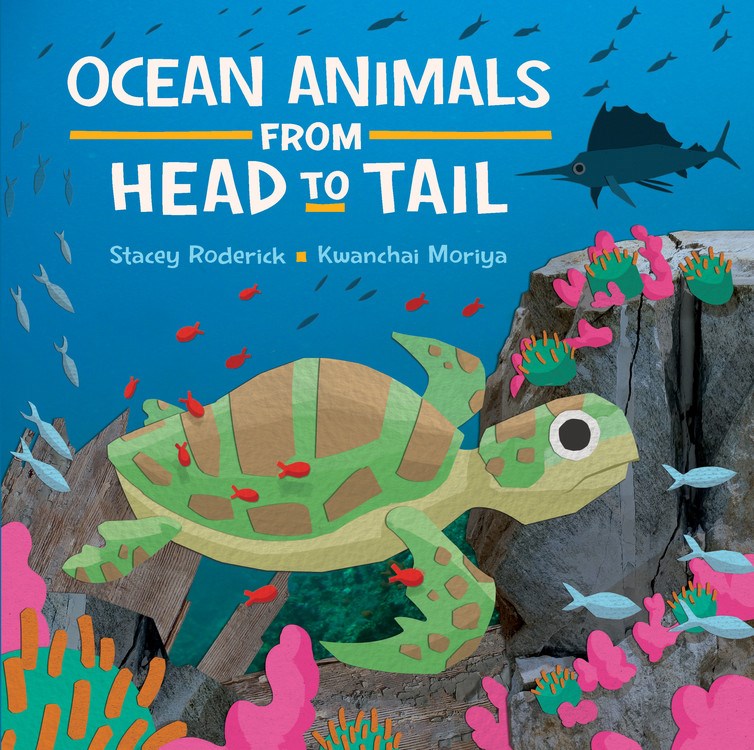
ocean animalsOcean Animals from Head to Tail, by Stacey Roderick/Illustrated by Kwanchai Moriya, (Sept. 2016, Kids Can Press), $16.95, ISBN: 9781771383455

Recommended for ages 3-7

Does anyone love Steve Jenkins’ Actual Size and Prehistoric Actual Size as much as I do? They are the perfect non-fiction read-aloud for elementary school class visits; the kids go berserk when they see a life-sized Goliath beetle, or watch me put a dinosaur’s claw to the back of my head to illustrate how it could pick me up like a grape. Less terrifying, but just as amazing for the younger set – especially those Octonauts fans out there! – is Ocean Animals from Head to Tail, by Stacey Roderick and illustrated by Kwanchai Moriya.

Ocean Animals introduces readers to eight different ocean animals, focusing on a unique body part. First, we see a close-up of the animals in question – the scalloped head of a hammerhead shark, a colossal squid’s eye, a blue whale’s mouth with a focus on its baleen – and a question: What ocean animal has a head like this? What ocean animal has eyes like this? What ocean animal has a mouth like this? The body part in question is highlighted with a gray font to call attention to it, and the following spread answers the question, zooms out to illustrate the animal in its natural environment, and provides interesting and quick facts about the animal. We learn that the squid’s soccer ball-sized eyes are the largest of any animal, and help the squid see in areas where there’s very little light. The blue whale’s baleen act as a huge sieve to catch the tasty krill it loves to eat. A spread at the end introduces kids to eight more ocean animals.

Not featured in actual size, but still in huge detail, the kids will LOVE this book. Kwanchai Moriya’s paper collage art is bright and interesting, popping off the page and adding depth to the spreads. My three year-old loves this book (as well as the Actual Size books) and has me read this to him constantly. (It came in handy at the doctor’s office today!) With shows like Octonauts and Wild Kratts generating interest in animals, nature, and conservation, this is a great book to have on home, school, and library shelves. It’s a great storytime book, too: pair it with a Rainbow Fish story, Shark in the Dark, Mr. Seahorse – any underwater theme will do! Show an episode of Octonauts that stars one of the featured animals, and let the kids color some pictures of underwater animals that appear in the book.

This is the second in the Head to Tail series: Dinosaurs from Head to Tail was published in 2015, and Bugs From Head to Tail will be coming in 2017.

Great book for easy nonfiction collections.

Posted in Animal Fiction, Early Reader, Fiction, Preschool Reads, Uncategorized

Mr. Postmouse’s Rounds is an adorable Fall read!

mr_postmouse_s_roundsMr. Postmouse’s Rounds, by Marianne Dubuc (Aug. 2015, Kids Can Press), $17.95, ISBN: 9781771385725

Recommended for ages 4-8

Mr. Postmouse loads up his wagon and goes on his delivery rounds. He visits all the animals on his route, from Mr. Bear, who’s having lunch with Goldilocks, to a special delivery at the end of his route. Each animal household is loaded with fun glimpses into their lives: the Rabbit family grows root vegetables on their roof, so they can just pluck them from the ceiling when they’re ready to eat; they have a warren below the house that includes multilayered bunk beds and a toilet; Magpie’s home is loaded with stolen goods, evidenced by the “Wanted” poster on the tree to his home and the “Lost” poster bearing a ring that looks just like one in his home; Pigeon’s planning his next trip and has luggage stamped and ready.

Marianne Dubuc’s artwork is wonderful for young readers because of all the elements she includes in her pictures. Her book, The Bus Ride, was loaded with little winks and smiles to careful eyes, and Mr. Postmouse’s Rounds is just as rich in visual detail. The animal homes are drawn in cross-section, allowing readers a tongue-in-cheek peek into their homes. Some, like the Birds, are naturally located in trees, but the Fly family is located in what appears to be a giant animal dropping. Mr. Octopus lives in a shipwreck, and the Penguin family lives in an igloo. Mr. Bear has a beehive on his roof, with a pipe that delivers honey straight to his kitchen, and the Yeti knits hats and socks to keep warm in his icy mountain home.

This is a fun way to introduce the idea of animal habitats into a conversation. Start with fiction, and work your way to the actual facts, comparing and contrasting the elements Ms. Dubuc brings into play with Mr. Postmouse’s Rounds, and ask children to talk about their own habitats. Have them draw a picture of their room, for instance.

Mr. Postmouse’s Rounds is an adorable book that will appeal to younger readers. It’s a fun read-aloud, but will be even more fun for readers to curl up with and discover Ms. Dubuc’s little gifts on their own.

Posted in Preschool Reads

Book Review: Diary of a Worm, by Doreen Cronin/illus. by Harry Bliss (Joanna Cotler Books, 2003)

diary of a worm

Recommended for ages 2-6

A young worm journals his daily life, writing about his friends, his family, and the pluses and minuses of being a worm.  His observations are often very funny, as when he talks about spending the day above ground with his family after a rainstorm, and then notes, “Hopscotch is a very dangerous game”, with illustrations from a worm’s point of view. The story includes facts about earthworm behavior that gives young audiences a fun lesson in science: earthworms dig tunnels that help the earth breathe; worms cannot walk upside down, and worms have no teeth being just a few fun factoids to take away.

The artwork adds to the appeal of the book. Mr. Bliss uses watercolor and ink illustrations to bring Worm, his family and friends to life; while not overly anthropomorphizing them, he does infuse them with personality. The worm’s-eye view of the world provides a different point of view that young audiences will appreciate, and could lead to a good post-storytime discussion of how things look different from a worm’s point view as opposed to a human’s. The text looks almost like a printed font, and the entries are dated, like a real diary would be. The endpapers are set up like a scrapbook or diary, with photos of Worm’s friends, family, and accomplishments – report cards, a web made for him by his friend, Spider, a comic strip – “taped” to the pages.

The “Ðiary Of” series includes Diary of a Fly; Diary of a Spider; and Diary of a Worm.

A Wiggling Worms/Garden read-aloud would be a fun idea for the Spring. Diary of a Worm may be a tricky read-aloud if done conventionally, as there is a lot of activity within each page. Bringing in puppets may be a fun way to accomplish a fun read-aloud, with assistants or another librarian acting out with puppets of worms, spiders, and flies, while the librarian narrates the journal entries. Amazon offers a Diary of a Worm & Friends Finger Puppet Playset that would connect the puppet show to the book even further. An after-story discussion about worms would involve children, inviting them to share what they have learned about worms after reading the book. A fun craft would let children make worms out of modeling clay, which they could take home. Scholastic has a Diary of a Worm DVD that may be fun viewing for younger audiences.

Diary of a Worm has received numerous awards and accolades since its publication, including designation as a School Library Journal Best Book for Children (2003).