Posted in Realistic Fiction, Teen, Young Adult/New Adult

YA Suspense: Black Flowers, White Lies

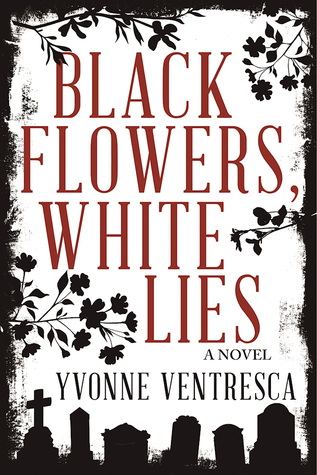
black-flowersBlack Flowers, White Lies, by Yvonne Ventresca, (Oct. 2016, Sky Pony Press), $16.99, ISBN: 9781510709881

Recommended for ages 13+

Sixteen year-old Ella’s dad died before she was born, but she’s always felt a connection to him. Now, her mom’s about to marry Stanley, a nice enough guy, in the process of reconnecting with his estranged son. Just after Blake – Ella’s soon to-be-stepbrother – shows up on the scene, things start getting weird for Ella. After her mom and Stanley marry, leaving Blake and Ella alone in the house together, things go really crazy. She wakes up to find bloody handprints on her wall; mossy handprints on her mirror – just like the one she left on her father’s grave. She and her best friend have a falling out, and Blake seems to be the only one who understands her… right? As Ella discovers little lies that her mother has told her over the years, she fears that she may have inherited her father’s mental illness. Is she having a breakdown, or is there something more going on here?

Black Flowers, White Lies is a good suspense novel that stumbles a bit with its characters, who are largely one-dimensional and hard to get on board with. Our heroine is s almost too neurotic to be sympathetic, and the  antagonist’s transparency comes through shortly after being introduced. Ella’s best friend is more of a classic frenemy, and her mother is seemingly too detached and self-absorbed through most of the book to notice what’s happening to her daughter. That said, the novel keeps you reading, wanting confirmation of everything you know is happening – and Ventresca ups the action in ways you may not see coming. I like the way the author paces her novels; I couldn’t put Pandemic down, and Black Flowers, White Lies keeps a similar pace, constantly building to its conclusion. books I liked the book and would booktalk this to mystery and suspense fans. A list of resources at the end guides interested readers to more information about topics touched on.


Posted in Fantasy, Fiction, Historical Fiction, Teen, Tween Reads

Folklore, myth, and memory: Merrow

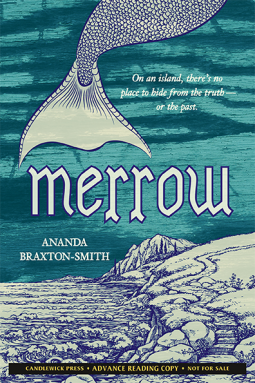
merrowMerrow, by Ananda Braxton-Smith, (NOv. 2016, Candlewick), $16.99, ISBN: 9780763679248

Recommended for ages 12+

Twelve year-old Neen Marrey lives with her Aunt Oshag on Carrick Island. Her father drowned and her mother disappeared when she was a baby; now, she and her aunt endure the town gossip – that her mother was a merrow, a mermaid, that returned to the ocean and her father drowned himself trying to reach her. Oshag dismisses the gossip as nonsense, but the myth keeps Neen going; she wants desperately to believe that her mother didn’t just desert her; that maybe even Neen herself has merrow in her, and can reconcile with her mother one day.

Merrow is beautiful and heartbreaking. Braxton-Smith spins a tale that weaves together historical fiction, Celtic folklore, and a coming of age story. Neen and Oshag are both incredibly constructed characters that come alive; characters that you come to ache for. The supporting cast are equally likable and believable, and having such a small group of characters adds to the intimacy of the novel.

This is a gorgeous novel that literary fiction readers, readers of magical realism, realistic fiction, and historical fiction alike will love. Merrow has received four starred reviews: Booklist, Publishers Weekly, Kirkus Reviews, and School Library Journal. Maybe the Printz committee will agree?

Posted in Fiction, Middle Grade, Middle School, Realistic Fiction, Tween Reads

Blind Guide to Normal brings back old friends!

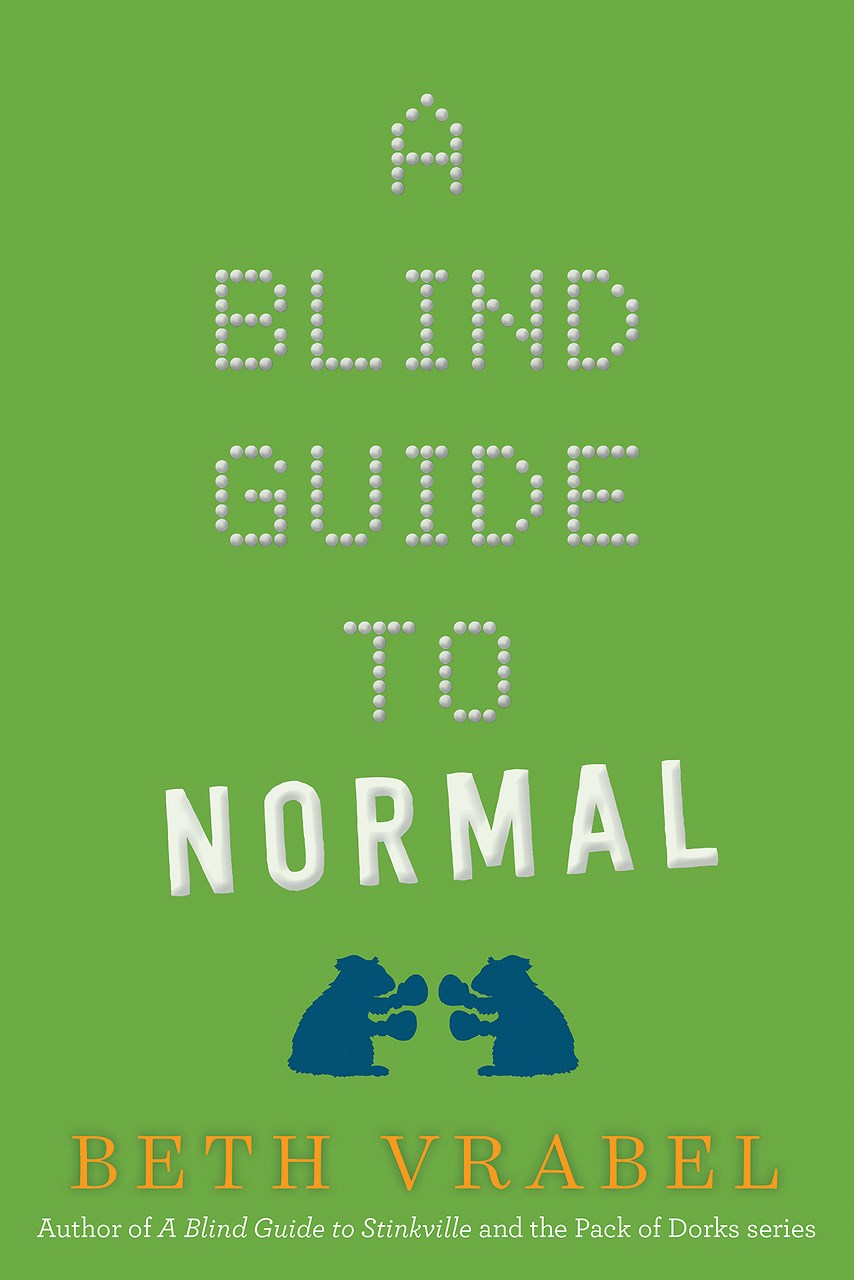
blind-guideA Blind Guide to Normal, by Beth Vrabel, (Oct. 2016, Sky Pony Press), $16.99, ISBN: 9781510702288

Recommended for ages 8-12

Taking place in Beth Vrabel’s Blind Guide universe, readers get to hang out with Ryder, also known as Richie Raymond, in Beth Vrabel’s A Blind Guide to Normal. Ryder is leaving Addison, the school for the blind we were introduced to in A Blind Guide to Stinkville, to head to “normal” school for eighth grade. The thing is, at Addison, Richie was the Big Man on Campus. With his jokes about his prosthetic eye and ability to find a witty comeback for every situation, he was the King of the Hill at Addison. In a mainstream school, it’s starting all over again – and to add to the chaos, he and his mom are moving in with his grandfather while his dad is off studying buffalo. Gramps has a very strange sense of humor, and his cat, General MacCathur, can’t stand him. On his first day of school, Ryder finds himself enrolled in a Quilting class (thanks, Grandpa!), making his bio teacher pass out, and putting himself at odds with the town hero, Max. Forget about fitting in – can Ryder get through the school year as the school punchline? He’ll need some help from his best friend Alice and, unbelievably enough, Gramps, to find out.

Less of a sequel and more of a companion to Blind Guide to Stinkville, Blind Guide to Normal is every bit as great to read as any Beth Vrabel book. Yes, I’m a Vrabel fangirl, and with good reason: she creates characters that I love. They tend to have a sarcastically upbeat outlook, which I can appreciate, and so do many of the kids I talk to in a given day. Her villain here isn’t even a villain, it’s just someone who Max starts off on the wrong foot with, and Max’s gift to see himself descending into car wreck territory but not being able to stop it is so refreshingly normal – how many times have you just not been able to stop talking when you know you’re just making things worse? – that you’ll laugh with embarrassed relief that you’re not alone. I was happy to see Alice again; her FaceTime conversations with Ryder provide a nice, familiar anchor for both Ryder and us readers. His relationship with his grandfather is a great subplot that I hope reaches kids who just don’t get their own grandparents, who they may see as weird or old-fashioned.

I hope Beth Vrabel finds more ways to bring us back to this group of friends. There’s a lot of great diversity in kid lit these days, and Vrabel’s ability to address disability with the suppressed emotion that spills over into a Don Rickles-like wit adds a spark to the expanding dialogue. Get this one and give it to your Blind Guide to Stinkville readers, sure, but also hand this one to your Wimpy Kid readers and tell them that Ryder and Greg would, in the ultimate literary multiverse, probably get along just fine.


Posted in Realistic Fiction, Teen, Young Adult/New Adult

Depression is not your fault: Detached, by Christina Kilbourne

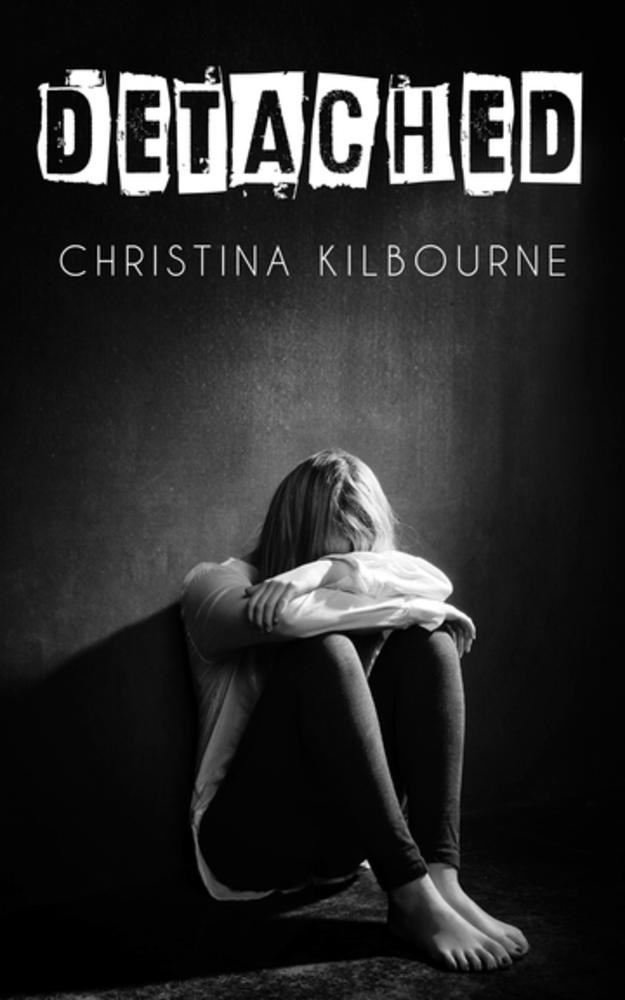
deatchedDetached, by Christina Kilbourne, (Sept. 2016, Dundurn), $12.99, ISBN: 9781459734319

Recommended for ages 13+

Anna is a high school student who doesn’t feel like she fits in. She’s got friends and family who love her, and she’s a talented artist; she seems to have everything going for her, but she doesn’t feel anymore. She’s detached from everything around her; she’s just going through the motions. She doesn’t want to live like this any longer, but she doesn’t want to hurt the people she leaves behind. She’s got plans written out, and finally, once her parents are out for the night, she overdoses on painkillers. A neighbor discovers her and gets medical intervention in time, but now the journey back to life begins, not just for Anna, but for everyone whose lives she touches.

Detached is a painful and accurate look at depression and how it affects everyone. Chapters alternate between Anna’s, her mother’s, and her best friend’s points of view, all told in the first person. Aliya, Anna’s best friend, notices Anna acting strangely, but is worried that saying something will alienate Anna. Anna’s mother, still grieving her own mother’s death, worries about her daughter, but doesn’t seem to grasp the gravity of Anna’s situation until it’s almost too late – and then, we read how Anna’s journey out of the black hole of depression affects a parent. It’s achingly real and it’s scary because it’s something we see in the headlines every day. Are we bad parents if we intervene? Are we bad parents if we don’t? I’d love to see parents and kids read this together and see how the other half thinks.

One of the most important messages coming out of Detached is this: depression is not the sufferer’s fault. It’s not a parent’s fault. It is an illness, just like any other, and it needs to be treated without stigma, with medication, therapy, love, understanding, and care. No one asks for depression to hit. This isn’t a gift, and sometimes, it’s just not possible to find the voice to ask for help. This is the power of Detached: to be that plea for help, for understanding, and to start dialogues that will shed light on an insidious disease.

Detached is an important addition to YA collections, particularly because it does talk so openly about a subject people are often uncomfortable addressing. Display and booktalk with Jay Asher’s 13 Reasons Why (which also has a very good companion website) and Julie Anne Peters’ By the Time You Read This, I’ll Be Dead.

I read an e-galley of Detached, so I didn’t see additional resources at the end of the book; I hope that some have been added to a finished version. In the meantime, if you need help or know someone who does, please consider The Society for the Prevention of Teen Suicide, the National Institute of Mental Health, and the Suicide Prevention Resource Center.

Posted in Fiction, Middle Grade, Realistic Fiction, Tween Reads

Soldier Sister, Fly Home is quietly powerful

soldier sister_1Soldier Sister, Fly Home, by Nancy Bo Flood/Illustrated by Shonto Begay, (Aug. 2016, Charlesbridge), $16.95, ISBN: 9781580897020

Recommended for ages 10+

Thirteen year-old Tess is struggling with her identity. As someone who’s part white and part Navajo, she feels too white when she’s on the rez, but she’s called “Pokey-hontas” and “squaw” at the white school she attends in Flagstaff. Her older sister, Gaby, whom she adores, has joined the military in order to get money for college; when she comes home to tell Tess that she’s being deployed – shortly after Tess and her family have attended a memorial service for Lori Piestewa, a member of their community and the first Native American woman to fall in combat – Tess is devastated. Gaby asks Tess to take care of her stallion, Blue, while she’s gone; it’s a challenge, to be sure, as Blue is semi-wild and doesn’t gel with Tess, but over the course of the summer, Tess learns more about herself from Blue than she could have imagined.

Soldier Sister, Fly Home is a quietly tender novel about family, identity, and loss. Lori Piestewa, whose memorial service opens the story, was a real-life soldier who was killed in Iraq and was a member of the Hopi tribe. From Lori’s tale, Ms. Flood spins the story of Tess and Gaby and Native American identity. Their grandfather is a veteran, a World War II Code Talker; they live in a community of proud warriors, descended from warriors. Tess is frustrated as she tries to embrace a cultural identity: but which culture to identify with? Her grandmother is a guiding force here, as is Gaby, who loves and reassures her younger sister, even from a world away. Blue, the stubborn and half-wild horse, teaches Tess patience and helps her recognize her own inner strength throughout the book.

The book includes notes and a glossary on the Navajo language, a note honoring Lori Piestewa and her service, and a reader’s group guide. Writing prompts are available through the publisher’s website, as is a link to a seven-page excerpt.

Soldier Sister, Fly Home has received a starred review from Publishers Weekly. It is a beautiful story and an important addition to all bookshelves.

Nancy Bo Flood was a research psychologist and studied brain development at the University of Minnesota and the University of London before writing books for children. Additional books include recognized and award-winning titles, such as Warriors in the Crossfire (Boyds Mills) and Cowboy Up! Ride the Navajo Rodeo (WordSong).

Posted in Uncategorized

Benny and Penny Say Goodbye to a Friend

bennypenny1Benny and Penny in How to Say Goodbye, by Geoffrey Hayes (Sept. 2016, TOON Books), $12.95, ISBN: 978-1-935179-99-3  

Recommended for ages 4-8

While playing outside, Penny discovers Little Red, a salamander, has died. She’s upset, but her brother, Benny, seems more irritated by Little Red – and Penny’s grief – than anything else. Penny and her friend Melina bury Little Red and hold a little ceremony for him, which stirs up mixed feelings for Benny.

This latest book in the Benny and Penny early graphic novel series takes on the tumultuous emotions that death can stir up: grief being one, and guilt being another. These feelings are often overwhelming to adults; to children, they must feel like a tidal wave. Benny remembers times he was unkind to Little Red, which triggers his grief. Benny’s guilt motivates him to take part in Little Red’s memorial, and Mr. Hayes gives Benny, Penny, and readers a bright spot to end on.

There are some great books on dealing with grief and loss with children: most recently, Margaret Wise Brown’s The Dead Bird and Ida, Always, by Caron Levis. Each book speaks beautifully to children, and each handles grief differently – just like people do. How to Say Goodbye is a sensitive look at dealing with strong feelings in the wake of loss. An important addition to graphic novel collections and readers advisory lists.

There will be an educator’s guide closer to the book’s publication. Keep an eye on the Benny and Penny TOON Page for details.

Benny and Penny is an award-winning early graphic novel series. Benny and Penny in the Big No-No received the 2010 Theodore Geisel Award.

bennypenny5

Posted in Fiction, Humor, Middle Grade, Realistic Fiction, Tween Reads

3-tissue reading: Ms. Bixby’s Last Day

bixbyMs. Bixby’s Last Day, by John David Anderson (June 2016, Walden Pond Press), $16.99, ISBN: 9780062338174

Recommended for ages 8-12

A beloved sixth grade teacher announces that she’s unable to finish the school year; she’s very sick and needs to be hospitalized. Topher, Steve, and Brand are three students who know just how special Ms. Bixby is come up with a plan to give her the best last day with her students. They cut school, make a specific list of supplies to acquire, and make their way to the hospital.

Each chapter is narrated by one of the boys, and switches between the boys’ journey to the hospital and the stories each boy has about Ms. Bixby and her impact on their lives.

I fell in love with this book. Impossible to put down, it’s honest, heart-breaking, and inspiring, all at once. Each boy’s story draws on experiences that many kids will recognize either in their own lives or a close friend or family member’s life. Knowing that there are teachers like Ms. Bixby out there may  help kids seek out an adult they can trust with their own personal challenges, even if it’s just another ear to listen.

Warning: this is quite possibly a three-tissue read. It’s an emotional and powerful read, but it is about grief and loss, so be prepared for that. This is an excellent choice for middle grade readers and collections. I’d put this on a booktalk list with reads like The Meaning of Maggie by Megan Jean Sovern and Donna Gephart’s Death by Toilet Paper.

Ms. Bixby’s Last Day has received starred reviews from Publishers Weekly and Booklist. The author’s website offers more information about his books, school and virtual visits, and contact info.

Posted in Fantasy, Fiction, Middle Grade, Tween Reads

What is the Secret of Dreadwillow Carse?

dreadwillowThe Secret of Dreadwillow Carse, by Brian Farrey (Apr. 2016, Algonquin Young Readers), $16.95, ISBN: 9781616205058

Recommended for ages 8-12

In a fantasy kingdom where all the subjects are deliriously happy, two girls bond over their mutual feelings of sorrow, helplessness, and ultimately, determination. Princess Jeniah is a 12 year-old Queen Ascendant; her mother is dying and she’s got very little time left to learn to be a queen, let alone to process the grief she’s feeling. Her mother’s cryptic message about the mysterious bog, Dreadwillow Carse, fires up her curiosity: “If you enter the Carse, the monarchy will fall.”

At the same time, a village girl, Aon, loses her father when the Crimson Hoods come and take him away, ostensibly to become the next advisor to the monarchy. The villagers barely recognize that he’s gone, and Aon – who’s already lost her mother to the Carse – is bereft. Aon is not like the other villagers. She feels a sadness she can’t explain. All the time.

When the two girls encounter one another, Jeniah asks Aon for a favor: explore the Carse. The monarchy can ask someone else to enter the Carse, after all, can’t they? In return, Aon asks Jeniah to send her father home. This meeting sets each girl off on her own personal voyage of discovery, where they’ll uncover long-kept secrets of the Carse, the monarchy, and most importantly, about themselves.

On the face of it, this is an interesting middle grade fantasy tale, with multicultural characters and a Big Secret to be uncovered. Read a little deeper, and you discover that this is an interesting portrayal of pre-adolesence set in a high fantasy setting. A villager and a monarch bond over their mutual sadness, that they feel they can never show to others. The people around them are either keeping secrets from them, as with Jeniah, or are wandering through life in a false delirium, refusing to see what’s going on around them, as with Aon. Aon feels a sadness no other villager can grasp, and she feels frustrated and ignored. The Carse’s presence holds so many answers, but they’re discouraged from venturing in. They have to work together to find answers, and those answers will reveal terrible truths about those around them.

Tweens will identify with the girls and their feelings of frustration; many will understand the undercurrent of seemingly inexplicable sadness and the pressure to put on a smiling face. They’ll share Jeniah’s frustration with her tutor, who answers all of her questions with questions – she has to learn not only to question everything, but to weigh the answers in front of her before she acts. The character development is built steadily through the book, with small plot reveals throughout leading readers further and further, until they reach the conclusion that hits hard and leaves a lot of questions in its wake. This is a great book to hold a discussion group with. I’ll be booktalking it for sure.

A good addition to middle grade collections and fantasy fans’ TBRs. Author insights and an excerpt are available on the Algonquin website. The Secret of Dreadwillow Carse has received a starred review from School Library Journal.

Posted in Fiction, Fiction, Humor, Middle Grade, Middle School, Tween Reads

David Walliams’ DEMON DENTIST is taking appointments!

demon dentistDemon Dentist, by David Walliams (March 2016, HarperCollins), $16.99, ISBN: 9780062417046

Recommended for ages 8-12

Weird things are happening in Alfie’s town, and they seem to have started when the freaky new dentist, Ms. Root – who insists everyone call her “Mummy” – shows up. Kids are getting terrible things under their pillow – eyeballs, bugs, slugs, and more! – instead of a shiny coin from the tooth fairy. Alfie’s own teeth need some serious dental work, but there’s no way he’s going to be Mummy’s next victim – but his social worker, Winnie, has other ideas. Can Alfie and his friend Gabz figure out Ms. Root’s secrets? Or will they find themselves in the demon dentist’s chair?

I’ve been a fan of David Walliams since the decidedly un-child-friendly (but HILARIOUS) show Little Britain, where he and comedian Matt Lucas created insanely funny sketches and characters. He’s become a prolific children’s author in the UK, but I’ve never had the chance until now to read any of his work. Demon Dentist, I believe, is his first US release, and I am thrilled – I already ordered a copy for my library.

Walliams’ work has a distinct Roald Dahl influence: Alfie’s poor surroundings and sickly father in particular remind me of Charlie Bucket’s family; but like Charlie, he doesn’t let it get to him. He takes care of his dad; it’s Alfie and his dad against the world. The two have more than a deep love for one another; they’re devoted to each other. Alfie’s dad spins tales of imagination that take them both on journeys and adventures far and wide, and although, as Alfie gets older, he’d rather be playing video games, he continues to go on these journeys with his dad because he loves him and knows what it means to his father. Winnie, the social worker tasked with checking in on Alfie and his dad, is brash, loud, and funny, with a heart of gold and the best of intentions. Doctor Root is a brilliant, 3-D villain that leaps off the page and hides under your bed.

To add to the Dahl-esque feel, we have Quentin Blake’s wonderful black and white illustrations. I love his artwork for so many reasons, not the least being the memories of reading Mr. Dahl’s books as a kid, curled up in my little reading corner. Blake’s illustrations are wickedly funny here, giving more life to Walliams’ story.

There are larger than life personalities in here, laugh out loud humor, made-up words galore (clearly asterisked for you!), and a bittersweet, gorgeous story about family that will leave you cheering as you wipe a tear away from your eye. My next move: download the rest of Walliams’ novels for my Nook.

Posted in Uncategorized

It’s a Wonderful Death… Can you really get a do-over?

wonderfuldeathIt’s a Wonderful Death, by Sarah J. Schmitt (Oct. 2015, Sky Pony Press), $17.99, ISBN: 978-1-63450-173-6

Recommended for ages 12+

RJ is a classic mean girl. She runs with the “in” crowd, she’s stuck-up, and she’s spoiled rotten. But she learns pretty quickly that Death is the grand equalizer when a Grim Reaper accidentally collects her soul. Now, she’s in the Afterlife and she’s not happy. She’s raising a ruckus, but her existing track record isn’t doing her any favors. If she can get enough souls, angels, and Death Himself on her side, she may stand a second chance, but can she stop thinking about herself long enough to make the right choices?

Written in the first person from RJ’s point of view, It’s a Wonderful Death is nearly unputdownable. It’s loaded with snark and sarcasm that will leave you chuckling and snorting into your sleeve (I commute on public transportation, for heaven’s sake). I needed to know what RJ was going to say next, or what Death Himself was going to come up with. Both characters are hilarious and yet, get the message across. What you do in life will stay with you. Whatever you believe – a topic touched on in this book – there is a reckoning; what you may think is a minor moment in your life could mean someone else’s life. We also see, very clearly, that as much as bad karma snowballs, so does good karma.

This story operates on the hope that people are, for the most part, good – if you show them a chance to go on the right path, and they take it, chances are, they’ll keep finding ways to stay on that path. It’s a pretty upbeat message, for a book about a dead teenager.

It’s a Wonderful Death is a very moral story that would lend itself to some great book discussions. And why shouldn’t it? Author Sarah J. Schmitt is a youth librarian. If she can’t get a teen’s sarcasm down, who can? She gets to the heart of a lot of teen issues here, and for that reason, It’s a Wonderful Death is on my must-have list for my YA collection. .

Have a morality program without beating kids over the head with the concept by showing Death Note one week, then discuss this book the next. There are a lot of facets to be discussed.