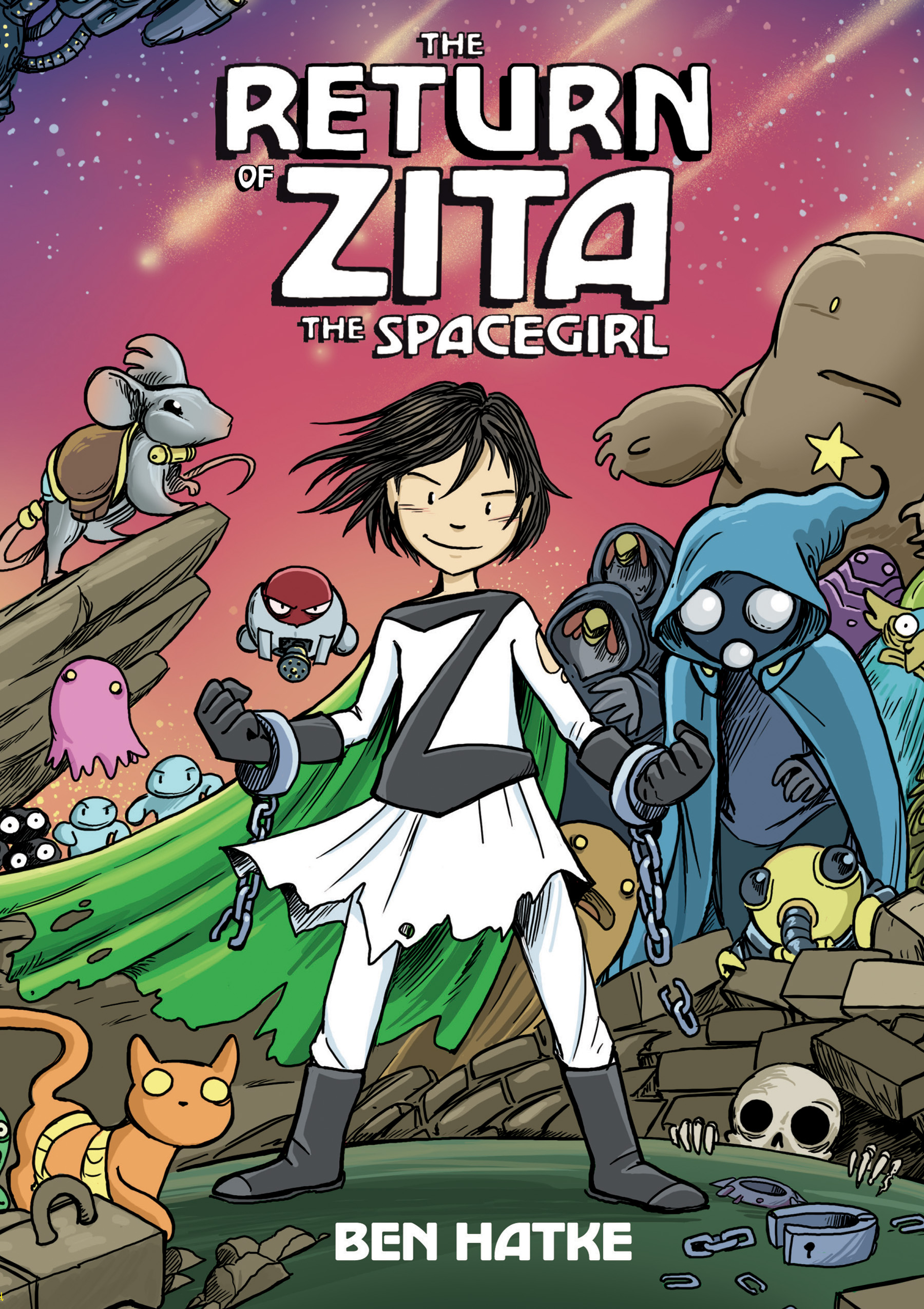
Great sagas come to an end – maybe. But we’ll get to that. For anyone who hasn’t heard of Ben Hatke’s Zita the Spacegirl, I urge you to get to a library, a bookstore, or a friend with an enviable graphic novel collection and check her out, because she is fantastic. I first met her when Chuck, our editor monkey, handed me a copy of the first book and said, “You have to read this. It’s all you.” And it was. I quickly read Legends of Zita the Spacegirl, and was delighted when a review copy of Return of Zita the Spacegirl showed up on my doorstep a couple of weeks ago.
Tag: friendship
Minerva Mint: The Order of the Owls
Minerva Mint: The Order of the Owls, by Elisa Puricelli Guerra/illus. by Gabo Leon Bernstein, Capstone Young Readers Group (2014), $9.95, ISBN: 9781623700386
Recommended for ages 8-10
Minerva Mint: The Order of the Owls is the first book in a new middle-grade series about an eccentric young girl named Minerva Mint, her two friends, Thomasina Crowley and Ravi Kapoor, and the mysteries that the group solves together; the most important being to find Minerva’s parents.
Minerva was found, as an infant, in a bag in Victoria Station. She lives in Lizard Manor -a large, ramshackle mansion that has seen better days – with Mrs. Flopps, the station custodian who discovered Minerva. Minerva meets Ravi and Thomasina, and the three become fast friends. Thomasina shares Minerva’s adventurous spirit and Ravi, a bit more level-headed and fearful, comes along for the ride at first because of his crush on Thomasina. He grows into himself during the group’s first adventures, but I’m pretty sure we’ll still see him as the voice of reason in the group.
This first book establishes the characters and the underlying mystery that will permeate the series – who are Minerva’s parents, and why did they leave her as an infant? There are some clues in the bag Minerva was found in, and she tries to put the pieces together. Thomasina and Ravi are sworn to help her, but Minerva is no damsel in distress; she can handle after years of fending off various long lost “parents” who come to the home in search of the valuable real estate and imagined riches in Lizard Manor.
The story is fast-paced and light, perfect for a middle-grade read about friendship with some mystery thrown in. Minerva is a quirky, fun character that will appeal to girls who want to step outside the “girly” model. Thomasina – pretty, blonde, wealthy Thomasina – is an adventurous spirit and a friendly, outgoing girl, which is a relief if you’re tired of the seemingly obligatory mean girls popping up as dramatic foils. Ravi is a shy, fearful boy who allows himself to be drawn out by the two girls. The group’s valued friendship sends a good message to younger readers about sticking together.
Gabo Leon Bernstein’s black and white illustrations are adorable and add to the story, giving us characters to bond with and creepy, fun landscapes. His illustrations advance the plot and fire up the imagination.
I look forward to more Minerva Mint books, and luckily, there are a two in progress: Merlin’s Island and The Legend of Black Bart. The publishers website offers extras, including character profiles, a book trailer, and downloadable clues sheet and a secret club contract that readers can use for their own secret societies!
Daniel Stefanski Teaches Us How to Talk to An Autistic Kid
How to Talk to an Autistic Kid, by Daniel Stefanski/illustrated by Hazel Mitchell. Free Spirit Publishing (2011), $12.99, ISBN: 978-1575423654
Recommended for 8+
Daniel Stefanski, an autistic teen, wrote this book to teach other kids (and adults!) about autism from a more personal point of view. There are many guides and books out on the market, but Daniel’s personal approach and point of view, combined with Hazel Mitchell’s friendly, two-toned digital illustrations, make a greater impact. He isn’t using clinical speech and medical language, nor is he a parent taking sides in a debate. He’s a kid who wants other kids to understand him, befriend him, like him, and understand, befriend, and like other kids with autism. He explains behaviors that other kids may not understand, like flapping or humming, for instance; he discusses issues including eye contact, personal space, and most importantly, how other kids can reach out to and connect with autistic kids in their lives.
This book is only 48 pages, and can be quickly and easily read, but the information is invaluable in teaching children and adults to see things from another person’s point of view. As Stefanski himself says, “Even though my brain is different, I’m still a kid. I like to have fun and I want to have friends.” This is a book that needs to be available not only in public libraries, but in school and classroom libraries, where it is easily accessible and kids are actively encouraged to read it.
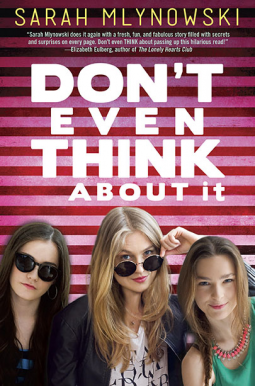
Don’t Even Think About It – Talk About Your Strange Side Effects!
Don’t Even Think About It, by Sarah Mlynowski, Random House Children’s (2014), 9780385737388, $17.99
I was lucky enough to be chosen by Random House to review an advanced copy of this book, by Sarah Mlynowski, who I fondly remember from her Red Dress Ink chick lit days. I thoroughly enjoyed her book Milkrun, so I was excited to see that she was writing YA. The plot is certainly different: a group of New York teens, attending Bloomberg Public High school down in Tribeca, develop ESP after receiving a tainted batch of flu shot at school.
Ms. Mlynowski has her ensemble cast: Cooper and Mackenzie the young lovers, one of whom has a secret; Pi, the overachiver; Olivia, the shy girl; BJ, the pervert; Tess, the one with the unrequited love for her best friend – these personalities and more are all here, which gives a feeling of familiarity to those reading the book. You know these kids – we’ve been these kids, in many cases. The characters aren’t soul-searching, and don’t require that depth of character for this quick read. It’s a situational piece of fiction.
What interested me was not the superficial teens, because they mostly are – even “the brain”, Pi, who uses her powers to try and get ahead of the number one student in the school so she can get the vaunted Harvard acceptance letter – it was how they dealt, on their own levels, with their newfound abilities. They didn’t take to Twitter, Instagram, or Facebook to discuss it with the world. They kept it quiet. They didn’t want anyone to know, because they live in a day and age where they know they’d be poked and prodded like test animals, or even worse, have their ability – something to give them an edge, to make them special – taken away from them. At the same time, Mlynowski creates an interesting portrait of what these abilities do to their bearers. It’s not always predictable, and it was enjoyable to see things play out.
The book is suggested for 16 and over for some language and situations. For a quick, light read between tests and papers, Don’t Even Think About It will fit nicely in your backpack.
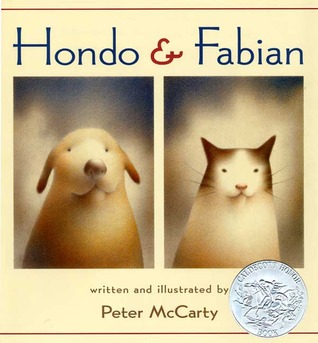
In Which I Explore an An Animated Book: Hondro & Fabian
Hondo & Fabian. Written and Illustrated by Peter McCarty. 6 minutes. DVD. Weston Woods. 2006. $ 59.95 ISBN 0-439-84909-8
Suggested for ages 3-6
When I saw the animated books at my local library, I have to admit I wasn’t sure what to expect. Was I just going to be staring at a static series of pictures with a voiceover laid over the whole business? I decided to give it a shot with Peter McCarty’s Caldecott Honored-story, Hondo & Fabian. I am very happy to say I was delighted by what I watched.
Hondo & Fabian is the 2003 Caldecott Award-winning story of Hondo & Fabian, a dog and cat who live in the same household and have very different experiences one day, when one goes to the beach and one stays home with the family baby. Who has the better day?
Weston Woods produced this animated version of the book for schools and libraries, and author Peter McCarty’s soft, grey pencil on watercolor paper illustrations come to life as narrator Jeff Brooks tells the tale of the two friends who spend their day in two different ways. The illustrations are animated, allowing viewers to see Hondo’s ears blowing in the breeze as he hangs out a window, and Fabian putting his claws to work, shredding toilet paper. The story is brief, and Joel Goodman and David Bramfitt’s music adds to the beauty of the artwork, bringing with it a relaxing feeling as the story’s events unfold. Readers will enjoy viewing this story about pet friends; the option to use English subtitles will allow for new readers to read along with the narration. A study guide comes with the DVD that provides pre- and post-viewing activity ideas that can be incorporated into a storytime session, such as a discussion about pets and which animals are pets versus which are not.
This would be an interesting addition to a pet-related storytime. The DVD could break up the routine of a traditional read-aloud and attract renewed attention from attendees. The Perry Public Library’s Parade of Pets storytime theme has pet-related songs and fingerplays, and having a sing-along to an animal song-related CD, like Raffi’s Animal Songs, would make for an interactive and fun time.
The Hondo & Fabian animated book has received numerous accolades, including designation as an ALA Notable Video; Honorable Mention from the Columbus International Film & Video Festival; and was an Official Selection at the Kids First Film Festival.
The Hondo & Fabian series of books by Peter McCarty also includes Fabian Escapes.
Retro Review: Nick Jr’s Oswald’s A Nice Quiet Picnic/The Big Parade
Oswald (A Nice Quiet Picnic/The Big Parade). Directed by Ken Kessel. NickJr, 24 minutes. HIT Entertainment PLC, Nicktoons Productions. 2001
Toddlers and Preschoolers will love the early 2000’s cartoon, Oswald, based on the series of books by Dan Yaccarino. The show ran on Nicktoons from 2001-2003; parents can still find the show on the NickJr channel. Yaccarino served as producer on the show, assuring that the look and feel of the books carried over. Each episode runs approximately 24 minutes and contains two episodes that run about 12 minutes each.
The show follows the adventures of Oswald, an octopus, and his friends in the city of Big. Each episode contains the same characters: Oswald (voiced by Fred Savage), his dachshund, Weenie, who looks like an actual hot dog (voiced by Debi Derryberry), and his friend, Henry, a penguin (voiced by David L. Lander) appear in every episode. Other friends show up from time to time. In the episode A Nice Quiet Picnic, Oswald, Henry and Weenie go on a picnic; as more friends show up, the group tries to figure out how to feed everyone when there are only three sandwiches. The episode highlights the value of sharing, as Oswald continues to invite friends to the picnic as he encounters them in the park, despite Henry’s protests that there is not enough food to feed everyone; it also focuses on teamwork, as the group of friends comes together to feed everyone at the picnic. There are repetitive phrases and counting exercises throughout for toddler and preschool audiences, and simple songs round out the episode.
In The Big Parade, Oswald hears parade music from his window and is excited, believing that a parade is coming to town. He and Weenie fetch Henry and their friend, Daisy (voiced by Crystal Scales) – an actual Daisy flower – and find a spot to wait for the parade to pass, talking excitedly about their favorite parade performers; in particular, the acrobats, the jugglers, and the Grand Marshall. When they learn that there is no parade, and that the music was coming from a friend’s radio, they decide to make their own parade, each character assuming their favorite role. As with A Nice Quiet Picnic, there is a great deal of repetition, this time, reinforcing the roles of the parade performers. The episode teaches children to deal with disappointment, as the group does when they realize that there is no parade – they turn a letdown into a positive situation.
The artwork is the same as the artwork from the Oswald book series, with bright, vibrant color against a calm backdrop of City. The skies are blue, the grass is a calming green, and even Oswald’s apartment building is an inviting backdrop of light color, all assuring that the main characters will stand out. The characters speak calmly, in quiet, soothing voices.
The series is not very interactive, but it does provide good storytelling with characters that may be known to young audiences; it also serves, for those audiences that are unfamiliar with Oswald, as a bridge to reading the books. It may be a fun idea to have an Oswald day where audiences can view a two-story episode and talk about the themes of teamwork and what to do when you feel sad. Have Oswald books available and on display for parents and children to read and take out after the read-aloud. There are Oswald board books available for younger audiences. The Oswald mini-site on the NickJr. webpage offers printables that attendees could color.
NickToons and the now-defunct Noggin network also ran episodes of Maurice Sendak’s series, Little Bear and Bil Cosby’s Little Bill; these shows were based on series of books and could also be of interest to younger viewers and readers.
The Oswald series of books by Dan Yaccarino includes early readers, board books, and 8×8 books. Titles include Oswald’s Camping Trip; Counting with Oswald; Colors with Oswald and Henry’s First Haircut.
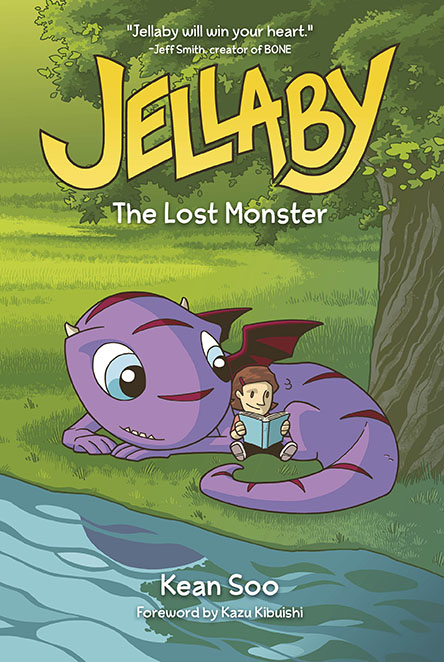
Jellaby: The Lost Monster – a story of friendship, in graphic form, from Kean Soo and Capstone
Capstone is bringing Kean Soon’s Jellaby back to print, and I couldn’t be happier. I came across the book on NetGalley, and am so happy that Capstone gave me the chance to read it. Jellaby: The Lost Monster is the first volume in the Jellaby series. The all-ages story about friendship also tackles some big issues within a safe space for kids.
Read the rest of my review over at WhatchaReading!
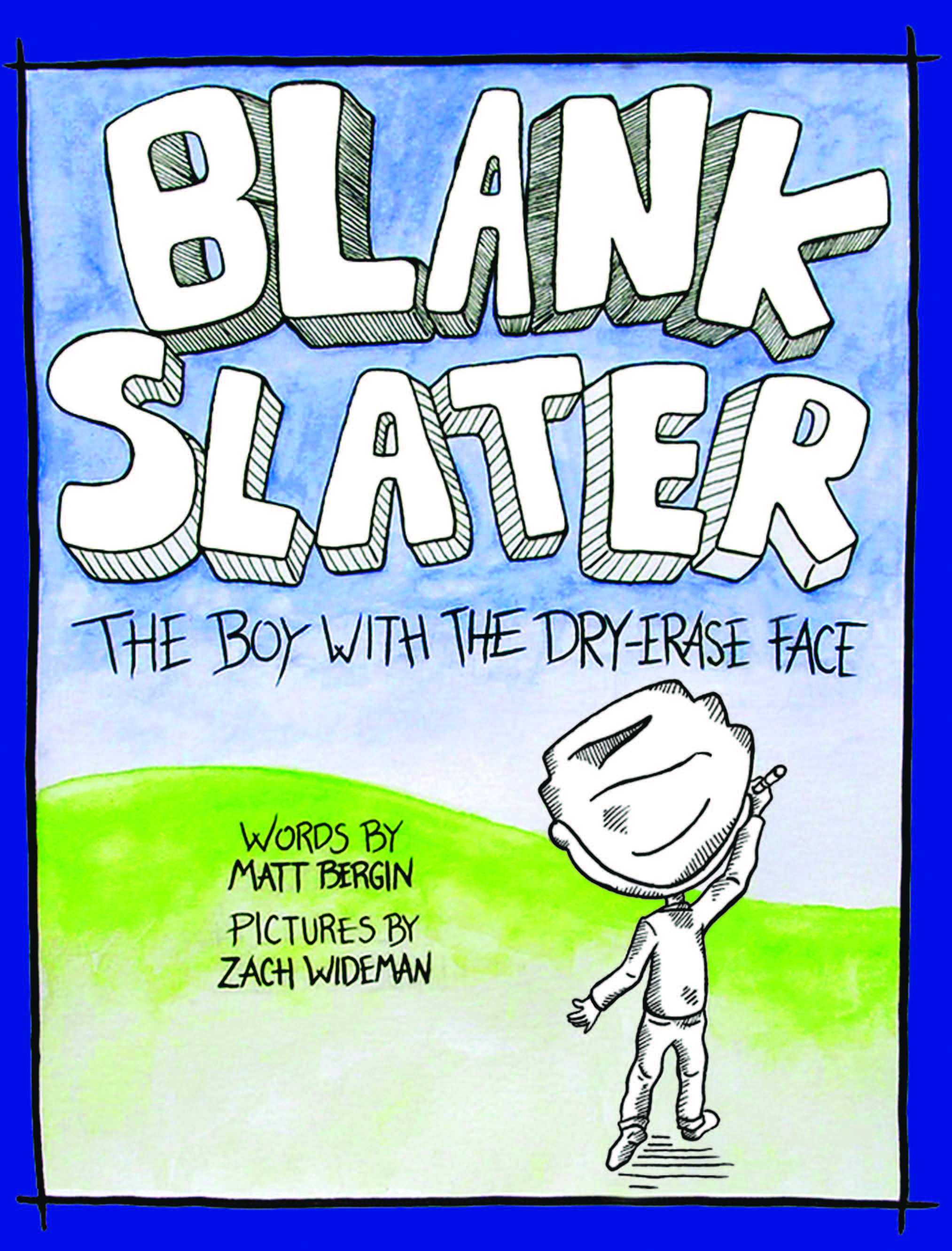
Blank Slater, the Boy with the Dry-Erase Face – a WhatchaReading Review!
You may or may not know this, but I review comics and graphic novels for the comics and comic culture site, WhatchaReading. Recently, Chuck over at WhatchaReading gave me the opportunity to review Blank Slater: The Boy with the Dry-Erase Face, written by Matt Bergin and illustrated by Zach Wideman. I was so impressed by this book, which provides a creative way to teach kids about self-esteem, emotions and feelings, and discovering who they are.
When this book hit WhatchaReading’s inbox, I got a chuckle out of the cute cover and figured I’d give it a shot – sounds like it could be fun, a kid with a Dry-Erase face, right? Draw silly faces and stuff? And then I dug in, and realized that there is so much more to this story than that.
Blank Slater is a kid born with a Dry-Erase face. He’s a blank slate (see what they did there?), and he goes through life pretty miserable – wouldn’t you? – until the day where he wanders away and discovers someone just like him! Nada Trace is a girl with a Dry-Erase face, but she isn’t wallowing at all – she grabbed some markers, pencil, and glitter, and made a face of her own! She helps Blank try on different faces, but nothing fits quite right until one day, Blank discovers his own face – and more important, a friend.
For the rest of the review, head on over to WhatchaReading!
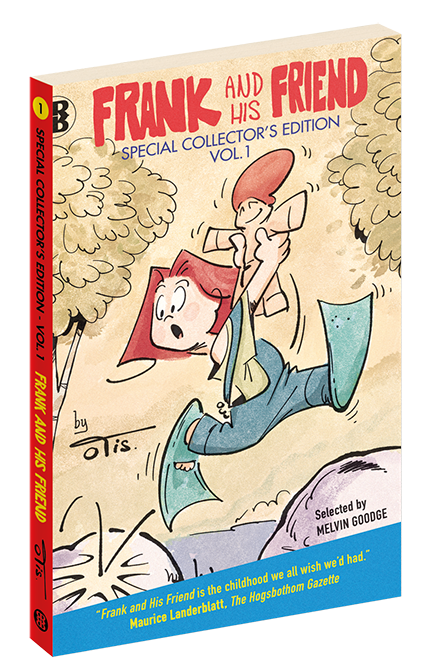
Frank and His Friend: A Pre-Calvin and Hobbes Cartoon About Friendship
Book Review: Frank and His Friend: Special Collector’s Edition, by Clarence “Otis” Dooley (Curio & Co, 2013)
Recommended for ages 8+
I’m trying something new and fun with this blog, and creating more interesting (I hope!) titles for the reviews. I’ll still note the book title and bibliographic info at the top, as you see above, but I’m hoping that the review titles give you a little more information to draw eyes to the reviews and the great books I write about here.
This time around, I’ve read a trade paperback of a 1970s-era serial comic strip, Frank and His Friend. The premise will remind readers of Calvin and Hobbes, a favorite of mine: a young boy and his stuffed toy, Frank, go on adventures and experience life through a child’s eyes. While Frank doesn’t speak, as Hobbes does, readers will still get some pretty serious life advice from his pairing with his “friend” as they spend time in nature, playing, embracing chocolate chip cookies and avoiding broccoli.
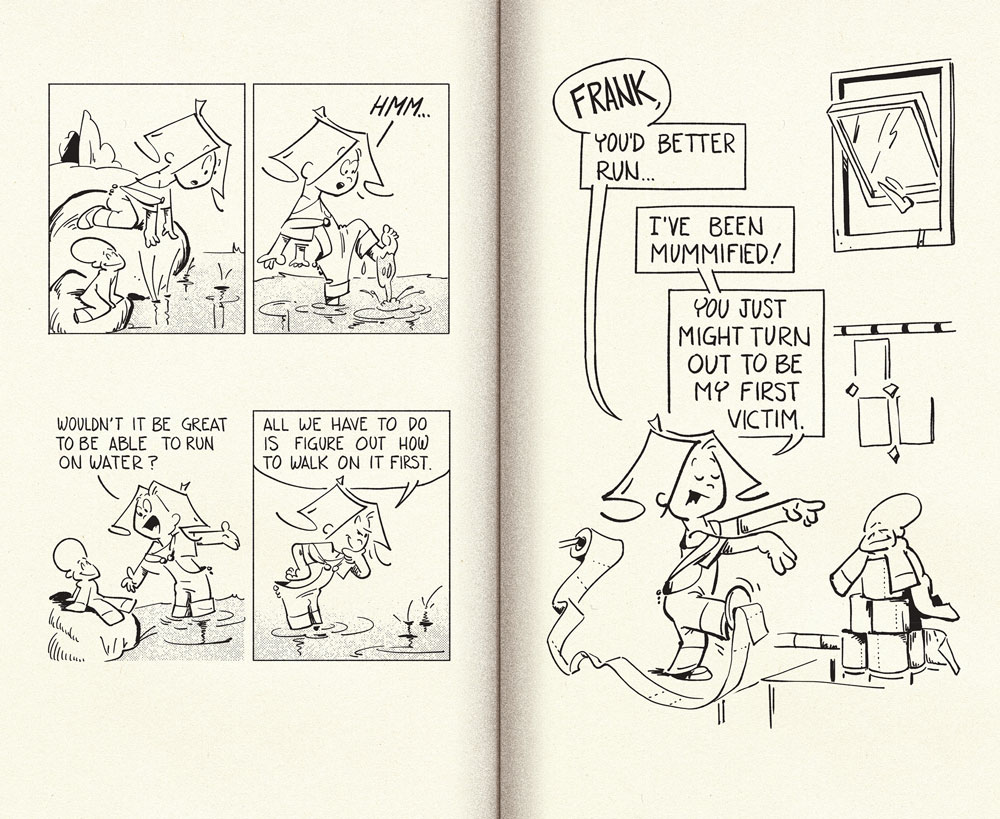
The black and white artwork is simple and elegant, and gets the point of each short story across. There are a mix of panels and full pages in the book, and adults and kids alike will enjoy Frank and His Friend’s stories, which encourages readers to use their imaginations. One on page, the boy clings tightly to Frank with one hand, a balloon clutched in the other, and says, “Hang on tight. You don’t want to get lost in the ether of space.”
The stories invoke some thoughtful moments. When fighting their advancing enemy who suddenly becomes invisible, the boy looks at Frank and sighs, “Typical Monday.” The boy tries on a pair of eyeglasses, presumably belonging to a parent, and declares that he’d “rather look at the world through my own eyes.”
The book is a good idea to give to kids who are surrounded by the chaos of electronics, school, and extracurricular moments, to introduce them to the quiet, peaceful moments of childhood. And adults will enjoy returning to that peaceful time.
Frank and His Friend: Special Collector’s Edition
Writer and Artist: Clarence “Otis” Dooley
Price: $19.95
Pages: 128
Pub Date: December 11, 2013
ISBN: 9783950296631
Diamond Order Code: OCT131033
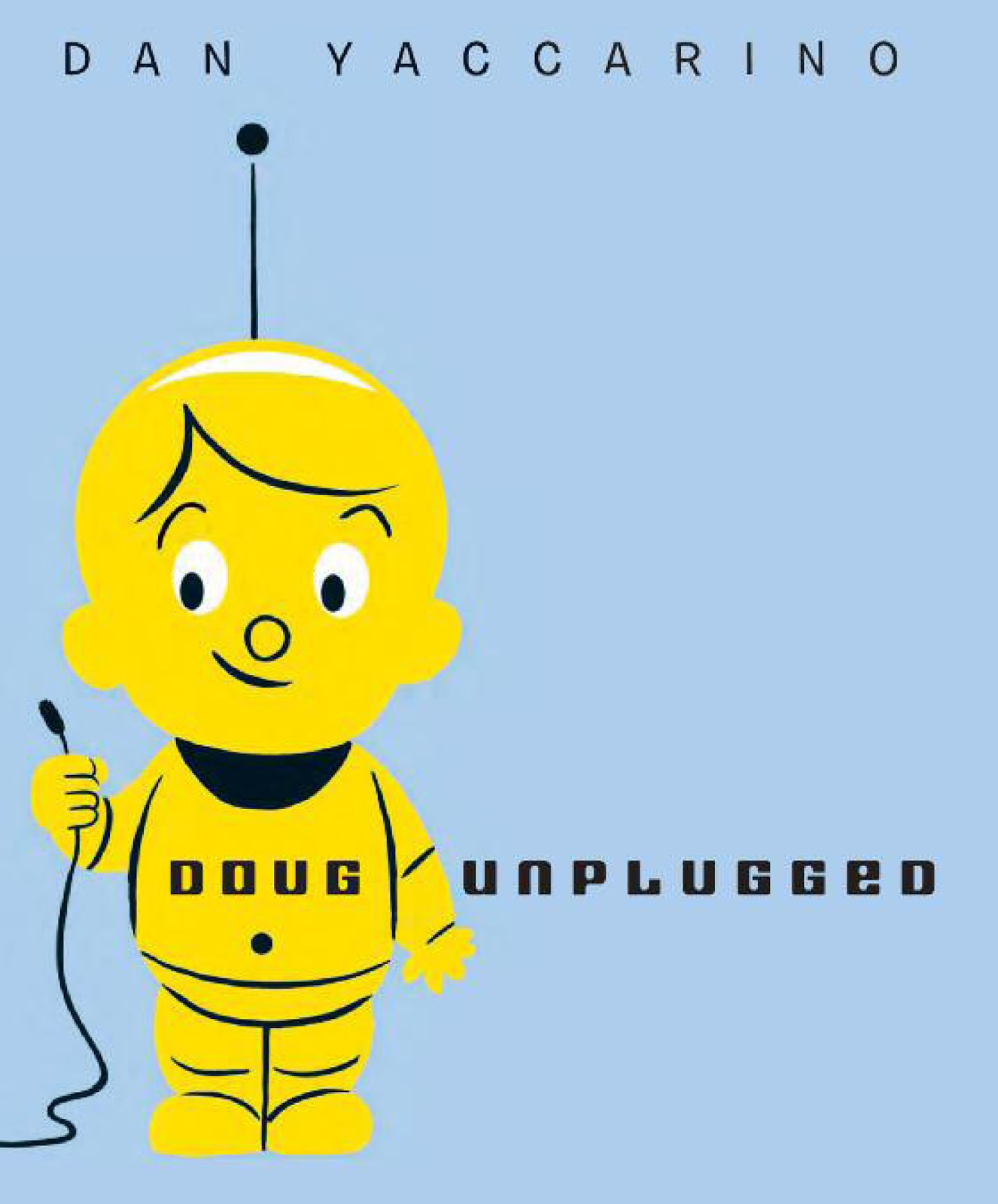
Book Review: Doug Unplugged, by Dan Yaccarino (Knopf, 2013)
Recommended for ages 4-8
This fun, retro story by Dan Yaccarino tells the story of a little robot boy who decides to “unplug” one day and explore the world. Little Doug is a robot boy whose parents plug him in every day so that he can learn while they head to work. One day, while learning about the city, Doug spies a pigeon at his window, and he’s fascinated. He unplugs himself and heads off on a day of exploration where he rides the train, scales a skyscraper, and makes a friend. After reuniting his friend with his parents, Doug decides to head home and tell his parents about his exciting day.
The story is sweet and packs a powerful message in our highly technological society. When most of our kids spend their days behind their iPads and computer screens, this simple message – unplug and learn by getting outside and doing – is a welcome sigh of relief. Packed with Yaccarino’s fun, adorable retro-futuristic artwork, Doug is a little boy on a big adventure that kids will enjoy living through vicariously. He may be a robot, but he’s easily distracted – there are many kids who can relate to the excitement of a pigeon landing on the windowsill at school or while doing homework at home. He spends a day exploring the city, yet manages to find a friend, and knows that he must go home at the end of the day. The art consists primarily of blues, greens and yellows, with other colors showing up to punch up the landscape. I read the digital version of this book, but encourage adult readers to use the physical storybook, which has smaller black font (it’s a great read-aloud book), usually at the bottom of the page or individual pictures so as not to detract from the artwork. There are whole spreads and chunked panels throughout the book, giving a fully-fleshed-out feeling to this story.
This would be a fun addition to a storytime on robots and would provide a more human perspective on a robot read-aloud. There are many robot printables and crafts online, and the author’s website offers information about his books, blog, social media, and speaking engagements.