Posted in Fantasy, Fiction, Fiction, Graphic Novels, Intermediate, Middle Grade, Teen, Tween Reads, Young Adult/New Adult

October graphic novels have something for everyone!

There are some solid graphic novels hitting shelves in October: LGBTQ+ positive stories and a dystopian adventure for tweens and teens, and for tweens and teens, Art Baltazar’s adorable artwork for kids are just a few of the books you can look forward to. Let’s dive in!
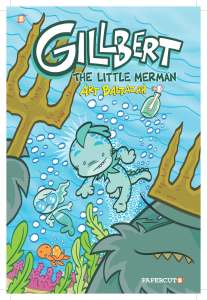
 

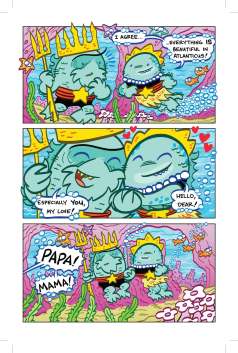
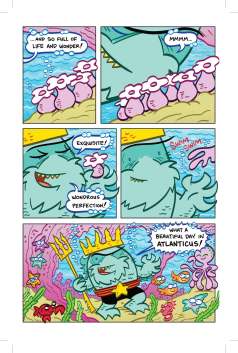
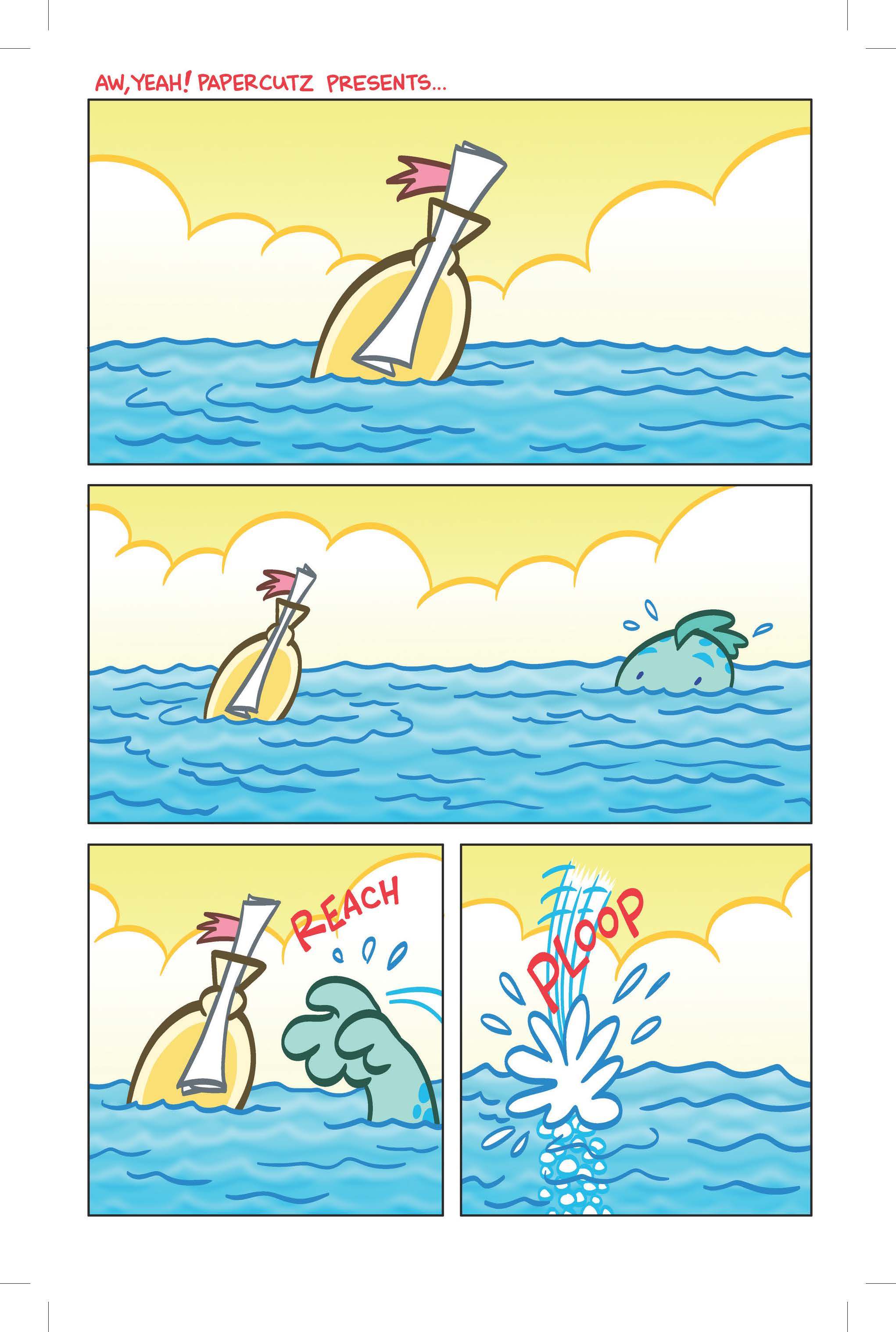
Gillbert, Vol. 1: The Little Merman, by Art Baltazar, (Oct. 2018, Papercutz), $14.99, ISBN: 9781545801451

Ages 6-10

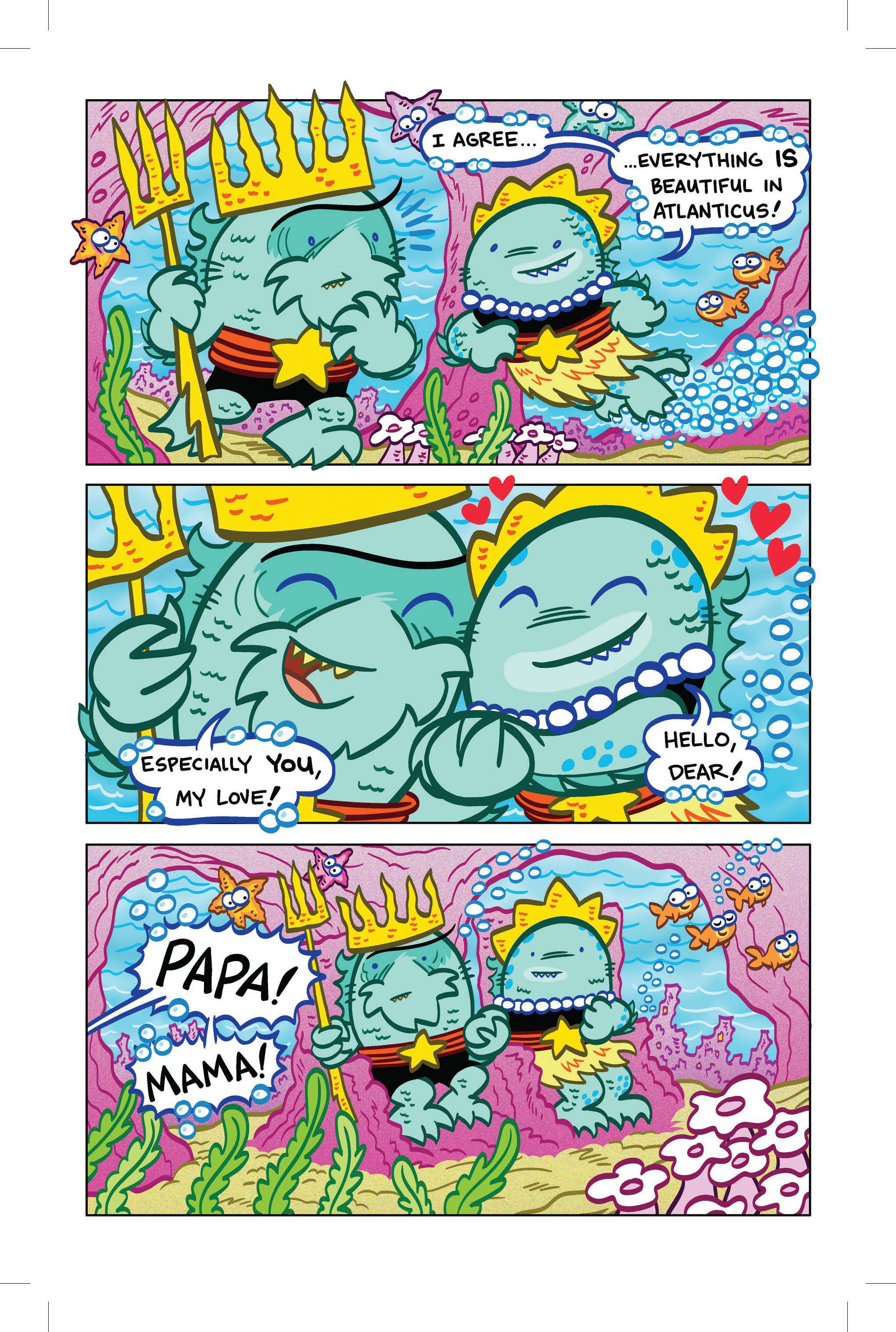
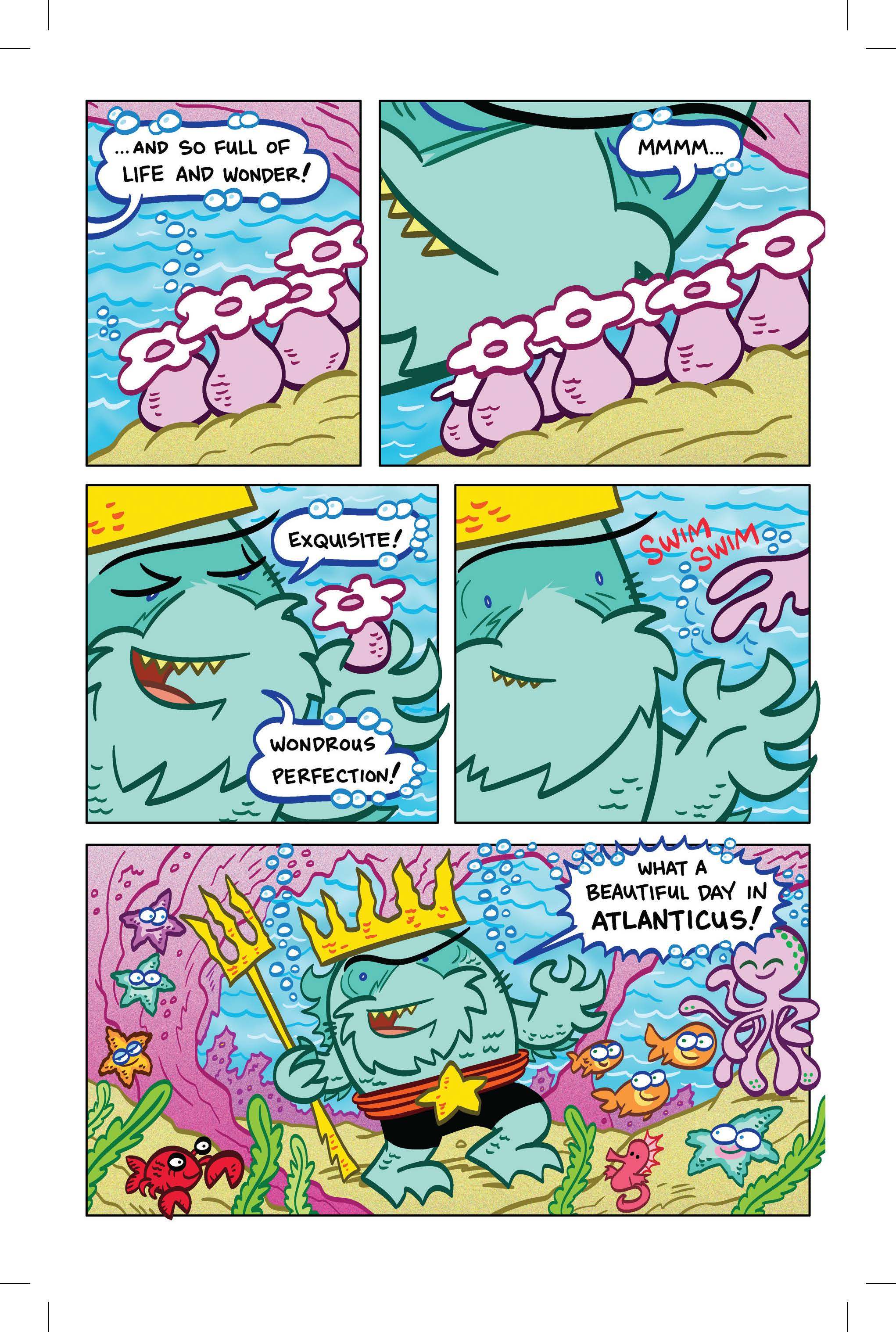
If you have readers who get a kick out of Joey Weiser’s Mermin books, they’ll love Art Baltazar’s Gillbert: The Little Merman! He’s the son of King Nauticus and the prince of Atlanticus, and he’s surrounded by cool friends, like his turtle buddy, Sherbert, and his starfish buddy, Albert. One day, he meets playful mermaid named Anne Phibian, who takes him to a rocking party at WeWillRockTropolis. Meanwhile, aliens invade Earth, but quick action by Queen Niadora and her alien friend, Teeq, save the day.

Art Baltazar creates art that kids love: Tiny Titans; Grimmiss Island; DC Super Pets, and countless more comics have his signature bold, bright artwork and zest for zany adventure. He’s got kid-friendly artwork, storylines, and humor that kids eat up. When my library kids are too young for the DC comics on “the other side of the library” (the teen collection), but still want superheroes, I give them Art Baltazar’s books, and they’re thrilled.

Gillbert’s first outing looks like it’s the start to a fun new under-the-sea series. Papercutz won’t steer you wrong; add this one to your graphic novel shelves.

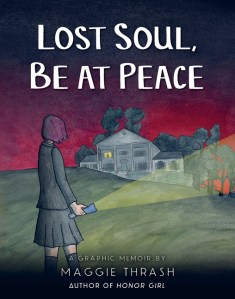
Lost Soul, Be at Peace, by Maggie Thrash, (Oct. 2018, Candlewick), $18.99, ISBN: 9780763694197

Ages 13+

Acclaimed Honor Girl author Maggie Thrash’s latest book is a continuing memoir with a touch of fiction. A year and a half after the events of Honor Girl, Maggie is spiraling into a deep depression. She’s failing 11th grade; her stuffy, image-consumed mother is baffled, and her workaholic father, a federal judge, pays no attention to her. The only thing Maggie cares about is her cat, Tommi, who seemingly disappears in her rambling home. While searching for Tommi, Maggie discovers a ghost named Tommy, who leads her to peel back layers of her father’s life and see him through new eyes.

Maggie Thrash beautifully captures the tedium and angst of adolescence and the hopelessness of depression. The feeling of shouting into the void is poignantly captured when she opens up about coming out… and being ignored, regardless. She maintains a bitter sense of humor through her journey, making her likeable and relatable, and her watercolor artwork intensifies the feeling of being not-quite-there.

Lost Soul, Be at Peace is a beautifully thoughtful graphic memoir and a must-add to upper middle school and YA collections. Download an author note (also included in the back matter) and Maggie Thrash’s Top 10 Songs for Lost Souls playlist here; view a sample chapter here. Lost Soul, Be at Peace has starred reviews from School Library Journal and Kirkus.


Last Pick, by Jason Walz, (Oct. 2018, First Second), $17.99, ISBN: 9781626728912

Ages 10+

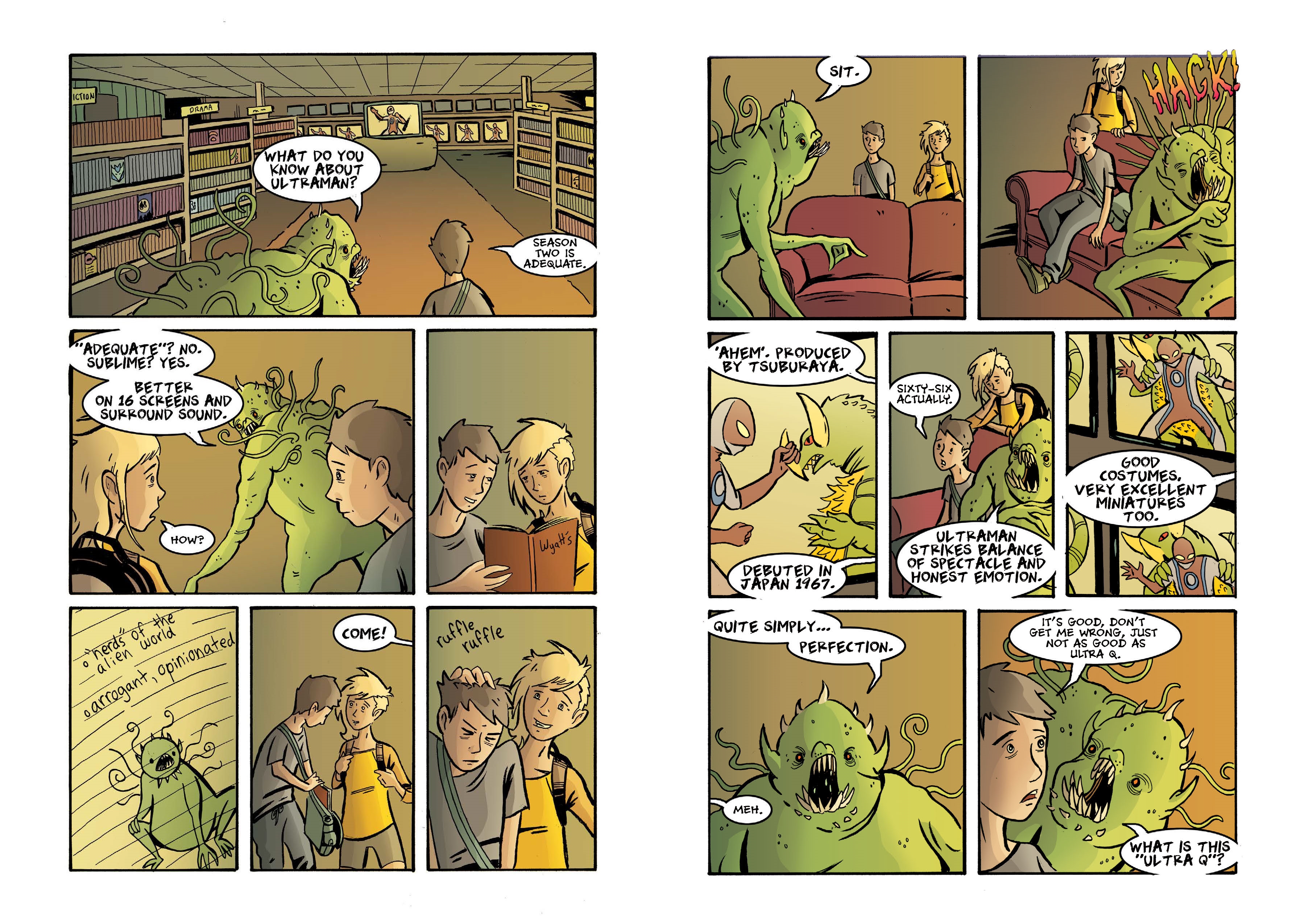
Last Pick is the first in a new dystopian trilogy. Three years ago, aliens invaded earth, taking everyone between the ages of 16 and 65: everyone they deemed “useful”. The survivors left behind live under cruel rule. Too young, too old, too disabled, they’re seen as worthless, receiving slim food rations and living under constant threat. But Sam and Wyatt, a twin brother and sister, are about to change all that. Sam’s the rebel, distributing food and fomenting revolution; Wyatt, her special needs brother, is the brains of the operation: he’s cataloging the aliens, and knows how to work with their technology. They start disrupting the aliens’ plans and making themselves a general nuisance until the aliens decide they’re too much of a threat, right on the eve of their 16th birthday.

Last Pick is SO GOOD. I tore through this one during a lunch hour; it’s compulsive reading with a tight storyline and characters you want to root for. Aliens appear to be enthralled with earth culture and are played in part as comic relief, from the overlord who seems to be influenced by American Westerns, affecting a cowboy-type flavor of speech, to the gooey creature that shares a love of Ultraman with Wyatt. There’s some intrigue going on among the aliens, too; I’m looking forward to learning more in the next installment. Sam and Wyatt are a solid sister-brother unit; Wyatt’s special needs appear to place him on the autism spectrum, and Sam acts as his partner and protector. An underground radio broadcaster, a Latinx who refers to herself as La Sonida, offers moments of retrospection and I hope we get more of her, too.

Adventure, science fiction, and dystopian fans are going to love this. If you have readers who love Spill Zone and Mighty Jack, hand them this one. Last Pick has a starred review from Kirkus.


On a Sunbeam, by Tillie Walden, (Oct. 2018, First Second), $21.99, ISBN: 9781250178138

Ages 14+

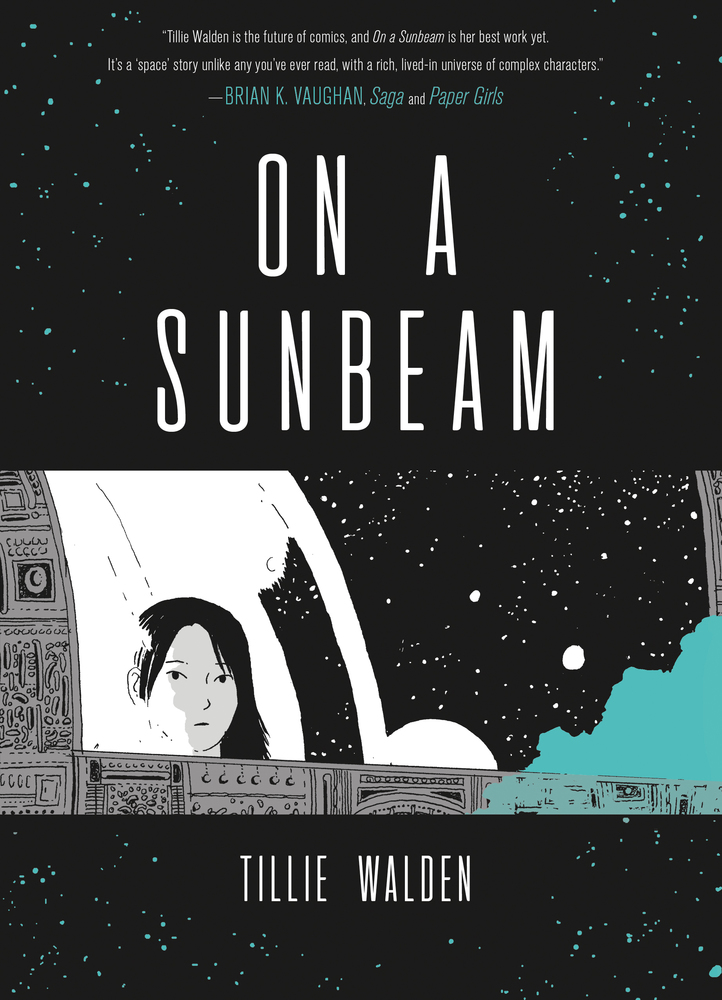
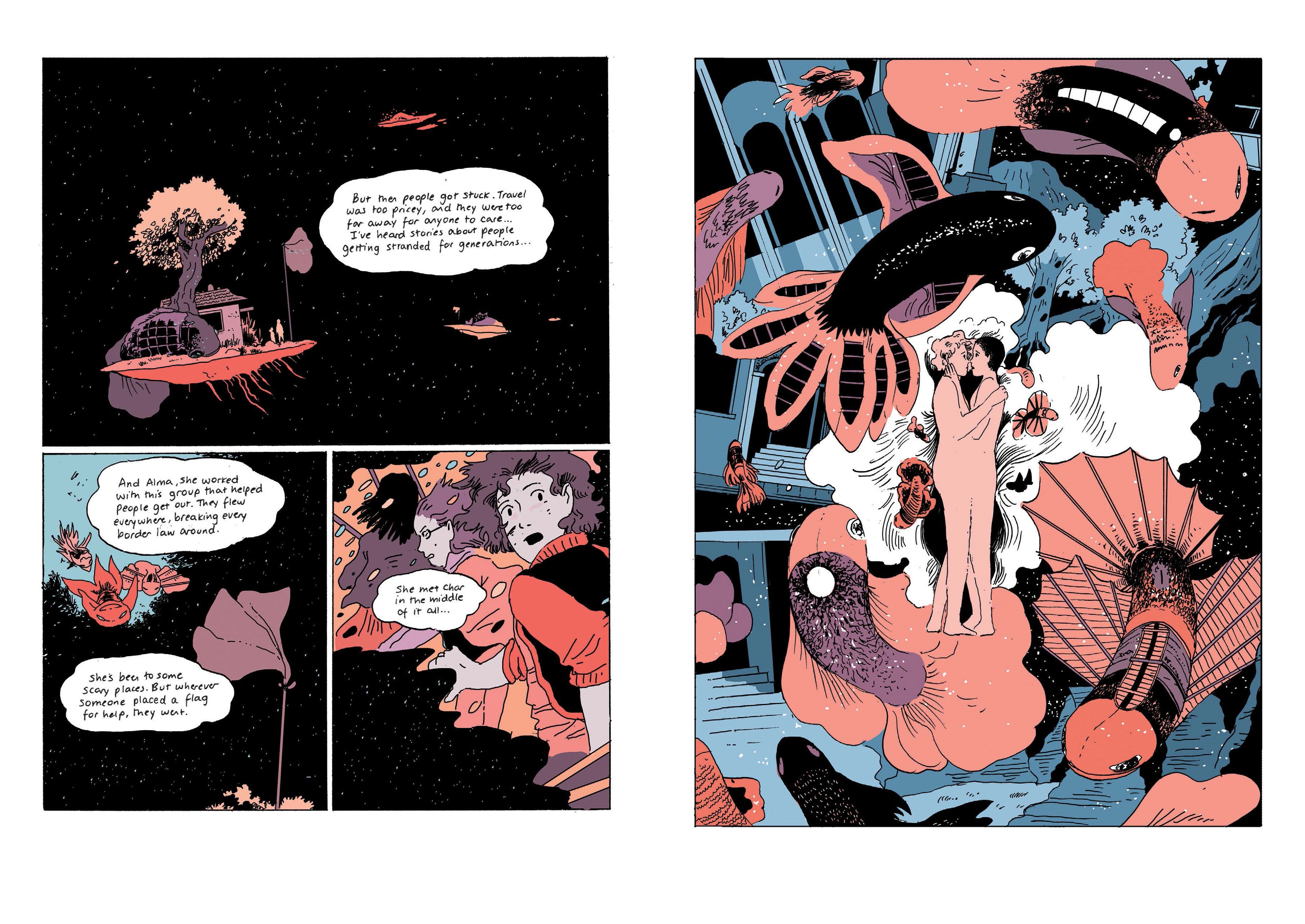
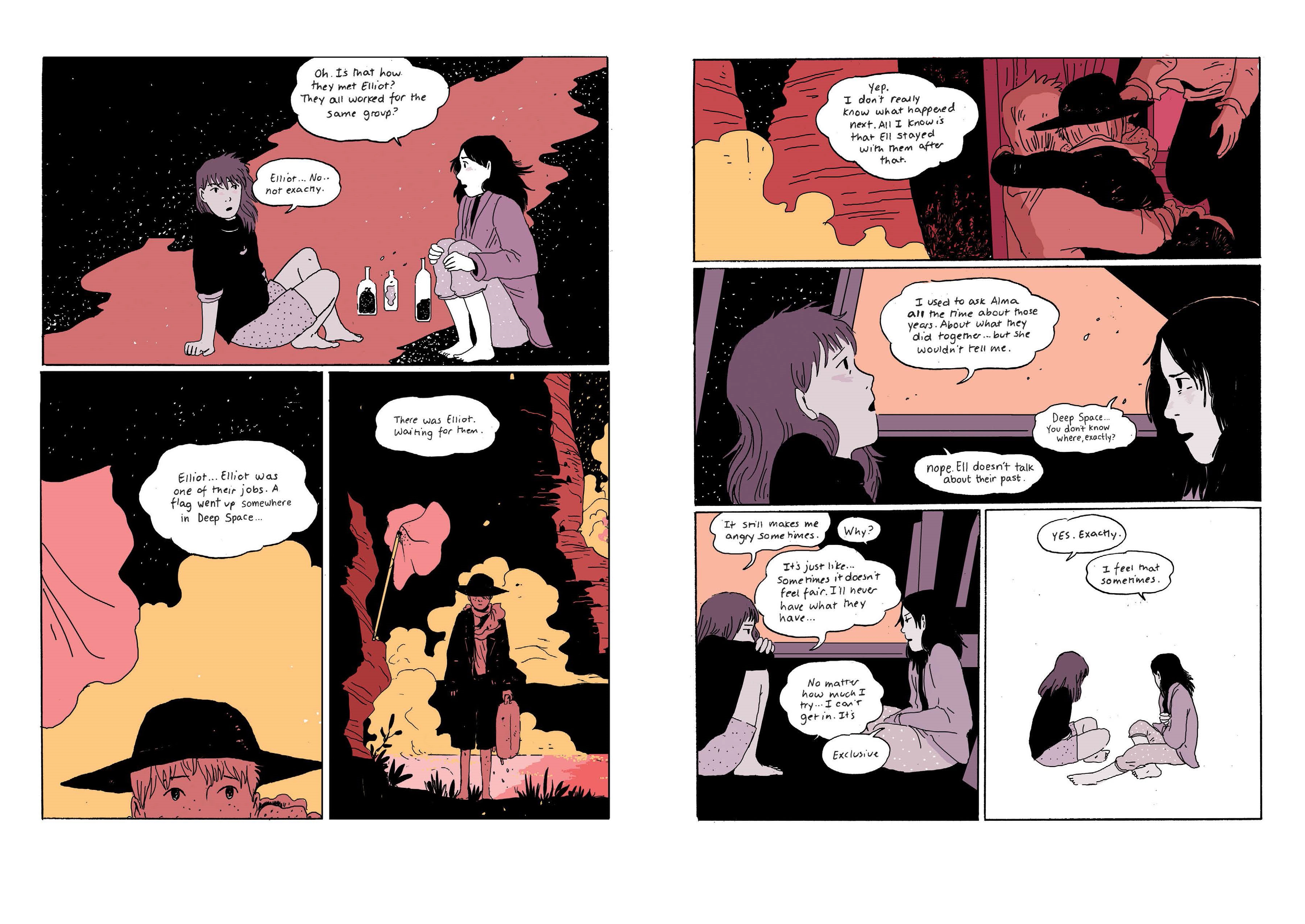
Eisner Award winner Tillie Walden’s On a Sunbeam collects all the installments of her webcomic. It’s a science fiction adventure in a universe that embraces all relationships. Mia is a young woman on a reconstruction crew that travels through space, restoring buildings and structures. The narrative shifts between the present and Mia’s past, where she fell in love at boarding school with a girl named Grace; a girl who was taken away by her family before Mia could say goodbye. Mia learns more about her crewmates and their own stories as they travel through space, ultimately creating a family of their own.

The cast is incredibly, wonderfully, diverse. There’s Char, the co-captain; she’s an African American woman who shares captain duties with her Caucasian wife, Alma: “Char may have the degrees, but Alma knows how to yell”, according to one character, Jules. Jules should know: she’s Alma’s niece, taken in when her mother – Alma’s sister – died. Jules seems to be the youngest member of the crew; she’s most likely a teen, loves playing games, and is the happy optimist of the crew. Ell/Elliot is a Caucasian nonbinary person who prefers they/them/their pronouns – and the crew vociferously defends their right to those pronouns, as Ell is nonverbal. Grace, Mia’s lost love, is African American.

As the narrative shifts between Mia’s past and present, we see Mia and Grace’s relationship develop, right up until Grace’s departure from the school. The color palette shifts with the narrative: cooler colors like blues and purples dominate the flashbacks, while warmer colors creep during the present day. Mia is the central character, but every character in this novel has a story to tell. This is a book I had to move back and forth with during the first few chapters; not having read the webcomic, I wasn’t altogether sure I was reading a connected story until I got the hang of the shifts, and of Mia’s place in them. Stick with the story: it’s an wonderful work of queer speculative fiction that deserves a spot on your shelves. On a Sunbeam is good for young adult/new adult readers.

Posted in Realistic Fiction, Teen, Young Adult/New Adult

Guest YA Review: Picture Us in the Light, by Kelly Loy Gilbert

My colleague, Amber, is back with another YA review! Enjoy as she talks about Kelly Loy Gilbert’s Picture Us in the Light.

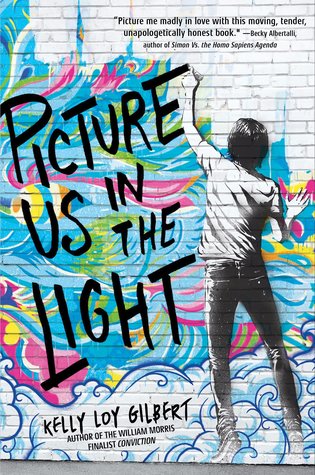
Picture Us in the Light, by Kelly Loy Gilbert,
(April 2018, Disney-Hyperion), $17.99, ISBN: 9781484726020
Ages 13+
I picked up “Picture Us in the Light” as an ARC at PLA last March. The cover popped, and I grabbed. I’m so glad I did. To my delight, just as I finished reading it, the finished copy showed up from central purchasing, all laminated and ready for my teen shelves!
 
The plot: Danny Cheng is the son of immigrant Chinese parents. His best friends, Harry and Regina, are dating. It’s a tad awkward because Danny has a secret crush on Harry. His parents are thrilled because Danny got into a prestigious art school, but Danny hasn’t been able to draw in a year. He’s harboring major guilt over his role in a tragedy that affected his whole friend group.  When Regina asks Danny to draw a portrait for the school paper related to the tragedy, Danny worries that his inability to do so will be seen as insult to those affected most. Then Danny finds a mysterious box of papers in his father’s things and his parents clam up when he asks about it.
It’s Danny’s senior year. He might not see his friends again because his college is across the country. Will he tell Harry he likes him? What about hurting Regina? Can he break his dry spell? What’s with that secret box of his dad’s? Why won’t his parents tell him anything? 
 
Review: This book made me feel so many ways. Kelly Loy Gilbert gets right to the heart of the teen experience. Her bio says she “believes deeply in the power of stories to illuminate a shared humanity and give voice to a complex, broken people.” That is certainly what happens here. While Danny is the center of the story, his parents are the heart. If anything, Danny’s position emphasizes how important he is to them and makes their sacrifices for him hit harder as they are uncovered.  Did they make the right decisions? Did their decisions hurt Danny? You decide. There are plenty of opportunities for debate in this book, which would make it a great choice for book club.  Here is a boy who deeply needs his parents’ open love and support, but because of secrets they are forced to keep from him, their relationship  with him, while loving and devoted, is not supportive in the way he needs.  Danny reflects that closed nature, keeping his own secrets from his parents and his friends. No one has any idea he hasn’t drawn in a year or why.
 
The best thing about “Picture Us in the Light”, in addition to the wonderful characters and how they are all real and recognizable, is the unfolding story. Mystery upon mystery come to light (yes, I did that, omg I just realized that ‘in the light’ here probably refers to the characters’ dawning awareness—look, I never claimed to be sharp about this kind of thing). OK, sorry. Had a moment there. I’m not going to name the mysteries because part of the joy is discovering them. If  you savor mysteries stemming from secrets so deep they can tear a family apart if they’re kept and might do the same if they’re discovered, you’re in for a treat. 
 
Recommended for teens 12 and up. Good for readers who enjoy: Mystery. Coming of age. LGBT. Personal relationships. Teen friendship issues.  Parent/child issues.  Chinese-American and Chinese immigrant experiences. Family secrets.
 
Posted in Fantasy, Fiction, Fiction, Graphic Novels, Intermediate, Middle Grade, Tween Reads

Humans can be such a pain: The Creepy Case Files of Margo Maloo returns!

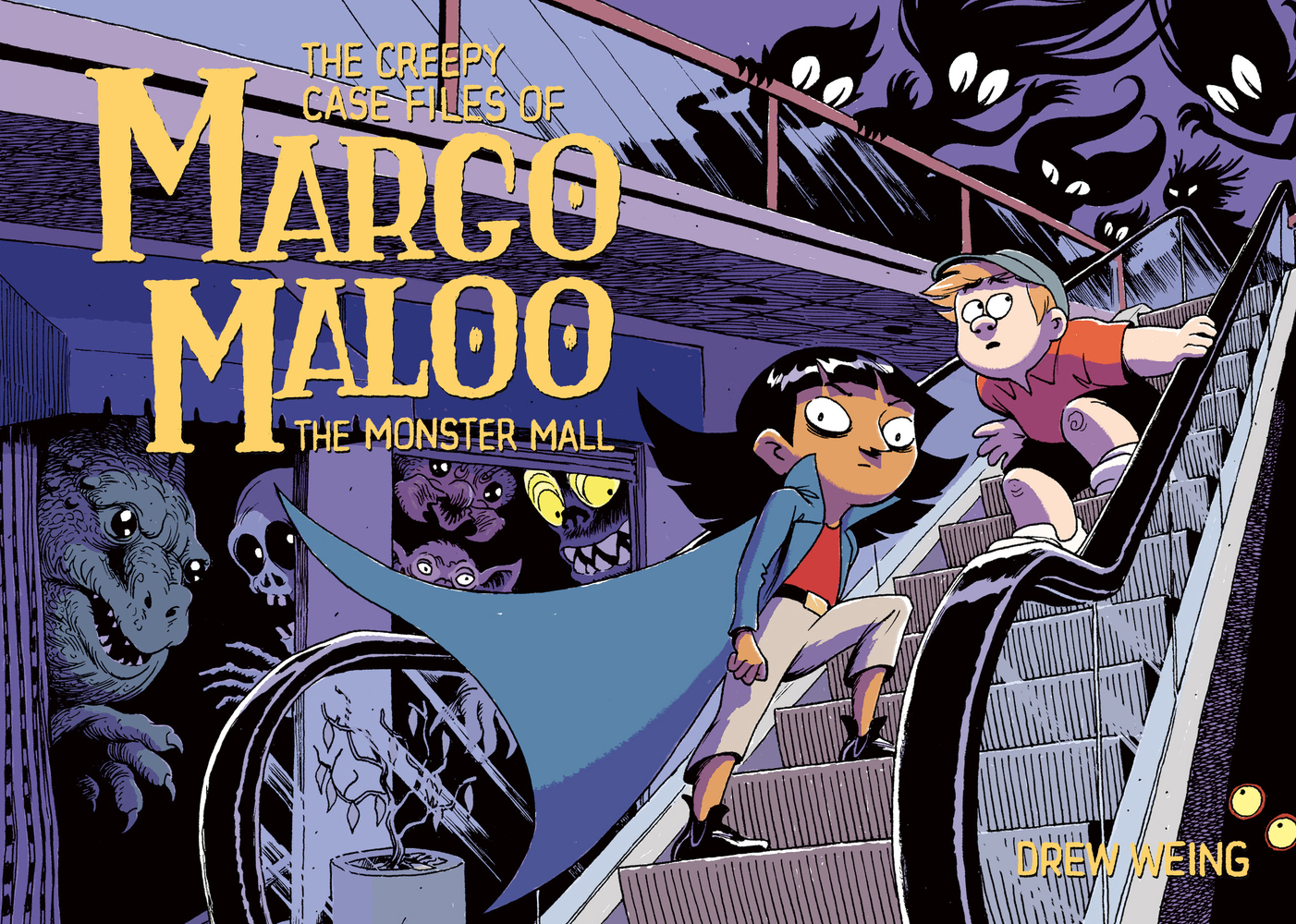
The Creepy Case Files of Margo Maloo: The Monster Mall, by Drew Weing, (Sept. 2018, First Second), $15.99, ISBN: 9781626724921

Ages 8+

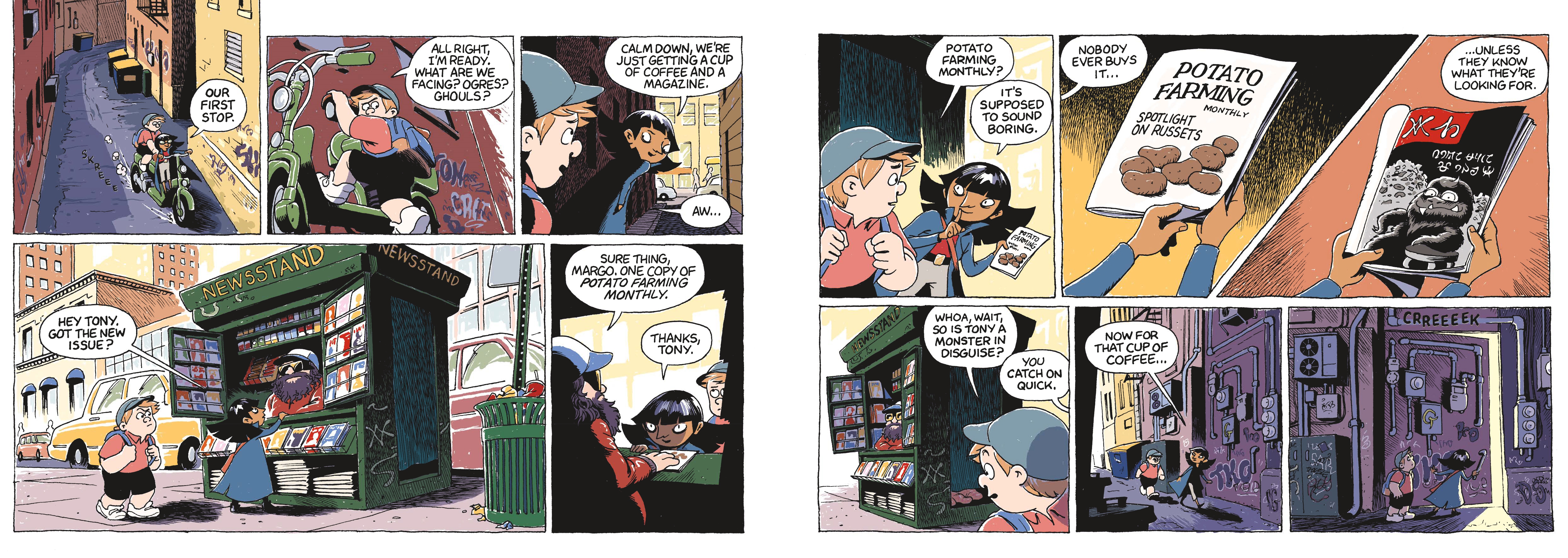
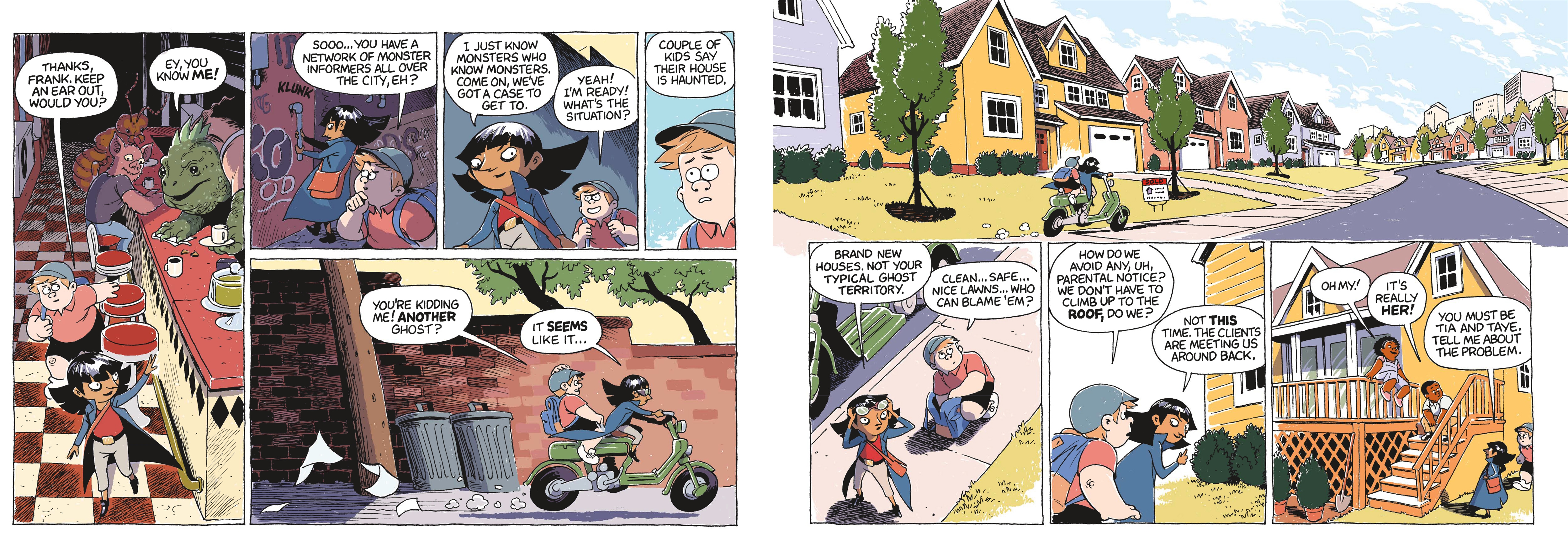
The intrepid duo of Margo Maloo and Charles Thompson is back in their second adventure! Margo Maloo is on a new case, and she needs Charles and his journalistic talents to help. The situation in Echo City is getting tougher on monsters. Humans are encroaching on their environment, and the Monster Code states that NO monster can let themself be seen by a human. Thank goodness, kids don’t count, but teenagers do, and there’s a group of teens hanging out at an abandoned mall. Some monsters are sick of hiding, and want to fight. Other monsters just want to be left alone. Tensions are running high, and it’s up to Margo and Charles to help keep the monster community in status quo!

The Monster Mall is a great follow-up to 2016’s The Creepy Case Files of Margo Maloo. The dynamic between Margo and Charles is fun and light, with smart dialogue and loads of humor. Margo has some wise insights, like one of my favorite lines, “…the older people get, the less they can be trusted”; Charles believes that kids and monsters can learn to trust one another. After all, Marcus and Kevin, Charles’ monster buddy in the basement and his friend, play Battlebeenz together, right? An epilogue teases the future of human-monster relations, and I can’t wait for the next installment. Cartoony monster art, witty dialogue and a diverse cast of characters that bring up some smart questions about diversity make this a book you want in your graphic novel collections.

Posted in picture books, Preschool Reads

Henry and the Yeti is about snuggle-worthy friendship!

Henry and the Yeti, by Russell Ayto, (Aug. 2018, Bloomsbury USA), $16.99, ISBN: 9781681196831

Ages 3-7

Henry is a little boy who loves yetis, but no one is quite sure whether or not yetis actually exist. Except for Henry, that is. He gets some time off from school, packs his equipment, and heads off on an expedition to the snowy mountains. Just when he’s ready to turn around and go home, SURPRISE! He finds a yeti! The two hit it off, snap some pictures, and Henry heads back home, delighted. But when he unpacks his gear, he discovers, to his horror, that he left his camera behind! How can he prove to his principal and classmates that he isn’t making things up? It’s a good thing that yetis are such good friends.

What an adorable book about friendship Henry and the Yeti is! I especially love the quirky, cool-hued artwork, making Henry and instantly likable little boy with huge glasses, expressive eyes, and a turtleneck that hides the rest of his face and covers most of his body. The yeti is an amorphous, white blob on two legs, and he, too, has tremendous, kind eyes. The size difference makes these two friends adorable together as they take selfies and share hugs. The sparse illustration allows readers to give Henry their full attention and sets him apart from his principal and classmates, all of whom stand taller and wear more shifty, less open, facial expressions. The text is tongue-in-cheek, working wonderfully with the artwork. When the principal uses a bullhorn to announce Henry’s punishment, we see the large yeti’s legs and body come into view, and the text reads, “Oh! Henry sees the yeti again. The yeti sees Henry. The principal sees the yeti. And everybody stops laughing.” The joke is on the mean crowd, and we’re there to savor it as it unfolds, as does on the next page… but I’ll let you read it for yourself. Suffice to say, Henry’s reputation is saved and he’s gained a friend for life; the principal and classmates have learned a valuable lesson about being kind. The book was originally released in the UK in 2017

Read this one out loud, and make sure you leave time for all the giggles and “awwwwwws” you’ll hear. Add Henry and the Yeti to your stories about empathy, friendship, and yes… yetis (psst… sasquatches work, too).


Posted in Fiction, Intermediate, picture books, Preschool Reads

Good Rosie!: New Kate DiCamillo and Harry Bliss!

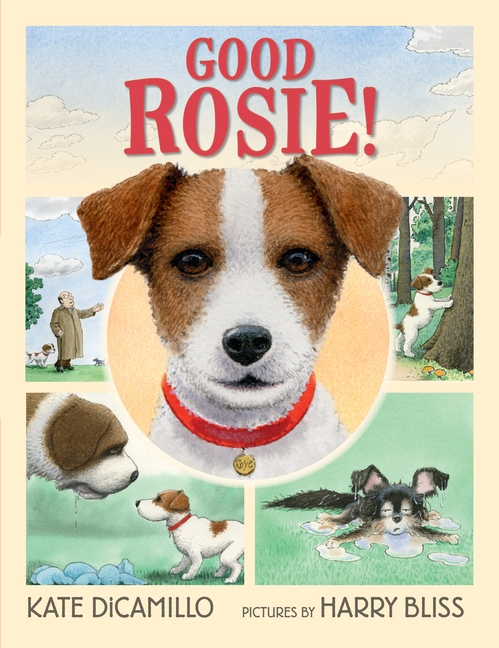
Good Rosie!, by Kate DiCamillo/Illustrated by Harry Bliss, (Sept. 2018, Candlewick Press), $16.99, ISBN: 9780763689797

Ages 4-7

Rosie is a sweet-faced Jack Russell terrier who lives with her human friend, George. She and George have a quiet life together, and Rosie feels lonely as the two go through their daily routine. George decides to shake things up a bit, and brings Rosie to a dog park, but Rosie’s a bit nervous, overwhelmed by all the new, strange dogs there. When a big St. Bernard named Maurice lumbers over to her with his stuffed bunny, Rosie is immediately on guard. How can Rosie make some new friends?

Kate DiCamillo has the gift of words, and Harry Bliss creates hilarious and poignant moments in this comic panel-styled story about making new friends. Rosie looks into her water bowl and sees her reflection, which she thinks is another dog; when she barks at the dog, she feels lonely, because “the other dog never answers”. Later, on her walk, she barks at a dog-shaped cloud; its lack of response makes Rosie “feel lonely in an empty-silver-bowl sort of way”. It’s just wonderful writing that speaks directly to the reader, eliciting that same disappointed, lonely feeling that Rosie experiences. And then, there are moments when the art and words come together to produce moments of sheer delight, as when Maurice introduces himself to Rosie: “‘My name is, uh, Maurice,’ says a very big dog. ‘And I have a bunny.'” The words are adorable, and the size difference between Maurice and Rosie make the full-page panel come to life.

The story addresses social skills when new friends come together: Rosie is lonely, but overwhelmed when thrust into a new social setting; Maurice needs a little bit of help with his social skills (and understanding his size in relation to other dogs), and Fifi, another small dog with a sparkly collar, is excitable and jumpy, which confuses Rosie and Maurice, who don’t immediately know how to react to her. With a little help from the grownups, and some get-to-know-you time between the pups, the day at the park ends with a group of new friends who look forward to playing together again.

This is a great back to school story for kids, especially for new Pre-K or Kindergarteners, who are starting school for the first time. I love this sweet story, and so will your readers (and you). Know a kid who’s starting school, or starting a new school, soon? Cuddle up with them and let them know that if Rosie can do it, so can they. Good Rosie! has starred reviews from Publisher’s Weekly, School Library Journal, and Kirkus.

Posted in Fiction, Middle Grade, Tween Reads

Dusti Bowling spends 24 Hours in Nowhere

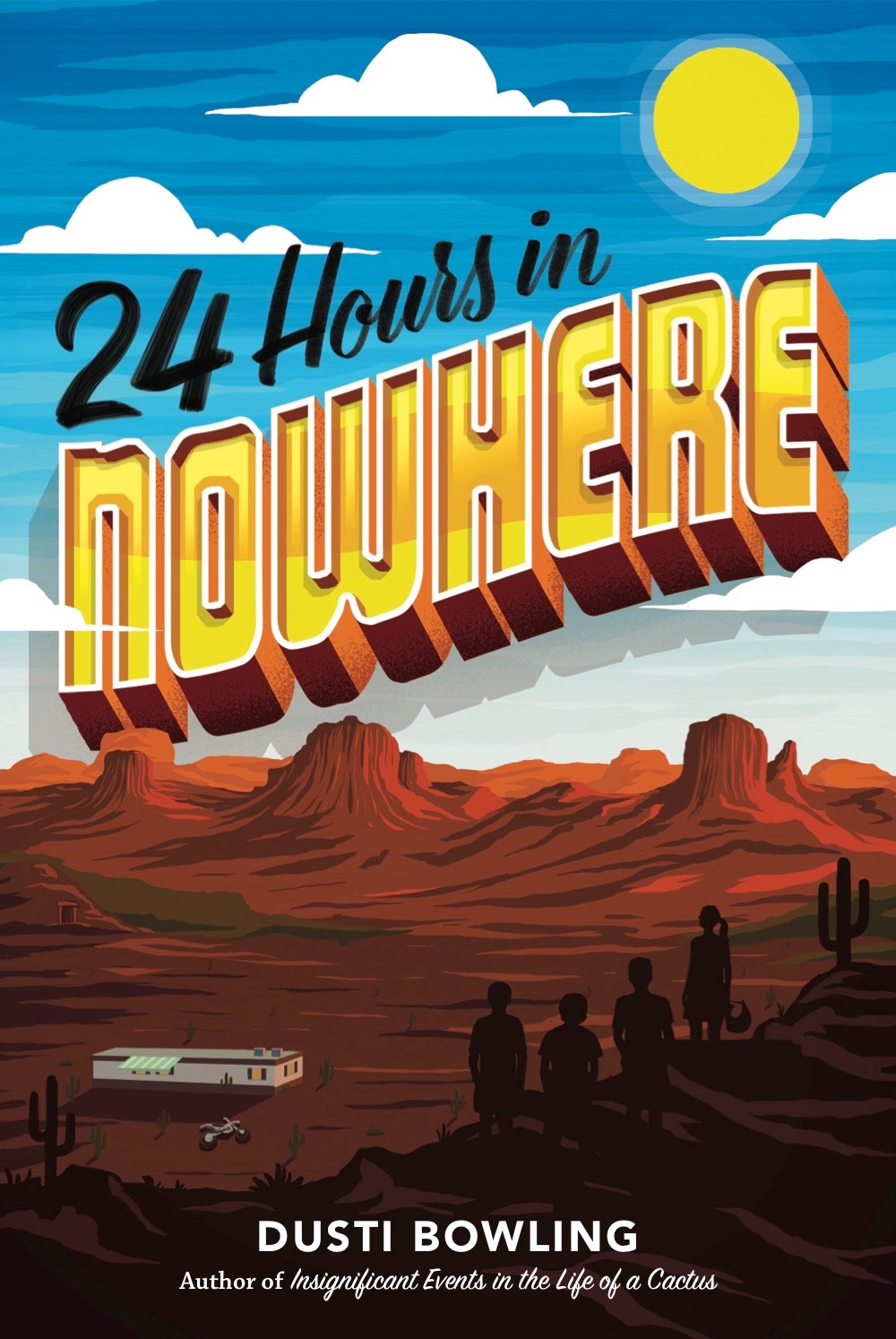
24 Hours in Nowhere, by Dusti Bowling, (Sept. 2018, Sterling), $14.95, ISBN: 9781454929246

Ages 9-12

Gus is a 13-year-old kid, abandoned by his parents, living with his grandmother in Nowhere, Arizona. When Bo Taylor, the worst bully in town, tries to force him to eat a spiny cactus, Rossi Scott interferes. She’s one of the best dirt bike racers in nowhere, and she’s got designs on winning the big race the next day – until she gives up her bike to save Gus. Now Bo has the bike, and Gus heads to Dead Frenchman’s Mine in the hopes of finding a piece of gold to get the bike back. Matthew, one of Bo’s cronies, is along for the trip, making sure Gus doesn’t spray paint a rock; Jessie, Gus’ former best friend, and Rossi show up to talk some sense into Gus, but a cave-in traps the four friends, leaving them to seek a way out and avoid mountain lions.

I loved Dusti Bowling’s fantastic debut, Insignificant Events in the Life of a Cactus (2017), so I immediately requested the ARC for 24 Hours in Nowhere. I am happy to say, there’s no sophomore slump here! Dusti Bowling continues writing smart, empathetic books about kids who are just doing the best they can in the face of everyday life. The teens share stories about their Worst Day Ever, giving us a glimpse into poverty, abuse, neglect, abandonment, race, (Jessie is Mexican-American, and Rossi is Native American, from the Tohono O’odham Nation) and white privilege, all within the greater examination of life in poor, rural America. Gus is a first-person narrator and alternately has moments of introspection, empathy, and humor. There’s a little bit of Goonies, a little bit of Holes, and a lot of great storytelling to be found here. Psst… teachers… put this one on next year’s Summer Reading lists, please?

Check out Dusti Bowling’s author website for extras (just Cactus for now, but sure to be updated with 24 Hours shortly) and school visit info, including free Skype visits! 24 Hours in Nowhere has a starred review from School Library Journal.

Posted in Fiction, Middle Grade, Realistic Fiction, Tween Reads

The Dollar Kids: Starting over, and fitting in

The Dollar Kids, by Jennifer Richard Jacobson/Illustrated by Ryan Andrews, (Aug. 2018, Candlewick), $17.99, ISBN: 9780763694746

Recommended for readers 9-13

Lowen Grover is a 12-year-old artist is using his comic book artwork to cope with the gun-related death of his young friend, Abe. He just wants to get away: away from the memories of Abe and the shooting; away from his neighborhood, where everyone knows. When he sees an article about a former mill town, Millville, holding a lottery of dollar homes to bring new life into the town, he mentions it to his parents, who apply and secure a home. It’s a chance for his family to own their own home, and a chance for his mother to start up a business, but rural life isn’t what Lowen expected, and the Millville families aren’t as welcoming to the new “Dollar Kids” and their families as he’d hoped. As the Grovers and the other new families try to make inroads into their new town, Lowen works through his grief and tries to rediscover friendship, his love for art, and his place in the community.

The Dollar Kids unpacks a lot of ideas and moments, and it’s beautifully done by author Jennifer Richard Jacobson and illustrator Ryan Andrews. It’s a book about grief and loss, and the guilt that comes with grief. It’s also about friendship, and accepting friendship, even when one doesn’t think he or she deserves it. It’s a book about family. Finally, it’s a book about acceptance. Lowen is grieving the loss of a kid who was somewhat of a friend; a younger kid who hung around him constantly; he embraces this chance to start a new life in a rural town, but he and his family discover that a dollar home takes a great emotional and financial toll; the families in Millville don’t like change much, even when it’s to benefit their town, and feel almost contemptuous toward the newcomers. The characters are realistic and relatable, with the author giving as much attention to her supporting characters as she does her main characters. The comic book artwork by Ryan Andrews is an outlet for Lowen, and helps readers work through his grief with him.

A great middle grade book for realistic fiction readers. Explain to readers that dollar homes do, in fact, exist, and what the stigmas associated with buying a foreclosed home could entail: how may the Millvillians see the families that purchase them, in light of the town’s history? I’d booktalk this with Beth Vrabel’s Blind Guide to Stinkville and The Doughnut Fix by Jessie Janowitz, both of which look at life in a rural community, and The Thing About Jellyfish by Ali Benjamin and Lisa Graff’s Lost in the Sun for addressing grief.

Posted in Fantasy, Fiction, Humor, Middle Grade, Middle School, Tween Reads

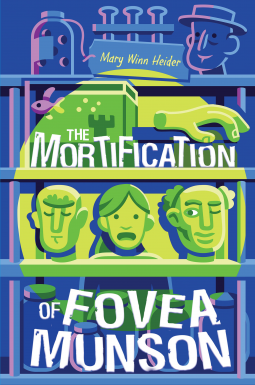
The Mortification of Fovea Munson is hilarious Summer Reading!

The Mortification of Fovea Munson, by Mary Winn Heider/Illustrated by Chi Birmingham, (June 2018, Disney-Hyperion), $16.99, ISBN: 9781484780541

Ages 9-13

From the opening line, “Dead bodies are the worst”, you just know you’re in for a good time with this book. Fovea Munson is the 12-year-old daughter of two doctors: cadaver surgeons. They operate on dead folks, and they teach medical students how to work their craft on dead folks. They’ve got the corniest senses of humor, a never-ending love for Hippocrates, the father of medicine, and they’ve just hired Fovea to be their receptionist for the summer. This is bad enough for a 12-year-old who’s already feeling tragically uncool, but wait: three heads in the cadaver lab start talking to her. Death isn’t necessarily final, after all, and Lake, McMullen, and Andy – the three heads in question – want to start a barbershop quartet, hit a recording studio, and have a release party, and it’s up to Fovea to make it happen. Quickly. Because that receptionist that quit left a lovesick, slightly unhinged cremator, behind, and he’s got information that will ruin Fovea’s family. The heads know something, so it’s a little quid pro quo in action.

Is this madcap? Absolutely! Is it hilarious? Without question! Fovea narrates this laugh-out-loud story of a summer vacation gone sideways with a priceless, put-upon tween voice as she navigates her relationship with her parents, her friends (both dead and living), and her scooter-riding grandmother. There’s an unexpected amount of pathos here as Fovea comes to care for a classmate and the trio of cadaver heads in her care, and a bittersweet realization that some friendships aren’t meant to last. There are black and white illustrations throughout, adding some visual humor to the story, and chapters titles remind us how much Hippocrates has influenced Fovea’s life. The end of the book leaves me hopeful that we’ll get some more fun with Fovea down the road, and an appendix (snicker) includes amusing little in-jokes that readers will get a kick out of.

The Mortification of Fovea Munson is a perfect summer read, especially for kids who think their parents are weird (which is, honestly, most of ’em). Don’t miss it. Add it to your STEM reading – cadavers science is a thing!

Posted in Fiction, Middle School, Realistic Fiction, Tween Reads

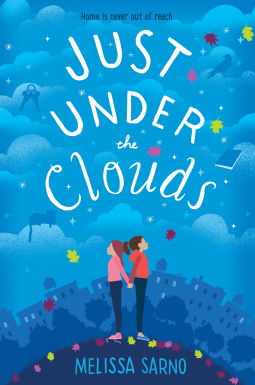
Just Under the Clouds shows us the working poor

Just Under the Clouds, by Melissa Sarno, (June 2018, Knopf Books for Young Readers), $16.99, ISBN: 9781524720087

Ages 10-14

Middle schooler Cora, her Mexican-American mom, and younger sister, Adare, are homeless. After her father died, she and her family have lived in a series of temporary homes and shelters in Brooklyn, New York, while her mother tries to make ends meet at an hourly retail job, giving up her art to keep her family going. Adare sustained brain damage at birth, so Cora must look after her when their mother isn’t around. When they get back to their room at the shelter and discover it’s been broken into, the family heads to Cora’s mom’s childhood friend, Willa, a successful lawyer with an apartment of her own, hoping to stay until a better, safer, placement comes through. Cora loves life in Willa’s stable home, but the girls’ mother is frustrated by what she sees as Willa’s meddling. Meanwhile, at school, Cora struggles with math and bullies, and meets a friend named Sabina, who lives on a houseboat and was homeschooled until this school year. Cora has both parents’ passions within her; she keeps her father’s tree diary with her and searches for a special tree that her father wrote about, paired with her mother’s artistic talent – with an arborial bent. She has the stress of caring for Adare, the stress of being homeless, and being bullied.

Just Under the Clouds is narrated in Cora’s voice; author Melissa Sarno creates a strong, moving narrative where we meet a family that often falls through the cracks in our society: the working poor. Cora’s mother, Liliana, is working at a job that doesn’t cover the cost of living for a family of three, let alone in metro New York, and her daughters are in school, clean, and fed, if not full. It’s a tale of poverty, grief, empathy, and hope. The book addresses childhood stress, which comes with long-lasting fallout, and caring for a special needs child, and how poverty affects those children receiving necessary services to help them. It’s a sensitive, painful look in our own backyards and courtyards, our own classrooms and workplaces, and deserves a space on bookshelves and in readers’ hands. Pair this with 1958’s The Family Under the Bridge, by Natalie Savage Carson, and ask readers how things have changed – and how they’ve stayed the same – over 60 years. Start a booktalk by asking your readers, “How would you feel if you lived in a place that wasn’t safe to go to alone?”

Posted in picture books, Preschool Reads

Someone New shows students welcoming new friends

Someone New, by Anne Sibley O’Brien, (July 2018, Charlesbridge), $16.99, ISBN: 9781580898317

Recommended for readers 4+

I’m New Here (2015) explored immigration from the points of view of three young newcomers: Maria, Jin, and Fatima. Someone New now flips the dialogue and shows us how new classmates perceive – and eventually befriend – these new kids in town. At first, Maria, Jin, and Fatima are shy, a bit withdrawn, and their classmates don’t know how to work with that. Understandable; these are kids we’re dealing with. Strong and honest statements like, “I feel uncomfortable”; “I don’t know what to do”; and “I can’t figure out to help” give kids words to put to the new feelings they may experience when meeting kids they don’t know.

Since kids are so much smarter than we are, though, they figure it out quickly: Jesse, a blonde white boy, invites Maria to play soccer with his group and discovers that she’s really good! Jason, a dark-skinned boy, can’t read what Jin writes, but smiles, prompting Jin to smile back; eventually, Jin teaches Jason how to write his name in Korean – it’s like a secret code! – and they draw comics together. Emma, a blonde white girl, draws a picture of her classmate, Fatima, and her together, giving Fatima the comfort and safety she needs to open up to Emma about her family. Each of these new children have things to share; they just needed the safety of that first effort. As Jason learns, when Jin smiles at him, “Maybe a smile is like a superpower.” The watercolor and digital illustrations stand out against the plain white space to make these characters stand out.

Someone New tells its story in brief, eloquent sentences with word balloons that allow characters to communicate in their own words. It is a book that needs to be on every shelf in every library and school. You’ll notice I recommend this book for ages 4+; I think it’s a book that all adults should be reading right now. Pick up the award-winning I’m New Here and make sure you tell these stories to anyone within earshot. Someone New has a starred review from Kirkus.