Posted in Fiction, Intermediate, picture books, Preschool Reads

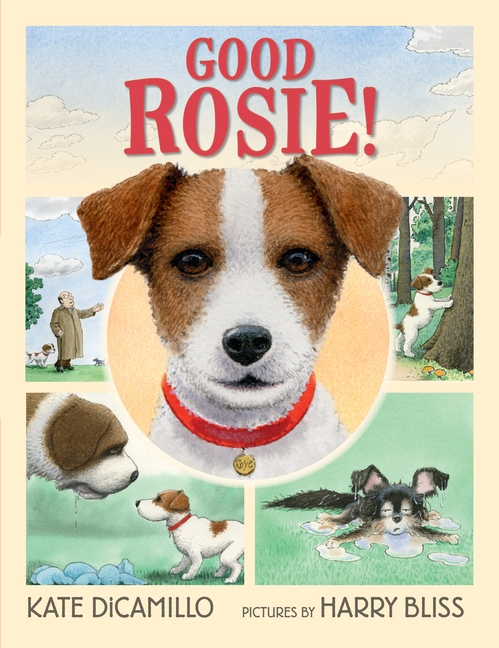
Good Rosie!: New Kate DiCamillo and Harry Bliss!

Good Rosie!, by Kate DiCamillo/Illustrated by Harry Bliss, (Sept. 2018, Candlewick Press), $16.99, ISBN: 9780763689797

Ages 4-7

Rosie is a sweet-faced Jack Russell terrier who lives with her human friend, George. She and George have a quiet life together, and Rosie feels lonely as the two go through their daily routine. George decides to shake things up a bit, and brings Rosie to a dog park, but Rosie’s a bit nervous, overwhelmed by all the new, strange dogs there. When a big St. Bernard named Maurice lumbers over to her with his stuffed bunny, Rosie is immediately on guard. How can Rosie make some new friends?

Kate DiCamillo has the gift of words, and Harry Bliss creates hilarious and poignant moments in this comic panel-styled story about making new friends. Rosie looks into her water bowl and sees her reflection, which she thinks is another dog; when she barks at the dog, she feels lonely, because “the other dog never answers”. Later, on her walk, she barks at a dog-shaped cloud; its lack of response makes Rosie “feel lonely in an empty-silver-bowl sort of way”. It’s just wonderful writing that speaks directly to the reader, eliciting that same disappointed, lonely feeling that Rosie experiences. And then, there are moments when the art and words come together to produce moments of sheer delight, as when Maurice introduces himself to Rosie: “‘My name is, uh, Maurice,’ says a very big dog. ‘And I have a bunny.'” The words are adorable, and the size difference between Maurice and Rosie make the full-page panel come to life.

The story addresses social skills when new friends come together: Rosie is lonely, but overwhelmed when thrust into a new social setting; Maurice needs a little bit of help with his social skills (and understanding his size in relation to other dogs), and Fifi, another small dog with a sparkly collar, is excitable and jumpy, which confuses Rosie and Maurice, who don’t immediately know how to react to her. With a little help from the grownups, and some get-to-know-you time between the pups, the day at the park ends with a group of new friends who look forward to playing together again.

This is a great back to school story for kids, especially for new Pre-K or Kindergarteners, who are starting school for the first time. I love this sweet story, and so will your readers (and you). Know a kid who’s starting school, or starting a new school, soon? Cuddle up with them and let them know that if Rosie can do it, so can they. Good Rosie! has starred reviews from Publisher’s Weekly, School Library Journal, and Kirkus.

Posted in Fiction, Middle Grade, Tween Reads

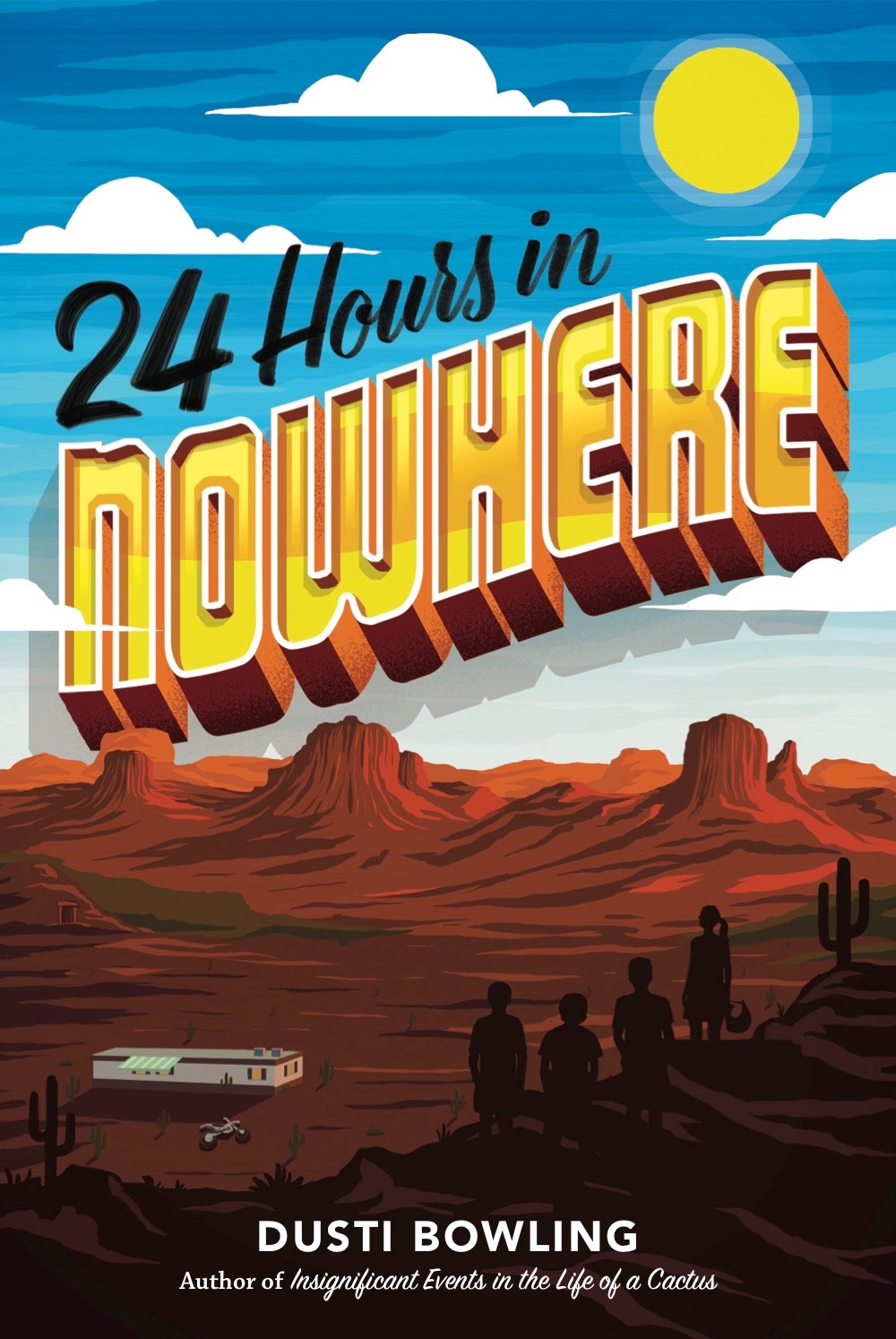
Dusti Bowling spends 24 Hours in Nowhere

24 Hours in Nowhere, by Dusti Bowling, (Sept. 2018, Sterling), $14.95, ISBN: 9781454929246

Ages 9-12

Gus is a 13-year-old kid, abandoned by his parents, living with his grandmother in Nowhere, Arizona. When Bo Taylor, the worst bully in town, tries to force him to eat a spiny cactus, Rossi Scott interferes. She’s one of the best dirt bike racers in nowhere, and she’s got designs on winning the big race the next day – until she gives up her bike to save Gus. Now Bo has the bike, and Gus heads to Dead Frenchman’s Mine in the hopes of finding a piece of gold to get the bike back. Matthew, one of Bo’s cronies, is along for the trip, making sure Gus doesn’t spray paint a rock; Jessie, Gus’ former best friend, and Rossi show up to talk some sense into Gus, but a cave-in traps the four friends, leaving them to seek a way out and avoid mountain lions.

I loved Dusti Bowling’s fantastic debut, Insignificant Events in the Life of a Cactus (2017), so I immediately requested the ARC for 24 Hours in Nowhere. I am happy to say, there’s no sophomore slump here! Dusti Bowling continues writing smart, empathetic books about kids who are just doing the best they can in the face of everyday life. The teens share stories about their Worst Day Ever, giving us a glimpse into poverty, abuse, neglect, abandonment, race, (Jessie is Mexican-American, and Rossi is Native American, from the Tohono O’odham Nation) and white privilege, all within the greater examination of life in poor, rural America. Gus is a first-person narrator and alternately has moments of introspection, empathy, and humor. There’s a little bit of Goonies, a little bit of Holes, and a lot of great storytelling to be found here. Psst… teachers… put this one on next year’s Summer Reading lists, please?

Check out Dusti Bowling’s author website for extras (just Cactus for now, but sure to be updated with 24 Hours shortly) and school visit info, including free Skype visits! 24 Hours in Nowhere has a starred review from School Library Journal.

Posted in Fiction, Middle Grade, Realistic Fiction, Tween Reads

The Dollar Kids: Starting over, and fitting in

The Dollar Kids, by Jennifer Richard Jacobson/Illustrated by Ryan Andrews, (Aug. 2018, Candlewick), $17.99, ISBN: 9780763694746

Recommended for readers 9-13

Lowen Grover is a 12-year-old artist is using his comic book artwork to cope with the gun-related death of his young friend, Abe. He just wants to get away: away from the memories of Abe and the shooting; away from his neighborhood, where everyone knows. When he sees an article about a former mill town, Millville, holding a lottery of dollar homes to bring new life into the town, he mentions it to his parents, who apply and secure a home. It’s a chance for his family to own their own home, and a chance for his mother to start up a business, but rural life isn’t what Lowen expected, and the Millville families aren’t as welcoming to the new “Dollar Kids” and their families as he’d hoped. As the Grovers and the other new families try to make inroads into their new town, Lowen works through his grief and tries to rediscover friendship, his love for art, and his place in the community.

The Dollar Kids unpacks a lot of ideas and moments, and it’s beautifully done by author Jennifer Richard Jacobson and illustrator Ryan Andrews. It’s a book about grief and loss, and the guilt that comes with grief. It’s also about friendship, and accepting friendship, even when one doesn’t think he or she deserves it. It’s a book about family. Finally, it’s a book about acceptance. Lowen is grieving the loss of a kid who was somewhat of a friend; a younger kid who hung around him constantly; he embraces this chance to start a new life in a rural town, but he and his family discover that a dollar home takes a great emotional and financial toll; the families in Millville don’t like change much, even when it’s to benefit their town, and feel almost contemptuous toward the newcomers. The characters are realistic and relatable, with the author giving as much attention to her supporting characters as she does her main characters. The comic book artwork by Ryan Andrews is an outlet for Lowen, and helps readers work through his grief with him.

A great middle grade book for realistic fiction readers. Explain to readers that dollar homes do, in fact, exist, and what the stigmas associated with buying a foreclosed home could entail: how may the Millvillians see the families that purchase them, in light of the town’s history? I’d booktalk this with Beth Vrabel’s Blind Guide to Stinkville and The Doughnut Fix by Jessie Janowitz, both of which look at life in a rural community, and The Thing About Jellyfish by Ali Benjamin and Lisa Graff’s Lost in the Sun for addressing grief.

Posted in Fantasy, Fiction, Humor, Middle Grade, Middle School, Tween Reads

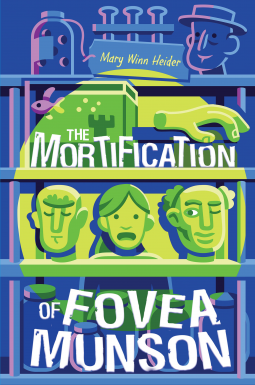
The Mortification of Fovea Munson is hilarious Summer Reading!

The Mortification of Fovea Munson, by Mary Winn Heider/Illustrated by Chi Birmingham, (June 2018, Disney-Hyperion), $16.99, ISBN: 9781484780541

Ages 9-13

From the opening line, “Dead bodies are the worst”, you just know you’re in for a good time with this book. Fovea Munson is the 12-year-old daughter of two doctors: cadaver surgeons. They operate on dead folks, and they teach medical students how to work their craft on dead folks. They’ve got the corniest senses of humor, a never-ending love for Hippocrates, the father of medicine, and they’ve just hired Fovea to be their receptionist for the summer. This is bad enough for a 12-year-old who’s already feeling tragically uncool, but wait: three heads in the cadaver lab start talking to her. Death isn’t necessarily final, after all, and Lake, McMullen, and Andy – the three heads in question – want to start a barbershop quartet, hit a recording studio, and have a release party, and it’s up to Fovea to make it happen. Quickly. Because that receptionist that quit left a lovesick, slightly unhinged cremator, behind, and he’s got information that will ruin Fovea’s family. The heads know something, so it’s a little quid pro quo in action.

Is this madcap? Absolutely! Is it hilarious? Without question! Fovea narrates this laugh-out-loud story of a summer vacation gone sideways with a priceless, put-upon tween voice as she navigates her relationship with her parents, her friends (both dead and living), and her scooter-riding grandmother. There’s an unexpected amount of pathos here as Fovea comes to care for a classmate and the trio of cadaver heads in her care, and a bittersweet realization that some friendships aren’t meant to last. There are black and white illustrations throughout, adding some visual humor to the story, and chapters titles remind us how much Hippocrates has influenced Fovea’s life. The end of the book leaves me hopeful that we’ll get some more fun with Fovea down the road, and an appendix (snicker) includes amusing little in-jokes that readers will get a kick out of.

The Mortification of Fovea Munson is a perfect summer read, especially for kids who think their parents are weird (which is, honestly, most of ’em). Don’t miss it. Add it to your STEM reading – cadavers science is a thing!

Posted in Fiction, Middle School, Realistic Fiction, Tween Reads

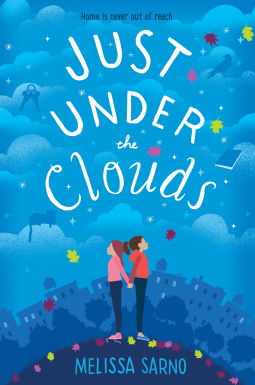
Just Under the Clouds shows us the working poor

Just Under the Clouds, by Melissa Sarno, (June 2018, Knopf Books for Young Readers), $16.99, ISBN: 9781524720087

Ages 10-14

Middle schooler Cora, her Mexican-American mom, and younger sister, Adare, are homeless. After her father died, she and her family have lived in a series of temporary homes and shelters in Brooklyn, New York, while her mother tries to make ends meet at an hourly retail job, giving up her art to keep her family going. Adare sustained brain damage at birth, so Cora must look after her when their mother isn’t around. When they get back to their room at the shelter and discover it’s been broken into, the family heads to Cora’s mom’s childhood friend, Willa, a successful lawyer with an apartment of her own, hoping to stay until a better, safer, placement comes through. Cora loves life in Willa’s stable home, but the girls’ mother is frustrated by what she sees as Willa’s meddling. Meanwhile, at school, Cora struggles with math and bullies, and meets a friend named Sabina, who lives on a houseboat and was homeschooled until this school year. Cora has both parents’ passions within her; she keeps her father’s tree diary with her and searches for a special tree that her father wrote about, paired with her mother’s artistic talent – with an arborial bent. She has the stress of caring for Adare, the stress of being homeless, and being bullied.

Just Under the Clouds is narrated in Cora’s voice; author Melissa Sarno creates a strong, moving narrative where we meet a family that often falls through the cracks in our society: the working poor. Cora’s mother, Liliana, is working at a job that doesn’t cover the cost of living for a family of three, let alone in metro New York, and her daughters are in school, clean, and fed, if not full. It’s a tale of poverty, grief, empathy, and hope. The book addresses childhood stress, which comes with long-lasting fallout, and caring for a special needs child, and how poverty affects those children receiving necessary services to help them. It’s a sensitive, painful look in our own backyards and courtyards, our own classrooms and workplaces, and deserves a space on bookshelves and in readers’ hands. Pair this with 1958’s The Family Under the Bridge, by Natalie Savage Carson, and ask readers how things have changed – and how they’ve stayed the same – over 60 years. Start a booktalk by asking your readers, “How would you feel if you lived in a place that wasn’t safe to go to alone?”

Posted in picture books, Preschool Reads

Someone New shows students welcoming new friends

Someone New, by Anne Sibley O’Brien, (July 2018, Charlesbridge), $16.99, ISBN: 9781580898317

Recommended for readers 4+

I’m New Here (2015) explored immigration from the points of view of three young newcomers: Maria, Jin, and Fatima. Someone New now flips the dialogue and shows us how new classmates perceive – and eventually befriend – these new kids in town. At first, Maria, Jin, and Fatima are shy, a bit withdrawn, and their classmates don’t know how to work with that. Understandable; these are kids we’re dealing with. Strong and honest statements like, “I feel uncomfortable”; “I don’t know what to do”; and “I can’t figure out to help” give kids words to put to the new feelings they may experience when meeting kids they don’t know.

Since kids are so much smarter than we are, though, they figure it out quickly: Jesse, a blonde white boy, invites Maria to play soccer with his group and discovers that she’s really good! Jason, a dark-skinned boy, can’t read what Jin writes, but smiles, prompting Jin to smile back; eventually, Jin teaches Jason how to write his name in Korean – it’s like a secret code! – and they draw comics together. Emma, a blonde white girl, draws a picture of her classmate, Fatima, and her together, giving Fatima the comfort and safety she needs to open up to Emma about her family. Each of these new children have things to share; they just needed the safety of that first effort. As Jason learns, when Jin smiles at him, “Maybe a smile is like a superpower.” The watercolor and digital illustrations stand out against the plain white space to make these characters stand out.

Someone New tells its story in brief, eloquent sentences with word balloons that allow characters to communicate in their own words. It is a book that needs to be on every shelf in every library and school. You’ll notice I recommend this book for ages 4+; I think it’s a book that all adults should be reading right now. Pick up the award-winning I’m New Here and make sure you tell these stories to anyone within earshot. Someone New has a starred review from Kirkus.

Posted in Fantasy, Fiction, Middle Grade

The Tale of Angelino Brown will make you happy cry.

The Tale of Angelino Brown, by David Almond/Illustrated by Alex T. Smith, (Feb. 2108, Candlewick Press), $16.99, ISBN: 9780763695637

Recommended for readers 8-12

Bert Brown is a tired school bus driver who’s burned out on his job. When he starts feeling chest pains behind the wheel one day, he’s sure he’s having a heart attack – but no! – there’s a little angel in his pocket! The sweet little angel shows a liking for gumdrops, offered by one of the kids on the school bus who notices the little visitor, and Bert brings the angel home to his wife, Betty, who’s thrilled. They name the angel Angelino and Betty sets to work finding foods that he likes, and making clothes for him. Betty decides that Angelino needs to be in school, and since she’s the school cook, he tags along with her for a school day, where he enchants (most of) the teachers and students around him, particularly the expressive art teacher, Ms. Monteverdi. Everyone is just happier, better, when Angelino is around, but two shadowy figures are keeping an eye on Angelino. When the time is right, they kidnap him, hoping to sell him off; what even they don’t realize is Basher, a lifetime bully, is coming for Angelino, too. Can Bert, Betty, and Angelino’s schoolmates save the day?

This story just made me feel happy inside, and not in a goofy, syrupy way. Angelino appears into the lives of a married couple who’ve been going through the motions for a long time, bringing joy to them after a tragedy of their own seems to have had a hand in closing them off. Everything he touches is filled with good and happiness – he’s an angel, complete with little wings, and happy little farts (my kids do love a good fart joke) that will give readers the giggles. The baddies here aren’t completely bad – there’s some interesting character study here for all involved – and the humor takes some amusing pot-shots at the Seriousness of the Education System, which is always good for getting a laugh out of me. Angelino has no memory of who he is and indeed, must learn how to speak, read, and write, but he’s up to the challenge and even advocates for himself when the chips are down. Black and white illustrations throughout add to the fun.

This one is a win for summer reading kids who “don’t know what to reeeeaaaaaad”.  A gentle, sweet fantasy with just a hint of flatulence. The Tale of Angelino Brown has starred reviews from Kirkus and Publisher’s Weekly.

Posted in Fantasy, Fiction, Middle Grade

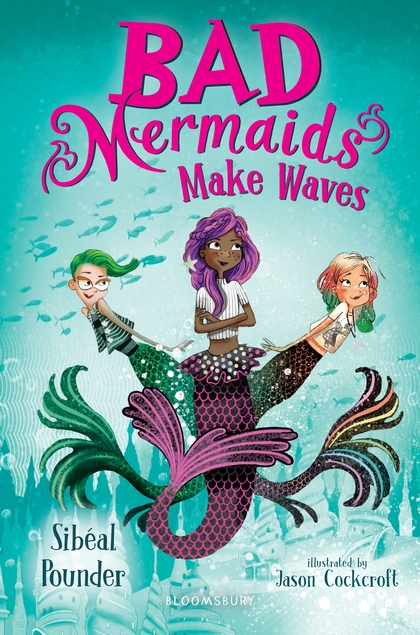
Bad Mermaids Make Waves!

Bad Mermaids Make Waves, by Sibéal Pounder/Illustrated by Jason Cockcroft, (May 2018, Bloomsbury USA), $13.99, ISBN: 9781681197920

Recommended for readers 8-12

What happens when you’re a mermaid, spending a summer on land with your temporary legs and feet, and you have to go back under the sea early because someone fishnapped the Mermaid Queen? That’s what besties Beattie, and twin sisters Zelda and Mimi have to do in this first middle grade mermaid adventure by Witch Wars author Sibéal Pounder. The mermaids arrive back under the sea to discover everyone acting… strange. A new queen who hides her face and calls herself The Swan is making everyone go back to wearing shell tops, and piranhas patrols are keeping things in check. The threesome steal a clamshell car and investigate who could be behind this fishy plot!

Mermaid stories are HUGE here. Heck, they’ve been huge at every library I’ve been at, from picture books, through YA. You’ve got three best friends who work really well together, a mystery to solve, and humorous villains and mean mermaids (all genders are referred to as mermaids), a café set inside an actual whale, plus black and white illustrations throughout. There are loads of in-jokes poking fun at mermaid tropes, like the clamshell tops and hair-combing, and the characters’ speech is full of fishy references like the exclamation, “Oh cod!”

This is an automatic add to my shelves. Give this to your Mermaid Tales and Mermaid S.O.S. fans who are ready for higher leveled books, and your Emily Windsnap fans.

Posted in picture books, Preschool Reads

Bear and Wolf: A tale of two friends

Bear and Wolf, by Daniel Salmieri, (Feb. 2018, Enchanted Lion), $17.95, ISBN: 9781592702381

Recommended for readers 4-8

Bear and Wolf discover one another walking through the snow one day; they wander together, enjoying the sights and sounds of the snowy forest, glancing at an owl flying overhead, and peering into a frozen lake to see the sleeping fish. They part so Bear can hibernate in his den, and Wolf can run with his pack. When Spring returns, the friends reunite across the green forest.

With cool color shades to welcome winter and warm earth colors to celebrate spring, Bear and Wolf is less a story about seasons than about renewal: of friendship and of nature. It also honors the joy of taking one’s time, noticing the details, enjoying the journey. The gouache, watercolor, and crushed colored pencil artwork provides texture and yet, is soft and comforting. Bear and Wolf is a serene story that is nicely paired with books like Tiny, Perfect Things or The Magic Garden. A must-add to storytime shelves.

Bear and Wolf has starred reviews from Kirkus and School Library Journal, and is on my Caldecott shortlist.


Posted in picture books, Preschool Reads

When the World is Full of Friends, it’s a pretty great place

When the World is Full of Friends, by Gillian Shields/Illustrated by Anna Currey, (Feb. 2018, Bloomsbury USA), $16.99, ISBN: 9781681196268

Recommended for readers 3-6

The rabbit family from When the World Was Waiting for You and When the World is Ready for Bed returns in this sweet book about play and discovering new friends. Siblings Albert, Tom, Flossie, and Pipkin love to play, and wish they had more friends to play with. They see a squirrel family across the stream, and put their heads together to figure out how to cross the stream to play together, turning the experience into a fun game in itself. The takeaway? “Playing with friends was wonderful!”

This is a great bedtime, quiet time, or circle time story. It’s got a calm pace, with soft watercolor and ink art. The messages of friendship and working together to play together reinforce positive lessons, and the opening and closing rhyming verses beautifully bookend the story narrative. Add this one to your storytime collections.