Posted in picture books, Uncategorized

Tales from the TBR: The Bone Wars by Jane Kurtz & Alexander Vidal

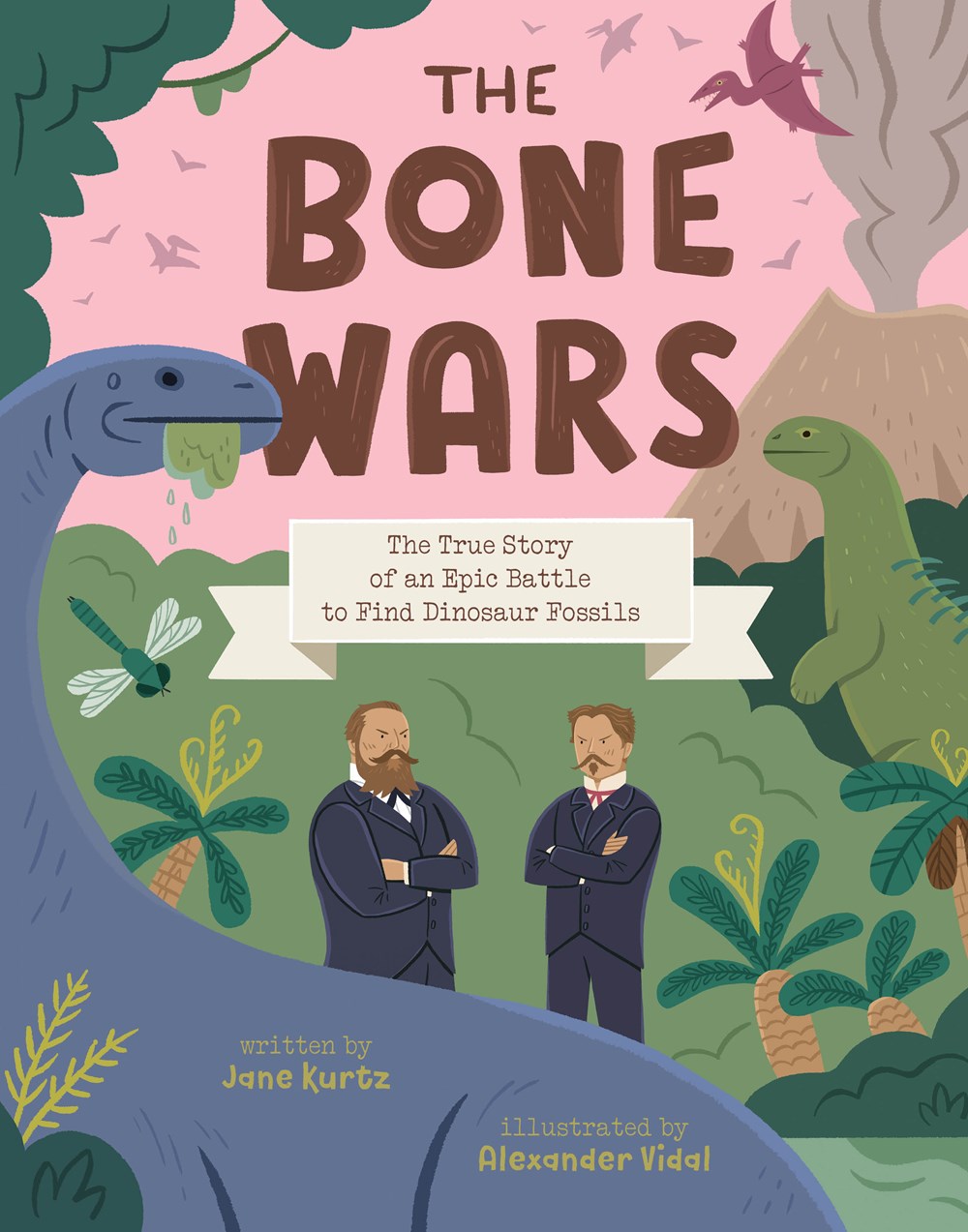
The Bone Wars, by Jane Kurtz/Illustrated by Alexander Vidal, (Nov. 2023, Beach Lane Books), $18.99, ISBN: 9781534493643

Ages 5-8

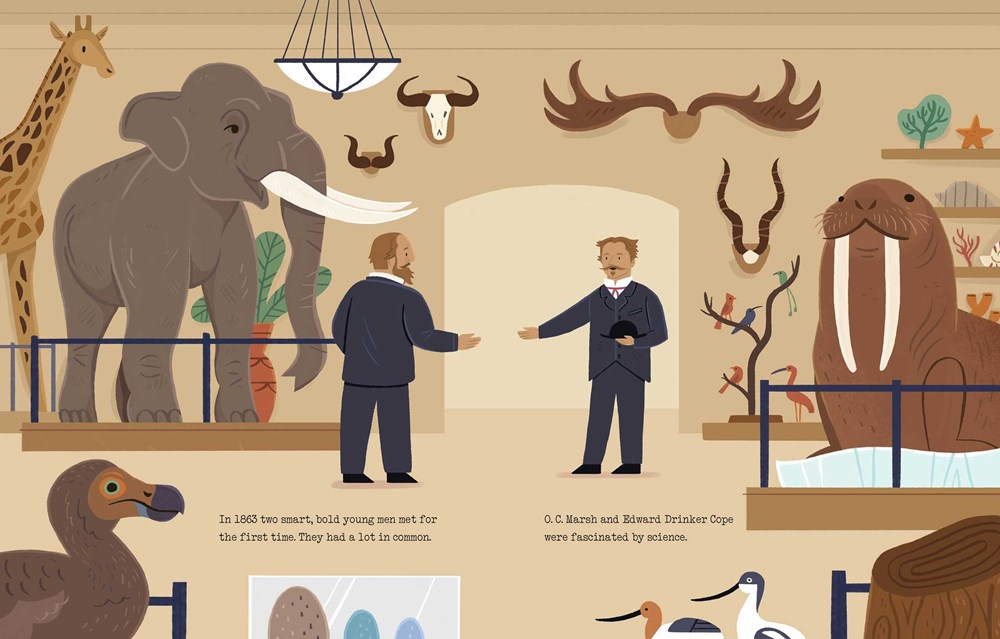
The Bone Wars! It’s a tale of friendship gone wrong! With dinosaurs! And exploding fossils! Kurtz writes history with a sense of humor that will catch a reader’s attention, describing the 19th-century race between two paleontologists – O.C. Marsh and Edward Cope – who go from friends to rivals. Marsh and Cope were besties – like Taylor Swift-level besties, writing letters to one another and naming dinosaurs after each other until the fateful day when Marsh deightedly poined out big mistake in a paper Cope had published. After that, they were DONE. Never, ever, ever getting back together. And thus began the Bone Wars: a race between the two paleontologists to make the next big discovery; and there were no punches pulled. Marsh and Cope pulled every dirty trick they could to get ahead. Spy on each other’s workers? Check. Leave fossils from different animals in the hopes of messing up a discovery? Yup. Blowing up smaller bones so the other team couldn’t have them? Yessireee. Did a final winner emerge from the Bone Wars? Yes: the public, because generations of people have benefitted from all of these discoveries, but the besties never made up. Kurtz gives readers the facts behind one of the more interesting rivalries in natural history, with wry commentary and reactions – “Hoo boy!”  – is a favorite – when discussing some of the duo’s darker moments. Vidal’s digital illustrations are cartoon realistic and easily move between history and modernity. Back matter includes notes from the author and illustrator and selected sources and reading. This is a fun addition to biography and natural history collections.
Posted in Middle Grade, Non-Fiction, Non-fiction, Tween Reads

The Great TBR Read-Down continues: Rhinos in Nebrasks, by Alison Pearce Stevens

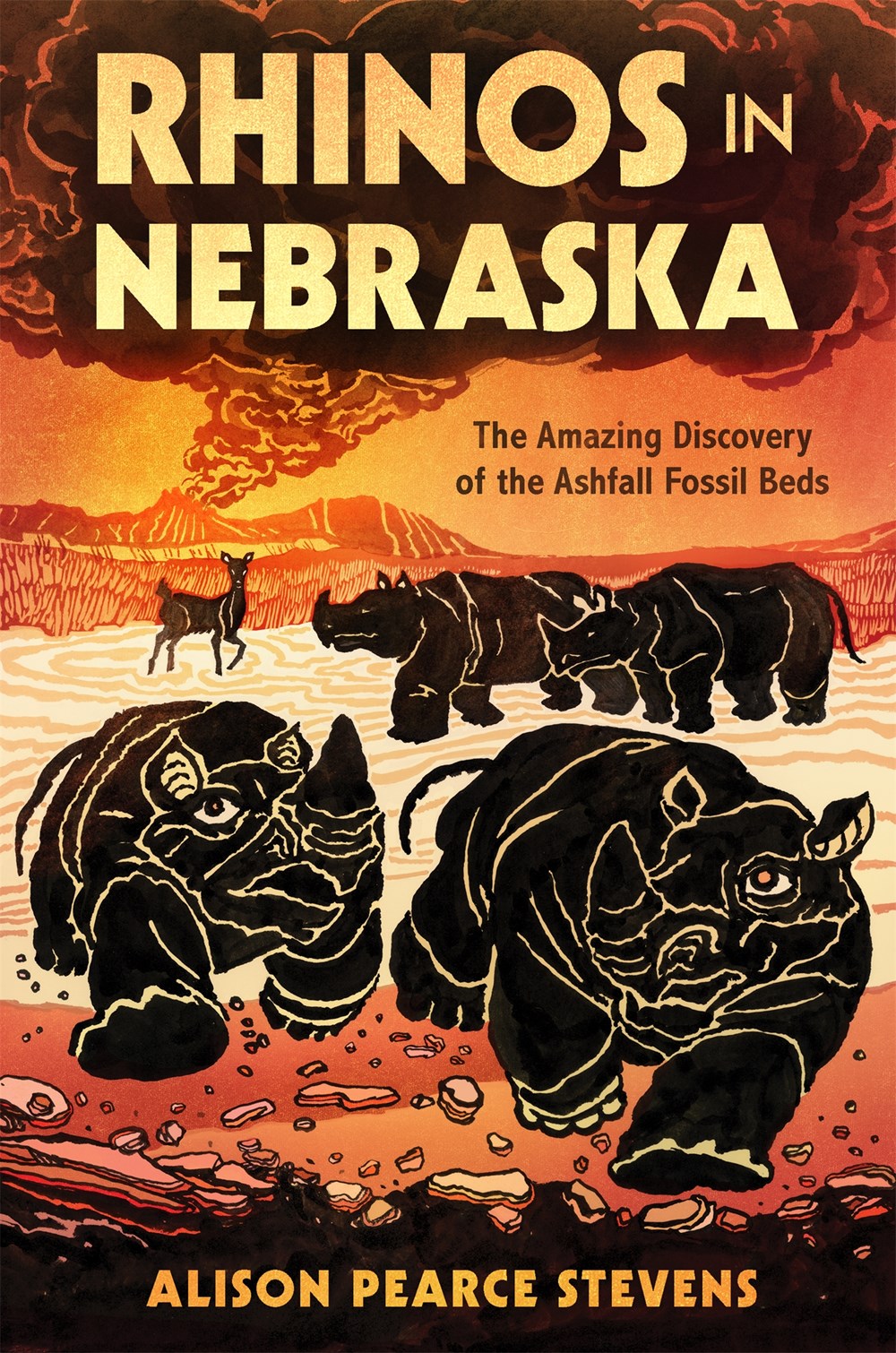
Rhinos in Nebraska, by Alison Pearce Stevens/Illustrated by Matt Huynh, (July 2021, Henry Holt & Company), $19.99, ISBN: 9781250266576

Ages 8-12

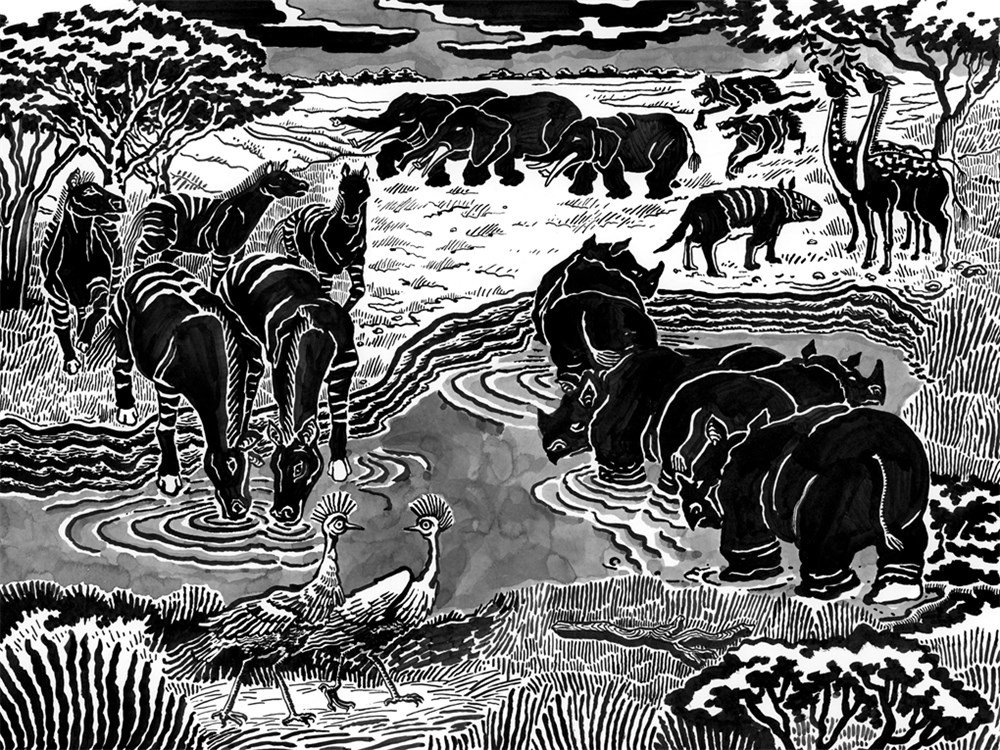
Twelve million years ago, a supervolcano exploded in what we now call the state of Nebraska; animals who used a nearby watering hole were buried under a blanket of ash, and lay quietly undiscovered for milennia, until 1953, when a 17-year-old farm worker and his father discovered a complete jawbone sticking up out of cliff at a spot called Bone Hill. Rhinos in Nebraska is the story of these animals, the supervolcano that killed them, and the discovery and construction of Ashfall Fossil Beds, where more than 200 perfectly preserved fossils have been uncovered. Author Alison Pearce Stevens worked with Ashfall researchers at the University of Nebraska State Museum as she wrote this story, which reads like adventure fiction, moving back and forth through different time periods to tell the story of this incredible archaeological discovery. Black and white illustrations and photos bring the story to life; the black artwork bringing to mind woodcut artwork that beautifully lends an ancient feel to these prehistoric animals. Alison Pearce Stevens generates emotion as she describes the agonizing deaths caused by the volcanic ash as deftly as she explains how a horse’s hoof evolved from three toes to one for easier movements like pivoting to evade predators. Back matter includes a glossary of terms – bolded in the book’s text – that come up throughout the narrative. There is also an author’s note and additional resources. Essential for ancient history readers.

Author Alison Pearce Steven’s website includes links to fun science videos and to activities related to Rhinos in Nebraska via TeachersPayTeachers.com. You can find more of Matt Huynh’s illustration work at his website. The American Museum of Natural History has a great, printable sedimentary layers puzzle available for free download.

Posted in Early Reader, Intermediate, Non-Fiction, Non-Fiction

Jurassic Pets! Dr. Dean Lomax and Mike Love gives us Preshistoric Pets

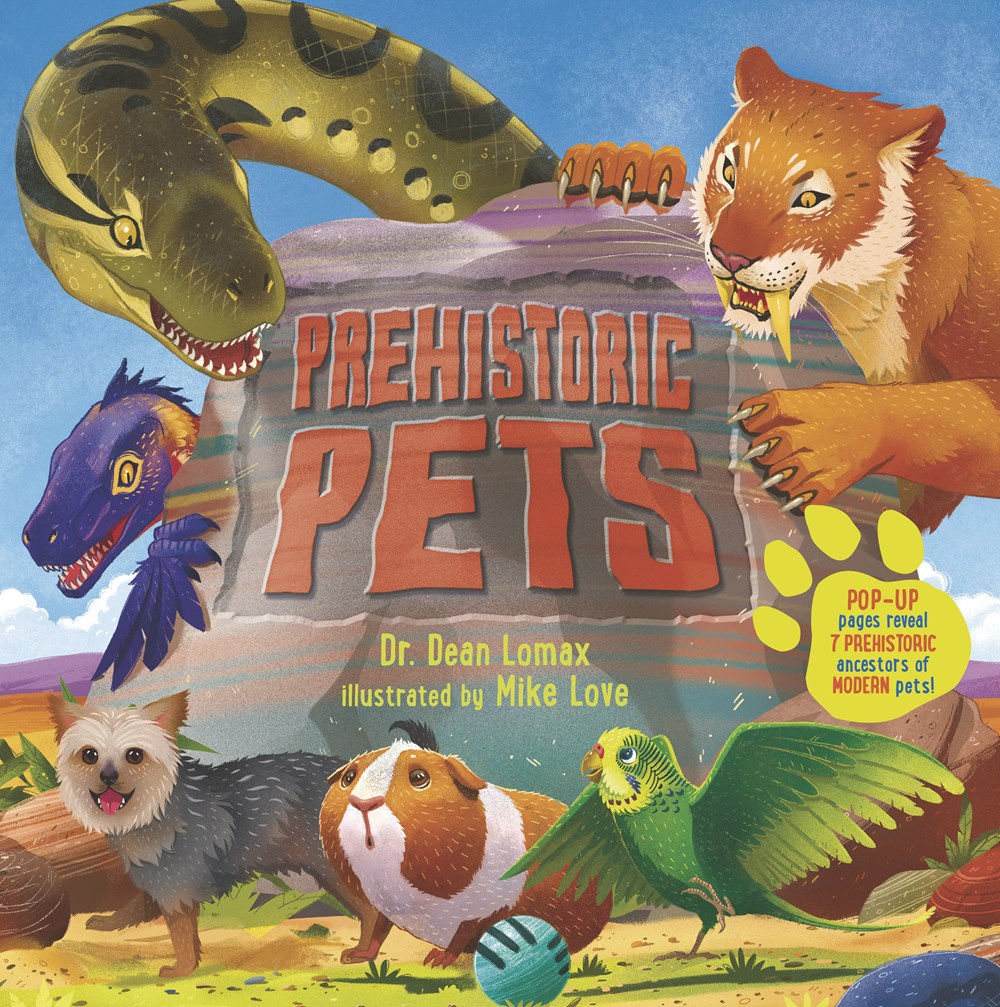
Prehistoric Pets, by Dr. Dean Lomax/Illustrated by Mike Love, (Sept. 2021, Templar), $17.99, ISBN: 9781536217148

Ages 5-9

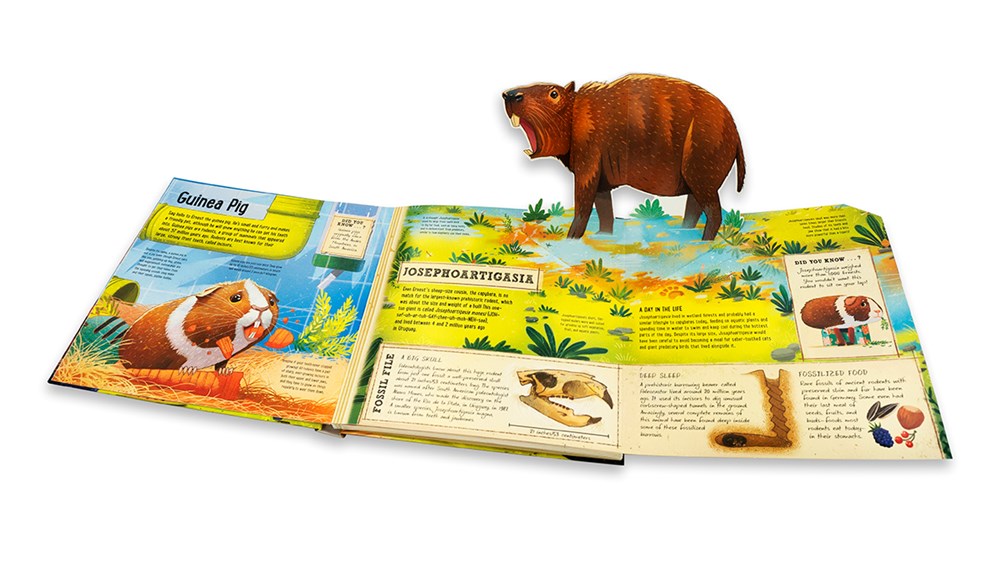
Cat people all know that our little furballs think of themselves as savage, saber-toothed tigers on the hunt, whether they’re stalking a daydreaming dinosaur or a dust bunny. But did you ever imagine what your guinea pig’s ancestors may have looked like? Paleontologist Dr. Dean Lomax has you covered. Prehistoric Pets looks at the evolution of seven favorite kinds of pets: guinea pigs, parakeets, corn snakes, cats, goldfish, dogs, and horses. Using the fossil record to trace each pet’s lineage, Dr. Lomax goes back through the family trees of each of these popular pets to give us an idea of their prehistoric parentage. That chatty parrot likely descended from the Velociraptor; your corn snake can trace its heritage back to the giant Titanoboa. Each spread folds out into a pop-up gatefold, with the prehistoric beast rising up from the pages. Loaded with facts about both the modern animal and its primeval counterpart, and filled with colorful artwork, this is a home run for your prehistory collections. Display and talk up with one of my favorite read-alouds, Steve Jenkins’s Prehistoric Actual Size. The pop-ups are going to seal the deal for readers on this book – get a couple if your budget permits.


Posted in Middle Grade, Non-Fiction, Non-fiction, Tween Reads

Dinosaurs books for the arts and sciences!

The 50 State Fossils: A Guidebook for Aspiring Paleontologists, by Yinan Wang/Illustrations by Jane Levy, (Sept. 2018, Schiffer Publishing), $18.99, ISBN: 9780764355578

Ages 7-12

You know that states have their own flags. You probably even knew that states have their own trees, foods, and animals, but did you know that most states have their own fossils? It’s true! 50 State Fossils give readers a state-by-state look at each one. Maryland’s state fossil, for instance, is a Sea Snail, while Michigan’s is a Mastodon – a mammal similar to elephants and mammoths. Some state fossils are plants: Oregon’s is a Dawn Redwood, while North Dakota’s is Shipworm-Bored Petrified Wood. Each entry includes a photo and illustration of the fossil (or proposed fossil, for those states that don’t have a state fossil); a state map with a designated area where fossils can be found in that state; and a brief notation on the fossil: when the fossil dates from, when it was designated a state fossil, scientific names, and a paragraph or two about the fossil.

The State Fossils are the meat of the book, but this slim volume is packed with information for budding paleontologists: there are sections on how fossils form, how a state fossil is designated, dating fossils and the geologic time scale, and taxonomic rank.  There’s a glossary, a state-by-state breakdown of where to see fossils, and further reading. Endpapers are a colorful mix of various flora and fauna that can be found in the book.

50 State Fossils is one of those books a kid will carry to the museum to refer to while wandering through exhibits (I know I used to) and makes for a great book to give dino fans. It’s a nice add to nonfiction collections and a good gift idea.


If da Vinci Painted a Dinosaur, by Amy Newbold/Illustrated by Greg Newbold, (Oct. 2018, Tilbury House), $17.95, ISBN: 9780884486671

Ages 4-8

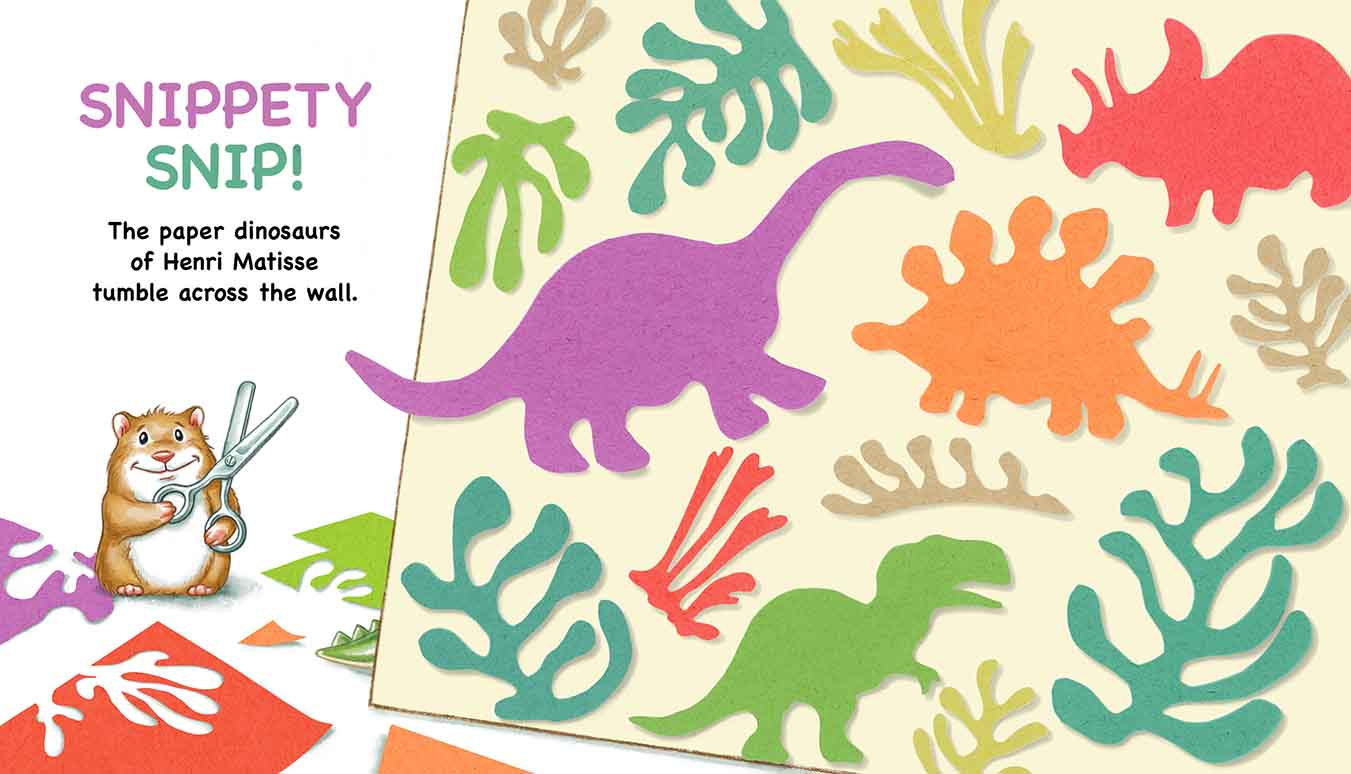
This follow up to 2017’s If Picasso Painted a Snowman is an enjoyable look at dinosaurs and art history. The hamster guide is back, escorting readers through an art gallery of different artists’ takes on dinosaurs, from a da Vinci-esque Virtruvian Dino, through Katusushika Hokusai’s giant wave (with dinosaurs wave surfing), and itty bitty dinosaurs hiding in Diego Rivera’s lilies. Who would da Vinci really paint, though, if he were painting dinosaurs? Why, Dino Lisa, of course! Readers are encouraged to copy a page sporting a blank easel and make their own dinosaur artwork, and featured artists get capsule biographies at the end, along with the dinosaur species designated to their paintings. A word from artist Greg Newbold encourages readers to draw, explore, and have fun on their own artist journeys. Endpapers inspired by Henri Matisse’s paper cutouts lead the reader in and usher them out, hopefully with a head full of ideas.

This book is just too much fun! It’s a great way to introduce art and science to kids, and begs for a program where kids can learn about artists and create their own dinosaurs. I’d have used this in my art storytime, for sure. (So maybe I need to dust that storytime off and revisit it.) Booktalk and feature in an art storytime with Lucy Volpin’s Crocdali; David Wiesner’s Art & Max; My Museum by Joanne Liu, and Henri’s Scissors by Jeanette Winter. This one’s an absolute add to collections.