Posted in programs

Halloween Slime Time!

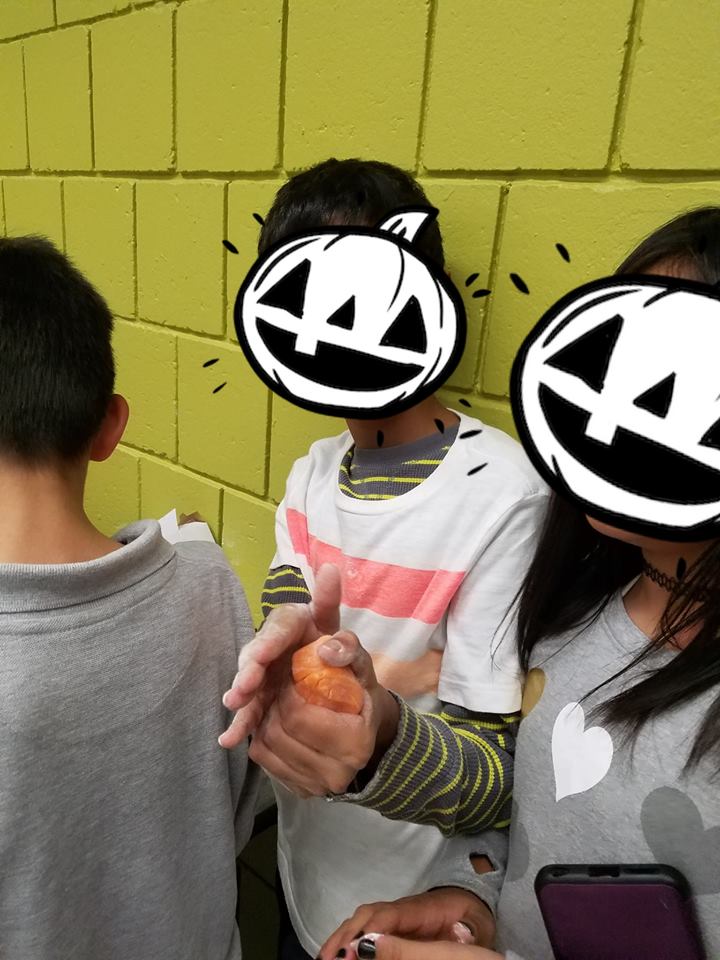
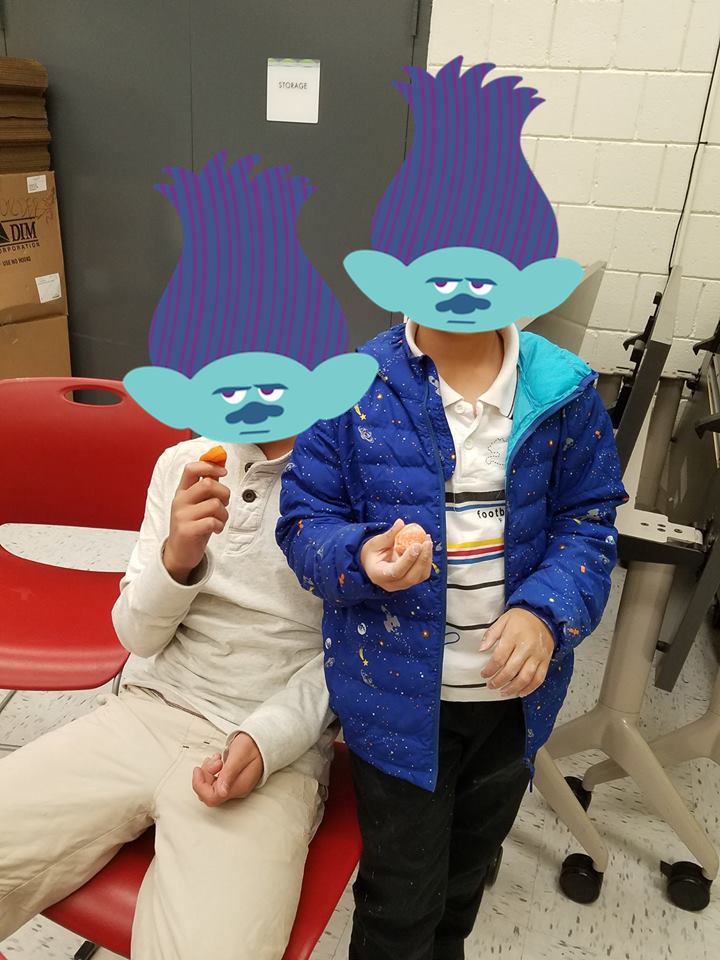
I’ve been settling in here at my new library digs, and finally felt comfortable enough with the kids to try something I’ve previously dodged in the past: slime. I feel like I’ve gotten to know my QH Kids and their parents well enough to attempt a mess on this level, especially after the Quirk Party bubble lab  and Annabelle Fisher author visit went so well. I found this great edible candy corn slime (more like Play-Doh in consistency) recipe from Teach Beside Me – incidentally, I love this site; you should add her to your list of program resources if you don’t have the site bookmarked already – and went for it.

I’m pretty sure the kids were happy. (And I love Facebook’s “Add Stickers” function so very much.)

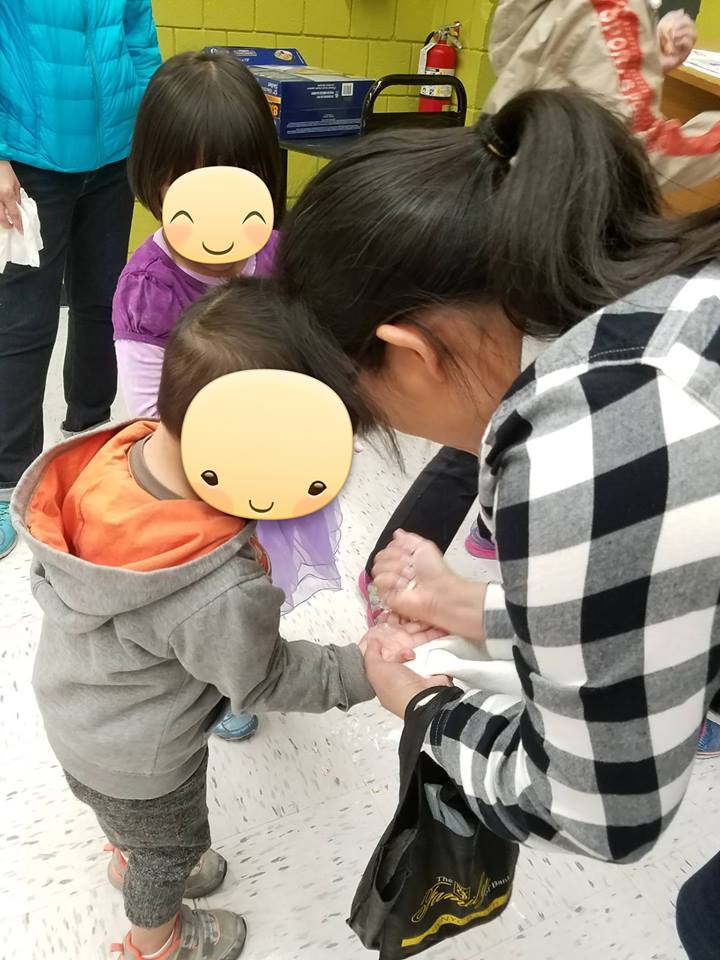
The program was packed – 20 kids and 4 parents! – so I recruited one of my tweens to handle melting duties with me, and we let all the little ones get a turn mixing the candy corn and coconut oil together. The kids had a blast, but word to the wise, this stuff gets as hard as a rock pretty darn quickly. I had a great time, we were all covered in powdered sugar and laughing, and they’re excited about the next slime lab, which will be something more pliable, and in greater volume: Definitely need to double the materials list to accommodate the kids.

Tomorrow, it’s walking s’mores (Golden Grahams, mini marshmallows, mini chocolate chips, put ’em in a cup), Scary Stories to Tell in the Dark, and a costume party with a tube of zombie army men as the grand prize. Stay tuned!

Posted in Intermediate, Middle Grade, Non-fiction, Non-Fiction

September Non-Fiction: Engineering, Nutrition, and the Planets

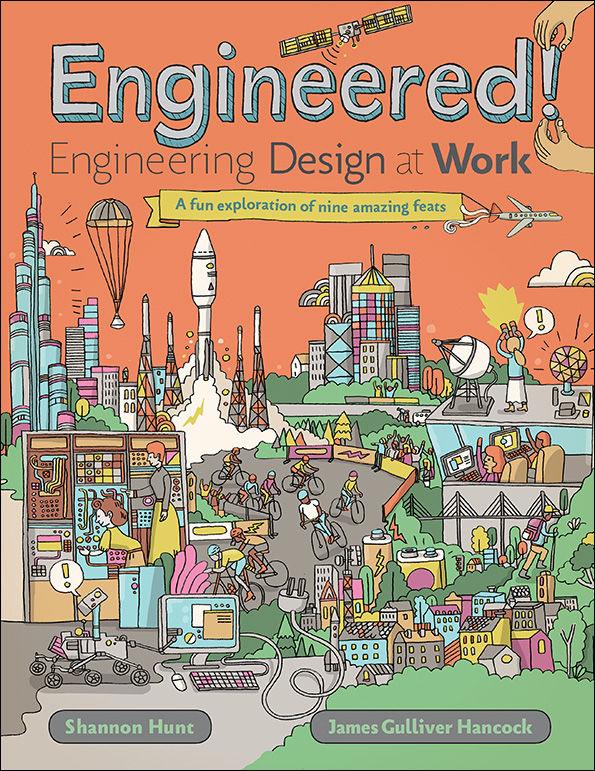
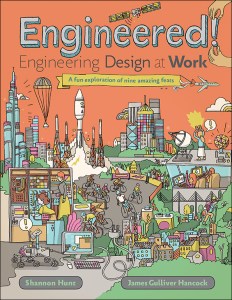
Engineered! Engineering Design at Work, by Shannon Hunt/Illustrated by James Gulliver Hancock, (Sept. 2017, Kids Can Press), $18.99, ISBN: 9781771385602

Recommended for readers 9-13

Nine engineering specialties -Aerospace Engineering, Biomedical Engineering, Chemical Engineering, Mechanical Engineering, Electrical Engineering, Civil Engineering, Geomatics Engineering, Computer Engineering, and Environmental Engineering – in this look at engineering design, which introduces readers to the step-by-step process by using eye-catching icons and nine case studies, one for each field. Team member bios that introduce kids to new scientists and what they do; new fields of engineering, like geomatics, are explained and illustrated, as are new technologies, like the incorporation of 3-D printing into biomedical engineering. Cartoony illustrations make the science more appealing to anyone who may think they can’t *do* science. Kids will learn that engineering can be found everywhere, from sending the rover to Mars, to saving animals from extinction, to replacing a sewer system to clear pollution from a lake. A glossary helps with new engineering terms readers come across.

Engineered! is a fun introduction to the basics of engineering and can be used equally in a science class, makerspace, or on career day.
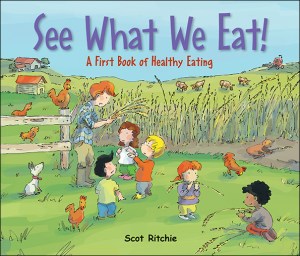
 

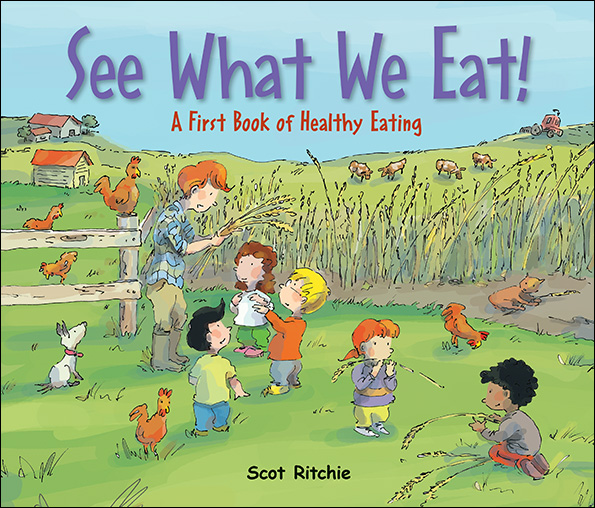
See What We Eat! A First Book of Healthy Eating, by Scot Ritchie, (Sept. 2017, Kids Can Press), $16.99, ISBN: 9781771386180

Recommended for readers 5-8

A group of friends takes a trip to a farm, run by one girl’s aunt. They’re there for pick apples and make an apple crisp for the potluck harvest dinner. Yulee’s aunt takes them on a tour of the farm, teaching the kids about growing grains and vegetables, getting enough nutrients, dairy, and protein – and addresses food allergies and alternative methods of getting those nutrients. Kids learn about transporting food to farmer’s market, stores, and all over the world. Ritchie addresses composting and recycling, and includes a tasty Harvest Apple Crisp recipe to try. A glossary helps readers with new words like pasteurize, carbohydrate, and nutrient.

The illustrations are soft, cartoony realistic, with a multicultural group of friends coming together to learn and eat. The room where the Harvest Celebration takes place has a line of hanging global flags as the families dine on pierogies, tamales, and apple crisp. With bolded facts and questions to encourage deeper thinking, this is a fun introduction for younger learners to nutrition and sustainability.

 

When Planet Earth Was New, by James Gladstone/Illustrated by Katherine Diemert, (Sept. 2017, OwlKids Books), $18.95, ISBN: 9781771472036
Recommended for readers 4-7
Take a trip through time and space and discover how our planet – and life on our planet – evolved. Beginning billions of years ago when Earth was forming, When Planet Earth Was New follows our planet’s formation through volcanoes and comet bombardment; through the formation of the oceans and evolution of life in the oceans and on the land. Beautiful, digitally-enhanced watercolor spreads showcase colorful artwork of each moment captured, with brief descriptive text that preschool and early elementary audiences will find breathtaking. A gorgeous spread showcases life on Earth today: a blue whale, birds flying overhead, and a marching line of animals, including a human being. A section at the end of the book presents each spread in thumbnail format, with additional explanatory text, and a glossary and list of sources round out this introduction to astronomy for young readers.
My 5 year-old loves this book; the spare text is just right for him and he’s fascinated with the changes our planet went through on its journey to the present. It’s a beautiful-looking book, and a great addition to elementary nonfiction collections. I can’t wait to display a copy in my library.
 

Posted in Fiction, Intermediate, Realistic Fiction, Uncategorized

Chow Mein and Potstickers brings global friends together

Chow Mein and Potstickers, by Liselotte Schippers/Illustrated by Monique van den Hout, (June 2017, Clavis Publishing), $16.95, ISBN: 978-1605373287

Recommended for readers 5-10

Chan is new to the neighborhood and wants to make some friends. The best way to go about it? Go door by door, of course! Told in the first person, we follow Chan along and meet the neighbor kids, who are from Bosnia, Indonesia, Poland, Afghanistan, Turkey, the Netherlands, Suriname, the U.K., South Africa, and Italy. Each new friend introduces Chan, and the reader, to a fun activity, food, and greetings in each language. The kids all gather together at the end for a celebration, where they share food and friendship.

Originally published in Belgium and Holland in 2015, Chow Mein and Potstickers is an initiative by Inclusive Works, a Dutch organization that promotes diversity and inclusiveness – and what better way to accomplish that than by having children serve as our example? Chan is our guide, as the new kid who wants to make friends. By playing together, Chan – and readers – learn about the ways kids all over the world have fun; we learn how to greet one another in global languages, and finally, we share food together. All great ways of promoting peace and togetherness. My son’s pre-k class had an international day where we did something similar; they sang “It’s a Small World” in 15 different languages and ate food that parents contributed from their native countries. This is a great story to read for a similar occasion; it’s a great story to read to our preschoolers and beyond to promote the global village we call our world.

Each 2-page spread features a new child Chan encounters; backgrounds are light, washed out, to bring the realistic artwork of the children to the forefront, with bright faces and clothing, surrounded by colorful toys. The vocabulary is set off with smiling icons for hello and good-bye, and a colorful sketch of each food the kids eat together.

This is a solid addition to diversity collections. It’s similar to How the Queen Found the Perfect Cup of Tea, in that it stars a character who travels the world (well, in this case, the world in a diverse neighborhood), meeting different people from different cultures, and sharing food together. Get some recipe cards together and hand them out with coloring sheets for a multicultural storytime!

Posted in Animal Fiction, Early Reader, Fiction, Preschool Reads, Toddler Reads

Stanley’s Store Blog Tour!

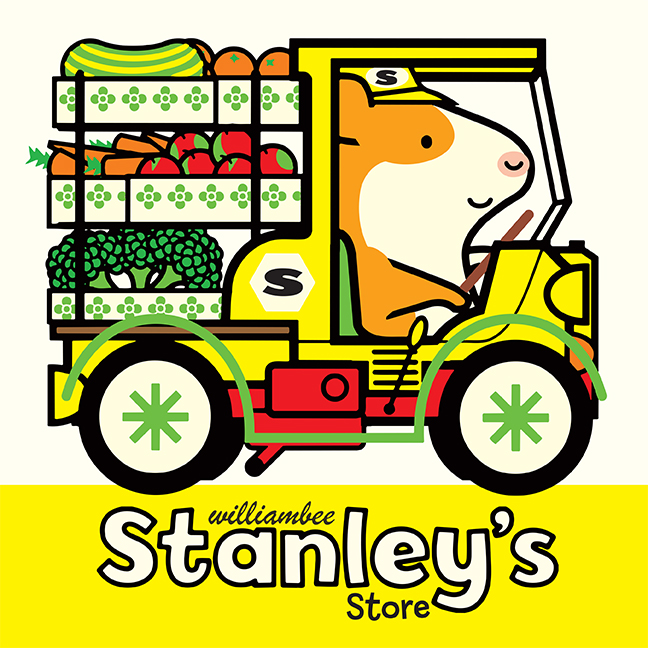
The hardest working hamster in town is back in his sixth book, Stanley’s Store (by William Bee, March 2017, Peachtree Publishers, $14.95, ISBN: 978-1-56145-868-4) . It’s a busy day at Stanley’s Store: Stanley’s got to unload fresh fruits and vegetables; Mattie helps customers pick out cheese, and there’s some excitement when Charlie doesn’t know how to control his shopping cart! Stanley’s always there to help, though, and at the end of a busy day, it’s time for him to go home.

stanley

My colleague LOVES Stanley. When we opened this library, she made darned sure we had the full line of Stanley books ready for the kids, so when I told her there was a new book coming out, she was thrilled! I sat down and read the first five books, and they’re adorable. They introduce kids to different careers (builders, business owners – stores and diners, farmers, mechanics, and mailmen) that shape their world, and provide a little look into the events of each job’s day. Stanley’s Store is a good book to read with your child and talk about your experiences at the grocery store; it’s also a good opportunity to point out safety and paying attention, illustrated by Charlie’s mishap. I love Shamus and Little Woo, a father and son duo, whose cart mysteriously fills up with cookies and sweets when Shamus’ back is turned. The story also slips in shape and color awareness, making this a great book for toddler and pre-k audiences.

Play store! Save some packaging and let your kiddos “shop” and create displays! Plastic food is huge with the kids in my library (and with my own kiddos, when they were younger) and is available everywhere. Talk about shapes and colors and talk about what foods are good for you. This could be paired with a fun flannel board activity and there are many food-related songs available to put together a fun storytime and playtime.

Posted in Animal Fiction, Early Reader, Fiction, Preschool Reads

Join Porcupine’s Picnic!

porcupines-picnicPorcupine’s Picnic: Who Eats What?, by Betsy R. Rosenthal/Illustrated by Giusi Capizzi, (Feb. 2017, Millbrook Press), $19.99, ISBN: 9781467795197

Recommended for ages 4-6

Porcupine is going on a picnic! He packs a basket full of clover and settles into a perfect spot. Nearby animals ask to join him, and bring their own food: koala loves his eucalyptus, squireel enjoys his acorns, and giraffe nibbles on his leaves. When Tiger shows up, though, the picnic comes to a very quick end!

This is a cute introduction to different animals and what they eat. An explanation at the end of the book introduces readers to herbivores, carnivores, and omnivores, and points out which animals from the story belong to which group. The digital art is very cute, and the reptitive pattern of the story – animal asks to join, Porcupine offers clover, animal declines and eats his or her own food – will appeal to younger readers, who can predict what will happen next. The story does tend to go on a bit long, at 40 pages, and could have used a few less animals; I worry about younger readers’ interest as the story proceeds. This would be a good flannel story candidate: create animals and foods, and invite storytime audiences to match the animal with the food on the flannel board, or even make up a worksheet and/or memory game to hand out after the story. An additional purchase for animal collections.

Posted in Toddler Reads

Toddler fun with Little Billy-Bob and friends

I’ve enjoyed Pauline Oud’s board books for little ones; she always has such adorable faces on her cartoony toddlers. Clavis Books has just released two more in her Little Billy-Bob series – numbers 3 and 4, I believe – and they’re great for toddlers and their favorite grownups to snuggle up and read together.

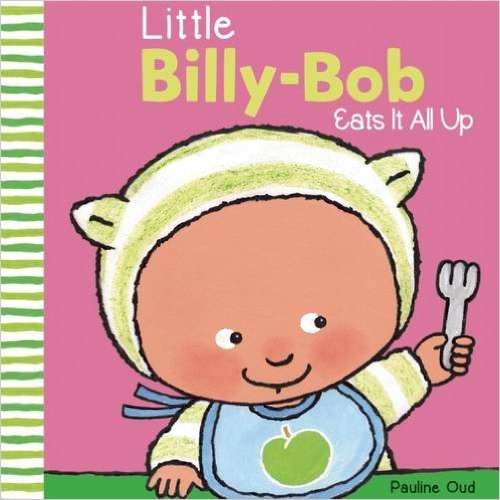
billybobeatsLittle Billy-Bob Eats It All Up (Nov. 2016, $12.95, 978-1605372969) stars Little Billy-Bob, in his ever-present footie pajama set and animal eared-hood, and his friend, Fifi, similarly dressed. The two friends are playing together when their tummies start rumbling: it’s time to eat! Together, the two eat a healthy lunch and notice their happy bellies fill up.

Little Billy-Bob goes through his bedtime ritual: brushing his teeth, climbing out of his bed to say goodnight to the moon, his pets, and his toys in Good Night, Little Billy-Bob (Nov. 2016, $12.95, 978-1605372952).

Toddlers will see themselves in Little Billy-Bob (and Fifi!) as they go through rituals that toddlers are beginning to master on their own: feeding themselves; drinking water from a cup; brushing teeth, and getting ready for bed. Each book begins with the same rhyme, opposite Little Billy-Bob reading his own book, and invites readers to curl up in a lap and enjoy reading and cuddle time. Both books also offer questions throughout the book, helping readers further engage their little ones: Can you brush your teeth just like little Billy-Bob? Do you see the moon, too? Do you see their empty tummies too Do you think they should eat something? These questions are fun springboards for questions of your own; I like to use questions that have kids incorporate their own experiences. For instance, “Remember when your belly growled this morning? Did you eat breakfast when your tummy grumbled?”

Each story ends with a counting summary of the story subject: “One slice of toast and you will grow; two slices of apple and pear. What else do you like?”

These aren’t quite board books, but the covers are board and the heavy stock pages will stand up to multiple readings. The art is cartoony and fun, and it’s nice to see some diversity with Fifi, who is a child of color. Illustrations are pastel and calming, boldly outlined for definition, against pastel backgrounds. These are my first experience with the Billy-Bob books, but I do love Pauline Oud’s artwork and highly recommend her other series, Ian, Lily and Milo, and Piggy. Check out her website for more about the books, and see more books from Clavis’ Fall lineup right here.  These are sweet little books about toddler daily routines that little ones will enjoy – and they invite you to cuddle up and read, which is my personal mission, so they’re a win for me.

Posted in Early Reader, Fiction, Fiction, Humor, Intermediate, Preschool Reads

What was your Worst Breakfast?

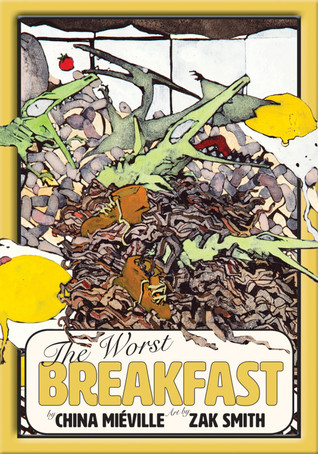
worstbreakfastThe Worst Breakfast, by China Miéville/Illustrated by Zak Smith, (Oct. 2016, Black Sheep/Akashic), $16.95, ISBN: 978-1617754869

Recommended for ages 3-8

Two sisters sit down one morning to talk about the worst breakfast they’ve ever had. It gets progressively worse, from burnt toast, to unbaked, uncooked, unclean baked beans, a steaming, slick tomato hill oozing into rancid swill. Can it get worse? It has to get better… doesn’t it?

This book is just too much fun to read by yourself or a room full of kids, who will squeal with awful glee as the awful breakfast the two sisters describe gets grosser and grosser. Award-winning author China Miéville, best known for his fantasy and science fiction tales, is brilliant as he constructs a hilarious, rhyming tale, told as a conversation between two sisters remembering the worst breakfast ever made. Building on each other’s memory, the sisters one-upping each other and – illustrated in full repulsive glory by Zak Smith – create a mountain of food so terrifying and awful that you have no choice but to squeal and giggle uncontrollably at memories of terrible meals past. And then… a glimmer of hope? Maybe breakfast can be saved, after all.

I love this book. I hope Miéville and Smith have more stories to tell, because this will be a storytime mainstay for me. This would be great for a food storytime. Pair this one with Kate McMullan’s I Stink!, where a garbage truck narrates a stomach-churning alphabet of the “food” he eats on his shift. I’d also pair this with Maurice Sendak’s In the Night Kitchen for a surrealist story session; I was reminded of Sendak’s book often as I read The Worst Breakfast. I enjoyed the back and forth between the sisters, and the different British-American references, like the differences in the pronunciation of words  like tomato and bravado: “You can’t rhyme TOMATO and BRAVADO!” “I can if we’re English. Almost. Tu-MAH-toe, bruh-VAH-doe.” I love the pictures that Miéville paints with his words and Zak Smith’s wild interpretations that give the words life on the page.

worstbreakfast_4

This is a fun tale that’s sure to get the kids interacting during a storytime. If you’ve got readers who enjoy gross humor – and who doesn’t? – this will build their vocabularies and make them howl with disgusted delight. The Worst Breakfast has received a starred review from Kirkus.


Posted in Fiction, Preschool Reads

The Ugly Dumpling puts a new spin on a beloved fable

ugly dumplingThe Ugly Dumpling, by Stephanie Campisi/Illustrated by Shahar Kober (Apr. 2016, Mighty Media), $15.95, ISBN: 978-1-938063-67-1

Recommended for ages 3-7

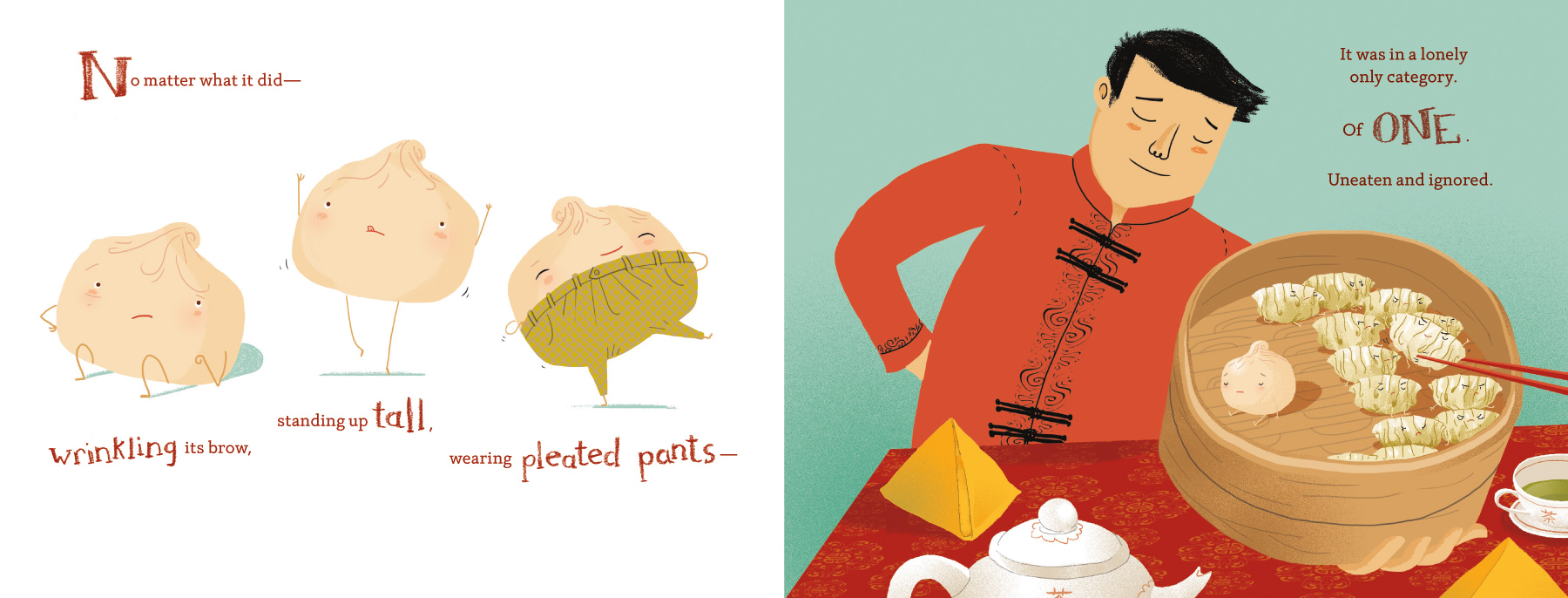
There once was an ugly dumpling who didn’t look like the other dumplings. This made him feel really badly, until along came a cockroach, whose heart reached out to the dumpling’s, and showed him the beauty of the world.

Sounds familiar, right? Well… kinda. The latest update of the classic Hans Christian Andersen fable The Ugly Duckling, The Ugly Dumpling looks beyond the surface to tell a sweet story about friendship, being different, and being proud of it. The dumpling, living in a restaurant, was uneaten and ignored because he didn’t look like the dumplings around him, but when he takes up with the cockroach, he realizes that the world around him is beautiful and so is his place in it – and he learns that he’s not a dumpling like those boring other guys after all! But the sweetest part of the story comes when the cockroach is discovered by the other food and the customers – and Dumpling realizes that it’s his turn to reach out to a friend in need.

MMP-5871_UgDu_MK1

Told in short, sentences with key words emphasized by beautiful artwork, like the “hiss” of a wok and a “thwack” of a cleaver, The Ugly Dumpling teaches kids not only that it’s okay not to fit in, but encourages them to accept one another’s differences – celebrate them! – and reach out to anyone who may feel ostracized and alone. I can’t think of a kinder, more valuable message to teach our kids these days.

Shahar Kober’s art is a perfect complement to Stephanie Campisi’s sweet story. I’m not a bug fan by any stretch of the imagination, but he manages to create a bug companion that is adorable and as touching as the cockroach in Wall-E (and that’s a HUGE thing for me to say). And think about it – what creature is as reviled as a roach? Ratatooie made mice in the kitchen a cute thing, we all love Desperaux, so by taking a cockroach – no doubt someone who’s all too aware of being an outsider and disliked – and having him reach out to a poor dumpling to say, “It’s okay – there’s so much beauty in the world around you,” is a beautiful gesture borne out of a true understanding of The Golden Rule. Kober manages to make a dumpling sympathetic and emphathetic, with kind words wrapped around him to give him life.

dumplingbowl

I love this story and can’t wait to read it with my preschoolers. It’s a great add to libraries and collections that promote tolerance and kindness among children, and maybe some adults could stand to learn a thing or three from its message, too.

Posted in Fiction, Middle Grade

Cybils Middle Grade At-a-Glance: The Meaning of Maggie & All Four Stars

I’ve been quiet lately, because I’ve been plowing through my Cybils middle grade fiction nominees. Here are some thoughts.

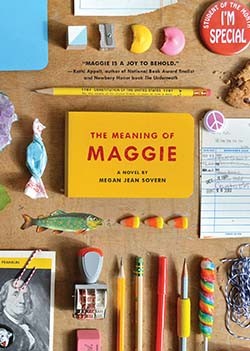
meaning of maggieThe Meaning of Maggie, by Megan Jean Sovern (2014, Chronicle Books) $16.99, ISBN: 978-1452110219

Recommended for ages 9-12

Set in the 1980s, Maggie’s an 11 year-old girl who wants to be president one day. She’s funny, quirky, and seemingly always at odds with her two older sisters. Her family is coping with her father’s increasingly worsening multiple sclerosis, the severity of which they try to shield from Maggie.

I enjoyed this book, in part because one of my childhood friends lost her mom to MS. Reading this book helped me, in a way, understand what my friend went through all those years ago, when we were all far too young to understand it. The author drew upon her own life to write this book, and for that, I’m thankful. Maggie is engaging and quirky, and as frustrating as I found her dad, in his ultimate quest to “be cool”, I saw his struggle to hang on when everything was falling apart around him.

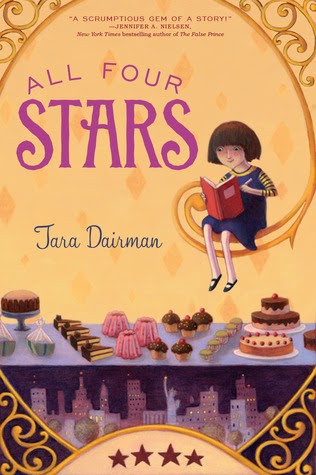
all four stars coverAll Four Stars, by Tara Dairman (2014, Putnam Juvenile), $16.99, ISBN: 978-0399162527

Recommended for ages 9-12

An 11 year-old foodie raised by junk food junkies has to be one of the best story plots I’ve come across in a while!

Gladys LOVES cooking. It’s her passion. She has a cookbook collection, watches cooking shows with a passion her classmates reserve for video games… and her parents just don’t get it. They microwave everything that they don’t bring home in a greasy bag. How can a foodie live like this?

When Gladys enters an essay contest for the New York Standard newspaper, her essay ends up in the hands of the food editor – who thinks it’s a cover letter. Gladys finds herself with a freelance assignment – to test out a new dessert restaurant in Manhattan! How can she visit the restaurant and write her review without her parents catching on?

This book just made me happy. It’s a fun story, with an instantly likable main character. Even her antagonists are likable, if a bit clueless. The plot moves along at a great pace, and I found myself chuckling out loud at some of the situations Gladys found herself in while trying to keep her secret. This is a great book to put into kids’ hands, a welcome lift from the heaviness that seems to permeate middle grade realistic fiction these days. I can’t wait to read the sequel, The Stars of Summer, when it hits shelves this summer.


Posted in Preschool Reads

Book Review: Food Fight, by Carol Diggory Shields/Illus. by Doreen Gay-Kassel (Handprint Books, 2002)

food fightRecommended for ages 3-8

Late at night, when we are fast asleep, who knows what goes on in our refrigerators? In Food Fight, it’s the cat who bears witness to this story about what happens when the food in a kitchen decides to throw a late-night party. The story, told in rhyme, escalates when tuna fish tells the garlic, “You stink”, angering the chili pepper, and the rumble is on. The artwork, done in modeling clay, brings life to the food, creating a wide variety of facial expressions and movements. The multicolored text, in different sized, exaggerated font, swirls and flows around the artwork and stands out against the brightly colored backgrounds, adding more fun to the book and for the reader. The endpapers offer a cursory look into the refrigerator, showing assorted groceries on shelves.

This would be part of a fun, food-related read-aloud for preschoolers and kindergarteners. It could fit in with other fun food books, like Dr. Seuss’ Green Eggs and Ham, and can also lead to a discussion about healthy eating. Putting out plastic food for children to play with will provide a fun playtime, as will singing songs like “On Top of Spaghetti”.

Food Fight has received numerous awards and accolades, including designation as an ALA Notable Children’s Book (2012), Colorado: Children’s Book Award Nominees (2013), Horn Book Fanfare (2011), Indies Choice Book Award for Picture Book (2012), Irma S. & James H. Black Picture Book Honor (2012), NY Times Best Illustrated Books (2011), NY Times Notable Children’s Books (2011), Publisher’s Weekly Best Children’s Books (2011), Texas: 2×2 Reading List (2012), Theodore Seuss Geisel Honor (2012), Virginia: Readers’ Choice Award Nominees (2013).