Posted in Uncategorized

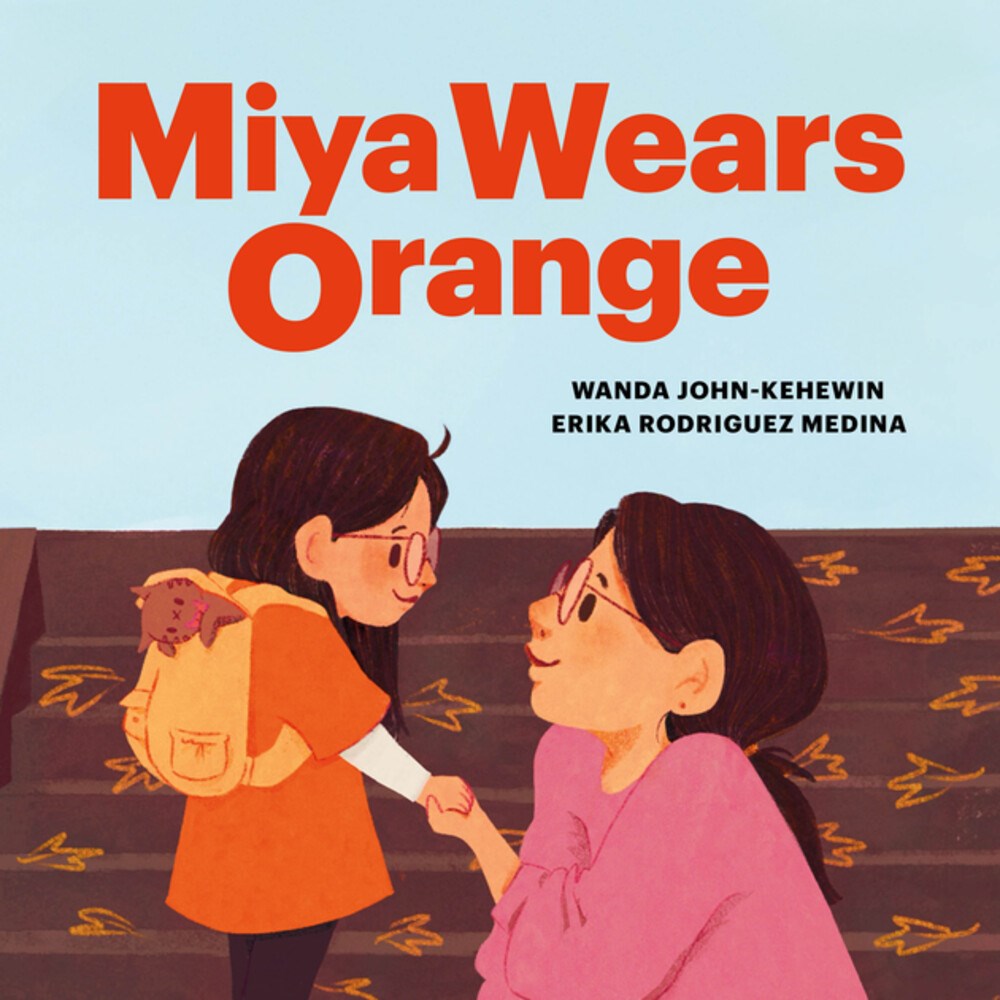
Happy Book Birthday to Miya Wears Orange

Miya Wears Orange, by Wanda John-Kehewin/Illustrated by Erika Rodriguez Medina, (Aug. 2025, Highwater Press), $18.95, ISBN: 9781774921258

Ages 6-8

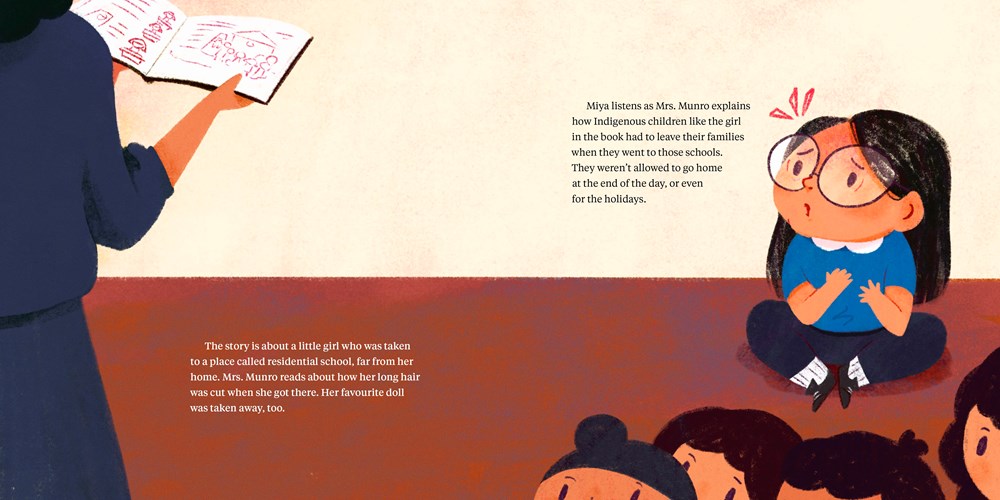
A young Indigenous girl learns about residential schools in her class, making her fear that she will be sent to one. When Miya arrives at home from school, she reluctantly tells her mother about her concerns; her mother assuages her fears, telling her that the schools have closed and she will never have to attend one. When Miya questions why her teacher read a book about them, Mom notes that “We all need to understand the truth of what happened, so we can make sure it never happens again”.  Mom tells Miya about wearing an orange shirt as a way of remembering the struggles of Indigenous children, and Miya proudly wears when she returns to school. John-Kehewin shows the intergenerational trauma wreaked by the schools and how it reaches the current generation. Medina’s illustrations have cultural details and her characters are inclusive and expressive. An author’s note mentions her inspiration for Miya’s story. A powerful and moving story about residential schools as seen through the modern-day eyes of an Indigenous girl, Miya Wears Orange belongs in library collections everywhere.

Learn about the National Day for Truth and Reconciliation here.
Posted in picture books

A childhood memory brought to the page: Herring to Huckleberries

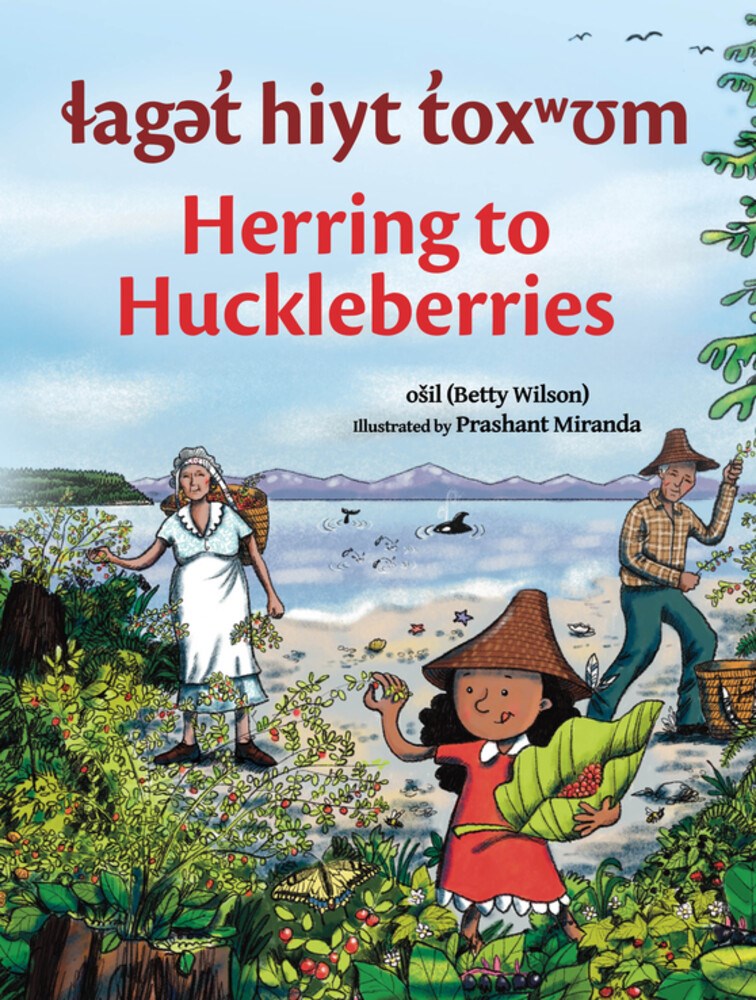
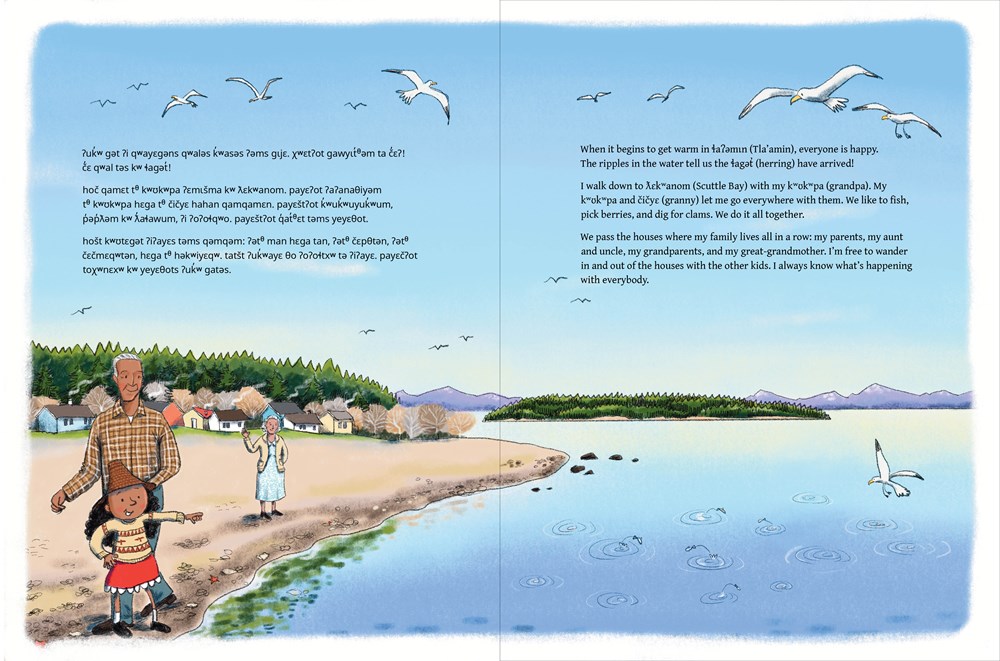
ɬagət̓ hiyt t̓oxʷʊm / Herring to Huckleberries, by ošil betty wilson/Illustrated by Prashant Miranda, (April 2025, Highwater Press), $21.95, ISBN: 9781774921180

Ages 6-8

Inspired by author ošil’s childhood as a member of the ɬaʔəmɩn (Tla’amin) Nation, Herring to Huckleberries is a bilingual picture book, written in the the ɬaʔəmɩn language and in English. Ošil’s favorite time of the year is spent with her grandparents on the southwest coast of British Columbia, harvesting foods from the sea and land. They fish, pick berries, dig for clams, and curl up together to fall asleep under the stars. ošil’s descriptions are vivid, so filled with an infectious joy, wonder and respect for the land. It’s a warm memory of time spent with family beautifully illustrated by Miranda, who uses deep natural colors to create the coastal setting. The characters are expressive and affectionate, portraying a loving family. A glossary and pronunciation guide, a map, author’s note, and list of traditional foods round out the back matter. Recommended for collections.

For more information about the ɬaʔəmɩn (Tla’amin) Nation, visit the Tla’amin Nation’s webpage and British Columbia’s Assembly of First Nations’ webpage.


Posted in picture books, Uncategorized

Enjoy the seasons from an Indigenous perspective: Dad, is it Time to Gather Mint?

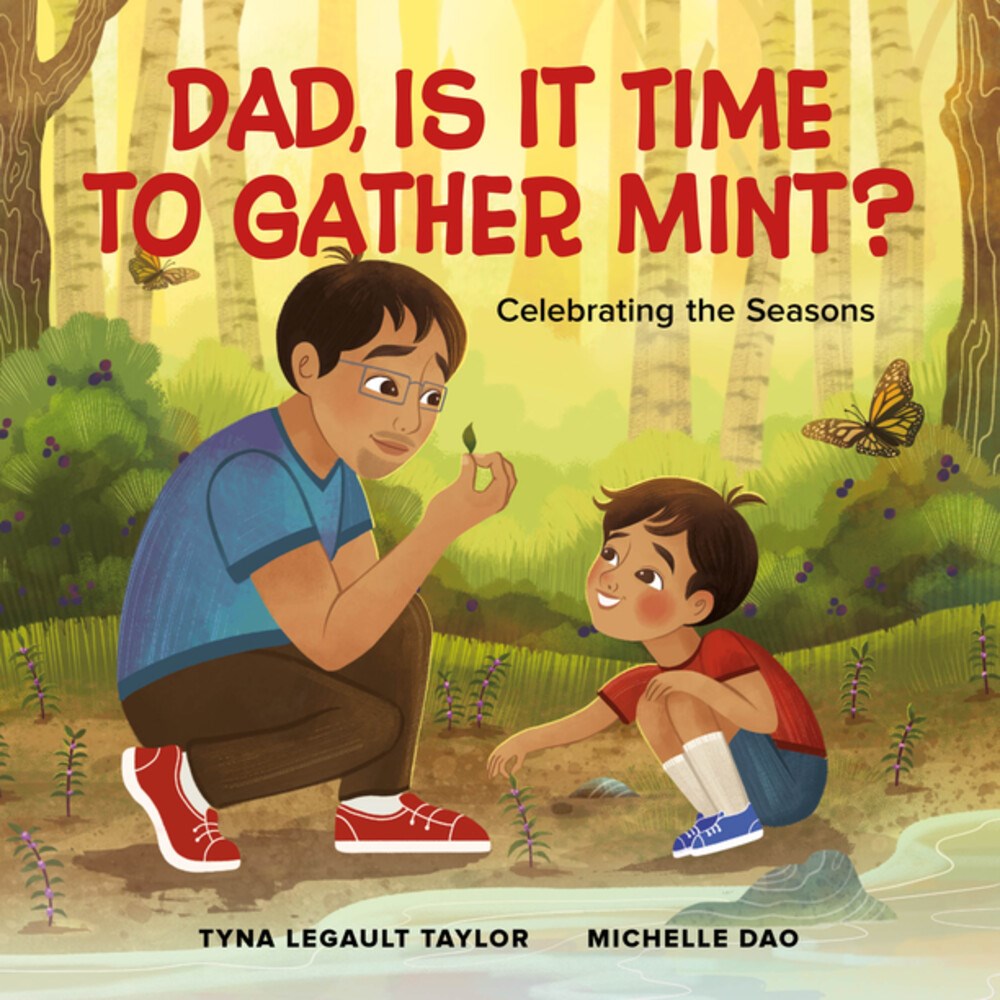
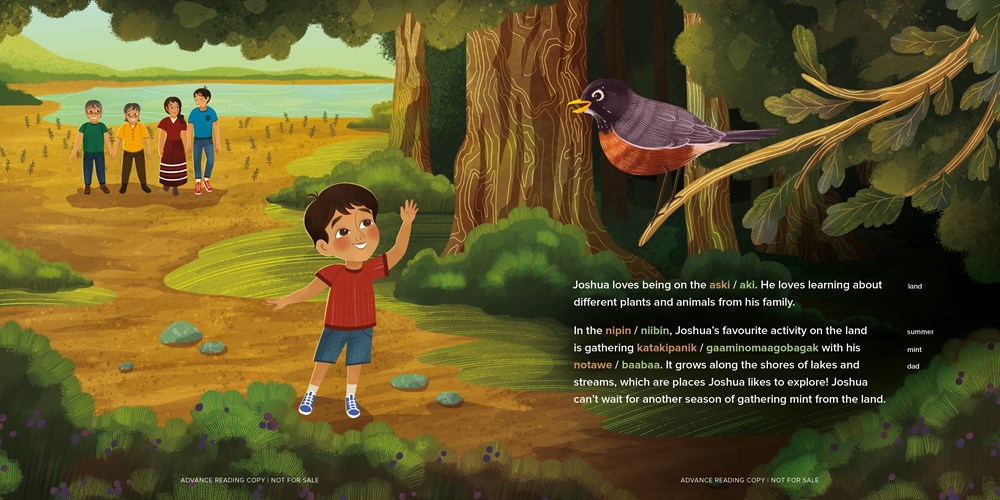
Dad, is it Time to Gather Mint?: Celebrating the Seasons, by Tyna Legault Taylor/Illustrated by Michelle Dao, (May 2025, Highwater Press), $18.95, ISBN: 9781774921227

Ages 5-8

Dad, is it Time to Gather Mint? celebrates the relationship between humans and the land as a First Nations child and his family move through the seasons. Told in three languages: English, Swampy Cree (n-dialect), and Anishinaabemowin, the story is narrated by Joshua, a young boy who revels in his relationship to the land; his favorite time of year being mint-gathering season. Josh and his dad spend time together in nature through Fall, Winter, and Spring; he drinks in the colors and feels of the surroundings of each time of year. In the Fall, he sees the leaves change color and animals prepare for the winter; in the Winter, the cottony snow brings the cold. In Spring, he sees the animals return and the land come back from a winter’s sleep, and in Summer, he feels the longer, warmer days and rejoices in the green around him. Each season he asks Dad if it’s time to gather the mint, and each time, his father describes what other work must be done: hunting moose and partridge in the Fall; ice fishing in the Winter; hunting geese and fishing for rainbow trout in the Spring. Finally, the Summer arrives, and with it, the time to gather mint! It’s a moving story of family and stewardship to our world. Vocabulary in Swampy Cree and Anishinaabemowin are color-coded in brown and green throughout, with English translations in the margins. Back matter includes a glossary and pronunciation guide along with a recipe for Mint from the Land Iced Tea, just like Joshua’s mother makes. A moving and important addition to season books for collections.

For more information and resources on the Swampy Cree, visit the Saskatchewan Indigenous Cultural Center and the Swampy Cree Tribal Council. For information on the Ojibwe, who speak Anishinabemowin, visit the Minnesota Historical Society the Gladue Rights Research Database of Legal Aid Saskatchewan. Always check in with Debbie Reese’s American Indians in Children’s Literature website for recommendations on Indigenous creators and works.


Posted in Early Reader, Fiction, picture books

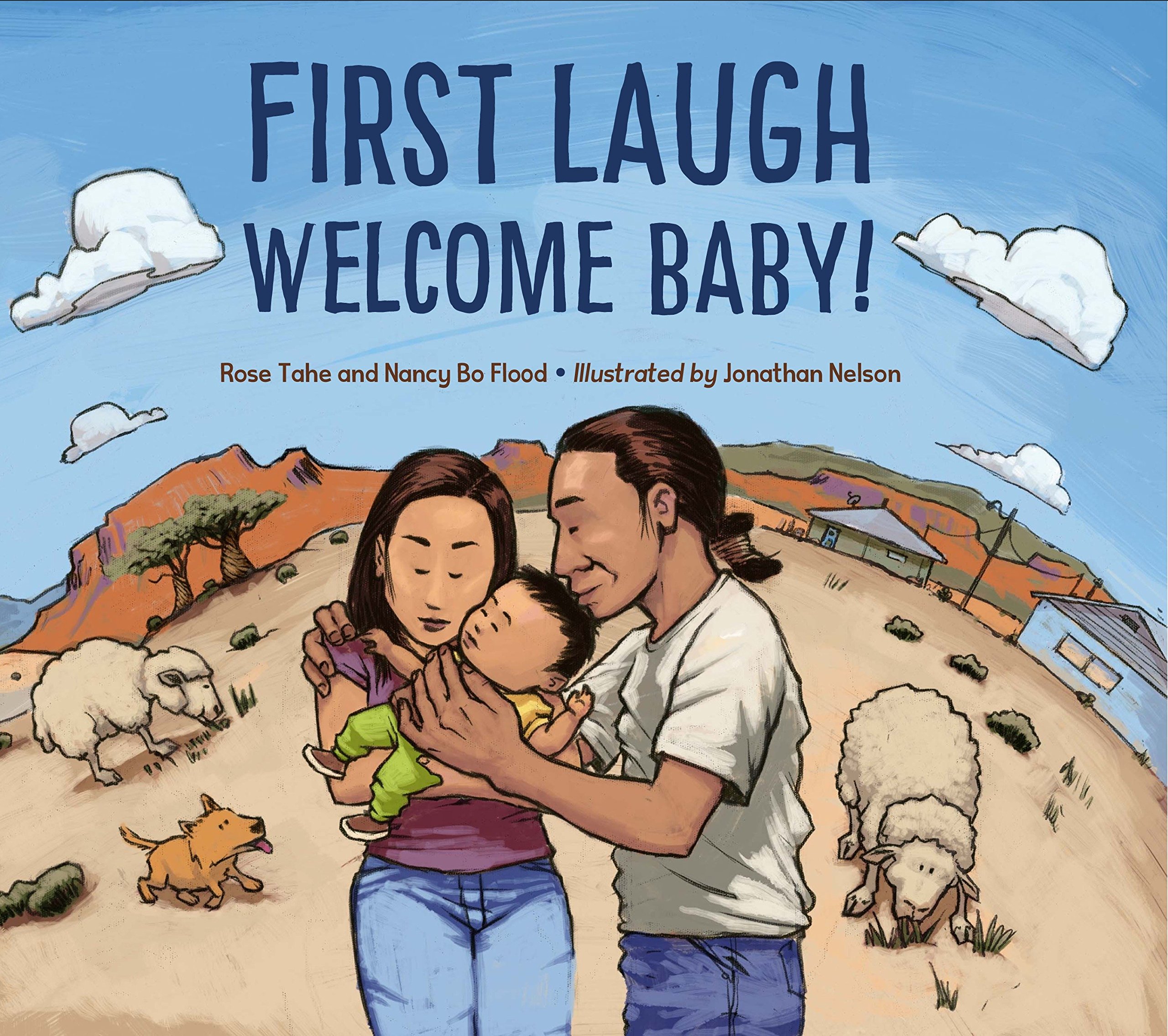
In First Laugh Welcome, Baby!, a family waits…

First Laugh Welcome, Baby!, by Rose Ann Tahe and Nancy Bo Flood/Illustrated by Jonathan Nelson, (Aug. 2018, Charlesbridge), $16.99, ISBN: 9781580897945

Ages 5-8

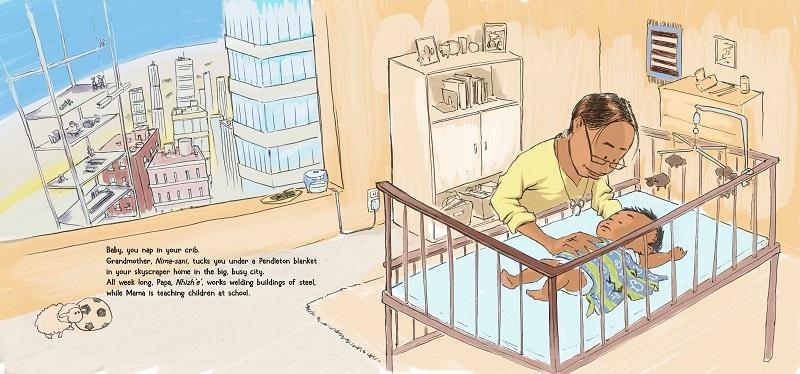
A Navajo family waits for baby’s first laugh. Who will be the first to hear it? Will nima-sami (grandmother) hear it, as she tucks Baby in for a nap? Will it be big sister (nadi), who cooks Baby a tasty meal? Maybe it will be nima (mama), who sits weaving while Baby rests in a papoose. Or will it be cheii (grandpa), who splashes Baby with water? Everyone in the family is waiting, kissing, tickling, hugging, and singing, as Baby squirms, yawns, frowns, until… suddenly… a smile! Let the First Laugh celebration begin!

First Laugh Welcome, Baby is a beautiful look at a Navajo tradition; the First Laugh Celebration is a child’s first formal welcome into a family and clans. The lyrical story is filled with Navajo words and glimpses of Navajo life, woven into a story about the joy of a baby’s first laugh and the celebration it brings to families and communities. Jonathan Nelson’s pencil, acrylic, and Photoshop artwork create a loving portrait of a family that spends time together both in the city and on a Navajo reservation; they eat together, enjoy nature together, and socialize together in settings primarily illustrated with earthy tones and bold lines.

Back matter includes author’s notes from the late Rose Ann Tahe and Nancy Bo Flood, and an illustrator’s note from Jonathan Nelson; a note about the First Laugh Celebration, and ceremonies in other cultures, including Muslim, Nigerian, and Jewish families.

Nancy Bo Flood’s Soldier Sister, Fly Home is a powerful middle grade story about a Navajo family; First Laugh is a wonderful picture book that introduces younger readers to First Nation families. Please, please, please, put these and other books by indigenous authors and illustrators in your bookshelves and in front of your readers.

Posted in Intermediate, Middle Grade

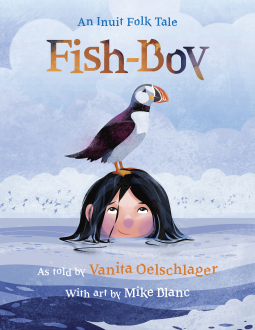
Fish-Boy spins an Inuit tale

Fish-Boy, by Vanita Oelschlager/Illustrated by Mike Blanc, (May 2018, Vanita Books), $15.95, ISBN: 9781938164200

Recommended for readers 7-10

A wise old Inuit relates the tale of Fish-Boy, a magical folk tale that explains why so many sea parrots (also known as puffins) nest on Ignaluk, a great rock in the Arctic region of North America. When the hunter Kitmesuk went out to fish one day, he discovered Fish-Boy instead: an armless boy with a fish body, lonely, and looking for a father. When the two travel to another village on a chief’s invitation, the villagers’ behavior toward them is awful – rude and combative. Fish-Boy uses magic to turn men that would harm them into sea-parrots, thus providing a strong message about being a good host.

The art allows for readers to interact with the story; the narration, plus point of view artwork, makes the reader feel like he or she is sitting around the fire, listening to the wise man tell his tale. There are bright colors, strong faces, and images that blend together, almost dreamlike, lending an imaginative feel to the story. There is a section with new words for readers, teaching points, and biographies on the author and illustrator. The endpapers provide maps of the Arctic region, helping place readers in the course of events.

I love a good folktale, and I want to get more First Nations books in my collection. This one is a definite add to my shelves. It’s good for an older reader storytime, and it’s great to display and booktalk when kids have to do projects on Native Americans – show the diversity of stories within the Nations, and introduce them to fiction as well as non-fiction so we foster discovery.