
I am insanely excited about this book! It’s a continuation of a childhood favorite, and a book that I booktalk to kids whenever they need a good, classic story. One of my best friends still mists up at the mention of Frances Hodgson Burnett’s original, The Secret Garden. I can’t wait to read this one, and I can’t wait to get it into the hands of the kids in my (new) library. Read on for more info, an excerpt, and a shot at winning your own copy!
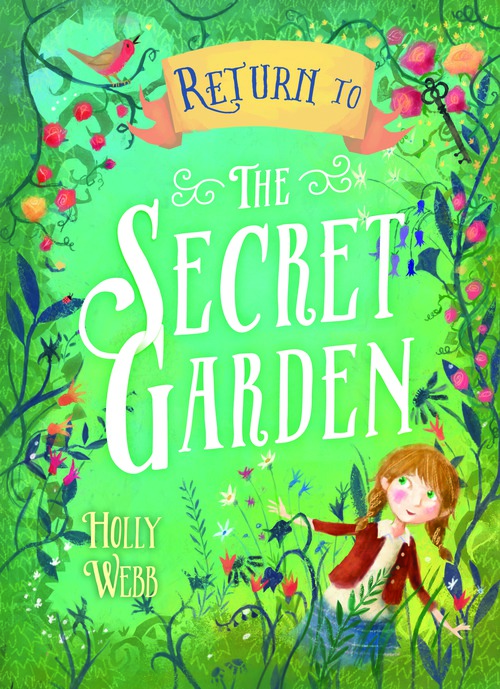
Return to the Secret Garden, by Holly Webb
November 1, 2016; Hardcover, ISBN 9781492639091
Book info:
Title: Return to the Secret Garden
Author: Holly Webb
Release Date: November 1, 2016
Publisher: Sourcebooks Jabberwocky
Praise for Return to the Secret Garden
“What a joy to return to the scene of a beloved children’s classic… RETURN TO THE SECRET GARDEN with Holly Webb and enjoy the wonder of childhood and the magic of friendship in this sequel that is sure to warm the hearts of young readers everywhere. This is an absolute literary delight.”
– Pamela Klinger-Horn, Excelsior Bay Books (Excelsior, MN)
Summary:
Return to the magic of Burnett’s classic tale with a brand-new character as she discovers a very secret garden.
It’s 1939, and the occupants of the Craven Home for Orphaned Children have been evacuated to Misselthwaite Hall, a fancy manor in the English countryside, to escape the Blitz. Emmie would hardly call the orphanage “home,” but her heart breaks knowing that leaving Craven means leaving her beloved cat, Lucy. Away from everything she’s ever known and trapped in imposing Misselthwaite, Emmie finds herself more miserable than ever.
But soon she starts discovering the secrets of the house—a boy who cries in the night, a diary written by a girl named Mary, and a garden. A very secret garden…
Goodreads link: http://ow.ly/rfse305NpEl
Buy Links:
Amazon: http://ow.ly/rKbi305NpND
Barnes & Noble: http://ow.ly/1yFh305NpWv
IndieBound: http://ow.ly/qtjR305Nq2Y
 About the Author:
Holly Webb worked as an editor at Scholastic Books in the UK before she became a full-time writer. She is the author of the popular Rose series. Holly lives in Reading, England, with her family. Visit Holly at www.hollywebb.com.
Social Media Links:
Author Website: http://www.holly-webb.com/
Facebook: https://www.facebook.com/HollyWebbOfficial
Twitter: https://twitter.com/HollyKateSkeet
Read an excerpt right here!
One
The children marched down the street in a long line of twos, and only one of them looked back. The others didn’t turn because they didn’t need to. There was nothing to look back for. Everything they owned was with them—-a few clothes, a battered, shapeless stuffed toy here and there. Each of them carried a paper bag and a gas mask, and that was all they had.
Emmie trailed, peering over her shoulder, so that Arthur, behind her, gave her a shove to tell her to keep up. She kicked him swiftly and walked backward instead, still trying to see.
But Lucy wasn’t there. It was stupid to expect that she would be anyway, Emmie thought. Lucy hardly ever came out onto the street. She was shy, and she hated loud noises. Emmie still stared though, hoping to see the small, black cat peering after her around the corner of the tall house. Lucy had probably fled out into the backyard, Emmie decided miserably. She kicked Arthur again because he was smirking at her—-and because she felt like it.
“Emmeline Hatton!”
Emmie whipped around with a sigh. Of course Miss Dearlove hadn’t seen Arthur giving her a push. She never did see. “Me, miss?” she asked innocently, trying to look as though she didn’t know what was the matter.
The matron glared at her. “No, the other Emmeline Hatton. Of course you! You bad–tempered little girl, how dare you kick Arthur like that?”
“He pushed me…” Emmie started to say, but Miss Dearlove didn’t bother to listen. She grabbed Emmie by the arm and hauled her up to the front of the line. She was a tiny lady, not actually much bigger than Emmie, but Emmie didn’t dare pull away. She had known Miss Dearlove forever. The matron was like a busy little clockwork train, wound up into a clicking fuss of pure crossness. It was best not to get in her way—-but somehow Emmie always did.
“You can walk here with Miss Rose and the babies since you can’t be trusted to behave like a ten–year–old. Why is it always you? And after your ridiculous behavior this morning as well. As if we haven’t got enough to worry about.” She glanced down at her watch. “Miss Rose, we need to hurry. The station’s bound to be busy, and there isn’t that much time to spare.” She scuttled down to the end of the line again with one last growled “Behave!” to Emmie.
Miss Rose was usually less bad–tempered than the matron, but even she eyed Emmie and sighed. “Today of all days, Emmie? I would have thought you’d have more sense.”
“He shoved me,” Emmie muttered. She knew that wasn’t quite true, but she wasn’t letting them have the last word. “It isn’t fair. Why do I always get into trouble?” She walked down the street next to Miss Rose, seething and muttering to herself. If she huffed and growled, she wouldn’t cry, and she wasn’t going to give Arthur Banks the satisfaction of that, however much Miss Rose frowned.
They had been told the day before that they were leaving. Miss Dearlove had stood up at the end of breakfast and explained that since war was expected to be declared within a few days, the Craven Home for Orphaned Children would be evacuated “somewhere safe.”
No one knew what evacuation meant, except that it was vaguely connected with the rows of brown boxes on the shelves in the schoolroom, which contained the gas masks. Once a week for the last few months, they had pulled the masks on and sat staring at each other, snout–nosed and goggle–eyed. After the first few tries, Arthur had figured out how to make a rude noise, a sort of farting snort around the rubber facepiece. He did it every time now, and they all laughed. Even Miss Dearlove didn’t sound that cross when she told him off.
But Emmie had dreamed of those huge, round eyes almost every night since. The glass lenses of the masks leaned over her, stooping down close and staring. The gas masks were supposed to help them breathe, Miss Dearlove said, but when Emmie thought of her mask, sealed away in its flimsy cardboard box, she found her breath catching in her throat. Where was this gas going to come from anyway? No one had said. Arthur and his friend Joey said it would be dropped by planes, but all the gas that Emmie knew about came in pipes to the kitchen for the stoves. She didn’t see how it could be carried in a plane. If only someone would explain, she thought bitterly, kicking at a crack in the pavement as they marched on. Where were they going—-and why? What was happening? No one told them anything. They didn’t need to know. They just got packed up like their clothes and sent away…
“Look.” The little girl Emmie had been shoved next to tugged at her sleeve.
“What?” Emmie muttered, not looking.
“Over there.” Ruby pointed across the road. “See, Emmie, there! Do you think they’re being evacuated too?”
Emmie turned and saw that they were passing a school, where a long column of children was lining up on the playground. They were carrying an assortment of battered cases and brown paper bags, and there were labels tied onto their coats.
“I suppose so.”
“Just like us…” Ruby said thoughtfully. “I didn’t know everybody was.”
“We have to get out of the cities—-in case of planes flying over,” Emmie said vaguely. “All the children do.” That was what the boys had thought anyway. They had been lurking around the matron’s sitting room, listening to the news broadcasts, so Emmie supposed it was possible they were right. The children on the playground did look a lot like them, except that there were mothers huddling around them and even a few fathers. They were pushing packets of sandwiches into children’s pockets, hugging them, and running along beside them as the line of children started to snake out onto the street. The children marched away, following two older boys who had a banner with the school’s name stitched onto it. Almost like a procession, Emmie thought.
Some of the schoolchildren were crying, Emmie noticed. A lot of the smaller ones were clinging to their mothers, pale faced and bewildered. They didn’t seem to know what was happening either. But some of the others looked happy, swinging their cases as if they were off on holiday. Perhaps they were—-they might end up at the seaside.
Emmie blinked thoughtfully. She was almost sure she’d never been out of London. Until now, she hadn’t really thought about where they were going. She’d been too worried about what they were leaving behind. Maybe those two boys in the line with grins all over their faces were right. It was an adventure…
But almost all the mothers were brushing tears away quickly with the sides of their hands so as not to be seen. Emmie shivered. She supposed the children from the Home were lucky—-all the adults they knew were coming with them. It didn’t make her feel lucky though. She tried to remember the softness of Lucy’s head bumping against her fingers, the warmth of her breath as the little cat nuzzled against her. But all she could hear was Ruby, grumbling because she was tired and her shoes were too tight.
They hadn’t gone all that far, but the streets were so much busier than the quiet area around the Craven Home. Even Emmie felt tired, with so many people pressing around her and the constant roar of cars and carts and buses along the bustling street. On any other day, it would have been fun to stand on one of those islands in the road and watch and wonder where all these people were streaming off to. Today, Emmie wished she was back sitting in the window of her dormitory, peering out at the street to see the grocer’s van and a car every so often. She’d wished for something to happen, something exciting, and now it had.
“We’re almost there, Ruby,” Miss Rose said soothingly. “The station’s just along the road there. Do you see? The clock tower and the name underneath: King’s Cross.”
The station was huge, with two great, curving arched windows across the front, like tunnel mouths.
“London and North Eastern Railway? Are we going northeast then, miss?” Emmie demanded sharply, looking at the rest of the white letters along the roof. But Miss Rose ignored her, starting to hurry the line of children across the road. A policeman waved them over, holding up a line of buses and smiling down at little Ruby clutching her faded bear.
There were other lines of children converging on the station now. Hundreds of them, marching along like little ants. More and more poured out of buses, labeled, carrying parcels and bags and battered cases. Emmie had never seen so many people her own age before. How many were going out of London?
Miss Rose slowed as she walked them past the scattering of shops around the front of the great building and glanced around anxiously for Miss Dearlove.
“What is it?” Emmie asked. Miss Rose looked so suddenly uncertain. All the staff at the Home had been brisk and decided about the move, brushing away questions and urging the children to complete their meager packing. Now for the first time, Emmie wondered if they were as confused and worried as the children. Mrs. Evans, the cook, was clutching her big, black handbag against her front like a shield.
“Nothing, Emmie!” Miss Rose replied sharply. She was glancing back and forth between the sandbags built up around the doorway and a flight of steps down—-still with a sign to the Underground but blocked off with a great pile of bits of broken stone. She glanced down at Emmie with a bright smile that showed her teeth. “I just wasn’t quite sure which door we were to take, that’s all. We must expect everything to look a little different in wartime, mustn’t we?” she added in a comforting, singsong voice as though Emmie had been the scared one.
Miss Rose didn’t allow herself to be daunted by the huge space inside the station or the milling crowd of children. She straightened her shoulders and hurried them in, then started counting everybody again in case one of the twenty orphans had disappeared on the way. Emmie didn’t think any of them would have dared. Not with those planes coming—-and the gas. She had thought about running away before—-on days when nothing happened and no one spoke to her. But that had been before she found Lucy.
Miss Dearlove marched over to a man in a station uniform. He frowned down at his list and eventually pointed across to one of the farthest platforms. Then he checked his watch and pointed again, flapping his hands.
The matron came trotting back to them and caught Emmie’s hand, pulling at her sharply. “We haven’t much time. Come along, all of you. No dawdling. There are only so many extra trains for the evacuated schools,” she added to Miss Rose. “The timetable is all upset. If we miss this one, we’ll have to wait hours.” She glanced irritably down at Emmie as she spoke, as if it were her fault that they were late.
The train was already steaming as the children hurtled onto the platform and a porter flung the doors open for them, bundling them in as Miss Rose and Miss Dearlove and Mrs. Evans wrestled with bags and food baskets.
Emmie collapsed onto a padded seat, clutching her brown paper bag of clothes and staring out the window. She could see another train at the next platform with a girl gazing back at her. She smiled faintly, recognizing the strange girl’s expression of fear and excitement. There was even something of her own sickening loneliness. Perhaps that girl had never been out of London either. Perhaps she’d never been on a train. But maybe, just perhaps, the train was taking her toward something new and different. Things might be better—-even though she’d had to leave so much behind.
The girl waved at her, and Emmie lifted her hand slowly as their train shuddered and creaked and began to pull out of the station, out of London, heading for somewhere else.
***
Emmie leaned back against the scratchy velour of the seat. She was facing the window, but she was hardly looking at the green banks next to the tracks that the train was racing through. She wondered where that other girl’s train had been going. She had looked nice—-no, not nice. Nice was what Miss Dearlove and Miss Rose were always encouraging them to be. Play nicely. Now, that isn’t nice. Is it, Emmie? Nice little girls don’t behave like that.
The only other girl Emmie’s age at the Craven Home had left when they were both about five. Louisa had been very nice indeed, and that was why she had been adopted. It had been made quite clear to Emmie that if only she had been more like Louisa, she might have been adopted too. But she was much too old for that now. And she didn’t care anyway.
Emmie ran her hand over the arm of the seat, and tears stung the corners of her eyes. The dark, dusty stuff reminded her of Lucy’s fur.
Whenever one of the younger, sweeter, nicer children was taken away to have a proper home, or when Miss Dearlove snapped at her for being ungrateful, or the boys teased her for being skinny and pale and ugly, Emmie would simply shrug and stare. Miss Dearlove called her insolent, and Arthur had smacked her ears for giving him that look.
She’d stare until Miss Dearlove flounced away or the boys grew bored. And then she’d sneak upstairs to the little window on the landing outside the girls’ dormitory. There was a large cupboard half in front of it, full of musty blankets and spare clothes, and a skinny, ugly, little person could squeeze behind the cupboard and open the window—-and climb out onto the rusted iron fire escape without anyone knowing where she had gone.
The first few times Emmie had been out there in the days just after she’d found the window, she sat there alone, gazing out across the roofs below. She loved the view—-watching the clouds streaked with red as the sun went down. Even on the days when London was choked in fog, she had imagined the sky and the rooftops beneath the layers of gray. If she leaned against the railings, she could just see a slice of the road and watch for passersby and wonder where they were going—-and where she would go one day. She’d even taken a few steps down the fragile, old metal staircase. But then common sense had sent her slinking back again. She had nowhere to go. She couldn’t leave.
Emmie had been out on the fire escape on a February afternoon when she first saw her. It had been almost dark and icy cold, especially because Emmie wasn’t wearing a coat. She couldn’t sneak her coat upstairs, not without someone stopping to ask her why. But being cold was worth it—-for time alone to think and watch the sky.
She had felt as though she were all alone in the city. A purplish light had soaked through the sky, and wisps of cloud floated by, looking almost close enough to touch. Emmie leaned against the metal railings, feeling the hard cold of the iron bite into her cheek and knowing she should go in before they missed her.
Something had made her stay. Afterward, she thought she’d known something was going to happen. There was the faintest creaking on the metal steps, and a darker patch of shadow slunk onto the tiny landing where Emmie was curled.
“A cat!” she whispered. The cat was tiny—-hardly more than a kitten—-and shy. It hesitated at the edge of the landing, watching her suspiciously. She caught a gleam of light reflected in its eyes. Why had it come all the way up here?
Emmie moved her hand cautiously toward her pocket, trying not to move suddenly and scare the cat away. She had hidden a sandwich in her handkerchief—-fish paste. She hated it, but they were supposed to finish everything that was on their plates. Usually she dropped the scraps off the fire escape, but she’d forgotten. She held back a laugh. Perhaps this cat had eaten her leftovers before. Perhaps that was why it had come.
She opened her handkerchief and wrinkled her nose at the smell. But there was a scuffling in the darkness—-the cat had moved. It could smell the fish paste too. Someone turned on the light inside, and both Emmie and the cat froze. But no one saw the open window. There was a quick patter of footsteps up the stairs, and one of the little girls disappeared into the dormitory.
With the light on, Emmie could see the cat—-tiny and skinny, like her. It was hunched at the corner of the metal floor, eyes fixed on the wrapped sandwich, but too scared to come closer.
Slowly, Emmie put the handkerchief down between them and unfolded it properly to let the little thing have a glimpse of the food. Then she wriggled farther back against the wall of the house.
“You may as well eat it,” she whispered. “I won’t. You can have it.” She watched the cat curiously. It was nothing like the cats she had seen in the schoolroom books. They were plump and cushiony, with long, white whiskers. This creature looked half-starved, and it couldn’t resist the sandwich for long. It darted forward and began to tear at the bread, glancing over at Emmie every so often to check that she wasn’t moving.
When the sandwich was gone, the cat sniffed at the handkerchief and even licked it, as if the flavor of the fish paste had soaked into the cotton.
Then it turned and whisked away, skinny tail held low, and Emmie leaned over to watch it scurry down the steps.
The next night, she had only bread and butter, but the cat didn’t seem to mind. It ate the whole slice, and then when Emmie held out her fingers, it sniffed them curiously before it darted away.
Emmie kept taking her scraps out to the fire escape, and the cat kept turning up. As soon as she climbed out of the window, a small, dark shape would appear, faster and faster each time. There were days she couldn’t get out, of course—-days when Miss Dearlove decided on a “brisk walk” or the inspectors came. But it only took seconds for Emmie to slip behind the cupboard and open the window a crack and drop her scraps out onto the fire escape.
It was an odd feeling, waiting and hoping for a glimpse of black fur. It wasn’t even as if the cat stayed for long, not for those first few days anyway. She—-Emmie was only guessing it was a she, but “it” all the time sounded mean—-would eat whatever Emmie had brought, and then when she was sure all the food was gone, she would hurry back to whatever she had been doing. Sniffing around the trash bins, probably, Emmie thought.
It seemed strange to mind so much, to sit in lessons and hope the cat would turn up, but Emmie found that she thought about the cat more than she thought of anything else. She had never had a pet or known any sort of animal. The Craven Home only had the occasional mouse, and then only in the kitchens, where the children weren’t really supposed to go. There wasn’t any chance of taming a mouse with crumbs, even if Emmie had wanted to.
Knowing that the cat came to see her, or her sandwiches, tugged at something inside Emmie. The cat wanted her, even if it was only for food. It needed her—-and she needed it too.
In the third week, the cat climbed into Emmie’s lap when she wasn’t fast enough unwrapping another fish–paste sandwich, and Emmie named her Lucy.
“Emmie! Emmie!” Someone pulled at her hand, and Emmie realized Ruby was talking to her.
“Don’t you want a sandwich?” Ruby pushed one into her hand, and Emmie stared down at it, trying not to gag. It was fish paste.
“No!” she said sharply, and shoved it back at Ruby. Then she caught Miss Rose’s eye and added, “No, thank you. I’m not hungry.”
“There’s plain bread and butter, Emmie.” Miss Rose passed her another paper packet. She went on gently. “You need to eat something. It’ll be hours more yet. It’s a long way.”
Emmie nodded. She was too miserable even to ask again where they were going, in case she started to cry.
“Missing that scrawny cat?” Joey leaned over, speaking through a mouthful of sandwich, and Emmie pressed herself back against the seat disgustedly. If only they hadn’t all seen. She had kept Lucy a secret for weeks, but the little cat grew tamer and a tiny bit plumper, and she was clever enough to figure out that Emmie—-and more food—-were inside the house.
Miss Dearlove shooed her out, but Miss Rose seemed to like cats. When she saw Lucy sitting on a windowsill or sneaking along the passage by the schoolroom, she smiled faintly and looked the other way instead of chasing the little cat outside again. And the cook liked her—-Lucy had the sense to catch a mouse and drop it in front of Mrs. Evans’s feet. After that, Emmie would occasionally see a saucer of milk in the yard at the bottom of the fire escape—-a saucer where there had once been milk anyway.
How could they have made her leave Lucy behind if what everyone said was true and London was going to be flattened by bombs? And the gas.
Emmie had heard Miss Rose and the cook saying that all the mailboxes were being painted with special gas–detecting paint, so they’d glow yellow instead of red if there was gas floating in the streets. It sounded as though it was going to happen any day now. What would happen to Lucy if that was real?
Emmie shivered and closed her eyes for a second. She could see Lucy lying on the little iron landing of the fire escape, basking in the sun. The little cat liked to stretch out on her side, showing off her rusty reddish black underneath. Sometimes she even lay on her back with her paws in the air. She’d wave them, as if she was inviting Emmie to rub the fluff of her belly. And then if Emmie dared, half the time Lucy would pounce on her and bat at her wrist. But Emmie didn’t mind the scratches.
The other children had petted Lucy and even fed her scraps, but she seemed to remember that Emmie had been her first protector, and she always came back to the fire escape.
Emmie had found a basket the night before while they were packing. It was in that same cupboard of odds and ends that stood in front of their window. There must have been a cat once before—-or perhaps it was meant for picnics in the park, although Emmie wasn’t sure anyone at the Home had ever done something so lovely. She hadn’t asked Miss Dearlove or Miss Rose if they could take the cat. She hadn’t even thought about it. It had been so clear to her that Lucy could not be left behind. She’d simply been grateful that she wouldn’t have to carry Lucy in her arms or tie a string around her neck. She didn’t think the cat would like being on a train.
But before breakfast wasn’t Lucy’s time to appear slinking through the kitchen or creeping up to the top of the iron staircase. Emmie had hurried through the press of twenty excited, bewildered children, dropping paper bags and gas masks and winter coats that smelled of mothballs—-because even though it was a sweltering September day, who knew how long they’d be away for? Miss Dearlove raced around, spooning porridge into the little ones, sewing buttons back on, and in between, dashing back into the kitchen to screech at Mrs. Evans about twenty sandwiches.
In the passage outside the kitchen, she came on Emmie with a fingerful of beef dripping, trying to persuade Lucy into the lidded basket. The little cat had her front paws in, and Emmie was wondering if she should just take a chance and shove the rest of her in too.
“Emmie! For pity’s sake, why haven’t you got your coat on? We’re about to leave! What’s in that basket? You’ve not put your clothes in there, have you? You should have them in a parcel, like the others.”
Emmie glanced around at her, and Miss Dearlove sucked in her cheeks.
Lucy saw that Emmie was distracted and took her chance to launch out of the basket.
“No!” Emmie squeaked. “Oh, miss, catch her!” And she flung herself full length, grabbing the thin, black cat, who to Miss Dearlove looked just as scruffy and ugly as the little girl. Emmie was sallow skinned and thinner than ever, since she’d been hiding away half her food to feed the cat.
Emmie’s hair had wisped its way out of her thin braids already, and her arms were all scratched.
“That disgusting stray! I might have known…” Then the matron stopped and stared at the basket. “Emmie Hatton, did you think you were taking that creature with you?”
Emmie crawled clumsily onto her knees and stood up slowly, gripping the squirming cat in her arms. She stood there, wincing as Lucy flailed her claws and pulled several more threads out of her cardigan. The cat didn’t care that she was being saved. She was hungry, and she had not liked the basket at all.
“We have to,” Emmie whispered, her greenish eyes widening as she stared back at Miss Dearlove. It wasn’t one of her purposeful stares—-she wasn’t trying to make Miss Dearlove angry. This was a round–eyed look of panic and disbelief. They couldn’t leave the cat behind. It would be too cruel.
“The bombs…” she faltered.
“We are not taking a cat, certainly not a dirty stray like that. Why, even proper pets are…” Miss Dearlove trailed off, shaking her head. “Get going, Emmie. We’ve a train to catch that’s taking us halfway across the country! You’re making us late. Now come along.” Miss Dearlove went to seize Lucy from Emmie’s arms, but Emmie screamed and darted back, and Lucy hissed, not even sure who to be angry with. She fought and bit and scratched, and at last Emmie let go of her with a despairing cry as the cat streaked away through the kitchen and the scullery and out.
“At last! Now get out to the hallway and find your coat. We should have left by now. Mrs. Evans, are you ready? The children are lining up,” Miss Dearlove added to the cook, who was standing in the kitchen doorway watching.
But Emmie crouched to pick up the basket, gazing into it as if she almost couldn’t believe it was empty.
“Put that down!” snapped Miss Dearlove, taking the handle.
Emmie jerked away, snatching it back. “No! I have to go and get her. We have to bring her with us!”
The matron grabbed the basket, and with her other hand, she slapped Emmie across the cheek. Emmie dropped the cat basket and leaned against the wall, tears seeping from the corners of her eyes. She wasn’t crying because Miss Dearlove had hit her, even though it hurt, but because she’d realized that it was true. They meant it. They really were leaving Lucy behind.
“I couldn’t help it,” she heard Miss Dearlove murmur to the cook. “Dratted child, she does it on purpose. Bring her, will you, Mrs. Evans? I need to go and lock up.”
Emmie felt Mrs. Evans’s arm slide around her shoulders, and the cook’s dry fingers stroked her scarlet cheek. She could hear the old woman tutting gently, but her voice seemed to come from a long way away.
“Come along, sweetheart. You come on now. Don’t you worry about that little cat. She’ll be next door, stealing a kipper for her breakfast, I expect. Time we were on our way.”
Enter the Rafflecopter giveaway for your chance to win a copy of Return to the Secret Garden. You’ve only got until November 18, so don’t miss out! Enter today!
 The Uncommoners #1: The Crooked Sixpence, by Jennifer Bell, (Jan. 2017, Crown Books for Young Readers), $16.99, ISBN: 9780553498431









 Mom Read It