Posted in Non-Fiction, Teen, Young Adult/New Adult

Blog Tour: Writers in the Secret Garden – Fanfiction, Youth, and New Forms of Mentoring

Who would have ever imagined that fanfiction would not only go mainstream, but be so popular? In the last 5 years since I’ve been librarianing, I’ve been to academic and pop culture panels on fanfic in the library; I’ve seen fanfic programs for middle graders and teens bring kids into the program room, I’ve seen novels like Carry On go meta and be about fanfic within a YA world, and I’ve seen my friends’ kids starting their own fanfic accounts so they could contribute to their fandom. It’s a wonderful thing to behold. One of my colleagues wrote her MLIS thesis on fanfiction. Now, University of Washington professors Cecelia Aragon and Katie Davis have given us Writers in the Secret Garden: Fanfiction, Youth, and New Forms of Mentoring; an in-depth exploration of how teens and tweens support and learn from each other through their participation in online fanfic communities like fanfiction.net and AO3.
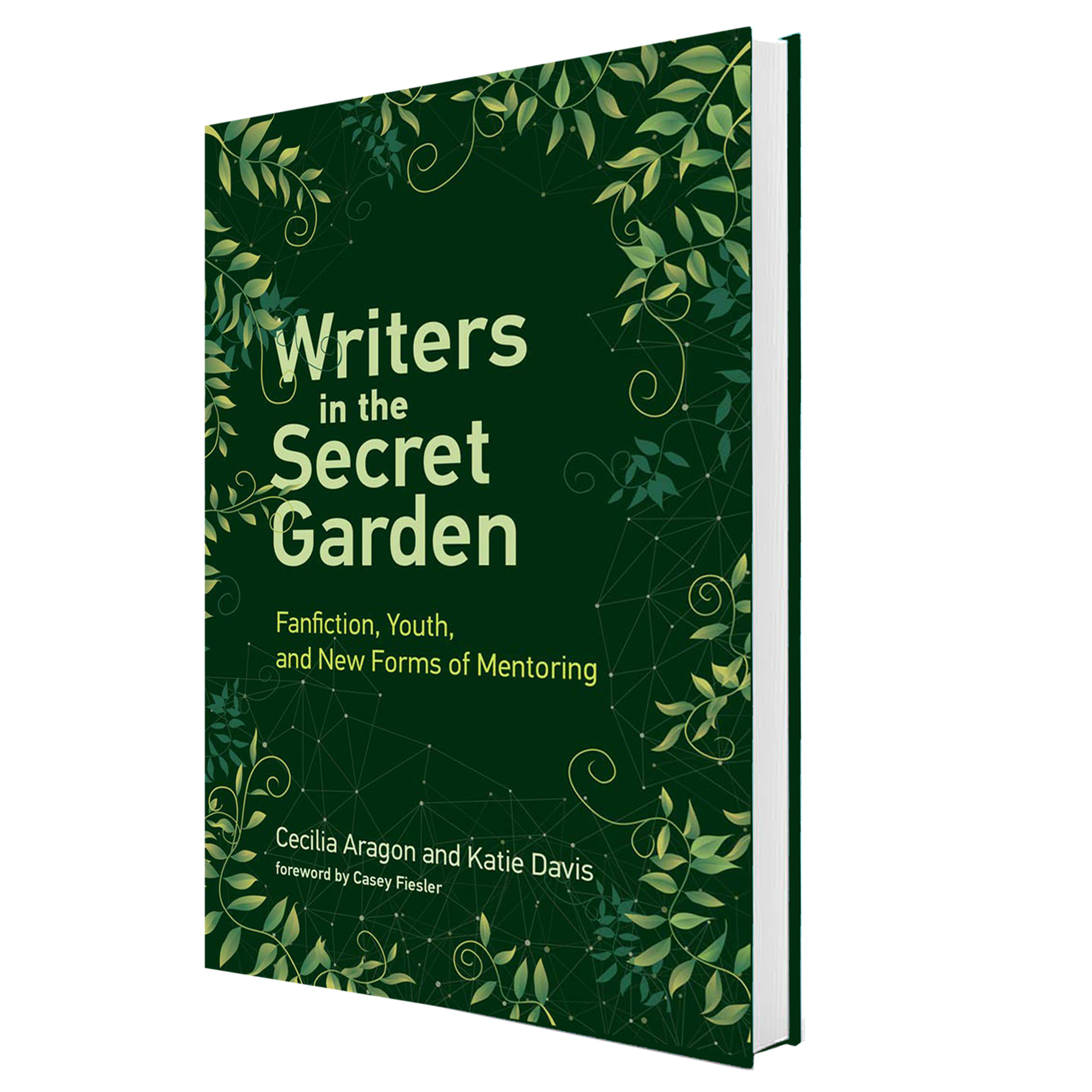
Writers in the Secret Garden: Fanfiction, Youth, and New Forms of Mentoring, by Cecelia Aragon and Katie Davis,
(Aug. 2019, MIT Press), $25, ISBN: 978-0262537803
Ages 16+


Writers in the Secret Garden was sparked by a conversation in 2013, after a slew of news storied claimed young people couldn’t write/weren’t writing. Aragon and Davis extensively studied what was happening on fanfiction.net from both education and human-centered data science perspectives. Some of their findings include:

  • Most adults either have a negative view or are unaware of fanfiction, and the impact it is having on the lives of many young people today.

  • On Fanfiction.net alone, 1.5 million authors have published over 7 million stories and shared over 176 million reviews of those stories.

  • The median age of authors on the site is 16, with over 87% between the ages of 13 and 25.

  • 84% of authors on the site are female; and more fanfiction authors identify as gender-nonconforming (9%) than male (7%).

  • Young people are teaching each other how to write through the feedback they give. This new type of mentoring is unique to networked communities. Called “distributed mentoring,” it is described in detail in the book.

  • The quality of the writing improves in response to the amount of distributed mentoring the author received. (650 reviews predicts as much growth as one year of maturation).

  • Despite the fact that readers post reviews anonymously, comments are overwhelmingly positive, with less than half of one percent gratuitously negative.

The discovery of this vast and vibrant resource for kids who have something to say has been especially meaningful to Aragon as she recalls her own hidden efforts. When Cecilia Aragon was ten years old, she read The Lord of the Rings and fell in love with the world Tolkien created. But, in her opinion, there weren’t enough female characters, and she also had some ideas for scenes that should have been in the books. So, she sat down and wrote her own version in a spiral notebook that she kept hidden. No one ever saw it, and she never told anyone about it until recently, because she thought it wasn’t “real writing.”

“Fanfiction is a private universe — a secret garden — that has become a welcoming community, particularly for those from marginalized groups,” says Cecilia Aragon.  “In it, young people are mentoring each other to become skillful writers and thoughtful readers – and they are doing it entirely on their time and their own terms.”

The research group at the University of Washington maintains a Tumblr about their research.


Posted in Non-Fiction, Tween Reads

New Year, New Nonfiction!

There’s some great nonfiction coming up in just a few short weeks. From fandoms to crafting, freaky animals to an unusual pen pal, there’s a little something here for everyone.

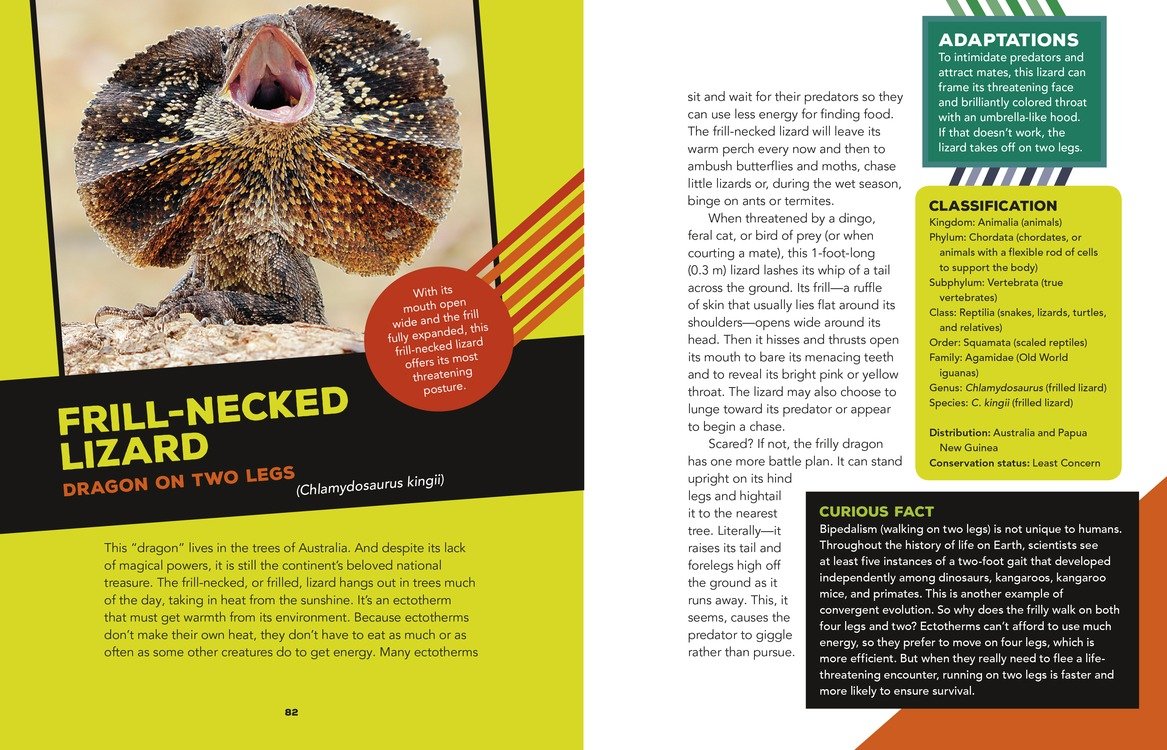
Outrageous Animal Adaptations: From Big-Eared Bats to Frill-Necked Lizards, by Michael J. Rosen,
(Jan. 2018, Lerner Publishing), $37.32, ISBN: 9781512429992
Good for readers 10-15
Animals with unusual adaptation take center stage here, from the frill-necked lizard that runs across the desert on two legs to a vampire squid, who uses its bioluminescence to startle predators. Outrageous Animal Adaptations is loaded with full-color pictures and facts; each featured animal has callouts on its adaptation, curious facts, and a box with classification information. At only 96 pages, though, the price is steep for my wee budget, so if this isn’t a centrally purchased book for my collection, I have to be honest; I’ll probably see where I can find a more reasonably priced option.
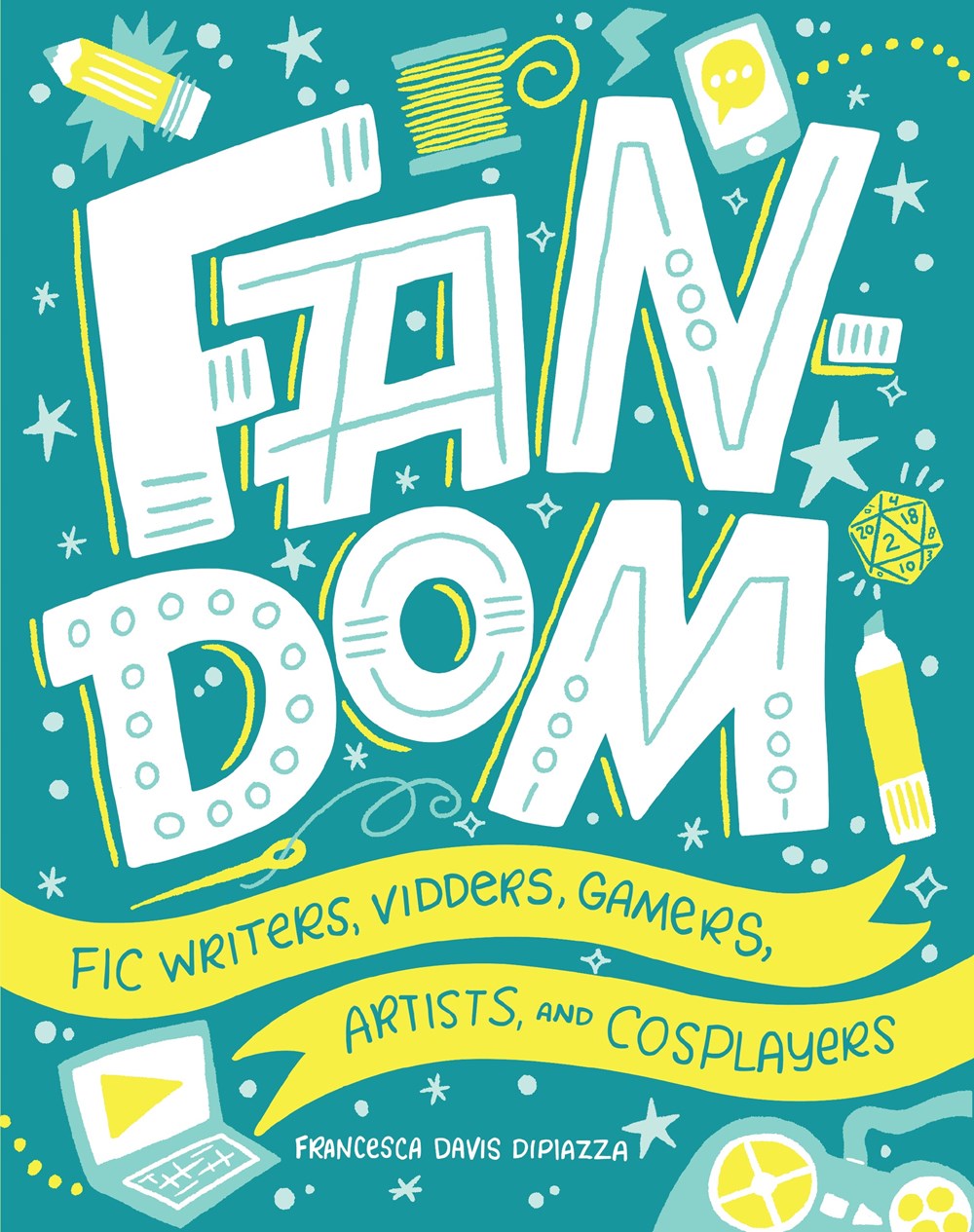
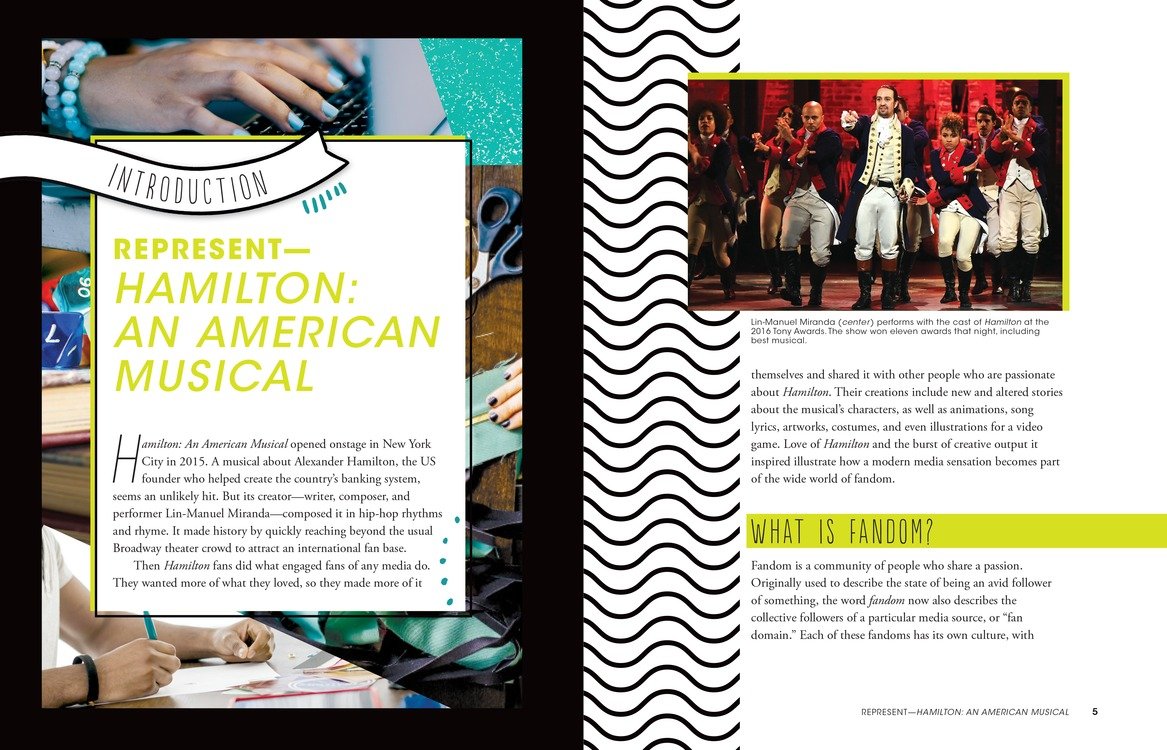
Fandom: Fic Writers, Vidders, Gamers, Artists, and Cosplayers, by Francesca Davis DiPiazza/Illustrated by Shauna Lynn Panczyszyn,
(Jan. 2018, Lerner Publishing), $37.32, ISBN: 9781512450491
Good for readers 12-16
What a time to be a fan! Fandom has gone behemoth; New York Comic-Con is the new San Diego, and people are writing their academic theses on fanfic. I feel like my tweenage self has finally been vindicated; now, if only my Wookiees Need Love, Too t-shirt still fit. Fandom: Fic Writers, Vidders, Gamers, Artists, and Cosplayers is a great, in-depth look at some of the most-loved facets of fandom: fan fiction, cosplay, vidding, gaming, and fan art. There are color photos and input from fans; tips and advice, and a nice history of fandom for newcomers and old guard alike. There’s a strong emphasis on the communities we build as fans, and extra attention paid to the more recent Cosplay is Not Consent movement taking place at fan conventions and meetups. The book looks at the positive aspects of fandom – there’s been a lot of ink spent on the in-fighting and “fake geek girl” foolishness out there – and it’s nice to read an upbeat book about fan communities. The big sticking point here is the price. At over $37 for this book, I can buy two copies of Sam Maggs’ Fangirls Guide to the Galaxy – a great readalike and an awesome book, but I’d love to have both on my shelves, you know? It’s a hard call, because this really is a good book, well-written and well-presented, and readers will definitely be drawn to it. If you’ve got the budget, go for it.
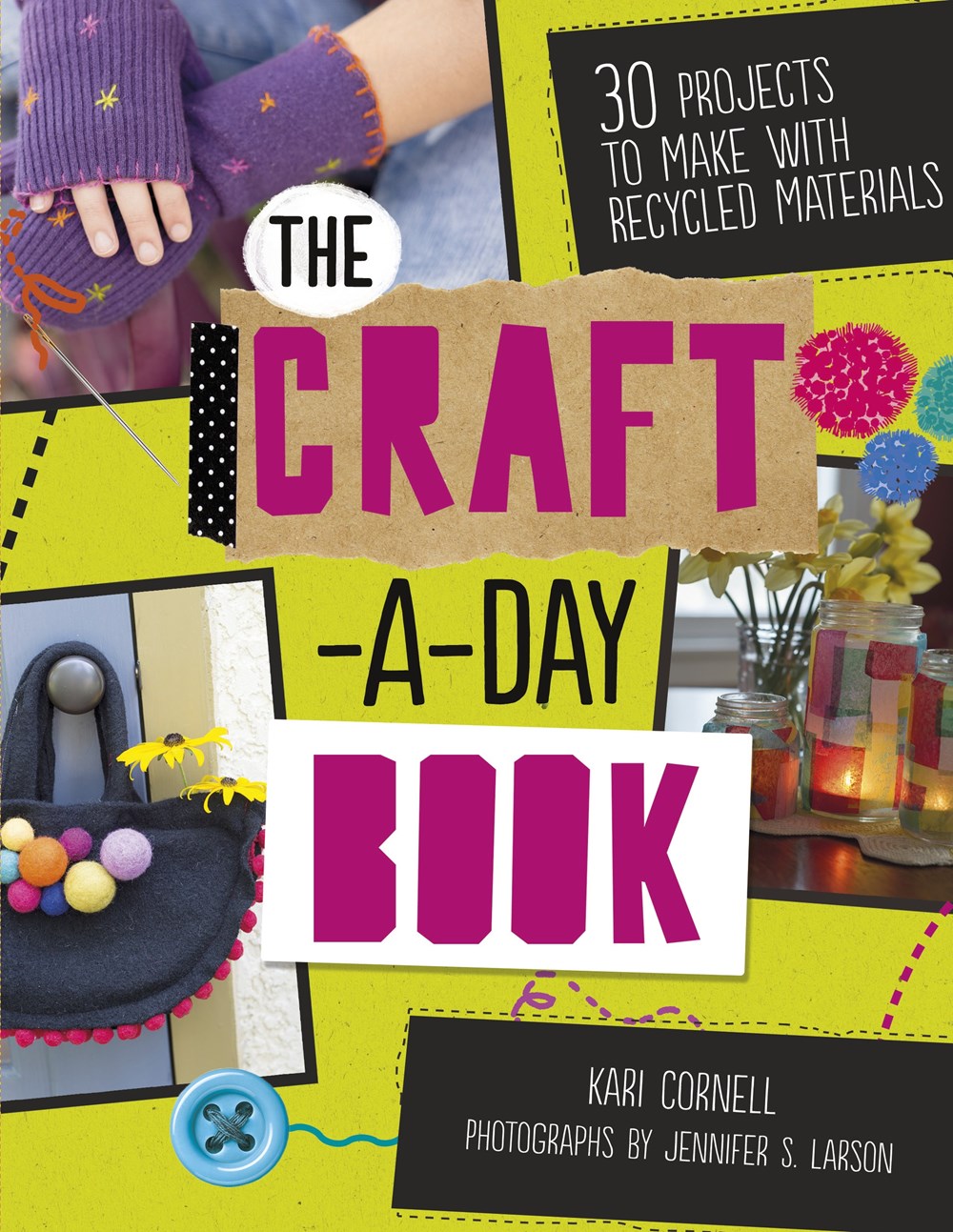
The Craft-a-Day Book: 30 Projects to Make with Recycled Materials, by Kari Cornell/Photos by Jennifer S. Larson,
(Jan. 2018, Lerner Publishing), $39.98, ISBN: 9781512413137
Good for readers and crafters 12-16
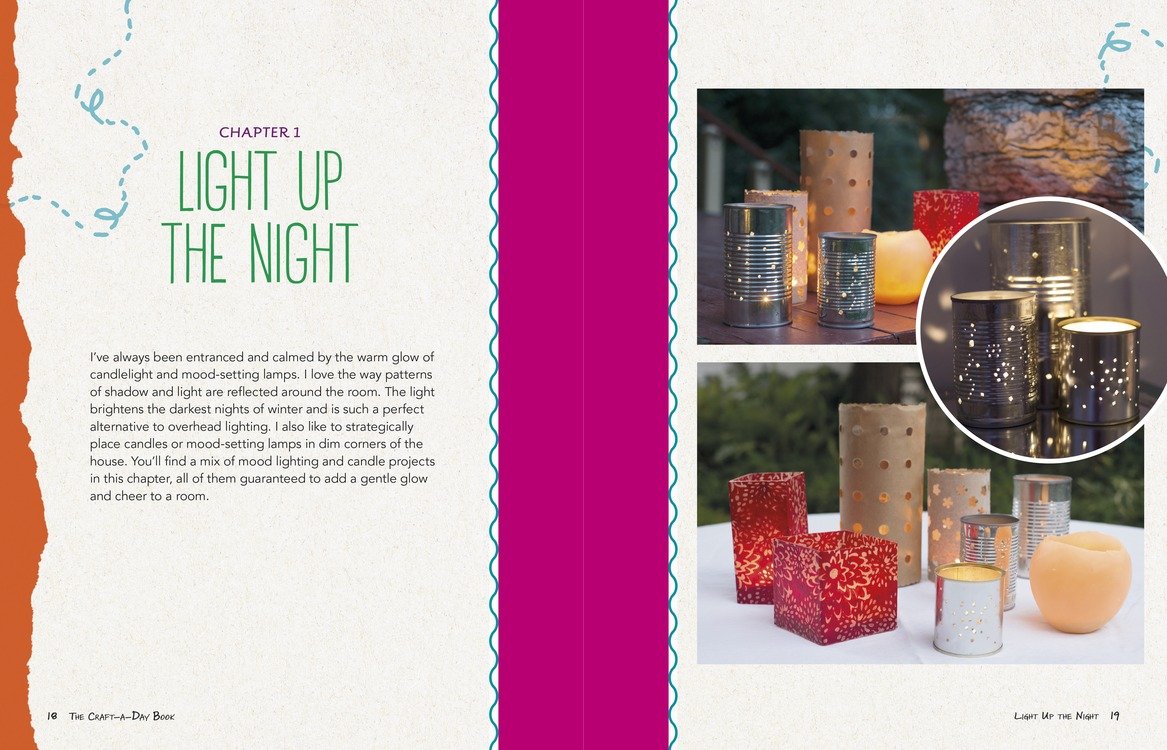
Written with an eye toward high school and college students, crafter Kari Cornell talks about finding inspiration and repurposing everything from old tin cans to mismatched socks to create new crafts. She’s big on thrift store shopping and materials swaps with friends, and she’s all about reduce, reuse, and recycle. There are 30 projects, with varying degrees of difficulty and skill, for teens to take on and make their own. Step-by-step instructions help crafters navigate projects. The crafts are fun and I love Kari Cornell’s ideas for inspiration, but there wasn’t a lot of new craft ideas to be found. I’d rather stick with books like Generation T, Sophie Maletsky’s Sticky Fingers duct tape book, and Quirk Books’ craft line of books, all of which have similar projects and… yup, they’re more affordable.
Dear Komodo Dragon, by Nancy Kelly Allen/Illustrated by Laurie Allen Klein,
(Feb. 2018, Arbordale Publishing, $17.95, ISBN: 9781607184492
Good for readers 4-9
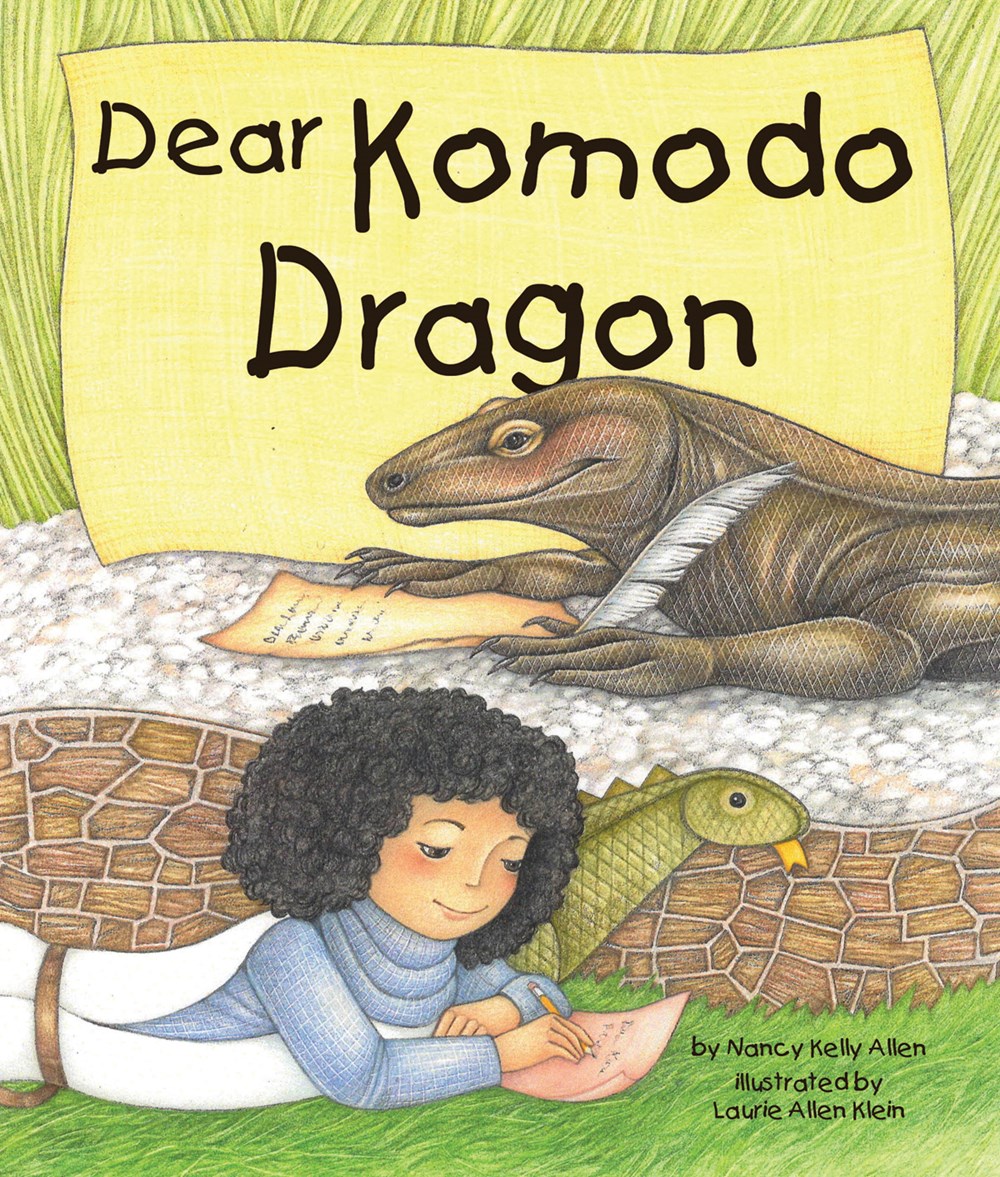
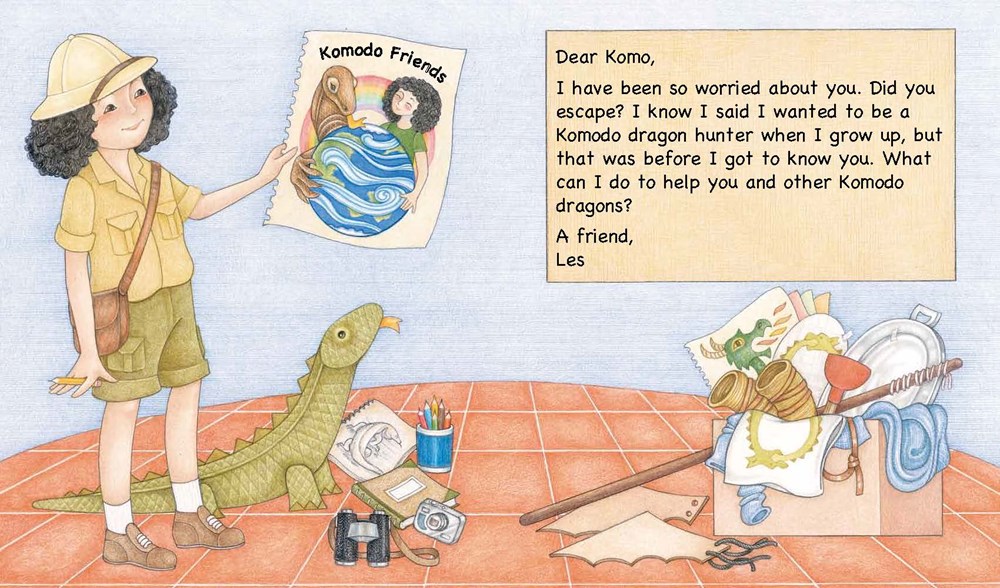
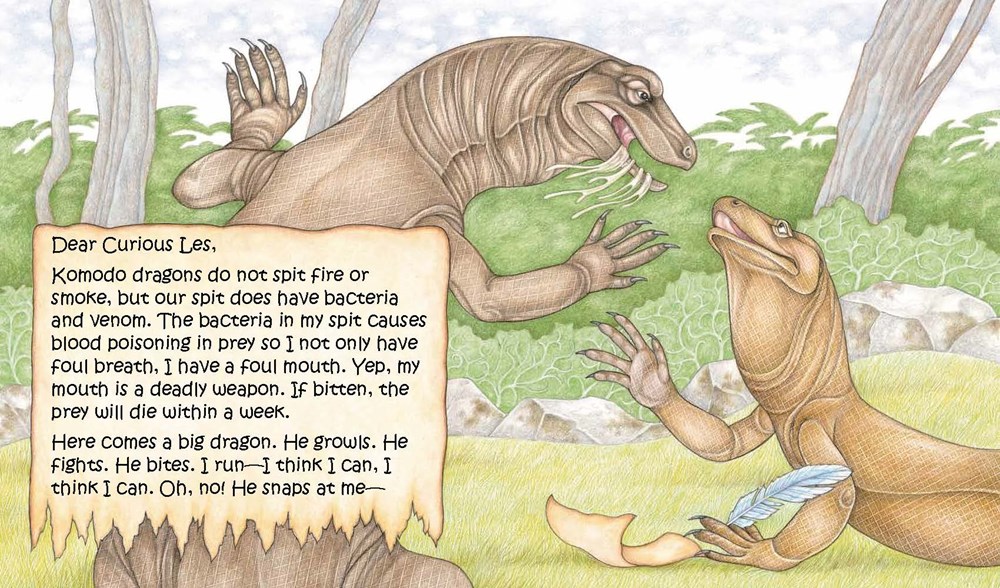
A story about a girl with an unlikely pen pal – an honest-to-goodness, real Komodo dragon, gives kids loads of facts and teaches environmental awareness.  A young girl named Les writes to a Komodo dragon who goes by the name Komo (fair enough). She and the dragon learn about one another through fun dialogue; Les wants to know if he breathes fire, Komo is amused and corrects her knowledge with facts. The dialogue is often humorous; very tongue-in-cheek, and we see Les go from a girl dressed like a knight and ready to fight a dragon to someone who understands the threats Komodo dragons live with, be it from other, bigger dragons or from man. The artwork is soft, yet realistic; the letters appear on each spread, over the artwork, almost scrapbook-like in format. Kids will enjoy learning through the dialogue between dragon and human. As with all Arbordale books, there is a For Creative Minds session with additional facts and information. There will be a Spanish translation available.
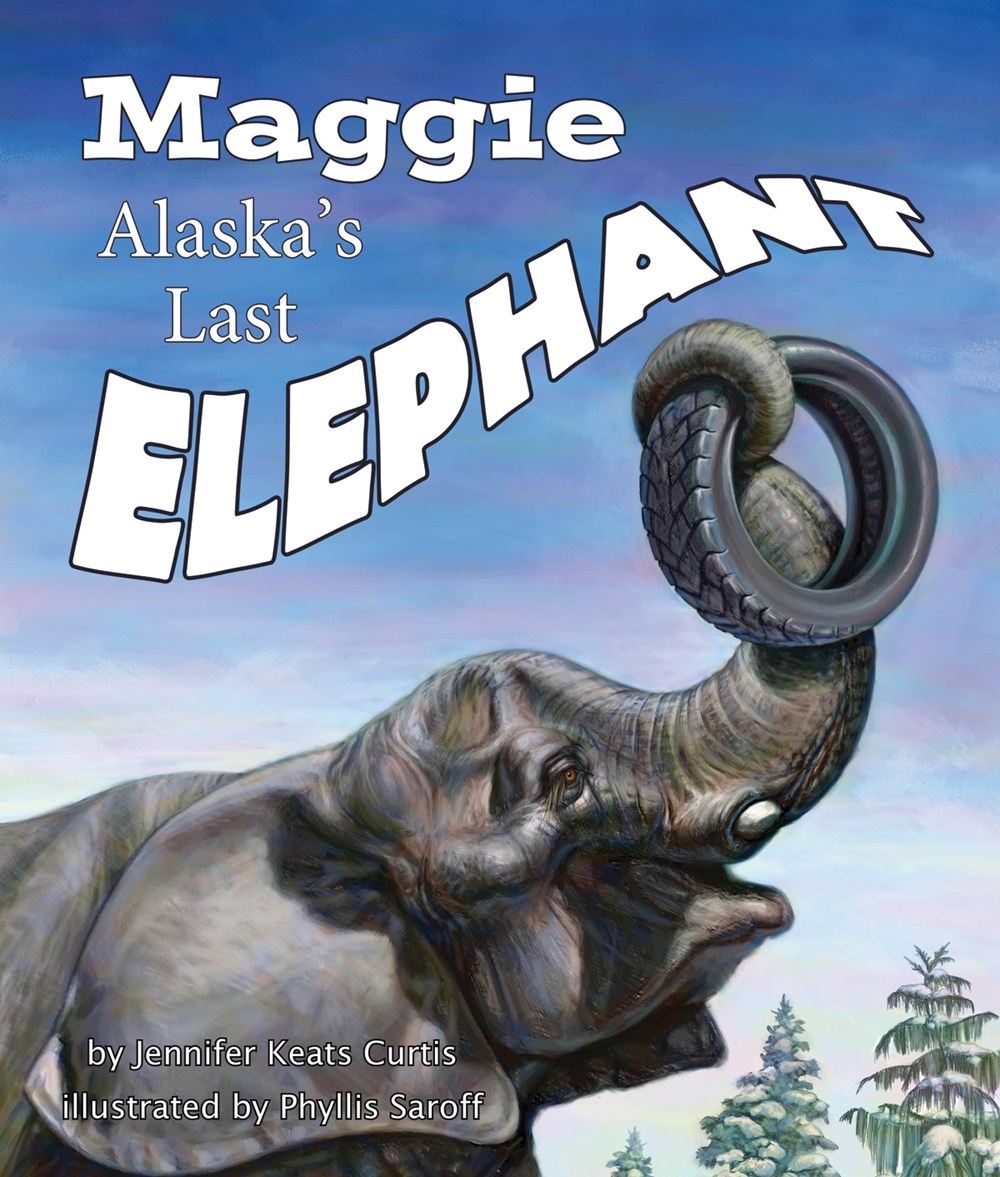
Maggie: Alaska’s Last Elephant, by Jennifer Keats Curtis/Illustrated by Phyllis Saroff,
(Feb. 2018, Arbordale Publishing), $17.95, ISBN: 9781607184508
Good for readers 5-10
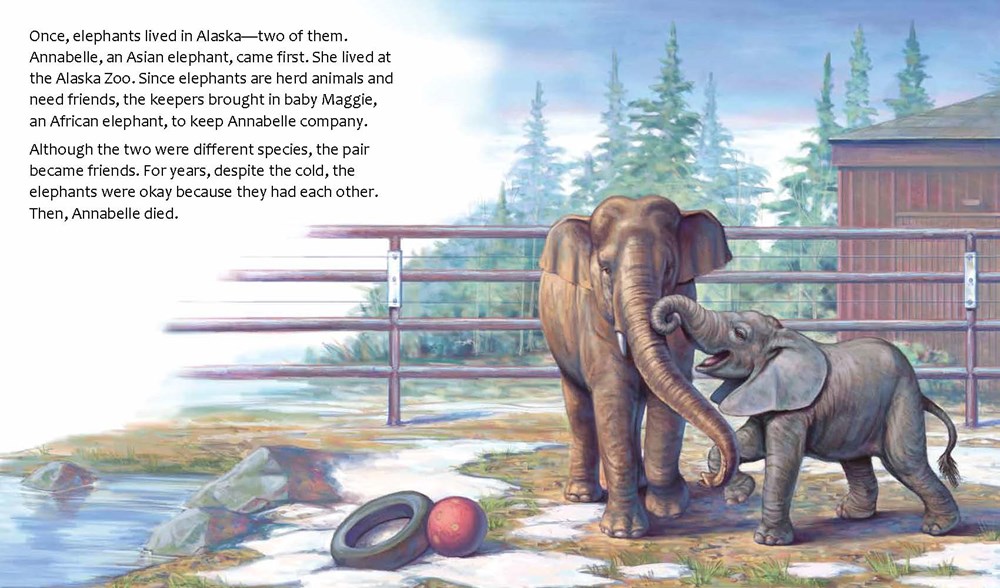
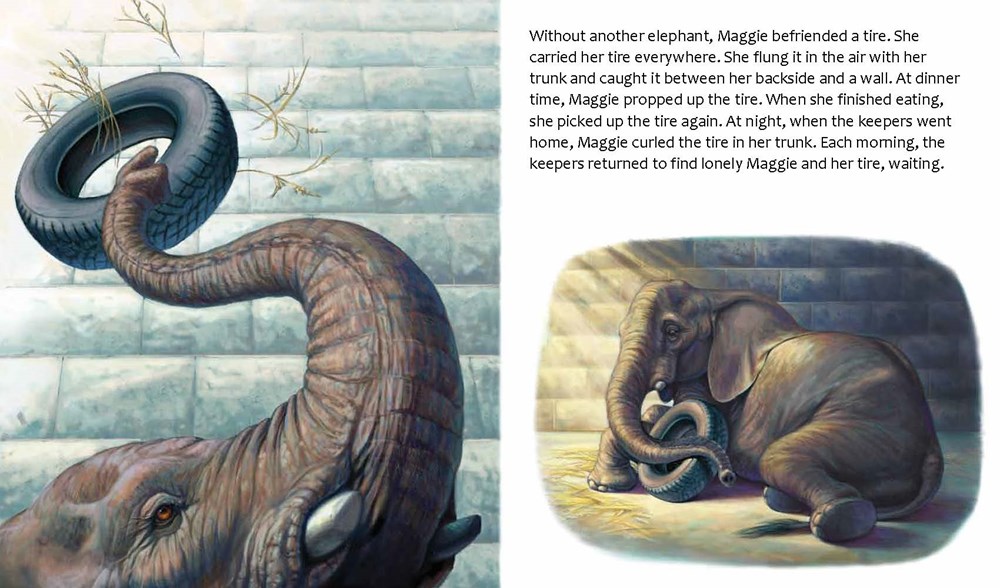
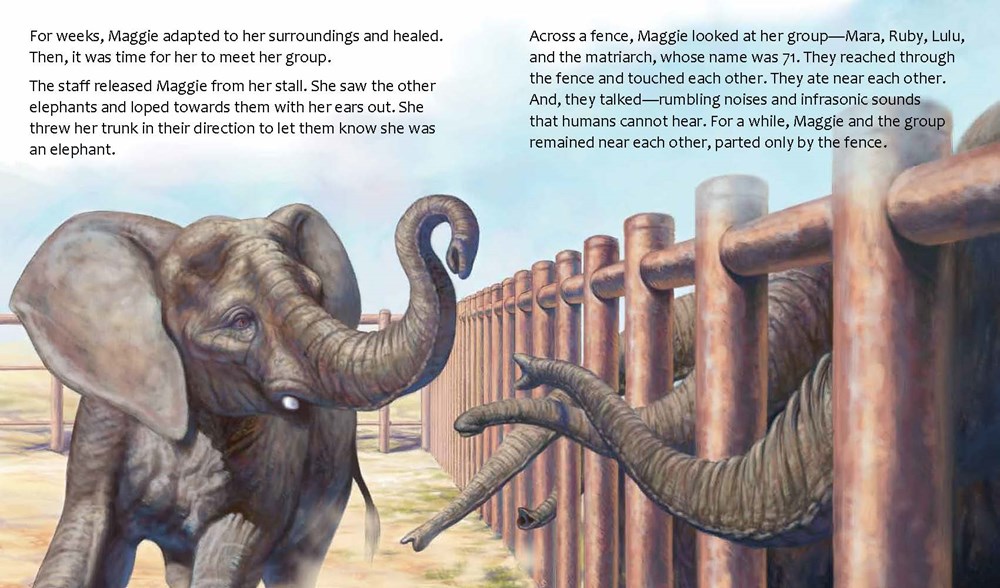
Based on a true story, Maggie: Alaska’s Last Elephant is the story of Maggie, an elephant living at the Alaska Zoo with an older elephant named Annabelle. When Annabelle dies, Maggie is left alone and becomes despondent. Elephants are social animals; with no other elephant to befriend, and living outside of her own habitat, Maggie spends years holding onto a tire. Zookeepers ultimately make the decision to send Maggie to live at the PAWS Sanctuary, where she now lives with a herd of elephants. Maggie’s story is heartbreaking; the realistic artwork beautifully and achingly conveys emotion, from Maggie’s joy with Annabelle to her despondence, clinging to her tire, alone in her pen. This is a strong story about making good decisions and making the decisions that benefit others; putting others first, and living with empathy. The Creative Minds section includes a Q&A with elephant keeper Michelle Harvey, and touches on Maggie’s care at PAWS; the PAWS website has several videos available, including Maggie’s arrival from Alaska in 2000, and Maggie joining the herd of elephants. I’ve become an Arbordale fan since encountering their books at KidLitCon this year; they put out consistently good nonfiction for younger readers and have extra resources available online to extend learning.