Posted in Non-Fiction, Teen

Peek into the mind of a teen with The Isobel Journal

isobelThe Isobel Journal, by Isobel Harrop (Capstone, August 2014). $16.95, ISBN: 9781630790035

Recommended for ages 12+

The Isobel Journal is a real-life journal from Isobel Harrop, “just a girl from where nothing really happened”. She lives in Britain, and shares her journal here with readers, who get a glimpse of her thoughts on herself, her friends, otters, and love. It’s filled with her artwork – she loves to sketch – and tidbits about her family and friends. I like her sketches, juxtaposed over photos, like the pages featuring her dog and cat. They’re fun pieces that bring art and life together.

Isobel is a teen girl – she likes to collect things, like photos and ticket stubs, and stick them in her journal. She likes to draw on herself. She daydreams, she explores. She’s got a fun, friendly sensibility that comes right through the page. Some reviewers have called this book random, but isn’t that the point of a journal? Isobel invites readers into her world, and in so doing, brings readers together – because what feels like not far too long ago (but in actuality, is), I was a teenage girl doing the same things, and reading this journal made me smile and think about that.

The Isobel Journal is a fun, quirky book that teen girls will get a kick out of looking through. Take a look at the book trailer!

Posted in Fiction, Post-apocalyptic/Dystopian, Science Fiction, Teen, Young Adult/New Adult

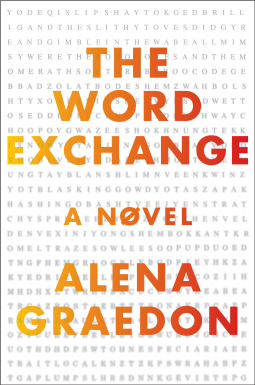
Alena Graedon’s The Word Exchange: an all-too plausible dystopia.

word exchangeThe Word Exchange, by Alena Graedon. Doubleday Books (2014), $13.99, ISBN: 9780385537667

Recommended for 18+

While Alena Graedon’s The Word Exchange isn’t written for YA/New Adult audiences, I wholeheartedly believe that these readers should read it, much in the way that they should read (if they haven’t already) Ernest Cline’s Ready Player One. Alex Awards, are you listening?

The Word Exchange takes place in an entirely believable, very near future. Society is too plugged in – smartphones appear to have morphed into devices called Memes, which think for you. Well, not really – but kind of. They anticipate what you want to do – hail a cab? Order a coffee? – and even offer you words when you can’t think of the word you’re looking for. Ana, a young woman who works with her father, Doug Johnson, at the North American Dictionary of the English Language (NADEL, for short), uses her meme – something Doug has no patience for; he feels like books and language are a disappearing art. He has no idea how right he is.

There’s a virus – WordFlu – that’s erasing language, stealing it from the populace. They start by bungling words here and there, eventually devolving into gibberish, silence, and ultimately, death. When Doug goes missing, Ana goes on the search for her father and finds herself in the middle of something far greater than she, Doug, or the Dicionary could ever be – could there really be a plot in place to erase language?

Told in the form of journal entries by Ana and her friend, Doug’s associate Bartleby (also known as Horace), The Word Exchange examines what would happen in a society that leaves entirely too much to technology. It’s very unsettling, because it’s only a step or two from where we are now. Imagine if someone were to create an app that let you think of the word that was on the tip of your tongue, but you couldn’t remember, for pennies a download? Now imagine if you had a Seamless or taxi service available to you without even picking up your phone or pulling up your app? Those bothersome clicks and pokes to the touchscreen would go away, because your Meme would do all the work for you. Would society really hand over the reins so easily?

The book starts slowly, laying groundwork – the mystery of Doug’s disappearance happens fairly soon in the book, but Ana’s search builds until about halfway through the book, when the action just explodes. Layered and tautly paced, this book was unputdownable for the second half. She’s got complex, three-dimensional characters, and a plot that chilled me to the bone just thinking about it – because it could happen. Very easily.

Teens and young adults should be reading this book, because they’re the next generation – they’ll appreciate the setting and hopefully, the message that Ms. Graedon delivers. It’s a fantastic book discussion group title that explores technology, morality, and the politics of doing business in an increasingly online world. I loved this book and can’t wait to see some of the discussions that evolve around it.
Posted in Adventure, Fiction, Middle School, Tween Reads

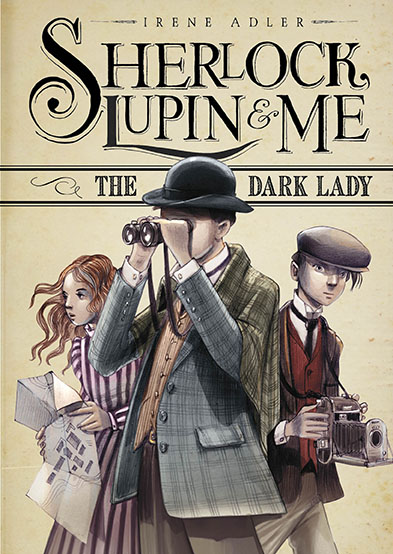
Young Sherlock and Irene Adler Face Off in Sherlock, Lupin, and Me: The Dark Lady

sherlock lupin meSherlock, Lupin and Me: The Dark Lady, by Irene Adler. Capstone Young Readers (2014), $12.95, ISBN: 9781623700409

Recommended for ages 9-14

Written by Irene Adler herself, this middle-grade novel details the first time Irene Adler, a young American girl living abroad and vacationing with her mother in a French coastal town, meets Sherlock Holmes and his friend, Lupin. The three become quick friends; when a dead body washes up on the beach one morning, they decide to solve the mysteries surrounding the dead man: who was he? Was this a suicide or a murder, and why?

Woven into the story’s fabric is background information on Holmes and Adler, offering glimpses into life events that led to the adults they become. Adler lives with her mother and her butler, Horatio Nelson, who seems to double as a chaperone/bodyguard. Young Irene is headstrong and willful, seemingly at endless odds with her mother. Sherlock is a quiet, somewhat surly, brilliant boy who’s reticent to discuss his home life; he has an older brother and a younger sister that annoy him. Arsene Lupin, the son of an acrobat, is a reckless young man who has an eye for Irene, but may eventually find himself at odds with the great Sherlock Holmes.

I really enjoyed this story. Middle graders who have already begun studying Sherlock Holmes will enjoy seeing the character development written into this young, teenage Sherlock, and those unfamiliar with Holmes will doubtless enjoy this introduction, easing them into the great sleuth’s world. The writing is fun and accessible to younger readers, and the sets itself up for a potentially exciting continuing series. For starters, will we find out more about Lupin, who ends up being one of the most famous thieves in literature? Will we meet a young Moriarty? A young Lestrade or Watson? And will we find out more about Irene Adler’s parents, who seem very secretive about something to do with Irene?

Jacopo Bruno’s Victorian-type illustrations add a Holmesian feel to each chapter, setting a mood for the reader.

I love the pairing of the world’s greatest detective with the world’s best gentleman thief as teenagers – I can’t wait to see where this series is going to go.

The Capstone Kids site should be getting a minisite up soon, but I didn’t see anything on Sherlock, Lupin and Me at the moment.

Posted in Fiction, Humor, Middle School, Science Fiction, Tween Reads

M.E. Castle’s The Clone Chronicles concludes with Game of Clones

gameofclones_3 Game of Clones: The Clone Chronicles, #3, by M.E. Castle. Egmont USA (2014), $15.99, ISBN: 9781606842348

Recommended for ages 8-12

In M.E. Castle’s third installment of the Clone Chronicles, seventh grader Fisher Bas and his clone, Fisher-2, put aside their differences to team up and fight Three, the Fisher clone created by the evil Dr. X. Three’s gone rogue, with plans for world domination on his mind, and he’s on track to make it happen – will Dr. X make an appearance? Is the enemy of Fisher’s enemy a friend?

The book is a fast-moving action-adventure series that should appeal to both middle grade boys and girls. Fisher and Fisher-2 have allies in their classmates, Amanda and Veronica, both of whom serve as the boys’ crushes and as intelligent, strong females in the series. Fisher tends to be an overthinker, and Alex struggles to define his own personality despite being a Fisher clone. This struggle runs throughout the book, and mirrors many a tween’s burgeoning identity and personality clashes and crises; where Fisher-2 is a clone, a tween pushes back against being merely “the son” or “the daughter”. Three wreaks havoc in Fisher’s neighborhood and school, forcing him to think of creative solutions and seek help outside of his gadgets; he realizes the power of friendship and of reaching out to ask for help, and it makes him a better person.

Overall, it’s a fun book in a popular series that tweens will enjoy. Game of Clones is part of The Clone Chronicles series; the first two books are Popular Clone and Cloneward Bound.

Posted in Post-apocalyptic/Dystopian, Science Fiction, Teen

Ann Brashares The Here and Now gives us time travel and dystopia.

cover35542-mediumThere Here and Now, by Ann Brashares. Random House Children’s (2014), $18.99, ISBN: 9780385736800

Recommended for ages 14+

Ann Brashares, author of the Sisterhood of the Traveling Pants series, gives us a well-constructed story with dypstopian elements, time travel, and a race through the past, present and future to stop a terrifying future.

Prenna is a 17 year-old Traveler – she, her mother, and a group of her people came to our present time to escape a future where a blood plague ravaged the population. The Travelers live under a restrictive list of rules that appear to exist more for their power-hungry leaders rather than the actual good of the people (or the Natives – people in the right timeline – that the rules are supposed to protect). When Prenna finds herself growing closer to her friend Ethan, she starts questioning not only the rules, but the entire structure their society was built on – and she and Ethan find themselves drawn into a race against time to put a stop to the dismal future from which Prenna came, all the while pursued by the leaders who want to silence Prenna, possibly for good.

The Here and Now has elements of The Giver – the post-apocalyptic society governed by rules really spoke to me – and is one of those books that I couldn’t put down. I needed to know what was going to happen next; Ms. Brashares constructed a compelling narrative with enough mystery to keep me going for that famous “one page more”. Within the overall story structure, there are mini-mysteries that the two teens have to unravel to get the next piece of the puzzle; add to that the internal conflict Prenna feels at duty to her family and the love she and Ethan feel for one another, and you have a great read for teens that can spawn interesting conversations about the implications of time travel: what would happen if you went back in time and changed things, even if they were for the better? What kind of society would develop if a blood-borne plague spiraled out of control? More than a teen romance, The Here and Now offers the opportunity to draw teens into complex conversations about the world around them.

Posted in Fantasy, Graphic Novels, Tween Reads

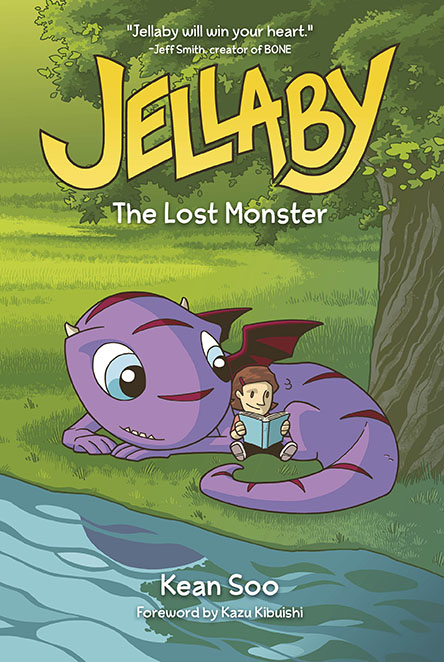
Jellaby: The Lost Monster – a story of friendship, in graphic form, from Kean Soo and Capstone

Capstone is bringing Kean Soon’s Jellaby back to print, and I couldn’t be happier. I came across the book on NetGalley, and am so happy that Capstone gave me the chance to read it. Jellaby: The Lost Monster is the first volume in the Jellaby series. The all-ages story about friendship also tackles some big issues within a safe space for kids.

jellaby

Read the rest of my review over at WhatchaReading!

Posted in Preschool Reads

Book Review: The Snowy Day, by Ezra Jack Keats (Viking Press, 1962)

snowydayRecommended for ages 3-5

In Keats’ beloved classic, a little boy enjoys the wonder of his first snowfall. Peter wakes up to see snow covering everything as far as the eye can see. After breakfast, he ventures outside and plays in the snow, making snow angels, playing with footprints, making a snowman, and climbing a mountain. He goes home and tells his mother about his day, takes a warm bath, discovers that the snowballs he saved in his pockets are gone, and  goes to sleep, only to wake up to another snowy day. The groundbreaking book was the first picture book to feature an African-American child as the hero of his own story and is still popular with audiences of all cultures and backgrounds today; it is the story of a child enjoying a snowy day – preschoolers will enjoy thinking about their favorite snowy day and appreciate moments that Peter experiences that may be familiar to them: the feeling of snow hitting him on the head, getting hit with a snowball when he tries to play with older boys, and the feeling of a  nice, warm bath  when he gets home.

Mr. Keats used illustrations consisting of cut-outs, varied textures, strong watercolors, geometric shapes, and collages, was also considered an artistic breakthrough. The images are not outlined, giving making for a softer appearance and will keep young audiences interested while the plain black font allows for a read-aloud that will keep audiences interested in the pictures while the reader weaves the tale. The endpapers provide a comfortable lead-in and phase-out to the story, with multi-colored snowflakes on a sponge-like background. Peter also appears in Keats’ books Peter’s ChairA Letter to Amy; and Goggles!

The Snowy Day has won numerous awards and accolades over the last 50 years, including the Caldecott Medal (1963) and the Child Study Children’s Book Committee (1995).

This would be a great anchor story for a winter/snowy day read-aloud. There is a board book version available for even younger audiences; it may be a good idea to have copies on hand for toddlers who want to follow along. Multicultural audiences will appreciate the African-American main character. The author’s website has an interactive version of the story with narration and a soundtrack that should be accessible on library computers. The Perry Public Library’s Snow & Winter storytime offers ideas, fingerplays and songs; children can talk about their favorite snow days and could color snow-related printables available on many children’s websites. Children could use precut shapes to make and decorate their own snowmen.

Posted in Fantasy, Historical Fiction, Tween Reads

Book Review: Icefall, by Matthew J. Kirby (Scholastic, 2011)

Recommended for ages 10-14

Reading Matthew Kirby’s Icefall is like reading an old Norse tale -there is suspense, there is heroism, there are storytellers, and there is battle. The author puts the reader in the banquet hall with the characters, invites you to take a seat and listen in.

Solveig, the middle daughter of a viking king, her older sister and younger brother, are in hiding at a frozen fortress while their father fights a war at home. The king’s warriors protect them, joined later by a group of berserker warriors that he sends as additional protection. Shortly after the berserkers arrive, though, things start going wrong – livestock disappears, food is poisoned, and it becomes all too clear that someone in the group is a traitor. Solveig and her siblings have to figure out how to survive the winter until the spring thaw, and Solveig works to discover who the traitor is before he – or she – destroys them all.

It is a compelling read with complex characters and a tense situation – a siege tale from within. Solveig is the middle daughter – she is plain, unlike her beautiful older sister Asa; she is not an heir, unlike her younger brother Harald; she is merely Solveig. But Solveig is smart and figures things out quickly. She strives to be a storyteller – a skald – like Alric, the skald in her father’s court, but she learns that being a skald means giving your loyalty to those who may not always warrant it. Solveig finds herself angry at Asa for doing nothing during their days in captivity and she protects Harald as if he is one of her own. The story is told in Solveig’s voice, interspersed with Solveig’s anecdotes involving different characters from before the time of the seige, to further flesh out the players. There are layers and layers to this story; as each layer peels back, the revelations keep the reader turning the pages to discover more.
 
This book crosses genres – it can be considered fantasy, it can be historical fiction, or it can be mystery (it was just nominated for an Edgar award). While the main character is female, there is plenty here to pique both boys’ and girls’ interests: battle, complex relationships, and the frustration of family ties are only part of what this well-written tale has to offer all readers.
 
Matthew J. Kirby’s blog, Kirbside, offers information about his books (with hyperlinked titles to bring you directly to points of interest) and contact information. The Scholastic site for Icefall allows readers to download a sample chapter.
 
Icefall has also been nominated for a Cybils award in Middle Grade Fantasy.
Posted in Fantasy, Tween Reads

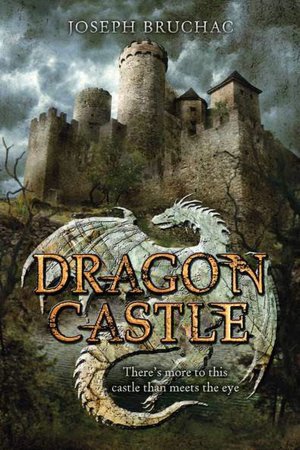
Book Review: Dragon Castle by Joseph Bruchac (Dial Books, 2011)

Recommended for ages 10-13

Prince Rashko, a 14-year old prince, is frustrated by his family. They’re so dumb. His parents are kind, but simple; his older brother Paulek, while a near-perfect warrior, is content to let Rashko do all the heavy thinking. They all live in Hladka Hvorka, a castle rumored to have magical origins, and there is peace in Rashko’s parents’ land – until Rashko’s parents disappear, and the Baron Temny shows up, expecting his young hosts to accommodate him and his entourage. The Baron also brings his ‘daughter’ with him as a potential bride for Paulek, who is thrilled to have company. Rashko suspects that neither there is more to both the Baron and his daughter, and works to find his parents and keep Hladka Hvorka in his family’s name.

Running parallel to Rashko’s story is the story of the legendary warrior Pavol, a hero in Rashko’s land. Orphaned when an evil king took his parents’ land and murdered them, Pavol is raised by a husband and wife living in the magical woodlands on the outskirts of the castle, and trained for the day he will avenge his parents’ deaths. This legend eventually converges with Rashko’s story, and he learns that Hladka Hvorka holds even more secrets than he imagined.

Author Joseph Bruchac is Native American and Slovakian, and draws upon his Slovakian heritage for Dragon Castle. The book contains phrases and words in Slovakian, always reinforced in English, and includes a glossary in the back. It is a great way to introduce younger readers to a new language within a fantasy setting.
 
The story is woven like a classic hero’s tale, with adventure and humor in equal parts. Rashko comes across as a bit petulant and stuck-up at times, particularly in the beginning of the book when he spends most of his time lamenting his superior intelligence and his parents’ and brother’s abject stupidity, but he’s an adolescent – he’s written well. He also realizes, as he gets deeper into his family’s background, that there is more to his parents – and possibly, his brother – than he ever thought possible, and this gives him pause.
 
Having two male main characters is a great way to bring this adventure fantasy to male readers; supplemental female characters will not draw any female readers in that weren’t planning on reading it already, but Dragon Castle is a strong fantasy tale that should appeal to boys and girls who enjoy fantasy, complete with evil sorcery, dragons, and castles.
 
Joseph Bruchac’s website focuses mainly on his music and poetry and features .mp3 files for listeners to enjoy. There is some information about his books and schedule available.
Posted in Science Fiction, Tween Reads

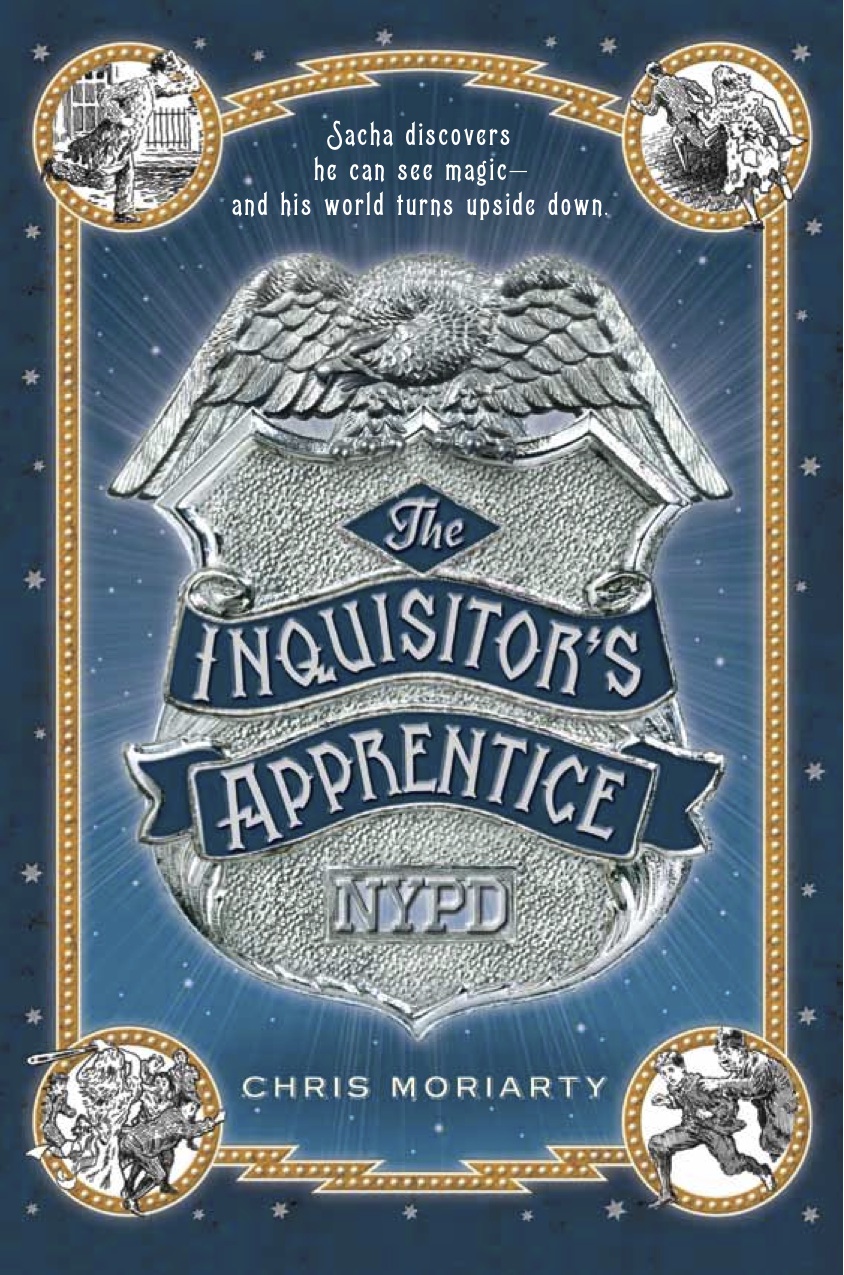
Book Review: The Inquisitor’s Apprentice by Chris Moriarty (Harcourt, 2011)

Recommended for ages 10-14

The Inquisitor’s Apprentice is the first book in a a science fiction/fantasy adventure series, taking place in an alternate New York City around the turn of the 20th century. Magic exists in this world, and each immigrant group has their own magic that they bring to the New World with them. Inquisitors, a branch of the New York Police Department, patrol to make sure magic is not being abused.
Thirteen year-old Sacha Kessler, who lives in the Lower East Side with his family, has the gift of seeing magic; for this, he is recruited into the NYPD, as an apprentice to Inquisitor Wolf; his fellow apprentice, Lily Astral, is from a wealthy New York family and is an entitled snob who rubs Sacha the wrong way almost immediately.

Inquisitor Wolf, Sacha and Lily are put on a case involving death threats to Thomas Edison, who is creating a witch-detectiing machine – every magician in New York City has a reason to want him dead, but as they delve deeper into the case, things become more complicated for Sacha, who sees the case leading back to his neighborhood – and possibly, his own family.

The book is compulsively readable, with well-drawn characters and an interesting alternate New York setting. Moriarty offers a new way of glimpsing life into the Jewish immigrant experience in turn of the century New York; this book would be good companion reading to a unit on immigration in America as it allows for many areas of discussion wrapped within a solidly enjoyable fantasy setting. Some may struggle with the many Yiddish terms, but context should answer most questions. A paperback edition may consider a guide to terms for some readers. Black and white illustrations by Mark Edward Geyer add to the moody feeling that permeates much of the novel.

Chris Moriarty has an Inquisitor’s Apprentice website set up that provides information on the series and on the actual New York City of the time, with photos and information about key individuals that appear in the series, like Harry Houdini and Thomas Edison. There is author event and contact information as well. He blogs at SFness.com about his own books, other author’s books, and offers writing advice. His website features his writing about science fiction and cyberpunk, along with other science fiction subgenres.