Posted in Graphic Novels, Middle Grade, Non-Fiction, Non-fiction, Tween Reads

First Second brings you Science Comics!

First Second’s got a line of Science Comics coming to stores beginning in May with the releases of Coral Reefs and Dinosaurs. The books are beautifully illustrated and bring nonfiction to the next level with information, wit, and fun for readers.

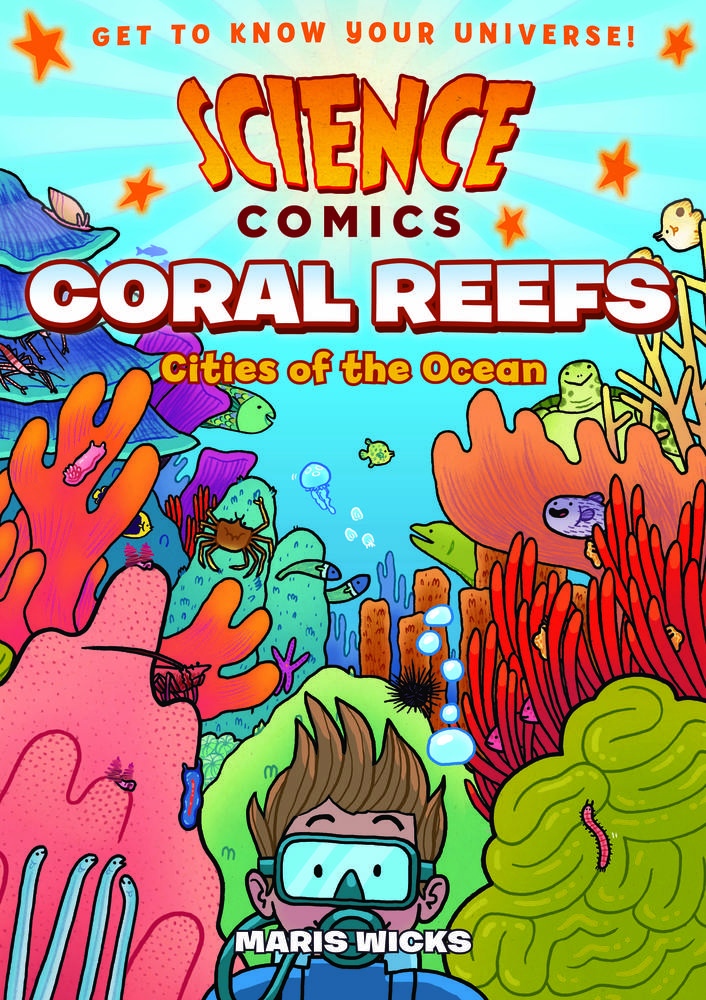
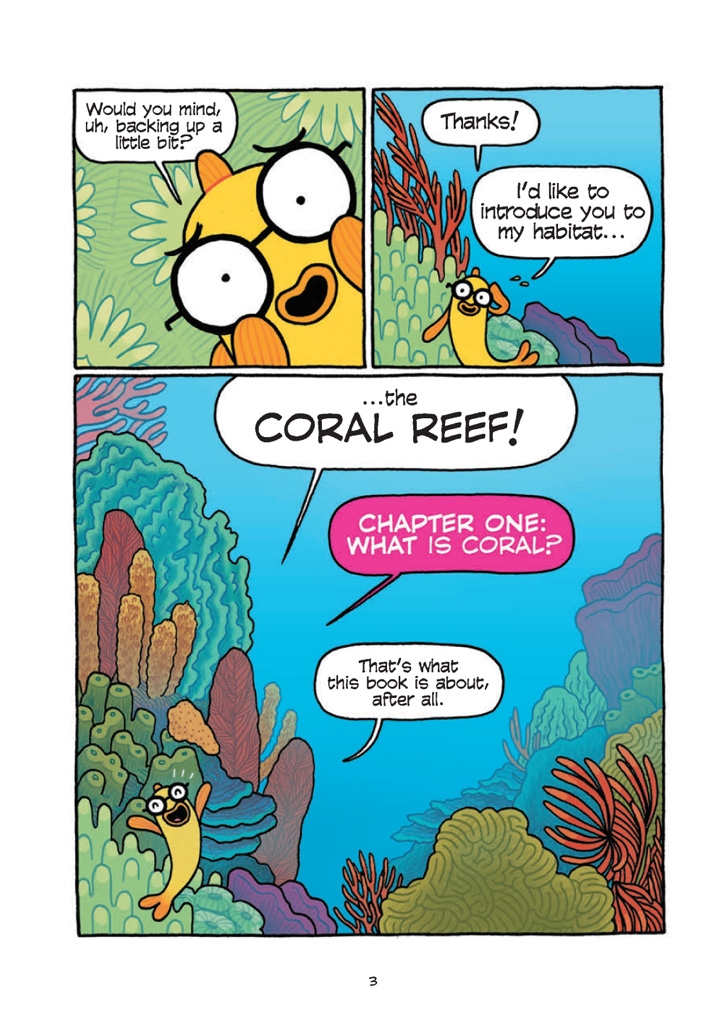
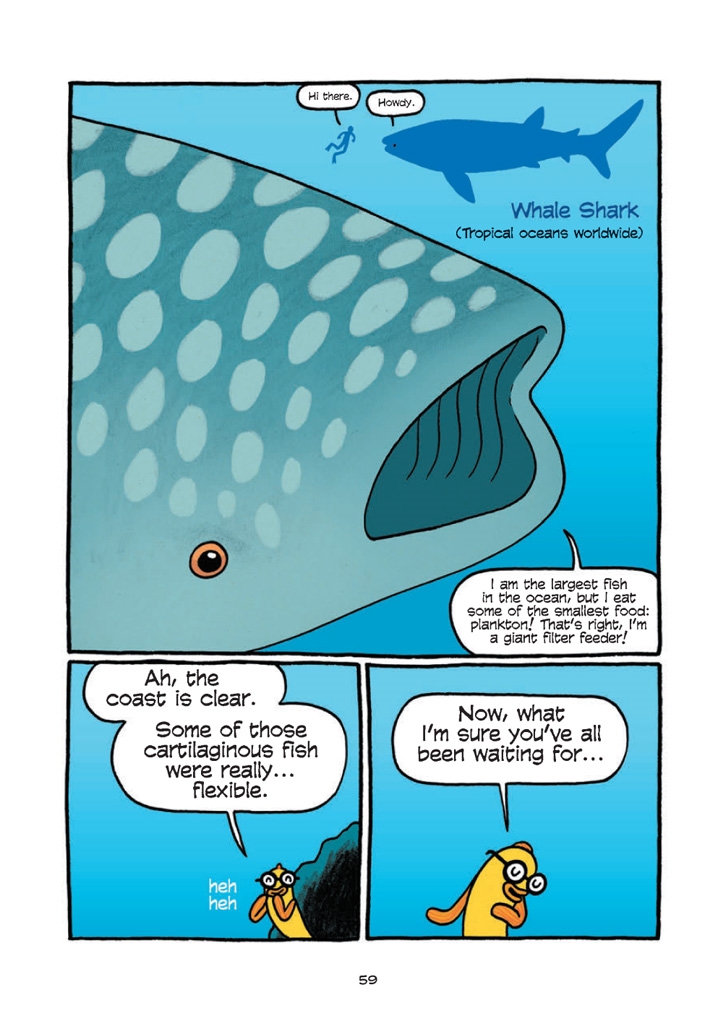
coral reefsCoral Reefs, by Maris Wicks ($9.99, ISBN: 9781626721456) introduces readers to the world of coral reefs! With an adorable fish acting as emcee and guide, readers get a look at the biology of coral, the different types of reefs, sea creatures that live in and around the reefs, and the ecological importance that the reefs play in our world. Maris Wicks, who also gave us the brilliant and informative Human Body Theater last year, is back with her combination of smart and funny writing and eye-catching, bright art.

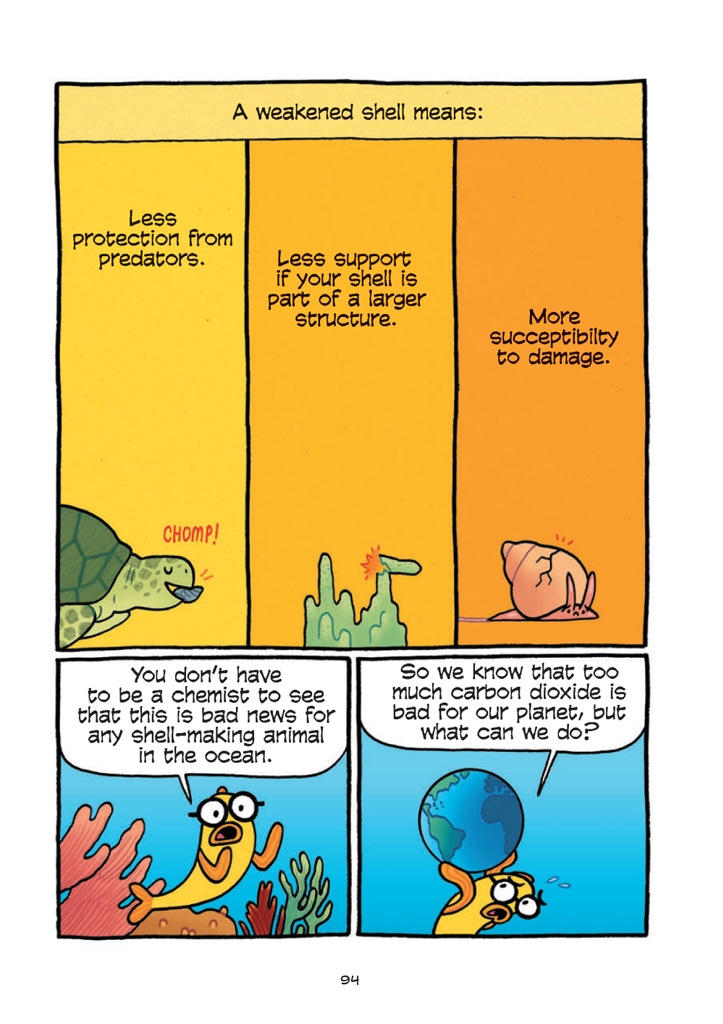
The science is solid and there are tons of take-away facts for kids and adults alike. Did you know that some reefs take millions of years to grow?  That coral reefs are home to a quarter of all the animals found in the ocean? Wicks also discusses climate change and its impact on the environment, with emphasis ramifications like coral bleaching and ocean acidification. Anyone can help in any way; Wicks provides examples that include reducing carbon emissions (take a walk! carpool! bike ride!); reusing and recycling plastics; composting, and planting trees and flowers. There’s a great message about environmentalism and conservation to be told here, and Wicks ends on an upbeat note: “Caring for ourselves and our environment is the first step to caring for the rest of the world.” With a foreword from Randi Rotjan, Ph.D., Associate Research Scientist with the New England Aquarium, a glossary, bibliography, and additional resources, Science Comics: Coral Reefs is a great companion to any unit on the oceans, sea life, conservation, and ecology. Strongly recommended for public, school and home collections.

Check out Maris Wicks’ website for fiction and nonfiction artwork!


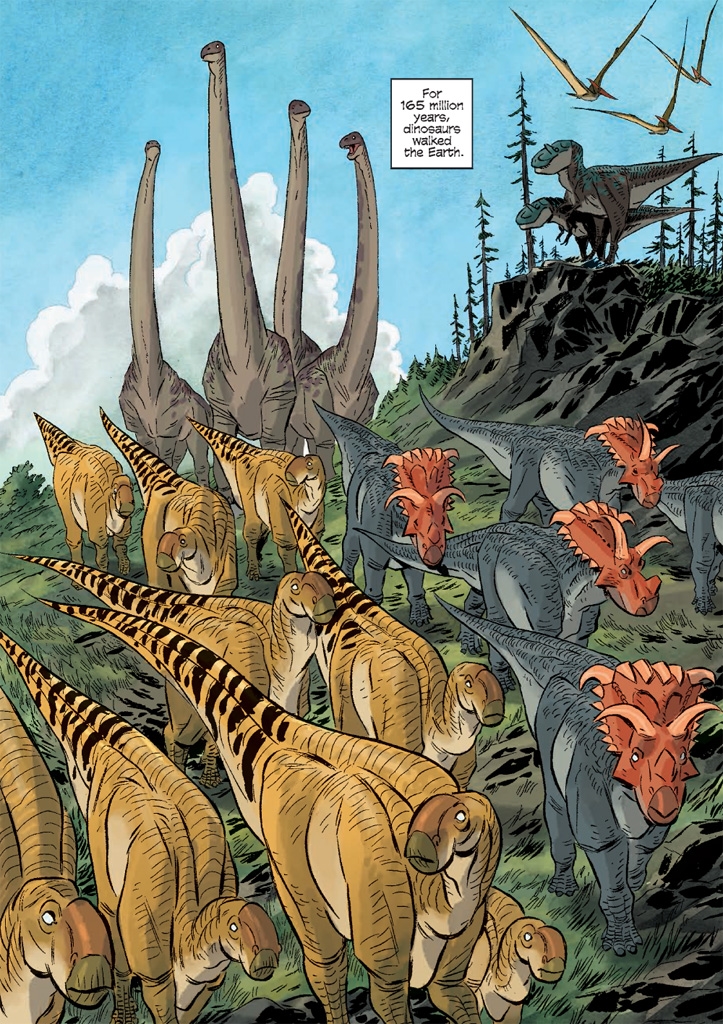
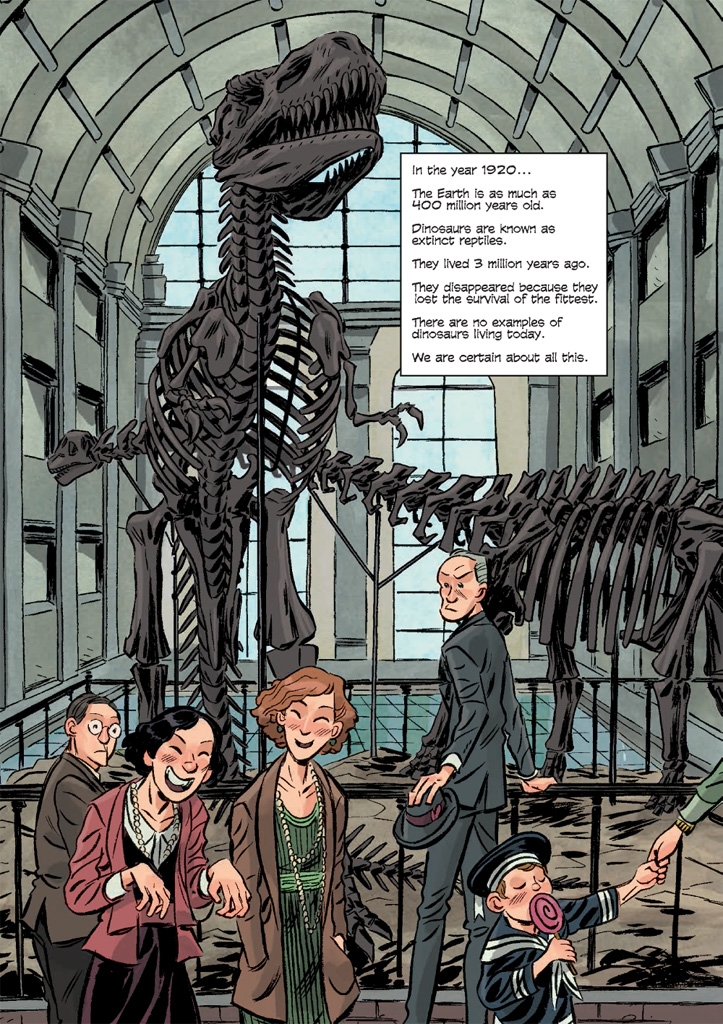
dinosaurs_cScience Comics: Dinosaurs, by award-winning author MK Reed and illustrated by Joe Flood ($9.99, ISBN: 9781626721432) takes an omniscient narrator approach, walking readers through the history of paleontology, including the many rivalries between scientists that led, in some cases, to some major classification errors, like the poor Brontosaurus, a victim of the infamous Bone Wars between paleontologists O.C. Marsh and Edward Drinker Cope, whose bitter rivalry and rush to beat one another to publishing led them to create a dinosaur that didn’t really exist – it was later discovered that an Apatosaurus body had a Camarasaurus head stuck onto the skeleton, in a rush to complete the work.

With a series of repeated timelines that show facts that society “definitely knew” at different times, we see how much we’ve really learned about the true age of the earth, the fossil record, and the origins of dinosaurs themselves. Joe Flood’s art is less cartoony than Maris Wicks, but captures the tremendous scale and brightly colored dinosaurs that we now understand roamed the earth. There are some incredible graphs and charts in here, illustrating common ancestors and evolutions. A foreword by Leonard Finkelman, Ph.D., Associate Professor in Philosophy of Science at Linfield College, plus a glossary, additional charts, and further resources make this a must-have for any dinosaur collection. Buy two – you know kids love their dinosaurs.

So much more than simple graphic novels, Science Comics is a series that deserves a place in any nonfiction section AND any graphic novel section. The next book in the series, Volcanoes, is due out in October. Recommended for ages 8 and up.

MK Reed’s author webpage has more information about the author and her books, including a link to her anthology on women gamers, Chainmail Bikini.

Sneak peek at Coral Reefs:

coral reefs_1coral reefs_2coral reefs_3coral reefs_4coral reefs_5coral reefs_6coral reefs_7coral reefs_8

Sneak peek at Dinosaurs:

dinosaurs_1dinosaurs_2dinosaurs_3dinosaurs_4dinosaurs_5dinosaurs_6dinosaurs_7dinosaurs_8


Posted in Animal Fiction, Fiction, Middle Grade, Tween Reads

Tristan Hunt and friends return with Stingray City!

stingraycity-useStingray City, by Ellen Prager (May 2015, Mighty Media Press), $9.95, ISBN: 9781938063701

Recommended for ages 9-12

When we last left Tristan Hunt and his Sea Camp friends, they’d had a rough summer that included being held prisoner by a crazy scientist and being chased by their environment-menacing foe, billionaire JP Rickerton. Camp ended early to get the heat off the kids, but Tristan and his friends aren’t out of action just yet: there’s an emergency by Grand Cayman, where stingrays and other sea life are disappearing. Tristan, Hugh, Ryder, Sam, and Rosina are called in to investigate, but they may end up missing along with the stingrays they’re trying to locate!

This third installment is the most fun Tristan Hunt adventure yet. Ms. Prager has hit her stride with this third book; her writing flows smoothly and she’s as comfortable with these characters as they are with one another. There’s more joking around now; more confidence; the kids are a little more inventive with their strategies and bolder when it comes to taking initiative. Tristan isn’t quite as focused on his on-land clumsiness as he’s been in the past, and, being teenagers now, they’re also starting to notice one another.

The Jamaican-accents are back, too! This time, instead of sharks, we’ve got stingrays calling the kids “bobo” and “mon”, adding some more humor to the storyline. There are some tense moments and some straight-up James Bond-type stunts happening here, courtesy of a billionaire inventor introduced here. (The books take place around Grand Cayman, there are going to be millionaires, folks.)

Readers are going to get some harsh truths in this book: not everyone appreciates life. But that’s why Tristan and his friends work so hard to keep the waters safe. You’re going to read about some pretty terrible conditions that people inflict on sea life and people who try to stop them, but it’s nothing that a kid can’t handle, and hopefully, he or she will come away with a greater respect for our world and the creatures we share that world with.

Lots of great conservation and environmental messages here, some new questions introduced (I still have questions from the last book!), and overall, a big, fun read. A plus to your middle grade realistic fantasy (I know that’s not a genre, but it should be) collection.

Do you want your own Tristan Hunt starter set? Enter a Rafflecopter giveaway for the chance to win books 1 and 2 (The Shark Whisperer and Shark Rider)!
https://widget-prime.rafflecopter.com/launch.js

Posted in Animal Fiction, Early Reader, Fiction, Fiction

Moon’s Messenger carries a beautiful and powerful message.

Moon is a young girl, sitting on the beach, when a sea turtle approaches her, beckoning her to join him in a journey through our planet. He quietly shows her the havoc people have wreaked on our environment: extinction, oil spills and pollution, global warming among a mere few of the methods. A message of hope and rebirth infuses Moon with purpose and action to protect the environment, and just as importantly, the living creatures we share it with.

moons messenger

Moon’s Messenger, by Virginia Kroll/Illustrated by Zusanna Celej (March 2016, Cuento de Luz), $16.95, ISBN: 9788416147205.
Recommended for ages 5-10

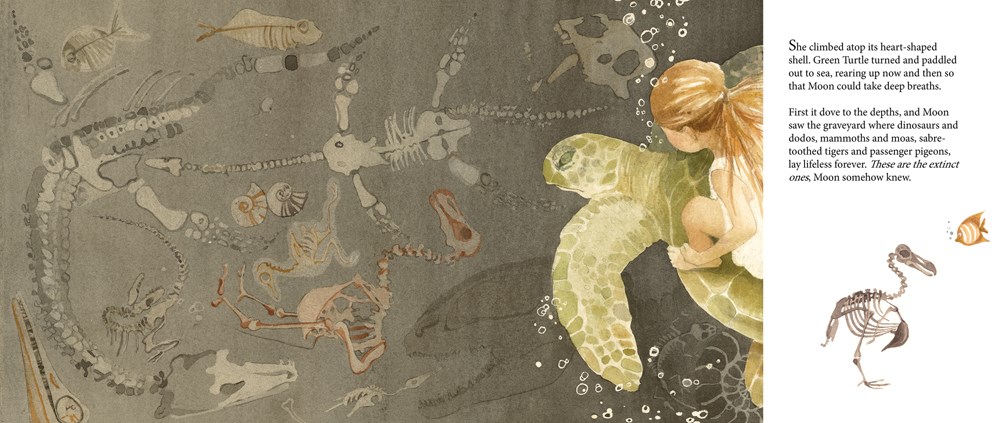
Moon’s Messenger is a powerful tale about conservation and activism, relying on watercolor images that are as heartbreaking as they are beautiful: a tired polar bear, trying to find an iceberg to rest on; local wildlife, deer and raccoons, ransacking residential garbage because their habitats are disappearing, giving way to more and more homes for people; sea life covered in oil and suffocating. And then, the turtle lays its eggs, and it’s beautiful again. There’s hope in the world, because there’s life, and now, one child knows what she has to do.

moons messenger_1

The text and images are not subtle – the author and artist are not hiding their message, and they are appealing to our next generation. Endpapers alternately draw you in and warn you about what you’re going to read – an ocean floor with the skeletons of extinct animals to bring you in, and to lead you out, the same image, but with information about green sea turtles, the dangers they face in our environment, and a call to action to readers: What will you do to help?

I loved this book, I loved the message, and I’m going to make sure it’s an Earth Day (April 22) storytime for my little ones. The small, black font takes nothing away from the images, and reading this aloud may be a bit of a challenge unless you’ve familiarized yourself with the story a couple of times. The text and ideas are better for a Kindergarten – Grade 2 audience, and pairing a reading with a reduce/reuse/recycling activity will let kids see how they can contribute to making the world a better place with their own two hands. Teach the kids in your life to respect nature, respect biodiversity, and respect our planet, and use this book as a valuable guide. I’d love to see an educators’ guide to this book with further resources and exercises for younger kids.

moons messenger_3

Posted in Middle Grade, Middle School, Non-fiction

What’s Up in the Amazon Rainforest?

rainforest_coverWhat’s Up in the Amazon Rainforest?, by Ginjer L. Clarke (Sept. 2015, Grosset & Dunlap), $8.99, ISBN: 9780448481036

Recommended for ages 8-12

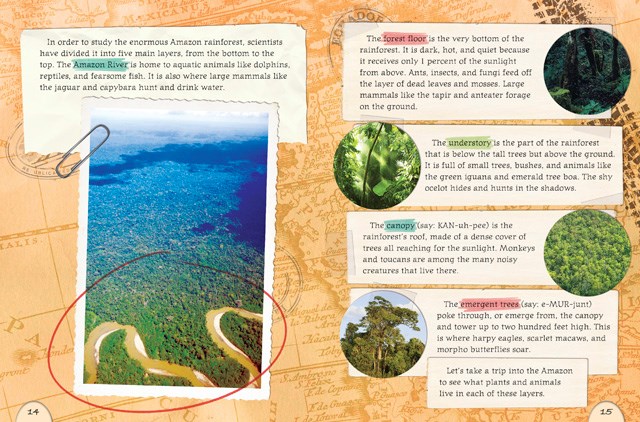
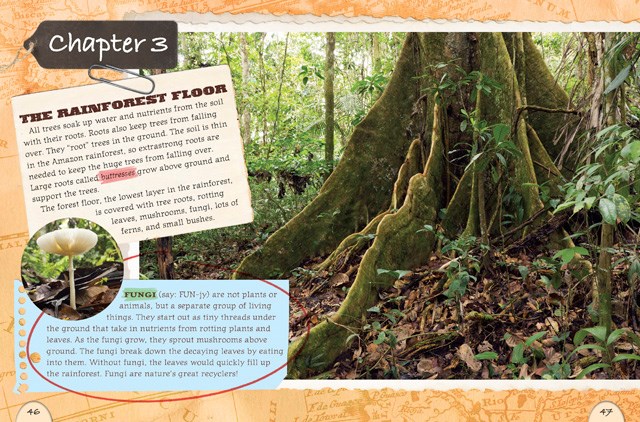
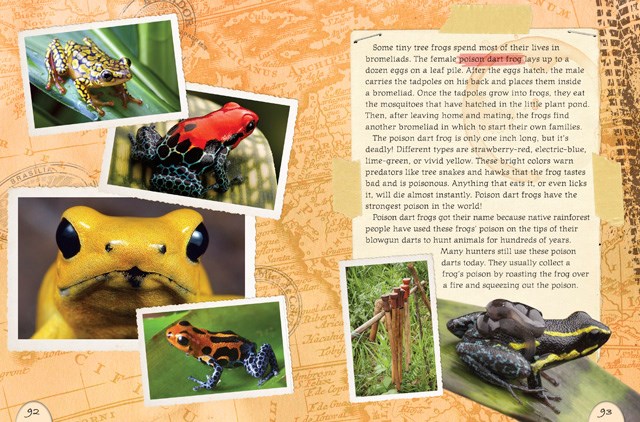
I’ve been doing a lot of weeding in my new library spot, and the first section I hit was the Animals section. Naturally, I need some new books to fill in my shelves, and this beauty fits the bill. It’s a new geography series, loaded with color photos and a fold-out map, and it’s laid out like a dossier file, with photos sharing space with informative text, laid over maps in the background, and little touches like circled paragraphs and paper clips to give the feeling that kids are reading an environmentalist’s journal.

rainforest_1

There’s a ton of information packed into this book: Ginjer Clarke looks at each layer of the rainforest, the flora and fauna that can be found there, and moves on to provide quick profiles on the people that live in the rainforest, products that come from the rainforest (yay, coffee and chocolate!), and most importantly, the importance of conservation and preservation. A bibliography and index round out the book. I’d love to see a glossary and some websites for kids included in future editions – admittedly, I’m working from a galley of the book, so if any of these resources are included in the finished copy, I apologize! In the meantime, her blog offers really cool updates and photos of different places she visits while researching her books. (Wait until you see the size of the oarfish.)

You’ll learn about pink dolphins – who knew there were dolphins in the rainforest? – and howler monkeys, Kapok and cacao trees. Fold-out maps will let kids place themselves in the locations they’re reading about.

Author Ginjer L. Clarke writes popular nonfiction books for kids. She’s got a section dedicated to her Baby Animals series on her website, and sections with more information about her other series, including more of her What’s Up, Out, and Wild Animals series.
Check out some more of What’s Up in the Amazon Rainforest below. The pictures are unbelievable!
rainforest_2 rainforest_3
rainforest_4 rainforest_5
Posted in Non-Fiction

Creepy Crawlies and the Scientific Method is perfect for educators, fun for kids!

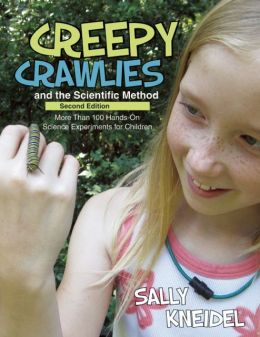
creepy crawliesCreepy Crawlies and the Scientific Method, by Sally Kneidel (2015, Fulcrum Publishing), $24.95, ISBN: 9781938486326

Recommended for 16+

Who said science has to be boring? Kids love to play in the dirt, right? The dirt is FILLED WITH SCIENCE. Sally Kneidel brings a love of her subject – she’s got a Ph.D. in Biology and has written extensively on the environment, natural history, and teaching science to kids- to this updated version of her book, Creepy Crawlies and the Scientific Method. She explains that everyone can find a creepy crawly or two to learn more about, whether you live in a building or out in the middle of nowhere – it’s all about looking under a rock, or between some leaves.

More than finding and experimenting, Dr. Kneidel stresses environmental responsibility. She urges children and adults alike to respect nature, to be kind and humane, and to release our test subjects once we’ve observed them. Do no harm isn’t just part of a doctor’s oath; we all need to remember and take this mantra to heart. We share the planet with “creepy crawlies”, but what do we know about them? Dr. Kneidel knows a lot, and that’s why we need to listen to her.

Written more for adults that work with or enjoy kids in their lives, Creepy Crawlies and the Scientific Method has extensive profiles on various “critters”: bugs and insects – to give adults and children alike a background from which to work. She outlines the five steps of the scientific method: question, hypothesis, methods, result, and conclusion, and provides activities and questions that will stimulate fun and creative thinking among kids. Beautiful photographs and in-depth descriptions of various critters, including different appearances at different life stages, make this book a hugely valuable resource for any STEM library. Bring this book to your backyard, the park, or on vacation to learn science and have a great time doing it.

This book is absolutely going on my order lists for my teaching libraries! I can’t wait to hear the teachers talk about their field trips.

Dr. Kneidel’s webpage is a great additional resource, with photographs and blog entries on nature, the environment, and social responsibility. You can follow her on Twitter @sallykneidel.

Posted in Non-Fiction, Tween Reads

Change the World Before Bedtime – Proof that everyone can affect positive change!

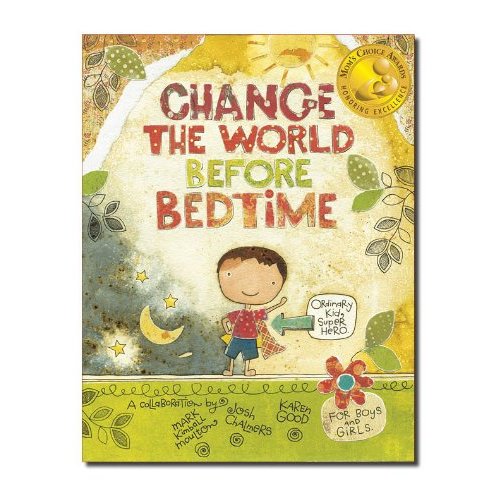
change the world before bedtimeChange the World Before Bedtime, a collaboration by Mark Kimball Moulton, Josh Chalmers, and Karen Good (Schiffer Publishing, 2012). $16.99, ISBN: 978-0764342387

Recommended for ages 4-8

For all the kids out there tired of being told that they’re too young to affect change, Change the World Before Bedtime is a primer on everything anyone, big or small, can do to bring about positive change in their world. The book takes place over the course of a day, with a group of children making positive decisions and taking positive actions to brighten the world around them. By tying on their “hero capes” and eating a healthy breakfast, they prepare for a  day of random good deeds, like picking up litter, visiting a sick friend or family member, donating clothing, toys, and food to the needy, and just thinking and saying happy thoughts and words.

The book features multicultural images and the artwork incorporates some great collage work. The images remind me of Joan Walsh Anglund’s illustrations that I loved, growing up. The rhyming text makes this a fun read-aloud, particularly to 5-6 year olds who may have a better grasp on activism. Positive messages, like “recycle” and “one beautiful world”, are emphasized throughout the book, as are images including composting, teamwork, manners, and environmental awareness. The last page of the book asks the children to write their “bright ideas to change the world before bedtime”, and the endpapers look like pieces of looseleaf paper, encouraging the children to keep writing.

The book’s optimistic tone and beautiful imagery will motivate children and adults alike to do something right away! There’s no need to wait for Earth Day to come around again – there’s always something to do to change the world.

Change the World Before Bedtime received the 2012 Gold Medal Award from the Mom’s Choice Awards.