Posted in Intermediate, Middle Grade, Non-fiction, Non-Fiction, Tween Reads

Resolve to Recycle! Two books on cutting down on plastic

There are lots of great books about taking care of our planet out for kids, and two timely ones focus on the ways tweens and middle graders can start on a big problem: the use of single-use plastics. Inspiring, empowering, and fun, these are two great books to add to your shelves (and Plastic Sucks! also has the dual duty of offering some environmentally conscious careers, too).

Plastic Sucks! How YOU Can Reduce Single-Use Plastic and Save Our Planet, by Dougie Poynter, (Oct. 2019, Feiwel & Friends), $19.99, ISBN: 978-1250256201

Ages 10-13

Musician and activist Dougie Poynter, of the group McFly, is here to give kids some straight talk about single-use plastics: they suck. They suck the life out of our oceans, most notably, by killing marine life and decimating our natural resources. Poynter has put together a history of plastic, how plastic still has good uses (medical equipment, safety belts) but is largely used as a temporary convenience, and how kids can take action – and get families involved – to lessen the use of single-use plastic in their everyday lives.

Illustrated in two-color green and black, with loads of infographics and eye-catching statistics, this is a smart look at conservation with a friendly, informative voice. Poynter breaks down recycling symbols and has an illustrated aquatic foodweb to show how everything is interconnected, and how pollution affects life on earth as well as the oceans. Easy swaps illustrate how to cut down on plastic waste. Profiles of environmental activists run throughout the book, offering a look at different careers that may appeal to burgeoning activists: marine biologists, wildlife charity heads, and bloggers/YouTubers are all in here. A glossary is available to help readers with some new terminology. A nice, concise book to have in your environmental collections.


Kids Fight Plastic: How to Be a #2minutesuperhero, by Martin Dorey/Illustrated by Tim Wesson, (Sept. 2020, Candlewick Press), $19.99, ISBN: 9781536212778

Ages 8-11

Absolute fun while providing absolute info, this digitally illustrated guide to fighting single-use plastic gives kids a book full of missions to fight plastic: from our homes to our schools, to the supermarket and beyond, kids get the skinny on plastics while racking up points, whether it’s through identifying five “good” and five “bad” pieces of plastic, bringing a reusable water bottle everywhere you go, and making homemade snacks to cut down on the use of plastic-wrapped stuff, there’s something for everyone here. Martin Dorey is the founder of the #2minutebeachclean movement, and shows kids that 2 minutes can make a huge difference. Missions are all worth different points, which they can tally up at the end and calculate their “Superhero Rating”. Profiles of different rescued sea life and activists appear throughout on “Everyday Superhero” graphics that look like collectible cards – they can even envision their own Everyday Superhero card! – and missions are all available at the end of the book, in one convenient spot, so folks don’t have to go throughout the book to locate each mission. More resources are available for readers who want to learn more, including more information about the #2minutebeachclean initiative.

Posted in picture books, Preschool Reads

Lights Out rails against light pollution

Lights Out, by Marsha Diane Arnold/Illustrated by Susan Reagan, (Aug. 2020, Creative Editions), $18.99, ISBN: 978-1-56846-340-7

Ages 4-8

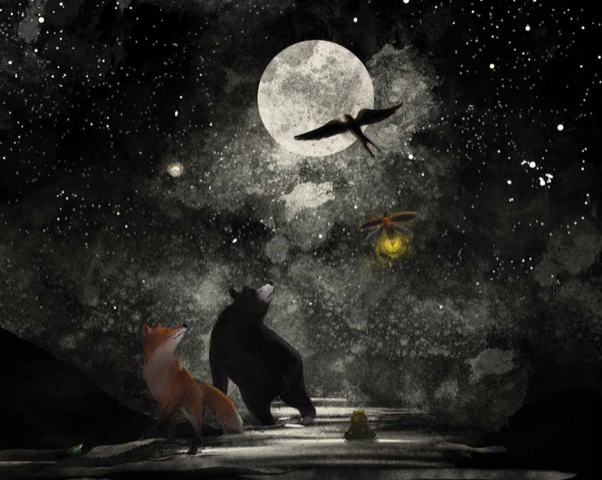
A fox and a beetle are trying to settle in for the night, but it’s too bright! Lights Out, a story about the ways that light pollution affects nature, sees a series of animals set out on a journey to find out how to shut off all the lights: but they just keep finding more. “House lights / Car lights / Truck lights / Street lights… Everywhere -LIGHTS!” The artificial lights shine on, confusing birds and frogs, and keep a bear from hibernating. The group of animals travels together, looking for the source of all the light, until they discover newly hatched baby turtles, running toward the moonlit water and decide to follow. Swimming together to a small island, the animals finally discover the natural light they crave. A powerful statement on light pollution, the text reads like a lyric poem, beautiful and evocative. Susan Reagan’s artwork is soft and dreamlike, with the harsh yellow light almost intrusive to the reader as we shift to the animals’ point of view, following Marsha Diane Arnold’s words. There are breathtaking moments, like the moment the animals discover the stars after not seeing them for so long; Marsha Diane Arnold’s verse builds a yearning in readers, so the moment when they arrive at the island brings such joy, perfectly communicated by Susan Reagan’s artwork. An author’s note on light pollution begins the story.

Visit author Marsha Diane Arnold’s website for Lights Out downloadable activities!

A beautiful, poignant picture book to add to your collections. Display and read with Sue Soltis’s The Stars Just Up the Street, and Lizi Boyd’s Flashlight (I know, it’s artificial light, but we’ll keep it as non-intrusive as possible).

Posted in picture books, Preschool Reads

It’s Earth Day! Resources and reading for you and your family

It’s Earth Day! I’ve got more books to gush about, and some resources, too.

We Are Water Protectors, by Carole Lindstrom/Illustrated by MIchaela Goade, (March 2020, Roaring Brook Press), $17.99, ISBN: 9781250203557

Ages 3-10

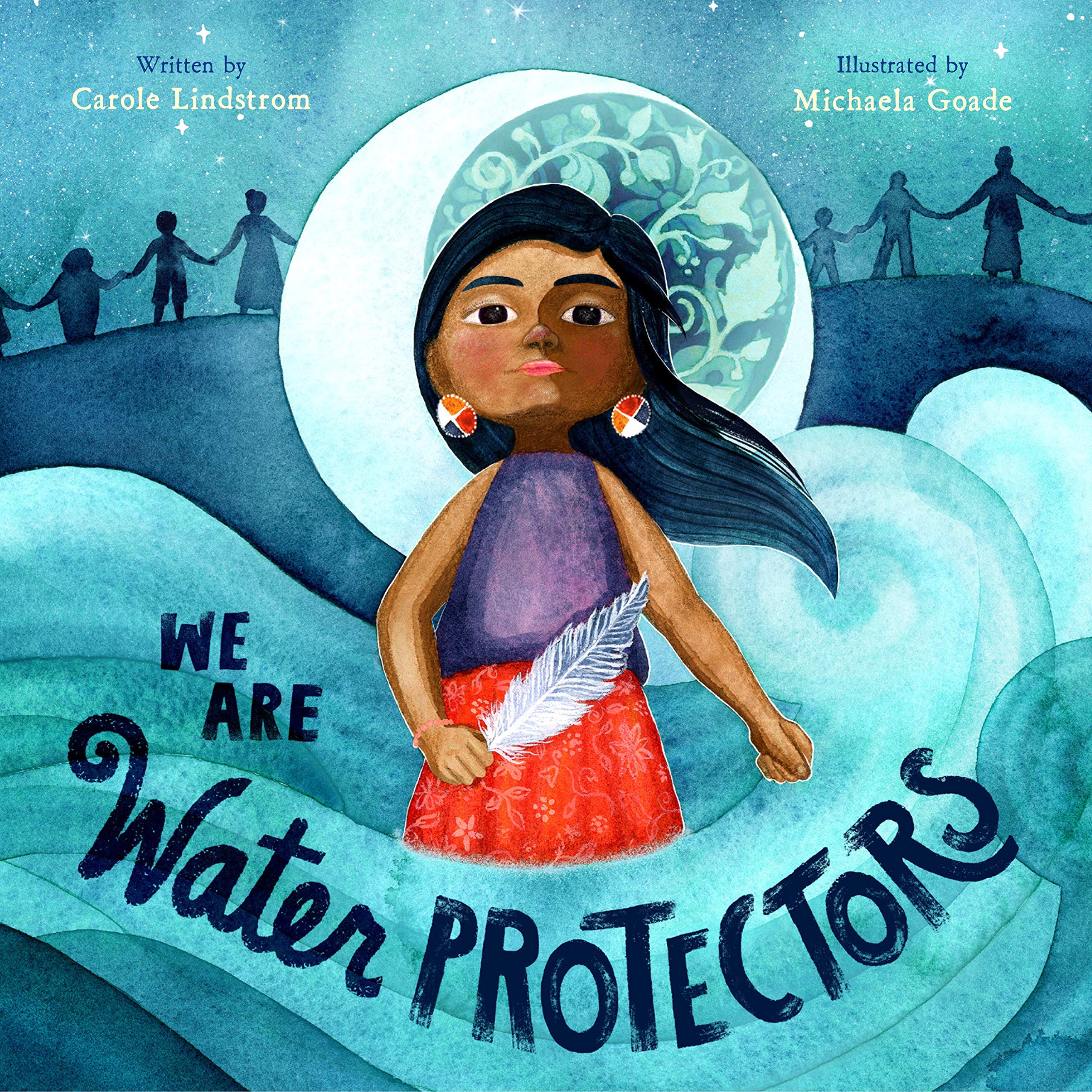
The first book up is one of the most visually stunning books I’ve read this year – and the lyrical prose reads like a prayer, a poem, a witnessing. Inspired by the Standing Rock Water Protectors who protested the Dakota Pipeline, We Are Water Protectors is created by indigenous author, Carole Lindstrom, and illustrator, Michaela Goade. Phrased as a story passed down through generations, about the sustaining life we receive from water, it also stands as a witnessing and call for help as we face the continued debasing of our planet’s natural resources. The artwork has traditional details, like a traditional skirt worn by the main character; swirling patterns inspire thoughts of water and its place in our life cycle; deep blues, purples, and orange inspire the dreamlike, womblike, atmosphere created by water. It’s a book that should give you chills as you read it, and is quietly urgent in its plea for action and positive, forward movement. Notes about Water Protectors, a glossary, and list of further reading add valuable resources to this story; an Earth Steward and Water Protector Pledge inspires kids to take action.

If you don’t want to mess up your book, or have a library book (please don’t write in it or tear the page out!), you can print a copy of the pledge, and activities to help readers realize their place in the world as stewards of our future, in this free, downloadable activity kit.

We Are Water Protectors has starred reviews from Kirkus, Booklist, Publishers Weekly, and Bookpage.


Some Earth Day things to do with your family today:

Earth Day 2020: Earth Day’s official website let readers tune into Earth Day events via webcast, including protests in Spanish and English, through the Earth Day Live link. Find Earth Day events on the general website.

The American Museum of Natural History is going all out for Earth Day, holding Earth Fest 2020; a collection of virtual celebrations to take part in, including Field Trip Earth, a global field trip around the world using interactive data-visualization software. Join a botany watch party and make a mini garden, learn to make your own instruments out of household objects like rubber bands and cardboard boxes, and travel to Venus and Mars and hang out with Neil DeGrasse Tyson.

National Geographic Kids has great, easy ways for kids to get involved in taking care of the world.

Check out the Environmental Protection Agency’s website, filled with videos, activities, and information on Earth Day.

NASA has Earth Day projects, videos, and images of our big, blue marble!

Zoos are getting in on Earth Day with virtual field trips and activities. Check out:

The San Diego Zoo

The Virginia Zoo

Cincinnati Zoo & Botanical Garden

Phoenix Zoo


Protect our planet: it’s the only one we have!

Posted in picture books, Preschool Reads

Happy Earth Day! Books for the Journey.

Tomorrow is Earth Day, which is a surreal experience when we’re sheltering in place. Luckily, we can still go out, taking precautions, to enjoy our world; whether it’s a walk around the neighborhood or just sitting in front of your home to notice the sky, the trees, the birds: everything around us is part of the experience. Here are some books to enjoy on the way.

Only a Tree Knows How to Be a Tree, by Mary Murphy, $16.99, ISBN: 9781536214703

Ages 3-7

Is there anything like a comfort of a Mary Murphy book? As soon as I see her artwork and that font I’ve come to know and love, I just know I’m going to experience the picture book equivalent of a hug. Her new book, Only a Tree Knows how to Be a Tree, celebrates nature and life by pointing out how we’re all unique and how we all manage to live together, here, on Earth. Trees have leaves that turn sunshine into food; birds build homes in trees and can fly; dogs can wag their tails and flick water into their mouths to drink, fish live in water and flash like jewels. We are all a part of one another, as each spread illustrates, yet only a fish can be a fish; only a bird can be a bird; only a tree can be a tree. We’re all unique. Mary Murphy’s brush and ink artwork is colorful, bright, inviting, and warm. Endpapers show vibrant areas with a varied group of people coming together to celebrate trees and play in the sun. It’s just the perfect book to start off an Earth Day readaloud.

Mary Murphy’s author website has free, downloadable coloring sheets and card crafts! Keep the fun going!

Only a Tree Knows How to Be a Tree has a starred review from Publisher’s Weekly.


Alba and the Ocean Cleanup, by Lara Hawthorne, (March 2020, Big Picture Press), $16.99, ISBN: 9781536210446

Ages 4-8

Alba is a sweet little fish who loves collecting shiny things. She enjoys being surrounded by her friends in their ocean home, but, as the ocean becomes more polluted, her friends have moved on, looking for cleaner waters and leaving Alba all alone. When Alba spies a shiny pearl, she must have it: and ends up trapped in a plastic bottle! A young girl cleaning up her beach notices Alba and takes her home to rehabilitate while the girl mobilizes her town to clean up the beach. Once she returns Alba to cleaner water, she’s thrilled to discover that her friends have returned – and that she can put her shiny pearl into her collection to proudly show off! An engaging story with dual messages makes Alba and the Ocean Cleanup such a good story to read on Earth Day and every day. Kids will be motivated by Kaia – the girl who discovers Alba trapped in a bottle – a child who makes a big difference, and they’ll relate to Alba’s love of shiny things and empathize with her experiencing her friends moving away. The artwork is colorful, vibrant, and just fun: it’s like a carnival underwater when Alba and her friends have clean living spaces! Endpapers are a colorful presentation of the ocean floor, with little Albas swimming around. Sharp-eyed readers can go back and look for 10 different kids of fish that author Lara Hawthorne provides information about at the end of the book, along with ways families can help take care of our oceans.

Alba and the Ocean Cleanup was originally published in 2019 in the UK.


My Green Day: 10 Green Things I Can Do Today, by Melanie Green, (March 2019, Candlewick Press), $7.99, ISBN: 9781536211313

Ages 3-7

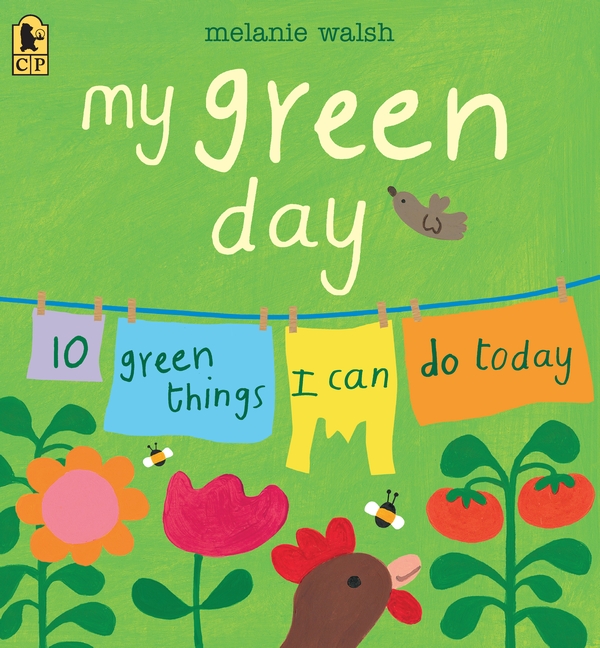
This is a must-have Earth Day book for home, classroom, and library collections. Melanie Walsh’s 10 Things I Can Do To Help My World (2012) has been an Earth Day standard for me for years; adding My Green Day to my storytime reference and my circulating collection is just a given. A narrator moves through their day coming up with ways to be green; be environmentally friendly, for the day: from eating a free-range egg breakfast and composting the egg shell, handmaking gifts with recycled materials, bringing recyclable bags to the grocery store, and taking a short shower before bed are just a handful of the green things that come up in the course of a day. Each step is a simple, easy-to-accomplish task that kids can do and feel empowered, having taken action to improve their world. Each spread has simple, helpful facts on how each task accomplishes a green goal: “Cloth bags can be used again and again. You’ll never need to use another plastic bag”; Playing outside with friends keeps you fit and makes you feel good”.

Empowering, easy-to-read, and with colorful mixed media artwork that beckons readers to the pages makes My Green Day another great Melanie Green book to add to your collections.


More to come tomorrow! In the meantime, check out the Earth Day Education Resource Library.

Posted in Uncategorized

A greener, gentler world: The Green Giant

The Green Giant, by Katie Cottle, (July 2019, Pavilion Children’s Books), $16.95, ISBN: 978-1-84365-430-8

Ages 4-7

A little girl named Bea and her dog, Iris, spend summer vacation at Bea’s grandpa’s home in the countryside. One day, Iris chases a cat, sending Bea chasing Iris; the two discover a greenhouse packed with lush, green plants… and one of them is an honest-to-goodness giant! The friendly green giant befriends Bea, and tells her that living in the city was just too much: “…the city got more grey and it was hard to breathe. I had to leave”. Here in the magical greenhouse, the giant and all the plants have room to grow, and it shows: the illustrations depict bright, anthropomorphic foliage with smiling faces and outstretched branches and leaves. The greenhouse becomes Bea’s and Iris’s refuge for the summer, but all too soon, it’s time to go home. The giant hands Bea a gift of sparkling seeds, which she sprinkles outside her apartment window. A beautiful transformation takes place, turning the drab grey of the city into a green, yellow, and orange paradise! Will the giant return one day to see his friend’s handiwork?

The Green Giant is a lovely story about taking care of our world and encouraging green spaces. Katie Cottle takes an intuitive approach to talking green with younger children by creating a friendly green giant to explain that the city’s crowded, grey spaces made it too difficult to live – but, in an optimistic spark for the future, gives her seeds that will turn – maybe thanks to the greenhouse’s magic? – the concrete landsdcape into a living outdoor green space! The artwork is bright, bold, and primarily uses greens, oranges, browns, yellows, and blues, all coming to life from the a stark white background. Bea appears to be biracial; she is a child of color, and her grandfather presents as Caucasian.

Pair this with Ingrid Chabbert’s The Last Tree for an environmentally-focused read-aloud. You can also pair with Lois Ehlert’s classic, The Leaf Man, and invite kids to use leaves to make their own Green Giants and Leaf Men. Or invite parents to a container planting program, and encourage personal green spaces. Read an interview with author Katie Cottle on the Gardening Know How’s Blog, and visit her author webpage for more of her illustration work.

Posted in picture books, Preschool Reads

Buggy Books!

It’s summer, and there are bugs. Why not talk about a couple of great bug books that have hit shelves recently?

Firefly Home, by Jane Clarke/Illustrated by Britta Teckentrup, (June 2019, Nosy Crow), $14.99, ISBN: 978-1-5362-0587-9

Ages 3-6

This book is ADORABLE. It’s also perfect for a storytime readaloud, as it’s very interactive. Little Florence Firefly is lost, and there are so many bright lights around her will she ever get home? That’s up to you and your readers, because this sweet little story is loaded with reader prompts to help Florence: flapping hands to show Florence how to fly fast, turning pages, making wishes are just a few of the ways readers can help Florence get back to her home. The text is made up of short sentences, with questions on each page, inviting readers to get involved. This is just too much fun to read out loud! Brita Teckentrup’s artwork is always a pleasure to enjoy; here, her digital artwork creates a sweet little firefly with a bright yellow light, with deep nighttime blues and muted colorful flowers and leaves throughout. House, train, and streetlights are bright and bold, matching our little firefly’s light.

This one is a must-buy, must-read. Let your kids make a firefly craft with this template, and use yellow tissue paper for the tail!


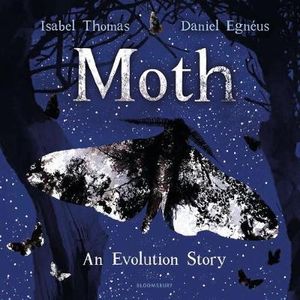
Moth: An Evolution Story, by Isabel Thomas/Illustrated by Daniel Egnéus, (June 2019, Bloomsbury Children’s Books), $18.99, ISBN: 978-1-5476-0020-5

Ages 5-8

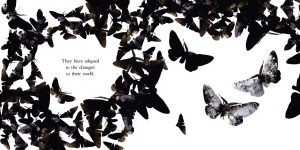
This stunning book tells the story of the peppered moth and its evolution, and humanity’s intervention in the process. Originally, peppered moths emerged as light with dark speckling; dark moths were easier to spot against trees and were easy prey. But as humans created factories and machines, spewing pollution into the air, the branches moths sought out became blackened with soot, putting light peppered moths at the mercy of birds, bats, and other predators. But wait! We’ve gotten better! We’ve cleaned up our world, and the trees and surroundings have gotten cleaner again! The moths adapted once again, passing their speckled wings onto new generations. Moth is a powerful story of change and hope for the future, seen through the evolution of a single species directly affected by us.

This is one of the most visually stunning books I’ve read this year. Mixed media illustrations create gorgeous texture, and the moths seem to emerge from the pages in an almost dreamlike fashion. The factories and towers look menacing, silhouetted against grey and black skies; as humanity works to heal the earth, hopeful blue skies break through the gloom. The art and text together create a dramatic, emotionally powerful experience. Originally released in the UK last year, Moth has just hit U.S. shelves and is perfect to supplement a unit on evolution, environmentalism, and conservation.

Posted in Middle Grade, Non-Fiction, Non-fiction, Tween Reads

Ocean: Secrets of the Deep is STEM fun!

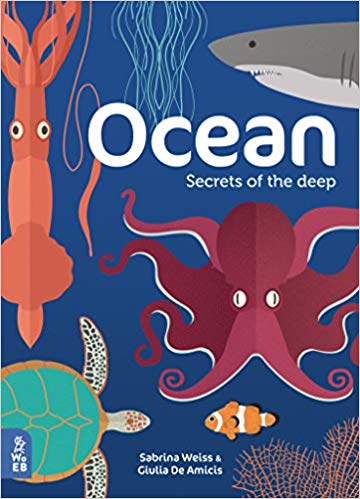
Ocean: Secrets of the Deep, by Sabrina Weiss/Illustrated by Giulia De Amicis, (April 2019, What on Earth Books), $19.99, ISBN: 97-1-9999680-7-6

Ages 7-12

We’re heading to Florida on the first road trip we’ve had in ages, so I’m all over the beachy reading right now. My little guy is excited, because his grandpa lives right by the ocean, so we’ve been enjoying this book immensely.

Ocean: Secrets of the Deep is loaded with facts and figures about the underwater world, and I am in love with the bright, bold illustrations and infographics! The information is presented in bite-size chunks that kids can easily enjoy and digest, and the minimailst artwork is bold and gorgeous. Not just a fact book, there is info about myths and legends (including one of my faves, the Kraken); sections on each of the ocean’s zones, with numbered renderings of each form of life living in each zone; animals who work together in the deep; animal sizes and sounds, and migration patterns. There are sections on environmental concerns and challenges, including overfishing, pollution, and climate change, and a call to action that encourages and empowers kids to act. A glossary and index complete this beautiful volume.

Natural history and environmental studies units would benefit from adding this book to shelves, and you can easily use Ocean in your library STEM programming. When we had our Discovery Club at my library, we did a unit on the ocean, and had the kids create their own ocean zones display on a wall in our meeting room. Print out pictures of different fish featured in Ocean, and invite the kids to color and stick their own marine life to the zones in your library or classroom! It’s a great multi-week project, if you want to spend time creating the monochromatic zones, then working on the marine life.

Ocean is absolute fun and absolutely gorgeous.

Posted in Early Reader, Intermediate, Middle Grade, Non-fiction, Non-Fiction, Non-Fiction, Preschool Reads

Read, Learn & Create: The Nature Craft Book is great for kids!

Hi, all! I know my posting schedule has been off the last several weeks, and I ask you all to bear with me. I’ve received a promotion and am getting into the swing of things at my new library (actually one of my first; I went back to my home away from home in Corona). I’ve been reading and furiously scribbling notes, though! More on the new digs shortly. For now, it’s back to my reviews!

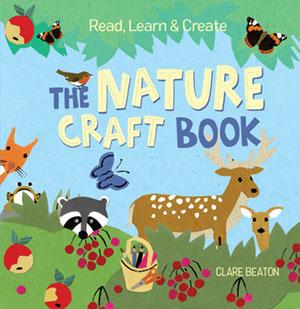
The Nature Craft Book, by Clare Beaton, (May 2019, Charlesbridge), $17.99, ISBN: 978-1-58089-843-0

Ages 3=

I LOVE nature crafts, and I love easy nature crafts. My first grader has a real love for wandering the neighborhood, collecting various leaves, snail shells, sticks, rocks… anything that strikes his fancy, and we’ve gone on some great nature walks in our neighborhood and local parks. I even brought home acorns from Rochester, NY for him when I was there for a library conference. He loved them!

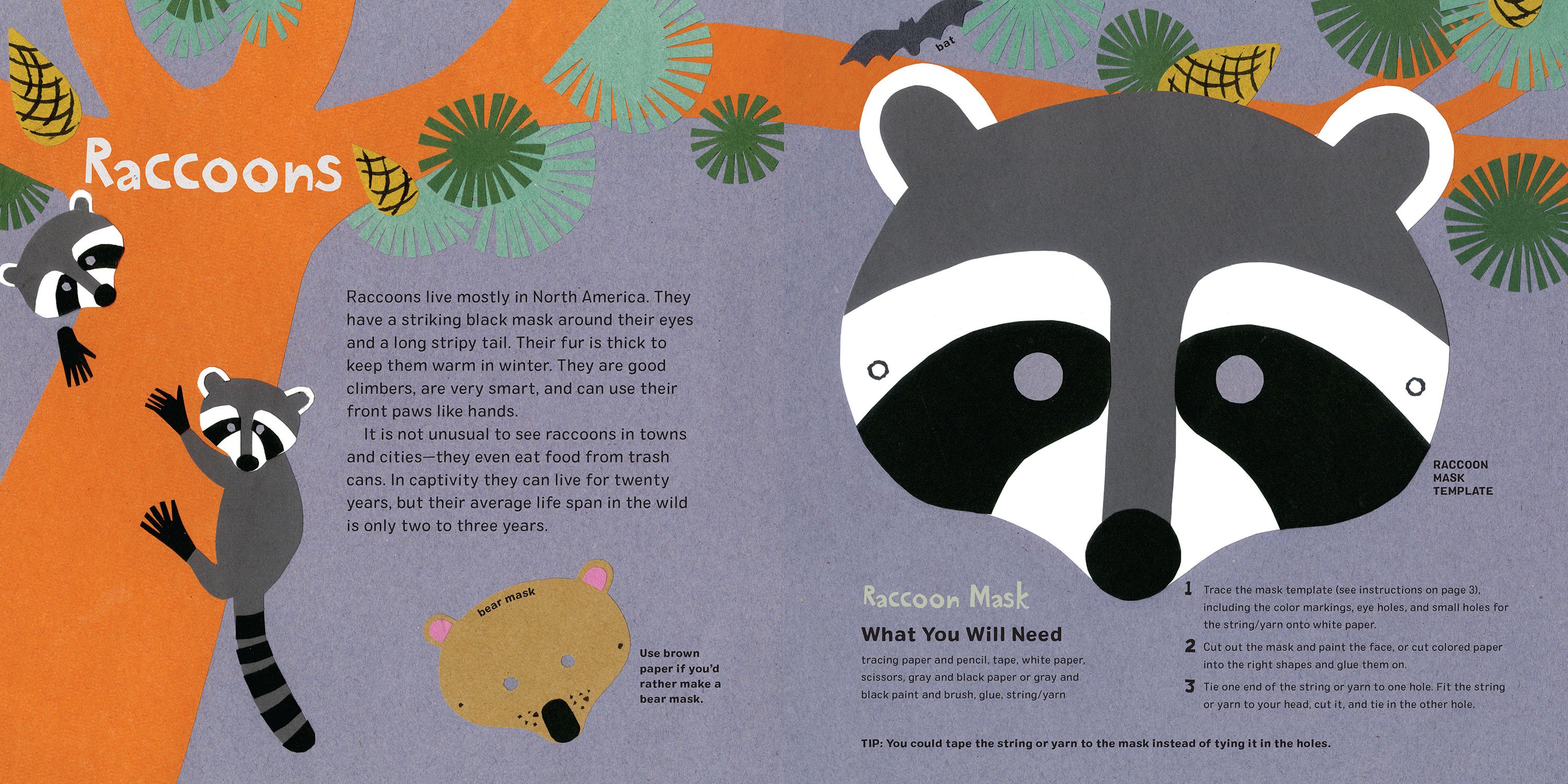
The Nature Craft Book is part of Charlesbridge’s Read, Learn & Create series (there’s an Ocean Craft Book, too!) is is loaded with ideas, templates, and facts for you and your kids to enjoy. Every craft is created with a respect for nature and our environment; a note at the beginning mentions that “it’s hard for some plants and creatures to survive where factories or farms have replaced wild places”, and encourages kids to “attract wildlife” by planting wildlife-friendly plants and flowers, putting water out for birds, and keeping nature journals. It fosters a real love and respect for our world. Activities include different bird feeders, toilet paper tube owls, leaf printing, animal finger puppets. The crafts give us a chance to reuse household objects like yogurt containers, hangers, and tissue boxes, and to create with found objects like pine combs and twigs. Even little crafters can get in on the fun, coloring and creating simple, enjoyable art.  Facts about birds, freshwater wildlife, raccoons, and other wildlife give readers a quick, overall idea of different animals and plants. The crafts are easy and can be done on a budget, which makes this spot-on for me at home or at work. My kiddo and I have already created a couple of craft projects from here and are planning winter bird feeders for our backyard. The collage artwork is adorable and labeled to introduce kids to different kinds of animals, trees, and leaves.

Grab this series for your shelves. I know I will.

Posted in picture books, Preschool Reads

Two new Pout-Pout Fish adventures!

Pout-Pout Fish: Back to School, by Wes Adams/Illustrated by Isidre Monés, (May 2019, Farrar Straus Giroux), $5.99, ISBN: 9780374310479

Ages 3-6

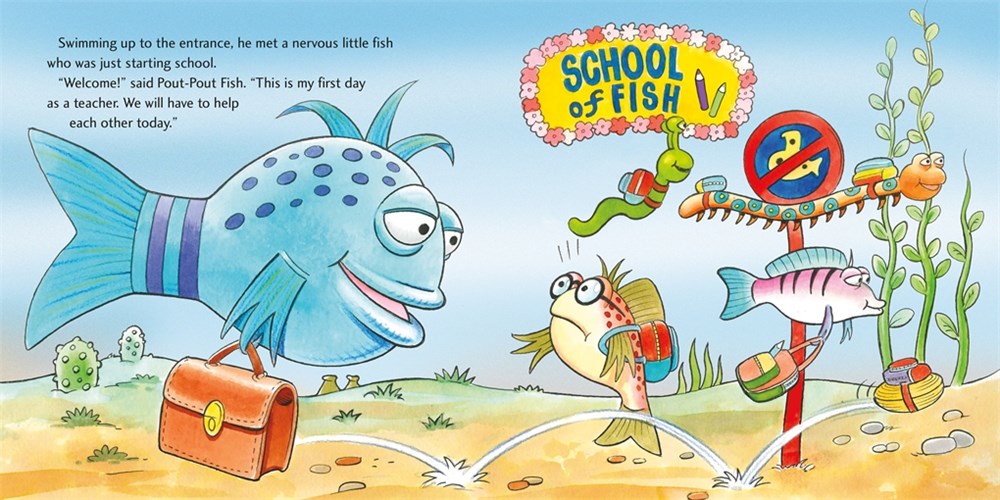
The Pout-Pout Fish is off to school! This time, he’s a substitute teacher, subbing for his favorite teacher, Miss Hewitt, who’s down with a cold. On the way to school, he meets a nervous new student and helps him feel comfortable with his new school and new classmates. When Pout-Pout – Mr. Fish here – feels a little overwhelmed in front of his first class, the little fish is there to return the favor, giving Mr. Fish the confidence to carry the class. TAt the end of the day, Pout-Pout gets a sweet drawing from his new student and a warm reception from his new students. What a way to start a school year!

Pout-Pout Fish: Back to School is a Pout-Pout Fish story by Wes Adams and illustrator Isidre Monés. I admit I miss the rhyme scheme and repetition that Deborah Diesen traditionally uses, but the emphasis on kindness present in Pout-Pout Fish stories is here. Isidre Monés uses calming blues for Pout-Pout and bright primary colors for the classroom, all of which will appeal to readers. And there are stickers at the end of the book, making this a great back-to-school gift for kids (and if you’re putting this on your library shelves, hold onto those stickers, or your books won’t last the day – hand them out to your kiddos as welcome back gifts).


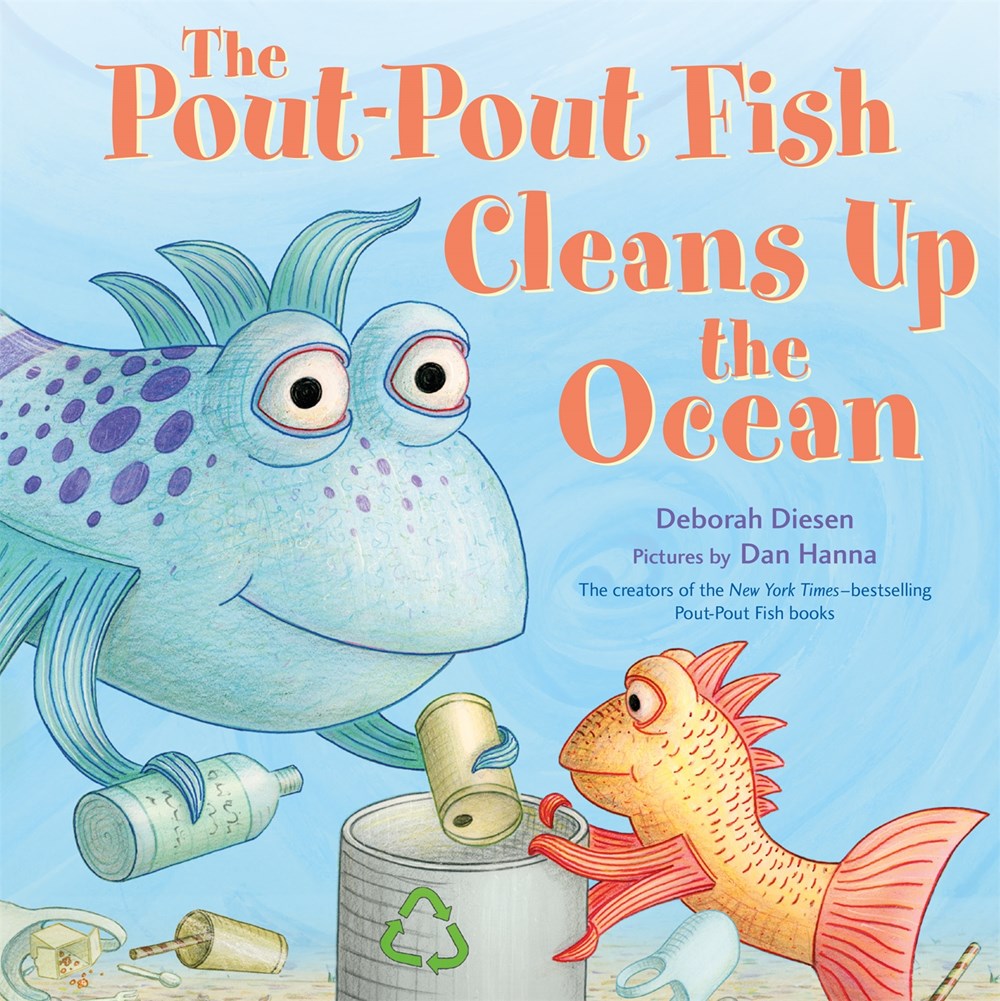
The Pout-Pout Fish Cleans Up the Ocean, by Deborah Diesen/Illustrated by Dan Hanna, $17.99, ISBN: 9780374309343

Ages 3-6

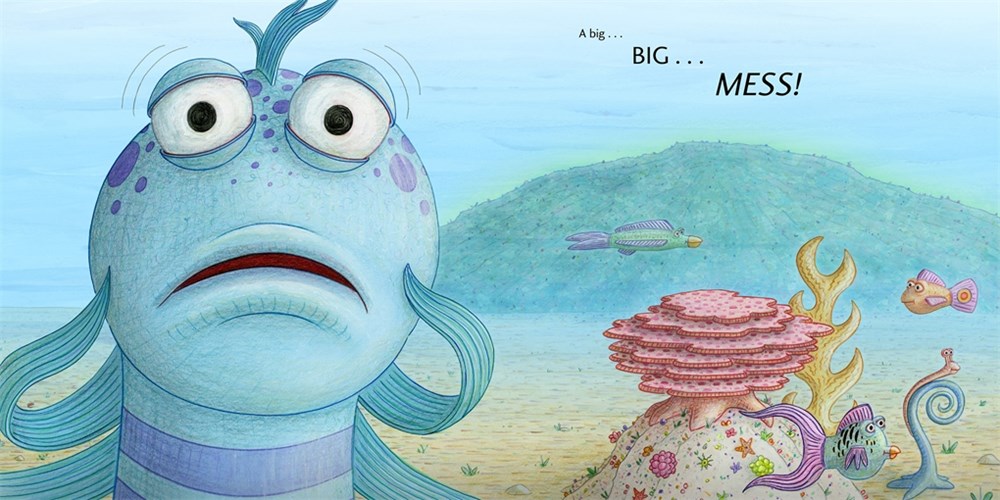
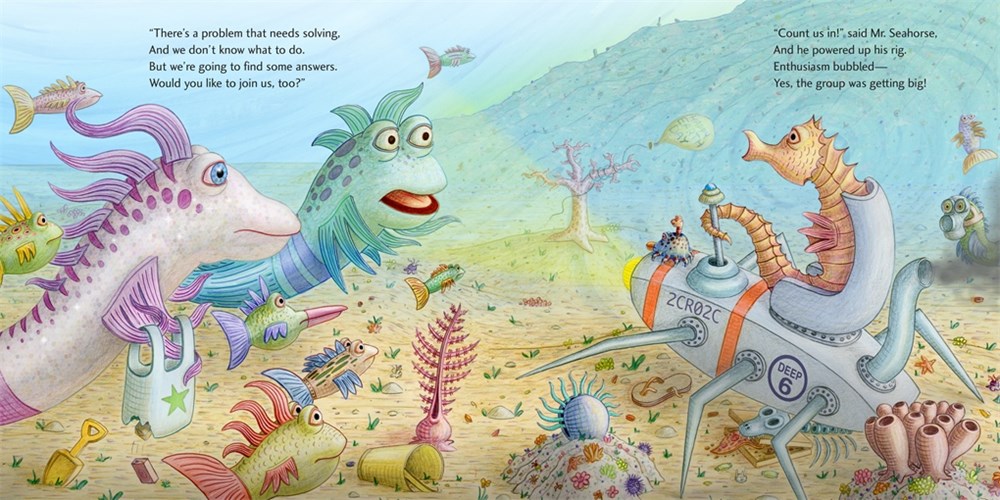
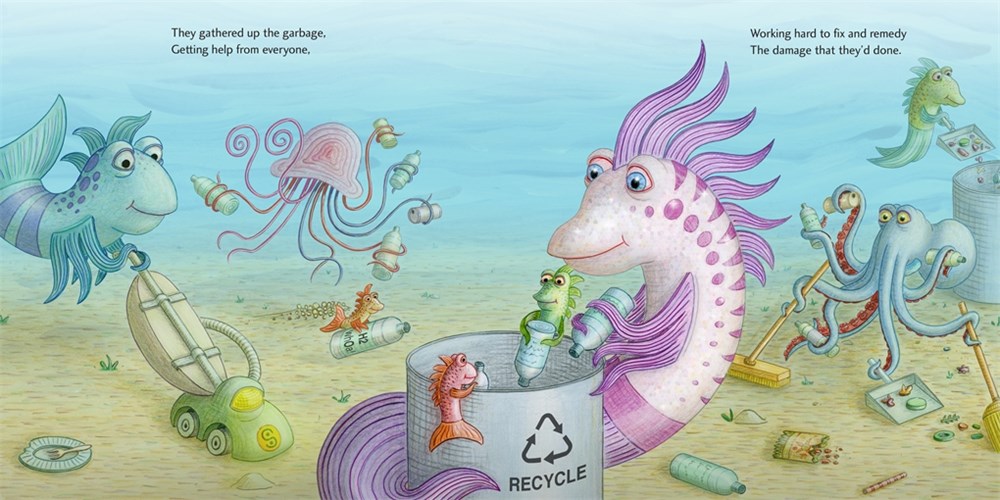
Pout-Pout and friends are cleaning up the ocean! Mr. Fish and his friends love the ocean’s beauty, but when he looks around and sees a giant mess, he and his friends investigate and find out that THEY are the cause of the mess! That simply won’t do, so the group team up to clean up in this rhyming story by original writer and illustrator Deborah Diesen and Dan Hanna.

Kids (and grownups) familiar with Pout-Pout stories will fall right into the rhyme and repetition of the story. There’s always a phrase or two that sets the plot moving; here, it’s “There’s a problem that needs solving/And we don’t know what to do/But we’re going to find some answers/Would you like to join us, too?” Old boxes of junk, food waste, plastic bags, all of it has to go, because it’s “a big… BIG.. MESS!” The friends come together to pitch in and clean up; even sorting their recyclables from their garbage. Once they’ve cleaned the ocean floor, they feel good about themselves, and extend the invitation to the reader to join them! An author and illustrator note encourages readers to clean up and protect the ocean, encouraging everyone to take action and learn more. It’s a great way to introduce conservation to kids.

The Pout-Pout website has lots of printable activities, and the website is way too much fun! (There are floating bubbles and fish!)


Posted in Intermediate, Non-Fiction

If I Were a Park Ranger introduces kids to a green career!

If I Were a Park Ranger, by Catherine Stier/Illustrated by Patrick Corrigan, (April 2019, Albert Whitman & Co.), $16.99, ISBN: 9780807535455

Ages 4-9

A diverse group of kids think of all the great things they’d do if they were park rangers in this picture book that takes readers across the United States for peeks at the beautiful national parks, while shedding some light on a career that you don’t often hear people talk about: the national park ranger. Catherine Stier and Patrick Corrigan provide kids with a history of the profession, and portraits of prominent figures in national parks history: Stephen Mather and Horace Albright, the founding directors of the National Park Service; Theodore Roosevelt, who created programs to protect land and wildlife, and Gerard Baker, a superintendent who brought Native American heritage to the parks, to name a few. Each child envisions himself or herself in ranger uniform, working across different locales; from desert to forest, from volcanoes to caves, battlefields and monuments; they help campers, they protect nature and wildlife, and they report emergencies that threaten our national parks.

Each spread is labeled, introducing readers to a different park. The group of rangers is racially diverse, as are the park visitors; the artwork is colorful and earth-toned, showing lush greens, calming blues, and warm browns of the lands. Deserts like Death Valley National Park get a beautiful orange and violet spreads. The author talks about her love of national parks, and how national parks contribute to STEM and art learning; there is also a note on how to become a park ranger, complete with a link to the National Park Service for becoming a Junior Ranger.

This is a fun addition to career sections, and an overall good book to introduce when talking about nature, environmentalism, and preservation. There are free, downloadable activity pages available, too! For kids interested in learning more about the US National Parks, recommend Ranger Rick’s Travels: National Parks.