Posted in Intermediate, Middle Grade, Non-Fiction, Non-fiction, Non-Fiction, Tween Reads

Road Trip! Ranger Rick’s Travels: National Parks

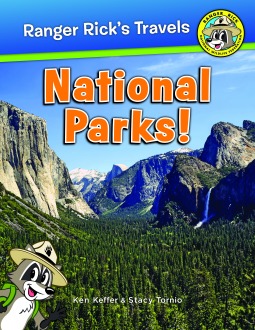
ranger-rickRanger Rick’s Travels: National Parks!, by Stacy Tornio & Ken Keffer, (Aug. 2016, Muddy Boots), $14.95, ISBN: 9781630762308

Recommended for ages 8+

In a fabulous love letter to the National Parks of America and the National Park Service, the folks at Ranger Rick Magazine – remember them? They have books now! – put together this beautiful book, featuring each one of the 58 National parks across America. Ranger Rick and his best friend, Deputy Scarlett, appear throughout the book to join readers on a countrywide sightseeing tour.

The book opens with a map of the United States, including Hawaii, Alaska, and the US Virgin Islands. Each park is numbered and corresponds to the Table of Contents, which organizes the parks into 9 groups: Eastern Parks, Midwest Parks, Mountain West Parks, Southwest Parks, Utah and Nevada Parks, California Parks, Pacific Northwest Parks, Pacific Island Parks, and Alaska Parks. Each park’s profile includes stunning photos and facts that will make readers want to pack their bags and take a month or six off from work or school!

rangerrick-rickandscarlettEach park feature provides information in quick bites that read like a tourism guide. About the Park provides a quick overview and basic facts; What to Watch For are Ranger Rick’s top nature picks on what plants and animals to keep an eye out for. Ranger Rick’s Top Things To Do is a bucket list for each park – don’t leave without seeing Old Faithful in Yellowstone Park, naturally, but also make sure not to miss out on a hike through the park! Finally, Ranger Rick’s Amazing Facts are the “WOW” factor for each park: did you know that you can only reach Northwest Alaska’s Kobuk Valley National Park by foot, dogsled, snowmobile, or air taxi? Now you do!

This is a great book to have in collections and to have available when you’re talking about the U.S. There’s 100 years of history in the National Parks Service, but there are far more years in the history of these parks; there are petrified trees, dinosaur footprints and bones, and formations carved out of rock thousands of years ago, here for all to enjoy. Families planning a vacation or two can use this as a jumping off point (I know I am).

Don’t forget to head to the Ranger Rick website, where kids can read more about nature and the environment, play some games, and get craft ideas. Educator resources included lesson plans and webinars.
Ranger Rick and Scarlett image courtesy of Photobucket.
Posted in Early Reader, Fiction, Preschool Reads, Realistic Fiction

The Branch gets a new lease on life after a storm

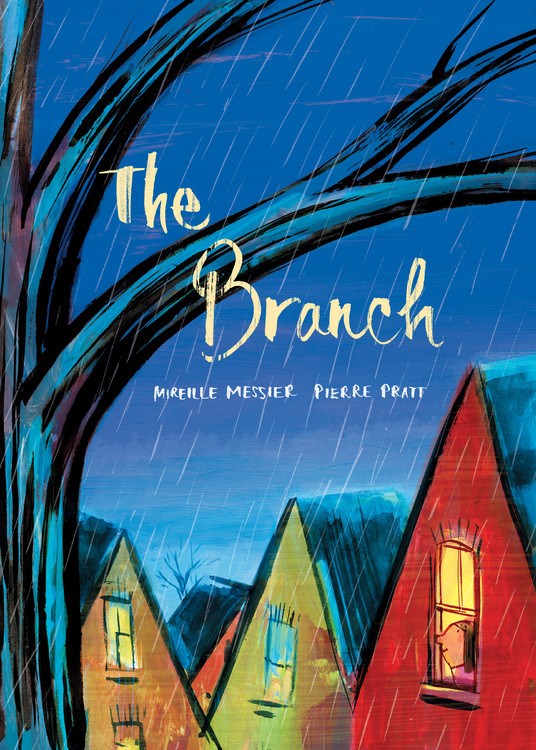
thebranchThe Branch, by Mireille Messier/Illustrated by Pierre Pratt (Sept. 2016, Kids Can Press), $16.95, ISBN: 9781771385640

Recommended for ages 3-7

A little girl’s favorite tree branch comes clattering down during an ice storm. A neighbor teaches her how to repurpose the branch, to create new memories.

What a great book to communicate so many ideas! First, we have the imagination of the tree branch. As the little girl says, the branch,”was my castle, my spy base, my ship…”, and she experiences the grief of losing the branch when she spies it on the sidewalk. She doesn’t want to part with it right away, so her mother allows her to hold onto it for a little while – long enough for the girl to encounter her neighbor, who tells her that the branch is “full of potential! …it means it’s worth keeping”, and we learn that he builds things from salvaged wood, and encourages the little girl to think about what the branch could become. When she uses her imagination and reaches into herself to reimagine the branch, she and the neighbor work together to give the branch new life.

In addition to imagination, we’ve got reusing/recycling, which is great for the environment; showing a child unwilling to discard a tree branch as a casualty of the storm, and finding ways to recreate it will get kids thinking about what they could create with objects in the world around them: cereal boxes could become robots or cities for superheroes to protect; old cans can become pencil holders; soda bottles can become terrariums. There are thousands of ideas on the Internet, so there’s no need to wait for Earth Day to come around again to make kids aware of the fun things they can make when they reduce/reuse/recycle.

Finally, we’ve got making: the whole creative process is here: sketching out plans, sawing, planing, drying the wood, waiting, waiting, waiting. It’s a great book to feature with The Most Magnificent Thing, HowToons, and fun nonfiction books, like those in the Make series. Encourage kids and parents to work together on anything from paper airplanes (great use of catalog paper) to repurposing a tree branch – large or small – of your own.

Mireille Messier is a Toronto-based author who’s had over a dozen books published in French. She’s also one of the French reviewers for the National Reading Campaign. Her website is available in English or French and offers information about her books, school visits, and her blog. Pierre Pratt is an award-winning illustrator of over 50 books for children. He lives and works in Montreal, Quebec, and in Lisbon, Portugal.


Posted in Fiction, Preschool Reads

Toshi’s Little Treasures: An adorable Search and Find story

9781771385732_fe9f5Toshi’s Little Treasures, by Nadine Robert/Illustrated by Aki, (Apr. 2016, Kids Can Press), $17.95, ISBN: 9781771385732

Recommended for ages 3-7

Growing up, I loved Highlights magazine; one of my favorite features in the magazine was the hidden pictures page. When my own children were big enough to start getting Highlights, I’d pitch in and help them find some of the more challenging hidden pictures. When I came across Toshi’s Little Treasures, I was thrilled – it’s a seek and find storybook!

Toshi is a little boy who loves to take walks with his grandmother. During their walks, they discover new little treasures that Toshi can store in his brand new backpack. Toshi and his grandmother explore six places in this book: the riverbank, the town, the forest, the country, the park, and the beach. An introductory page to each location shows kids the treasures they can expect to discover, and a full spread of each spot promises fellow treasure seekers a good hunt. There are activities that help identify the treasures from each place by matching them to related items. An answer key at the back of the book provides interesting facts about Toshi’s treasures and the animals he and his grandmother encounter, really rounding out the experience and giving kids and parents a chance to learn more, together.

The art is very calming, relaxing readers and encouraging them to take their time searching for hidden objects. You’re a guest on a walk with Toshi and his grandmother, there’s no rush! There’s also a quiet nod to diversity with the renderings of Toshi and his grandmother, which I loved.

By offering facts about the animals in each location Toshi and his grandmother visit, the book also offers educators (and parents!) the opportunity to start discussing habitats and the environment with little readers and listeners. It could also inspire a fun field trip to discover treasures of your own.

Toshi’s Little Treasures will be in stores in April. Keep an eye on their website, too: Kids Can Press offers some great learning resources to accompany their books; I’m looking forward to seeing what they develop for this title.