Posted in Uncategorized

Benny and Penny Say Goodbye to a Friend

bennypenny1Benny and Penny in How to Say Goodbye, by Geoffrey Hayes (Sept. 2016, TOON Books), $12.95, ISBN: 978-1-935179-99-3  

Recommended for ages 4-8

While playing outside, Penny discovers Little Red, a salamander, has died. She’s upset, but her brother, Benny, seems more irritated by Little Red – and Penny’s grief – than anything else. Penny and her friend Melina bury Little Red and hold a little ceremony for him, which stirs up mixed feelings for Benny.

This latest book in the Benny and Penny early graphic novel series takes on the tumultuous emotions that death can stir up: grief being one, and guilt being another. These feelings are often overwhelming to adults; to children, they must feel like a tidal wave. Benny remembers times he was unkind to Little Red, which triggers his grief. Benny’s guilt motivates him to take part in Little Red’s memorial, and Mr. Hayes gives Benny, Penny, and readers a bright spot to end on.

There are some great books on dealing with grief and loss with children: most recently, Margaret Wise Brown’s The Dead Bird and Ida, Always, by Caron Levis. Each book speaks beautifully to children, and each handles grief differently – just like people do. How to Say Goodbye is a sensitive look at dealing with strong feelings in the wake of loss. An important addition to graphic novel collections and readers advisory lists.

There will be an educator’s guide closer to the book’s publication. Keep an eye on the Benny and Penny TOON Page for details.

Benny and Penny is an award-winning early graphic novel series. Benny and Penny in the Big No-No received the 2010 Theodore Geisel Award.

bennypenny5

Posted in Early Reader, Fantasy, Fiction, Preschool Reads

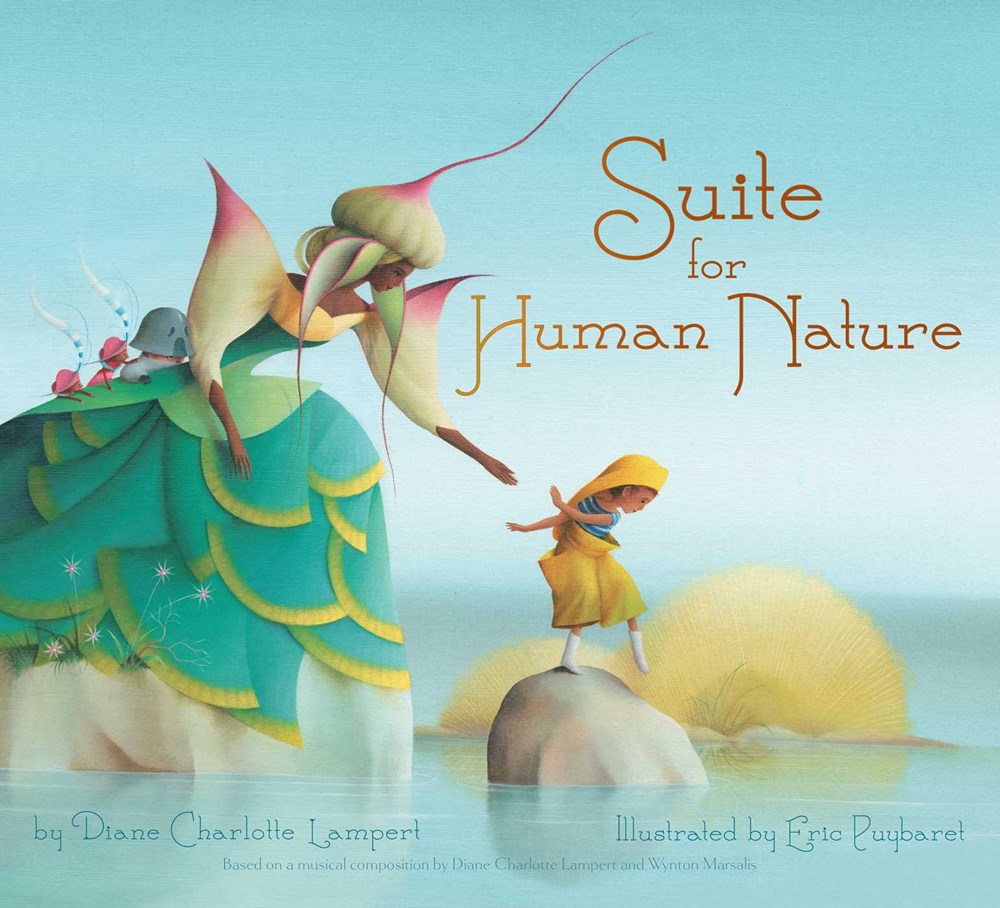
Suite for Human Nature is a musical folktale made art

suite for human natureSuite for Human Nature, by Diane Charlotte Lampert/Illustrated by Eric Puybaret (May 2016, Atheneum/Caitlyn Dlouhy Books)$17.99, ISBN: 9781416953739

Recommended for ages 4-10

A musical collaboration between legendary songwriter Diane Lampert and Jazz legend Wynton Marsalis becomes a beautifully illustrated parable on humanity in this gentle story about Mother Nature and her challenging children.

Mother Nature is busy. She’s got seasons to change, flowers to wake up and put to bed, and all of Earth’s creatures to care for. But she really longs for children of her own, so using bits and pieces of nature – sticks, stones, seeds, leaves – she ends up making five children: Fear, Envy, Hate, Greed, and Fickle. Each time, she’s taken aback when she realizes how tough it is to raise a child, and asks humans – the creatures that can’t fly, swim, roar, or gallop – to keep an eye on her unruly children once she buzzes off to tend to another season. Each time she returns, she creates another child, hoping to even things out, and each time, things get a little more complicated, especially when the children’s personalities start rubbing off on the humans. When she takes some advice from the Winds, and creates Twins, though, things change.

Suite for Human Nature is told in old folktale tradition, telling the story of human nature; its strengths and its weak spots, and the one thing that conquers all. Breathtaking acrylic and linen illustrations by Eric Puybaret make this a joy to read and gaze at. This is a better read-aloud for slightly older listeners, who can sit for a little longer and use their imaginations to fly away with this story. Ask your listeners to draw their feelings – what materials would they use? What colors would they give them? Older kids doing a unit on fairy tales and mythology could compare this story to the myth of Pandora’s Box.

Absolute must for collections. I would love to get hold of the actual music.

Diane Lampert (1924­–2013) was a renowned songwriter who contributed to lyrics for artists from The Beatles to Brenda Lee and over twenty movie title tracks such as The Snow Queen, I’ll Take Sweden, Billie, and Silent Running, as well as songs for The Wild and the Innocent, and Trees Lounge, and for Bob Hope, Gary Grant, and Buster Keaton, among others. Suite for Human Nature first debuted at a concert at Jazz at Lincoln Center, with the world-famous Boys Choir of Harlem.

Eric Puybaret has illustrated many children’s books, including Suite for Human Nature; the bestselling Puff, the Magic Dragon; The Night Before Christmas; Over the Rainbow, as well as many others in his native country, France. Eric’s critically acclaimed work was praised by The New York Times as “elegantly rendered” and Publishers Weekly calls it “graceful [and] whimsical.”

Have a look at some of Eric Puybaret’s beautiful art:


suite for human nature_2

suite for human nature_3


Posted in Early Reader

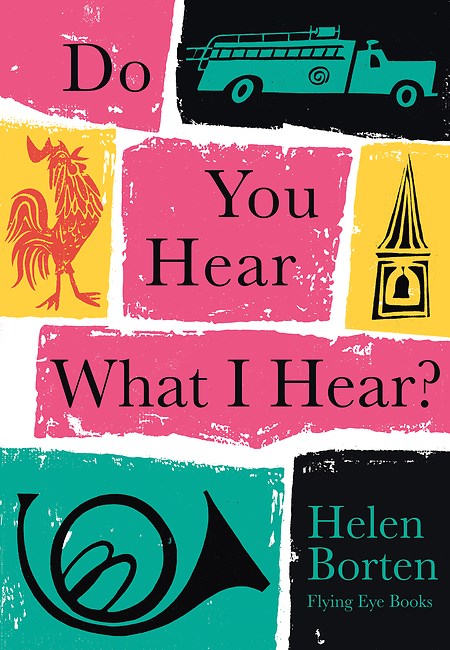
Do You Hear What I Hear? Vintage Art helps create a symphony!

9781909263857_e3d21Do You Hear What I Hear?, by Helen Borten (May 2016, Flying Eye Books/Nobrow), $17.95, ISBN: 9781909263857

Recommended for ages 4-8

A companion to Ms. Borten’s Do You See What I See?, Do You Hear What I Hear?, also published in 1959, introduces children to the effects different sounds can have on them.

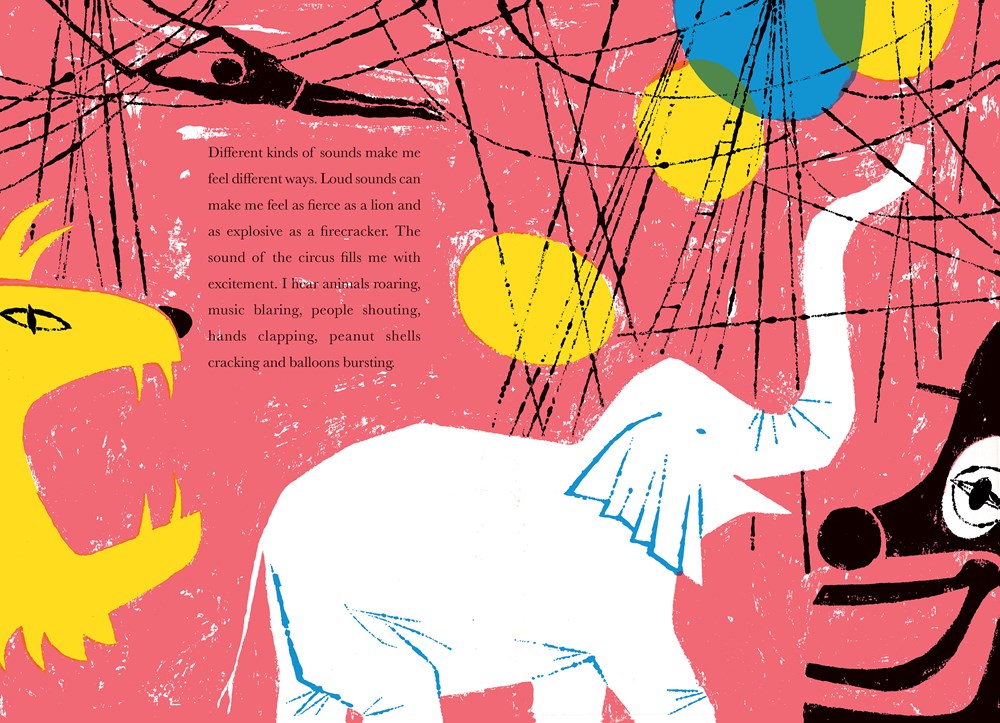
“Loud sounds make can me feel fierce as a lion and as explosive as a firecracker. The sound of the circus fills me with excitement. I hear animals roaring, music blaring, people shouting, hands clapping, peanut shells cracking, and balloons bursting.”

Accompanied by her beautiful artwork, these images have texture that help kids unpack the sensations described in the text. The frenetic atmosphere of the circus is captured in the many lines stabbing the spread; the cords holding up the big top and the trapeze wires; the motion of the swinging trapeze artist and the balloons, and the animals walking across the pages.

9781909263857_1_d7840


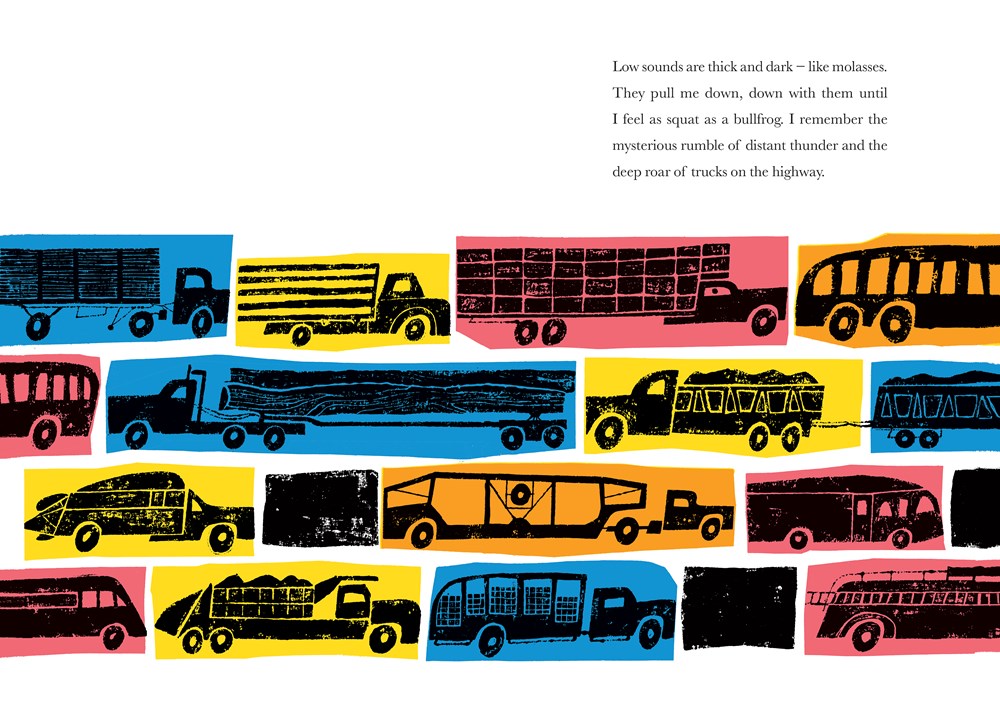
Originally published in 1959, Mr. Borten’s beautiful, vintage artwork adds texture to the basics: lines, color, and shape, whether it’s by adding swirls to an ocean full of fish or wispy, thin spider webs above the thick bars of a lion’s cage. Ms. Borten artwork and evocative text inspires children to see the world around them “as a great big painting, full of lines and shapes and colors, to look at and enjoy”.

This is a great book to read out loud, then talk about the different sounds and feelings kids associate with them. I know the sizzle of a grill makes me think of summer, and I can feel the warmth on my skin and taste the tart lemonade just thinking about it, and the scent of a box of crayons makes me feel excited, like I’m ready for the first day of school all over again. Have kids draw what different sounds make them think of, or describe them. I’ll be adding this book to  my family storytime rotation for sure.

Do You Hear What I Hear? isn’t out until May, but take a look at some more of the beautiful art from the book, and pre-order from Amazon. Check out the publisher’s website for more picture books, and take a look at some of the outstanding artwork from Do You Hear What I Hear, below.

9781909263857_2_494bd

9781909263857_4_92af3

Posted in Preschool Reads

Tough Guys Have Feelings, Too: An exploration of feelings

toughguys_1Tough Guys Have Feelings, Too, by Keith Negley (Nov. 2015, Nobrow Ltd.), $17.95, ISBN: 9781909263666

Recommended for ages 3-6

Everybody’s got feelings – even ninjas, superheroes, and daddies! They’re allowed to feel sad, disappointed, and even embarrassed. Keith Negley uses strong, male figures – usually stereotyped as stoic, “walk it off” types – to help kids understand that feelings are perfectly natural, normal, and not something to be ashamed of. What you feel is what you feel, and there’s nothing wrong with that!

Ninjas cry when they argue with their friends. Cowboys are embarrassed when they fall off their horses. Wrestlers are nervous before a big match. Most importantly, daddies are proud to show how much they love their children. This book is phenomenal for taking male stereotypes and giving them powerful feelings – feelings that young kids will recognize in themselves, and hopefully, be encouraged to share. Tough Guys Have Feelings Too is a great read-aloud book, with its bright colors, bold shapes, and larger-than-life figures; it opens up the doors to discussions that parents can have with their children, teachers and educators can have with their students, and it allows kids to develop the tools to express their feelings to one another, too. There’s also an opportunity for a cause-and-effect lesson here, illustrating how events can influence our feelings, or how our own actions and feelings affect others.
I can’t wait to get this on my shelves and get it into storytime rotation. Get this one into your collections!

Author Keith Negley will be taking part in some reading events in the NYC area to promote the book in the next few weeks. Check out his schedule on Tumblr.


Posted in Non-Fiction

Meh helps kids understand depression.

I just came across an article about Meh, a wordless picture book written and illustrated by Deborah Malcolm, as away of helping children understand depression and mental health.

meh

Inspired by Neil Gaiman’s unconventional storytelling, Malcolm decided to use visual metaphor and symbolic imagery to explain – and leave open to others – what depression feels like. Depression is subjective, depending on the sufferer and how others experience the feeling, and allowing children and adults to arrive at their own interpretations should help create a deeper connection and understanding.

Says Malcolm, “Meh was designed to be completely wordless so that the reader can come to their own conclusion of what they think depression is. It is different for everyone. It is also a tool for parents, guardians and teachers to use to teach children about mental health. I hope it will engage them in discussion about mental illnesses so that they might have a better chance of tackling them in the future and reduce the stigma surrounding it.”

Amazon has a “Look Inside” glimpse available for Meh, and the art is quite evocative. I’m interested in picking up a few copies for my libraries and seeing if these will circulate. Having suffered post-partum depression in the past, I’d have loved to have had a copy of this available to my older children to help them grasp what was going on in our home at the time. Good luck to Ms. Malcolm on this one, and thank you.

Posted in Uncategorized

Benny and Penny in Lost and Found – A WhatchaReading Review!

If you’ve got kids, I hope by now you’ve introduced them to comic books. When I was a kid, kids’ comics meant Richie Rich, Casper, and Archie. Now? There are virtually hundreds of titles to get kids started on a love of graphic, sequential storytelling.

Toon Books is a great resource for parents and educators that want to get more graphic novels into their little ones’ lives. I have a pretty nice collection of Toon Books in my library, including Jeff Smith’s Little Mouse Gets Ready. You read that right – Bone’s Jeff Smith does comics for Toon. Quality creators making quality comics.

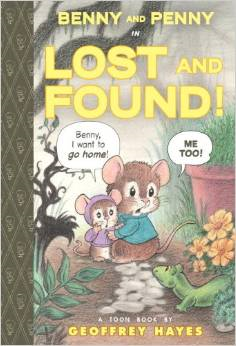
Today, though, I’m talking Benny and Penny, the brother and sister mouse series also published by Toon and written by Geoffrey Hayes, who also won a Theodor Seuss Geisel Award for the series back in 2010. The siblings’ newest adventure, Benny and Penny in Lost and Found, hits shelves on August 5th, and is an adorable addition to the series.

Read more of my review over at WhatchaReading and pre-order your copy of Benny and Penny in Lost and Found here!

benny and penny

Posted in Fiction, Tween Reads

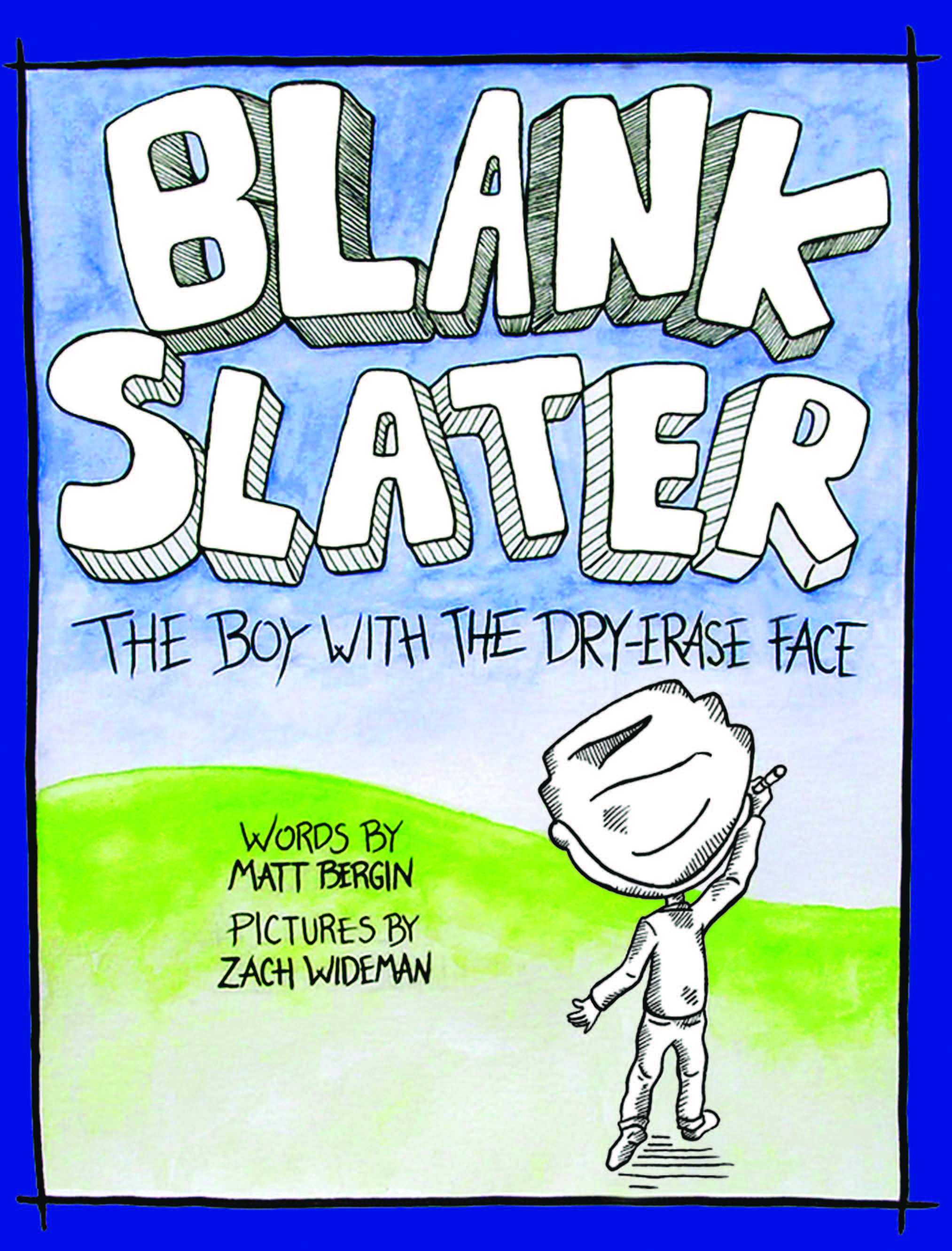
Blank Slater, the Boy with the Dry-Erase Face – a WhatchaReading Review!

You may or may not know this, but I review comics and graphic novels for the comics and comic culture site, WhatchaReading. Recently, Chuck over at WhatchaReading gave me the opportunity to review Blank Slater: The Boy with the Dry-Erase Face, written by Matt Bergin and illustrated by Zach Wideman. I was so impressed by this book, which provides a creative way to teach kids about self-esteem, emotions and feelings, and discovering who they are.

BlankSlater (1)


When this book hit WhatchaReading’s inbox, I got a chuckle out of the cute cover and figured I’d give it a shot – sounds like it could be fun, a kid with a Dry-Erase face, right? Draw silly faces and stuff? And then I dug in, and realized that there is so much more to this story than that.

Blank Slater is a kid born with a Dry-Erase face. He’s a blank slate (see what they did there?), and he goes through life pretty miserable – wouldn’t you? – until the day where he wanders away and discovers someone just like him! Nada Trace is a girl with a Dry-Erase face, but she isn’t wallowing at all – she grabbed some markers, pencil, and glitter, and made a face of her own! She helps Blank try on different faces, but nothing fits quite right until one day, Blank discovers his own face – and more important, a friend.

For the rest of the review, head on over to WhatchaReading!

Posted in Preschool Reads, Uncategorized

Book Review: Rain Romp, by Jane Kurtz/Illus. by Diana Wolcott (Greenwillow Books, 2002)

RainRompRecommended for ages 3-6

Preschoolers often deal with moods that they don’t know how to control; many will associate with this young girl who wakes up in a bad mood on a rainy day. Her parents try to boost her mood, but she wants none of it, until she decides to stomp her bad mood away in the rain. Her parents join her, and the bad mood goes away. The watercolor and gouache art is perfect to convey the both the weather and the girl’s moods, going from angry and gray, like the rain, to happy and content, as the sun peeks through the clouds. The text curves around the art and gets larger for emphasis when the girl vents her anger.  As she and her family hug, mood lifted, the text curves underneath them, allowing the reader to join in the hug.

This would be a good addition to a read-aloud on moods. There could be a discussion on what preschoolers do when they are angry, or sad, or happy. If they feel sad or mad, what makes them feel better? A good storytime craft would allow the children to draw a picture of how they deal with a bad mood, and they could receive a smiley face handstamp at the end of the storytime.

Posted in Preschool Reads

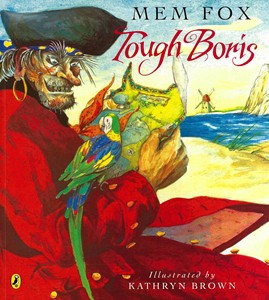
Book Review: Tough Boris, by Mem Fox/Illus. by Kathryn Brown (Harcourt Brace, 1994)

tough-borisRecommended for ages 3-6

Boris van der Borsch is a tough, massive, scruffy, greedy, fearless, and scary pirate with a tough, scary- looking crew. When his pet parrot dies, though, preschoolers see that even the toughest pirate can cry. The story is told through the eyes of a young boy who stows away on the ship in the very beginning of the book, and whom Boris and crew leave back on his home shore at the end of the story, prompting the boy to cry as well. It is a subtle but strong subplot readers will enjoy. The watercolor artwork shows Boris and his crew in all their scruffy, tough pirate glory, with angry faces and bristly beards. The text is rendered in a simple, black font that matches the solemn brevity of the story. Tough Boris is an American Library Association (ALA) Notable Children’s Book (1995).

This is a great book for a pirate storytime, as it portrays pirates as capable of sensitive feelings on top of being rough and tough. It shows young audiences that everyone cries when they are sad – even a mean old pirate. It can be used with more fun pirate fare to lighten the mood, or it can be used on its own to get kids talking about feelings. Children would enjoy a Jolly Roger handstamp as a memento of their day, and there are many printable treasure maps available online, for attendees to color in, take home and start their own search for buried treasure. The British Columbia Public Library has very good Pirates Storytime theme that includes songs and fingerplays.