Posted in picture books, Preschool Reads

Max’s Box helps kids manage emotions

Max’s Box, by Brian Wray/Illustrated by Shiloh Penfield, (Sept. 2019, Schiffer Books), $16.99, ISBN: 9780764358043

Ages 4-8

A young boy named Max receives a box from his parents; they tell him he can put everything in the box, so he starts putting his favorite toys in the box but quickly discovers that he can put feelings and emotions in the box, too. Unfortunately, as Max adds feelings to the box – hurt, embarrassment, frustration – the box becomes bigger and heavier to bear, and Max’s quality of life is affected: he can’t do things he used to enjoy, like riding a bike or climbing trees, because of the unwieldy, enormous box. Luckily, a prospective friend and a ladybug lead Max to a joyful, creative solution.

Max’s Box is a clean, easy-to-understand story about emotions, and how suppressing them can cast a shadow over everything we do. As the box first becomes loaded with Max’s physical clutter, his parents buy him a wagon to tote it around, asking him if the Box is getting too big for him. Max’s response, “I can carry it”, will resonate with adults and kids who feel like negative emotions can be a burden on others.  All it takes as a boy willing to keep Max company and a surprise visit from a ladybug to lift Max’s spirits and give him an idea: to create the image of a balloon, floating away; other see this and contribute their own balloons, communicating the value of creative visualization. The grey and white artwork gradually fills in with bright colors as Max and others lighten their loads, sending physical and emotional baggage free. As Max’s dad says, “It’s ok to have all kinds of feelings… but once you feel them, their job is done”. An author note about expressing emotion offers tips for adults who want to help children healthily manage and express their emotions.

A good read-aloud for younger grades that invites discussion. I’d love to see some parent-educator resources for this.

Posted in picture books, Preschool Reads

Angry Cookie is working through a bad mood

Angry Cookie, by Laura Dockrill/Illustrated Maria Karipidou, (March 2019, Candlewick Press), $16.99, ISBN: 9781536205442

Ages 3-7

Angry Cookie is NOT having a good day. From the first page, he’s mad and he wants readers to know it, calling the reader a nosy noodle and complaining about his annoying roommate, running out of his favorite toothpaste, getting a bad haircut, and having the ice cream parlor run out of his favorite sundae. He’s really, really mad, and there’s nothing you can do about it, you hear? But… once he realizes that the readers are sticking around, paying attention to him, he warms up a little, and lets us in on what’s really bugging him: no one listens to him. Nobody sticks around. Once Cookie realizes that he’s being heard, he softens up and even cracks a smile.

Angry Cookie zooms in on what we all really want: to be heard. And preschoolers, in particular, can relate to Cookie: they don’t want that burning, minty toothpaste, they want the fruity-flavored kind (this has been a HUGE issue in my own home), and they don’t want a stupid haircut, and heaven help us if a sibling is on his or her nerves or if a favorite snack isn’t available. Angry Cookie shows readers that it’s okay to be frustrated by things, and that someone is always there to listen. It’s a fun look at managing emotions, with laughs and snorts to be had along the way. The digital artwork is bright and bold, with all text communicated through word balloons and spoken by Cookie. Cookie is round and has a mop of wild red hair, blue overalls, and big, round eyes.

This is a good one for feelings and emotions collections, and a cute storytime pick. I’d pair with Claire Messer’s Grumpy Pants, The Bad Seed by Jory John, and – naturally – any of Mo Willems’ Pigeon books for a display or storytime on emotions and feelings.

Posted in picture books, Preschool Reads, Toddler Reads

Tiger Days: Let the animals be your guide to feelings!

Tiger Days: A Book of Feelings, by M.H. Clark/Illustrated by Anna Hurley, (March 2019, Compendium), $16.95, ISBN: 978-1-946873-41-5

Ages 3-6

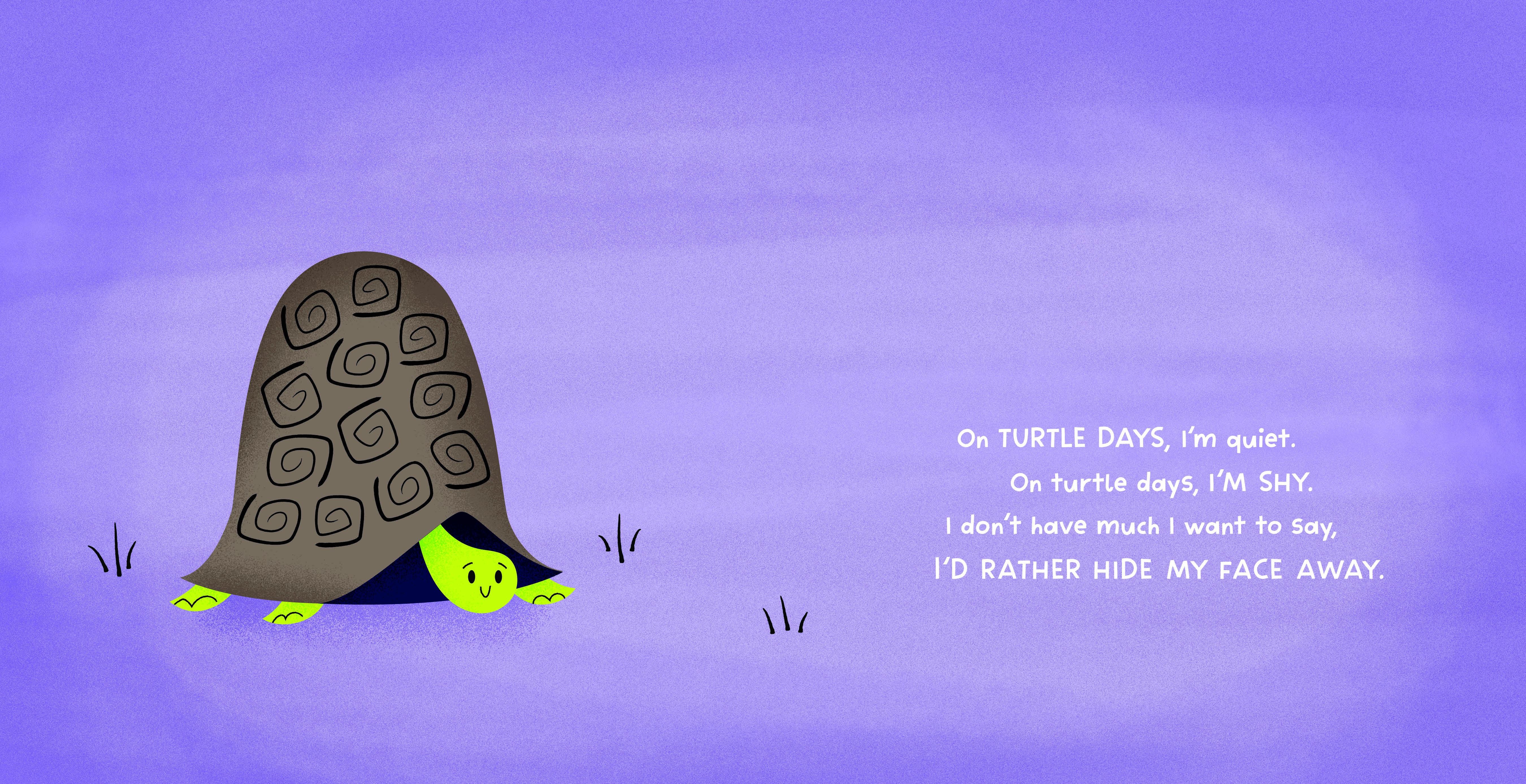
Tiger Days helps kids understand their emotions, and how to describe their feelings, by using animals to illustrate them. Ever feel like a rhino? So stubborn, no one can move you or change your mind? How about a silly monkey, all wiggly arms and legs, full of mischief and fun? Each spread is vividly colored, featuring a different animal, and characteristics of that animal that map to different moods. The background color of each page adds to the feel of each feeling; bright greens and yellows for happy rabbits and monkeys, who play across the pages; soft purple for a shy turtle; red for an angry bull. Each drawing is boldly lined and bright, popping off the page; fonts are capitalized to emphasize key words.

Tiger Days also lets kids know that their feelings are normal. No feelings are presented as “good” or “bad”; they just are, and this is how they can make people feel. I’d easily add this to one of my storytimes, including a yoga storytime, where I use animal poses. The kids’ favorite one tends to be the Lion Pose, where they get to open their mouths wide and roar. Linking feelings to mindfulness is a great way to help kids understand their feelings and be present for them, allowing them to describe and name what’s going on and furthering communication. Encourage your storytime kids roar, stamp the ground, or curl into their shells to describe different feelings! This would made a good time to break out some emoji flash cards, too; let the kids color the different faces and match them to animals mentioned in the book.

Tiger Days is a good book to have in your bookshelf, especially when you’re working with kids who are learning not only how to communicate with you, but to put words to things happening within themselves.


Posted in Non-fiction, professional development

Become an emotional explorer with three new books!

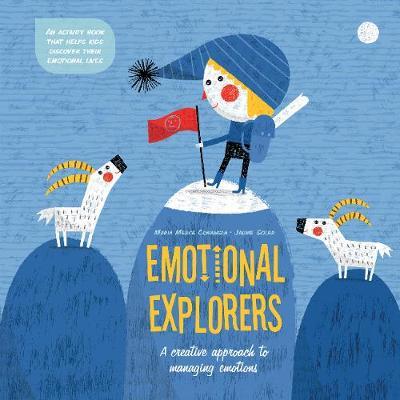
Schiffer has three new books by psychologists Maria Mercè Conangla and Jaume Soler, geared toward helping kids between ages 7-12 becomes “emotional explorers” and “emotional ecologists”: better able to become more in tune with their own emotions, and the emotions of everyone around them.

Emotional Explorers, by Maria Mercè Conangla and Jaume Soler, (Oct. 2018, Schiffer Publishing), $16.99, ISBN: 9780764355530

Ages 7-12

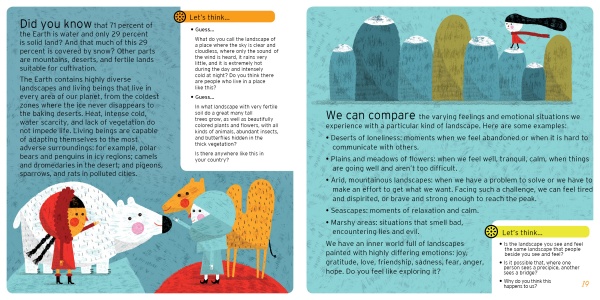
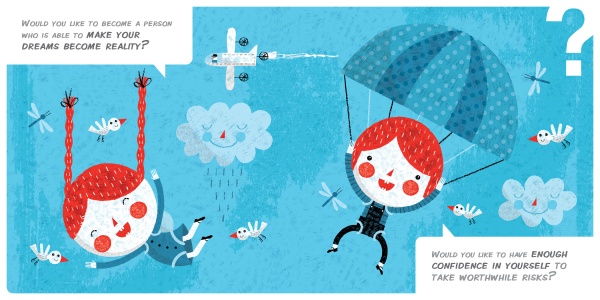
Emotional Explorers encourages kids to see environmental and emotional education as parallel ideas, each supporting the other, in support of the fact that we are tied to our planet; our environment, and that we affect our surroundings as they affect us. The table of contents offers five separate sections, each with discussion points to ponder before diving in. The idea of being part of two worlds: the inner planet – ourselves – and the outer planet – the world around us – is a big idea to wrap one’s head around, but at the same time, it makes perfect, simple sense. Thought-provoking questions have readers consider how we treat the world around us, and then, how we treat ourselves. From there, we move to emotional landscapes, adaptation, facing adversity, and creating protected spaces.

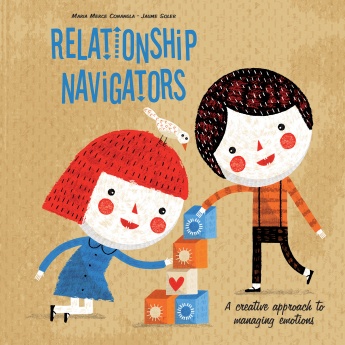
Relationship Navigators, by Maria Mercè Conangla and Jaume Soler, (Oct. 2018, Schiffer Publishing), $16.99, ISBN: 9780764355554

Ages 7-12

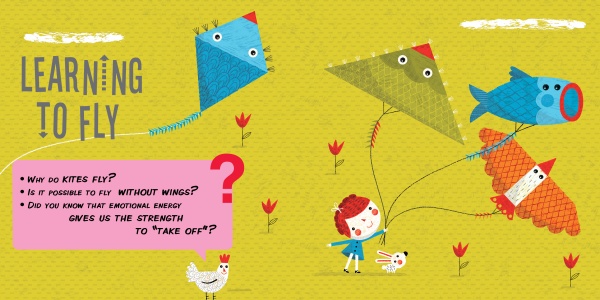
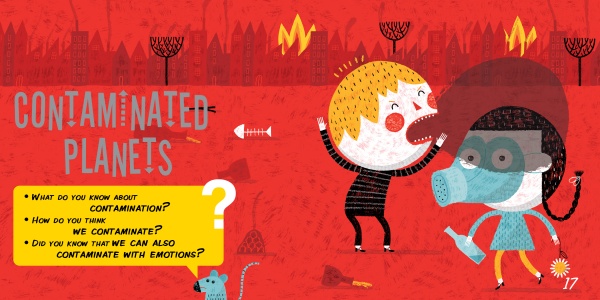
Relationship Navigators encourages kids to explore relationships and how to surround themselves with positive energy. Chapters include “Learning to Fly”, the opening chapter that explores what gives us wings versus what drags us down and keeps us from soaring; “Energies”, which explains how to differentiate positive energy from contaminated energy; and “Sowing Happiness”, where kids learn to plant the seeds for a happy life – and reminds readers that gardens require constant care.


Feelings Forecasters, by Maria Mercè Conangla and Jaume Soler, (Oct. 2018, Schiffer Publishing), $16.99, ISBN: 9780764356247

Ages 7-12

Feelings Forecasters explores “emotional meteorology”: our emotions and how they affect the world around us; emotional tsunamis that can rage out of control and overwhelm us; what to happen when our emotional management fails us and how carrying an “umbrella of self-esteem” can protect us from others’ emotional acid rain; and how to reduce, recycle, and transform emotional garbage. Thing about how emotions are often communicated: “stormy” relationships; “sunny” outlooks and “waves” of feeling, and you have a great way to open up a discussion on emotional meteorology.

Each book follows a specific structure, laid out at the beginning of the book. Activities, discussion prompts, and reflections throughout allow for discussion and introspection. The bright, bold, childlike artwork is eye-catching. Chunks of text on some of the pages may be a little intimidating to younger readers, and there is a lot to unpack in these books. This would be best served for educators and caregivers to use, particularly for younger readers, when working with emotions and how to manage them.

Posted in picture books, Preschool Reads

A little Joy goes a long way…

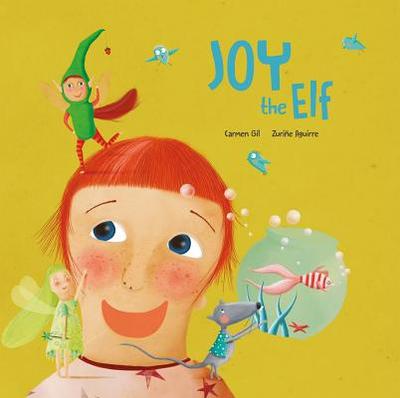
Joy the Elf, by Carmen Gil/Illustrated by Zuriñe Aguirre, (June 2018, NubeOcho), $15.95, ISBN: 9788494692611

Recommended for readers 4-8

Mateo is a boy who loves his tiny elf friend, Joy. She can be found in the most unexpected of places; his daddy’s beard, or in the sound of his grandparent’s car when they arrive for a visit. But the mean Ragdoll Witch doesn’t want Joy hanging around, so she cast a spell on Joy to keep her away from Mateo, and proceeded to give the boy everything he wished for: a fancy tablet, cool roller skates, even a giant dragon. And the more Mateo got what he wished for, the more Joy disappeared, until she finally became invisible. A fish and a fairy got together and created a counterspell, which slightly altered the gifts to be a little off – a mountain bike became a boat trip with Mateo’s grandparents; a video game became a library book – and with each small, slightly off-kilter gift, Joy came back.

The moral of the story? If you get everything you want, you don’t appreciate it; find your Joy in the simplest of moments. Joy the Elf is a bit heavy on the moralizing, but it does open up a nice discussion about finding happiness outside of the expensive things in life. The collage artwork is colorful and eye-catching. Joy the Elf was originally released in Spanish in 2017.


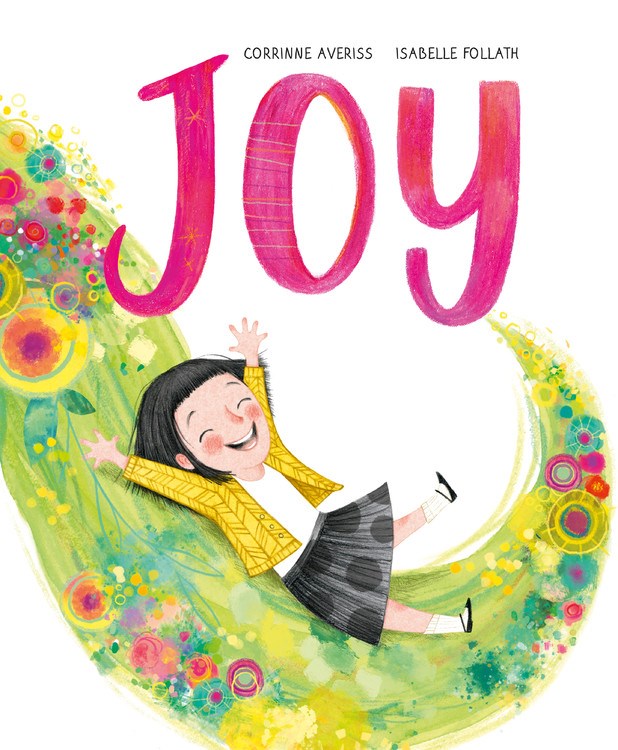
Joy, by Corrinne Averiss/Illustrated by Isabelle Follath, (July 2018, words and pictures), $17.95, ISBN: 9781910277669

Recommended for readers 4-8

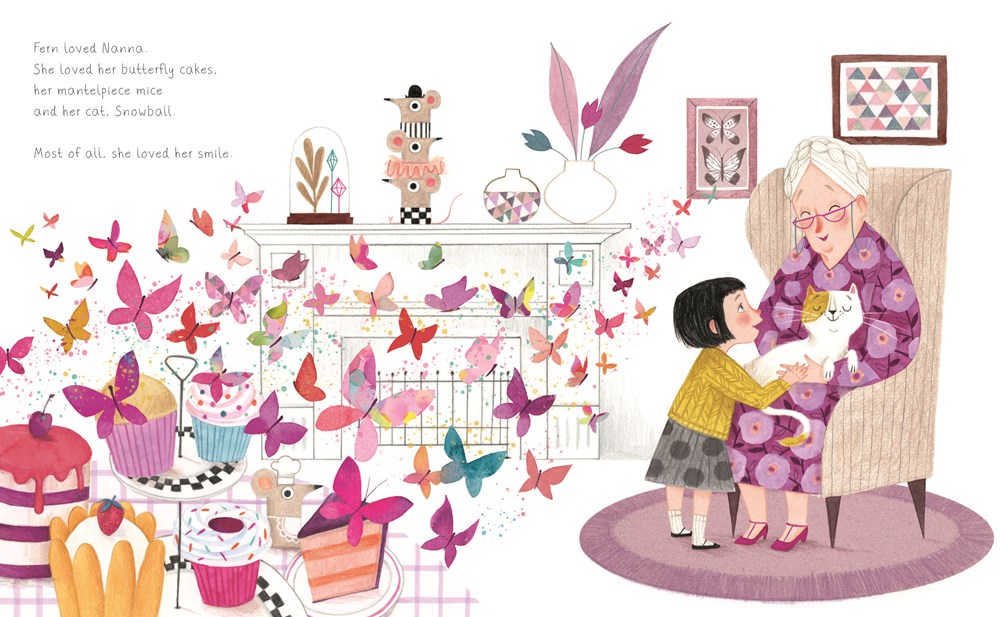
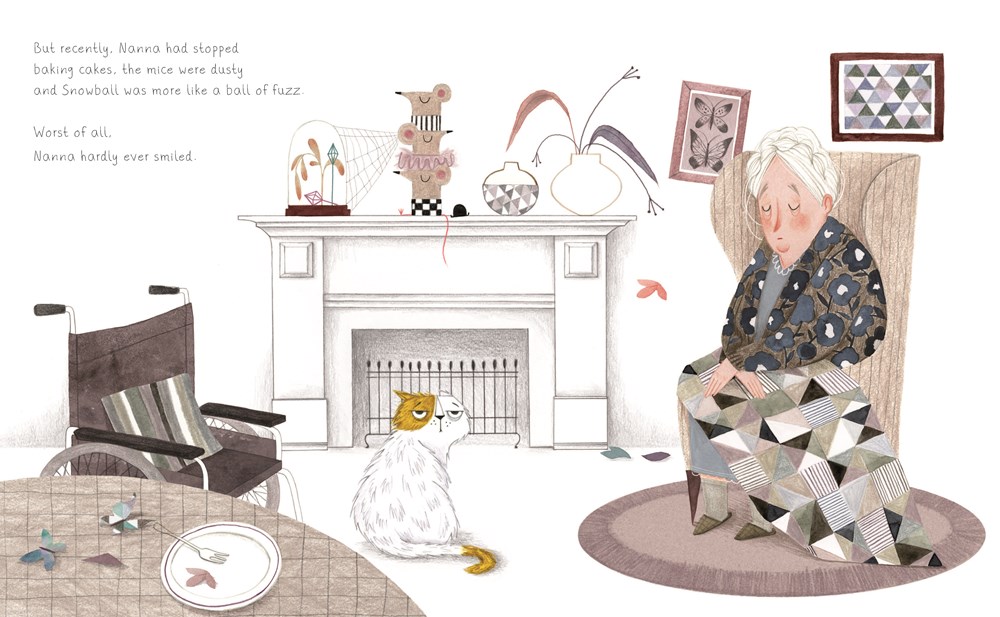
Fern is a little girl who loves her cheerful Nanna, but lately, Nanna’s been very down. She’s not baking yummy butterfly cakes, she’s not keeping up her home, and she just sits and looks very sad. Fern’s mom mentions that the joy has gone out of Nanna’s life, prompting Fern to seek it out and bring it back! She discovers all the places you can find joy, and brings them to Nanna. The message is wonderfully clear: joy is wonderful, but it’s not a given; sometimes, it needs an infusion. The best part? Joy is also something that can be shared!

Joy also enlightens readers to the issue of elder depression. Nanna shows the signs of someone dealing with depression: Nanna looks sad. She’s stopped her daily routine; she appears to have stopped cleaning her home, grooming her cat, taking care of her appearance. Her daughter, Fern’s mother, is worried, and Fern, being a child, takes the most direct course of action. No one is relying on a little girl to cure her grandmother; she’s acting appropriately for a child, and seeking out things that will make her grandmother happy again. It works, and now, Fern understands that sometimes, people can become sad. The artwork flows with the storyline; happy Nanna has a bright, clean home, with butterflies zooming around; sad Nanna and her home are depicted in darker gray and black shades. Fern’s quest for joy brings us back to bright color and upward movements. This is a book that opens up the chance for discussions about feelings and empathy, and the importance of our family relationships.

Posted in picture books, Preschool Reads

What beast does your anger look like?

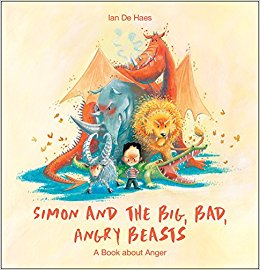
Simon and the Big, Bad, Angry Beasts: A Book About Anger, by Ian De Haes, (Apr. 2018, Flyaway Books), $16, ISBN: 9780664263553

Recommended for readers 4-7

Simon is a little boy with a BIG temper. And when his temper flares, he feels like different animals: a ramming goat, a roaring lion, even a giant dragon! At first, it feels wonderful to have that kind of control over people’s reactions, but eventually, who wants to worry about someone’s bad temper? Simon finds himself feeling pretty lonely until he learns how to tame some of those big, bad, angry beasts.

Simon and the Big, Bad, Angry Beasts is a smart, visual way to start a discussion about anger and anger management. Simon’s anger manifests as exceedingly larger animals as his temper runs unchecked, and his anger gives him a feeling of power: “It was great, it was marvelous, it was magical…” until his anger alienates everyone around him. Kids will enjoy and understand the powerful feelings that come with anger, and the illustrated beasts help with visualization, and can help kids communicate their feelings when tempers flare. Repetitive phrases like “it was great…” reinforces understanding – anger can make someone feel big and powerful, especially a child who may feel otherwise powerless – while leading into the moment where “it” is no longer great, marvelous, or magical, it is lonely; the story encourages readers to seek out meditation and relaxation practices to help, like Simon, control the beasts. A section for parents and educators at the end discusses anger management in children.

Simon and the Big, Bad, Angry Beasts is a nice addition to books on emotions and feelings. Similar books include Molly Bang’s When Sophie Gets Angry-Really, Really Angry and Rachel Vail’s Sometimes I’m Bombaloo.

Posted in Intermediate, Middle Grade, Non-fiction, Non-Fiction, picture books

Inspector Croc helps kids manage their emotions

Inspector Croc’s Emotion-O-Meter, by Susanna Isern/Illustrated by Mónica Carretero, (May 2018, NubeOCHO), $22.95, ISBN: 9788417123079

Recommended for readers 7-10

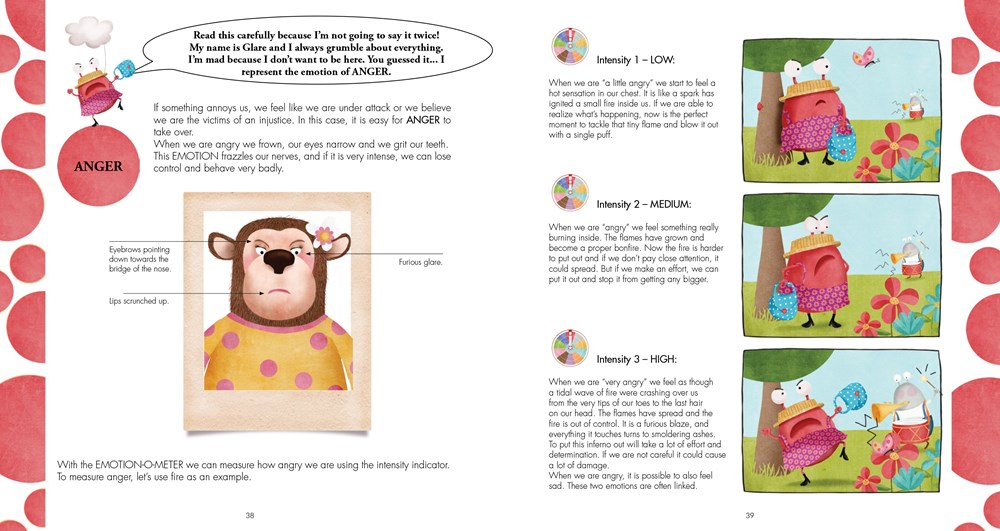
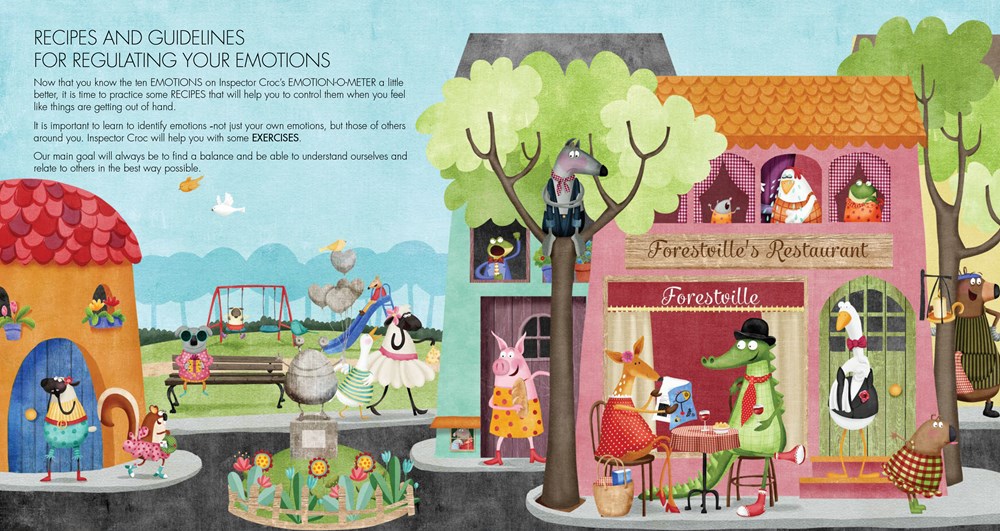
Inspector Croc, the great emotion inspector, is here to help kids identify and manage their emotions in this entertaining and insightful book from NubeOCHO. Accompanied by Yippee, an Emi (emotion) from a large family of emotions, kids will learn what an emotion is, how to identify behaviors associated with emotions, and read through Inspector Croc’s case files; 10 cases where emotions came into play. He introduces his Emotion-O-Meter, allowing kids to identify whether they are feeling emotions on a low, medium, or high level of intensity, and gives kids the ability to put their feelings into words. Finally, we get “recipes” for working with both good and bad emotions, and the Inspector explains that sometimes, emotions like sadness are good and right for us to feel, but that we also have to learn how to let them go when it’s time.

It’s a smart book that addresses ideas that can be tough for kids to identify and express; author Susanna Isern respectfully talks to readers and uses empowering language to promote understanding and courtesy. Mónica Carretero’s animal artwork is cartoony and light, but don’t dismiss that: she illustrates, in detail, various emotions and uses facial expressions to illuminate the physical changes our emotions bring about. It’s a very mindful book, and encourages self-exploration. The book has a dust jacket with an emotion-o-meter on the back cover, but if this book is used in a classroom or library setting, it’s not going to last: do yourselves a favor, and make this a great class project/library program. This would go wonderfully with a viewing of Pixar’s Inside Out (2015).

Inspector Croc’s Emotion-O-Meter is also available in Spanish.

Posted in Graphic Novels, Middle School, Teen, Tween Reads

A boy deals with his grief in Cast No Shadow

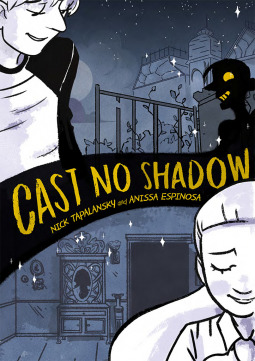
Cast No Shadow, by Nick Tapalansky/Illustrated by Anissa Espinosa, (Oct. 2017, :01FirstSecond), $16.99, ISBN: 9781596438774

Recommended for ages 12+

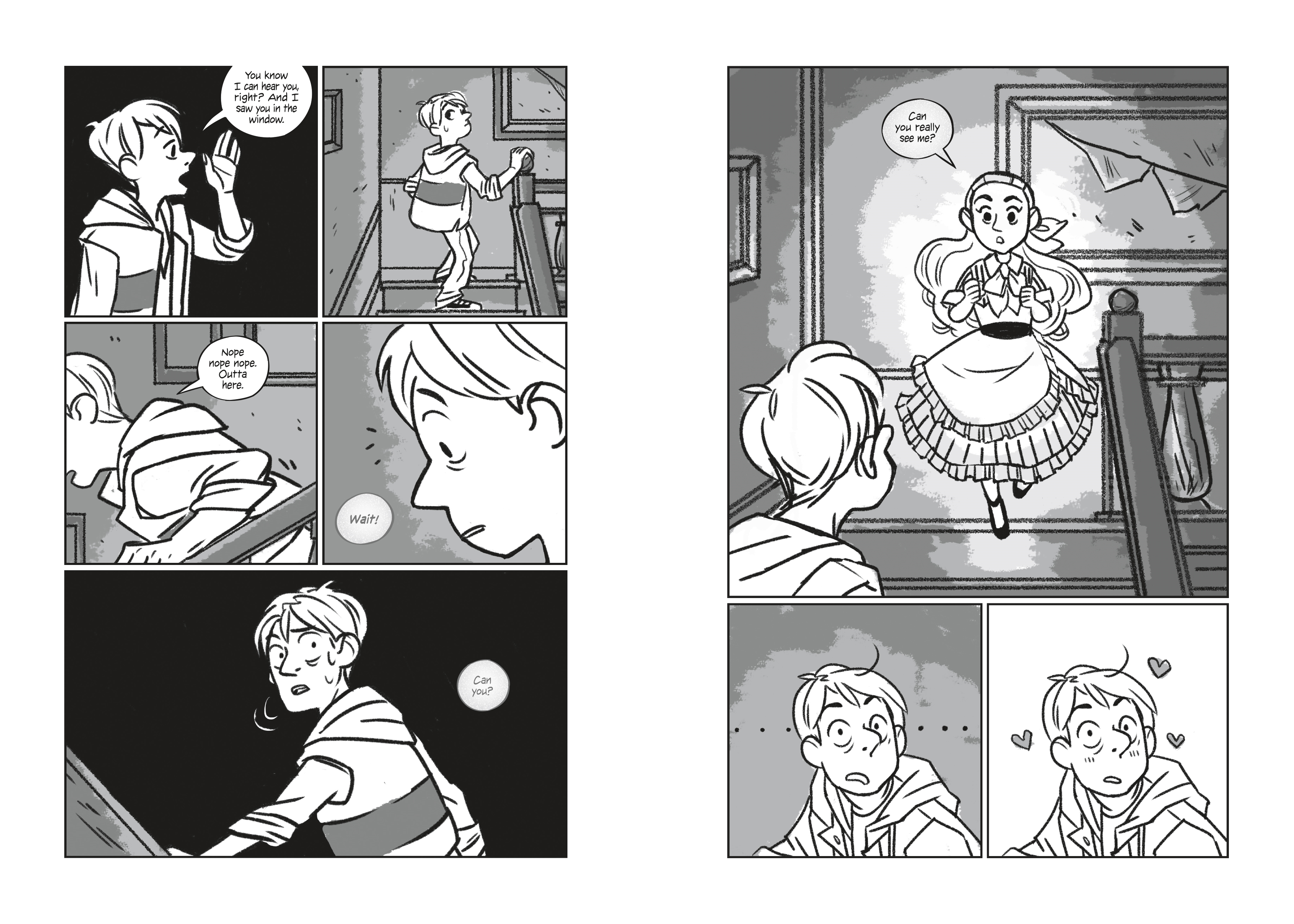
Greg and his friends live in Lancaster, in a town that’s lately become obsessed with tourist traps. This latest one is a giant hairball. No lie. Greg is kind of an attraction on his own: he was born without a shadow. He’s normal in every other way; he just doesn’t have a shadow, which just makes him one more quirky thing in a town full of quirks. When Greg explores an abandoned mansion just outside of town, he meets Eleanor, who could be the perfect girl for him – “smart, beautiful, funny, and man, she totally gets me” – if only she weren’t dead. Eleanor is a teenage ghost, living in her family’s old mansion, and chasing out the creepy living that go in and mess up her home, but she has a soft spot for Greg.

Greg’s got a lot going on in his home life, too: his dad’s girlfriend, Joyce, has just moved in, and Greg isn’t happy about it. He doesn’t want anyone taking his dead mother’s place. As he deals with the frustration of having a new person in the house, and a girlfriend who can’t leave her haunt, something is set in motion; Greg has unwittingly set a dangerous entity loose on his town. What are the chances he can save his town, smooth over his relationship with his father and Joyce, and have a happily ever after of his own?

Cast No Shadow is a touching exploration into grief and loss. Greg retreats from the world to cope with his mother’s loss and his father’s subsequent relationship; aside from his female best friend, the strongest relationship that emerges in the book is with a dead girl. Greg’s suppressed feelings find another way to emerge, causing destruction and danger for everyone around him. It’s a great story to put into older tweens’ and teens’ hands, helping them cope with feelings that may be too overwhelming to confront head-on. The black, white, and gray illustrations add a nice, ghostly feel to the story and come in handy when finer plot points fall into place.

A nice addition to middle school and teen graphic novel collections, and a good secondary reference for kids dealing with grief and loss. Find more of author Nick Tapalansky’s work at his website, and illustrator Anissa Espinosa’s work at her Tumblr.

Posted in Early Reader, Preschool Reads

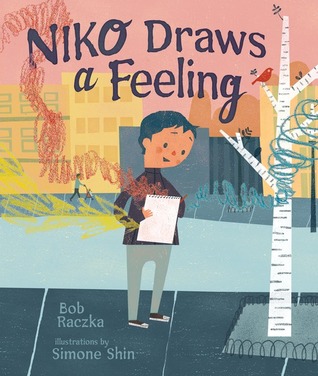
Niko Draws a Feeling: What do you see?

niko-draws-a-feelingNiko Draws a Feeling, by Bob Raczka/Illustrated by Simone Shin, (April 2017, Carolrhoda Books), $17.99, ISBN: 9781467798433

Recommended for ages 4-8

Niko loves to draw the world around him. Everything inspires him, and ideas flow through him, from his brain down to his fingers. He captures feelings, not images: the ring-a-ling of an ice cream truck; the warmth of the sun; the hard work of a mother robin building a next. No one seems to understand Niko. They’re looking for the bell of the truck; the sun and Niko’s face; the mother robin. Niko captures the feelings these things inspire, but no one seems to grasp that, until he meets Iris, a new girl moving into the neighborhood. She understands exactly what he has to say, because she feels, rather than looks.

I adore this book. It reaches in and touches the reader, just like Niko’s drawings. Younger children will appreciate that someone out there understands what they’re trying to communicate, much like Niko and Iris finding one another. Raczka and Shin create a story that relies on feelings and emotions inspired by the world around us, and reminding us that art, like feeling, is abstract, and able to be communicated in many ways. Simone Shin’s mixed media, digital and acrylic paints give us a world that looks like it could have been drawn by Niko himself.

There are so many ways to use this book beyond a simple storytime. Ask kids to draw their own feelings, their own experiences of the world around them. Let them explain what they see, and see it with them. Pair this with Andrew Larsen and Mike Lowery’s A Squiggly Story for a great storytime on self-expression and art.

Bob Raczka is an award-winning children’s author and poet. Simone Shin is an award-winning illustrator.

Posted in Animal Fiction, Early Reader, Fiction, Preschool Reads

Sugar and Spice and everything… Candy Pink?

candy-pink-coverCandy Pink, by Adela Turin/Illustrated by Nella Bosnia, (Nov. 2016, NubeOcho), $15.95, ISBN: 978-84-944446-7-8

Recommended for ages 5-8

A classic written 40 years ago with the goal to promote equality between boys and girls arrives in the United States for the first time. Candy Pink is written in the style of a folk tale, explaining how elephant all became gray. You see, male elephants were always gray, but female elephants were candy pink. To get that color, they ate only peonies and anemones, wore bibs and shoes, and stayed together in a little walled garden, while the boy elephants playing in the mud, eating yummy grass, and sleeping beneath trees. When one little elephant named Daisy doesn’t turn pink, her father is harsh and cruel, her mother, sad. They pressure her to eat more pink food and threaten her by telling her no one will want to marry her. When they finally give up, the girl elephant embraces her freedom, sheds her bib and shoes, and enjoys life – something that doesn’t go unnoticed by the other female elephants. And, well… you can’t tell the difference between boy and girl elephants anymore, can you?

I was taken aback the first time I read Candy Pink, because it seems harsh on a young girl: the emphasis on appearance and girlish pursuits, Daisy’s parents’ terrible reaction to her inability to fit their mold for her. A second reading put more in perspective for me – the little elephant embraced her uniqueness and wasn’t ostracized for it – the other female elephants flocked to her, and made a huge change that exists to this day. It’s a powerful little story for school-age kids that lends itself to some pretty big ideas. Originally published in Italian in 1976 with the title Rosaconfetto, Adela Turin tackled gender identity and the pressure society puts on appearances by using a parable that everyone could understand and that young girls could relate to. Forty years later, Candy Pink is just as relevant.

Award-winning illustrator Nella Bosnia’s artwork is beautiful. She uses shades of gray and pink against muted background colors for the world of the story; primarily greens, blues, and yellows for the assorted flora and fauna. The bibs, shoes, and bows on the elephants tails are frilly and exaggerated, even pinker than the pale pink elephants; against Daisy’s natural gray, it’s a true contrast.

An interesting and still-timely look at gender, society, and the expectations parents put on their own children. A good addition to bookshelves. Booktalk and display with self-esteem boosters like Karen Beaumont’s I Like Myself!, Peter Reynolds’ Ish, and Todd Parr’s It’s Okay to Be Different. Want another elephant fairy tale? Emma Dodd’s Cinderelephant is a light-hearted, fun take on the classic fairy tale.