I know this is MomReadIt, and I talk mainly about kids books, but every now and then, I put up something for the grownups. Nourish is a nutrition guide for parents and caregivers with information, advice, and recipes for creating a plant-based life for you and your littles – or just incorporating more plant-based food into their diets. From pregnancy to teen, Nourish is comprehensive, with easy-to-understand discussions of plant-based food, micronutrients, supplements, and getting the whole family on board are just the beginning of what you’ll find in here. For anyone who wants to work on getting a healthier diet onto their tables and into their lunchboxes, start with Nourish. I’ll be keeping their “no recipe meals” advice on my fridge for those days when I need to bring something to work for lunch, but have no idea what I want to eat.
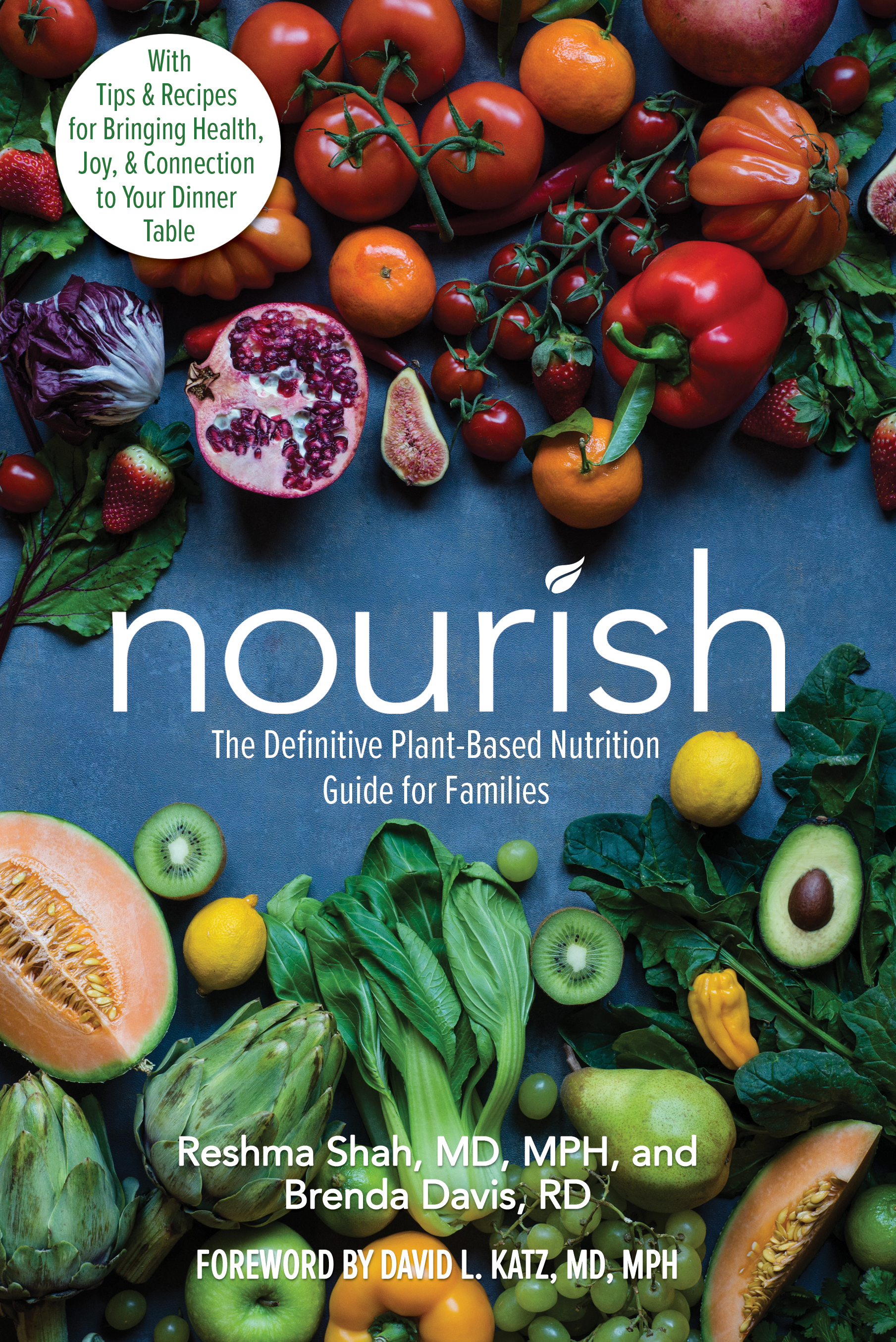
Nourish: The Definitive Plant-Based Nutrition Guide for Families,
by Reshma Shah, MD, MPH and Brenda Davis, RD, (November 2020, HCI),
$18.95, ISBN: 9780757323621
Enjoy an excerpt from Nourish:
10 TIPS FOR A HEALTHY FAMILY TABLE
Excerpt adapted from Nourish: The Definitive Plant-Based Nutrition Guide for Families by Reshma Shah, MD, MPH and Brenda Davis, RD (November 2020, HCI). More at nourishthebook.com.
As parents and guardians of children, we are tasked with ensuring that our family table is a place where cultural traditions are honored, community is celebrated, and each family member is well nourished. Sometimes balancing nutrition with joy and connection can be challenging for parents. Here are 10 healthy eating tips to make nourishing your family simple and mindful.
- Eat a variety of foods from each food group. The greater the variety of foods included from each group, the greater the diversity of nutrients, fiber, phytochemicals, and antioxidants you will consume. When you make healthy choices from each food group, you establish healthy eating patterns that cover a lifetime of protection.
- Make water your beverage of choice. Beverages can easily be the downfall of any dietary pattern. They may contain unwanted sugars, sodium, saturated fat, caffeine, and/or alcohol (in adult beverages). Water is critical to overall health and is the most effective beverage for quenching thirst. To increase water intake, drink it hot or cold, drink it with your meals and between your meals, drink it during physical activity, and carry a reusable water bottle with you. To provide a flavor boost, add fruit pieces, lime, lemon, mint, cucumbers, cinnamon sticks and/ or a frozen juice cube. Use soda water as a base to make it fizzy.
- Skip the highly processed foods. Highly processed foods are major contributors to the excess consumption of unhealthy fats, refined sugars and starches, salt, and potentially harmful food additives. Examples of highly processed foods are fast foods, deep-fried foods, sweet baked goods, sugar-laden ice creams and frozen treats, salty snacks, candy bars, candies, and sweet beverages. While you don’t have to eliminate these foods altogether, consider reserving them as occasional foods in your family’s diet. To curb intake of highly processed foods, start by slowly replacing some of these foods with healthier options. For example, instead of store-bought cookies and muffins, try making homemade baked goods with nutritious ingredients; swap out French fries for oven-baked “fries.”
- Keep sodium intake moderate. Over 70 percent of our sodium comes from processed food, about 15 percent is naturally present in whole food and only about 10 percent comes from salt added during cooking and at the table. The balance comes mostly from water and dietary supplements. So, reducing processed foods will put a major dent in your sodium load.
Be aware of foods that are hyper concentrated in sodium such as pickles and olives, as generous intakes can quickly lead to excess. You can easily adjust the amount used in cooking and at the table, if need be. Kids can overconsume sodium as well, and as diet habits are formed in childhood, reducing intake can help promote long-term health.
- Read food labels. Food labels can supply information that will help you to make more healthful choices. The most valuable information is provided in the nutrition facts and ingredient list. The Nutrition Facts provide information about serving size, calories, and some nutrients (as a percent of the Daily Value). The ingredient list tells you about the ingredients in order of their weight in the product. It is common practice to try to fool customers by including multiple forms of less desirable ingredients such as sugar, so they all end up lower on the ingredient list. For example, instead of listing 16 grams of cane sugar per serving, a manufacturer might list 4 grams each of cane sugar, dextrose, maltose, and corn syrup. You can use the food label to help you compare products and choose those with less sugar, less salt, less fat, and more fiber. Additionally, nutrition claims (“high in fiber,” “low in sugar,” or “high in protein”) are often depicted on a label. Foods must meet specific criteria to make these claims, and generally the healthiest foods (think broccoli!) don’t require a label to convince you of their nutritional benefit.
- Be savvy about food marketing. Food marketing is advertising that attempts to sell you a product. Most marketing is for products that are highly processed like presweetened cereals or toaster pastries, rather than for broccoli or blueberries. A significant amount of this advertising is directed towards children. Food marketing is designed to convince you or your children that a product is superior to its competitor’s (for example, in taste, convenience, or nutrition) or that it will provide you with some desirable outcome—higher energy, more strength, better looks, or a more robust social life. Being savvy about marketing will help you and your children to avoid being deceived by a sales pitch.
- Prepare meals at home. Cooking your own food means that you control what goes into your meals, including the amount of fat, sugar, and salt. You will be reducing highly processed foods and saving money for healthier foods such as fresh vegetables and fruits. It’s perfectly alright to purchase some ready-to-eat greens, pre-cut or frozen vegetables, pasta sauces, salsa, pre-seasoned tofu, or ready-to-eat veggie burgers to reduce meal prep time.
- Make your foods appealing and enjoyable. Making foods appealing and enjoyable leads to more positive eating experiences for your family. Take the time to present your food attractively by using colorful vegetables and fruits, herbs, and sauces. Kids love fun food, like bear-shaped pancakes or fruit plated in a flower shape. Be creative, adventurous, and open to experiencing new flavors. Weave in traditions from your family’s culture. Set an attractive table, light some candles, put on some soft music, and enjoy the company.
- Eat with others. When you eat with others—family, friends, colleagues, or neighbors, you will connect in a valuable way. Eating together allows you to share your cultural traditions, to explore new foods, and to have quality time with others. Enjoy your meal at a leisurely pace, and get rid of distractions such as TV and cell phones.
- Eat mindfully. Being mindful about your food choices means being more conscious about where your food comes from, how it is selected, and how it arrives on your table. It means experiencing your food’s appearance, taste, and texture, and appreciating the effort that went into procuring and preparing the food. It means being aware of your eating behaviors and trying to take steps to improve them, such as removing distractions, slowing down to enjoy your food, spacing meals and snacks, and creating an inviting environment.
Website: nourishthebook.com
IG: https://www.instagram.com/nourishthebook/
FB: https://www.facebook.com/nourishthebook/
Buy links:
B&N: https://www.barnesandnoble.com/w/nourish-dr-reshma-shah-md/1136472931?ean=9780757323621
 RESHMA SHAH, MD, MPH is an affiliate clinical instructor at Stanford University School of Medicine and has been a practicing pediatrician for nearly 20 years. She received her undergraduate and graduate degrees from Johns Hopkins University and her medical degree from Drexel University College of Medicine. She lives in the Bay Area with her husband and two children. Most Sundays, you can find her at the California Avenue Farmers Market in Palo Alto where she finds inspiration for weekly family meals. reshmashahmd.com
 BRENDA DAVIS, RD is a registered dietitian and widely regarded as a rock star of plant-based nutrition. VegNews called her “The Godmother of vegan dietitians.” She has been a featured speaker at medical and nutrition conferences in over 20 countries on 5 continents and is the author of 11 books on vegetarian and vegan nutrition. In 2007, she was inducted into the Vegetarian Hall of Fame. She lives in Calgary with her husband, Paul. She has two grown children and two beautiful grandchildren. brendadavisrd.com
More stops on the Nourish tour!




 Mom Read It