Posted in Non-Fiction, Uncategorized

Hands-On Science and Math makes learning fun!

9780876596500_a5605Hands-On Science and Math – Fun, Fascinating Activities for Young Children, by Beth R. Davis (July 2015, Gryphon House), $14.95, ISBN: 9780876596500

Recommended for educators and parents of preschoolers-age 8

I’m always on the lookout for books that have fun, easy activities for my younger patrons. Being a librarian in an urban, lower community  made up largely of working class and working poor families, I’ve got a lot of parents concerned about their kids’ progress in math and science. One thing I’ve been working on putting together is a series of science workshops for my younger patrons. I’m a bit clueless in this area, so I’ve been getting some help from my colleague at our Children’s Library and Discovery Center in Jamaica (seriously, go to this library and prepare to be amazed); I also keep an eye out for blogs, websites, and books that offer some ideas. Hands-On Science and Math is one of those books.

Loaded with experiments and ideas for kids from preschool to roughly third grade (you can skew older or younger, with easy tweaks on these experiments), Hands-On Science and Math gets kids thinking and using their five senses to explore the world around them. Each experiment comes with an explanation of the scientific concepts behind the experiment, STEM lessons to be gained from the experiments, and ways to link to the math and literacy in each one. I’ve already created a few sessions for the kids in my library, including using a Matchbox car, cardboard, a pile of books, and a measuring stick to learn about simple machines; examining the world around them using a magnifying glass, and the almighty baking soda volcano (I’ll be doing that one solo, but I’ll give them instructions they can try at home). I’ll be trying these out over the winter break!

Parents and educators can recreate these experiments on a small budget: most of the ingredients and objects can be found at dollar stores or are already in your home. There’s an appendix on graphing topics, a popular math and literacy link here, including questions with concrete answers you can use to graph results. Further resources are available for anyone who wants to read more about STEM activities and young children.
Author Beth R. Davis, EdS, NBCT, holds a bachelor’s degree in elementary education; a master’s degree in teaching English to speakers of other languages, or TESOL; and an education specialist degree in computer education. She is the director of Kids 4 Kids Academy preschool in Miami, Florida. I’m thrilled that she’s got experience in working with speakers of other languages; this talent comes through in her experimentation, and allows me to create these programs with my multicultural families. She offers more science activities for kids on her website, where you can also sign up to join her mailing list.
Posted in Non-Fiction

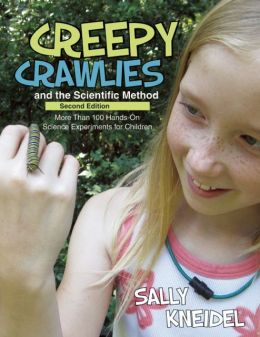
Creepy Crawlies and the Scientific Method is perfect for educators, fun for kids!

creepy crawliesCreepy Crawlies and the Scientific Method, by Sally Kneidel (2015, Fulcrum Publishing), $24.95, ISBN: 9781938486326

Recommended for 16+

Who said science has to be boring? Kids love to play in the dirt, right? The dirt is FILLED WITH SCIENCE. Sally Kneidel brings a love of her subject – she’s got a Ph.D. in Biology and has written extensively on the environment, natural history, and teaching science to kids- to this updated version of her book, Creepy Crawlies and the Scientific Method. She explains that everyone can find a creepy crawly or two to learn more about, whether you live in a building or out in the middle of nowhere – it’s all about looking under a rock, or between some leaves.

More than finding and experimenting, Dr. Kneidel stresses environmental responsibility. She urges children and adults alike to respect nature, to be kind and humane, and to release our test subjects once we’ve observed them. Do no harm isn’t just part of a doctor’s oath; we all need to remember and take this mantra to heart. We share the planet with “creepy crawlies”, but what do we know about them? Dr. Kneidel knows a lot, and that’s why we need to listen to her.

Written more for adults that work with or enjoy kids in their lives, Creepy Crawlies and the Scientific Method has extensive profiles on various “critters”: bugs and insects – to give adults and children alike a background from which to work. She outlines the five steps of the scientific method: question, hypothesis, methods, result, and conclusion, and provides activities and questions that will stimulate fun and creative thinking among kids. Beautiful photographs and in-depth descriptions of various critters, including different appearances at different life stages, make this book a hugely valuable resource for any STEM library. Bring this book to your backyard, the park, or on vacation to learn science and have a great time doing it.

This book is absolutely going on my order lists for my teaching libraries! I can’t wait to hear the teachers talk about their field trips.

Dr. Kneidel’s webpage is a great additional resource, with photographs and blog entries on nature, the environment, and social responsibility. You can follow her on Twitter @sallykneidel.