Posted in professional development

Guest Post: Why is fluency important to comprehension?

Hi all! I’ve got a guest post today from Alesia, from PrimaryLearning.org, an online education resource for K-5 educators. There are some great, free lesson plans, worksheets, and activities to be found there; I’ll be trying some of these on for size as we increase our self-directed (passive) programming. Without further ado, here’s Alesia’s article on fluency and comprehension.

Why is fluency important to comprehension?

Developing fluency and comprehension significantly helps children become proficient readers. These two skills are connected, with fluency supporting children’s comprehension of the texts they read. When teaching children how to read, a focus on fluency should be part of the program. 

What is Fluency?

Fluency is the ability to read smoothly with automaticity. Fluency makes reading sound like talking. It consists of three components: accuracy, rate, and expression. 

Accuracy is the ability to read words correctly. The more accurate readers are, the fewer mistakes they make. 

Rate is the speed or pace that words are read. Fluent readers have a consistent flow to their reading. Their reading is not filled with stops and starts. 

Expression is related to how a reader’s voice sounds. Expressive readers vary their volume, pause at appropriate places, and attend to punctuation, adding excitement or intonation to their voice. Their reading does not sound robotic or monotone. 

What is Comprehension?

Comprehension is a key component of reading. Without it, children are merely reading words on a page, with no understanding of what they mean. Think of times when you have read a paragraph or page, then had to go back and read it again because you had little understanding of what you had just read. Comprehension was missing. 

Comprehension allows readers to understand, interpret, and interact with texts. It allows readers to understand the vocabulary in books. They also bring their own prior knowledge and experience to the text in order to make connections. They make predictions and confirm or revise them as they read. Children with well-developed comprehension skills can infer while they read. They also ask questions or have “wonderings” as they progress through a book. All of these skills allow children to understand the books they read.    

How Does Fluency Affect Comprehension?

If children are struggling to solve words, their efforts become focused on decoding. Their rate of reading slows down, often becoming word-by-word or robotic-like. Expression is lacking or even absent, as they concentrate almost primarily on word solving. 

When children read fluently, they recognize words more automatically and can shift their focus to what the words mean. They are able to concentrate on what the text is saying and can interact with it, using the comprehension skills described in the section above.      

How Do I Teach Fluency?

To teach fluency, make sure you are modeling what fluent reading sounds like. Demonstrate how you pause, change your voice, and group words together so your reading is not choppy. Provide children with opportunities to demonstrate their own fluency. Beginning readers can start with one sentence that they can read smoothly. Encourage them to make their reading sound like talking. It may be helpful to record their reading so they can hear what they sound like. 

To encourage fluency, it is important that children are reading books appropriate for their level. If a book is too difficult, children will struggle to solve the words and fluency will break down. Choose “just right” books or, if fluency is the main goal of the lesson, consider using a book that is even a bit easy to read. Without the need to tackle unknown words, children can focus all their efforts on reading the book fluently. Re-reading a familiar book is another way to shift the focus to fluency.  

To support fluency, preview books and identify vocabulary that you may need to pre-teach. Anticipating challenging words and reviewing them before children begin reading will help their fluency. Sometimes fluency is even hindered by characters’ names that kids are unfamiliar with. Spotting these problems ahead of time will prevent them from stumbling throughout the book. 

Fluency also improves when children have a well-developed sight word vocabulary. We want children to recognize high-frequency words like “the,” “and,” and “it” automatically. Without a bank of known sight words, children will struggle through texts.

As we teach children to read, it is easy to become focused on word-solving strategies. However, it is important that we don’t neglect fluency, which opens the door to a deeper comprehension of texts.   
 

Posted in professional development

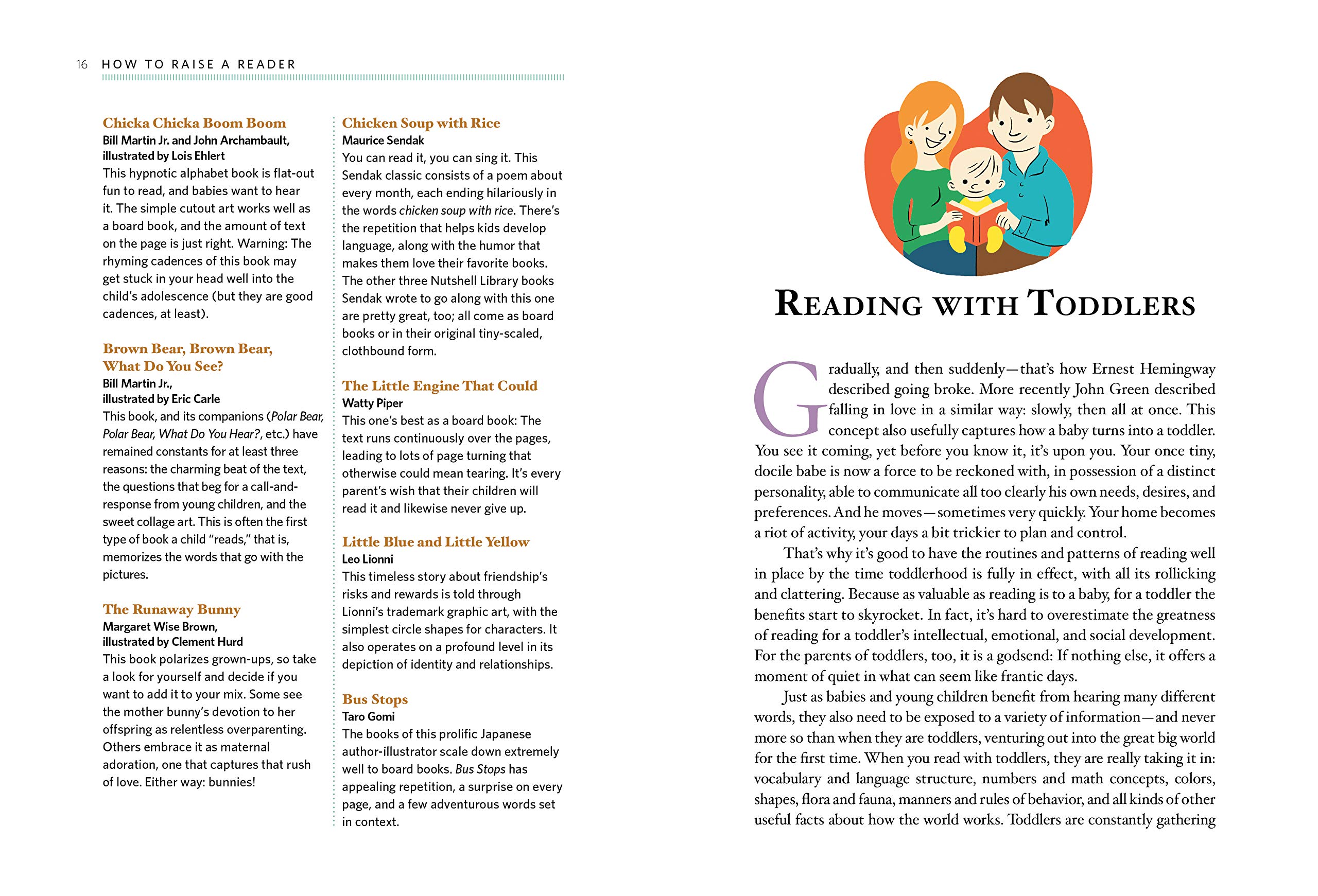
Good for Parents & Professional Development: How to Raise a Reader

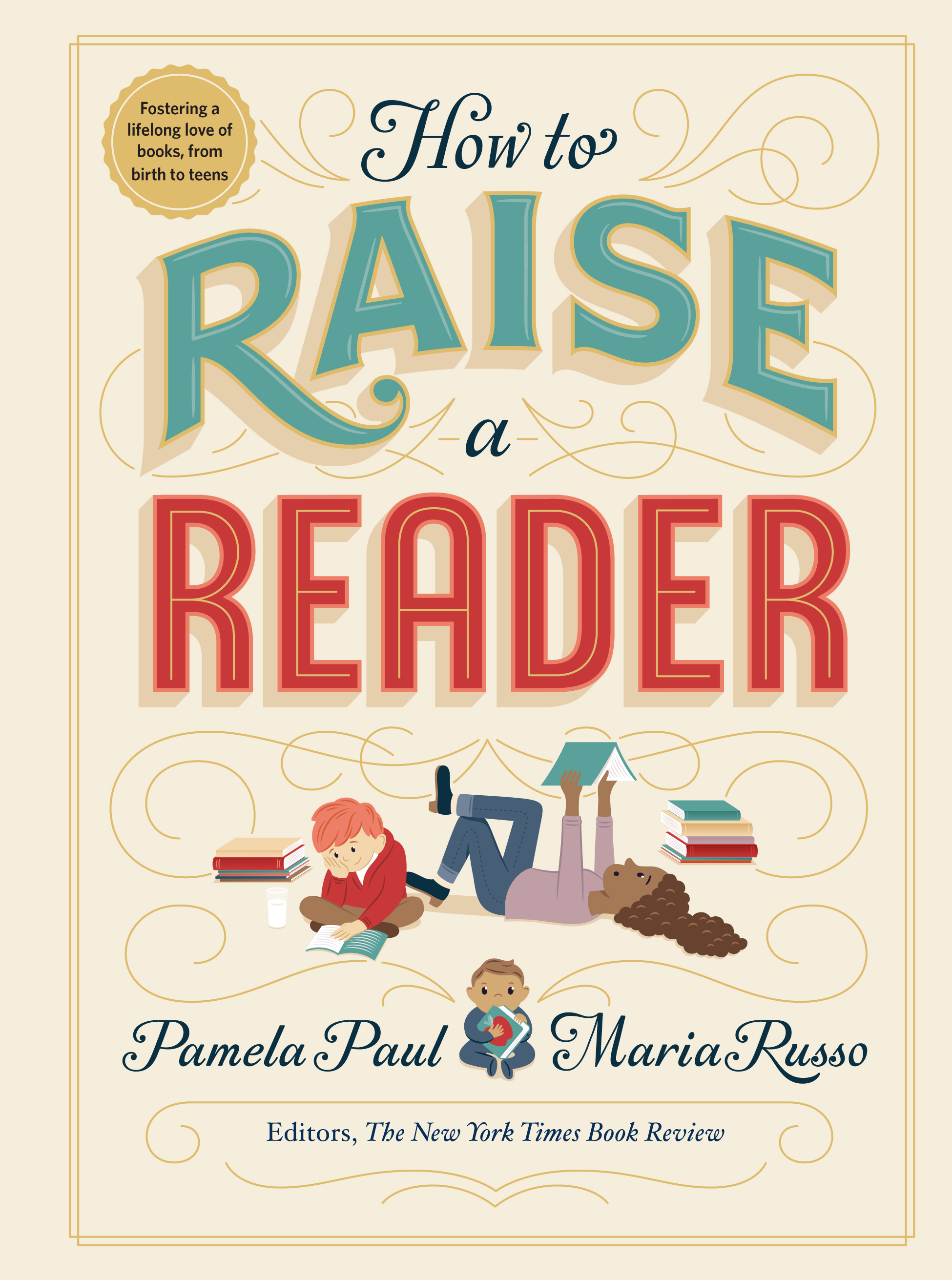
How to Raise a Reader, by Pamela Paul & Maria Russo/Illustrations by Vera Brosgol, Lisk Feng, Monica Garwood, & Dan Yaccarino, (Sept. 2019, Workman), $19.95, ISBN: 978-1523505302

I like finding good books to recommend to parents and to add to my own professional development, so I picked up How to Raise a Reader. Written by two editors of The New York Times Book Review, How to Raise a Reader is all about inspiring parents, caregivers, and educators to promote a lifetime love of reading. Organized into four parts – Born to Read, Growing a Reader, Your Middle-Grade Reader, and A Reader for Life, with a fifth section providing book suggestions by themes and reading levels (not A-Z, more like age and grade) – this is a handy Readers’ Advisory volume to have at your fingertips, and a good suggestion to hand parents who want to work toward growing their own readers. There’s advice, tips and facts about early childhood learning, and booklists, booklists, booklists. Illustrated in full-color by popular children’s book illustrators, this is a book that will make you fall in love with reading again, too. It’s easy to read; easily skimmed if you need to look for one specific section or booklist; and filled with an upbeat, positive attitude: you can do this! You can get kids to love books!

Never overwhelming, the information is presented in easily digestible sections and fact boxes. Get yourself a desk copy to keep on hand, and consider adding this to your parenting sections. And encourage those parents when they come in, looking scared and lost. Remind them that reading kids’ books is fun, and tell them that they should never feel bad about reading along with their kids, too! I can’t tell you how many times I’ve had a parent confide that they “aren’t really readers”, or “haven’t picked up a book in SO long”. Kids’ books are the best way to get back into reading – let this book and your expertise be the pep talk bewildered or just plain tired caregivers need.

Posted in professional development

Professional Development Reading: Time for a Story

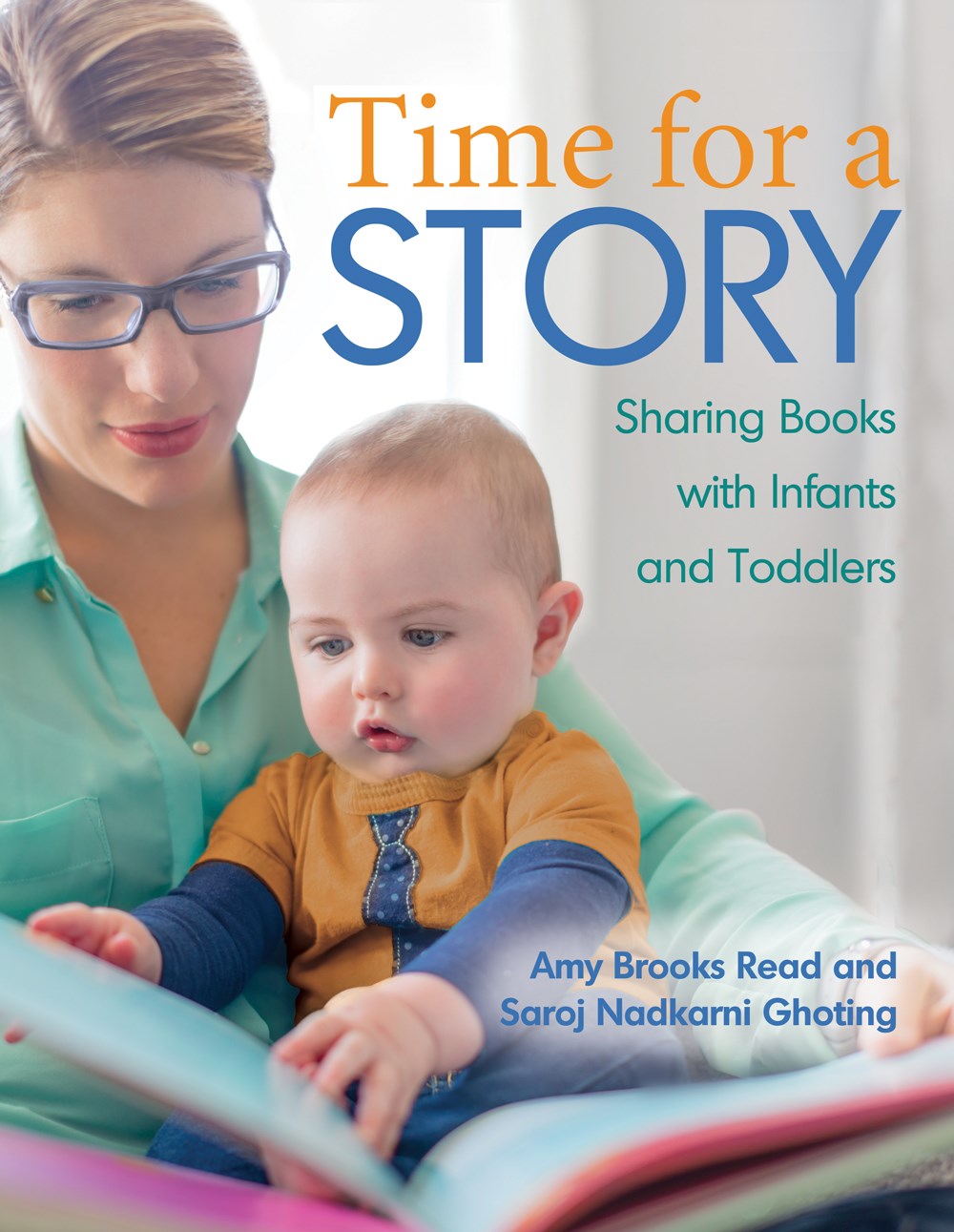
Time for a Story: Sharing Books with Infants and Toddlers, by Amy Brooks Read & Saroj Nadkarni Ghoting, (Nov. 2015, Gryphon House), $19.95, ISBN: 9780876596586

I’m always looking for new ways to learn within my profession and expand on that knowledge. And since the family finances are like, “Nuh-uh” when it comes to getting another grad degree, I’ve turned to books. There is some great stuff out there! Since I’m always in search of strengthening my storytimes, especially to babies and toddlers, I started with Time for a Story. Saroj Ghoting spoke at an in-service at my library one time, and I really liked the way she talked about storytelling and how to apply learning to storytime, so I jumped at the chance to read a book she had a hand in.

Time for a Story is a good start to digging into storytime and how to incorporate singing, play, talking, reading, and writing into any and every book you pick up. Amy Brooks Read and Saroj Ghoting have tips and reading lists ready for babies and toddlers, concentrating on the early childhood literacy and the best ways to introduce a lifelong love of reading in kids. Reading, you say? Yes, reading! Kids start making connections early – print awareness is wonderful, we all know that. Keep books all over the place for kids to develop that print awareness. Let them chew on those board books (not library books, though, PLEASE), let them hold books and turn pages. I hand out books for kids to hold onto and explore during my storytimes, so it was gratifying to read that here. I was also relieved to discover that it is okay for my kiddos to wander during storytime, and for me to keep reading – they’re still paying attention while they explore. Family Literacy Tips are great to post around your libraries and classrooms, and talk through with parents during storytime.

There are book lists and samples of ways to read different books. I appreciated the advice on reading wordless or sparsely worded books, like Peggy Rathmann’s Good Night Gorilla, because I feel like it’s an untapped resource for my storytimes.

This was a nice start to my professional development reading, with information that I will come back to. Saroj Ghoting has a very useful website where you can find resources in a multitude of languages, including Spanish and Chinese. Gryphon House has a video of Amy Brooks Read discussing storytime strategies on their website.

Posted in Uncategorized

March is Read Aloud Month!

Remember, everyone – reading time is cuddle time, so get your snuggles in and read to the little ones in your life. Just 15 minutes a day makes a tremendous difference. Want a scary statistic? By 3 years of age, there is a 30 million word gap between children from the wealthiest and poorest families. 30. MILLION. WORDS. (Reading is Fundamental, 2014)

March2016_readaloudmonth_post

Grab those Pigeon books, the Sandra Boynton books (my little Gozer is currently a huge fan of But Not the Hippopotamus), anything by Karen Katz: just grab a book, snuggle that little one in your lap or wherever you’re most comfy, and read. Just 15 minutes a day makes all the difference in the world.

Got older kids? Read to them, too! Explore Narnia or Hogwarts, join Johnny Tremain or Phoebe the Spy. Make your kid the Mockingjay. Just read and be together.

The Read Aloud campaign has great, bilingual posters and handouts for the 15 Minutes literacy initiative here. Download them, print them, post them, hand them out!