Posted in Uncategorized

Benny and Penny Say Goodbye to a Friend

bennypenny1Benny and Penny in How to Say Goodbye, by Geoffrey Hayes (Sept. 2016, TOON Books), $12.95, ISBN: 978-1-935179-99-3  

Recommended for ages 4-8

While playing outside, Penny discovers Little Red, a salamander, has died. She’s upset, but her brother, Benny, seems more irritated by Little Red – and Penny’s grief – than anything else. Penny and her friend Melina bury Little Red and hold a little ceremony for him, which stirs up mixed feelings for Benny.

This latest book in the Benny and Penny early graphic novel series takes on the tumultuous emotions that death can stir up: grief being one, and guilt being another. These feelings are often overwhelming to adults; to children, they must feel like a tidal wave. Benny remembers times he was unkind to Little Red, which triggers his grief. Benny’s guilt motivates him to take part in Little Red’s memorial, and Mr. Hayes gives Benny, Penny, and readers a bright spot to end on.

There are some great books on dealing with grief and loss with children: most recently, Margaret Wise Brown’s The Dead Bird and Ida, Always, by Caron Levis. Each book speaks beautifully to children, and each handles grief differently – just like people do. How to Say Goodbye is a sensitive look at dealing with strong feelings in the wake of loss. An important addition to graphic novel collections and readers advisory lists.

There will be an educator’s guide closer to the book’s publication. Keep an eye on the Benny and Penny TOON Page for details.

Benny and Penny is an award-winning early graphic novel series. Benny and Penny in the Big No-No received the 2010 Theodore Geisel Award.

bennypenny5

Posted in Uncategorized

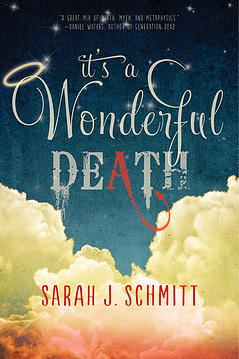
It’s a Wonderful Death… Can you really get a do-over?

wonderfuldeathIt’s a Wonderful Death, by Sarah J. Schmitt (Oct. 2015, Sky Pony Press), $17.99, ISBN: 978-1-63450-173-6

Recommended for ages 12+

RJ is a classic mean girl. She runs with the “in” crowd, she’s stuck-up, and she’s spoiled rotten. But she learns pretty quickly that Death is the grand equalizer when a Grim Reaper accidentally collects her soul. Now, she’s in the Afterlife and she’s not happy. She’s raising a ruckus, but her existing track record isn’t doing her any favors. If she can get enough souls, angels, and Death Himself on her side, she may stand a second chance, but can she stop thinking about herself long enough to make the right choices?

Written in the first person from RJ’s point of view, It’s a Wonderful Death is nearly unputdownable. It’s loaded with snark and sarcasm that will leave you chuckling and snorting into your sleeve (I commute on public transportation, for heaven’s sake). I needed to know what RJ was going to say next, or what Death Himself was going to come up with. Both characters are hilarious and yet, get the message across. What you do in life will stay with you. Whatever you believe – a topic touched on in this book – there is a reckoning; what you may think is a minor moment in your life could mean someone else’s life. We also see, very clearly, that as much as bad karma snowballs, so does good karma.

This story operates on the hope that people are, for the most part, good – if you show them a chance to go on the right path, and they take it, chances are, they’ll keep finding ways to stay on that path. It’s a pretty upbeat message, for a book about a dead teenager.

It’s a Wonderful Death is a very moral story that would lend itself to some great book discussions. And why shouldn’t it? Author Sarah J. Schmitt is a youth librarian. If she can’t get a teen’s sarcasm down, who can? She gets to the heart of a lot of teen issues here, and for that reason, It’s a Wonderful Death is on my must-have list for my YA collection. .

Have a morality program without beating kids over the head with the concept by showing Death Note one week, then discuss this book the next. There are a lot of facets to be discussed.

Posted in Fiction, Humor, Middle School, Teen, Tween Reads

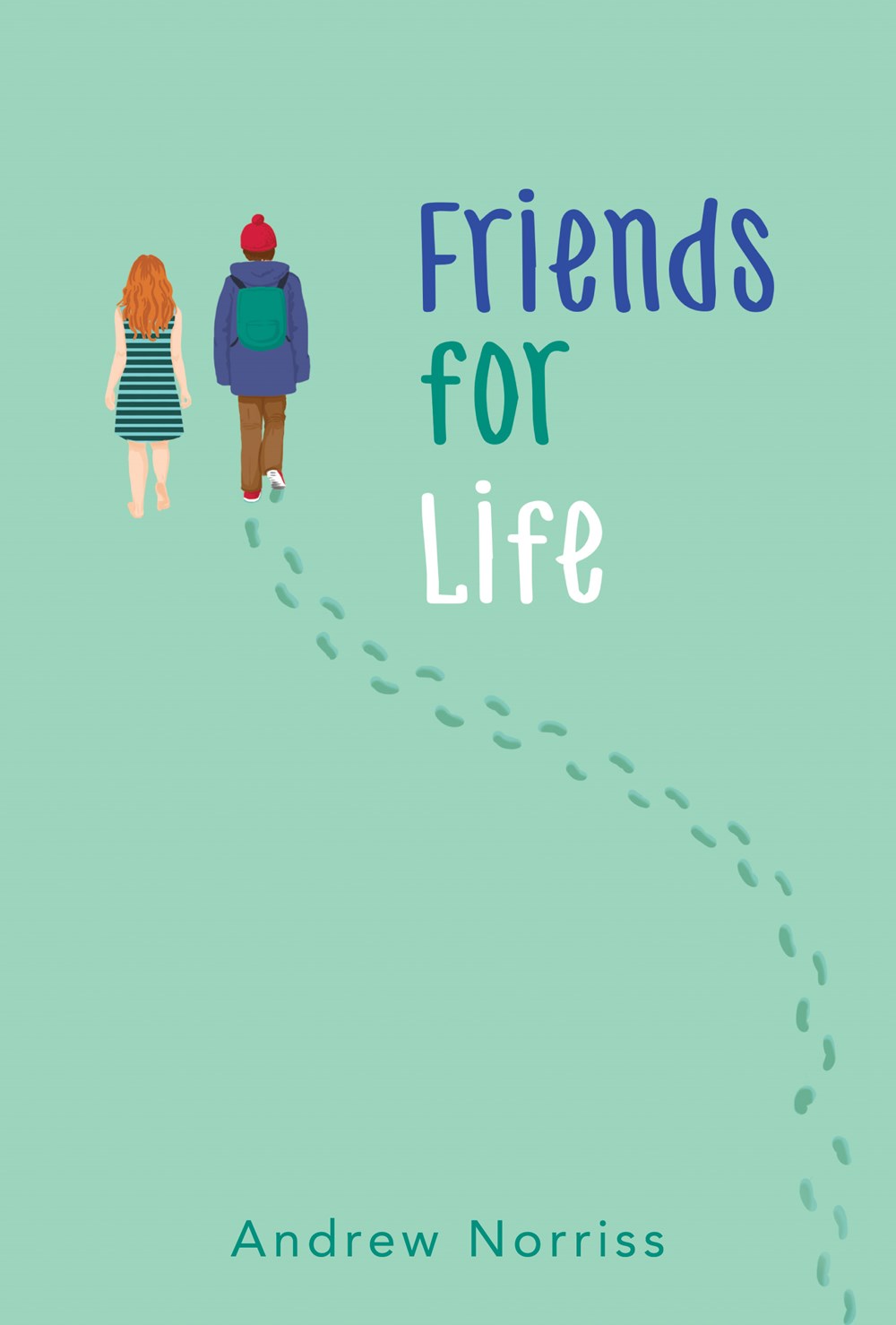
Friends for Life – where friends can save lives

friends for lifeFriends for Life, by Andrew Norriss (Aug. 2015, David Fickling Books), $17.99, ISBN: 9780545851862

Recommended for ages 12+

Francis is a middle schooler that isn’t very popular. He’s teased because he has a passionate interest in – and talent for – fashion, and tends to eat lunch by himself every day. Until Jessica wanders into the schoolyard and is amazed that he can see her, speak to her.

You see, Jessica’s a ghost. She died a year ago.

Francis and Jessica become fast friends. She models his designs for him, being able to think herself into a new outfit on a whim; he’s the only person that she’s been able to talk to in an entire year. They go places together, do things together, and Francis’ outlook changes; so much, that they end up meeting two more tweens that have a hard time of it in school. Together, the four become a tight unit – to all their parents’ surprise and joy. During one of their group discussions, they learn how Jessica became a ghost – how she died – and that touches off an incredibly deep and tender look at depression and suicide.

Jessica and Francis are like a balm for the soul. Their friendship sets off a positive chain reaction that resonates through the entire book. As someone who first suffered depression in my tweens, this story really touched me. Too often, young people suffer in silence when what they really need is to start talking. Jessica only appears to certain people – you’ll discover that in the book – and thus creates a safe nucleus for these tweens, giving them a focal point to gather around.

Much of the background characters are idealized in this story – the principal who has zero tolerance for bullying, the parents who listen to other kids to find out how best to help their own – but this is a glimpse into what could be, if only people would act instead of talk about how to act.

Put this book in guidance counselors’ offices, classrooms, and libraries. Make it available. The middle school and high school years are tough – this is a book that’s here to help.

Posted in Horror, Teen, Young Adult/New Adult

Dead Girls of Hysteria Hall is a good haunted house story

dead girlsThe Dead Girls of Hysteria Hall, by Katie Alender (Aug. 2015, Scholastic) , $18.99, ISBN: 978054564000

Recommended for ages 12+

Delia just inherited a house from her great-aunt Cordelia, but it’s not just any house – it’s a former asylum for troubled females, and there’s an evil that’s keeping a lot of the former residents there. Delia, who’s already in trouble with her parents for being defiant, can feel right away that something’s wrong with the house, but her parents ignore her – and the house kills her. Now, Delia’s a ghost, and she’s got an eternity to unravel the secrets of Hysteria Hall.

This is a fun haunted house novel with an intriguing mystery that kept me turning pages until the end. Delia is a likable character – she’s a rebel, she argues with her parents and gets annoyed by her younger sister, but there’s something inherently likable about her. As a ghost, she’s witty and sarcastic, but she’s incredibly vulnerable at the same time. She loves her family and feels their loss just as much as they do hers.

Delia meets other ghosts during her time at Hysteria Hall, and we get fascinating back stories on them, all of which are integral to the plot. Most are likable – there are a couple that should rile readers up, as any good ghost story should.

Told in the first person in Delia’s voice, The Dead Girls of Hysteria Hall is a good haunted house novel for readers who like their scary books lighter on the scary, heavier on the characters. I loved it, and can’t wait to get it on the shelves at my library. I foresee some great book discussions on this one.

Posted in Fiction, Fiction, Middle Grade, Middle School, Tween Reads

Dead Boy by Laurel Gale – An Unconventional Kid, An Unconventional Friendship

DEADBOYDead Boy, by Laurel Gale (Sept. 2015, Random House Children’s), $16.99, ISBN: 9780553510089

Recommended for ages 9-13

Crow is a boy who should be in 6th grade by now. He’s lonely and wants a friend, but he’s stuck indoors by his overprotective mom, who worries that the outside world will take Crow away from her once they discover her secret: Crow died two years ago.

Crow doesn’t remember much about how he died; he just sort of died. But he remembers waking up to his mother’s tears. Since then, he’s been a bit stinky, has a bit of a maggot problem, and tends to lose body parts. All Crow wants is a friend, and maybe not to stink so much. When an eccentric girl named Melody moves in next door, she’s fascinated by Crow. She’s undeterred by his mother’s efforts to keep her away – keep everyone and everything away – from Crow, and at last, Crow finally has a friend. When they go wandering one night, they discover a creature, the Meera, that has deep ties to Crow and his family – and another family in the neighborhood. Can Crow learn the Meera’s secrets, save one of his former classmates, and maybe – just maybe – be a real boy again?

This was a great read for middle graders who like a touch of the macabre in their fiction. If your kids have read and enjoyed Neil Gaiman’s Coraline and Graveyard Book, or Lemony Snicket’s A Series of Unfortunate Events, consider introducing them to this one. I’d like to pair this book with A.F. Harrold’s The Imaginary for a heck of a book discussion. (Hmm… I see a really interesting book display forming in my brain.) Laurel Gale gives us such an empathy toward poor Crow, at the same time letting us cringe and chuckle at his… well, deadness. I felt his yearning for a friend and his loneliness, his frustration with his mother, who keeps too many secrets “for his own good”, and the desperation to know what happened to him. Melody is a great sidekick, a friend with some wild theories that aren’t too off the mark. We get some great comeuppance for mean girls and bullies, too.

At the same time, we see the toll that the loss of a child takes on a marriage, and the lengths that parents will go to in order to keep their children safe and happy. It’s a bit disturbing at times, but it’s an honest look into a parent’s psyche that will make for some great family book group discussions. Read this book with your kids, with your classes, and let the dialogue flow.

Laurel Gale ‘s author page features Dead Boy and some basic contact info for the moment; hopefully, as the book gets closer to publishing date, we’ll get some more resources.

Posted in Teen, Uncategorized, Young Adult/New Adult

Monica Ropal’s When You Leave – a gripping YA mystery, and an author interview!

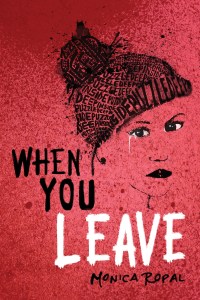
when you leaveWhen You Leave, by Monica Ropal (April 2015, Running Press), $9.95, ISBN: 9780762454556

Recommended for ages 14+

Skater girl Cass has a theory: everyone you love will leave you. Her dad left her; her best friend battled cancer and won, but it took his voice – she still feels the pain from it; her mother, remarried and pregnant, barely notices her or her younger brother, and her stepfather keeps her at arm’s distance. She sticks to her group of skater friends from Frogtown, despite living in a better neighborhood (courtesy of her stepfather) and being enrolled in a private school with the sort of kids who look at Frogtown skaters like something stuck to the bottom of their shoes.

And then, there’s Cooper. One of the popular kids, he’s someone Cass would never dream of having a relationship with – until she does. As soon as their romance begins, it ends when Cooper is brutally murdered, and one of her best friends is the prime suspect. As Cass starts her own investigation to clear her friend’s name, she starts learning more about the kids at school, what she meant to Cooper, and who she can really trust.

Cass is an outsider in her school, feels like an outsider among her own friends, once her family’s circumstances have changed, and an outsider in her own family. She even feels, to some degree, like an outsider in her fledgling relationship with Cooper, who’s not from her social crowd. Even after his death, she tries to find meaning in the relationship. She’s a great character to identify with teens, who often feel like outsiders themselves, for a myriad of reasons.

This is a story that will appeal to mystery and YA romance fans alike. There’s the whole West Side Story, secret romance between two factions to draw readers in, and the whodunit, which hits like a gut punch, and keeps going until the conclusion, where you’re yelling at the book. In a good way. Monica Ropal has created a layered story, told in the first person through a true outsider looking in.

When You Leave is in stores, so make sure you check out a copy on your next bookstore/library trip.

I’m thrilled to present my first MomReadIt author interview! Monica Ropal was kind enough to answer a few questions for me about When You Leave, fandoms, and more. Read on!

headshotmonica2 MomReadIt: Congrats on an amazing debut novel! What influenced you to write a mystery? Are you a fan of the genre?

Monica Ropal: Thank you very much! I am a huge mystery fan! But specifically my thought, from the start, was to make a very personal and very emotional mystery. Adult mystery tends to be very cerebral, and for YA, I wanted to bring the FEELS. Cass isn’t your typical sleuth. In fact, she is probably the worst person for the job because she has zero objectivity, given how close she is to both the victim and the prime suspect. I think that the fact that she struggles with finding emotional distance and that her perspective is colored by her emotions makes a very interesting point of view.


MRI: When You Leave looks at rival social classes, and how one’s social class affects not only how other kids look at you, but how the law looks at you. Has media coverage of current events influenced you at all when you’re writing?

MR: I think this is an age-old problem. The location in St. Paul, like many big cities, I imagine, has very different socio-economic classes within blocks of each other, and I always thought that was interesting. 

MRI: I loved the unspoken communication between Cass and Mattie. He’s kind of like a Greek chorus living in Cass’ head. What influenced your decision to make Mattie unable to speak?

MR: Mattie and Cass have an unusually close relationship. Taking away verbal communication allowed me to show their relationship through physicality and nonverbal communication. Mattie is a very sensitive and emotional person, and I think that not only does he radiate his thoughts and feelings, but that Cass’ radar is particularly in tune to him.

MRI: I was totally thrilled to find out you’re a mom (of three, just like me!) and a fangirl! What are some of your fandoms?

MR: Every day is an adventure with three kiddos. They outnumber you, so you have to plan carefully and strategize. Unfortunately, I am neither well-organized nor strategic, so we have low-key chaos on the daily.

I am heavily into the One Direction fandom, who have been rebranding and appealing to more and more adult listeners, and I predict will be holding the world’s attention this year for more than just their music. (MomReadIt note: I mistakenly thought Monica’s OTP was Harry and Hermione, and mentioned that it was a fabulous OTP – but I stand corrected, as you’ll see!) Harry Potter will always hold a very special place in my heart. But let’s be clear here, Hermione and RON are my OTP. I don’t get righteous about much, but I will get righteous about my OTPs. :0)

Thank you so much for the book love and thank you for hosting me on your blog!


So that’s my big first interview! Thank you again, Monica, and good luck with When You Leave! You can find Monica’s author page at MonicaRopal.com, (where I also borrowed her author picture) and connect with her on Facebook and GoodReads. Follow her on Twitter @MonicaYAwriting.


Posted in Preschool Reads

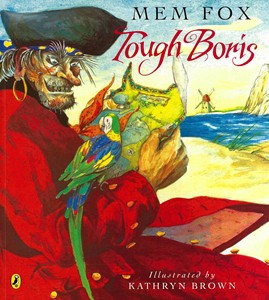
Book Review: Tough Boris, by Mem Fox/Illus. by Kathryn Brown (Harcourt Brace, 1994)

tough-borisRecommended for ages 3-6

Boris van der Borsch is a tough, massive, scruffy, greedy, fearless, and scary pirate with a tough, scary- looking crew. When his pet parrot dies, though, preschoolers see that even the toughest pirate can cry. The story is told through the eyes of a young boy who stows away on the ship in the very beginning of the book, and whom Boris and crew leave back on his home shore at the end of the story, prompting the boy to cry as well. It is a subtle but strong subplot readers will enjoy. The watercolor artwork shows Boris and his crew in all their scruffy, tough pirate glory, with angry faces and bristly beards. The text is rendered in a simple, black font that matches the solemn brevity of the story. Tough Boris is an American Library Association (ALA) Notable Children’s Book (1995).

This is a great book for a pirate storytime, as it portrays pirates as capable of sensitive feelings on top of being rough and tough. It shows young audiences that everyone cries when they are sad – even a mean old pirate. It can be used with more fun pirate fare to lighten the mood, or it can be used on its own to get kids talking about feelings. Children would enjoy a Jolly Roger handstamp as a memento of their day, and there are many printable treasure maps available online, for attendees to color in, take home and start their own search for buried treasure. The British Columbia Public Library has very good Pirates Storytime theme that includes songs and fingerplays.

Posted in Fantasy, Fiction, Tween Reads

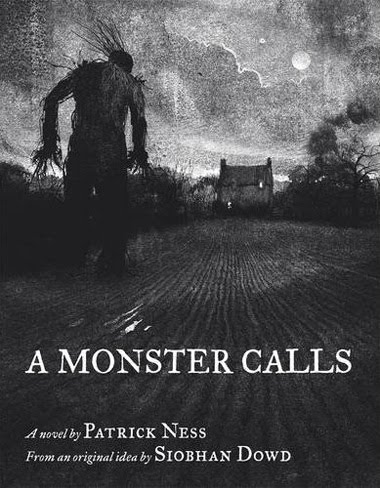
Book Review: A Monster Calls, by Patrick Ness (Candlewick, 2011)

Recommended for ages 11-13

A Monster Calls is one of those books that will tear your heart out while you’re reading it, but when you’re done, you’re glad that you went through the experience. It’s that good.

Conor is a 13-year old boy who lives in Britain with his single mother, has a strained relationship with his father, who has his own life and new family in the States, and is bullied at school. His mother is fighting a battle with cancer, and losing. Around this time, Conor starts receiving visits every night, just after midnight, from a monster in the guise of a yew tree in his backyard. The monster tells him stories – truths – whose outcomes really play with perspective, and he tells Conor that the fourth story will be Conor’s, telling the monster his own truth. It’s a truth that Conor doesn’t want to think about, but that gives him nightmares every night.

The story, originally an idea by author Siobhan Dowd, whose own life was cut short by cancer, is gorgeously written. Ness’ words bring the reader right into Conor’s fear, grief and anger at his mother’s battle, his grandmother’s fussiness, his father’s distance, and the numbness he feels as he endures the bullies at school. When the monster allows Conor’s rage an outlet, the reader feels it, viscerally. Jim Kay’s stark black and white illustations add to the moody feeling of Ness’ prose.
 
A Monster Calls has been shortlisted for several awards including the Galaxy British National Book Award, the Red House Children’s Book Award, and the Cybils Award in Middle Grade Fantasy. The author’s website features his blog, an FAQ, and information about his books and events.
Posted in Fantasy, Tween Reads

The Graveyard Book, by Neil Gaiman (illus. by Dave McKean) (HarperCollins, 2008)

Recommended for ages 12+

Created from an idea author Neil Gaiman had in 1985 that would create a “Jungle Book in a graveyard”, The Graveyard Book tells the story of Nobody “Bod” Owens, orphaned as a toddler and raised by the ghosts of a graveyard he wanders into after his family is murdered. His guardian, Silas, is neither dead nor alive and can navigate both worlds in order to assure Nobody’s needs are taken care of.

The problem is, Jack – the man who murdered Nobody’s family – is still at large, and he’s still looking for Bod to finish his business. He’s working for a secret society who has ordered the boy’s death, but as long as Bod stays within the confines of the graveyard, he is safe. As he gets older, though, Nobody wants to venture outside and see more of the world and have human friends.

Like Coraline and Gaiman’s other work for younger readers, The Graveyard Book is a dark fantasy, yet he manages to make the fact that a boy is raised by ghosts and the undead charming. Nobody is a sweet boy who grows up loved for and cared for by the spirits of the graveyard in which he lives, and the supernatural beings – Silas and Bod’s tutor, Miss Lupescu – who are charged with his care. Mr. Gaiman’s descriptions again let the reader’s imagination run wild, with funny and wry descriptions of everyone from the inhabitants of the graveyard to the sinister murderer, Jack Frost.

The Graveyard Book received the 2009 Newbery Medal, Hugo Award for Best Novel, and Locus Award for Best Young Adult Book; it also won the 2010 Carnegie Medal.

Posted in Post-apocalyptic/Dystopian, Science Fiction, Tween Reads

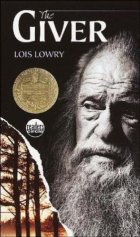
Book Review: The Giver, by Lois Lowry (Houghton Mifflin, 1993)

Recommended for ages 11-14

In the dystopian future, there is no more war, disease, or poverty. There are no choices, either – in 12-year old Jonas’s community, spouses are assigned to one another, children are assigned to families, and children’s milestones are pre-selected and celebrated once a year. At age seven, they receive jackets that button in the front. At the age of nine, they receive bicycles. At the age of 12, they attend the Ceremony of Twelve, where they are assigned their careers. Jonas, who has been experiencing feelings that has made him feel different from his peers, is assigned to be the Receiver of Memory – the sole repository for the collective memories of the community. He begins to work with the outgoing Receiver, now called The Giver, to receive the memories and learns disturbing truths through both the memories and the truths he begins to see in his daily life in the village.

The Giver is one of those books that sticks with you, changing the way you think about things. What price is a group willing to pay to live in a perfect, ordered society? Jonas, in receiving memories, plays the part of Adam in the Garden of Eden – he receives knowledge, and with knowledge comes confusion. Is his community right because they don’t know better? He begins to question everything around him and everything he’s ever known; when he sees his father commit an act in the course of his daily work that he finds unspeakable, the last vestiges of what he believes in are thrown into chaos.
 
The Giver is one of the most challenged books books in middle schools across America, usually for its portrayal of euthanasia (but also for what has been considered a sexual reference). Regardless of its challenges, it remains a popular and important middle-school book that speaks to the power of free will and choice. There are many lesson plans for this book on the Web, including this comprehensive one from the Mountain City Elementary School District in Tennessee. The book won the 1994 Newbery Medal and the 1996 William Allen White Children’s Book Award and has been designated an American Library Association (ALA) Best Book for Young Adults and an ALA Notable Children’s Book. The Giver is the first in a 3-book series that includes Gathering Blue and Messenger.
 
Lois Lowry is an award-winning YA author; she has received numerous awards, including two Newbery medals (for The Giver and Number the Stars). Her website lists all of the awards she’s won in addition to offering book information, a biography, her blog, her photos, and copies of her speeches.