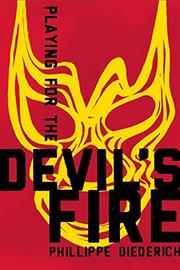
 Playing for the Devil’s Fire, by Phillippe Diederich, (March 2016, Cinco Puntos Press), $11.95, ISBN: 978-1-941026-29-8
Recommended for ages 14+
Photojournalist Philippe Diederich wrote his debut novel as a way of communicating his sorrow and anger at the brutual narcoviolence and corruption infecting Mexico. The brutal and gripping story follows 13 year-old Libero “Boli” Flores as he sees his town, Izayoc, crippled by the town’s new inhabitants: men who wear shiny guns, expensive clothes, and drive big SUVs; men who have a lot of money to spend, and men who don’t like to be questioned or crossed. When people speak out, they show up dead.
Boli’s parents know it’s no use to go to the local police, so they head to a neighboring town to seek help, but they never arrive. Boli waits for someone to bring he and his sister, Gaby, some kind of news. Hope comes, briefly, in the form of El Chicano Estrada, a small-time luchador that Boli sees at a wrestling match. Boli, a devoted fan of lucha, particularly the legendary El Santo, begs Chicano to help him locate his parents. Chicano sees the corruption and grim reality facing Boli and the people of Izayoc; it awakens something in him, and he tries to be the hero that Boli needs. But Chicano also knows a truth that Boli hasn’t learned yet: the world is not a good place.
This is a vicious, heartbreaking story about the end of childhood. It’s a grim, powerful, and beautifully written novel, with unforgettable characters: Boli and Gaby are two siblings struggling to move on with their lives in the most horrifying circumstances; their Abuela escapes into her memories of the past to cope; Chicano is someone who just wanted to get by until he found someone that believed in him. Diederich looks at the morality, or lack of it, using Boli as the lens.
Who do you turn to in a town when everyone can either be bought or murdered? This is the question at the heart of Playing for the Devil’s Fire, and it is a very real question facing many Mexican communities. It’s an eye-opening look into a reality many young people face. Philippe Diederich puts a very human face on the cost of the neverending war on drugs.
This is not a book for middle grade or middle schoolers. There is graphic violence (the story begins with a child finding a decapitated head), language, and overall content that is disturbing and upsetting. I’d suggest this for upper high school, young adult, and adult readers, because it is a brilliantly written book that will make readers think, and hopefully, talk.
Playing for the Devil’s Fire has received a starred review from Publishers Weekly.
Philippe Diederich grew up in Mexico City where he played marbles in the streets and became a fan of lucha libre – pastimes he revisits in Playing for the Devil’s Fire. This is his first novel for young adults, but his short stories have been published in literary journals, and his mystery, Sofrito, is a culinary mystery that travels from Havana to New York City. His author website offers a newsletter and more information.
Playing for the Devil’s Fire Blog Tour
August 31: Rich in Color review (http://richincolor.com)
Sept 1: The Pirate Tree review & interview (http://www.thepiratetree.com)
Sept 4: Guest Post for Clear Eyes, Full Shelves (www.cleareyesfullshelves.com)
Sept 5: Review, The Brain Lair (http://www.thebrainlair.com)
Sept 6: Rich in Color author interview (http://richincolor.com)
September 7: Edi Campbell CrazyquiltEdi review (https://campbele.wordpress.com)
September 8: Anastasia Suen, #KidLitBookoftheday (asuen.com)
September 9: Reading Through Life author highlight plus links to blog tour (http://readingtl.blogspot.com)
Sept 9: Guest Post, The Brain Lair (http://www.thebrainlair.com)
September 12: Linda Washington (https://lmarie7b.wordpress.com/ )
September 13: Excerpt, Review, Mom Read it (https://momreadit.wordpress.com)
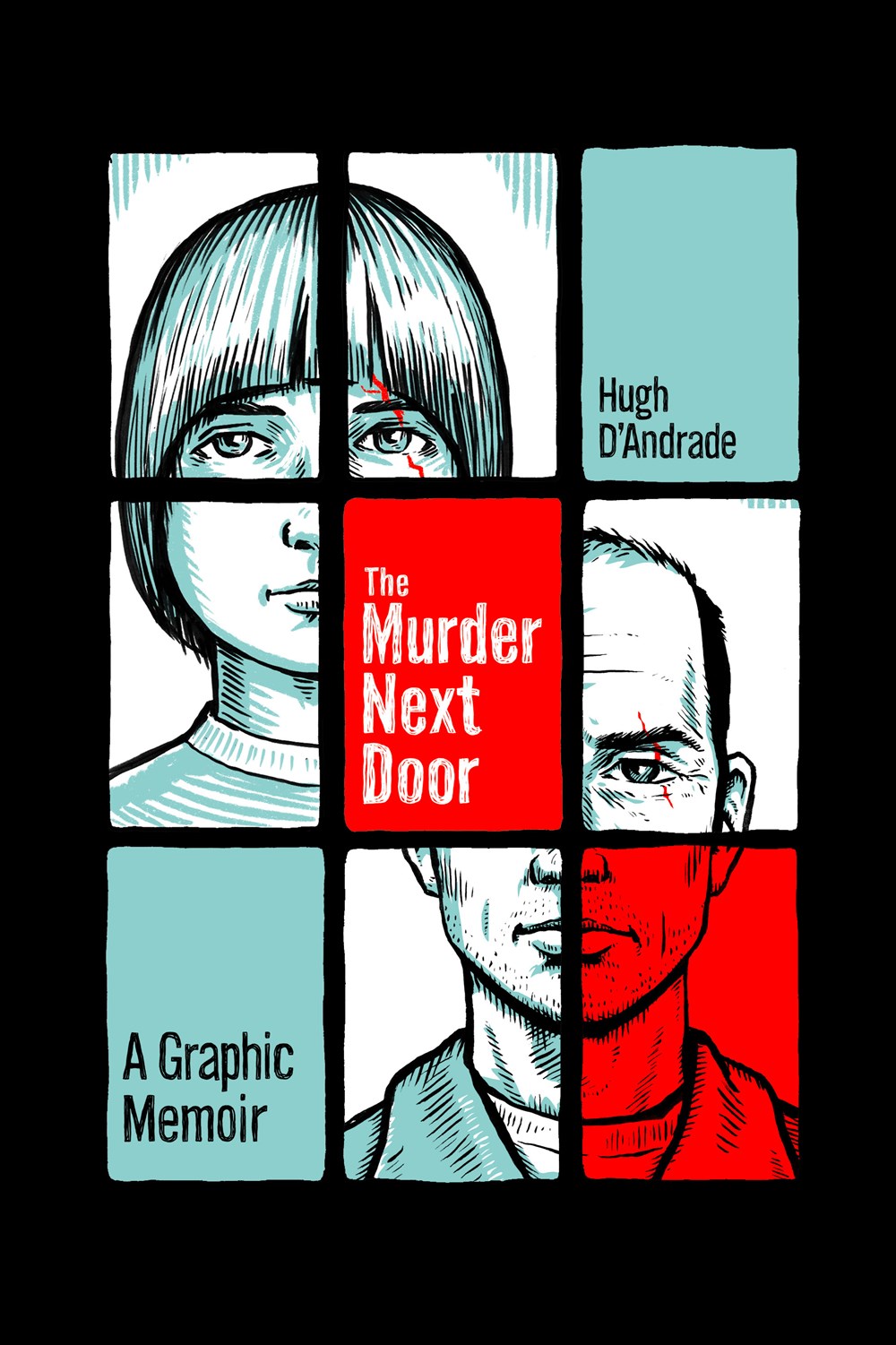 The Murder Next Door: A Graphic Memoir, by Hugh D’Andrade, (Feb. 2025, Street Noise Books), $20.99, ISBN: 9781951491352

 Mom Read It