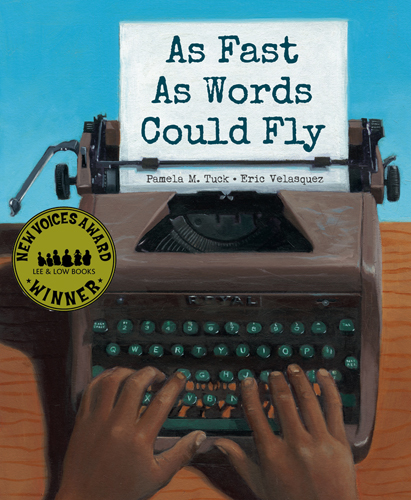
As Fast As Words Could Fly, by Pamela M. Tuck/Illustrated by Eric Velasquez, (Apr. 2013, Lee and Low), $18.95, ISBN: 9781600603488
Recommended for readers 6-10
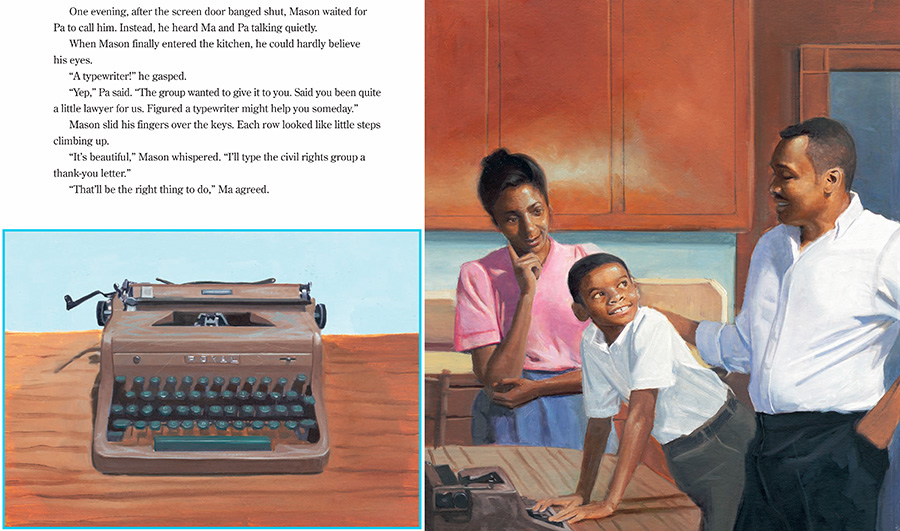
I had to start my Black History Month reviews off with this gorgeous book by Pamela M. Tuck. As Fast As Words Could Fly is inspired by Ms. Tuck’s father, who – along with his brothers – integrated a North Carolina school, and by her grandfather, who was active in the Civil Rights movement. Mason Steele is a 14 year-old who helps his father’s civil rights group by writing letters for them, shining light on injustices. Mason’s father brings home a manual typewriter, transforming Mason’s life and letting his words fly across the pages. At the same time as Mason receives his typewriter, his father tells him and his brothers that they will integrate the local high school rather than continue busing to one twelve miles away. Integration is tough on Mason and his brothers: buses drive right by them and teachers and students alike make it known that the boys aren’t welcome there, but Mason endures and uses his typewriter to increase his skill and earn some money. He also uses his typewriter to make a change: he defies racism to keep his job at the local library and to represent his school in a typing contest. For Mason, the words on the paper speak loud and clear.
This was Pam Tuck’s first published story, which won the Lee & Low New Voices Winner. I was lucky enough to see her speak about her experience, and her family’s experience, at KidLitCon back in November, and I got my own copy of As Fast As Words Could Fly signed for my kiddo. Pam’s voice comes through so clearly in her story; I can hear her, even now, telling me about her grandfather and father’s story. I mentioned that I was a fan of her illustrator, Eric Velasquez, and she sat with me; as we went through the book together, she pointed out her favorite pieces of artwork. I mentioned that I loved Mr. Velasquez’s books, Grandma’s Records and Grandma’s Gift, and his talent for creating warm, loving family artwork, and she told me that the spread where Mason’s father tells his boys that they are going to a new school was perfectly recreated: she pointed out areas of her grandparents’ kitchen that she remembered, and said that Pa’s posture and hands were spot-on; the artist had given life to her grandfather.
As Fast As Words Could Fly is a strong story about a family during the Civil Rights movement, and it’s the story of a young man who was determined to make a change on his own terms. I love this story, and would love to see it on more bookshelves. Find a teacher’s guide and interviews on the Lee & Low website, and learn more about Pamela Tuck here. See more of award-winning illustrator Eric Velasquez’s artwork at his website.



 Mom Read It