Posted in Intermediate, Middle Grade, Non-Fiction, Non-fiction, Non-Fiction, Tween Reads

Ocean Animals: Who’s Who in the Deep Blue!

big blueOcean Animals: Who’s Who in the Deep Blue, by Johanna Rizzo (May 2016, National Geographic Kids), $12.99, ISBN: 9781426325069

Recommended for ages 8-12

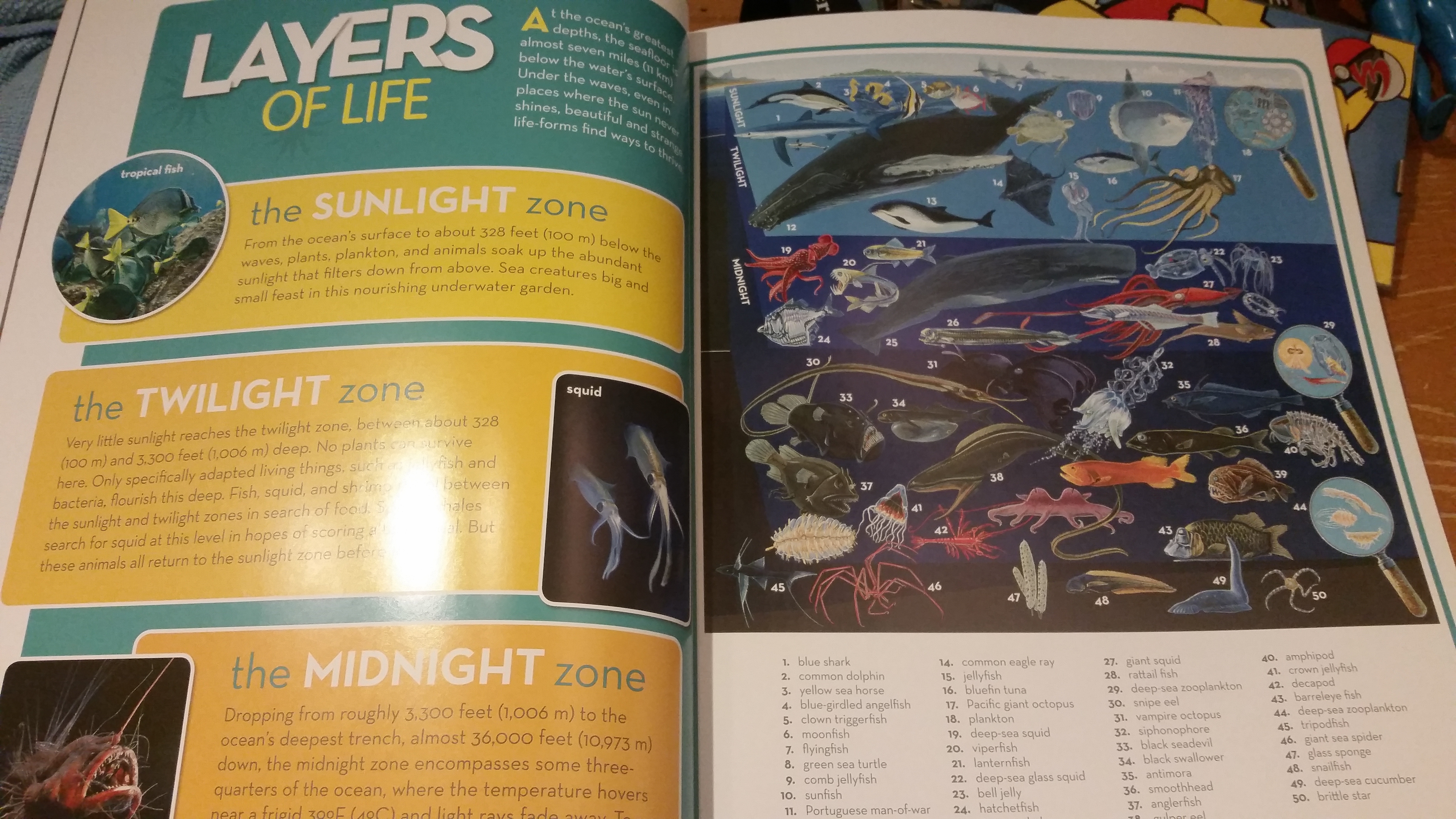
When you have a book featuring real life Dory on the cover and a Nemo on the first page of a book, you know NatGeo is paying attention to what kids like. Ocean Animals: Who’s Who in the Deep Blue is another home run from NatGeo Kids, combining breathtaking photos of ocean life (blobfish and anglerfish are breathtaking, if a bit in that gasp of “WHOA!” kind of way, after all) with interesting facts, information, and advocacy. Chapters are broken down by oceans of the world; the three layers the ocean, and the animals that inhabit them, featuring a great infographic; sharks and rays; marine mammals; a separate chapter on whales and dolphins; marine birds; ocean habitats; the Pristine Seas Project, and 20 Ways You Can Protect the Ocean. A glossary and index complete the volume.

I used this book as a companion to my ocean storytime today; it was great to be able to show the kids a beluga whale and an orca after we sang our song about whales. Saying the name over and over is one thing; seeing a picture of the real animal is another. I love NatGeo’s focus on advocacy, and how the organization empowers kids to take action to preserve their planet.

20160825_104603Sorry for the photo glare! Love this detailed infographic.

You all know I love NatGeo books, and now you know this copy’s already in my library. My little guy loves his copy; even though he’s only 4 years old, he loves looking at the photos, and I modify/paraphrase some of the information when he wants me to read it to him. This one’s a great selection for middle grade nonfiction collections and animal lovers.

20160825_104615Beautiful photo of a sea anemone

Posted in Intermediate, Middle Grade, Non-Fiction, Non-fiction, Non-Fiction

Animal Planet’s Animal Atlas is a passport to the world’s habitats

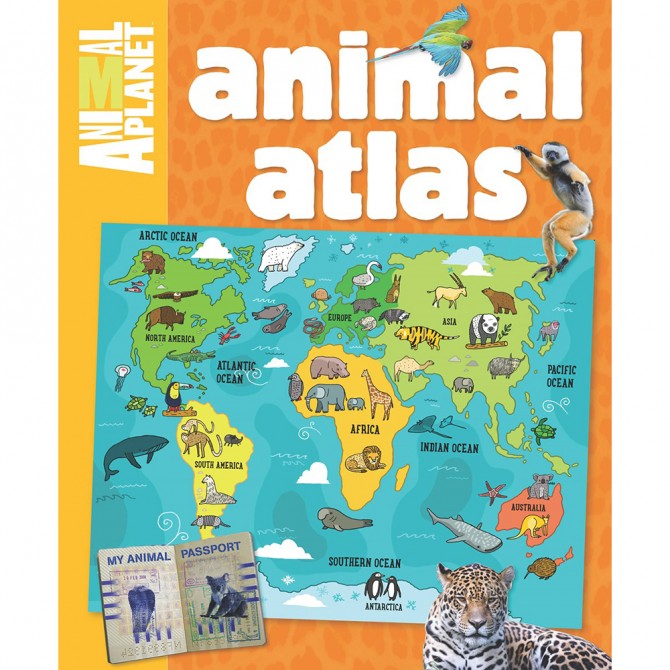
animal-planet-animal-atlas-hardcover-book-658_670Animal Planet Animal Atlas, by Animal Planet (May 2016, Animal Planet), $17.95, ISBN: 978-1618931658

Recommended for ages 7-10

I have tons of animal nonfiction books in my library, and I have a bunch of really good books on habitats, too.  What Animal Planet’s Animal Atlas does it bring together explanations of different biomes/habitats, and the animals who live in them on each continent and in the oceans of our world.

The atlas begins with a map to present the major biomes of the world, and describes each biome: alpine, desert, marine, grassland, rain forest, temperate forest, tundra, and taiga. Animal tour guides for each continent take readers through a look at different animals that inhabit each biome on each continent, and features like ROAR (Reach Out. Act. Respond.) – Animal Planet’s initiative, dedicated to improving the lives of animals worldwide – empower kids with knowledge about how humans are working to change the world for the better through conservation and protective measures. Surprisingly Human boxes provide facts about the similarities between animals and people. Each continent section ends with a spotlight on an animal from the area, giving readers a close-up look at animals like the bald eage, anaconda, or Sumatran tiger. Spotlights include a Where in the World section, where maps detail the animals’ living areas; Animals Facts, and information on what they eat and how animals adapt best to their environments.

Combining colorful illustration and full-color photographs of over 200 animals, the atlas is a great resource for young readers. It’s got information ready at a glance for my Corona Kids, who come in asking for books about various habitats and then, what animals live in those habitats. It’s a strong companion book for slightly bigger kids, who will need more in-depth books to complete a report, but it’s a great starting point for anyone who wants a little more info on different habitats, and who may not realize that different continents have so many different biomes. A brief glossary and index round it all out.

This is a good addition to primary nonfiction collections if you have strong books that provide more detail that kids can jump to if they want to go further into a topic. Or, if you’re like me, and your kiddo just loves learning about different animals, where they live, and what they eat, it’s a nice add to your bookshelf. The passport and guide animal features add a cute touch that brings something different and fun to learning. Hmmm… now, I’m thinking of an animal program for my Discovery Club… learning about a new animal each week, and stamping a “passport” with an animal sticker or stamp… I’ve got to talk to my Discovery Team!

Posted in Adventure, Animal Fiction, Fiction, Middle Grade, Tween Reads

Teddycats: A coming of age animal adventure

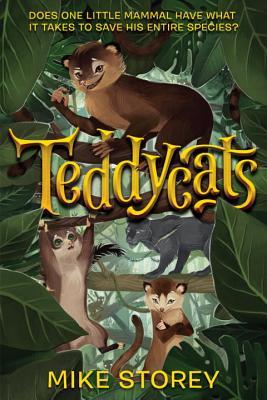
teddycatsTeddycats, by Mike Storey (July 2016, Razorbill) $16.99, ISBN: 9781101998830

Recommended for ages 9-13

Bill Garra is a Teddycat – a unique jungle-dwelling mammal, living high up in the tallest trees; a community they call the Cloud Kingdom, far away from the other animals in the forest. The Teddycat elders want to keep Cloud Kingdom a secret; to remain separate, to keep outsiders out. Bill doesn’t always understand the rules the elders make; rules like keeping their extra sharp claws hidden unless they need to climb or get out of a life-or-death situation, and he definitely doesn’t understand why he has to keep his friend, Luke, an olingo, out of Cloud Kingdom. When he sneaks Luke into Cloud Kingdom for a look around, the problems seem to begin: predators, including humans, take notice and stalk the Teddycat community. When Bill’s best friend’s sister is trapped and taken by the humans, the Teddycat elders vote to go into hiding, but Bill sets out to rescue her, along with an old frenemy, Omar, a grizzled scout named Diego, a recuperating jaguar named Felix, and Luke. Bill and his group risk banishment from Cloud Kingdom as they face the dangers of the forest.

Wow. Look at this cover. I thought I was going to read a sweet animal adventure when I picked up Teddycats, but what I got was an emotional read about the dangers of deforestation and trophy hunting and a strong subplot about isolationism. Throughout the novel, Bill discovers the downside to the elders’ choice of isolation and the power of teamwork. The big danger here, though, does not come from other animals: it’s the humans, referred to as “Joe” by the Teddycats. They burn, kill, and leave devastation in their wake. They want to sell the Teddycat claws as trinkets, or figure out how to weaponize them, with no regard for the lives they impact. It’s a strong statement, and it may affect some more sensitive readers when animals die. It’s not over the top or gory, but the narrative is matter of fact in stating that these animals are at the mercy of humans and the havoc we wreak.

There are some strong characters in this book. Bill is the self-centered youth who comes of age on his journey; the elders are the frightened old men who are afraid of change; Felix is the wise old cat, and Diego is the grizzled voice of experience. There are more wonderful characters to meet here, and it’s a great opportunity to learn more about animals in the forests of the Andes. Yup, I looked it up. I didn’t see “teddycats” specifically listed, but I did find Olingos versus Olinguitos, which were much more recently discovered. I’m making a wild guess here, but I’m relating Olinguitos to Teddycats (since that’s also what came up in an initial Google search on “Teddycat”).

olingo olinguito
Left: Olingo; Right: Olinguito (images via Google Images)

Grab an atlas to booktalk this story! Explain where the Andes are, talk about some of the residents of the forest that they’ll encounter in the book, and use this opportunity to talk up conservation and preservation of our rain forests, our environment, and the folks we share this world with. Heck, show them the scene from the Spongebob Squarepants movie, when they discover Shell City, and see all the dried starfish and sea life that gets sold as souvenirs!

Talk about movies like Finding Nemo and Happy Feet, that also deal with human impact on the environment, and then talk about all the ways they can help make a difference. Whether it’s writing a letter to a politician, cleaning up after themselves, or being aware of the world around them, they count.

This is a solid animal adventure story with a message; animal fiction fans and kids that are on the lookout for environmentally conscious stories will love it.

Posted in Early Reader, Intermediate, Non-Fiction, Non-Fiction

Animal Planet’s Animal Bites series is great for young readers!

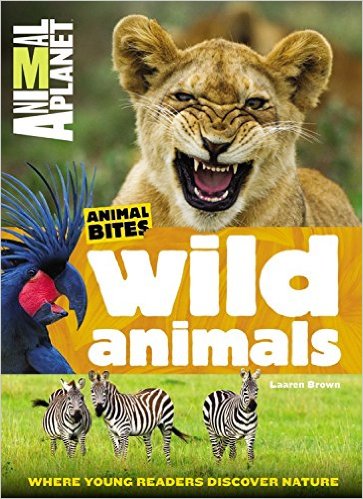
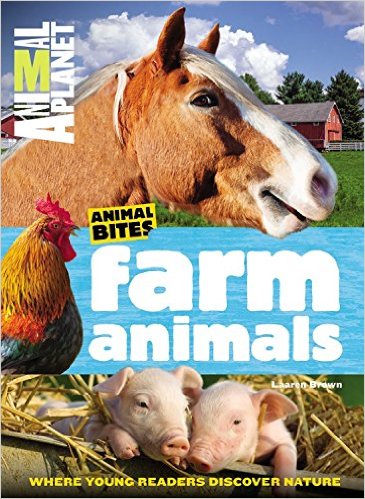
Animal books are KING with younger readers. I gush constantly about the NatGeo books, but I’ve just been made aware of Animal Planet’s Animal Bites series: books spotlighting animals from different habitats, like Farm Animals and Wild Animals, and loaded with bite-sized info (see what I did there?), questions for discussion, and yes, outstanding photos.

wild animalsEach book is organized to guide readers through information about family relationships, animal bodies, ecosystems, play time, conservation, and so much more. Check boxes throughout prompt discussion about whether these animals are friendly or would make good pets (bears, not so much; horses, yes) and discussion questions ask kids to compare themselves with animals: do you like to play games, like a border collie does? We get infographics on featured animals, including geographic location, weight, and height, and to help younger kids form a more solid frame of reference, a comparison to something most of us see every day, from a truck to a computer printer.

I love the emphasis on conservation, particularly in the Wild Animals book. Features on animals that have been saved from the brink of extinction, like the gray wolf, make very real the idea that conservation works when there is awareness.

Each book ends with a quiz, an activity and a craft, and a robust list of resources, a glossary, and an index. Endpapers lead readers in and send them off with a gorgeous photo of an animal.

There are over 200 photos in each book, along with infographics, maps, and informative Quick Bites. Other books in the series include Animal Planet Polar Animals and Animal Planet Ocean Animals.farm animals

Further committing to conservation, a portion of the proceeds benefits Animal Planet’s R.O.A.R. (Reach Out. Act. Respond.) campaign that partners with leading animal organization to make the world a better place for domestic and wild animals.

My 4 year old LOVES these books: trying to get them back so I could refer to them for this review was fun (he’s at school right now). Every page is a new discovery, something waiting for him to find and explore. Sometimes, he plays with his animal toys, showing me his horses when I read the section on horses; he’ll show me a lion when I get to a spotlight on lions. If he asks why his shark is missing, I’ll explain that I have to buy him a copy of Ocean Animals. 😉

Kids love animals. Animal Planet books make it easy for you to bring more animals into their lives, and even more importantly, to discuss humane treatment of animals and the importance of conservation of our planet with them. The books are a nice, sturdy softcover, perfect for tucking into your tote bag when you’re traveling (or sneaking your kid’s copy out so you can read it on the way to work), and it’ll hold up to repeated reads.

Animal Planet: Animal Bites – Wild Animals, by Laaren Brown (Animal Planet, June 2016), $12.95, ISBN: 978-1618934147

Animal Planet: Animal Bites – Farm Animals, by Laaren Brown (Animal Planet, June 2016), $12.95, ISBN: 978-1618934130

Recommended for ages 4-8

Posted in Middle Grade, Non-Fiction, Non-fiction, Tween Reads

NatGeo’s 2017 Almanac is jam-packed!

almanac_coverNational Geographic Kids Almanac 2017 (May 2016, National Geographic), $14.99, ISBN: 978-1426324178

Recommended for ages 8-13

NatGeo’s 2017 almanac is packed with content from their kids’ magazine, their collection of books, and their NatGeo Kids website. It’s chock full of articles, facts, games, and digital extras, including an invitation to the Newsmaker Challenge, where kids can submit their own time capsule artifact photos to be featured in next year’s almanac. Features on animals encourage kids to get involved in the Summer Mission Animal Rescue Challenge, increasing awareness about endangered species and how they can play a part in helping do their part toward conservation and protection.

Information is broken out into 10 sections, covering current events, animals, going green, world cultures, adventure, fun and games, science and nature, history, and geography. Each section is loaded with breathtaking photos, top 10 lists, homework help and research ideas, and a quiz.

These books are a great idea for kids who love trivia, and they’re great for introducing readers to the world outside their doors. Like I’ve said before, NatGeo books are a win with the kids in my library, my own kids, and the kids in my extended family. There’s so much to love!

Posted in Uncategorized

Mr. King’s Machine needs to stop!

kings machineMr. King’s Machine, by Geneviève Côté (Apr. 2016, Kids Can Press), $16.95, ISBN: 9781771380218

Recommended for ages 3-7

Mr. King loves flowers! He notices that a caterpillar has taken a munched on a flower, he is NOT happy, and takes it upon himself to construct a Caterpillar-Catcher. But Mr. King trades one small problem for much bigger ones: his Caterpillar-Catcher is making a mess of the environment! It’s trampling flowers and grass, it’s belching awful gray smoke into the air, and most importantly, it’s stopping the caterpillar from doing his work: becoming a butterfly that will help flowers grow as they fly from plant to plan! Mr. King’s friends confront him, and he listens; then, he decides on a new invention, and takes apart his Caterpillar-Catcher to create a much more environmentally friendly machine: the Flower-Fan!

This is the third book in the Mr. King series; the first one I’ve read. You don’t need to pick up any of the other books to know what’s going on, just dive into this fun Earth Day-friendly tale for our youngest learners! Mr. King is a sweet, well-meaning lion (but he’s got no mane – maybe he’s still young?) who has a knee-jerk reaction and tries to take action. Toddlers and preschoolers will understand this, and they’ll understand how Mr. King’s friends see what he’s doing wrong. Use this as an interactive read-aloud and ask your readers what Mr. King’s doing wrong, too – it’s a great learning opportunity, especially if you’re talking about Earth Day, conservation, and pollution.

The mixed media artwork is adorable, with Mr. King standing out as a crayon-drawn character, set into what looks like collage backgrounds. It’s a great read-aloud book that toddlers and preschoolers can enjoy, and allows for a lot of interactivity: talk about what we can do as a community to make our neighborhoods nicer; how we can make our world a better place as a global community (a better discussion for school-age readers).

Mr. King’s Machine has received a starred review from Kirkus.

Geneviève Côté is a Montreal artist whose illustrations have graced the pages of publications such as the New York Times and the Boston Globe. Her books have received three nominations for the Governor General’s Award for Illustration, one of which went on to win, and she has also won the the Elisabeth Mrazik-Cleaver Award.


Posted in Graphic Novels, Middle Grade, Non-Fiction, Non-fiction, Tween Reads

First Second brings you Science Comics!

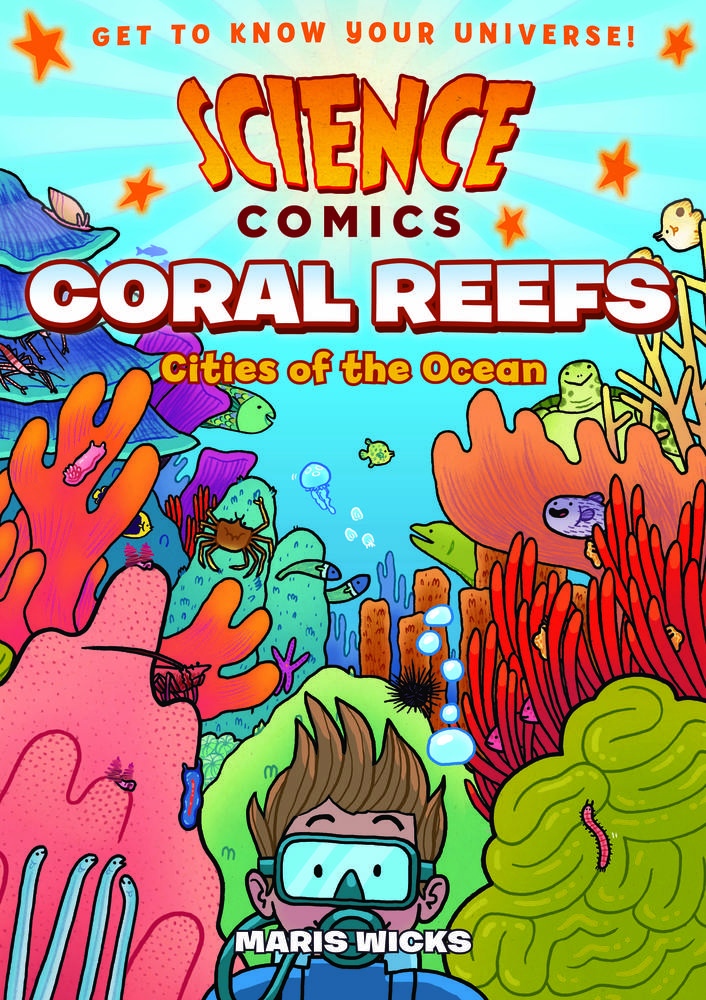
First Second’s got a line of Science Comics coming to stores beginning in May with the releases of Coral Reefs and Dinosaurs. The books are beautifully illustrated and bring nonfiction to the next level with information, wit, and fun for readers.

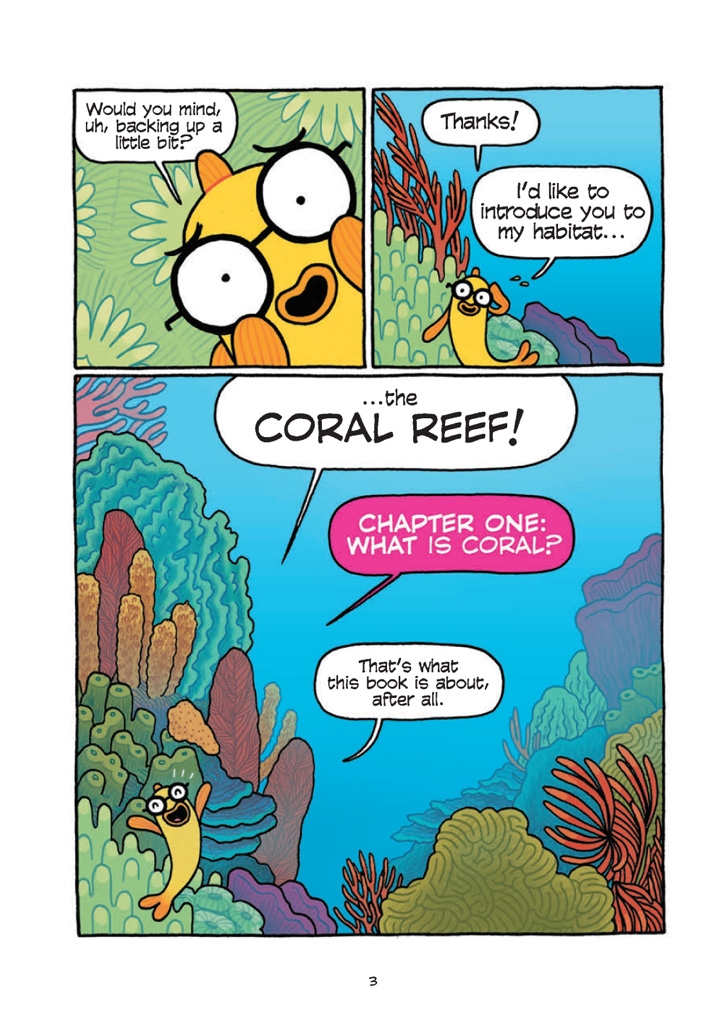
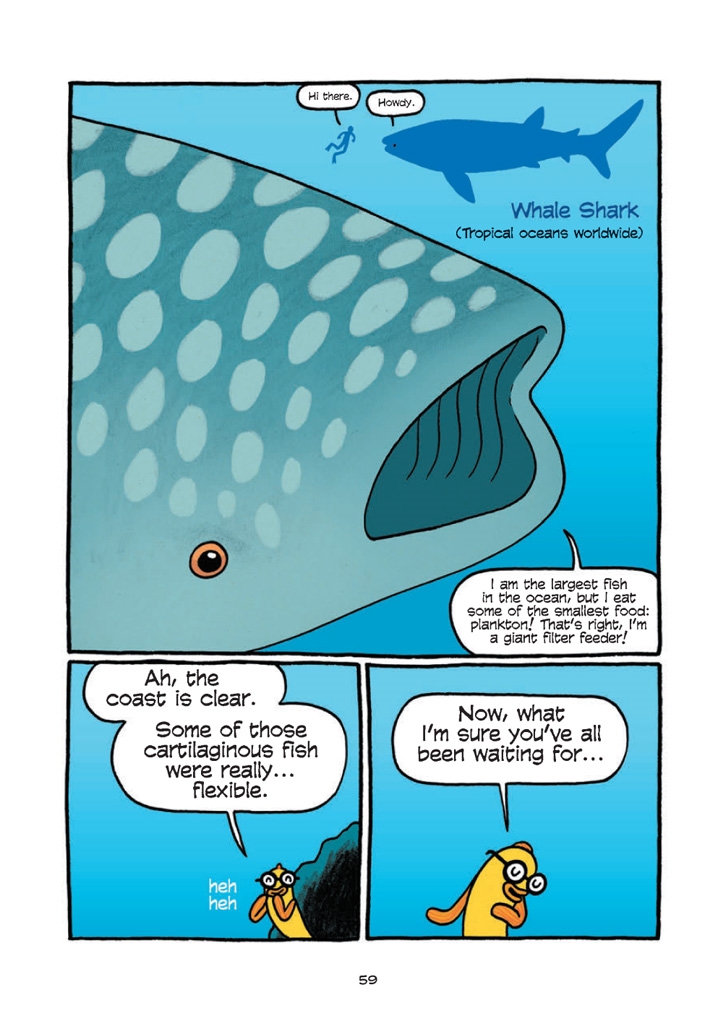
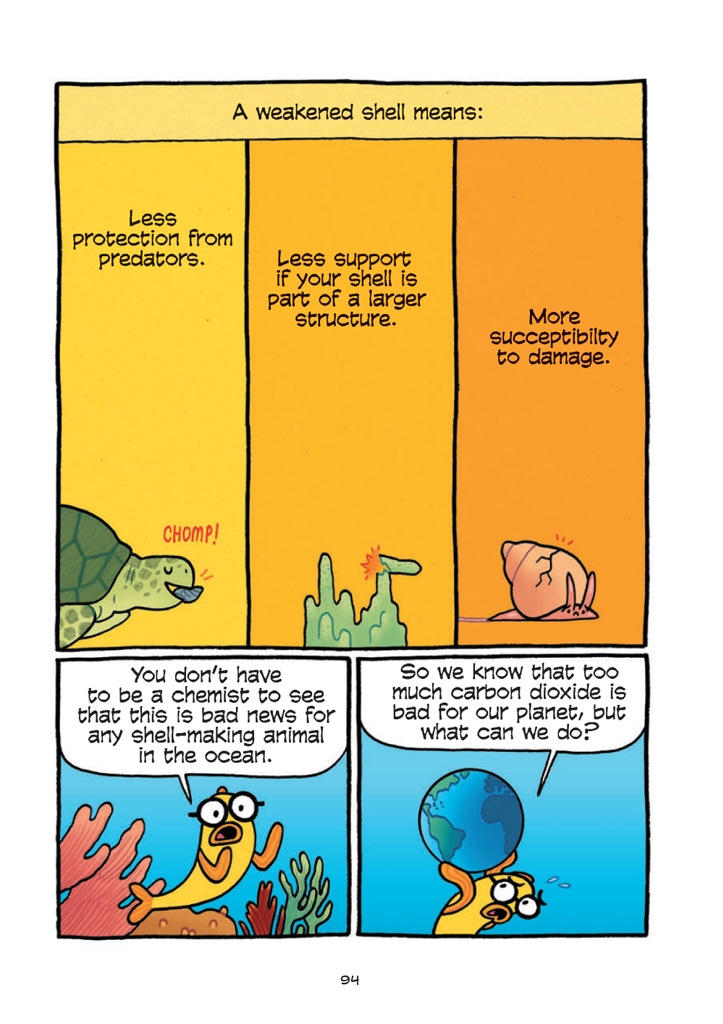
coral reefsCoral Reefs, by Maris Wicks ($9.99, ISBN: 9781626721456) introduces readers to the world of coral reefs! With an adorable fish acting as emcee and guide, readers get a look at the biology of coral, the different types of reefs, sea creatures that live in and around the reefs, and the ecological importance that the reefs play in our world. Maris Wicks, who also gave us the brilliant and informative Human Body Theater last year, is back with her combination of smart and funny writing and eye-catching, bright art.

The science is solid and there are tons of take-away facts for kids and adults alike. Did you know that some reefs take millions of years to grow?  That coral reefs are home to a quarter of all the animals found in the ocean? Wicks also discusses climate change and its impact on the environment, with emphasis ramifications like coral bleaching and ocean acidification. Anyone can help in any way; Wicks provides examples that include reducing carbon emissions (take a walk! carpool! bike ride!); reusing and recycling plastics; composting, and planting trees and flowers. There’s a great message about environmentalism and conservation to be told here, and Wicks ends on an upbeat note: “Caring for ourselves and our environment is the first step to caring for the rest of the world.” With a foreword from Randi Rotjan, Ph.D., Associate Research Scientist with the New England Aquarium, a glossary, bibliography, and additional resources, Science Comics: Coral Reefs is a great companion to any unit on the oceans, sea life, conservation, and ecology. Strongly recommended for public, school and home collections.

Check out Maris Wicks’ website for fiction and nonfiction artwork!


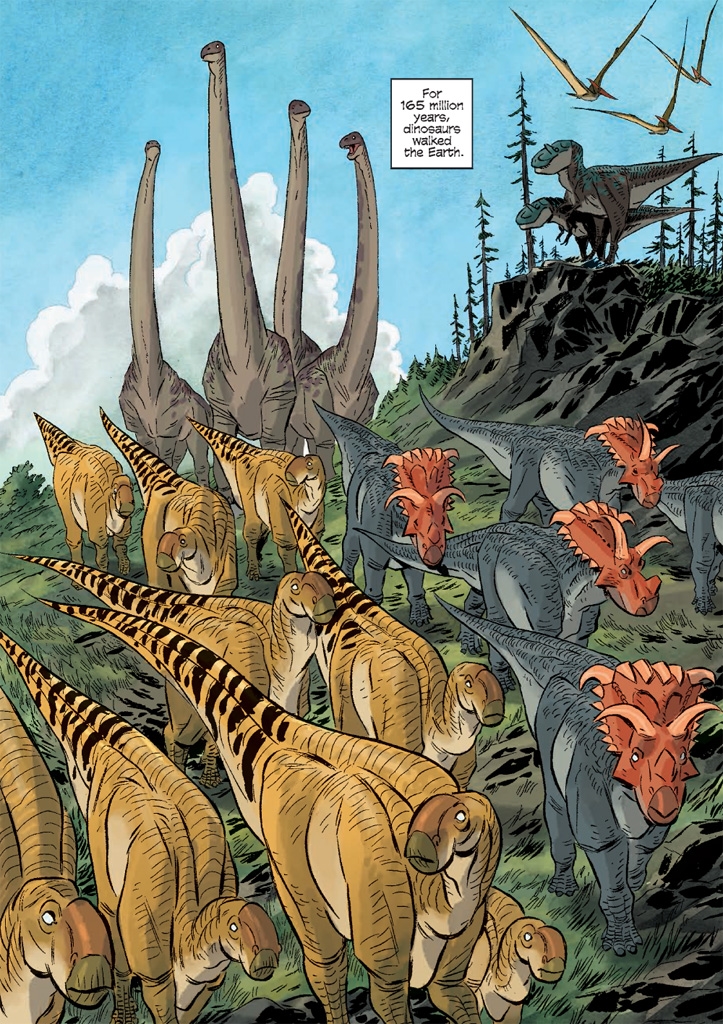
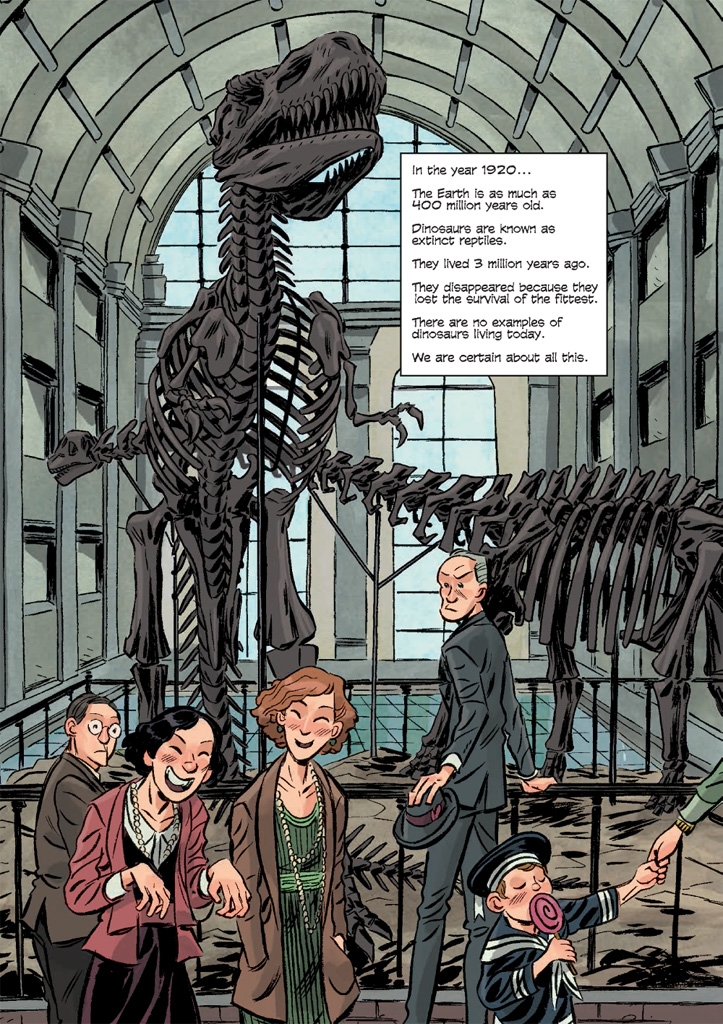
dinosaurs_cScience Comics: Dinosaurs, by award-winning author MK Reed and illustrated by Joe Flood ($9.99, ISBN: 9781626721432) takes an omniscient narrator approach, walking readers through the history of paleontology, including the many rivalries between scientists that led, in some cases, to some major classification errors, like the poor Brontosaurus, a victim of the infamous Bone Wars between paleontologists O.C. Marsh and Edward Drinker Cope, whose bitter rivalry and rush to beat one another to publishing led them to create a dinosaur that didn’t really exist – it was later discovered that an Apatosaurus body had a Camarasaurus head stuck onto the skeleton, in a rush to complete the work.

With a series of repeated timelines that show facts that society “definitely knew” at different times, we see how much we’ve really learned about the true age of the earth, the fossil record, and the origins of dinosaurs themselves. Joe Flood’s art is less cartoony than Maris Wicks, but captures the tremendous scale and brightly colored dinosaurs that we now understand roamed the earth. There are some incredible graphs and charts in here, illustrating common ancestors and evolutions. A foreword by Leonard Finkelman, Ph.D., Associate Professor in Philosophy of Science at Linfield College, plus a glossary, additional charts, and further resources make this a must-have for any dinosaur collection. Buy two – you know kids love their dinosaurs.

So much more than simple graphic novels, Science Comics is a series that deserves a place in any nonfiction section AND any graphic novel section. The next book in the series, Volcanoes, is due out in October. Recommended for ages 8 and up.

MK Reed’s author webpage has more information about the author and her books, including a link to her anthology on women gamers, Chainmail Bikini.

Sneak peek at Coral Reefs:

coral reefs_1coral reefs_2coral reefs_3coral reefs_4coral reefs_5coral reefs_6coral reefs_7coral reefs_8

Sneak peek at Dinosaurs:

dinosaurs_1dinosaurs_2dinosaurs_3dinosaurs_4dinosaurs_5dinosaurs_6dinosaurs_7dinosaurs_8


Posted in History, Non-fiction, Teen, Tween Reads

A Weird and Wild Beauty tells the story of Yellowstone

yellowstoneA Weird and Wild Beauty: The Story of Yellowstone, the World’s First National Park, by Erin Peabody (Feb. 2016, Sky Pony Press), $14.99, ISBN: 978-1-63450-204-7

Recommended for ages 12+

A beautiful book with stunning photo and a powerful ecological and historical message, Erin Peabody’s A Weird and Wild Beauty tells the story of the founding of Yellowstone National Park. She tells us about the hard journey and oftentimes grueling expedition West; about the lives of the men who explored and risked their lives to bring the natural beauty of Yellowstone to the rest of the post-Civil War United States; and provides breathtaking photos and paintings of the natural wonder that is Yellowstone.

More than just a book on the beauty of Yellowstone, readers will discover that there was a fight to keep Yellowstone’s lands untouched: from Jay Cooke, a robber baron who wanted to build a transcontinental railroad that would cut through the lands, to the Native American tribes who wanted their tribal homelands to remain untouched.

A welcome addition to tween and teen nonfiction, A Weird and Wild Beauty is a lovely addition to collections in classrooms, libraries, and homes. I’ll have to booktalk this one to let the kids know it’s on the shelf – nonfiction, especially in the YA area, tends to go unnoticed – but with summer vacation coming, I could pick any picture out of this book and talk about dream destinations. History fans will love the narrative storytelling voice Peabody assumes, and art fans need to know about this book because of the stunning work by the expedition’s photographer, William H. Jackson, and the painter, Thomas Moran. Readers will learn the complex processes behind each photo – there were no negatives in the early days of photography, so photographers (and their poor pack animals) had to carry hundreds of pounds of equipment, including glass plates of different sizes to capture different images – and painting, or woodcut. It’s a beautifully artistic book that art students should not miss.

"Crater of the Giant Geyser", illustration from "The Wonders of the Yellowstone"; NP Langford; May/June 1871 issue of Scribner's Monthly
“Crater of the Giant Geyser”, illustration from “The Wonders of the Yellowstone”;
NP Langford; May/June 1871 issue of Scribner’s Monthly, from Yellowstone’s Photo Collection

The book includes maps, a guide to Yellowstone’s hydrothermal features, complete endnotes, sources, photo credits, and an index. Make sure to consider this beautiful resource for your collections.

Posted in Animal Fiction, Fiction, Middle Grade, Tween Reads

Tristan Hunt and friends return with Stingray City!

stingraycity-useStingray City, by Ellen Prager (May 2015, Mighty Media Press), $9.95, ISBN: 9781938063701

Recommended for ages 9-12

When we last left Tristan Hunt and his Sea Camp friends, they’d had a rough summer that included being held prisoner by a crazy scientist and being chased by their environment-menacing foe, billionaire JP Rickerton. Camp ended early to get the heat off the kids, but Tristan and his friends aren’t out of action just yet: there’s an emergency by Grand Cayman, where stingrays and other sea life are disappearing. Tristan, Hugh, Ryder, Sam, and Rosina are called in to investigate, but they may end up missing along with the stingrays they’re trying to locate!

This third installment is the most fun Tristan Hunt adventure yet. Ms. Prager has hit her stride with this third book; her writing flows smoothly and she’s as comfortable with these characters as they are with one another. There’s more joking around now; more confidence; the kids are a little more inventive with their strategies and bolder when it comes to taking initiative. Tristan isn’t quite as focused on his on-land clumsiness as he’s been in the past, and, being teenagers now, they’re also starting to notice one another.

The Jamaican-accents are back, too! This time, instead of sharks, we’ve got stingrays calling the kids “bobo” and “mon”, adding some more humor to the storyline. There are some tense moments and some straight-up James Bond-type stunts happening here, courtesy of a billionaire inventor introduced here. (The books take place around Grand Cayman, there are going to be millionaires, folks.)

Readers are going to get some harsh truths in this book: not everyone appreciates life. But that’s why Tristan and his friends work so hard to keep the waters safe. You’re going to read about some pretty terrible conditions that people inflict on sea life and people who try to stop them, but it’s nothing that a kid can’t handle, and hopefully, he or she will come away with a greater respect for our world and the creatures we share that world with.

Lots of great conservation and environmental messages here, some new questions introduced (I still have questions from the last book!), and overall, a big, fun read. A plus to your middle grade realistic fantasy (I know that’s not a genre, but it should be) collection.

Do you want your own Tristan Hunt starter set? Enter a Rafflecopter giveaway for the chance to win books 1 and 2 (The Shark Whisperer and Shark Rider)!
https://widget-prime.rafflecopter.com/launch.js

Posted in Middle Grade, Middle School, Non-fiction

What’s Up in the Amazon Rainforest?

rainforest_coverWhat’s Up in the Amazon Rainforest?, by Ginjer L. Clarke (Sept. 2015, Grosset & Dunlap), $8.99, ISBN: 9780448481036

Recommended for ages 8-12

I’ve been doing a lot of weeding in my new library spot, and the first section I hit was the Animals section. Naturally, I need some new books to fill in my shelves, and this beauty fits the bill. It’s a new geography series, loaded with color photos and a fold-out map, and it’s laid out like a dossier file, with photos sharing space with informative text, laid over maps in the background, and little touches like circled paragraphs and paper clips to give the feeling that kids are reading an environmentalist’s journal.

rainforest_1

There’s a ton of information packed into this book: Ginjer Clarke looks at each layer of the rainforest, the flora and fauna that can be found there, and moves on to provide quick profiles on the people that live in the rainforest, products that come from the rainforest (yay, coffee and chocolate!), and most importantly, the importance of conservation and preservation. A bibliography and index round out the book. I’d love to see a glossary and some websites for kids included in future editions – admittedly, I’m working from a galley of the book, so if any of these resources are included in the finished copy, I apologize! In the meantime, her blog offers really cool updates and photos of different places she visits while researching her books. (Wait until you see the size of the oarfish.)

You’ll learn about pink dolphins – who knew there were dolphins in the rainforest? – and howler monkeys, Kapok and cacao trees. Fold-out maps will let kids place themselves in the locations they’re reading about.

Author Ginjer L. Clarke writes popular nonfiction books for kids. She’s got a section dedicated to her Baby Animals series on her website, and sections with more information about her other series, including more of her What’s Up, Out, and Wild Animals series.
Check out some more of What’s Up in the Amazon Rainforest below. The pictures are unbelievable!
rainforest_2 rainforest_3
rainforest_4 rainforest_5