Posted in Fiction, Historical Fiction, Realistic Fiction, Teen, Tween Reads

Lost Boys chronicles the Iran-Iraq War through a boy soldier’s eyes

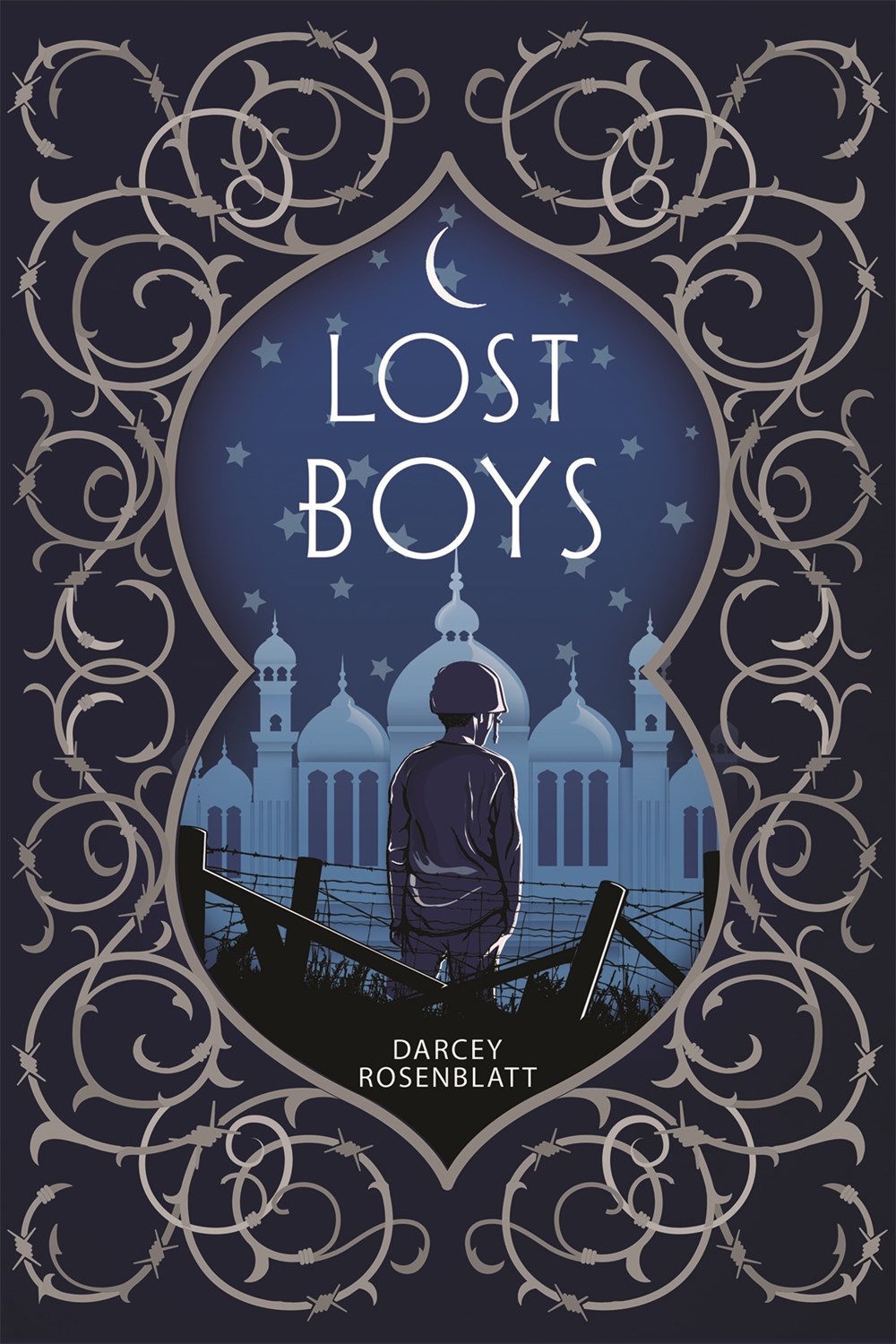
Lost Boys, by Darcey Rosenblatt, (Aug. 2017, Henry Holt & Co), $16.99, ISBN: 9781627797580

Recommended for readers 9-14

Twelve year-old Reza is a musical prodigy living in 1982 Iran. He lives with his widowed, fundamentalist mother, and craves visits from his Uncle Habib; a member of the resistance, he also encourages Reza’s love of music by slipping him cassettes of artists from Stevie Wonder to Thelonious Monk. His mother pushes him to join the war effort, telling him she would be proud to have her son die in service of Allah. Reza wants nothing to do with the conflict, but when his uncle is killed and his best friend, Ebi, signs up to serve, Reza feels he has nothing left without his best friend, and signs on. He and Ebi receive their “keys to heaven” – plastic keys that serve as symbols that they will achieve paradise when they die in service to Iran and the Ayatollah – and are sent into battle. War is not the glorious battle that Ebi dreamed about; it’s not full of exciting moments like he and Reza have seen in the movies. The boys are fodder for the minefields – tied together and sent into battle to clear the way for older troops. Reza is injured and sent to a prisoner of war camp, where he meets other boys his age and desperately tries to learn Ebi’s fate as he endures abuse at the hands of a sadistic prison guard.

I couldn’t put Lost Boys down, choosing instead to disregard my normal sleep schedule until I finished the last page. Reza is a heart-achingly real character based on far too many child soldiers. He and his classmates are promised glory and fed lies; in the end, all he lives for is the hope that he’ll be reunited with his best friend and live to enjoy music again. Set in 1982, the story is more relevant now than ever, as children are still pressed into service all over the world. Booktalk Lost Boys with Marjane Satrapi’s Persepolis for tween and teen readers; booktalk with Child Soldier: When Boys and Girls Are Used in War, by Jessica Dee Humphreys and Michel Chikwanine to illustrate the worldwide epidemic of using children as combatants. This article from Global Citizen shines a light on seven countries that still use child soldiers, and what we can do to help stand against the practice.

Lost Boys is an important book that sparks outrage and empathy, and is a must-add for collections. I’d love to see this on next summer’s reading lists.

Posted in Graphic Novels, History, Middle Grade, Non-fiction, Tween Reads

Child Soldier tells a survivor’s story

child soldierChild Soldier, by Michel Chikwanine & Jessica Dee Humphreys/Illus. by Claudia Davila, (Sept. 2015, Kids Can Press), $18.95, ISBN: 9781771381260

Recommended for ages 10+

In 1993, Michel Chikwanine was a 5 year-old boy living in the Democratic Republic of Congo. He admired his father, a human rights lawyer, and loved his mother, who took care of children from all over the neighborhood who needed food or care. He was surrounded by friends and family, played soccer, and goofed off with his friends.

His father talked to him about the world as they listened to the news on the radio together; he had no idea that he would become directly involved in world events so soon, though.

On the way home from school one day, he was kidnapped by rebel militants and forced to become a child soldier. He was drugged and forced to kill, tortured and starved, until weeks later, he was able to escape and return to his family. But how do you return to a life when, at the age of 5, your childhood has been taken away?

This heartbreaking, yet inspirational biography is Chikwanine’s story, told in graphic novel format. Michel provides a brief background on his country, so that we may follow the history of conflict that has led to a society that creates child soldiers. We see his parents struggle to give Michel his life back and the risks they take as activists to fight against this happening to another child, ever again: his father is jailed, his home attacked, and his family separated as they escape to protect Michael and his siblings.

The story is told, both in words and pictures, in a way that will grasp younger readers’ attention. They can see themselves in Michel’s childhood: playing games, enjoying friends and family, attending school. The story, while horrific, never becomes too graphic for younger readers – it’s important, because we need younger readers here to know this is happening to children their age and younger. It’s also important for children to see that adults can take care of their children; we see Michel escape on his own, but adults in his village return him to his family, and his family takes action to protect their son.

Child Soldier is ultimately an inspirational story: Michel’s childhood has been taken from him, but he rises from the ashes and recreates himself, becoming a young man with a mission. He is a human rights activist with a story to tell and motivates young people to action. A graphic novel is a wonderful and powerful way to introduce a discussion on human rights in the classroom, and Child Soldier includes discussion questions and information, information on how to get involved and help, and primary sources for further research to facilitate these discussions.

Over the last two summers, I’ve noticed more books on child soldiers showing up on summer reading lists for kids in grades 4 and up. I’m glad to see this subject being addressed in the schools, and hope that this book is on next year’s summer reading lists.

Child Soldier is a book in Kids Can Press’ Citizen Kid series, a collection of books about global issues that seeks to make our kids better global citizens.

Child Soldier is on sale on September 1, but you can take a look at the book trailer here and see some of Claudia Davila’s beautiful artwork.