Posted in Intermediate, Non-Fiction, picture books

Reading for Indigenous People’s Day? Add these to your list.

October 10th is designated as Indigenous People’s Day, when we honor Native American history and culture. It is a holiday that has been a long time coming; consider spending the day learning from the best resources.

Dr. Debbie Reese’s American Indians in Children’s Literature website is an excellent resource, with analyses on books and resources on indigenous people in literature: Dr. Reese provides insight on the good, the bad, and the downright ugly.

If you are interested in research the indigenous land you occupy, and you are in the United States, you can text your zip code or your city and state to a number that will respond with the names of the Native lands that correspond to your region. I live and work on land taken from the Canarsie, Munsee Lenape, and Matinecock nations. Thanks to Code for Anchorage and Native Land for this service.
Support Indigenous presses. Highwater Press was kind enough to send me two beautiful picture books from their Sk’ad’a Stories Series, which I’ll be talking about below. Highwater is an imprint of Portage & Main Press and they publish stories by Indigenous writers and illustrators.
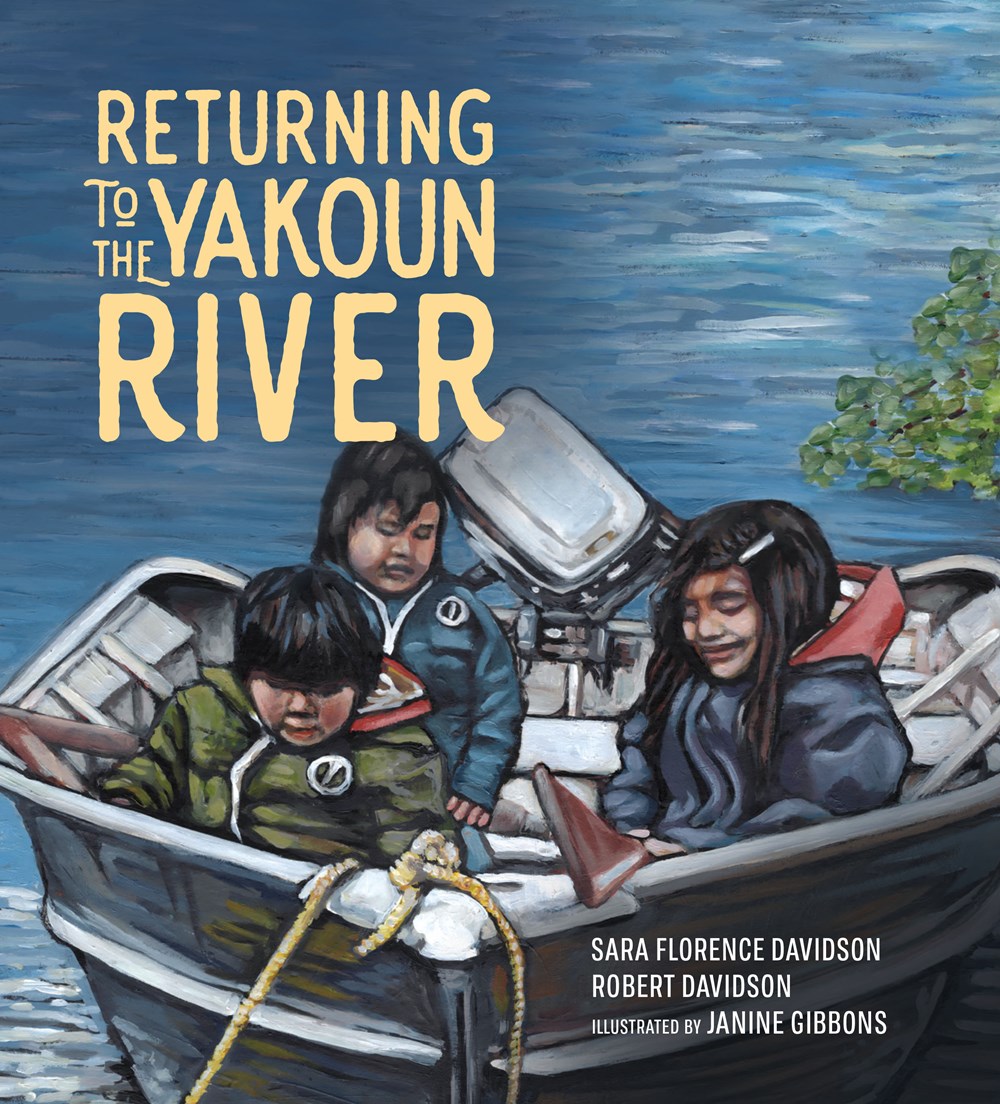
Returning to the Yakoun River, by Sara Florence Davidson & Robert Davidson/Illustrated by Janine Gibbons, (Sept. 2022, Highwater Press), $21.95, ISBN: 9781774920213

Ages 6-8

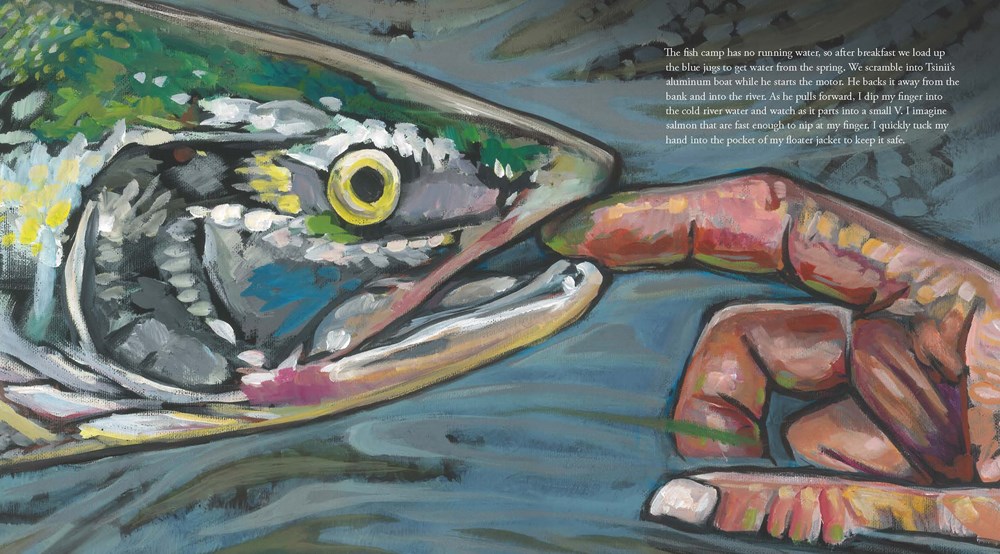
Returning to the Yakoun River is based on author Sara Florence Davidson’s childhood memories of a Haida fish camp. Seen through the eyes of a young girl, a family travels to the Yakoun River to fish for salmon and spend time with their Tsinii (grandfather). The artwork unfolds like a dream; the art appears to be oil painting; Haida artist Janine Gibbons draws from nature for her palette, with early morning blues and grays moving into cool weather steel blues and and greens; food and cheerful faces warm up the spreads. Endpapers show a calm river scene in the early morning. Sara Florence Davidson, a Haida/Settler Assistant Professor in Indigenous Education, draws heavily on themes of family and connection to the ancestors in her work. Her father, co-author Robert Davidson, is of Haida descent and is one of the most respected and important contemporary artists in Canada. The story is a peaceful meditation on intergenerational relationships and family and on recognizing the importance of ritual and connection. A gorgeous book for collections and an excellent purchase.
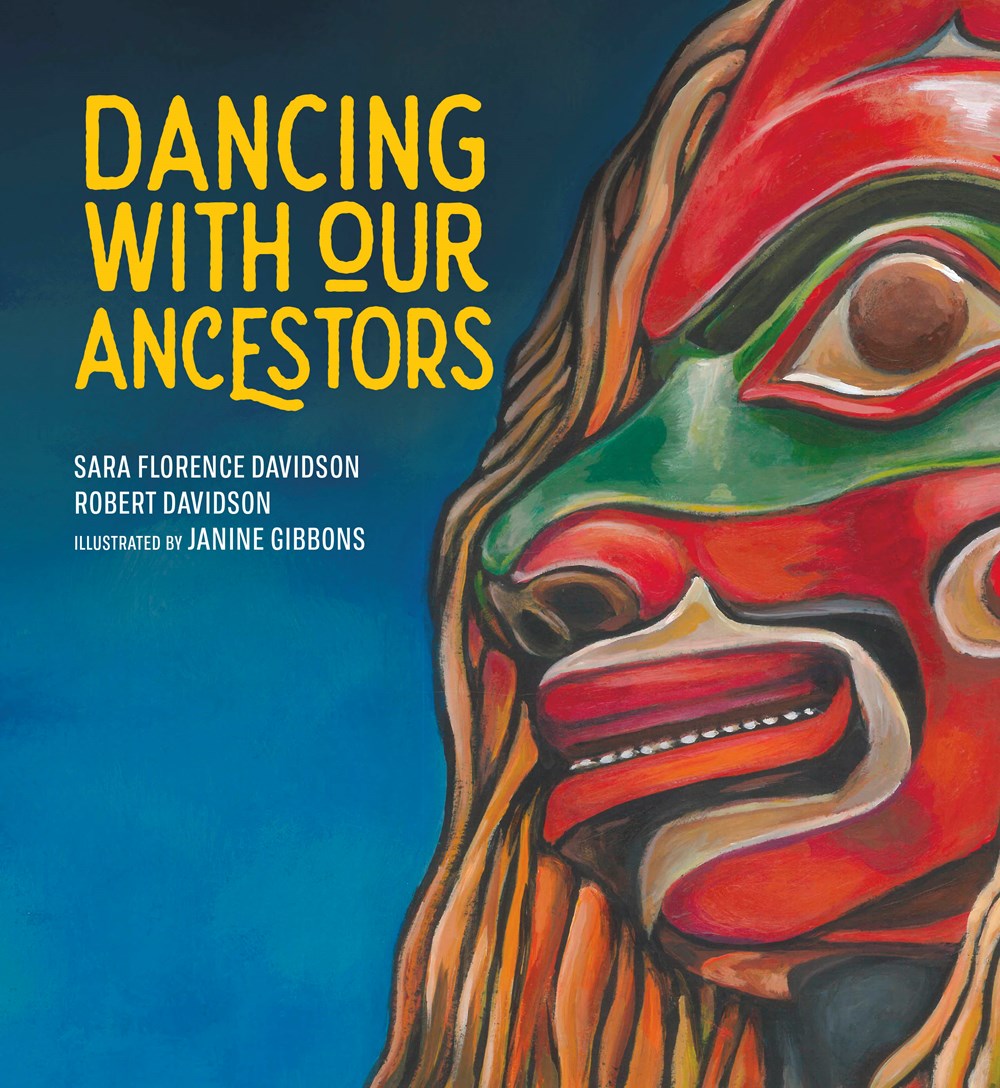


Dancing With Our Ancestors, by Sara Florence Davidson & Robert Davidson/Illustrated by Janine Gibbons, (Sept. 2022, Highwater Press), $21.95, ISBN: 9781774920244

Ages 6-8

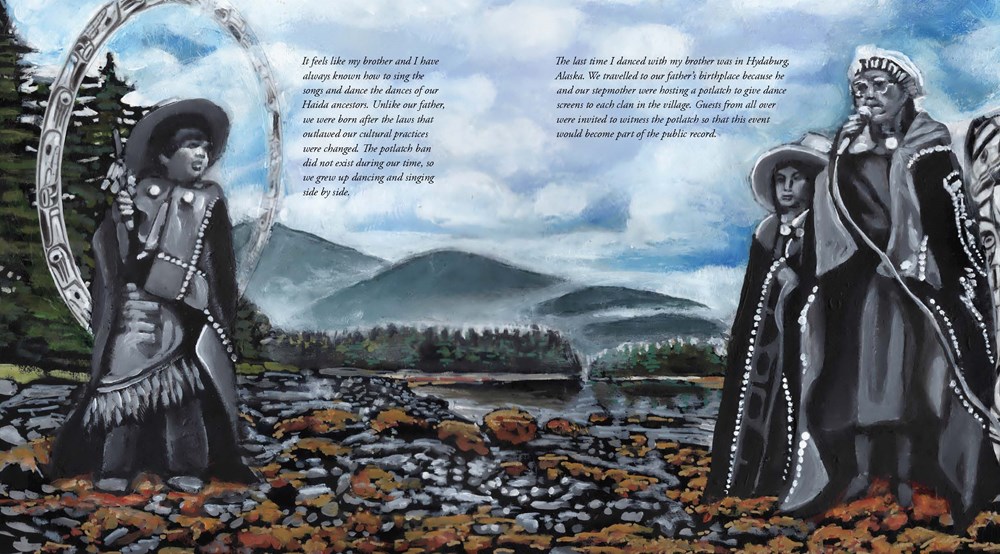
A potlatch is an important ceremony to First Nations in the Northwest and parts of Canada. In Dancing With Our Ancestors, Sara Florence Davidson remembers the last time she danced with her late brother, all the while bringing the importance, excitement, and joy of a potlatch to younger readers. What most stands out in the narrative is the determination to continue tradition in the face of adversity: “Unlike our father, we were born after the laws that outlawed our culture practices were changed. The potlatch ban did not exist during our time, so we grew up dancing and singing side by side”; “They wanted us to stop being Haida”; “Today we dance with our children so our culture cannot be stolen again”. Joy and pain live side by side in the storytelling. Davidson beautifully describes the excitement and anticipation, with attendees arriving by boat, plane, and cars and RVs; the community makes “mountains of food” and set up the gym where the event is being held. Janine Gibbons’s illustrations show a crowd that spans generations, with bold, vibrant regalia and a sense of wonder that comes through. Endpapers show bold, colorful crests and masks, proudly displayed during the potlatch. An author’s note provides context to the story and a note on Ben Davidson, the author’s brother, is a lovely tribute. An absolutely essential purchase.
 

For the complete Sk’ad’a Stories Series list, visit Highwater’s page. Highwater also sells a Teacher’s Guide available for working with the Sk’ad’a Stories on their website.
Posted in Preschool Reads, Toddler Reads

Books for giving thanks

Thanksgiving is next week, but this is the time of year when, no matter what you celebrate – or don’t – it’s a time to reflect and be thankful. This year has given us a lot to think about, and while we’ve definitely had our share of challenges, we can always find things to be thankful and appreciative for. Here are a couple of books that do just that.

Peppa Pig and the Day of Giving Thanks, (Sept. 2020, Candlewick Entertainment), $12.99, ISBN: 9781536216608

Ages 2-6

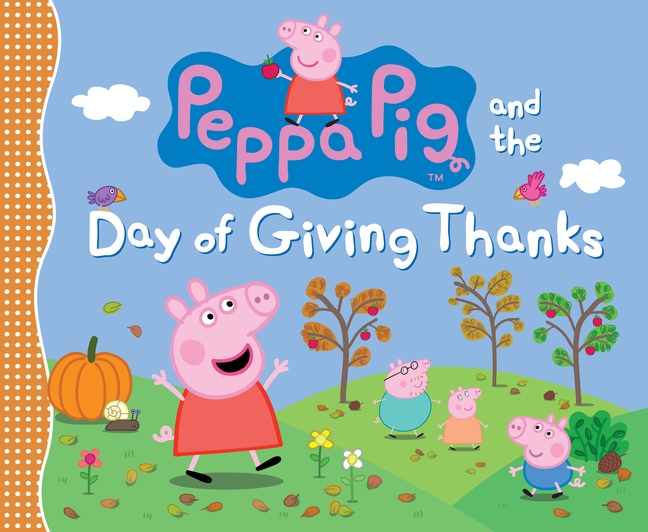
Peppa is aces in my library. The kids adore her, and my books fly off the shelves, so I doubly miss reading them this book this year. In this latest Peppa story, Peppa, her younger brother George, and mother and father are taking a nature walk on a fall day, and are so happy with the beautiful day that they find themselves thankful for everything they see: the clouds, the sky, the apples in the trees, even the rain that pours down on them, because it leaves them a happy surprise. Never mentioning a holiday, this is lovely reading all year ’round, but especially kind and gentle for this time of year; it reminds us all to be thankful for the little moments around us that often get taken for granted. The digital illustrations are identical to the TV show, so kids will recognize this one right away. The inside cover is a coloring sheet, so librarians, do yourselves a favor and have coloring sheets available at checkout. This pack from Nickelodeon was always popular for me.


What I Like Most, by Mary Murphy/Illustrated by Zhu Cheng-Liang, (April 2020, Candlewick Press), $16.99, ISBN: 9781536209402

Ages 3-6

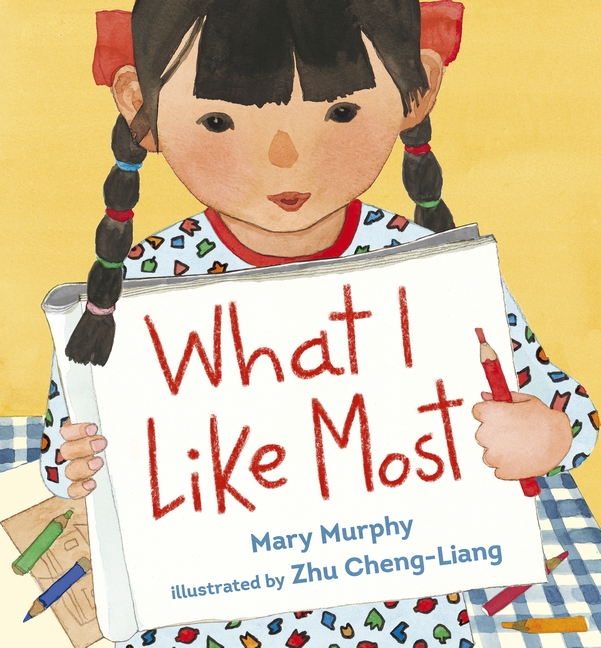
A young girl talks about all the things she likes most: her window, where she can see the world; new people moving in and moving out; her grandmother’s apricot jam, her favorite shoes. Kids will see themselves and adults will see their kids in the constant idea of “this is my very favorite thing… except for this!”, but read further and see the girl’s wisdom in honoring change: she loves her window, acknowledging that “my window won’t change, but the things outside will”; “when our jar is nearly empty, I only put a tiny bit on my toast to make the jam last”; “one day the shoes will wear out, or my feet will grow too big for them”. She loves in the moment and understands that the moments change; she’s grateful for them all, regardless. And what she loves most in the world will never change: her love for her mother. Mary Murphy creates wonderful worlds when she writes, and this one just shines. Zhu Cheng-Liang’s watercolor and ink artwork is gentle, soft, with shifting permanence from spread to spread. Endpapers show three birds sitting in a tree with pink flowers in the front, and an empty tree, now red and gold, with falling leaves in the back. A beautiful tribute to autumn and celebrating change.

Posted in Preschool Reads

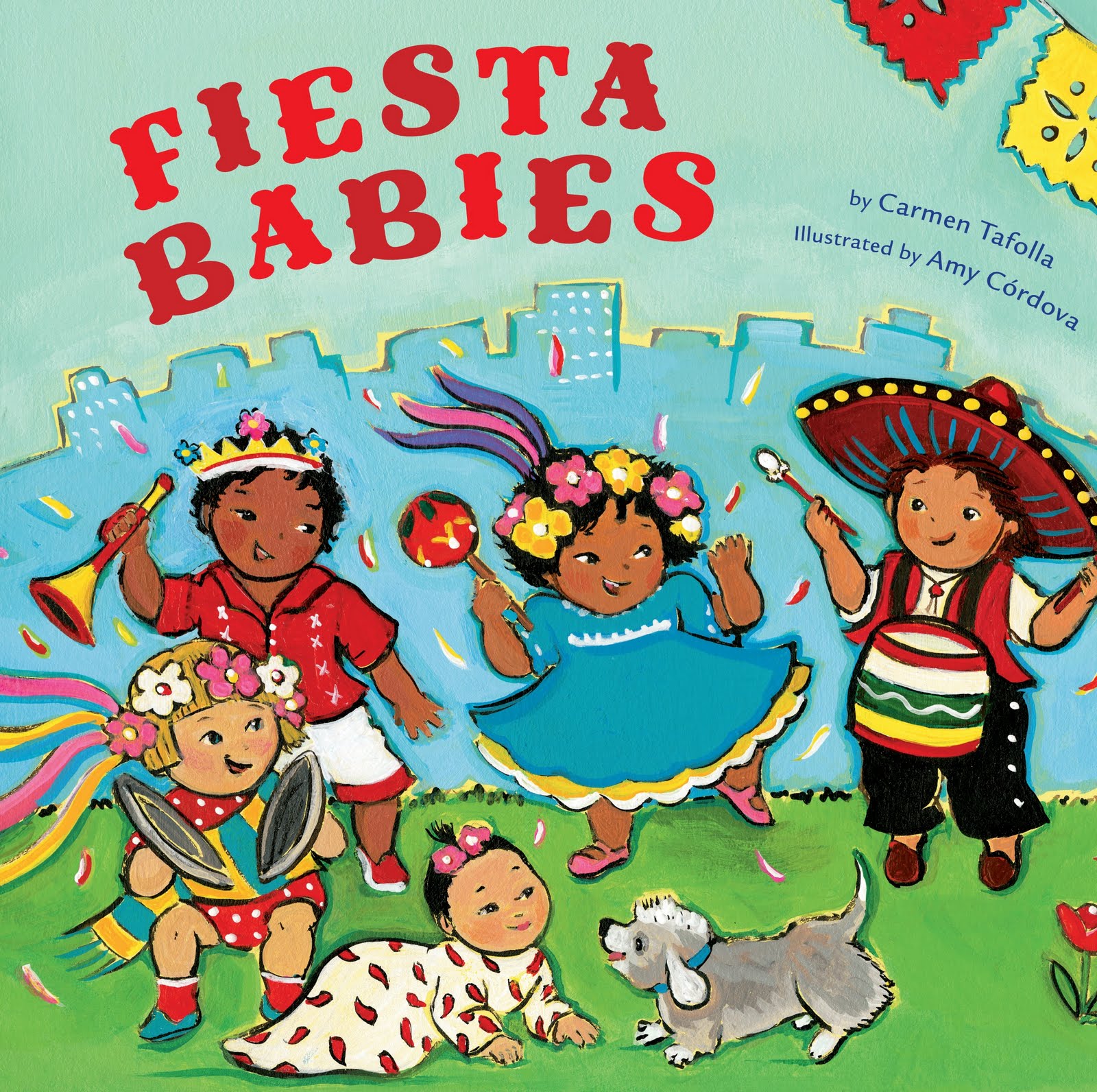
Book Review: Fiesta Babies, by Amy Cordova (Tricycle Press, 2010)

fiesta babiesRecommended for ages 2-5

A multicultural group of babies and their families take part in a cultural celebration, complete with colorful hats, dresses, foods, and dancing. The story, told in rhyme, uses English and Spanish words to bring babies of all ethnicities together in a celebration of Mexican heritage. Amy Cordova received 2011 Pura Belpre Illustration Honors for her bold acrylic colors and brushstroke paintings that bring Ms. Tafolla’s text to life. There are sombreros, serapes, salsa, and happy babies and grownups from diverse backgrounds together to celebrate a grand fiesta. The faces of the participants are joyfully expressive, spreading good feelings. A short glossary at the end of the book defines the Spanish words in simple-to-understand language for young audiences.

The book is a great read-aloud choice. The rhyming text will draw in young listeners, as will the bright colors and exciting new words, for those non-Spanish speakers. There can be a glossary handout for parents and guardians to practice the new words with children after the story time. Fiesta Babies, like Dora the Explorer, can teach children simple Spanish words; some preschoolers may recognize some of the words from Dora episodes. This would be a great multicultural language read-aloud with books like Linda Sue Park and Julia Durango’s Yum! Yuck! A Foldout Book of People Sounds, where children learn common words and phrases in a multitude of languages. There are several websites that offer Spanish language fingerplays and songs and can easily be slotted in to a bilingual story time.