Posted in Animal Fiction, Fiction, Middle Grade

Shhh… there’s a pony on the 12th floor, but you’re not supposed to know.

Pony on the Twelfth Floor, by Polly Faber/Illustrated by Sarah Jennings, (June 2020, Candlewick Press), $16.99, ISBN: 9781536209303

Ages 8-12

Kizzy is a girl who would love to have a pony of her own. She has pony pictures in her room, she thinks of ponies all the time, but she never expects to discover a pony snacking on donuts in her grocery store! She seizes the day and claims the pony as hers, rather than have the store owner call the authorities. Now, after sneaking her new pet – now named Donut – into her 12th-floor apartment, she has to figure out how to keep Donut a secret from the super and figure out how to gently break the news to her mother. Oh, and how to keep the grounds clean, because when Donut has to go… it’s pretty stinky. Her best friend Pawel tries to talk some sense into Kizzy, but it’s hard to be heard over the joyful shrieks of his younger twin sisters, who are firmly in favor of keeping Donut.

Polly Faber has created a sweet story about a girl finding out that getting what one wishes for isn’t always all it’s cracked up to be. It’s a light, fun, happy story with a kind characters and a sweet, snacky pony, that animal fiction fans will love. Black and white illustrations throughout up the cute factor. It’s a good book to introduce chapter book readers to longer, slightly denser books. Set in the UK, Kizzy and her family are brown-skinned, Pawel and his family are Polish. Pony on the Twelfth Floor is a good fit for the Imagine Your Story Summer Reading theme this year: imagine what would happen if you discovered your dream pet in the supermarket? In the park, or walking down the street?  This could work for a book group or a series of readalouds, too.

Posted in Fiction, Intermediate

Books from Quarantine: Stella Endicott and the Anything-Is-Possible Poem by Kate DiCamillo

Stella Endicott and the Anything-Is-Possible Poem, by Kate DiCamillo/Illustrated by Chris Van Dusen (Tales from Deckawoo Drive), (June 2020, Candlewick Press), $14.99, ISBN: 9781536201802

Ages 7-10

When my bigger little ones (my first and second graders, usually) come into the library, many of them automatically ask me for Mercy Watson books. They love Kate DiCamillo, they love Mercy Watson and all her friends on Deckawoo Drive, and they love Kate DiCamillo at an early age; when they’re a couple of years older, and come in looking for Tales of Desperaux, I remind them that this is the same author they’ve been reading since they picked up Mercy Watson, and that smile, that book hug, it makes every day I’m there fantastic. Yeah, I’m rhapsodizing again; forgive me. It’s been going on three months since I’ve been around my Corona Kids and I’m missing them, big time. Every book I read, I know just the kid I want to tell about it. This is hard, folks. Don’t think for a second it isn’t.

Okay. So, let’s talk the newest book in the Tales from Deckawoo Drive series. Stella Endicott loves school and loves her teacher, Miss Liliana. She’s so excited to work on her assignment, to write a poem, because she knows just who she’s going to write about: Mercy Watson, the pig who lives next door and relaxes on a couch! She creates a lovely poem, but class know-it-all Horace Broom insists that she’s lying: wizards don’t play accordions, and pigs don’t live in houses! Annoyed not only by Horace’s lack of imagination, but the fact that he called her a liar, Stella shouts back at him, and the two are sent to the principal’s office, which leads to an adventure where the two will learn to see things from the other’s point of view.

The Deckawoo Drive books just make me happy. They’re funny, upbeat, and always have a good message to share. Here, we learn that it’s good to be literal and metaphorical. It’s balance! Stella is smart and spirited, and Horace may have learned his lesson about offering uninvited criticism. Gouache artwork from Chris Van Dusen is automatically recognizable: kids will spot this book on a bookshelf (literal or virtual) a mile away. Mercy’s cameo is adorable – if you have the space in your reading area, stick some cushions or pillows on the floor with a stuffed pig and let your kids curl up with their Mercy to read, imagine, and create with.

Stella Endicott and the Anything-Is-Possible Poem has a starred review from Kirkus. Want to visit Deckawoo Drive and spend some time with Mercy? Visit the Mercy Watson website for information about the books, resources for parents and educators, join the fan club, and play some games.

Kate DiCamillo is the Newbery-Award winning author of Flora & Ulysses and The Tale of Desperaux, and a former National Ambassador for Young People’s Literature. Chris Van Dusen is the illustrator of the Mercy Watson and Deckawoo Drive series, and an author-illustrator of books including The Circus Ship and Hattie & Hudson.


Posted in Post-apocalyptic/Dystopian, Science Fiction, Teen, Young Adult/New Adult

Books from Quarantine: Dogchild, by Kevin Brooks

Dogchild, by Kevin Brooks, (June 2020, Candlewick Press), $22.99, ISBN: 9781536209747

Ages 15+

This is a stark, often unsettling post-apocalyptic story. Jeet, a child raised by the wild dogs that killed his human family, lives in a settlement where there are few other “dogchildren” – most dogchildren don’t rehabilitate back to being human well; they run away, back to their dog families or die in the process of rehumanizing. Jeet lives with his uncle, Starry, after the settlement kills his pack of Deathland dogs on a raid, and eventually, becomes trusted enough that town head Marshal Gun Sur first asks him to write a history of their people, and then, to be part of a spying mission as the group gets ready to go to war against their enemy settlement, the Dau. Chola Se, another dogchild, and the closest thing Jeet has to a friend, has been kidnapped in a raid on the settlement; Jeet rescues her and learns that she has been sexually assaulted mutiple times – including by their own settlement’s second in command, Deputy Pilgrim. Jeet and Chola Se believe that Deputy is a traitor, but before they can enact their own plans, Pilgrim puts actions in motion that will turn the entire encampment against the two. While they want to flee, go back to their dog family and forget about the settlers entirely, but Chola also wants revenge against Pilgrim.

This is a gritty, rough story that includes sexual assault, graphic violence, and cannibalism. Definitely not for the younger set. The story is harrowing, with desperation that reaches out and grabs readers with every turn of the page. Kevin Brooks has created a stark, desolate landscape and characters that will stay with you after you finish the book. The love between Jeet and his dog mother makes for emotional, moving writing; Chola’s rage, always simmering, ready to explode, will leave readers gritting their teeth. He gets to readers on a visceral level. The book is written as if it were Jeet’s chronicle, so you won’t see punctuation; there aren’t traditional paragraphs, sentence structures, or spelling; there are no real chapter breaks, either; more like pauses between entries. If you have teen post-apocalypse fans that can handle rougher subject matter, give them this book.

Dogchild has a starred review from Booklist.

Posted in Fiction, Historical Fiction, Middle Grade, Tween Reads

David Almond asks: Why should children be at war?

War is Over, by David Almond/Illustrated by David Litchfield, (May 2020, Candlewick Press), $16.99, ISBN: 9781536209860

Ages 9-12

Taking place in the UK in 1918, War is Over asks a timeless question: why do we expect children to fight our wars? Not having a child’s presence on the front, but the psychological war; the “us” and “them” mentality that permeates everything we do. John is a young boy whose father is fighting in the trenches of France while his mother works in a munitions factory. John’s teacher tells – bellows, really – that the students are fighting alongside the grownups, fighting the enemy in Germany that includes the children of Germany. But John certainly doesn’t feel like anyone is his enemy. When a classmate’s uncle tries to speak to the children, telling them that they are children and NOT at war with anyone, he’s attacked and taken away from the children, but he’s touched something in John,  who sees a sketch of a young boy among the man’s scattered papers. It’s a drawing of a German boy named Jan, the same age as John. John imagines he and Jan become friends, and dreams of a better world where children are children, not enemies, and create a peaceful world together.

This is a strong story of a sensitive boy trying to make sense of a world gone mad. It’s a story that’s as relevant today as it was in 1918, when the story takes place. David Litchfield’s black-and-white illustrations are moody, evocative, packing strong emotions. Visit his website to see some of his work from War Is Over. Poignant and ultimately hopeful, War is Over is a story that will resonate with kids and adults alike.

Posted in picture books

Books that love beautiful weather

I’ve been going through my TBR as we sit in time out for a little while. Today’s picture book slam is all about books to read while enjoying the beautiful weather. Grab some books (they’re available via ebook – check your libraries or order from your indies; many have ebooks!), sit outside with your littles, and enjoy every moment.
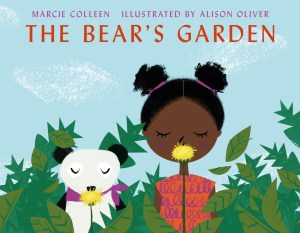
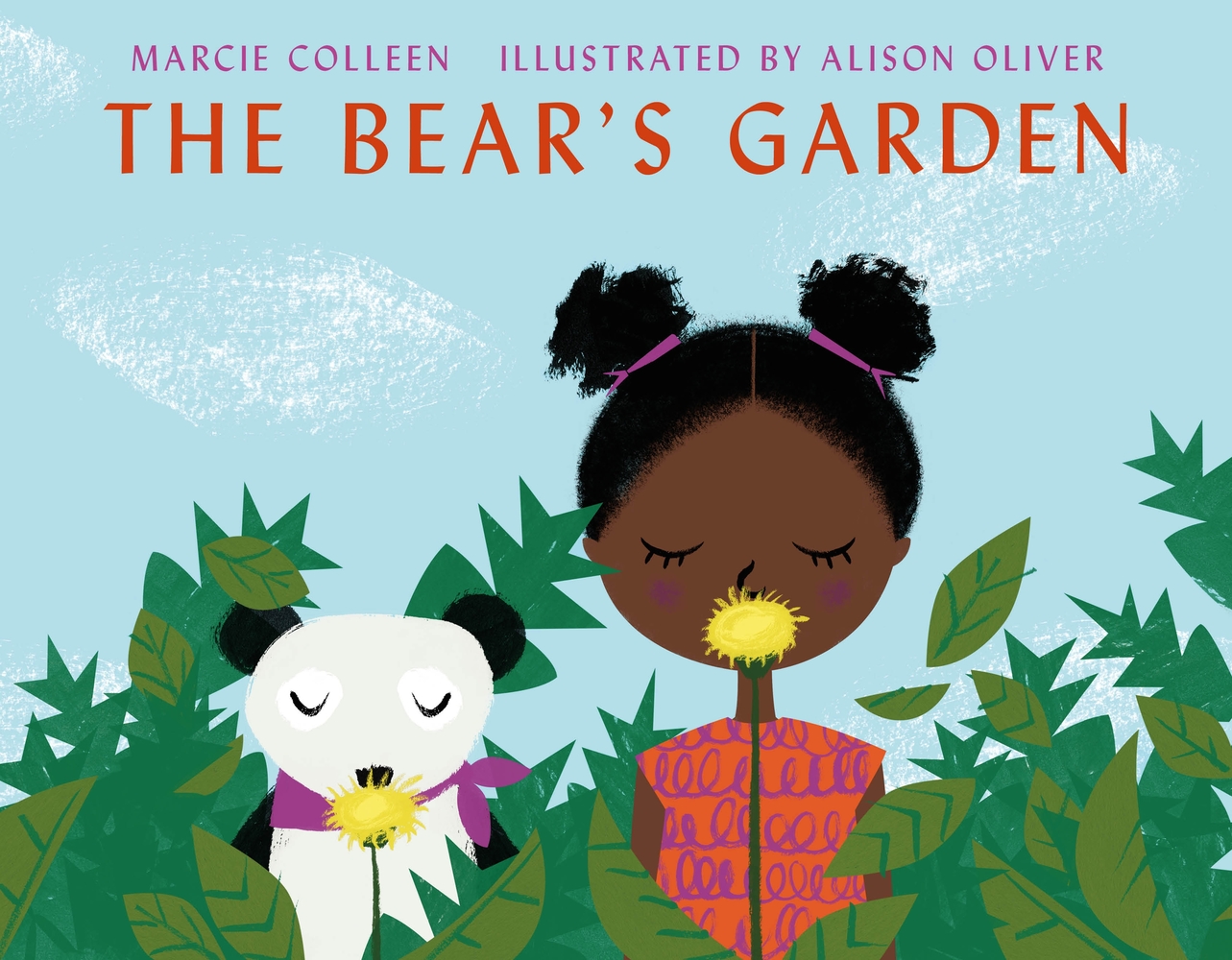
The Bear’s Garden, by Marcie Colleeen/Illustrated by Alison Oliver, (March 2020, Imprint/Macmillan), $18.99, ISBN: 9781250314819

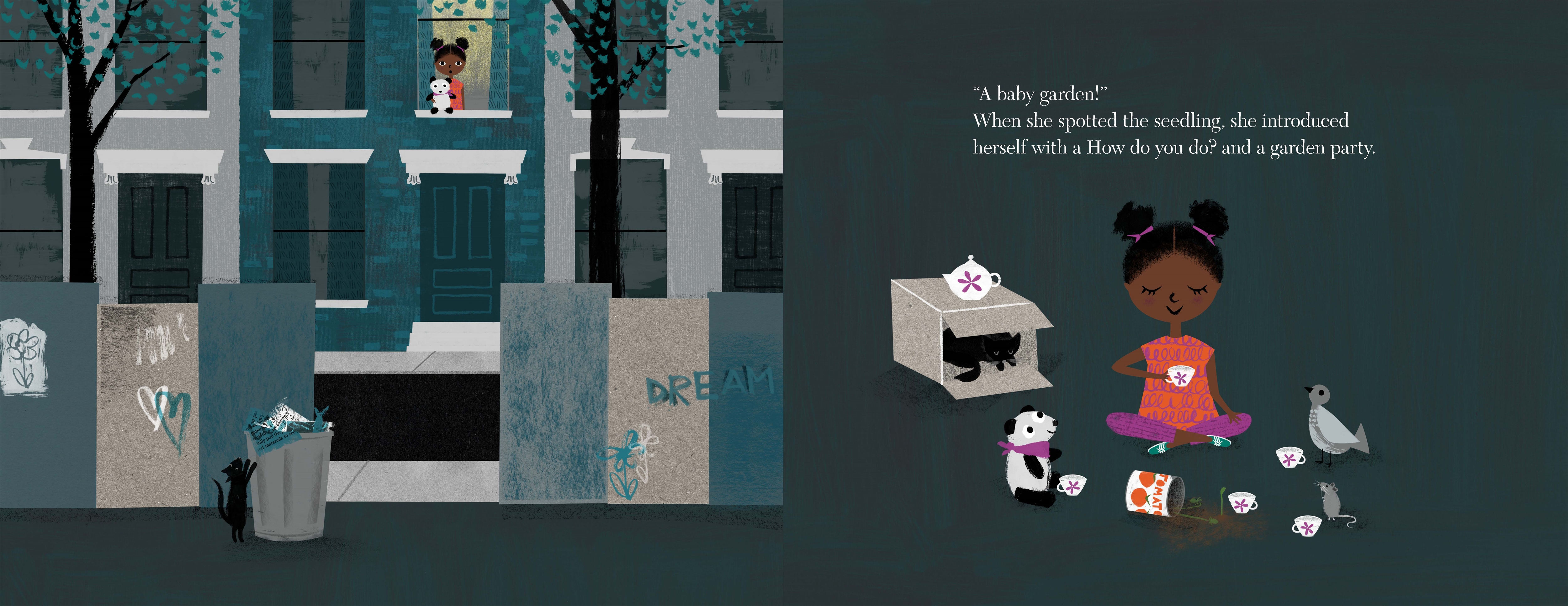
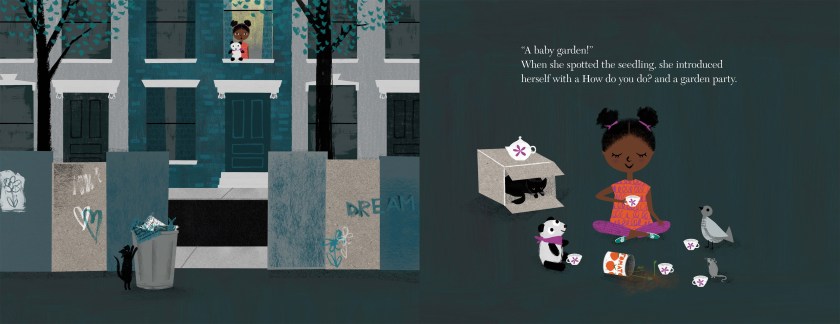
A young girl envisions a community garden from a spilled plant in this story, based on the actual Pacific Street Brooklyn Bear’s Community Garden in Brooklyn, New York. Living in the inner city, the girl sees potential in everything: a cardboard box, a tomato can, a seed. When her tomato can plant falls over, she sees “a baby garden”, and tends to the seedling where it landed. As her plant grows, people being slowing down, admiring her progress. But the girl has to leave, and she worries that without her love, her plants will suffer, so she makes the decision to leave her teddy bear behind. Under the bear’s loving eye, the neighborhood comes together to create a community garden filled with life, color, and love. Colorful and upbeat, The Bear’s Garden illustrates the beauty of imagination, creation, and community coming together. Endpapers are laid out like a map of the boroughs; the back endpapers focuses on Brooklyn, with a colorful burst of flowers noting where the Bear’s Garden can be found.

Consider a planting activity with your own kiddos – I love this Buzzfeed link that has different types of kitchen scraps that you can grow; Kids Gardening has a downloadable planting activity using kitchen scraps.

The Bear’s Garden has a starred review from Kirkus.
 

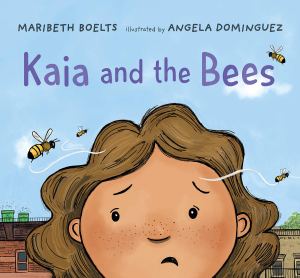
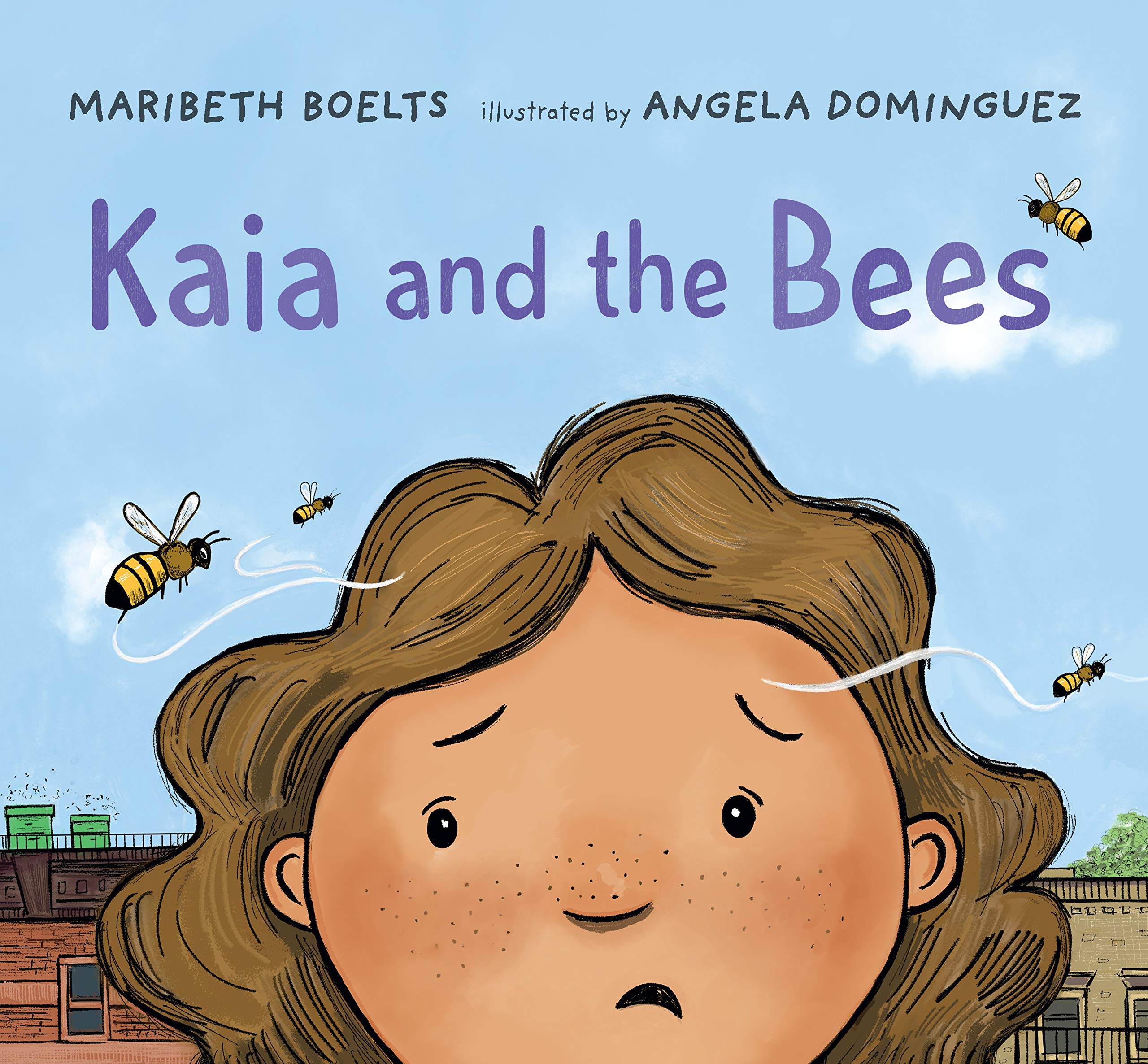
Kaia and the Bees, by Maribeth Boelts/Illustrated by Angela Dominguez, (March 2020, Candlewick Press), $16.99, ISBN: 9781536201055

Ages 4-8

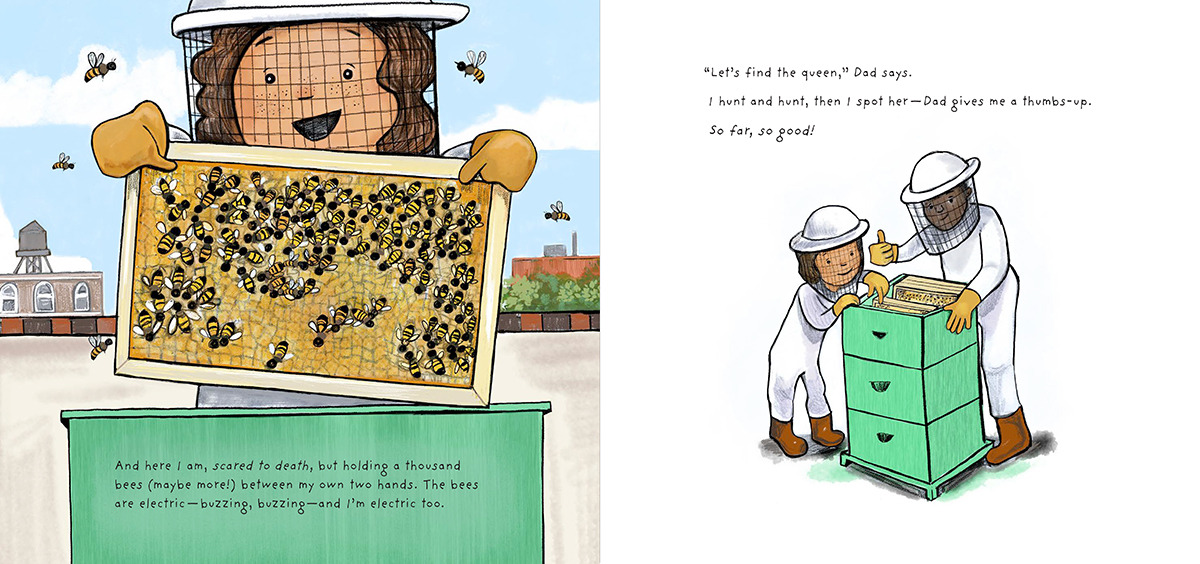
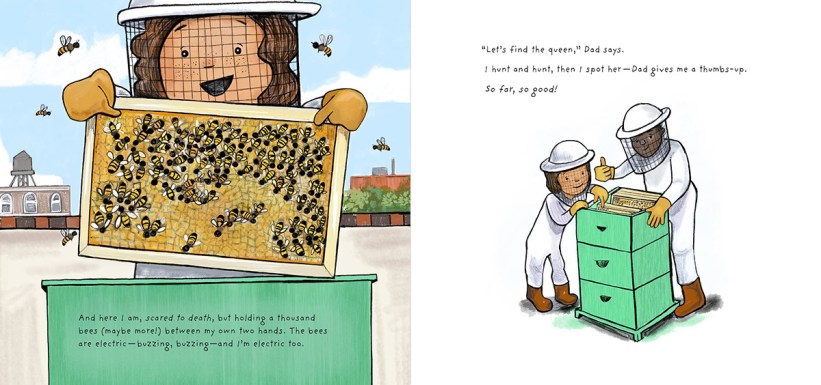
Kaia is a little girl who is pretty brave, but one thing scares her: Bees. She tries to keep it a secret from her friends, but when she’s spooked by a bee flying by her, she turns to her beekeper dad: she wants to go up on the roof with him, to his apiary. She’s doing great with the bees, until she slips her glove off and one stings her finger! Just when Kaia thinks she’s done with bees, she has a moment where she faces her fears and discovers that maybe bees aren’t so scary after all.

A story about bravery and empathy, with a smart message about our environment and urban apiaries, Kaia and the Bees warmly addresses relatable fears – in this case, bees – and how the smallest steps can lead to big progress. Kaia is relatable; she’s brave and smart, but hides her fear of bees until she’s called out on it. Her beekeeper father explains how bees are important to our world, and how his work – the family’s work – as beekeepers helps keep bees safe and healthy. Maribeth Boelts, herself a beekeeper, brings her love of bees and social mindfulness to Kaia’s voice, while Angela Dominguez’s cartoon-realist illustrations give readers an expressive, accessible heroine and a multicultural family living and thriving in an urban setting. Endpapers give readers a peek into a beehive, complete with nonthreatening, cute bees.

There are some interesting facts about honeybees available from NatGeo Kids. Hobby Farms has information on beekeping safety for kids who want to be like Kaia. The New York City Beekeepers Assocation has education on urban beekeeping. Introduce kids to urban beekeeping with Kaia and with Lela Nargi’s book, The Honeybee Man; The Honeybee Conservancy also offers a good list of bee books for children.
 

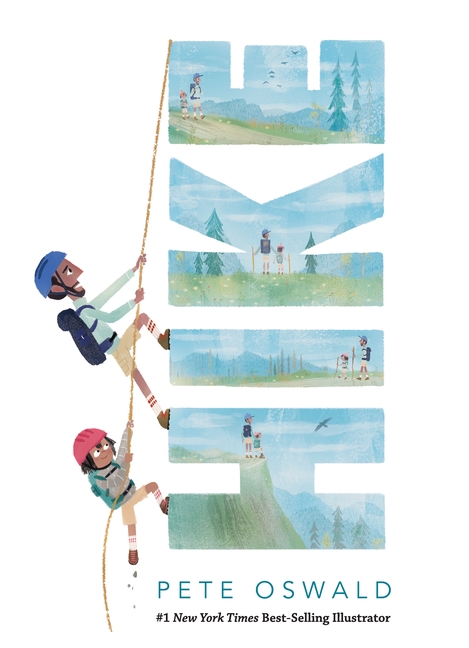
Hike, by Pete Oswald, (March 2020, Candlewick Press), $17.99, ISBN: 9781536201574

Ages 4-8

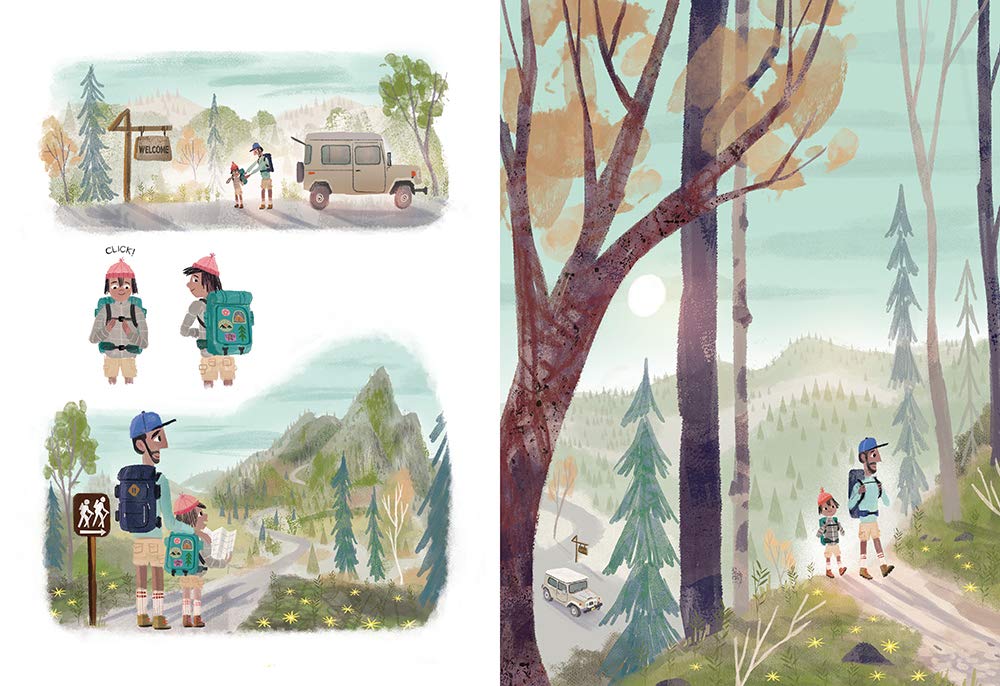
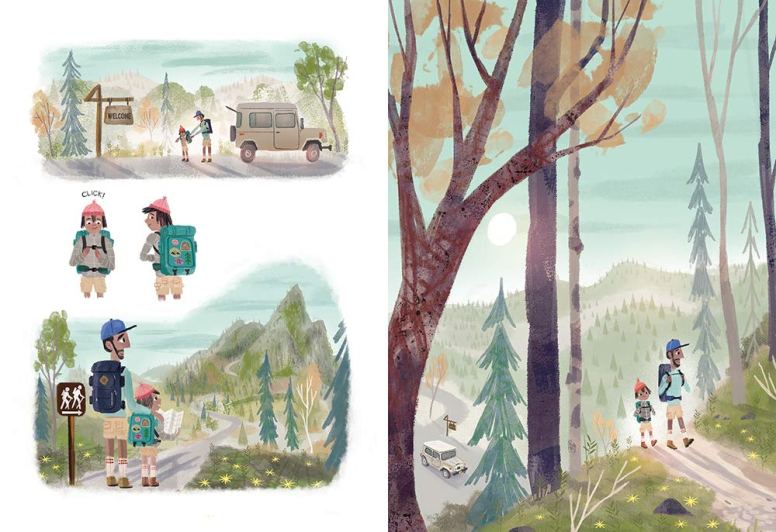
A dad and child wake up and hit the trail for a day’s hike. As they walk a trail together, they notice the beauty of their surroundings: spy a family of deer; track a black bear’s footprints; indulge in a snowball fight, and contribute their own offering to the forest: they plant a sprig from a tree. A celebration of the parent-child bond and our world, Hike is largely wordless, relying on the illustrations to tell the story. The colors are warm, drawn from nature, and the father and child share a visibly warm, loving relationship that invites caregivers and their kids to put on their hiking boots – or sneakers! – and explore their world. Be it a backyard, an urban neighborhood, or a suburban landscape, there’s always something to discover together. A sepia set of endpapers present a map, with start and finish points noted.

I loved the idea of a DIY Nature Journal like this one from KC Edventures. Last year, when I was home with my little guy during Spring Break, we made a nature journal with brown paper lunch bags and went wandering around our neighborhood, collecting cool leaves, acorns, and pebbles we found and liked. Kiddo loved it, and I printed out photos I snapped during our walk to add to the pages. The Pragmatic Parent has a great, free Nature Scavenger Hunt PDF that kids will love, too.

Hike has five starred reviews.
 

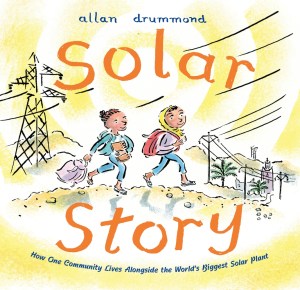
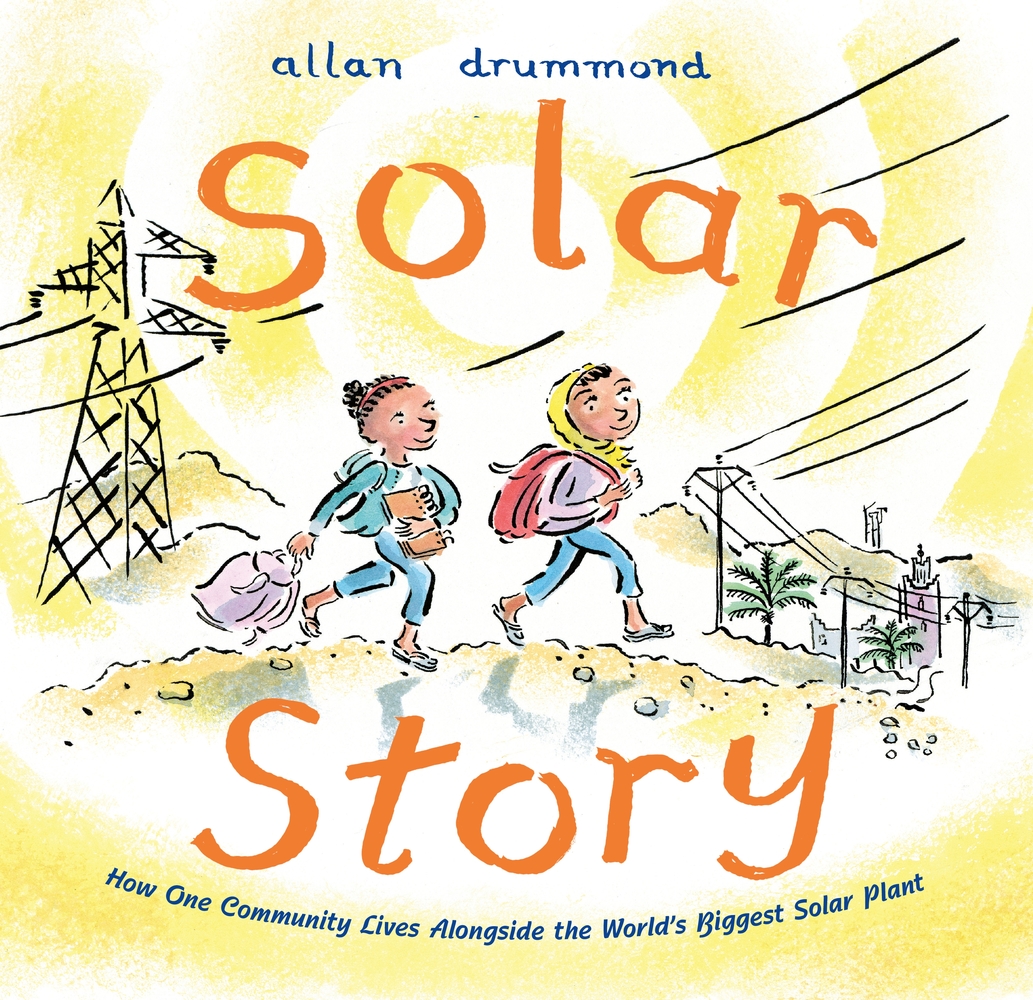
Solar Story: How One Community Lives Alongside the World’s Biggest Solar Plant, by Allan Drummond, (March 2020, Farrar, Straus and Giroux), $18.99, ISBN: 9780374308995

Ages 5-10

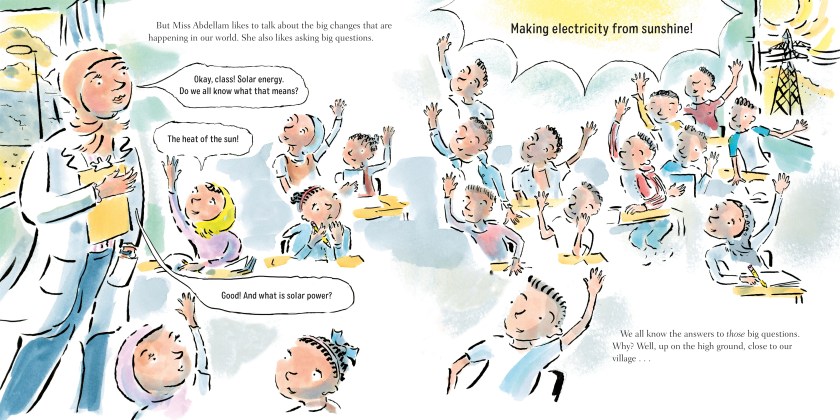
This is nonfiction that appeals to multiple grades. The story of the Noor Solar Power Plant in Morocco’s Sahara Desert – the largest solar power plant in the world – wraps around a story about everyday life in a small village next to the plant. Jasmine and Nadia are two friends who go on a class trip to the plant; during that trip, the girls’ class and readers will learn about Morocco and how the power plant creates jobs and improves the quality of life by bringing turnkey skills, technology, and the magic word, sustainability.

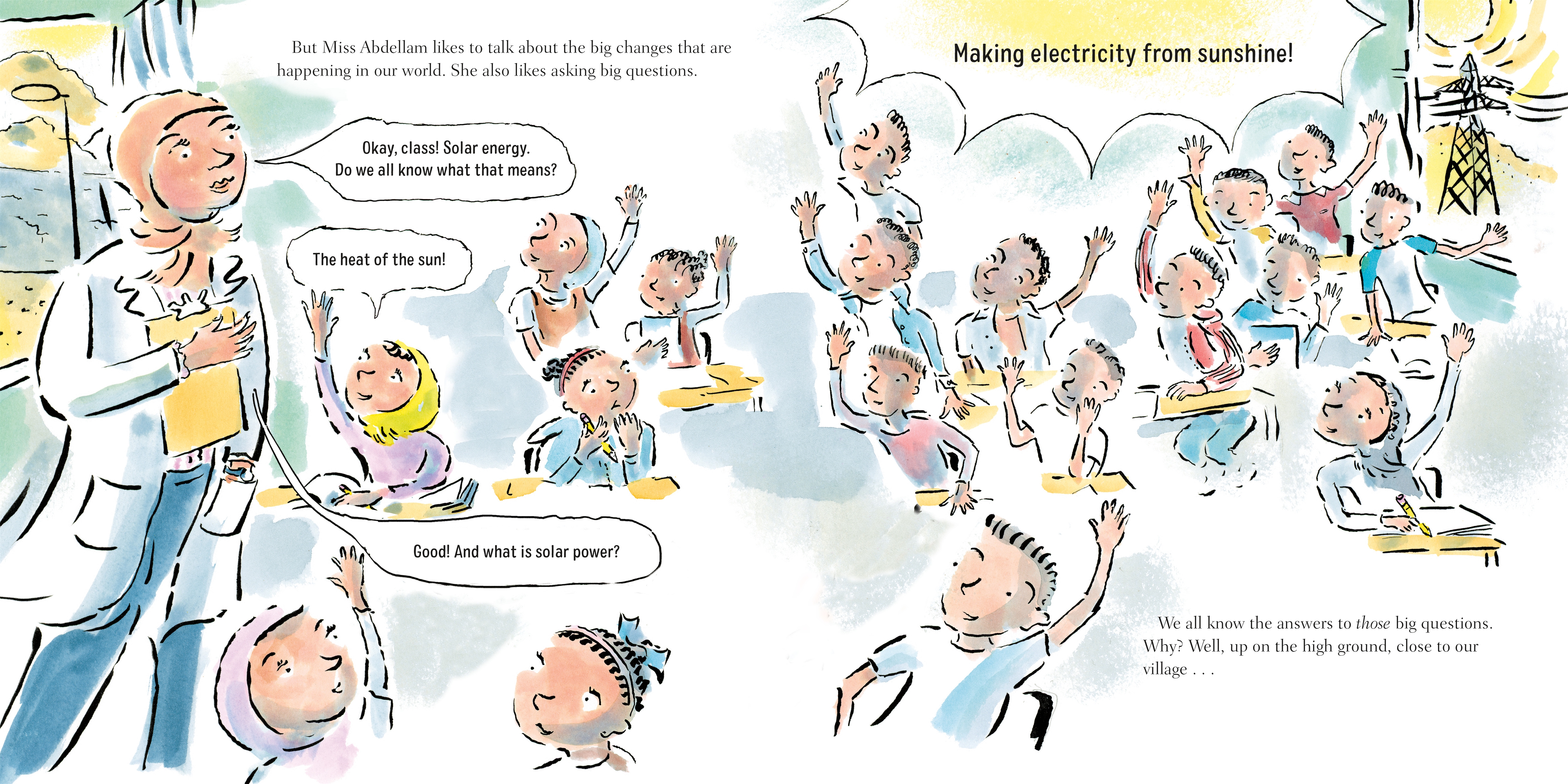
By giving readers relatable guides in the forms of Jasmine and Nadia, readers get a glimpse of life in a small Moroccan village, where the villagers have farm animals and cook on open fires, and the huge sprawl of the power plant and the modernity it brings while honoring the culture of the people who inhabit the area. The teacher engages her students, and readers, by asking thoughtful questions; most notably, “what does sustainability mean?”, to get her students and our readers ready for the school trip that illustrates how the power plant creates sustainability.

Watercolor illustrations and word balloon dialogue make this an enjoyable read. Warm yellows wander through the story, and earth tones and blues bring the reader to the land and its people. The teacher and many female children wear hijab. Sidebars throughout provide more detailed information about Morocco, the power plant, and sustainability. An author’s note showcases photos of workers at the Noor plant and a bibliography provides an opportunity for more reading. Endpapers bookend the story by having Nadia and Jasmine meet before the trip, and head back to school after.

A good addition to STEM collections. Toms of Maine has some easy to do activities to teach kids about solar power. Time for Kids has a 2016 article about the Noor plant.
 

That’s it for this time, I want to get this posted! More books coming!

Posted in picture books, Preschool Reads

Happy Mother’s Day! Books to Snuggle With

This is certainly a different kind of Mother’s Day, but one thing remains constant: we’re surrounded by the ones we love. So, in honor of Moms and Mom-like figures in our lives, snuggle up with your little ones and enjoy a storytime with these picture books.

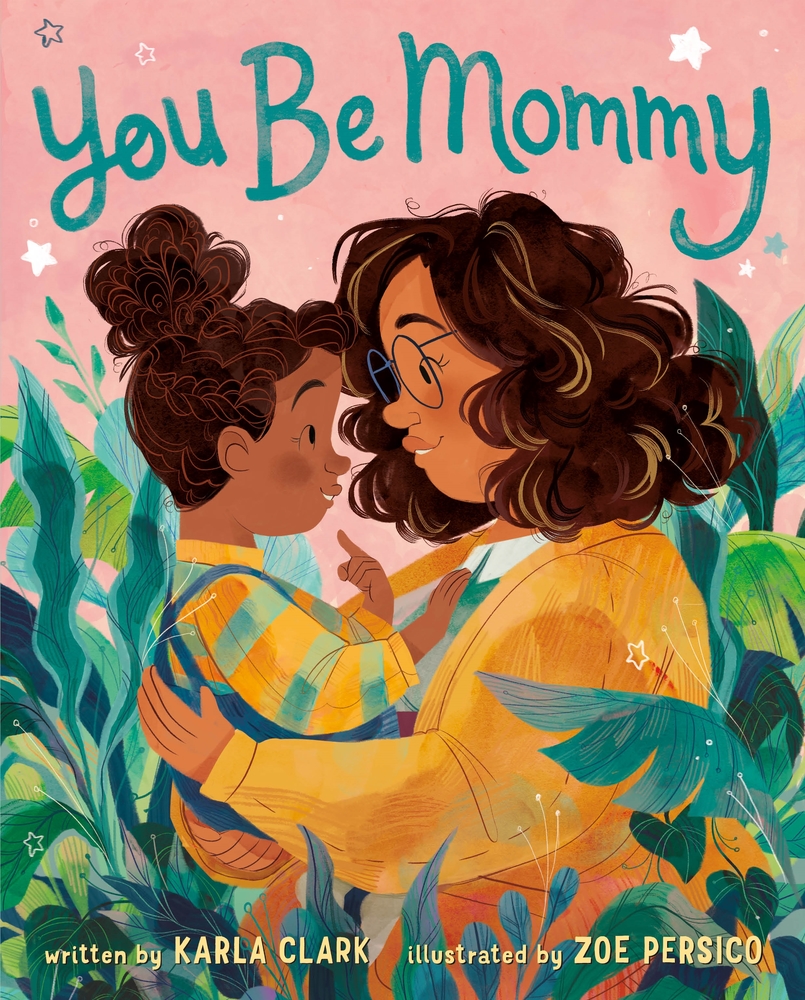
You Be Mommy, by Karla Clark/Illustrated by Zoe Persico, (March 2020, Feiwel & Friends), $17.99, ISBN: 978-1-250-22538-2

Ages 3-7

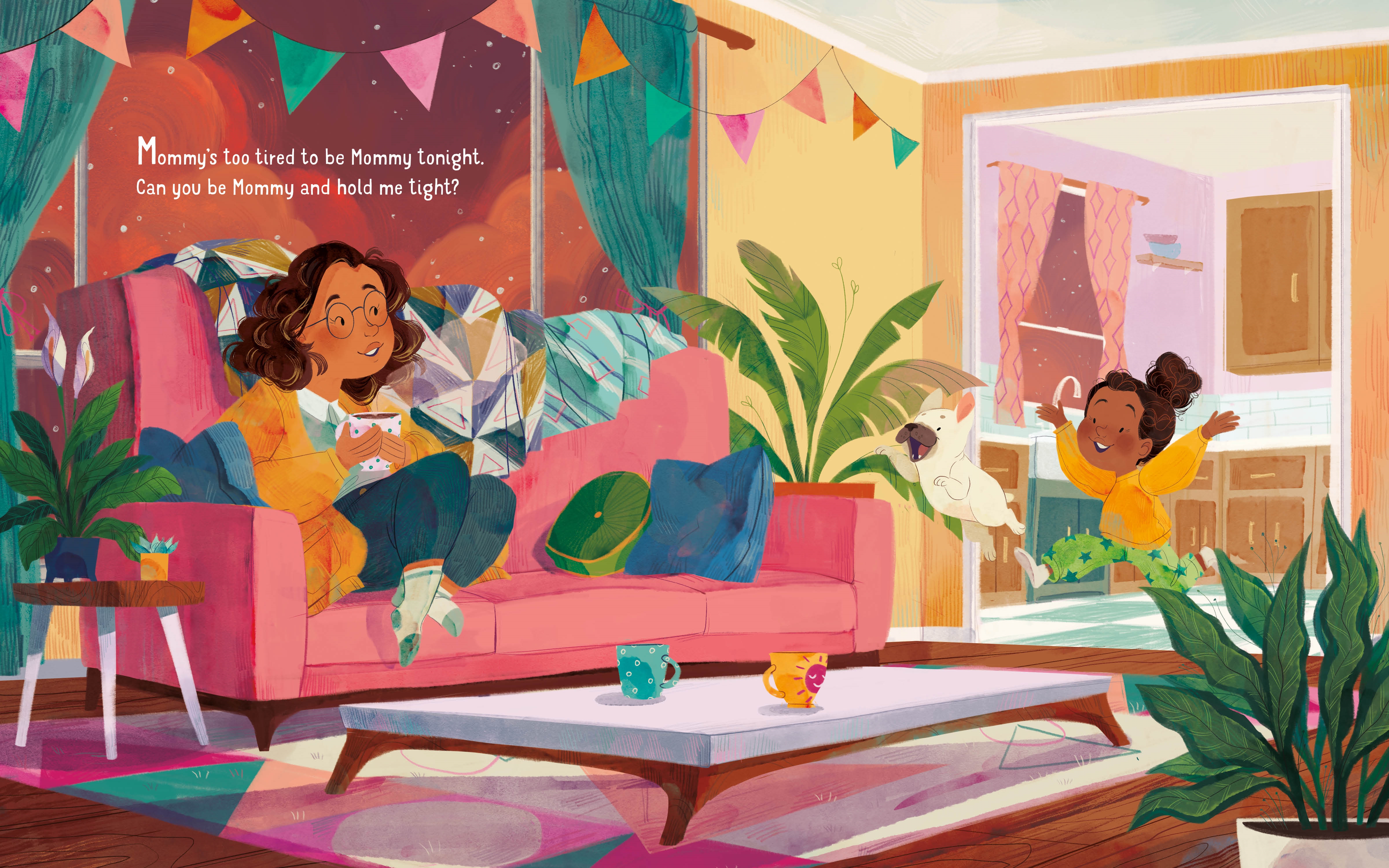
Moms everywhere will appreciate this one. The Mommy in this story is exhausted from a full day, and she’s just too tired to be Mommy at the moment… so she asks her daughter if she can be Mommy for the night. This rhyming story is chock full of Mom moments we know so well: working a full day, cleaning up messes, feeding the masses, helping with homework, even bathing the dog. Mommy is pooped, so she needs someone to check under her bed for monsters, give her some head and tummy rubs, and kisses good night. But the little girl seems to be pretty tired, too… so maybe Mommy will just take a little break, rather than the whole night off. An adorable story that salutes Moms everywhere, You Be Mommy has colorful, warm illustrations. Endpapers feature the family dog, enviably dozing with Mom’s ever-present cups of coffee nearby. Mom and family are people of color.

A sweet story to read while your little one(s) take on some Mommy duties for the day.


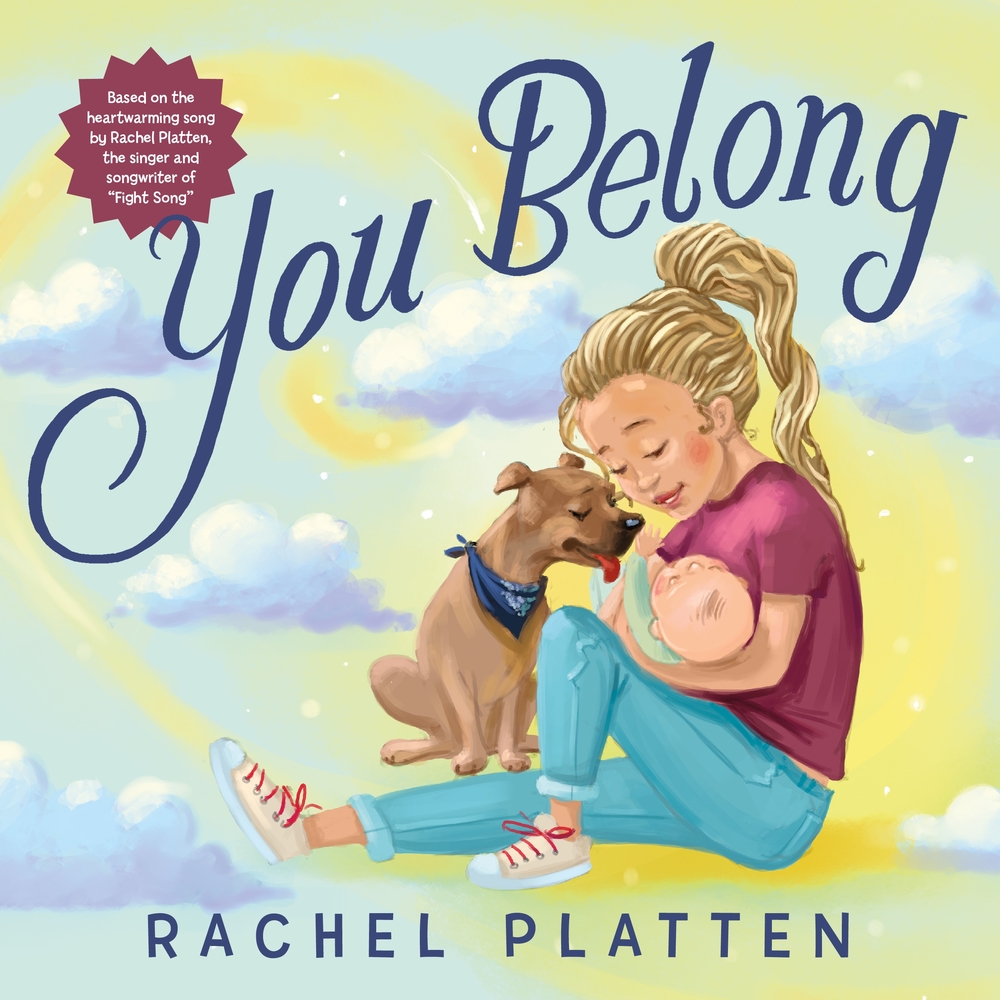
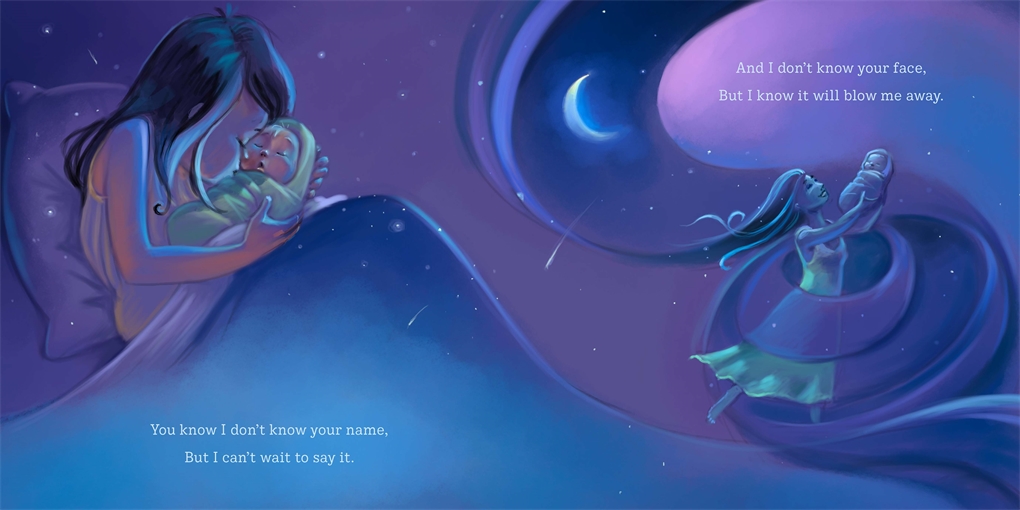
You Belong, by Rachel Platten/Illustrated by Marcin Piwowarski, (March 2020, Feiwel & Friends), $17.99, ISBN: 9781250240163

Ages 0-5

Singer-songwriter Rachel Platten’s ode to newborn babies and motherhood explores the feelings, hopes, and dreams an expectant mom has while waiting for her baby to arrive: “I’m waiting patiently for you to arrive. / I want to meet you so much I could cry”. The song weaves through images of multicultural families, both expectant and with young children, creating lump-in-the-throat moments for moms, calling up memories of talking to bellies and holding up outfits at baby showers; tending to skinned knees or providing a loving hug; soaring on rainbows and dancing on air. Digital artwork creates soft, colorful images that bring the words of Rachel Platten’s song to life. This is a sweet Mother’s Day gift, baby shower gift, and storytime read.


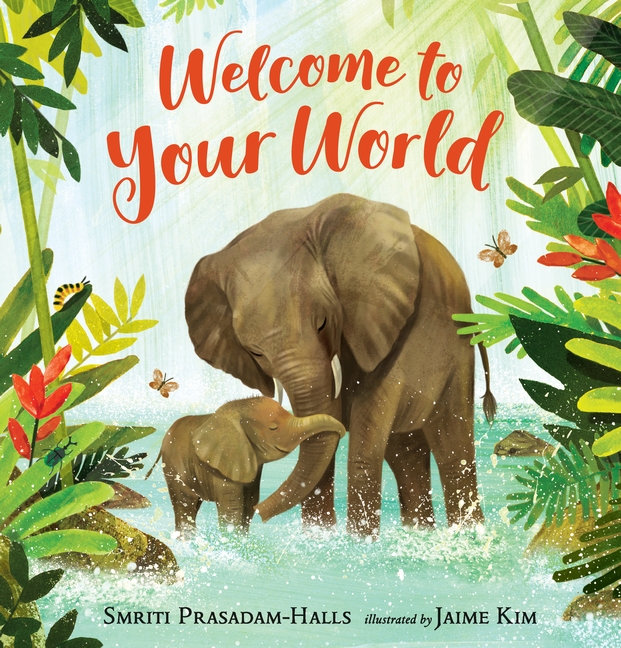
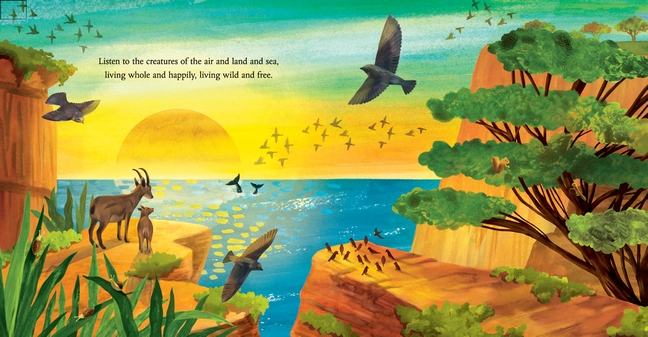
Welcome to Your World, by Smriti Prasadam-Halls/Illustrated by Jaime Kim, (March 2020, Candlewick Press), $16.99, ISBN: 9781536206227

Ages 0-5

A sweet rhyming story with images of parent-child animals and an underlying message about caring for our planet, Welcome to Your World rejoices in parenting, nature and the bond we have with our world. Beginning and concluding with images of a human mother holding her child, verses explore the sky, land, ocean, the elements, and the beauty of our surroundings: “Can you feel the raindrops landing on your nose? Can you feel the waterfall tickling your toes?” Earthy watercolors create waterfalls, oceanscapes, and snowy mountains where wild animals roam free, bringing us back to a parent and child, cuddled together, imagining their place in the great scheme of things. Gentle and soft, this is a lovely way to get ready for bed or a nice addition to an animal-related storytime. This would pair nicely with Mother Earth’s Lullaby (2018).

Posted in picture books, Preschool Reads

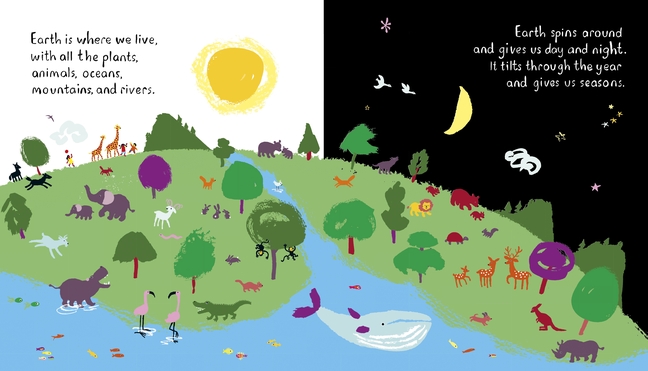
Happy Earth Day! Books for the Journey.

Tomorrow is Earth Day, which is a surreal experience when we’re sheltering in place. Luckily, we can still go out, taking precautions, to enjoy our world; whether it’s a walk around the neighborhood or just sitting in front of your home to notice the sky, the trees, the birds: everything around us is part of the experience. Here are some books to enjoy on the way.

Only a Tree Knows How to Be a Tree, by Mary Murphy, $16.99, ISBN: 9781536214703

Ages 3-7

Is there anything like a comfort of a Mary Murphy book? As soon as I see her artwork and that font I’ve come to know and love, I just know I’m going to experience the picture book equivalent of a hug. Her new book, Only a Tree Knows how to Be a Tree, celebrates nature and life by pointing out how we’re all unique and how we all manage to live together, here, on Earth. Trees have leaves that turn sunshine into food; birds build homes in trees and can fly; dogs can wag their tails and flick water into their mouths to drink, fish live in water and flash like jewels. We are all a part of one another, as each spread illustrates, yet only a fish can be a fish; only a bird can be a bird; only a tree can be a tree. We’re all unique. Mary Murphy’s brush and ink artwork is colorful, bright, inviting, and warm. Endpapers show vibrant areas with a varied group of people coming together to celebrate trees and play in the sun. It’s just the perfect book to start off an Earth Day readaloud.

Mary Murphy’s author website has free, downloadable coloring sheets and card crafts! Keep the fun going!

Only a Tree Knows How to Be a Tree has a starred review from Publisher’s Weekly.


Alba and the Ocean Cleanup, by Lara Hawthorne, (March 2020, Big Picture Press), $16.99, ISBN: 9781536210446

Ages 4-8

Alba is a sweet little fish who loves collecting shiny things. She enjoys being surrounded by her friends in their ocean home, but, as the ocean becomes more polluted, her friends have moved on, looking for cleaner waters and leaving Alba all alone. When Alba spies a shiny pearl, she must have it: and ends up trapped in a plastic bottle! A young girl cleaning up her beach notices Alba and takes her home to rehabilitate while the girl mobilizes her town to clean up the beach. Once she returns Alba to cleaner water, she’s thrilled to discover that her friends have returned – and that she can put her shiny pearl into her collection to proudly show off! An engaging story with dual messages makes Alba and the Ocean Cleanup such a good story to read on Earth Day and every day. Kids will be motivated by Kaia – the girl who discovers Alba trapped in a bottle – a child who makes a big difference, and they’ll relate to Alba’s love of shiny things and empathize with her experiencing her friends moving away. The artwork is colorful, vibrant, and just fun: it’s like a carnival underwater when Alba and her friends have clean living spaces! Endpapers are a colorful presentation of the ocean floor, with little Albas swimming around. Sharp-eyed readers can go back and look for 10 different kids of fish that author Lara Hawthorne provides information about at the end of the book, along with ways families can help take care of our oceans.

Alba and the Ocean Cleanup was originally published in 2019 in the UK.


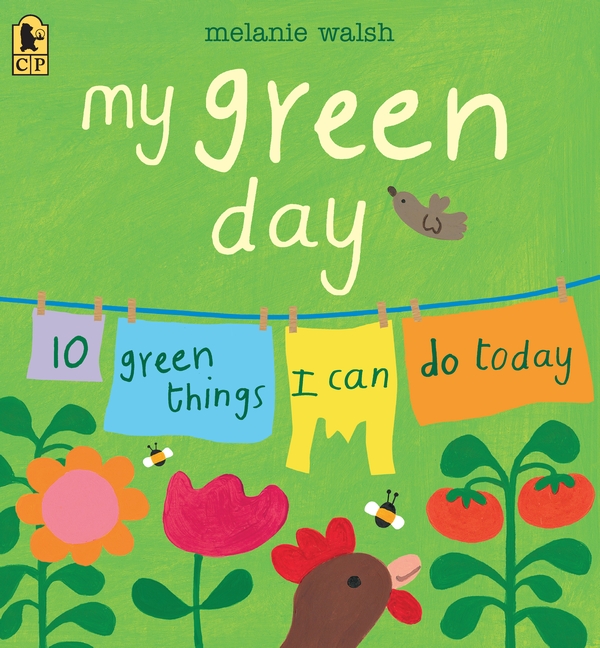
My Green Day: 10 Green Things I Can Do Today, by Melanie Green, (March 2019, Candlewick Press), $7.99, ISBN: 9781536211313

Ages 3-7

This is a must-have Earth Day book for home, classroom, and library collections. Melanie Walsh’s 10 Things I Can Do To Help My World (2012) has been an Earth Day standard for me for years; adding My Green Day to my storytime reference and my circulating collection is just a given. A narrator moves through their day coming up with ways to be green; be environmentally friendly, for the day: from eating a free-range egg breakfast and composting the egg shell, handmaking gifts with recycled materials, bringing recyclable bags to the grocery store, and taking a short shower before bed are just a handful of the green things that come up in the course of a day. Each step is a simple, easy-to-accomplish task that kids can do and feel empowered, having taken action to improve their world. Each spread has simple, helpful facts on how each task accomplishes a green goal: “Cloth bags can be used again and again. You’ll never need to use another plastic bag”; Playing outside with friends keeps you fit and makes you feel good”.

Empowering, easy-to-read, and with colorful mixed media artwork that beckons readers to the pages makes My Green Day another great Melanie Green book to add to your collections.


More to come tomorrow! In the meantime, check out the Earth Day Education Resource Library.

Posted in picture books, Preschool Reads

Books from Quarantine: Spring Picture Books

So we’re inside for a large amount of every day, but it’s still Spring outside. I’ve been looking at some beautiful picture books that celebrate the season, and thought I’d bring a little Spring to you.

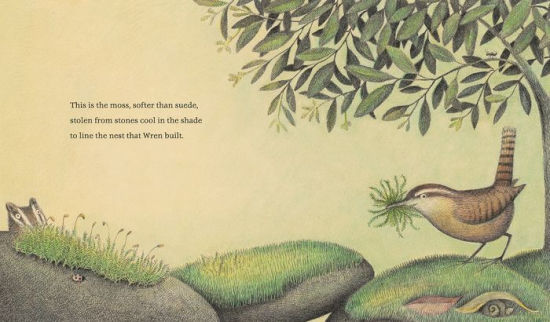
The Nest That Wren Built, by Randi Sonenshine/Illustrated by Anne Hunter, (March 2020, Candlewick Press), $16.99, ISBN: 9781536201536

Ages 3-7

An ode to nature in the form of that most famous of cumulative poems, The House That Jack Built. Two wrens build a nest and a family that comes to life as the story progresses. Flowing with imagery and details about Carolina wrens, author Randi Sonenshine and illustrate Anne Hunter create a lovely story that gives readers new surprises to behold on every spread: This is the snakeskin warding off harm, / a scaly and thin reptilian charm, / draped on the nest that Wren built”; “This is the tuft of rabbity fur, / plucked from a sharp, persnickety burr, / to warm the nest that Wren built”. Gentle ink and pencil illustrations in natural browns and greens are just breathtaking which each spread’s reveal. A glossary and page with facts about wrens add additional learning.

An excellent choice for storytimes and for STEM/Science classes for preschoolers and kindergartners. Great inspiration for bird-related crafts and activities, like these DIY bird binoculars or this fun sensory activity. The Audobon Society has a page dedicated to the Carolina Wren, and you can read Laura Donnelly’s poem dedicated to Carolina Wrens here.

The Nest That Wren Built has a starred review from Kirkus.
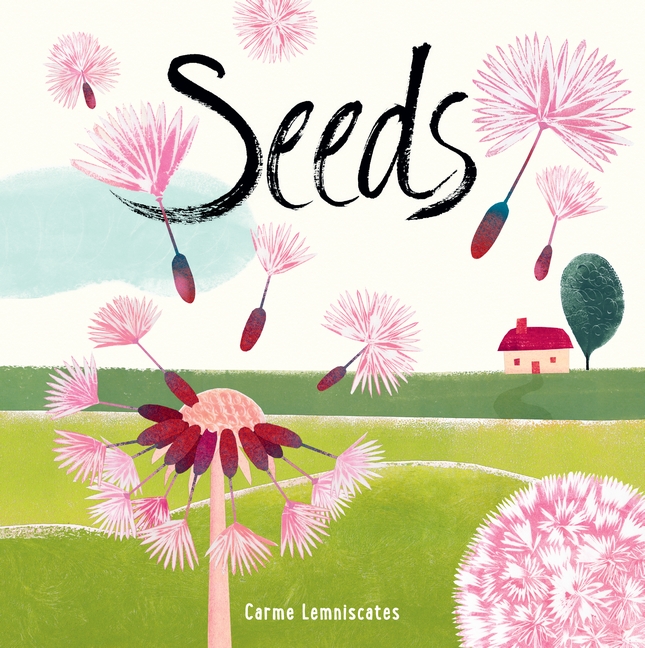
Seeds, by Carme Lemniscates, (March 2020, Candlewick Press), $14.99, ISBN: 9781536208443
Ages 3-7
A narrative on the literal and metaphorical power of seeds. “They embark on amazing adventures”, author Carme Lemniscates begins, with illustrations of seed journeys via dandelion puffs and sunflower seeds; underground to sustain ant colonies, and bursting to life as flowers and food. Seeds bring life to the most unlikely places, as we all know; anyone who’s seen leaves sprout from cracks in concrete can attest to that. We are part of the seed’s life cycle as the sowers and caretakers of seeds, reminding readers that we have a big responsibility to our planet. The narrative takes on a solemn note when Lemniscates notes that “we can plant many different kinds of seeds. A smile is a powerful seed… But there are also seeds that bring anger and misunderstanding. When those seeds grow, they pull us apart. Seeds can only bring what they carry.” Pretty powerful words that need repeating. Often.
Carme Lemniscates’ mixed media illustrations bring a crisp life to the illustrations, with browns and greens from nature sharing the space with brightly colored flowers and characters. A wonderful story about friendship and nature, and how we are bound to nature. Great for preschoolers and kindergarteners.

The Seedling That Didn’t Want to Grow, by Brita Tecktentrup, (March 2020, Prestel), $14.95, ISBN: 978-3-7913-7429-1

I never hide my love for Brita Teckentrup, and The Seedling That Didn’t Want to Grow is another hit for me. A seedling takes its time growing in a forest while all the other seeds sprout up around it. Forest friends Ladybird (I love that word) and Ant wait patiently, and when the seedling begins sprouting, Ant and Ladybird follow it along its path, with other forest creatures joining them along their way. The seedling sprouts into a bush full of blossoms, giving home to forest animals who live in her leaves, filling her with “love and life”, but Fall eventually comes, and the animals tearfully say goodbye. But Spring will come again, and with it, a new batch of seedlings, left by their friend.
An aching, unfussy story of friendship set within the nature cycle, The Seedling That Didn’t Want To Grow is filled with catch-your-breath moments: each friend guarding and guiding the seedling as it grows; the change in perspective to showcase the seedling at full growth, housing butterflies, bees, moths, and more; Little Mouse’s farewell… just gorgeous moments, made even more touching by the deep colors of nature and the collage-like feel of the artwork. This is definitely a book on my storytime shelf.
Posted in Fiction, Intermediate, picture books

The Fabulous, the Mysterious, Madame Badobedah!

Madame Badobedah, by Sophie Dahl/Illustrated by Lauren O’Hara, (April 2020, Walker Books), $18.99, ISBN: 9781536210224

Ages 5-8

Mabel is a young girl living in the Mermaid Hotel, where her parents work. There’s always something to see and do at the Mermaid, but when a mysterious, somewhat eccentric old lady moves in, Mabel puts on her detective hat. Madame Badobedah, as Mabel calls her, has simply got to be a supervillain. When Mabel begins investigating Madame Badobedah, she discovers a much softer, kinder, friendlier woman, and the two unlikely friends explore the hotel – and beyond – together.

This is a sweet story of intergenerational friendships, with a Dahl-esque fantastic twist (Sophie Dahl is author Roald Dahl’s granddaughter). Mabel is a smart, curious girl a la Harriet the Spy; Madame Badobedah is a fabulously exotic, mysterious figure that readers can’t help but be drawn to: “She was old, old, old. With red lips. She was not alone. She had two dogs, two cats, a tortoise, and twenty-three bags, all clustered around her like a choir. I thought she might be a little awful”, as Mabel describes her. She calls people “Darlink”, and has “red, crunchy hair”. Dahl’s descriptions are vivid and wonderfully brought to life by Lauren O’Hara, whose watercolor illustrations add a surreal touch to this incredible story. Blue and white beachy endpapers really put the reader into a spring/summer mindset.

Originally published in the UK in 2019, I’m very happy to be welcoming Sophie Dahl to US readers. Great for a read-aloud to school-age readers, Madame Badobedah also allows for an art/English exercise where kids can draw their own versions of Madame Badobedah, a room in the Mermaid Hotel, or where their own hidden corridor would lead to.

Madame Badobedah has starred reviews from Kirkus and Booklist.

Posted in Animal Fiction, Fiction, Fiction, Fiction, Intermediate, Middle Grade

Chapter books to take on a camping trip

I know, right now, camping is probably the furthest thing from your minds, but why not? My older boys loved “camping out” in our living room, spreading comforters on the floor for cushioning, and staying up all night giggling and falling asleep while talking into the wee hours of the morning. My eldest “camps” in his little brother’s room in the dog days of summer, when Gabe’s air conditioner is a lot cooler than Will’s. And Gabe and his buddies have had sleepovers where they camp out, sleeping bags all over the living room, and stuffed animals, action figures, and assorted iPads strewn about. So why not consider a camping trip for your kiddos now? Hike on over to a room that can fit you all, and settle in with some snacks, some games, and some good books.

McTavish Goes Wild, by Meg Rosoff/Illustrated by Grace Easton, (May 2020, Candlewick Press), $21.99, ISBN: 9781536203318

Ages 7-10

Originally published in the UK, this is the second book in the McTavish Stories series, starring a rescued dog and his adopted family – although, as McTavish would tell you, he’s the one who rescued them. The Peachey family is a little quirky, as most families are; in this second installment, the family frets over where to go on vacation. Young Betty Peachey wants to go camping, but Pa Peachey is convinced that nature is far too dangerous to be out and about in. Teenage brother Ollie just wants to be somewhere where there are dance clubs where he can find a girlfriend, and big sister Ava wants to stay home and read German philosophy. Thank goodness for Ma Peachey, who sides with Betty. Once out in nature, McTavish sees that it’s up to him to get this family acclimated to the Great Outdoors, in sweet and fun fashion. The story is gentle, moves at a leisurely pace with humor throughout. Black and white drawings give life to the text. Intermediate readers will get a kick out of this quirky family and their canine companion, who seems to be two steps ahead of the game. You won’t need to have read the first book, Good Dog McTavish, to jump right into this series, but animal fiction fans will want to – make sure you have both on the shelf.

The Infamous Ratsos Camp Out, by Kara LaReau/Illustrated by Matt Myers, (May 2020, Candlewick Press), $19.99, ISBN: 9781536200065

Ages 6-10

The fifth book in the Infamous Ratsos series Ralphie and Louie Ratso going on a camping trip with the Big City Scouts, with Grandpa Ratso as their guide. Even with Grandpa’s guidance and experience as a Scoutmaster, the Scouts learn that camping isn’t as easy as they think it is: pitching a tent, making a fire, and finding their way through the woods is hard! They have to learn to work together, and they have to learn that asking for help is the most important skill a Scout – or anyone – can have. With fun scout-meets-urban living references to badges like City Smarts and Cleanup, and scouting levels like Streets and Avenues instead of Cub and Weeblo, this is a cute addition to the series. Black and white cartoony illustrations of the Ratsos throughout the book really engage the reader. Enjoy a chapter sample from Candlewick’s page and consider adding this series to your intermediate collection if you haven’t yet.

Make some merit badges – all you need is paper, scissors, and imagination! Come up with fun merit badge ideas: ate a vegetable, read for 30 minutes, Kitchen Science, Minecrafter. The possibilities are endless, and we’re not going anywhere, anytime soon. Make it fun.