From sharks, to space, to stories of survival in the wild, I’ve got books for all sorts of nonfiction tastes! Let’s start with the oogie stuff and go from there.
 They Lost Their Heads! What Happened to Washington’s Teeth, Einstein’s Brain, and Other Famous Body Parts, by Carlyn Beccia, (Apr. 2018, Bloomsbury), $18.99, ISBN: 9780802737458
Recommended for readers 10+
If you have readers who loved Georgia Bragg and Kevin O’Malley’s books, How They Croaked: Awful Ends of the Awfully Famous, and How They Choked: Failures, Flops, and Flaws of the Awfully Famous, this is a home run! Learn what happened to the famous body parts of 17 famous folks, and pick up some knowledge about other body parts and how they influenced science medicine. If you’ve ever ever wanted to know what happened to Thomas Edison’s last breath or Van Gogh’s missing ear, this is the place to go. You also learn cool stuff like what rots first after you die (psst… it’s the intestines). Loaded with black and white drawings, funny footnotes, sources, an index, and a bibliography. This one’s a hit for upper elementary readers, all the way through high school. They Lost Their Heads! has a starred review from Booklist.
 StarTalk with Neil DeGrasse Tyson (Young Readers Edition), by National Geographic, (March 2018, National Geographic), $17.99, ISBN: 9781426330872
Recommended for readers 10+
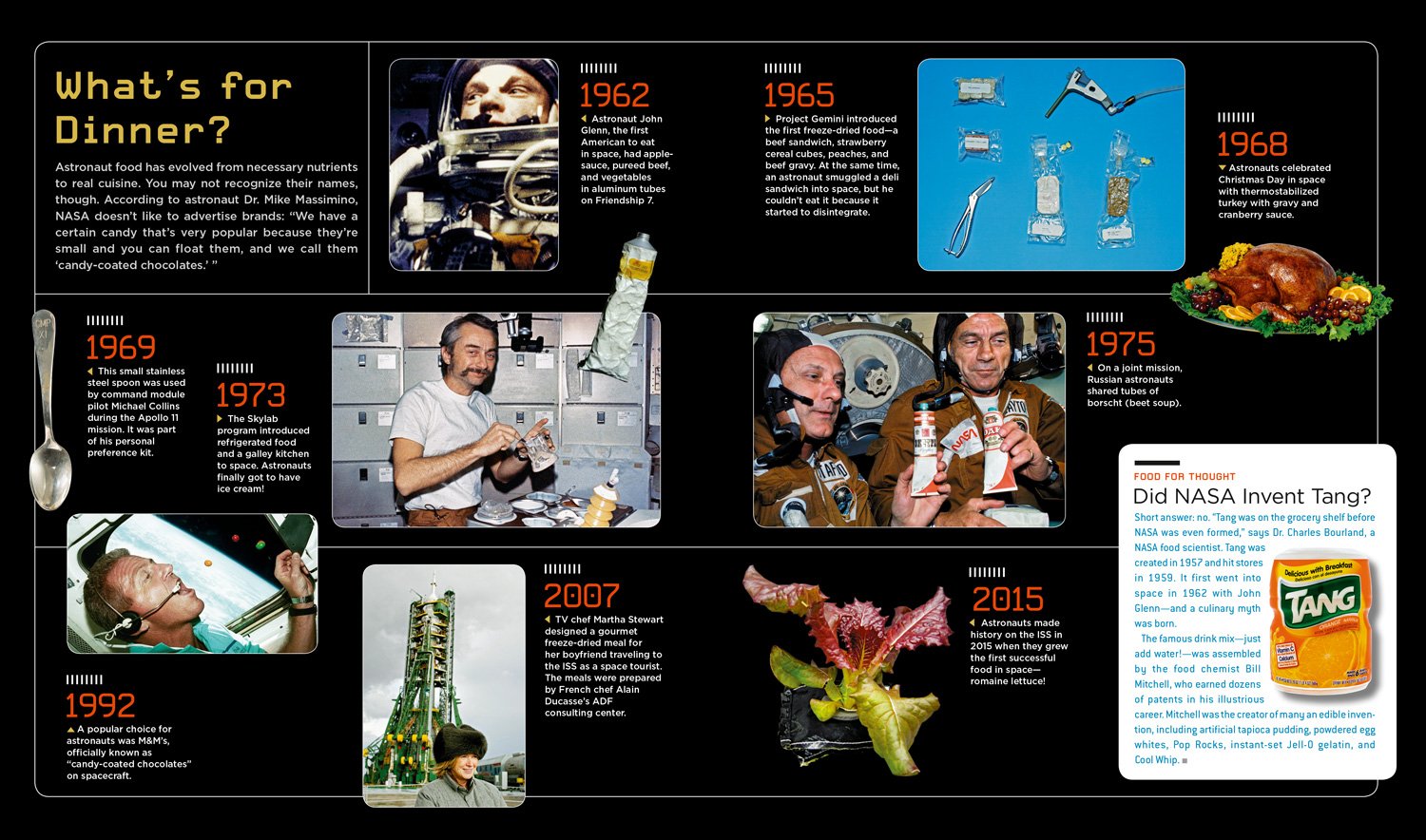
I LOVE Neil DeGrasse Tyson and evangelize his StarTalk Radio podcast any chance I get. (Seriously, it’s great stuff.) NatGeo’s Young Readers edition of the StarTalk book is must-booktalk summer reading. Get your Summer Reading budget and buy some astronaut ice cream; while you and the kids feast, read the section on why you can’t get a pulled pork sandwich in space; find out what the Vomit Comet is; and read mini-bios on scientists like Carl Sagan. Not so much with the food? There are also sections on zombies and superheroes. Debate the eternal question: Could the Death Star really blow up a planet? There’s so much to discover in this book that every kid is darn near guaranteed to find something to interest him or her. (Psst… get an extra copy for yourself. You’ll thank me.)
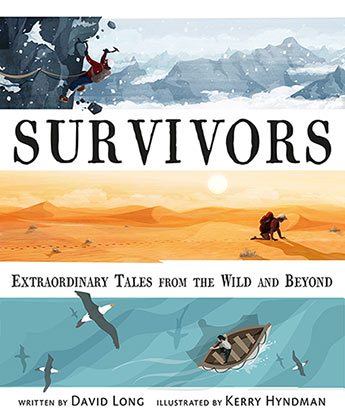 Survivors: Extraordinary tales from the Wild and Beyond, by David Long/Illustrated by Kerry Hyndman, (Sept. 2017, Faber & Faber), $19.95, ISBN: 9780571316014
Recommended for readers 9-13
Do you know fans of Lauren Tarshis’ I Survived series? I’ve never been able to keep those books on the shelves, no matter which library I’ve been at. Middle graders go berserk for that series, and they’ll LOVE this oversized, illustrated anthology of true survival tales. There are 23 stories in here; the most famous being explorer Ernest Shackleton, who saved his crew when a 1914 Antarctic expedition put their lives in danger. There’s also the story of Hugh Glass, a “fur trapper and adventurer” who made the critical error of surprising a mother bear and her cubs by the Missouri River in 1823, or Mauro Prosperi, a runner competing in the 1994 Marathon of the Sands through the Sahara Desert, found himself in the middle of a sandstorm. Not crazy enough for your readers? There’s also a Hollywood pilot who crashed INSIDE a Hawaiian volcano in 1992. The stories are fast-paced, beautifully illustrated in color, and are perfect for adventure fans. Best part? All the stories are TRUE.
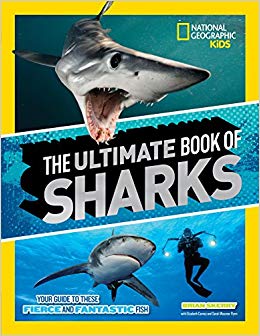 The Ultimate Book of Sharks, by Brian Skerry, Elizabeth Carney, & Sarah Wassner Flynn, (May 2018, National Geographic Kids), $19.99, ISBN: 9781426330711
Recommended for readers 7-13
Kids love sharks. This is a fact. The Ultimate Book of Sharks has all the info and pictures your shark-loving fans crave, just in time for Shark Week, which kicks off on July 22 (get your printables and programs lined up – I’ll do a separate post about Shark Week as it gets closer). The NatGeo folks bust myths about sharks, give us a look at shark anatomy, and – as always – provide loads of information about conservation and preservation, and how we can all help keep sharks, and our waters, safe and clean. This volume is chock full of fast facts and lists, with Up-Close Encounters, where marine wildlife photojournalist and author Brian Skerry shares some of his stories with readers. There’s an index at the end. This volume is an absolute must-add to your science and nature collections.

 Red Alert! Endangered Animals Around the World, by Catherin Barr/Illustrated by Anne Wilson, (July 2018, Charlesbridge), $17.99, ISBN: 9781580898393
Recommended for readers 7-11
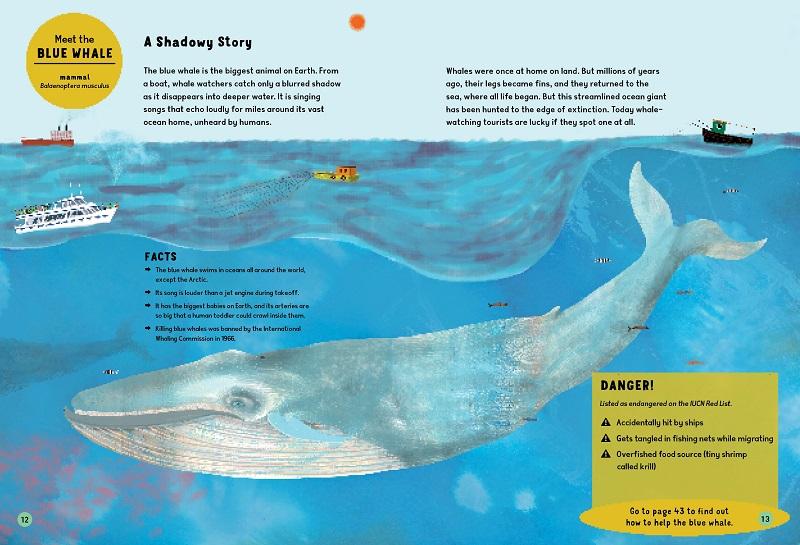
This is such a fun book. Think of a Choose Your Own Adventure about endangered animals, and you’ve got Red Alert! Red Alert! profiles 15 animals on the International Union for Conservation of Nature’s (IUCN) list. A beginning note explains the organization’s “Red List”: a list of endangered plants, animals, and fungi, and lists some of the categories mentioned in the book. Colorful endpapers start the fun: the first, a map of the world, with the 15 profiled animals drawn into their world regions; final endpapers highlight a plethora of endangered animals. From here, readers can pick a place to explore: deserts, forests, mountains, grasslands, rivers, or oceans; pick a creature from each of these regions, and go to its page to read further. You can also read the book straight through. Spreads include the animals’ scientific names, facts, endangered category, and factors contributing to the endangerment of the species. A section at the end provides resources for more information on taking conservation action. A solid introduction to environmental action for younger readers.
 National Geographic Kids Almanac (2019 Edition), (May 2018, National Geographic Kids), $14.99, ISBN: 9781426330131
Recommended for readers 8-13
Another guaranteed must-have from NatGeo Kids, this latest edition of their Kids Almanac shows readers a baby animal “tweet-off” between several zoos and aquariums (it’s from 2017, but who doesn’t want to revisit that simpler, lovelier time?), talks about updates in robotics and technology, dwarf planets, and has a Special Gross Edition of their Just Joking feature. Facts, quizzes, updated maps and stats, and homework help ideas all in one volume? This is one desk reference every kid should have – put one on your shelves, and keep one in your reference area, to be on the safe side.


How’s that for a start? Next time a kid comes in, stressed about needing a nonfiction book, consider yourself ready.
 Mom Read It