Posted in picture books, Preschool Reads

Counting, Colors, and Animals Eating – Concept Fun!

Two fun picture books give kids the giggles while inviting them to count, call out colors, and animals!
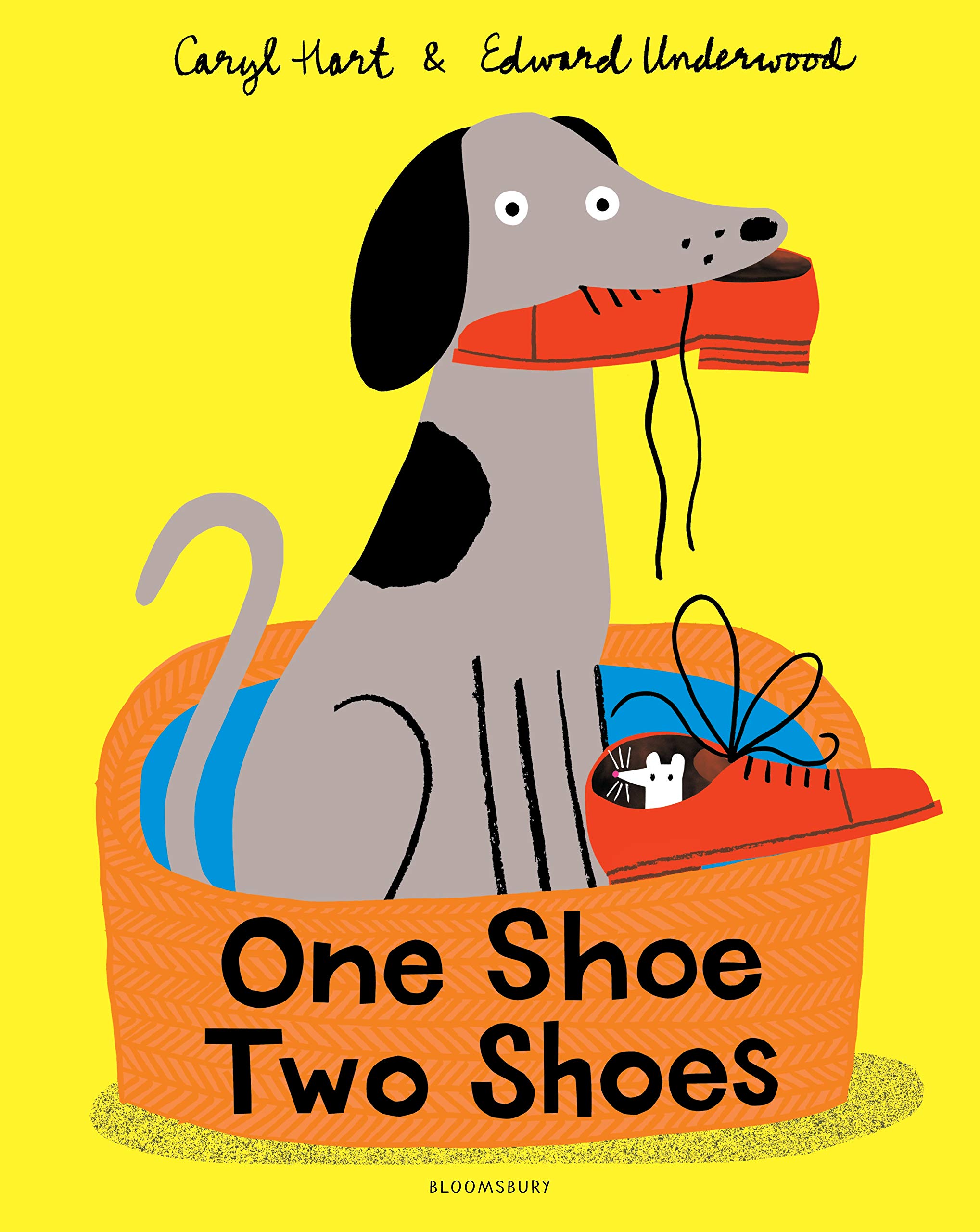
One Shoe Two Shoes, by Caryl Hart/Illustrated by Edward Underwood, (July 2019, Bloomsbury USA), $17.99, ISBN: 978-1-5476-0094-6

Ages 3-6

A dog and a bunch of curious mice explore all the shoes in their world in this adorable rhyming story. The rhyming pattern reminds me of Dr. Seuss’ classic, One Fish, Two Fish, Red Fish, Blue Fish – “Old shoes/New shoes/On their way to school shoes” – minus the wacky, new words. The pup notices shoes all around, both inside and outside the home, when…. wait! There are two mice, making a home in a pair of shoes! A few more scramble by the dog, and before you can say “shoelace”, there are 10 mice, all making their homes in various sneakers, skates, and boots.

Originally published in the UK in 2018, this is an absolutely fun concept book that would work nicely with felt board accompaniment. The pencil, ink, and digital collage artwork is bold and bright, with primary colors and bold black fonts. The endpapers are loaded with footwear. The rhyming, counting, and colors in this book make it a multitasker for concepts, making this a good add to your concept bookshelves and storytimes. Pair with Hart and Underwood’s companion picture book, Big Box Little Box for more concept fun!

Visit author Caryl Hart’s webpage for info about visits and, for aspiring writers, mentorship! Illustrator Edward Underwood features more of his artwork on his Instagram.

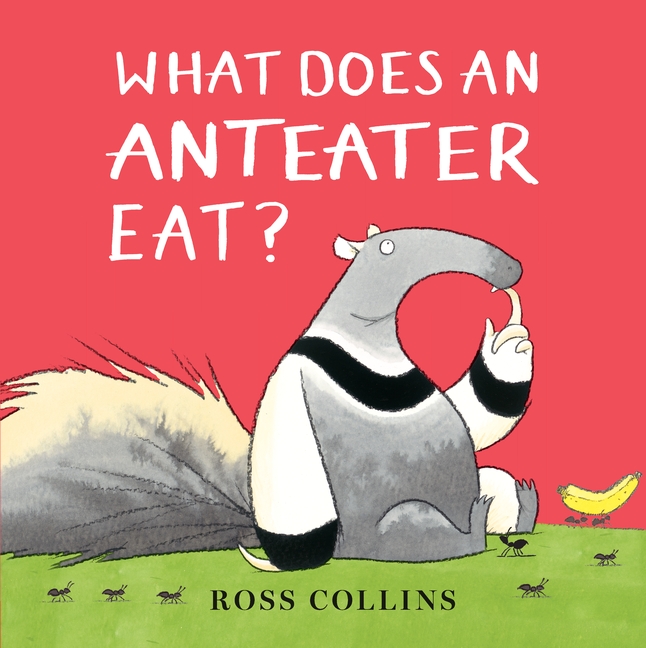
What Does an Anteater Eat?, by Ross Collins, (July 2019, Nosy Crow), $16.99, ISBN: 978-1-5362-0591-6

Ages 3-6

Anteater wakes up hungry, but there’s a bit of a problem. What does an anteater eat? He sets off to find out, asking sloths, snakes, bats, and cheetahs he encounters on his exploratory walk, all with different results. The book is one hilarious inside joke – we know what the anteater eats, and it’s a good bet that the ants scurrying across each spread in the story do, too – presented in Q&A format. The anteater asks every new animal he meets what anteaters eat, and the animals’ responses are colored by their experiences: the snake, belly bulging with its latest meal, cautions the anteater to chew its food; the cheetah hungrily eyes the anteater. The anteater’s questions are in bold font; the responses, in italics, signaling the chance in voice to your audience. The adorable, funny ending makes the book a storytime winner for toddlers and preschoolers.

Originally published in the UK in 2018, What Does an Anteater Eat? has the playfulness that make Ross Collins’ books so much fun to read. This one is another great candidate for felt board storytelling or puppet accompaniment. Collins’ artwork is cartoony and entertaining with a playful sense of joy added to each spread. The endpapers are in on the story’s joke, starting with an ant crawling across the front endpapers, and finishing with a pile of banana peels.

This one is a storytime winner. Ross Collins’ author webpage includes info about his books, and provides free, printable posters of his book covers and a few activity sheets.

Posted in picture books, Preschool Reads

Buggy Books!

It’s summer, and there are bugs. Why not talk about a couple of great bug books that have hit shelves recently?

Firefly Home, by Jane Clarke/Illustrated by Britta Teckentrup, (June 2019, Nosy Crow), $14.99, ISBN: 978-1-5362-0587-9

Ages 3-6

This book is ADORABLE. It’s also perfect for a storytime readaloud, as it’s very interactive. Little Florence Firefly is lost, and there are so many bright lights around her will she ever get home? That’s up to you and your readers, because this sweet little story is loaded with reader prompts to help Florence: flapping hands to show Florence how to fly fast, turning pages, making wishes are just a few of the ways readers can help Florence get back to her home. The text is made up of short sentences, with questions on each page, inviting readers to get involved. This is just too much fun to read out loud! Brita Teckentrup’s artwork is always a pleasure to enjoy; here, her digital artwork creates a sweet little firefly with a bright yellow light, with deep nighttime blues and muted colorful flowers and leaves throughout. House, train, and streetlights are bright and bold, matching our little firefly’s light.

This one is a must-buy, must-read. Let your kids make a firefly craft with this template, and use yellow tissue paper for the tail!


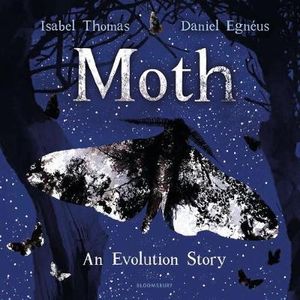
Moth: An Evolution Story, by Isabel Thomas/Illustrated by Daniel Egnéus, (June 2019, Bloomsbury Children’s Books), $18.99, ISBN: 978-1-5476-0020-5

Ages 5-8

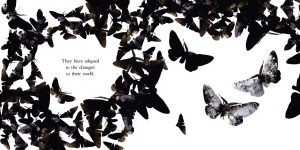
This stunning book tells the story of the peppered moth and its evolution, and humanity’s intervention in the process. Originally, peppered moths emerged as light with dark speckling; dark moths were easier to spot against trees and were easy prey. But as humans created factories and machines, spewing pollution into the air, the branches moths sought out became blackened with soot, putting light peppered moths at the mercy of birds, bats, and other predators. But wait! We’ve gotten better! We’ve cleaned up our world, and the trees and surroundings have gotten cleaner again! The moths adapted once again, passing their speckled wings onto new generations. Moth is a powerful story of change and hope for the future, seen through the evolution of a single species directly affected by us.

This is one of the most visually stunning books I’ve read this year. Mixed media illustrations create gorgeous texture, and the moths seem to emerge from the pages in an almost dreamlike fashion. The factories and towers look menacing, silhouetted against grey and black skies; as humanity works to heal the earth, hopeful blue skies break through the gloom. The art and text together create a dramatic, emotionally powerful experience. Originally released in the UK last year, Moth has just hit U.S. shelves and is perfect to supplement a unit on evolution, environmentalism, and conservation.

Posted in Espionage, Middle Grade, Non-fiction, Tween Reads

Can You Crack the Code? makes codebreakers out of your readers

Can You Crack the Code? A Fascinating History of Ciphers and Cryptography, by Ella Schwartz/Illustrated by Lily Williams, (March 2019, Bloomsbury USA), $21.99, ISBN: 9781681195148

Ages 10-13

Three years ago, I held a great, week-long Spy program at my library for Summer Reading. The kids went berserk for it; I had a blast planning and running it, and books like Can You Crack the Code? make me think it might be time to hold a program like that again. Ella Schwartz has come up with a nice history of codes, code names, and cryptography for middle graders, with loads of pictures, informative sidebars, and activities to keep readers on their toes. Famous moments in cryptography history include the Caesar Cipher, invented by Julius Caesar, the Arnold Cipher, used by the infamous Benedict Arnold, and the Enigma machine, used by the Germans during World War II; the machine that gave them the upper hand until a team of British codebreakers at Bletchley Park finally broke the code (shout-out to computer scientist and codebreaker Alan Turing). Want to know why you have to generate a strong password, obnoxious as it may be? Check out the “Can You Hack the Bank?” activity and you’ll be changing all of your passwords. A final challenge has readers going through the book to solve one last cipher. There’s a comprehensive bibliography and the book is indexed, making this a nice volume to have on your shelves.

Display this with the Book Scavenger series, the Mr. Lemoncello’s Library books, the Secret Coders graphic novels, and – naturally! – the Girls Who Code books, both fiction and nonfiction. Brightly has a good post on fiction with puzzles and codes.

Now, if you’ll excuse me, it’s time to revisit some of my old Summer Reading plans… I know this year’s theme is A Universe of Stories; maybe I’ll just use some codes to send them into space! Great escape room ideas in here, too. All around fun for your brain-teaser-loving readers.

Posted in picture books, Preschool Reads

When Mom and Dad say no, Baby takes matters into his own hands… Baby’s First Bank Heist

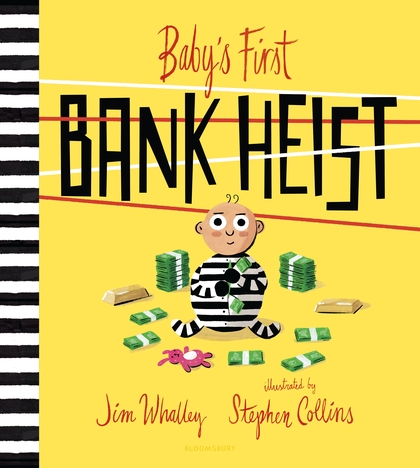
Baby’s First Bank Heist, by Jim Whalley/Illustrated by Stephen Collins, (March 2019, Bloomsbury), $17.99, ISBN: 9781547600625

Ages 3-7

Baby Frank is a cute little baby who loves animals and would love to have a pet, but Mom and Dad each say no. This doesn’t sit well with Baby Frank, who devises his own moneymaking scheme: he’s going to rob a bank. Hey, he’s already rocking black and white striped pajamas! He’s little, so he can crawl his way through laser beam alarm systems and past dozing guards. One Frank starts raking in the cash, he amasses quite the animal collection – but how much longer can he hide things from his parents? Frank’s cover is blown, and his parents devise a suitably adorable plan to repay the banks and put Frank to work.

Originally published in the UK, Baby’s First Bank Heist is a cute rhyming story that preschoolers and kindergartners will enjoy; they’ll appreciate Frank’s taking matters into his own hands, and they’ll get a laugh out of the different ways he tries to hide his growing menagerie from his parents. Cartoony gouache, ink, and Photoshop artwork is appealing, and makes for a fun pet storytime. Put some stuffed animals around the room and let the kids gather a few wild pets of their own.

YouthLitReviews, Imagination Soup, and Pre-Kinders all have really good pet picture book lists – add some to your pet storytime! Boss Baby is a good readalike, for stories about babies who are more than meets the eye. I also like Crackerjack Jack for a fun rhyming story about a robber waylaid by his duck. Hey… he kinda looks like Frank, come to think of it…

Posted in picture books, Preschool Reads

Croc & Turtle are the BEST at being best friends!

Croc & Turtle! The Bestest Friends Ever!, by Mike Wohnoutka, (Feb. 2019, Bloomsbury Children’s Books), $17.99, ISBN: 9781681196343

Ages 3-6

Croc tells his buddy, Turtle, that he’s the strongest, fastest, highest jumper… but he gets proven wrong each time! When Croc starts to feel down on himself, Turtle knows that just won’t do: he’s the best friend to Turtle. And Croc assures Turtle that he’s the best friend to Croc. They’re both the best at something! Yay! A sweet story about not having to be “the best” at things to have value, Croc and Turtle! The Bestest Friends Ever is comical, entertaining, and delivers a valuable message.

Written as a dialogue between the two friends, with other friendly animals chiming in, this works for storytime, one-on-one, and individual reading. The text includes short and mid-length sentences, with sound effects and plenty of sight words for newly independent readers; toddlers and preschoolers will love the cartoony artwork and the big facial expressions; the gouache artwork is done in pastels and is very little kiddo-friendly. Croc & Turtle! The Bestest Friends Ever! is a good addition to your picture book collections, and I look forward to seeing more Croc & Turtle adventures.

Mike Wohnoutka is an ALA Notable book author; his books, Can’t Sleep without Sheep, Jack’s House, and This is NOT a Cat have been designated as Blue Ribbon selections by the Bulletin of the Center for Chidren’s Books.


Posted in picture books, Preschool Reads

A little post-Halloween fun: Bear’s Scare

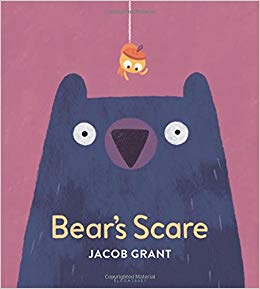
Bear’s Scare, by Jacob Grant, (June 2018, Bloomsbury), $16.99, ISBN: 9781681197203

Ages 3-6

Bear keeps a tidy house for himself and his friend, a stuffed bear named Ursa. He loves to clean the house every day, but one day, he notices something: a cobweb! As he searches his home, he notices another web! And another! Convinced he has a spider problem, Bear works himself into a frenzy – the spider is covering the house with webs! It’s making it sticky mess! – and tears his home apart, searching for the spider. The pictures belie what Bear imagines is happening, as we see the spider very politely knitting, painting, and reading a book as Bear turns his house upside down. In his panic to get the messy spider out of his house, Bear traps Ursa’s arm under a chair and tears it off when he pulls her. Stunned into realization, Bear focuses on getting Ursa some first aid, only to discover that the spider has stitched Ursa’s arm together with its own silk. Bear discovers that getting to know someone is a much better way to determine one’s character, and embraces his new friend – who invites some more new friends to visit.

Bear’s Scare is an adorable story about how our own perceptions can get away from us, and the havoc it wreaks. The charcoal and crayon artwork lends a hand-crafted feel to the story, with digital coloring adding a depth of warm color. Bear is a deep navy blue; he stands out against his earth-toned home yellow spider neighbor. Pages are mostly bright white, with the artwork standing out against the background, with some full bleed spreads, usually for a more dramatic moment. The plain black font lets the artwork tell the full story while the text is there to let the storyteller be as tongue-in-cheek as they want to be.

Bear’s Scare is adorable fun with a smart message about friendship and judging others on appearances. It’s a nice add to picture book collections where kids enjoy a little wink, wink, nudge, nudge humor.

See more of Jacob Grant’s artwork and information about his books at his website.

Posted in picture books, Preschool Reads

Perfectly Norman is perfectly lovely

Perfectly Norman, by Tom Percival, (May 2018, Bloomsbury USA), $16.99, ISBN: 9781681197852

Ages 4-7

Norman is a perfectly normal little boy until the day he sprouts big, colorful wings! At first, he enjoys his wings and the freedom they give him, letting him soar through the sky, but then worry slips in: what would his parents think?  Norman slips on a heavy yellow coat and resigns himself to being hot, uncomfortable, and sad, until his parents encourage him to take off the coat. Norman unfurls his beautiful wings, embraces his true self, and takes to the skies again: this time, encouraging other children to shed their coats and embrace their wings, too. Because there’s no such thing as perfectly normal, but he is perfectly Norman.

This sweet picture book embraces diversity and self-awareness. Norman is a biracial boy with a light-skinned mom and a dark-skinned dad, who shows lives and moves throughout his black and white world. Even Norman is black and white, sporting a bright yellow sweater with red striped sleeves, and carrying a bright yellow and red kite. once Norman’s wings make an appearance, though, Norman’s no longer black and white: he’s full color, and so are the blue skies and colorful birds he flies with! He soars above his black and white world, soaking in the color, until he gets called to dinner: Norman’s world goes back to black and white, the yellow coat now setting him apart in a seemingly different way, calling attention not to his uniqueness, but his desire to hide. When the colorful birds fly by him again, and his parents encourage him to shed the coat, the world fills with color again – and so do the multicultural group of kids he invites to fly with him. Perfectly Norman sends a passionate message about the freedom of self-acceptance and encourages kids to share that message with others. It’s a solid storytime read and a good addition to picture book collections.

Originally published in the UK, Perfectly Norman is available in the States. Tom Percival is also the author of the Little Legends chapter book series, which flies off the shelves.


Posted in picture books, Preschool Reads

Henry and the Yeti is about snuggle-worthy friendship!

Henry and the Yeti, by Russell Ayto, (Aug. 2018, Bloomsbury USA), $16.99, ISBN: 9781681196831

Ages 3-7

Henry is a little boy who loves yetis, but no one is quite sure whether or not yetis actually exist. Except for Henry, that is. He gets some time off from school, packs his equipment, and heads off on an expedition to the snowy mountains. Just when he’s ready to turn around and go home, SURPRISE! He finds a yeti! The two hit it off, snap some pictures, and Henry heads back home, delighted. But when he unpacks his gear, he discovers, to his horror, that he left his camera behind! How can he prove to his principal and classmates that he isn’t making things up? It’s a good thing that yetis are such good friends.

What an adorable book about friendship Henry and the Yeti is! I especially love the quirky, cool-hued artwork, making Henry and instantly likable little boy with huge glasses, expressive eyes, and a turtleneck that hides the rest of his face and covers most of his body. The yeti is an amorphous, white blob on two legs, and he, too, has tremendous, kind eyes. The size difference makes these two friends adorable together as they take selfies and share hugs. The sparse illustration allows readers to give Henry their full attention and sets him apart from his principal and classmates, all of whom stand taller and wear more shifty, less open, facial expressions. The text is tongue-in-cheek, working wonderfully with the artwork. When the principal uses a bullhorn to announce Henry’s punishment, we see the large yeti’s legs and body come into view, and the text reads, “Oh! Henry sees the yeti again. The yeti sees Henry. The principal sees the yeti. And everybody stops laughing.” The joke is on the mean crowd, and we’re there to savor it as it unfolds, as does on the next page… but I’ll let you read it for yourself. Suffice to say, Henry’s reputation is saved and he’s gained a friend for life; the principal and classmates have learned a valuable lesson about being kind. The book was originally released in the UK in 2017

Read this one out loud, and make sure you leave time for all the giggles and “awwwwwws” you’ll hear. Add Henry and the Yeti to your stories about empathy, friendship, and yes… yetis (psst… sasquatches work, too).


Posted in picture books, Preschool Reads, Toddler Reads

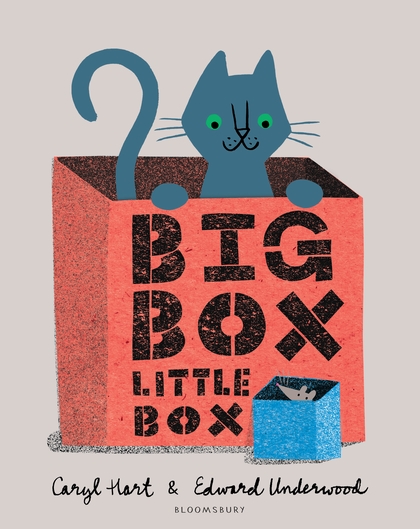
Concept Fun: Big Box, Little Box… perfect for a cat box!

Big Box Little Box, by Caryl Hart/Illustrated by Edward Underwood, (July 2018, Bloomsbury USA), $17.99, ISBN: 9781681197869

Ages 2-6

What’s the best way to illustrate the many words to describe a box? Put a cat in the story! Big Box Little Box stars a curious cat who investigates all sorts of boxes: big and little boxes; brown and blue. The descriptive words take a fun turn when the cat stands on a box (cat box?), which immediately squashes under its weight (flat box), or when human hands designate “my box” versus “YOUR box”. As our inquisitive friend wanders through the boxes, it spies a hole in a box – and a mouse! The two run and play together, providing readers with some more fun words like “tickle”, “purr”, and “warm fur”. The endpapers show a cat and mouse romp through all sorts of boxes.

This book is a fun way to introduce adjectives to beginning readers, and ways to explore objects with younger readers. The pencil, ink, and computer-assisted collage work makes for fun, angular art, vividly colored and textured, almost inviting readers to feel the rough cardboard of the boxes under their fingertips. Lois Ehlert fans will find some similarities to the artwork, and the text is repetitive with occasional rhyme, inviting interaction.

Originally released in the UK, Big Box Little Box is a companion to Hart and Underwood’s upcoming One Shoe Two Shoes, and a fun addition to toddler and preschooler collections and concept bookshelves.

Posted in Fantasy, Fiction, Middle Grade

Bad Mermaids Make Waves!

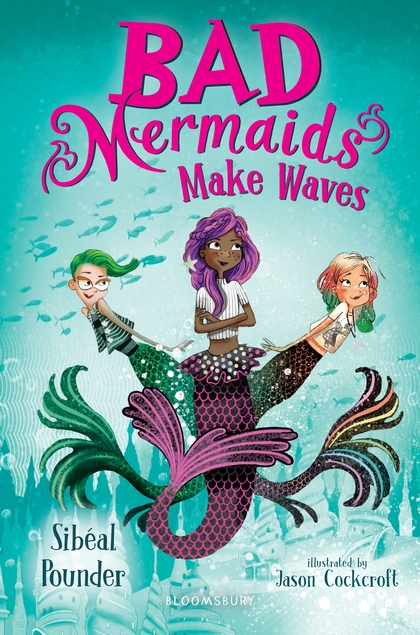
Bad Mermaids Make Waves, by Sibéal Pounder/Illustrated by Jason Cockcroft, (May 2018, Bloomsbury USA), $13.99, ISBN: 9781681197920

Recommended for readers 8-12

What happens when you’re a mermaid, spending a summer on land with your temporary legs and feet, and you have to go back under the sea early because someone fishnapped the Mermaid Queen? That’s what besties Beattie, and twin sisters Zelda and Mimi have to do in this first middle grade mermaid adventure by Witch Wars author Sibéal Pounder. The mermaids arrive back under the sea to discover everyone acting… strange. A new queen who hides her face and calls herself The Swan is making everyone go back to wearing shell tops, and piranhas patrols are keeping things in check. The threesome steal a clamshell car and investigate who could be behind this fishy plot!

Mermaid stories are HUGE here. Heck, they’ve been huge at every library I’ve been at, from picture books, through YA. You’ve got three best friends who work really well together, a mystery to solve, and humorous villains and mean mermaids (all genders are referred to as mermaids), a café set inside an actual whale, plus black and white illustrations throughout. There are loads of in-jokes poking fun at mermaid tropes, like the clamshell tops and hair-combing, and the characters’ speech is full of fishy references like the exclamation, “Oh cod!”

This is an automatic add to my shelves. Give this to your Mermaid Tales and Mermaid S.O.S. fans who are ready for higher leveled books, and your Emily Windsnap fans.