Posted in picture books, Preschool Reads

A fairy tale retelling and a neurodivergent main character who saves the day

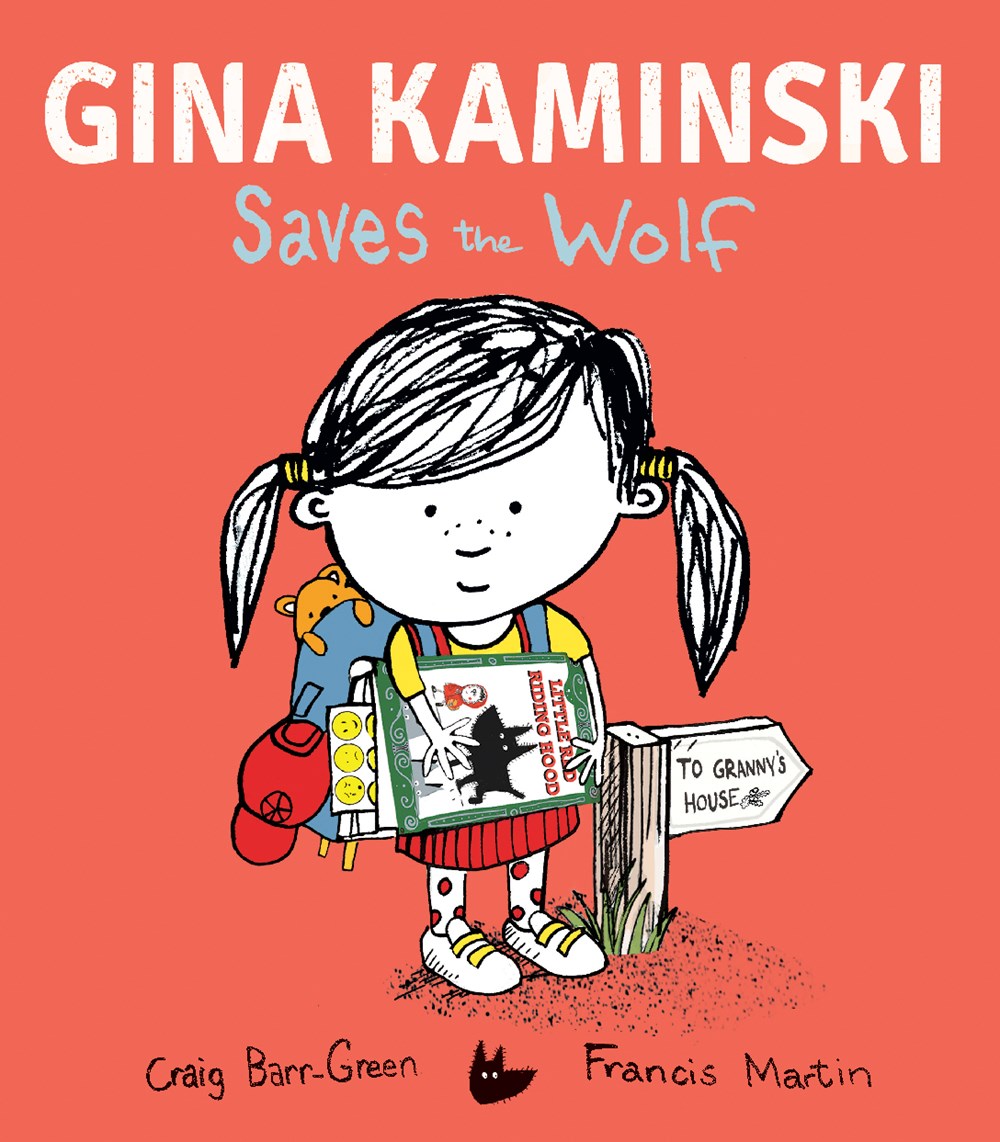
Gina Kaminski Saves the Wolf, by Craig Barr-Green/Illustrated by Francis Martin, (March 2024, Kane Miller), $17.99, ISBN: 9781684647866

Ages 4-7

Gina Kaminski is an autistic young girl who uses emojis to let readers know how she is feeling. She’s not having a great day at school because it’s hot, smelly, and loud, so she heads to the reading room with Anya, a woman who appears to be a paraprofessional or teacher; there, Anya reads Gina the story of Little Red Riding Hood, which really doesn’t sit well with Gina for a multitude of reasons. Gina decides she’s ready to visit fairy-tale land and correct the mistakes she found in the story, and, in an amusing an inventive retelling, saves the wolf and the day. Gina is so likable: she’s ready to tell readers how she interprets the world and invites us along for the ride, and she clearly lays out how she sets to correcting the holes in the story, using her emojis along the way so we know how she feels and what her triggers are. Endpapers feature a variety of emojis to let readers see a range of emotions, and the simple and direct illustration uses color for emphasis, with bold outlines to define Gina and her world. Fonts change when Gina speaks versus fairy tale characters, helping readers transition back and forth. This British import is the first in a new flipped fairy tale series; with a clever and endearing neurodivergent main character and creative ways to rewrite stories that may be worrisome for some readers, it’s worth reading and adding to collections. Visit author Craig Barr-Green’s webpage for a sneak peek at Gina’s next adventure.

Gina Kaminski Saves a Wolf has starred reviews from Booklist and Kirkus Reviews.

For more information about autism feelings charts, visit the UK’s High Speed Training page or Autism Little Learners, which has a self-regulation chart. Teachers Pay Teachers has a wealth of free emotion charts available for free, and Autism Parenting Magazine has a very good article on how emotion charts are helpful.

Posted in Fiction, Middle Grade, Middle School, Realistic Fiction, Tween Reads

Speak Up! channels inner strength and confidence

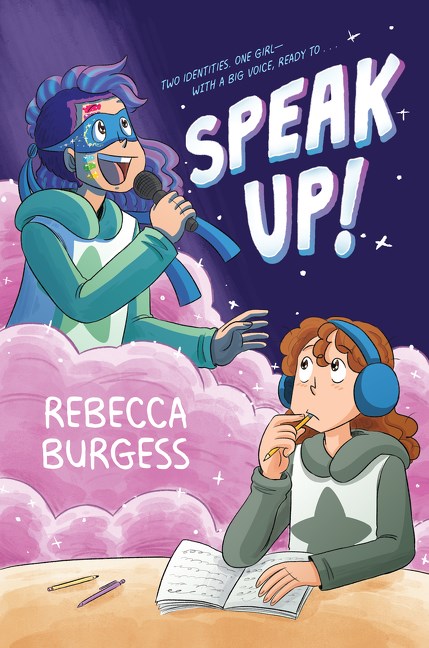
Speak Up!, by Rebecca Burgess, (Aug. 2022, Quill Tree Press), $13.99, ISBN: 9780063081192

Ages 8-12

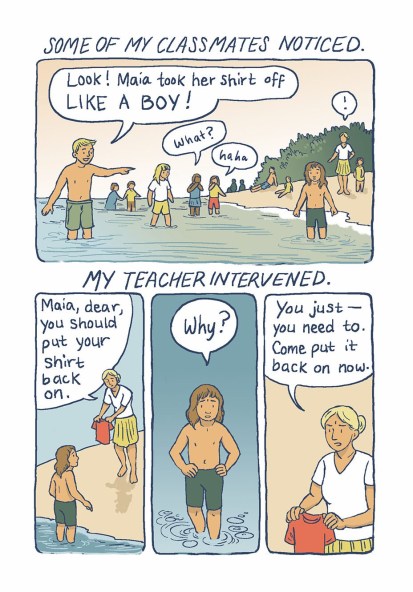
Middle schooler Mia is autistic and bullied by other kids at school, but when she and her best friend, Charlie, get together after school, they make musical magic together, posting videos where Mia is singer Elle-Q, accompanied by Charlie’s musical talent. If only Mia’s bullies knew that the singer they’re obsessed with is the same girl they laugh at for being “weird”, maybe they’d be singing a different tune. Mia and Charlie have differences of opinion when he pushes for the duo to appear in the local talent show: Mia is nervous afraid people will laugh at her for “stimming” – the self-stimulating behaviors triggered by stress or anxiety – and Charlie feels that Mia’s reluctance to appear will squash his chance to get notice for his music. Meanwhile, Mia’s mom seems to be completely clueless on how her daughter really feels, pushing her toward ways to “be normal” and “fit in”. Mia learns to advocate for herself in this graphic novel that’s sure to keep tweens and young teens turning pages. Speak Up! is a study in self-advocacy and an inspiring story about being true to onesself, with tween-friendly cartoon-realistic artwork that will draw readers who love Raina Telgemeier, Kayla Miller, and Terri Libenson. An excellent choice for graphic novel collections and a strong addition to the growing canon of books about autistic tweens living and thriving. Mia is white and Charlie is brown-skinned, uses “they/them” pronouns, and presents as nonbinary.

Posted in Fantasy, Graphic Novels, Realistic Fiction, Teen, Tween Reads

Graphic Novel Bonanza: Adora and the Distance

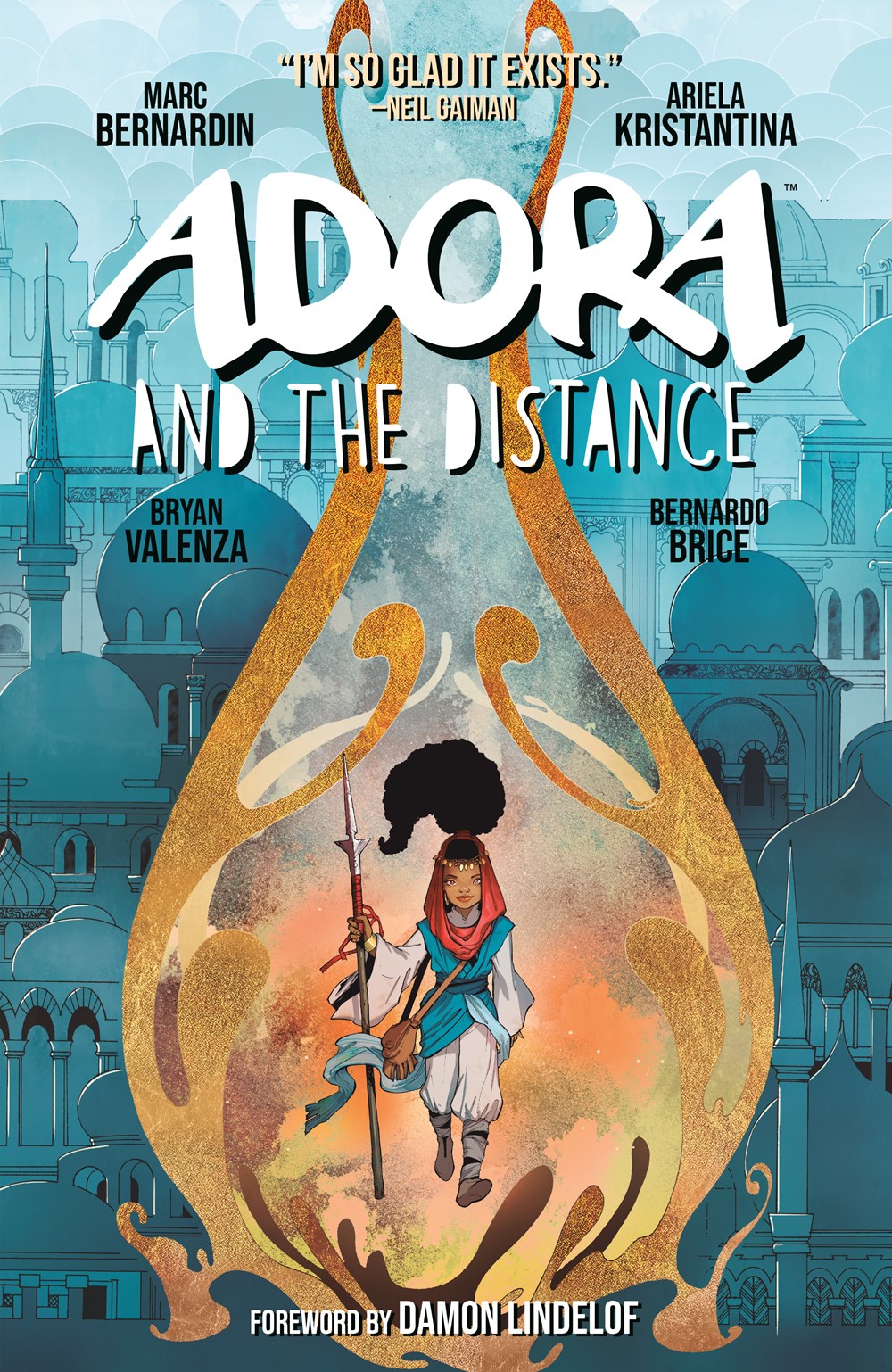
Adora and the Distance, by Marc Bernardin/Illustrated by Ariela Kristantina, (March 2022, Dark Horse), $14.99, ISBN: 9781506724508

Ages 12+

Like I said, I read a HUGE backlog of graphic novels while I had my little break, so be prepared for some “If you didn’t read it, it’s new to you!” posts. This time, I’ve got Adora and the Distance, by television writer-producer and comic book author Marc Bernardin. Set in a high fantasy world, Adora is a young woman of color living in a world full of adventure: there are pirates, ghosts, a royal family, and a malevolent entity known as The Distance. The Distance devours and destroys, and Adora, connected to The Distance, must leave her home on a mission to stop it.

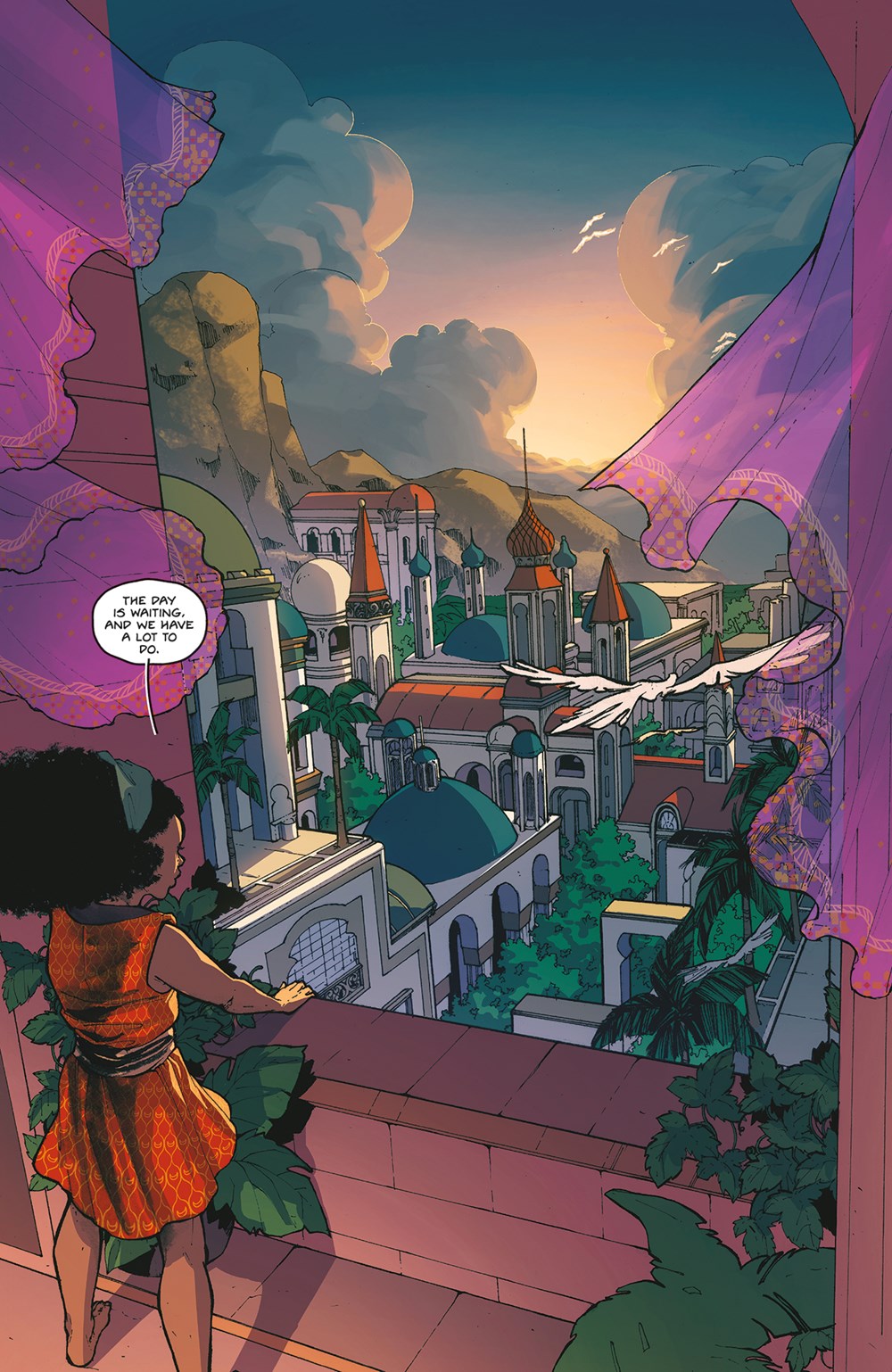
The artwork is stunning. The colors, the shading, the depth, bring this book to life in a reader’s hands. The story builds to an incredible conclusion that made the world come to a halt around me as I took it all in. Adora and the Distance is a father’s love letter to his daughter in the best way he could reach her; the best way to let her know he sees her. Adora and the Distance is a story of autism, you see; Marc Bernardin’s author’s note at the end of the book  explains his impetus for creating this epic tale. Adora is smart, brave, and full of love.  There’s humor, adventure, family, and forgiveness all here, bound into this story that connects a father to his daughter.

Put Adora and the Distance in your distributor cart, and get it on shelves for your readers. Give it to parents, educators, and caregivers.

Posted in Fiction, Middle Grade, Middle School, Realistic Fiction, Tween Reads

A Kind of Spark is an incredible must-read

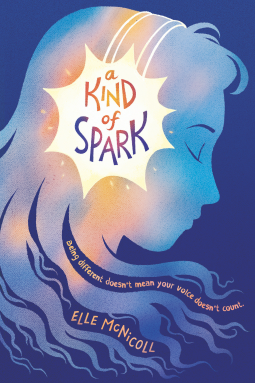
A Kind of Spark, by Elle McNicoll, (Oct. 2021, Crown Books for Young Readers), $16.99, ISBN: 9780593374252

Ages 8-12

An award-winning debut middle grade novel that debuted in the UK last year, A Kind of Spark is the kind of book the educators, parents and caregivers, and kids need to read and discuss together.

Addie is an autistic girl with a teacher who loves reading and learning, but she’s stuck with a teacher who sees her neurodivergence as being rebellious and lazy. She’s verbally abusive to Addie, as she was to Addie’s older sister, Keedie. Addie is targeted by both Mrs. Murphy, her teacher, and by Emily, a fellow student; her fellow students, including her former friend, all look the other way during these painful bullying sessions, but new girl Audrey arrives and befriends Addie, enjoying her for who she is. When the class learns that their small Scottish town once tried and executed a number of young women as witches, it sparks a visceral reaction in Addie. What if these women were misunderstood? What if they were like her? The lesson becomes a personal crusade for Addie, who campaigns for the town to install a memorial to these misunderstood women, with Keedie and Audrey providing the support she needs.

There is so much in this book. At times painful and enraging, it remains a book that needs reading and discussing. Told from the point of view of a neurodivergent character, written by a neurodivergent author, A Kind of Spark encourages empathy and understanding by providing a first-person perspective. It addresses the bullying and abuse that neurodivergent people are susceptible to, but it also points the finger at bystanders who don’t speak out and takes on those who should be there to support and protect students – like caregivers and educators – who are lacking. The bond between Keedie and Addie is heart-warming, and their discussions on “masking” – acting neurotypical in order to fit in – are thought-provoking and a wake-up call. An incredible book that is a must-add, must-read, to all collections.

A Kind of Spark has a starred review from School Library Journal. There are a wealth of autism and neurodivergence resources available: the NEA has a guide for educators; the Organization for Autism Research has a Kit for Kids to help create allies rather than bullies and a Teacher’s Corner for educators; the Autistic Self-Advocacy Network has resources and an article on what makes an ally, and Autism Classroom News and Resources has a free resources library with materials and webinars. Author Elle McNicoll’s website has links to her blog and more information about her books.

The BBC is going to be bringing A Kind of Spark to the screen – now, we folx in the U.S., wait.

Posted in Animal Fiction, Fiction, Middle Grade, Tween Reads

Frankie and Amelia is a great buddy story

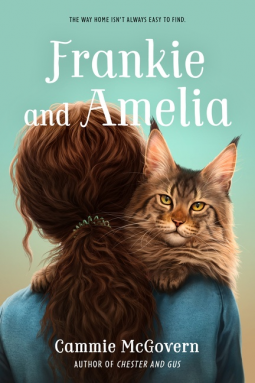
Frankie and Amelia, by Cammie McGovern, (Oct. 2021, HarperCollins), $16.99, ISBN: 9780062463326

Ages 8-12

Franklin is a cat who ends up separated from his family. He finds a temporary home with a family, where he meets a dog named Chester, a service dog to a boy with autism named Gus. But Gus’s dad is allergic to Franklin, so he ends up with one of Gus’s classmates, a girl named Amelia, who loves cats, and who really needs a good friend.

Frankie and Amelia is a the companion book to Chester and Gus (2017), but you don’t need to have read it to enjoy Frankie and Amelia. It’s a gentle story about found families, inclusion, and autism, particularly how it’s often missed in girls. The story is narrated by Franklin, who grows as a character as the story progresses and he learns more about and becomes more sensitive to his adopted humans, Gus and Amelia. Chester, a seasoned seizure response dog, is Franklin’s guide into this new world and provides an incredible amount of information to readers on autism and the sensitivity that companion animals provide to their charges. Cammie McGovern, the parent of a child with autism, writes with an understanding and sensitivity to the topic, and creates characters that are kind, realistic, and lovable. By exploring the relationship between pets and people, she’s able to give readers a new understanding of autism, how people with autism are often perceived by others, and how autism presents differently in boys and girls.

A must-have for your shelves.


Posted in picture books

“If only humans were as easy to understand!”: Leo and the Octopus

Leo and the Octopus, by Isabelle Marinov/Illustrated by Chris Nixon, (Sept. 2021, Kane Miller), $12.99, ISBN: 9781684642779

Ages 4-8

“The world was too bright for Leo. And too loud.” Leo is a boy who feels like he’s on the wrong planet. Other kids don’t understand him; he doesn’t understand them. Stressed and lonely, everything changes the day he meets Maya, an octopus who looks like an alien! And Leo feels like an alien, so this should be great! Once he reads up on octopuses, he discovers how interesting they are, and decides that maybe Maya could be his first friend. The octopus and the boy form a friendly bond, which helps him understand a day when Maya is overwhelmed by all the attention she’s getting at her aquarium tank.

Author Isabelle Marinov was inspired to write Leo and the Octopus by her own son and turns in a sensitive and accurate portrayal of a child on the autism spectrum. The storytelling is gentle, respectful to both Leo and Maya and their growing friendship. The two characters develop a very sweet relationship that helps Leo grow: he recognizes when Maya is distressed and takes action to relieve her stress, and he learns to reach out and discover another friend in the course of the story. Soothing colors make this an easy read that all kids will love. Endpapers spotlight Maya and Leo interacting across the spread. A must-read, must-have to teach empathy and understanding to others as well as to provide kids on the spectrum with a child they recognize on the page.

Leo and the Octopus has a starred review from Kirkus.

Posted in Graphic Novels, Non-Fiction, Teen, Young Adult/New Adult

Graphic Novels, Life Stories

I’ve been really loving the graphic novels coming out this year. Lots of life stories have found their voices in the pages of graphic novels; it’s a trend I’m enjoying, because the artwork really helps bring a person’s story to full, visual life, with little nuances and nods to things not always easily described with just words. Shades of grey; pops of color; a flash of a poster in a teen’s room: these are all things that a graphic novel can illustrated and communicate much more easily and quickly, reaching visual readers who may otherwise not experience the full breadth of a story. Here are some great lives I’ve read about recently.
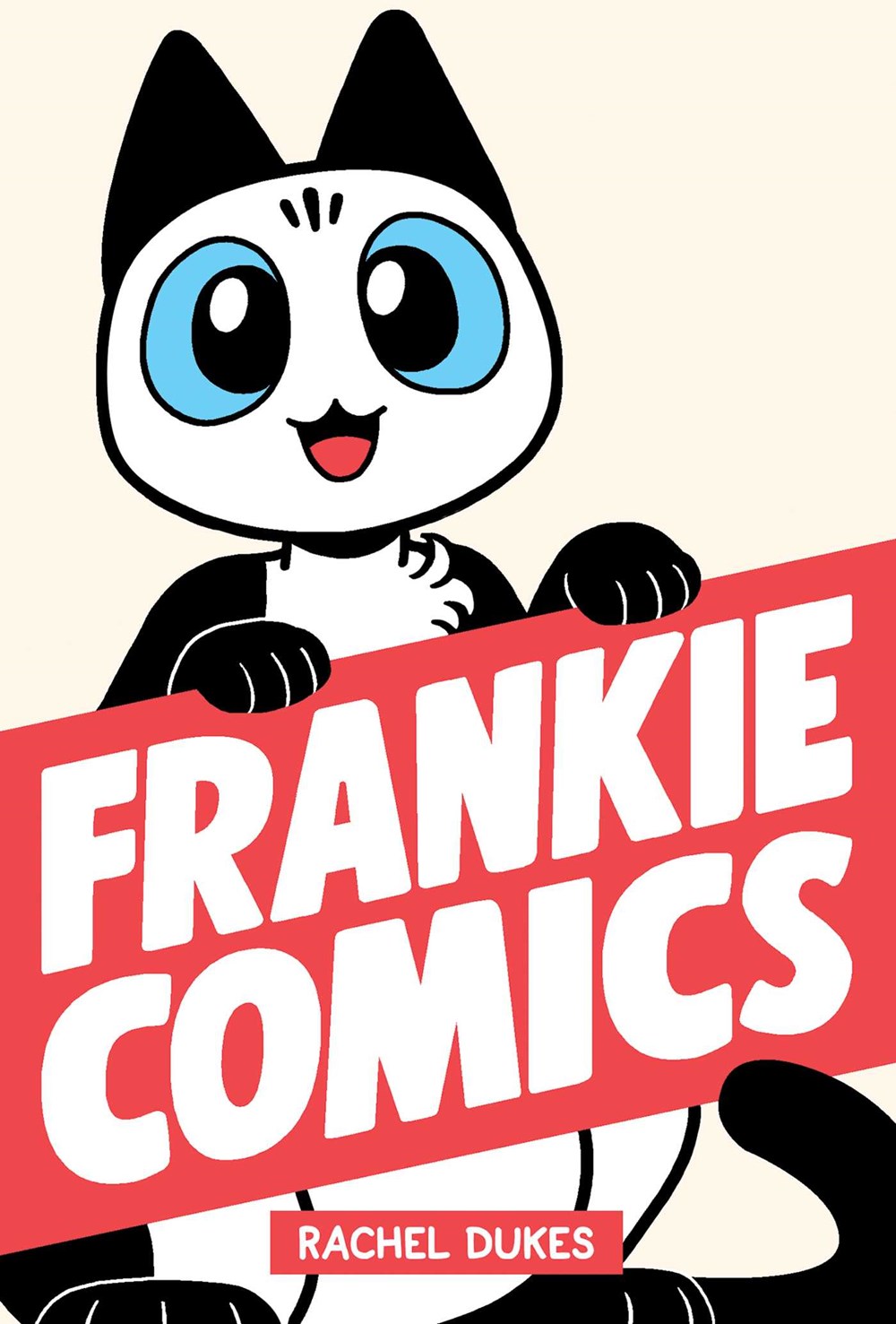
Frankie, by Rachel Dukes, (Oct. 2020, Oni Press), $17.99, ISBN: 9781549306884

Ages 12+

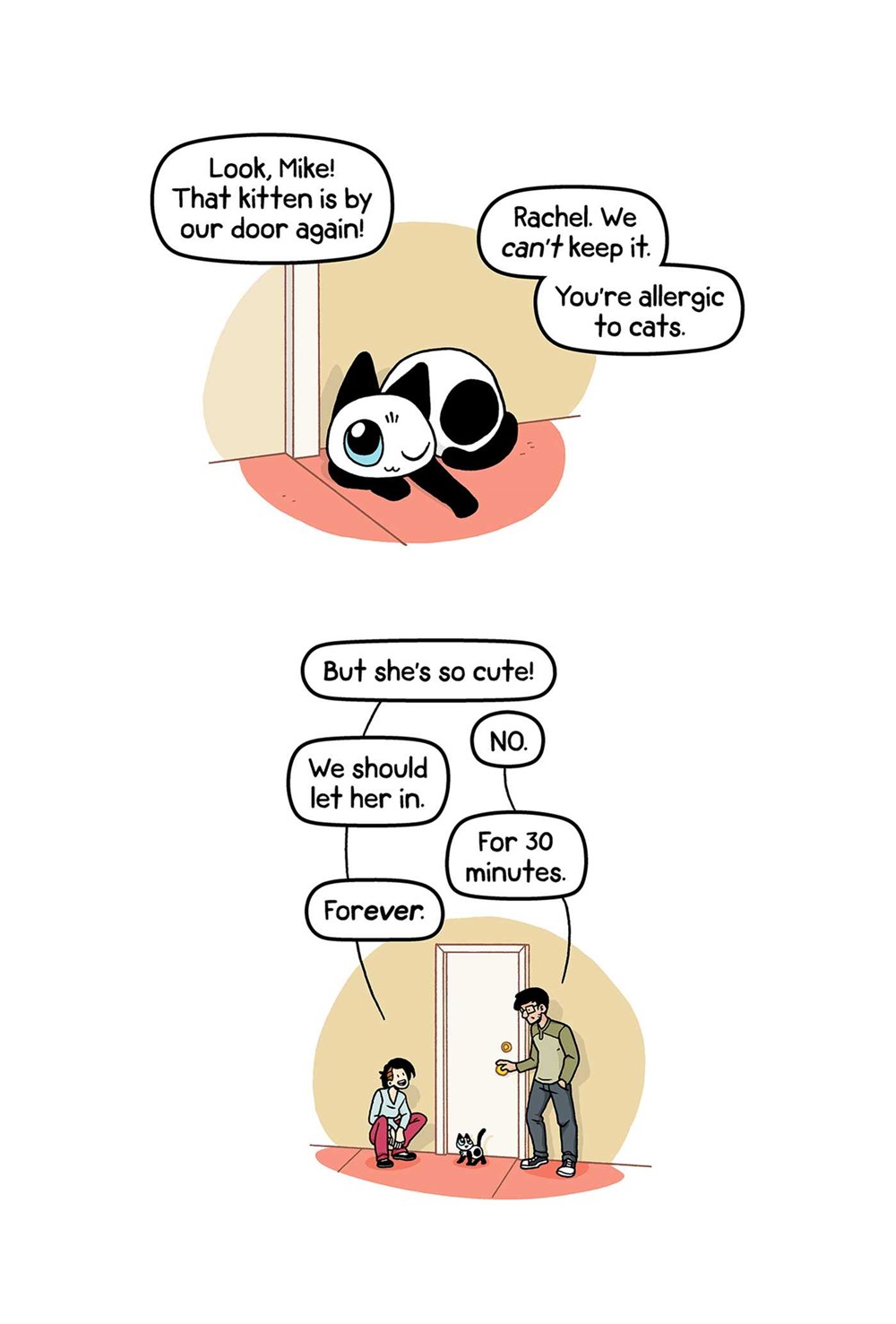
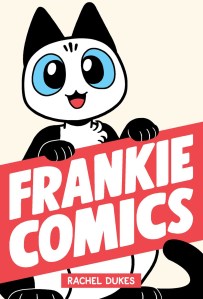
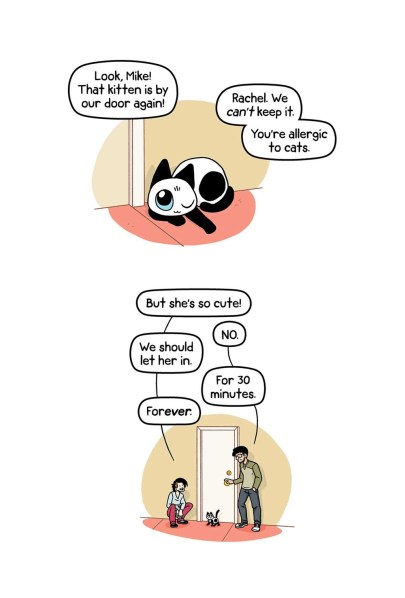
This is the sweetest book! Cartoonist Rachel Dukes is the Lucy Knisley of pet parenthood, as she chronicles life with her cat, Frankie. Rachel and their spouse, Mike, find the cutest black and white kitten outside their door, and Rachel is in love. Inspired by Rachel’s webcomic, Frankie is a series of vignettes in pet parenting, with comics taken from their webcomic and with some new material. Cat-lovers and pet-lovers will all recognize moments like Frankie choosing Rachel’s backpack over a snuggly new bed; the conversations we have with our furry friends; the nicknames we give them, and many, many, bedtime moments (what is it about sneezing in our faces as they settle in on our chests?). Frankie is adorable and full of personality that comes shining through the page. Rachel’s artwork is fun and expressive, silly and upbeat: it’s just what so many of us need to read these days! Each vignette has a name that pet parents will relate to, including moments like “Language Barriers”, “The Box”, “Night Song”, and “Cuddles”. Rachel includes a section on Quick Tips for Aspiring Cat Parents. Talk up to your readers who love Chi’s Sweet Home and Pusheen, and visit Rachel’s Frankie website for adorable downloadables! See more of their artwork on Rachel’s Instagram, and read more of their comics and buy some swag by clicking here, at MixTape Comics.
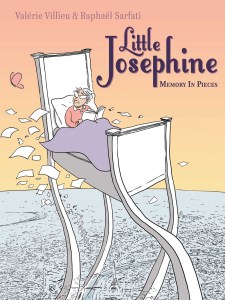
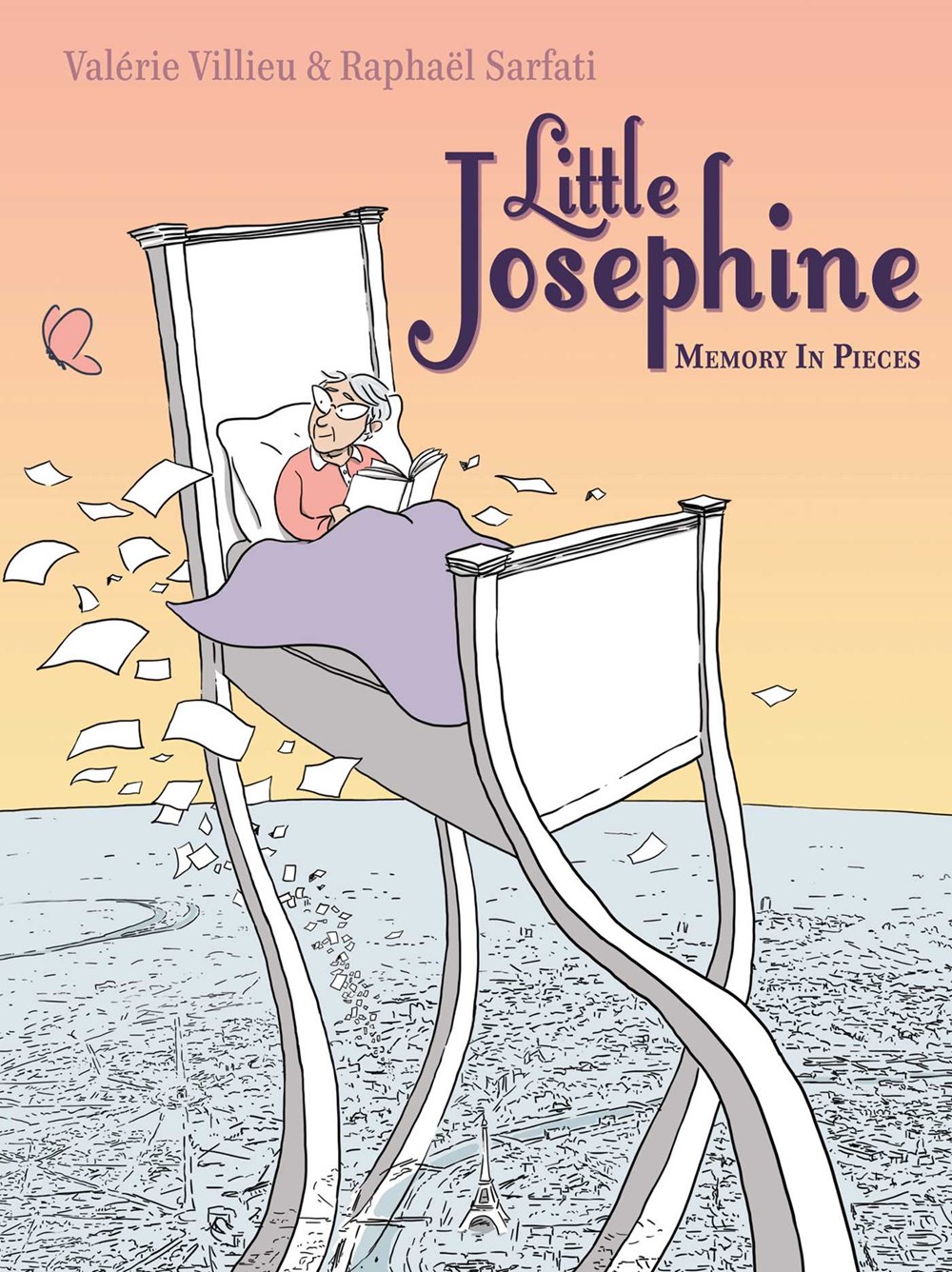
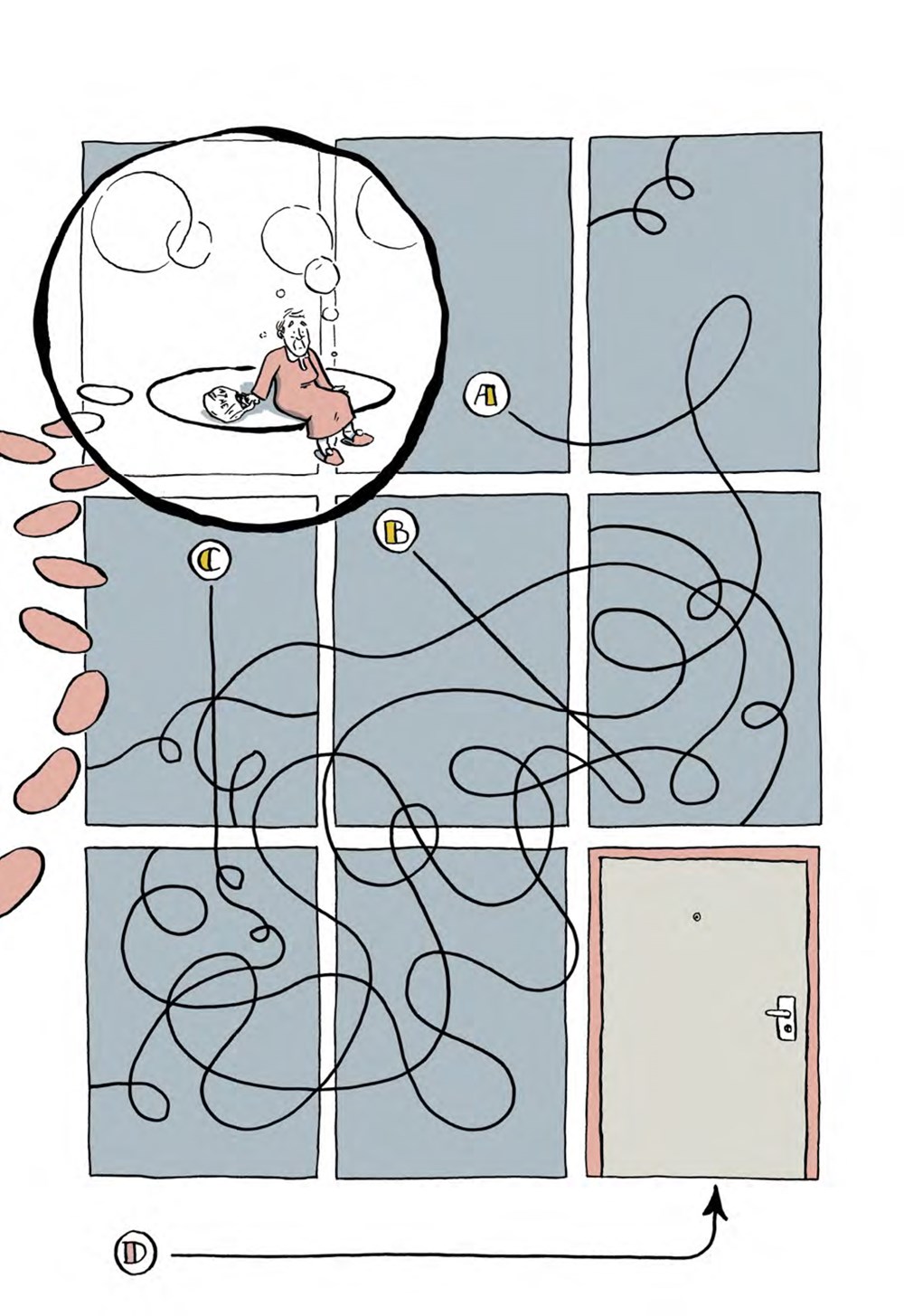
Little Josephine: A Memory in Pieces, by Valérie Villieu/Illustrated by Raphaël Sarfati, (Apr. 2020, Humanoids Inc.), $17.99, ISBN: 9781643375342

Ages 12+

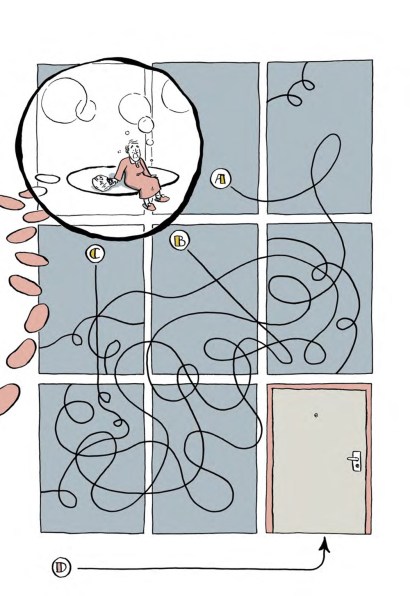
Visiting nurse Valérie Villieu tells the story of Josephine, a patient that touched her heart, in this aching and quietly lovely story that examines the bonds between patient and nurse while it gives readers a look at the unsettling treatment of the elderly by overwhelmed social workers and home health aides. Josephine, an Alzheimer’s patient, lives alone in a Paris apartment when Valérie is assigned to her. While Josephine is at first resistant to Valérie’s help, the two eventually find common ground in humor. As Valérie strives to learn more about her charge, she discovers that Josephine is a playful, charming woman who enjoys conversation. Valérie expresses her frustration at an overloaded health care system, which leaves an elderly woman in the care of a conservator who just isn’t able to keep up with their caseload – a relatable, upsetting issue. Josephine’s lapses are creatively envisioned in fractured panels, where she’s swept away on her bed, or thrust into the middle of a chaotic panel. The colors are muted shades, giving the story a quiet dignity, even as we ache, seeing Josephine increasingly lost in her own world. A beautiful story of connection and a painful memoir of Alzheimer’s from a caregiver’s point of view, Little Josephine is gorgeous storytelling. Back matter includes an author’s note on Alzheimer’s Disease.
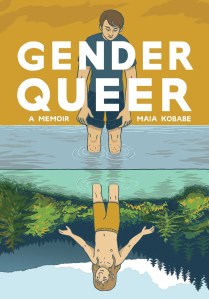
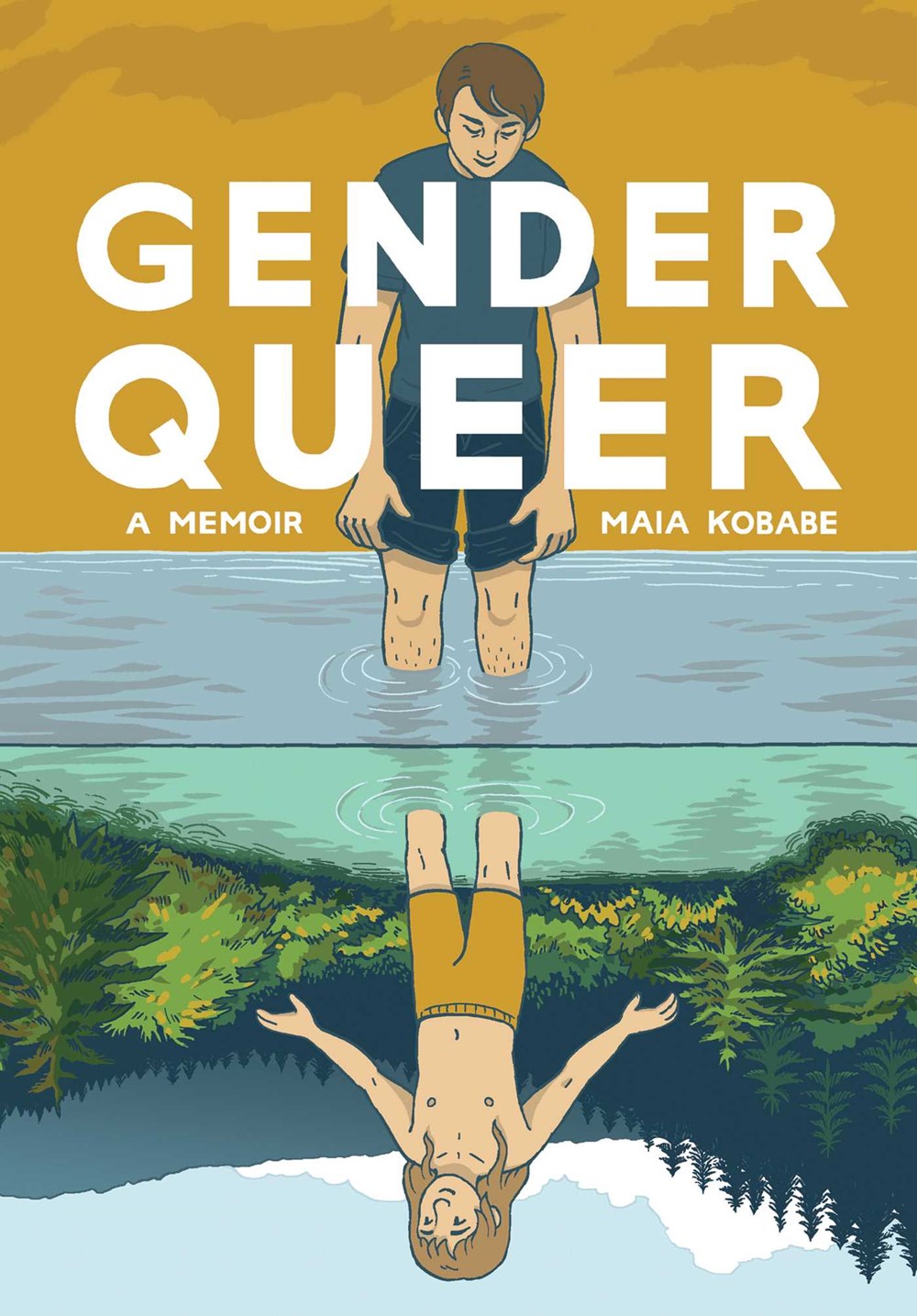
Gender Queer, by Maia Kobabe, (May 2019, Oni Press), $17.99, ISBN: 9781549304002

Ages 14+

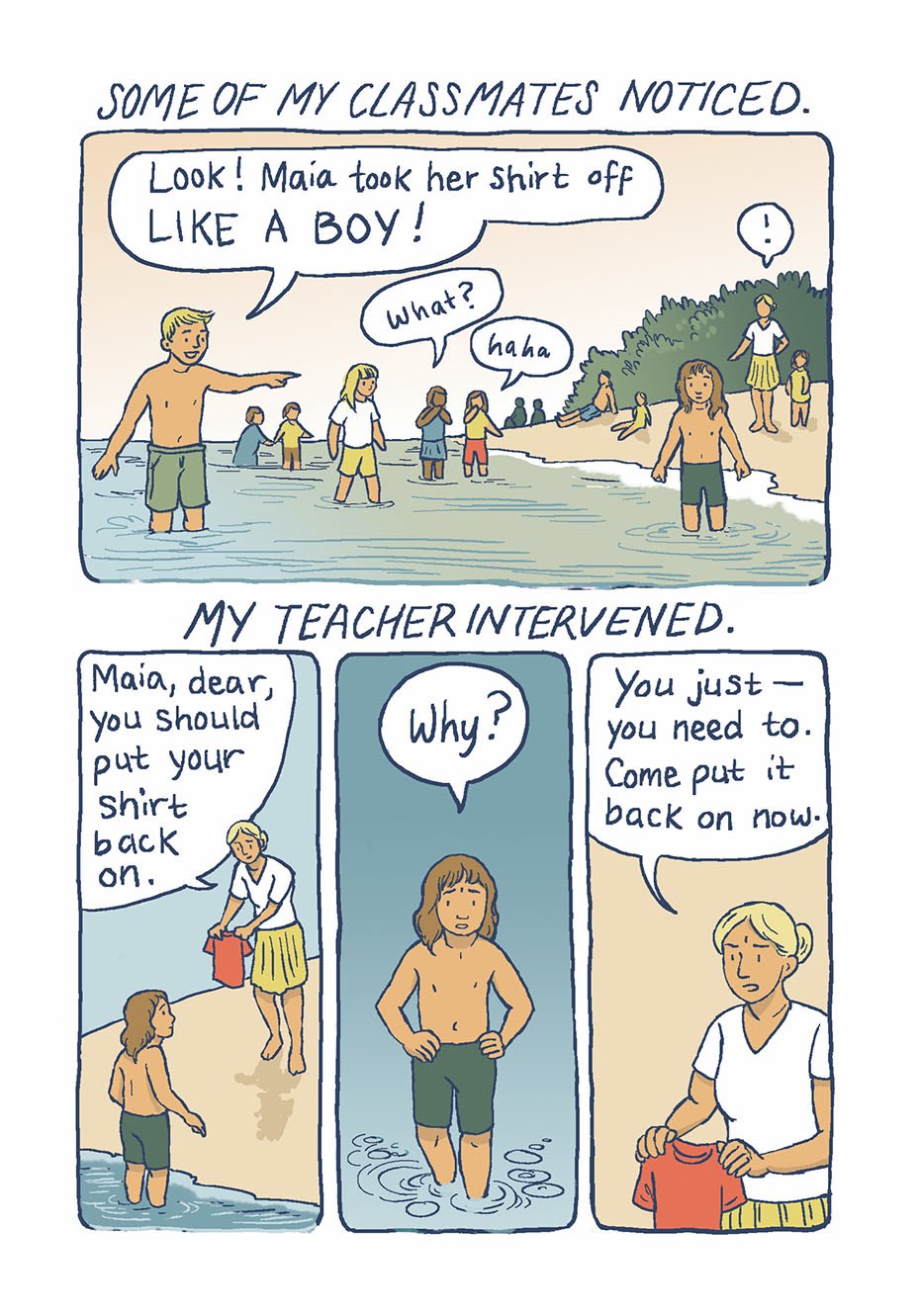
Gender Queer is illustrator Maia Kobabe (pronouns: e/em/eir)’s autobiography. Assigned female at birth but never quite feeling that designation fit, Kobabe journals em’s journey through fandom, identity, and sexuality; finally coming to the discovery that nonbinary and asexual are the best descriptors. From a rustic childhood, through puberty, high school, college, and grad school, we walk with Maia through years of introspection and self-discovery. Written as a journal, readers will hopefully see themselves, or gain an understanding of others as Kobabe describes the trauma of body dysmorphia and gynecological exams; appreciate em’s supportive family, and come away with sensitivity and compassion. Have this available for readers who identify as nonbinary or asexual. There are some strong resources to keep available for asexual and nonbinary readers, including Queer Books for Teens, and booklists from YALSA, Book Riot, GoodReads, and Tor. Author Jeanne G’Fellers has an excellent author webpage, including The Enby Booklist, containing fiction, nonfiction, and poetry with a non-binary focus. There is a lesson plan available for Gender Queer through Diamond Bookshelf.

Gender Queer has a starred review from School Library Journal, is a 2020 ALA Alex Award Winner and a 2020 Stonewall — Israel Fishman Non-fiction Award Honor Book.
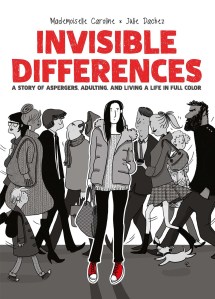
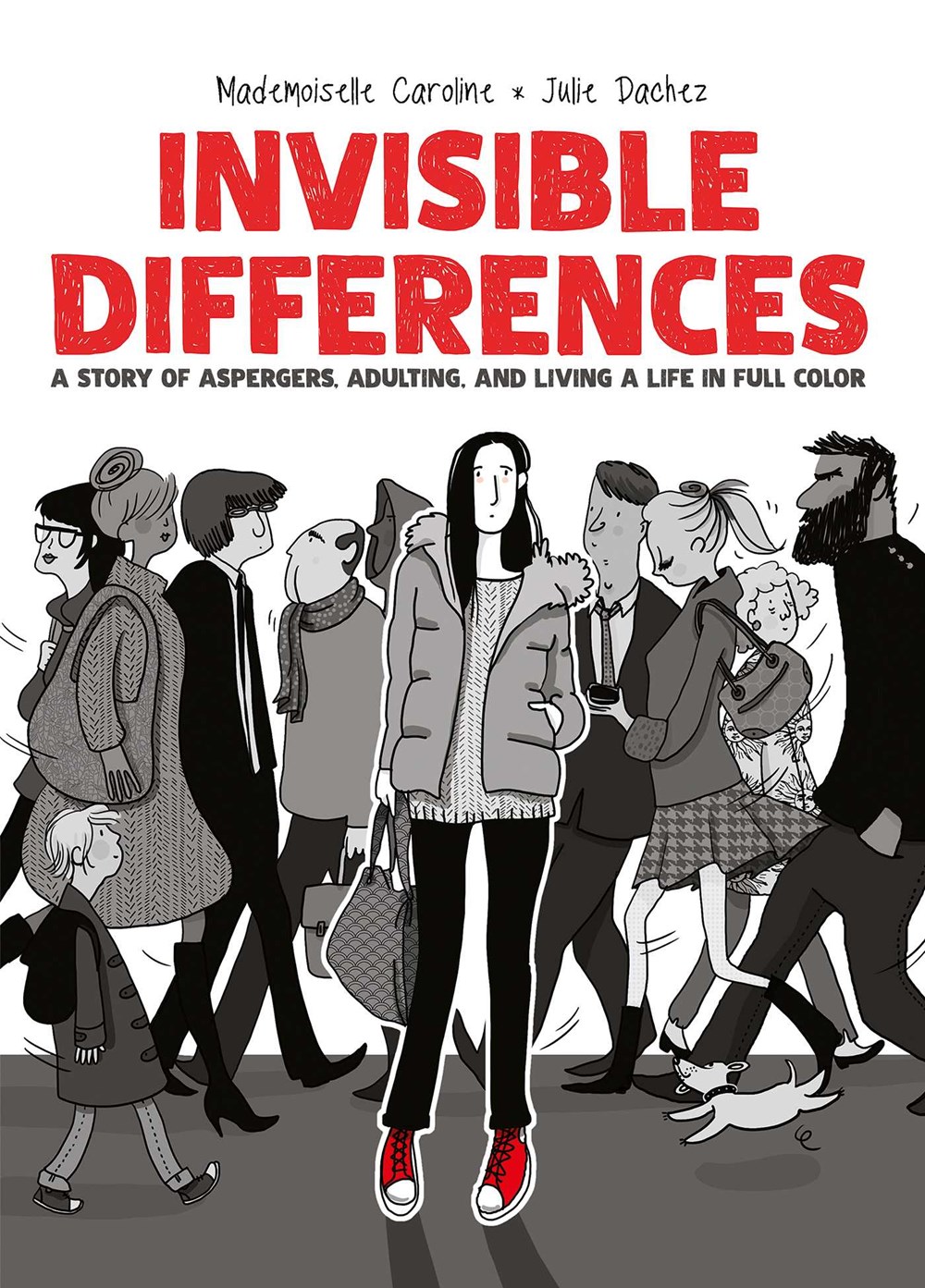
Invisible Differences: A Story of Asperger’s, Adulting, and Living a Life in Full Color, by Julie Dachez, (Oct. 2020, Oni Press), $19.99, ISBN: 9781620107669

Ages 12+

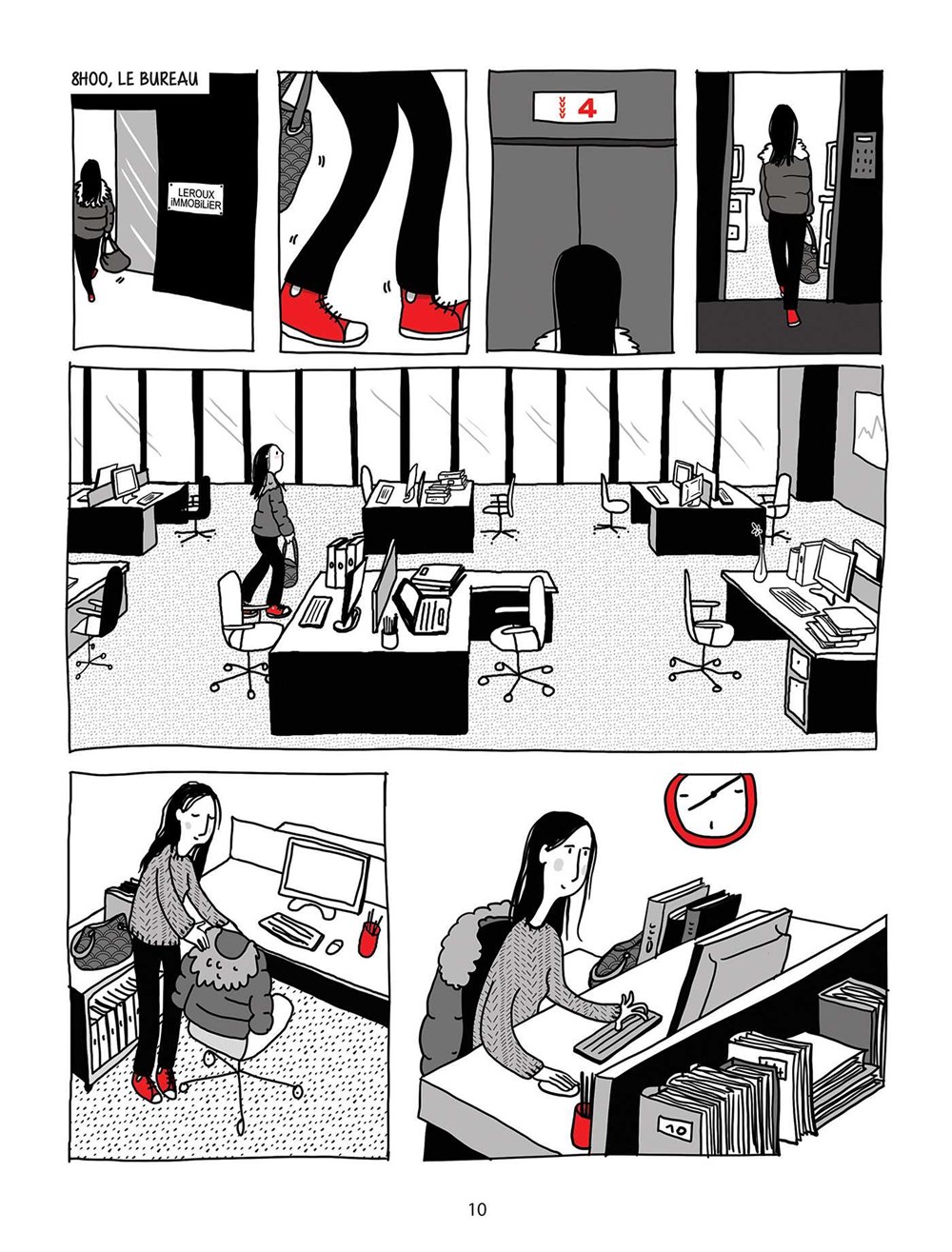
From her opening dedication: “This comic is dedicated to you. You, the deviants. People who are ‘too much like this’ or ‘not enough like that’, Julie Dachez creates a safe, welcoming space for readers delving into her graphic novel, revealing what life is like for a person living with Asperger’s Syndrome. Twenty-seven-year-old Marguerite loves staying home with her books, her little dog, her purring cats, and her soft pajamas. Within her silent apartment, they form her “cocoon”. She’s stressed by commuting to her job, but relies on routines to usher her through her day. Coworkers don’t seem to understand her. Her boyfriend is frustrated because she doesn’t want to go to parties and socialize as he does. As she searches for answers to her anxiety, she discovers that she is not alone: there is a community of people with Asperger’s Syndrome, a form of autism, and their experiences are there, online for Marguerite to read. No longer in the dark and alone, she begins a search for the right therapist, and the resources she needs to advocate for herself.

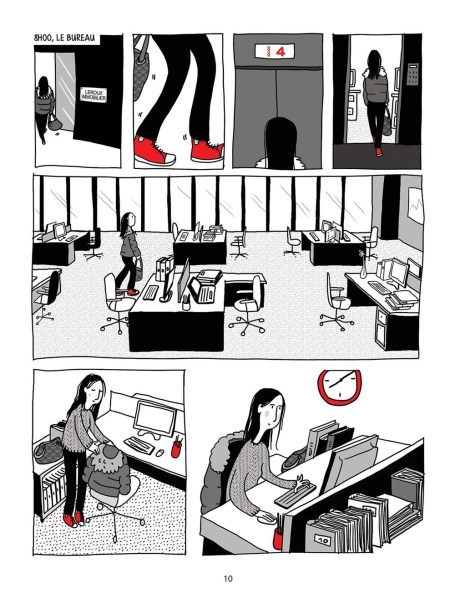
Julie Dachez’s black and white artwork skillfully uses reds and yellows to communicate Marguerite’s stressors and anxiety: loud conversations and everyday noise; panels are bathed in red to denote stressful moments in Marguerite’s day, when her defenses are running low, gradually fading back to black and white as she separates herself from social situations to recharge. Her red sneakers are the sole point of red that provide a reassuring, routine constant. Back matter includes a history of autism, information on Asperger’s Syndrome, and a list of resources for further reading (incuding children’s books!). A good book to have in your collection; consider also purchasing Camouflage: The Hidden Lives of Autistic Women, a nonfiction graphic novel by Dr. Sarah Bargeila and illustrated by Sophie Standing.
Posted in Fiction, Middle Grade, Realistic Fiction, Tween Reads

We Could Be Heroes: dogs, rocks, and adventures in friendship

We Could Be Heroes, by Margaret Finnegan, (Feb. 2020, Atheneum Books for Young Readers), $17.99, ISBN: 978-1-5344-4525-3

Ages 8-12

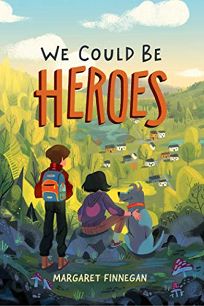
Hank Hudson is a boy who loves rocks and The Jungle Book. He does NOT like the very sad book his teacher is reading to the class: it gives him the a’a feeling, which is a geological term for lava flow which moves and cools at different rates. Hank has autism, and feels things, sees things, in a way that doesn’t always match his classmates. His classmate, Maisie Huang, notices him after a big incident lands Hank in some hot water. Her parents are geologists, so she invites him over to see their rock collection. It’s there that Hank discovers Maisie’s ulterior motive: she wants Hank to help her “rescue” her next door neighbor’s dog, Booler. Booler has seizures, and Mr. Jorgenson, his elderly owner keeps Booler tied to a tree outside, because it’s too dangerous for him to be indoors. Maisie has built up a vision of her neighbor that isn’t too flattering, and Hank, while happy to have a friend, is conflicted about a lot of Maisie’s “rescue” ideas. But the two kids become friendlier with Mr. Jorgenson, until he has an accident and his daughter comes to town. Hank and Maisie decide that Booler isn’t safe, after all, and revisit their initial rescue plan. Filled with cringeworthy, funny, and touching moments, We Could Be Heroes is a story about friendship, understanding, and feeling “less than”.

Hank and Maisie are complex characters that feel real. Readers may know kids like Hank and Maisie at school – they may be Hank or Maisie. Margaret Finnegan captures the feelings that go into a meltdown for a person with autism by linking Hank’s love of rocks and geology to the feeling that heralds a meltdown; the “a’a”, a Hawaiian word that, once defined, paints a picture for readers and opens the door to understanding. Maisie may frustrate some readers – this is a great character to talk about; find her motivation, and give pros and cons of her focus on saving Booler. The adults in the novel each have wonderful depth, too; they are all invested in our characters and important parts of the story throughout.

A strong choice for book discussions, We Could Be Heroes is a good realistic novel that delves into the complexity of emotions and friendships. Author Margaret Finnegan has epilepsy and autism resources available on her author webpage.

We Could Be Heroes is a Junior Library Guild selection.

Posted in picture books

Self-Publishing Spotlight: Look at Me Look at Me

Look at Me Look at Me: An Eye Contact Game for You and Me, by Sophia Gallagher/Illustrated by David Cruz, (March 2016, Puppyducks Publishing), $12.99, ISBN: 978-0996794909

Ages 4+

This self-published book is a team effort: the author is a paraprofessional at a high school in New Jersey; the illustrator, David Cruz, is a young man with ASD (autism spectrum disorder) and Ms. Gallagher’s student; Ruth Cruz is David’s mom and pitched in as an editor and writes the afterword. Speech pathologist Maura M. Lazzara worked with David and writes the foreword. David has a solid team surrounding him!

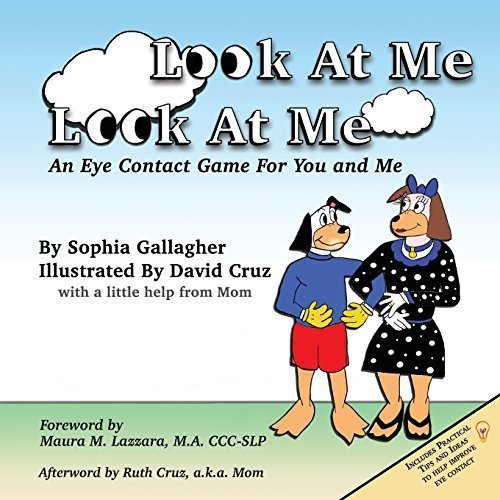
Look at Me Look at Me is based on a game developed specifically for and with David, to develop and maintain eye contact during social interactions. The repetitive phrase, “Look at me Look at me” invites David – and readers – to make eye contact to communicate feelings. The story is upbeat and positive, with David’s illustrations of Puppyduck – a puppy with duck feet – bringing a sweet element into the artwork. David the Puppyduck goes through his day, interacting with different adults who encourage him to look at them. The story ends with a counting game that any kid would enjoy and is easily translated to others.

The next half of the book is dedicated to strategies for parents, educators, and caregivers when working with special needs kids. Discussions include Sections include eye contact and how to maintain it; fun bubble-blowing and puppet activities, and dress-up play.

David’s illustrations are bright, child-friendly, and positive. He makes his characters’ eyes large, so readers can maintain eye contact with them (a great start). It’s an empowering book for kids, especially those with special needs. I’d love to see this in school counselors’ and doctors offices.

Posted in picture books

Two siblings support each other in Benji, the Bad Day, and Me

Benji, the Bad Day, and Me, by Sally J. Pla/Illustrated by Ken Min, (Oct. 2018, Lee & Low Books), $17.99, ISBN: 9781620143452

Ages 5-8

Sammy is having a terrible, horrible, no-good, very bad day. He’s been in trouble at school, the cafeteria ran out of pizza for lunch, and he had to walk home in the rain. When he gets home, he discovers that Benji, his little brother who has autism, is having a bad day, too: but a bad day for Benji is totally different. Benji has a special hiding place and a block city set up, and Mom even wraps Benji up “like a burrito” in a special blanket when he’s having a bad day. When Sammy has a bad day, no one seems to notice – or so he thinks. Because Benji does notice, and in a touching moment of sibling affection, gets out his blanket and leads Sammy to it. Because Sammy his his little burrito.

Benji, the Bad Day, and Me will resonate with anyone who loves Judith Viorst’s classic, Alexander and the Terrible, Horrible, No Good, Very Bad Day; Sammy’s frustrated narrative is so close to Alexander’s, readers may wonder if Sammy’s about to pack it all in and head for Australia. Sally J. Pla is wonderful at using this narrative device to introduce readers to a story about siblings and the challenges of being a sibling to a child with autism. Sometimes, it may feel like one’s feelings get lost, or no one’s paying attention, but Sally Pla and illustrator Ken Min show readers that family will always be there for you. The story is inspired by the author’s experiences of “sibling rivalry and neurodiversity, all wrapped in a big blue blanket”. Ken Min‘s acrylic and colored pencil artwork uses digital enhancements to give us a warm household; Benji’s isolation shows in the cool blue color depicted inside his box fort; a color repeated in Sammy’s recollection of Benji’s appointments with his occupational therapist, who Sammy refers to as “Super-Happy Lady”. As Benji gazes out at Sammy, reduced to tears when he hits his final straw, the shadow falls across Benji’s face, warming up his eyes and nose as he gazes out at his brother. Sammy and his family appear tan-skinned, with dark brown hair.

Benji, the Bad Day, and Me has a starred review from Shelf Awareness and is a solid add to your collections. It is a strong book to suggest when explaining neurodiversity, autism acceptance, and exploring sibling relationships. As author Sally J Pla notes on her website, “I once heard someone describe autism as “not a spectrum, so much as a constellation.” I love that. We are all stars shining with different lights.”