Posted in Animal Fiction, Early Reader, Fiction, Preschool Reads

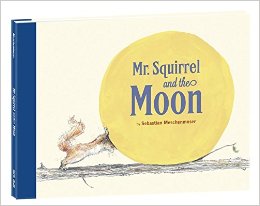
What happened to the Moon? Mr. Squirrel and Moon tries to figure it out.

squirrel_2Mr. Squirrel and the Moon, by Sebastian Meschenmoser, (Jan. 2015, North South Books), $18.595, ISBN: 9780735841567

Recommended for ages 3-6

Mr. Squirrel wakes up one morning to discover that the moon has fallen from the sky and landed on his tree! Afraid that he’s going to be blamed for stealing the moon, he desperately tries to get rid of it in this entertaining cumulative tale. The squirrel tries to shove the moon off of his branch, where it lands – and sticks – on a hedgehog. Together, the two attract the attention of a billy goat, some bees, and mice, but can they get the moon back where it belongs before someone notices?

The best parts of Mr. Squirrel and the Moon are the wordless, black and white interludes between episodes of trying to dispose of the moon, when Mr. Squirrel’s imagination takes over, picturing him in a jail cell with a (human) cellmate. The detail is hilarious, from the tiny toilet for the squirrel to the little uniforms for Mr. Squirrel and the rest of the animals as they join him in the cell, to the sight of the moon, back in the sky, with the hedgehog still stuck to it.

The endpapers give readers a clue as to what’s really going on, and the subdued artwork challenges readers to look closer to discover the wonderful little extras Sebastian Meschenmoser adds to his story. This is a fun read-aloud, and is even better for independent readers to sit down and look through at their leisure. There’s so much to discover here.

squirrel_1Image source: PictureThisBook.com

Mr. Squirrel and the Moon was a Winter 2015 Top Ten IndieNext Pick.


Posted in Intermediate, Middle Grade, Non-Fiction, Non-fiction, Non-Fiction, Tween Reads

Road Trip! Ranger Rick’s Travels: National Parks

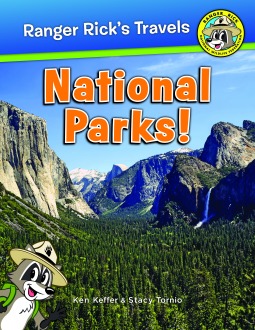
ranger-rickRanger Rick’s Travels: National Parks!, by Stacy Tornio & Ken Keffer, (Aug. 2016, Muddy Boots), $14.95, ISBN: 9781630762308

Recommended for ages 8+

In a fabulous love letter to the National Parks of America and the National Park Service, the folks at Ranger Rick Magazine – remember them? They have books now! – put together this beautiful book, featuring each one of the 58 National parks across America. Ranger Rick and his best friend, Deputy Scarlett, appear throughout the book to join readers on a countrywide sightseeing tour.

The book opens with a map of the United States, including Hawaii, Alaska, and the US Virgin Islands. Each park is numbered and corresponds to the Table of Contents, which organizes the parks into 9 groups: Eastern Parks, Midwest Parks, Mountain West Parks, Southwest Parks, Utah and Nevada Parks, California Parks, Pacific Northwest Parks, Pacific Island Parks, and Alaska Parks. Each park’s profile includes stunning photos and facts that will make readers want to pack their bags and take a month or six off from work or school!

rangerrick-rickandscarlettEach park feature provides information in quick bites that read like a tourism guide. About the Park provides a quick overview and basic facts; What to Watch For are Ranger Rick’s top nature picks on what plants and animals to keep an eye out for. Ranger Rick’s Top Things To Do is a bucket list for each park – don’t leave without seeing Old Faithful in Yellowstone Park, naturally, but also make sure not to miss out on a hike through the park! Finally, Ranger Rick’s Amazing Facts are the “WOW” factor for each park: did you know that you can only reach Northwest Alaska’s Kobuk Valley National Park by foot, dogsled, snowmobile, or air taxi? Now you do!

This is a great book to have in collections and to have available when you’re talking about the U.S. There’s 100 years of history in the National Parks Service, but there are far more years in the history of these parks; there are petrified trees, dinosaur footprints and bones, and formations carved out of rock thousands of years ago, here for all to enjoy. Families planning a vacation or two can use this as a jumping off point (I know I am).

Don’t forget to head to the Ranger Rick website, where kids can read more about nature and the environment, play some games, and get craft ideas. Educator resources included lesson plans and webinars.

Ranger Rick and Scarlett image courtesy of Photobucket.
Posted in Middle Grade, Middle School, Non-Fiction, Non-fiction, Teen, Tween Reads

Bridge to the Wild: Zoos connect people and animals

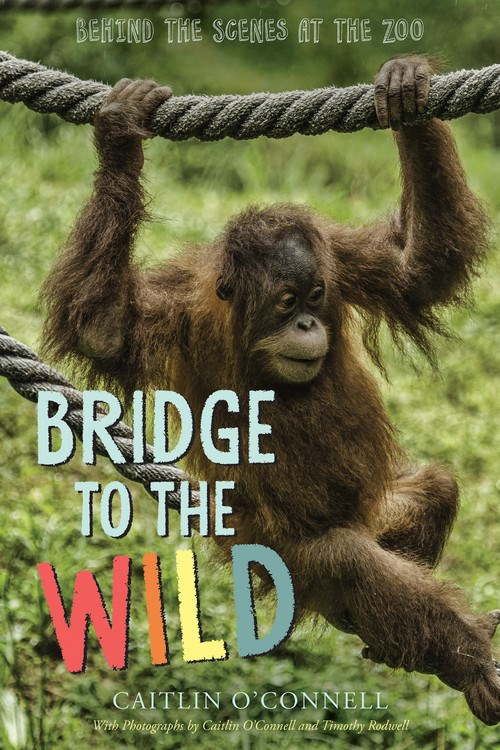
bridge-to-the-wildBridge to the Wild, by Dr. Caitlin O’Connell/Photographs by Timothy Rodwell, (Aug. 2016, HMH Books for Young Readers), $18,99, ISBN: 9780544277397

Recommended for ages 10 and up

I’m about to gush here. If you read my reviews often enough, you probably have guessed that I love any nonfiction book about animals, conservation and preservation, and even better when the ideas are combined. In Bridge to the Wild, Dr. Caitlin O’Connell begins by recalling a childhood visit to the zoo – back when animals were still largely kept in cages (I remember it well), and saw a gorilla, seemingly in deep despair over living in a cage not much bigger than he was.

Thankfully, those days are (mostly) over. Zoos are more like natural preserves now, offering many animals larger spaces to roam; conservation and preservation is the order of the day, with zoo staff rescuing and caring for animals all over the world. As more animals face extinction at the hands of poachers, habitat devastation, and pollutants that contaminate their environment, zoos are playing a bigger part in keeping our wildlife alive, and conducting valuable research on improving their conditions and our world. Bridge to the Wild is Dr. O’Connell’s manifesto, where she lays out the valuable ways zoos are a bridge for humans, to the wild outside our doors.

Dr. O’Connell spent a week working with the staff at Zoo Atlanta –  a private, nonprofit wildlife park and zoo – to observe the relationships between animals and caretakers, to help strengthen this bridge. After all, what we see as observers is only the tip of the iceberg; many, many loving and brilliant people are behind the scenes, learning about and learning from the animals, caring for them, loving them. From the Dawn Chorus – the morning symphony conducted by the tenants as the day begins, to the Dusk Chorus, when they start winding down for the night, Dr. O’Connell and Tim Rodwell introduce us to the inhabitants of Zoo Atlanta, from the pandas, to the hornbills, meerkats, gorillas, tigers and more.

There are anecdotes and beautiful photographs, a “Keeper Feature” that profiles the different keepers at Zoo Atlanta, and a fantastic note on ignorance and extinction, which is a real call to action to end senseless poaching of animal parts for talismans and “remedies” that simply don’t work. A full bibliography and sources are available and provide more research opportunities, and data sheets encourage budding zoologists to do some research on their own, guided by Dr. O’Connell, who lays out simple experiments to observe and record behaviors.

Animal books are hugely popular with my Corona Kids, and I’ve been stacking my collection with plenty of rescue, preservation, and conservation titles for them, to drive home the point that this planet doesn’t only belong to us. Bridge to the Wild is going to be one of those books I talk endlessly about, especially since my library is about a stone’s throw away from the Queens Zoo. I may even slip copies of this book into teachers’ hands during class visits, with a “hint, hint” nudge for a class trip activity (sorry, kids!). That’s how important this book is to me.

Bridge to the Wild has received a starred review from School Library Journal. Learn more about Dr. O’Connell’s work and books at her author website.

Take a peek at a chapter excerpt on meerkats, then go order this book for your animal lovers!
meerkat_1


Posted in Animal Fiction, Early Reader, Fiction, Humor, Preschool Reads, Toddler Reads

The Zoo’s about to cut FOOTLOOSE!

footloose_1Footloose, by Kenny Loggins/Illustrated by Tim Bowers, (Oct. 2016, MoonDance Press), $17.95, ISBN: 9781633221185

Recommended for ages 2-6

Where are my fellow ’80s children at? Kenny Loggins, who basically soundtracked the ’80s, has given new life to Footloose – a song that I will still unabashedly jump off and dance to whenever I hear it (usually to my eldest teen’s mortal terror) – for the little ones! He was inspired to rewrite the song into a fun story for his grandchildren; what we get is a fun rhyming story about what goes down after a zoo closes to the public for the evening.

First things first: Yes, I absolutely did find a karoake version of Footloose on YouTube and played it while I sang this book. In the privacy of my bedroom, sure, but I did it and it was fabulous! The song and story line up nicely, and if that’s your kind of thing, and you have an audience that may be receptive to it, print out a set of the lyrics for the parents and go for it.

This is a fun story for kids about party animals getting down after dark, with Zookeeper Big Jack witness to the whole business. There’s rhyming, there are great illustrations of animals swinging from trees, dancing a tango, and turning it loose – Footloose!

footloose_2

footloose_3

footloose_4For me, this is a no-brainer add to my shelves – my storytimes include a lot of movement, my little ones love animal books, and I can easily read this, Eric Carle’s From Head to Toe, Lindsay Craig’s Dancing Feet, and Sandra Boynton’s Barnyard Dance to get the kids up, moving, and laughing. If you have animal picture book fans, it’s a great addition to your collections. If you like to sing and dance with your little ones, be it in your own living room or the storytime area in  your library, add this one. And if you want that karaoke link, here’s the backing track (just the music), and here’s one with the lyrics, in case you want to track how your reading goes compared to the pace of the song.

Posted in Animal Fiction, Early Reader, Fiction, Preschool Reads

Paying it forward: Cara’s Kindness

caras kindnessCara’s Kindness, by Kristi Yamaguchi/Illustrated by John Lee (Oct. 2016, Sourcebooks Jabberwocky), $16.99, ISBN: 978-1492616863

Recommended for ages 3-8

Cara the Cat is practicing her ice skating routine and thinking of the perfect song for it when she notices Darby the Dog, who wants to skate, but is afraid to try. She helps Darby overcome his fear, telling him to “pass on the kindness”, setting off a chain of good deeds, with each friend helping someone else and telling them to “pass on the kindness”. The cycle of good deeds comes full circle when a friend creates a song especially for Cara’s performance. The story concentrates on the good feelings of paying it forward – doing a kindness for someone and asking others to do the same – and how karma works like a boomerang; it’s the old adage, “treat others as you would be treated”, brought to life with adorably drawn animal characters in situations that speak to young audiences.

Olympic medalist Kristi Yamaguchi has written children’s books before, featuring Little Pig (It’s a Big World, Little Pig! and Dream Big, Little Pig!), who inspired readers to follow their ambitions and dreams. Maybe Cara and Little Pig will meet up in a future story?

This is a good book to pair with other books on kindness, like Carol  McCloud’s Have You Filled a Bucket Today? (“bucket filling” was huge when my tween was in elementary school), Philip Stead’s A Sick Day for Amos McGee, and the classic fable, The Lion and the Mouse. Encourage kids to pay it forward by doing something nice for someone of their choosing.


Posted in Early Reader, Fiction, Preschool Reads, Toddler Reads

Blog Tour: Busy Builders, Busy Week! Interview with Jean Reidy!

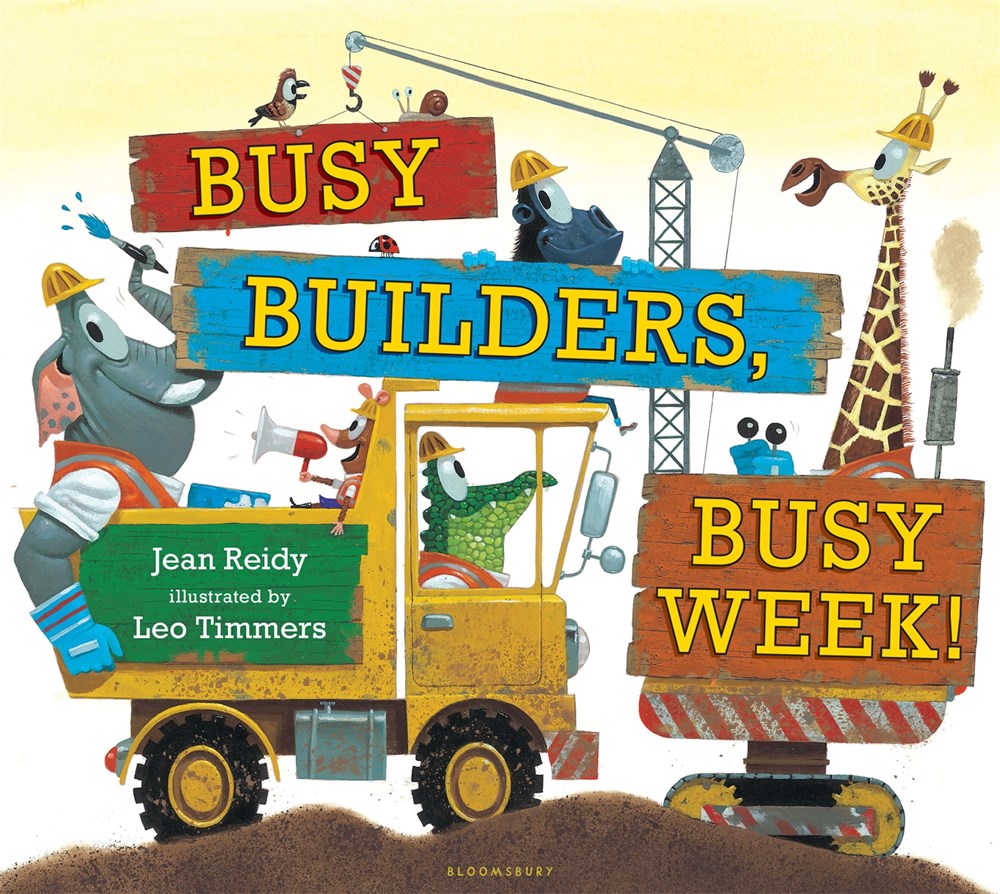
busy builders_1Busy Builders, Busy Week, by Jean Reidy/Illustrated by Leo Timmers, (June 2016, Bloomsbury), $16.99, ISBN: 978-1619635562

Sunday! Dream day! Study, scribble, scheme day. Map, measure, plan a treasure. Gather up a team day!

The author-illustrator team that brought us All Through My Town – a storytime staple at my library – comes together to bring readers a book about working together! Over the course of a week, animal characters pull together to build a brand new playground in their community. Each day brings new things to do, from planning, to digging, to fixing and planting!

This is such a fun story to read out loud, and has entered regular rotation at home. Kids can practice their days of the week and get lost in the rhyming story, which has the added benefit of showing readers how to group tasks to get things done in the best way. On Sunday, the builders come up with plans for their big job ahead; on Monday, they clear the area. Tuesday is for infrastructure: cement, pipes, boards, fixing fences. On Wednesday, we load everything up and take it on the road. Thursday is for getting the place shaped up: drills, nails, rake and spread. Friday, the plants go in and the final details, like painting and sanding, get the park ready for their big opening on Saturday!

I love Leo Timmers’ bright, bold acrylics here. The bright colors and cartoony animal characters are a perfect accompaniment to Jean Reidy’s bouncy, happy rhyming text. Even the endpapers bring on the fun, with yellow, diamond-shaped construction signs featuring different animals working at different tasks leading readers in and out of the story.

Transportation books have done well at all of my libraries, so this is a no-brainer for my collection. If your readers love books like Good Night, Good Night, Construction Site, by Sherri Duskey Rinker, and Kate and Jim McMullan’s series (I Stink!, I’m Brave!, et al), this is a perfect fit. Busy Builders also lends itself to a days of the week read-aloud, right next to fun books like John Himmelman’s Chickens to the Rescue!,  or Albert Bitterman’s Fortune Cookies.

I was lucky enough to get a few minutes with author Jean Reidy, and we talked about Busy Builders, Busy Week! Read on!


MomReadIt (MRI): I love the idea of the characters coming together to create a playground! Did you decide on the idea of building the playground as the best way to talk about the days of the week, or did the story come together separately?

Jean Reidy (JR): A little bit of both, I’d say. When my editors at Bloomsbury asked me to write a days-of-the-week book for their list, I loved the idea. So I brainstormed a variety of approaches that ranged from the mundane to the wildly weird. But that’s the way I like to work, creatively uncensored, putting all the possibilities out there. I’ve always wanted to write a construction trucks book, so when I hit on the notion of a “construction week” the only decision left was, “What can we build in a week that will resonate with a child?” Well, a playground, of course. Even better, a playground designed by illustrator Leo Timmers. And while the premise was fun and uncomplicated, the idea of a community coming together to transform an old, abandoned city lot into something fun and beautiful felt like it added an additional layer of meaning to the essential story. I like that layer. I think it gives readers more to talk about. And Leo did a fabulous job bringing it to life.

MRI: When you were working on the text, did you plot out the different phases of construction to help you group together the tasks the characters undertake each day?

JR: That would have been really smart, eh? But my process was a little looser than that. I tried to keep my free association of the topic going as long as I could before I forced it into any kind of order. I wanted to fully explore all the fun possibilities for structure and language. So, I developed word lists—starting with the days of the week and then all the construction actions, sounds, vehicles and tools I could think of. I played with those lists until I sounded out the bouncy rhythm and rhyme scheme I wanted for my young readers. From there, I made sure that the construction tasks were logically ordered and grouped so that the artwork could then bring sense to the process of building the playground.

MRI: You’ve also written a book called ALL THROUGH MY TOWN that features animals as the main characters. Do you think these two books could take place in the same storytelling universe? Could the kids from All Through My Town come and play at the new playground built in Busy Builders, Busy Week?

JR: Oh my goodness! What a brilliant idea! I love unexpected connections, surprises and meta moments in storytelling. So let’s play that out. ALL THROUGH MY TOWN is loosely modeled after the Chicago suburb in which I grew up—a self-contained town with its own shops, library, gardens, fire department and only thirty miles from Chicago. The Chicago and Northwestern train line—now called the Metra—whistled through multiple times each day, taking commuters to and from the Windy City. BUSY BUILDERS, BUSY WEEK! takes place in an urban area where the characters transform an old empty lot. So yes, let’s have our town characters hop on their train and visit their city friends—all meeting up at that brand new playground. Bloomsbury, how ‘bout it? Readers, toss me a title! Let’s do this!

 

Jean Reidy photoJean Reidy is a two-time winner of the Colorado Book Award. Especially gifted at writing for very young children, Jean is a frequent presenter at national and local literacy, writing, and education conferences and at schools across the country—in person and via Skype. She is a member of the Colorado Council International Reading Association and the Society of Children’s Book Writers and Illustrators, and she serves on the board of Reach Out and Read Colorado. Jean writes from her home in Colorado where she lives right across the street from her neighborhood library, which she visits nearly every day. Visit her at www.jeanreidy.com and on Twitter: @JeanReidy.


Follow Jean on the BUSY BUILDERS, BUSY WEEK! tour!

Mon, Aug 22 Cracking the Cover
Tues, Aug 23 Literary Hoots
Wed, Aug 24 NC Teacher Stuff
Thurs, Aug 25 Mom Read It
Fri, Aug 26 Unleashing Readers
Sat, Aug 27 Booking Mama
Mon, Aug 29 Bluestocking Thinking
Tues, Aug 30 Jean Little Library
Wed, Aug 31 Geo Librarian
Thurs, Sept 1 Mrs. O Reads Books
Fri, Sept 2 Where Imagination Grows

Click here for a free classroom curriculum guide and storytime kit!

Enter a Rafflecopter giveaway for a chance to receive a copy of BUSY BUILDERS, BUSY WEEK! (U.S. addresses, please.)
Posted in Intermediate, Middle Grade, Non-Fiction, Non-fiction, Non-Fiction

Animal Planet’s Animal Atlas is a passport to the world’s habitats

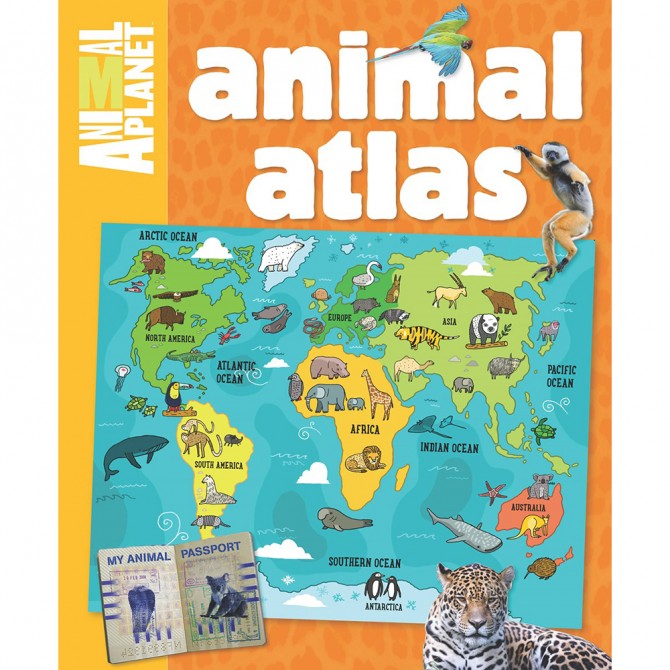
animal-planet-animal-atlas-hardcover-book-658_670Animal Planet Animal Atlas, by Animal Planet (May 2016, Animal Planet), $17.95, ISBN: 978-1618931658

Recommended for ages 7-10

I have tons of animal nonfiction books in my library, and I have a bunch of really good books on habitats, too.  What Animal Planet’s Animal Atlas does it bring together explanations of different biomes/habitats, and the animals who live in them on each continent and in the oceans of our world.

The atlas begins with a map to present the major biomes of the world, and describes each biome: alpine, desert, marine, grassland, rain forest, temperate forest, tundra, and taiga. Animal tour guides for each continent take readers through a look at different animals that inhabit each biome on each continent, and features like ROAR (Reach Out. Act. Respond.) – Animal Planet’s initiative, dedicated to improving the lives of animals worldwide – empower kids with knowledge about how humans are working to change the world for the better through conservation and protective measures. Surprisingly Human boxes provide facts about the similarities between animals and people. Each continent section ends with a spotlight on an animal from the area, giving readers a close-up look at animals like the bald eage, anaconda, or Sumatran tiger. Spotlights include a Where in the World section, where maps detail the animals’ living areas; Animals Facts, and information on what they eat and how animals adapt best to their environments.

Combining colorful illustration and full-color photographs of over 200 animals, the atlas is a great resource for young readers. It’s got information ready at a glance for my Corona Kids, who come in asking for books about various habitats and then, what animals live in those habitats. It’s a strong companion book for slightly bigger kids, who will need more in-depth books to complete a report, but it’s a great starting point for anyone who wants a little more info on different habitats, and who may not realize that different continents have so many different biomes. A brief glossary and index round it all out.

This is a good addition to primary nonfiction collections if you have strong books that provide more detail that kids can jump to if they want to go further into a topic. Or, if you’re like me, and your kiddo just loves learning about different animals, where they live, and what they eat, it’s a nice add to your bookshelf. The passport and guide animal features add a cute touch that brings something different and fun to learning. Hmmm… now, I’m thinking of an animal program for my Discovery Club… learning about a new animal each week, and stamping a “passport” with an animal sticker or stamp… I’ve got to talk to my Discovery Team!

Posted in Intermediate, Non-Fiction

This Fall, Natumi Takes the Lead!

natumiNatumi Takes the Lead, by Gerry Ellis with Amy Novesky, (Nov. 2016, National Geographic Kids), $16.99, ISBN: 978-1-4263-2562-5

Recommended for ages 4-8

I completely dropped the ball on World Elephant Day last week; I was away with Husband and my brain was on vacation. I’m so sorry, because in addition to my loving elephants, I wanted to let you all know about a great book that’s coming out from NatGeo Kids in early November.

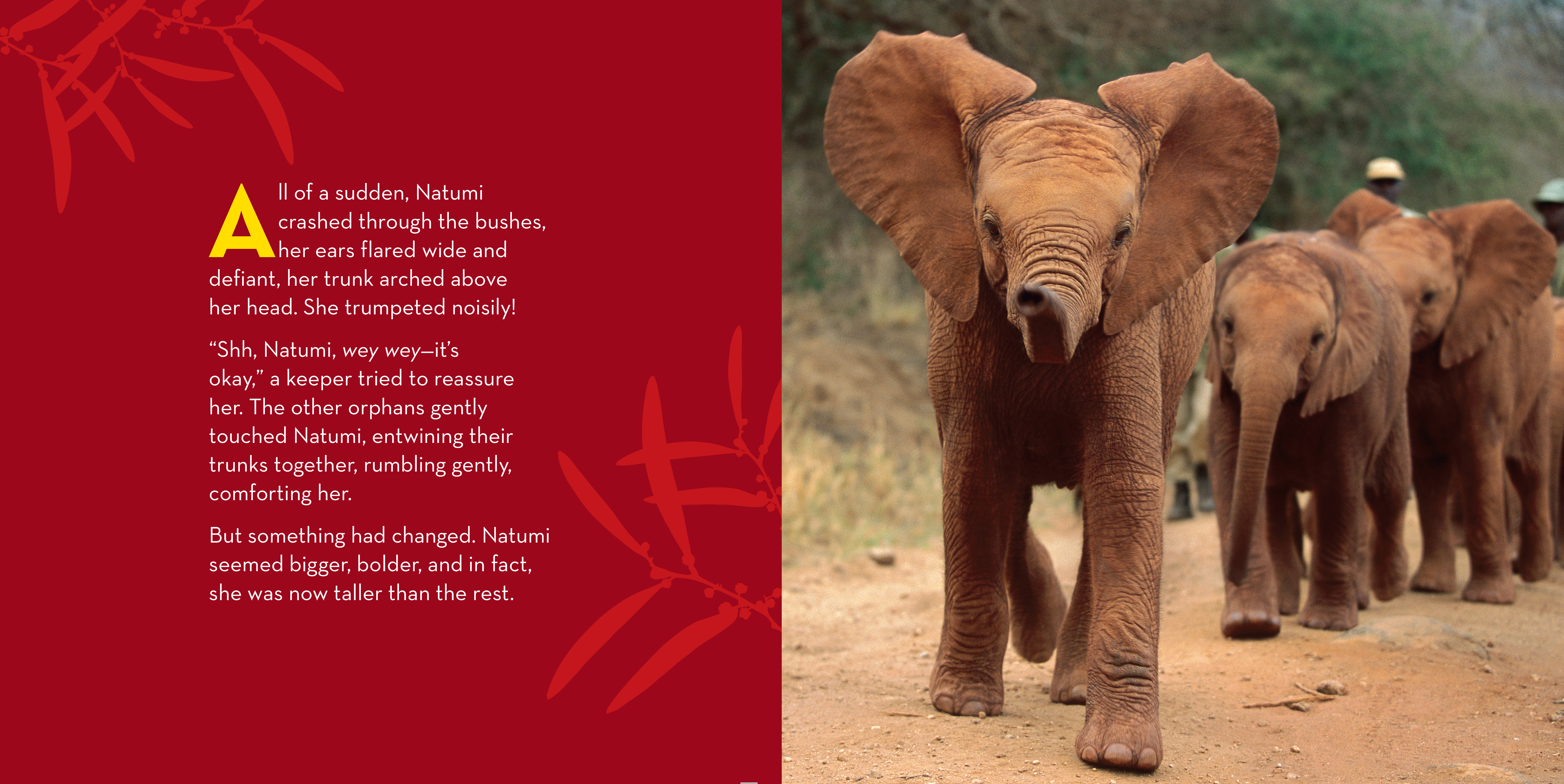
Natumi Takes the Lead is the true story of a young elephant who was orphaned, rescued by a farmer and sent to an orphanage. Sounds like a Disney film, right? But it’s so much  more than that, because this story happens too often. Poachers and hunters still slaughter elephants for their ivory tusks or for big game trophies, leaving young elephants, like Natumi, to fend for themselves.

Pages 3-4

Natumi is also a powerful story of a shy elephant who gains the confidence to become the leader of her new little family group. With the love and nurturing she receives from her rescuers at the orphanage, she gains confidence and takes the lead in bringing her new family back to the wild: a protected African preserve.

Pages 20-21

I first discovered Natumi at PLA earlier this year, and fell in love with the beautiful photos and the elephant’s story. NatGeo has a way of making these animals more realistic than any animated movie character. NatGeo, through beautiful, empathetic writing and photography, brings out the personalities of the world’s animals, and their stories motivate readers to take action. The best part is that NatGeo tells kids HOW they can take action: by learning more about their world, and providing resources to help kids do just that.

Resources at the end of the book include a map of Natumi’s home and where the elephant’s live in Africa; lists of organizations, websites, and books; facts about elephants, and an infographic on elephant growth, to give readers a frame of reference about Natumi’s age and size when she was orphaned and where she’ll be as she ages.

Natumi isn’t due out until November, but it’s a great addition to your younger nonfiction sections, and a great book for young animal lovers.


Posted in Uncategorized

Benny and Penny Say Goodbye to a Friend

bennypenny1Benny and Penny in How to Say Goodbye, by Geoffrey Hayes (Sept. 2016, TOON Books), $12.95, ISBN: 978-1-935179-99-3  

Recommended for ages 4-8

While playing outside, Penny discovers Little Red, a salamander, has died. She’s upset, but her brother, Benny, seems more irritated by Little Red – and Penny’s grief – than anything else. Penny and her friend Melina bury Little Red and hold a little ceremony for him, which stirs up mixed feelings for Benny.

This latest book in the Benny and Penny early graphic novel series takes on the tumultuous emotions that death can stir up: grief being one, and guilt being another. These feelings are often overwhelming to adults; to children, they must feel like a tidal wave. Benny remembers times he was unkind to Little Red, which triggers his grief. Benny’s guilt motivates him to take part in Little Red’s memorial, and Mr. Hayes gives Benny, Penny, and readers a bright spot to end on.

There are some great books on dealing with grief and loss with children: most recently, Margaret Wise Brown’s The Dead Bird and Ida, Always, by Caron Levis. Each book speaks beautifully to children, and each handles grief differently – just like people do. How to Say Goodbye is a sensitive look at dealing with strong feelings in the wake of loss. An important addition to graphic novel collections and readers advisory lists.

There will be an educator’s guide closer to the book’s publication. Keep an eye on the Benny and Penny TOON Page for details.

Benny and Penny is an award-winning early graphic novel series. Benny and Penny in the Big No-No received the 2010 Theodore Geisel Award.

bennypenny5

Posted in Animal Fiction, Early Reader, Fiction, Preschool Reads

Blog Tour: The Adventures of Lovable Lobo: Selfies in the Wild

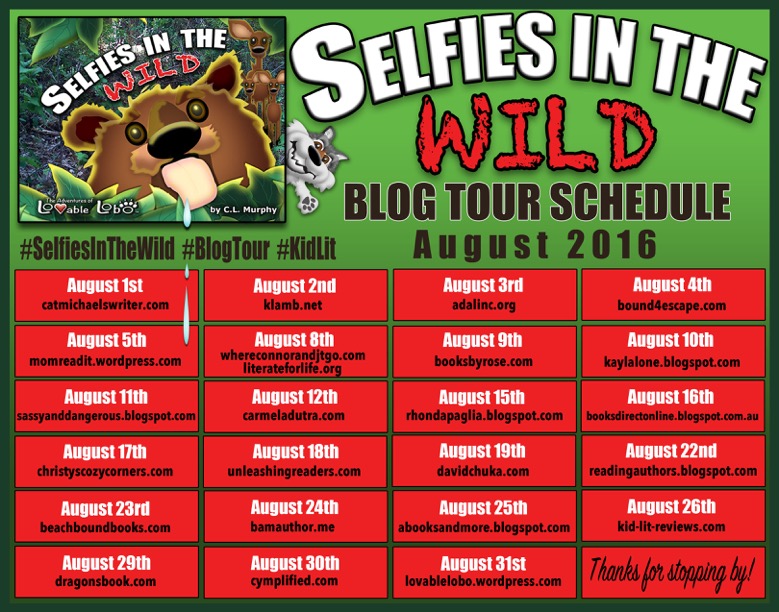
Lobo and his raven sidekick discover a trail camera in their neck of the woods, and it attracts the attention of their forest friends. What do animals do when they get hold of a camera in the wild? Take selfies, of course! The images captured by the trail camera have never been sillier or more candid. Just as their wild dispositions are exposed, the photo shoot comes to an unexpected end, leaving them all wondering why. The reason may be obvious to you, though!

Take a look at the book trailer for Selfies in the Wild, and make sure to check out the Lovable Lobo website for more fun!

Make sure to visit these other sites on the Selfies in the Wild blog tour!

selfies_BlogTourSchedule

The Adventures of Lovable Lobo

Website: http://lovablelobo.com

Blog: http://lovablelobo.wordpress.com

Twitter: https://twitter.com/LovableLobo

Facebook:  https://www.facebook.com/pages/Lovable-Lobo/265661023552725

Pinterest: https://www.pinterest.com/murphymess/

Google+: https://plus.google.com/+CLMurphyKidLit