Posted in Animal Fiction, Early Reader, Fiction, Fiction, Intermediate

Nocturnals Easy Readers are back with The Tasty Treat and The Kooky Kinkajou!

Regular readers know how much I love Tracey Hecht’s The Nocturnals series from Fabled Films Press. There are four great middle grade novels about the three adventuring animal friends, and there have been four easy readers so far, which has been fantastic for my second grader, who loves reading them. There are positive messages in each book, and the Fabled Films friends have really put the time in to create lesson plans and learning games that address kindness and compassion among kids, using the series’ characters to communicate the message. Here’s a look at the two latest books in the Nocturnals series.

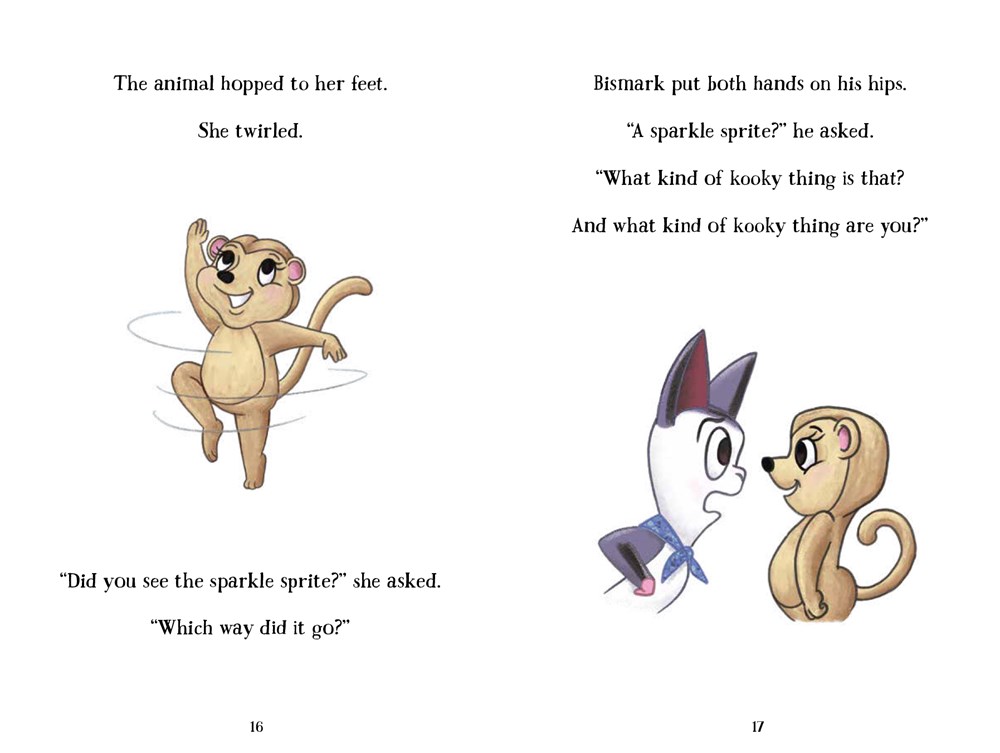
The Nocturnals: The Kooky Kinkajou, by Tracey Hecht/Illustrated by Josie Yee, (Sept. 2019, Fabled Films Press), $5.99, ISBN: 9781944020248

Ages 4-7

The Nocturnals Brigade meets a Karina, a careening kinkajou, while stargazing one night. Naturally, Bismark is his usual churlish self at first, but Karina leads the group through imaginative play through the forest, enchanting them with her exciting way of seeing things: a weeping willow tree becomes a rainfall; bent tree, a rainbow. Even Bismark can’t stay cranky with Karina’s contagious enthusiasm and creative way of looking at things. Nocturnals fun facts and new words make up the back matter. This makes a good readaloud for preschoolers, indulging and encouraging their imaginations and creative play, and is a Grow & Read Level 3, making it spot-on for newly independent readers.

There are great moments for discussion within the story. Bismark always makes for good “what not to do” moments; Tobin’s sweet innocence makes him the first to commit to Karina’s game, and makes him the perfect character to inspire readers to see shapes in the clouds, make up stories with the stars, and jump over rocks in an imaginary riverbed. Josie Yee’s art really captures the playful spirit of each character, making them soft, approachable, and cuddly for younger readers (especially my son, who made off with my plush Dawn months ago). Another win for my favorite group of nocturnal friends!
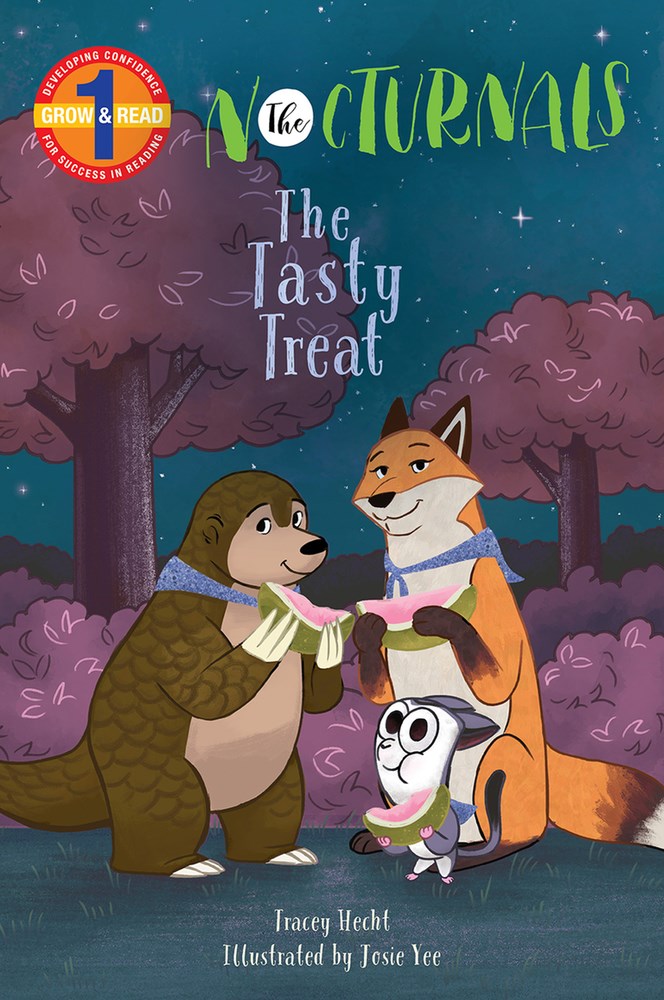
The Nocturnals: The Tasty Treat, by Tracey Hecht/Illustrated by Josie Yee, (Oct. 2019, Fabled Films Press), $5.99, ISBN: 9781944020309

Ages 4-7

The friends share a tasty treat – a pomelo, a favorite that shows up in many Nocturnals books – in this Level 1 reader. Short, simple sentences make this a good choice for pre-readers and new readers to start with, giving them some new vocabulary words and introducing them to the Nocturnals. The story revolves around Dawn, the fox, as she seeks and finds her friends one evening. Bismark has a pomelo, which he graciously offers to share, and the friends sit down to a pomelo picnic. Nocturnals fun facts reinforce character traits and introduce new words. Josie Yee’s artwork always makes the Nocturnals feel like cozy friends that kids will love spending time with. Bismark’s wide-eyed, exaggerated facial expressions are perfect for his blustering character with a heart of gold; Dawn’s all-knowing fox always has a slight smile, like she knows something most don’t (especially Bismark), and Tobin is the picture of shy but sweet, with eyes that gaze upward and a shy smile on his face.

This is a good introduction to The Nocturnals for new readers, and a great way to illustrate sharing.

The Nocturnals webpage has educator resources and activity kits, with Common Core activities and discussion questions and science activities that meet Next Generation Science standards. Activity Kits include word games, printable masks, and face-painting kits.

 

Posted in History, Middle Grade, Non-fiction, Tween Reads, Uncategorized

Big nonfiction roundup!

I have been curating a pile of nonfiction over the last several weeks, ready to do a back to school post, but all these other great books started coming out, too… so, before this pile crushes me, let’s do this!

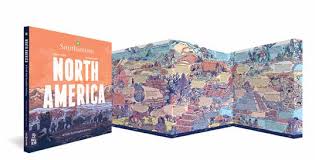
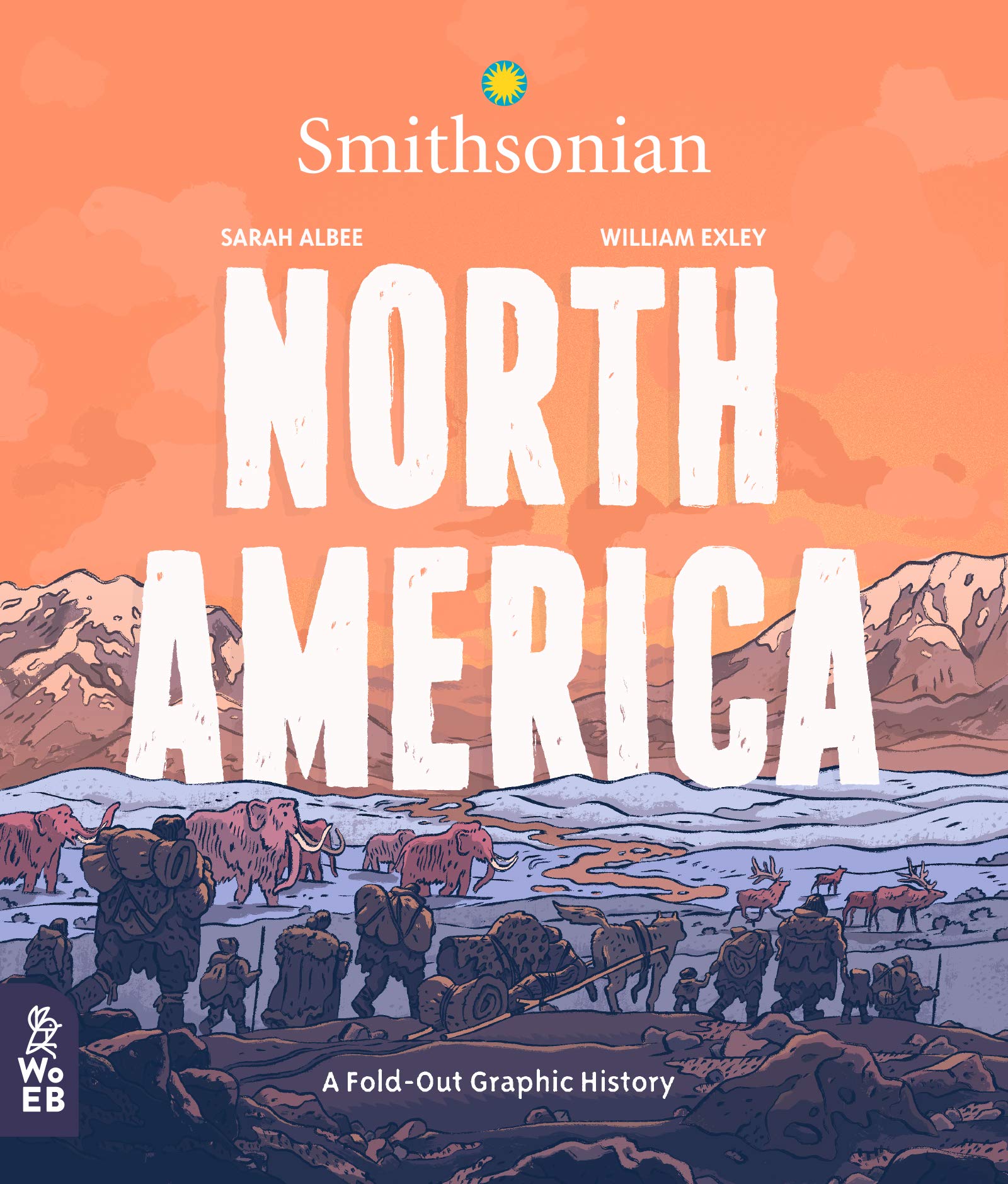
North America: A Fold-Out History, by Sarah Albee/Illlustrated by William Exley, (Oct. 2019, What on Earth Books), $19.99, ISBN: 978-1999967925

Ages 8-14

That What on Earth Books fold-out are so much fun! This time, we’ve got a fold-out graphic timeline of Canada, the United States, Mexico, and the Caribbean islands, going from 11,000 BCE to 2017. It’s fully illustrated and offers a wealth of history on early indigenous peoples, including the Olmecs, Maya, Taino, and Aztec. European invasions are covered – first the Vikings; later, Columbus and the conquistadors – and American history covers much of the book’s second half. History is captured with dates and a brief blurb about standout moments, and callout boxes call attention to larger happenings, like the spreading out of humans across the land, and how European conflicts played out in North America. Back matter includes facts; glossary; source notes, and an index.

Not one for circulation – it’ll sustain damage quickly – but it’s a good reference tool and darn fun to have at home. My little guy loves these books.

Source: Bounce Marketing UK


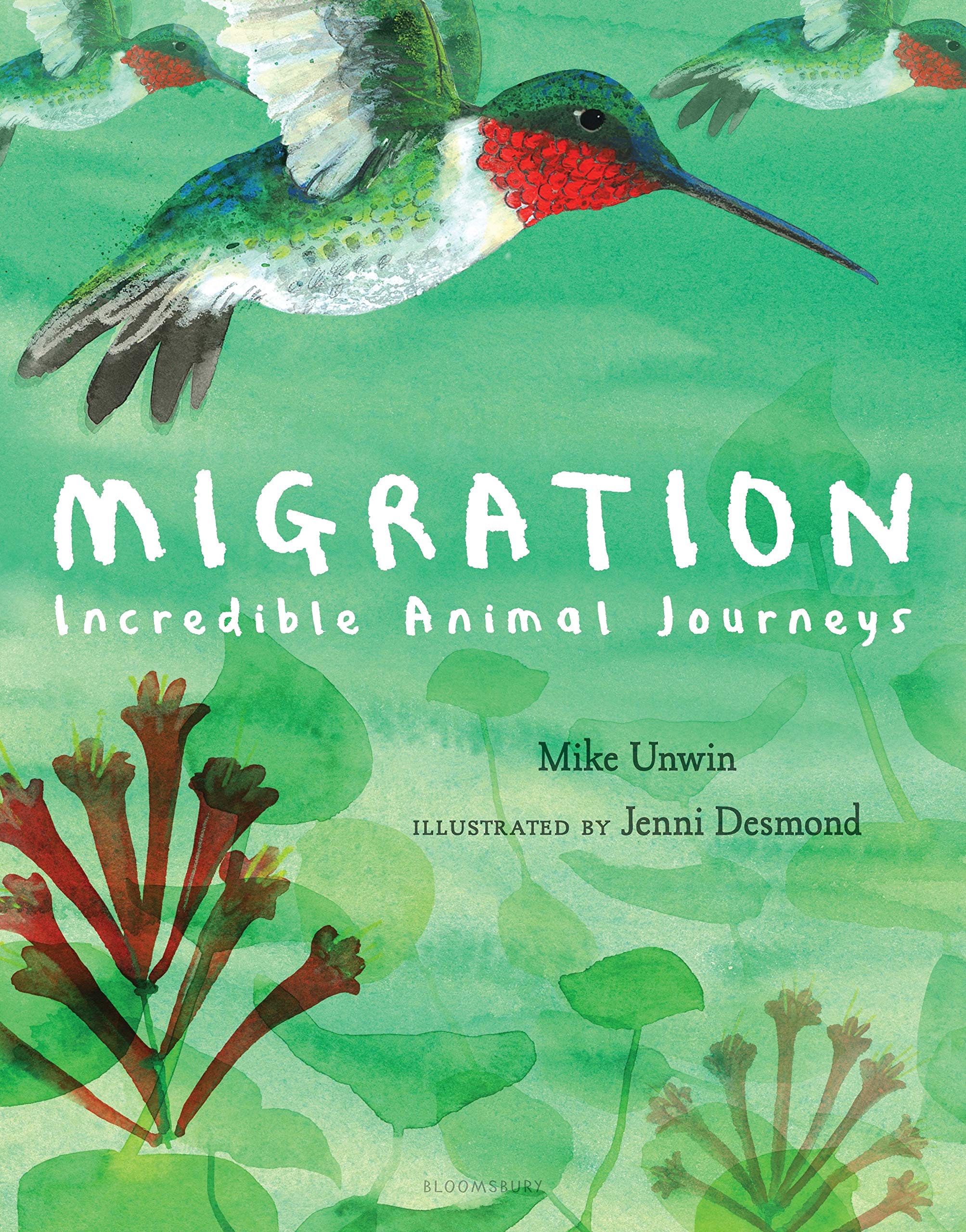
Migration: Incredible Animal Journeys, by Mike Unwin/Illustrated by Jenni Desmond, (Aug. 2019, Bloomsbury USA), $18.99, ISBN: 9781547600977

Ages 9-13

Originally published in the UK, Migration profiles 20 different migrating animals, including the humpback whale; emperor penguin; ruby-throated hummingbird; blue wildebeest, and green turtle. Each spread contains acrylic, watercolor, ink, pencil and crayon illustrations of these animals, captured in the progress of their journeys. Some artwork gives an incredible breadth of scale, like the spread dedicated to the Christmas Island red crabs, which form a “river of crabs” as they march to the sea. Others, like the humpback whale, are a more personal journey shared between a mother and her calf. Each spread provides a migration story, which reads like an I Survived novel: crossing rivers; digging through snow for food; flying for miles to reach their destination; marching across an icy landscape. Each spread also offers a quick animal fact. Back matter includes a migration map and notes on making the world safer for migrating animals.

Animals of all shapes and sizes make epic journeys across our planet, through harsh weather, avoiding hungry predators, in their efforts to survive. Travel around the globe with some of the world’s most incredible animals and discover their unique migration stories. A nice addition to your nonfiction collections, especially if your books on migration are spare.

Mike Unwin is a UK Travel Writer of the Year, and Jenni Desmond is a winner of the New York Times Best Illustrated Children’s Book, The Polar Bear. Migration: Incredible Animal Journeys has a starred review from Publisher’s Weekly.


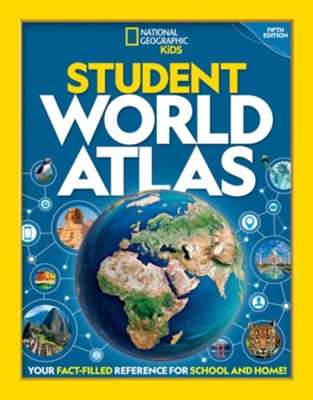
National Geographic Kids Student World Atlas (Fifth Edition), (July 2019, National Geographic Kids), $12.99, ISBN: 978-1426334795

Ages 8-12

This latest edition of this handy-dandy student reference has a wealth of facts, figures, and maps at your fingertips. There are over 100 maps, 70 incredible color photos, 50 charts and graphs with the latest data on climate change, the human footprint on our world, and most populous urban areas. Back matter includes an updated flags of the world section; a list of important websites on world resources, religions, languages, and quality of life; a glossary, thematic and place-name indexes, and more. If your budget allows for you to order two of these, do it: I like to keep one on hand at reference and put one into circulation. Along with the NatGeo Kids Almanac, you can’t go wrong with having these available for homework help.


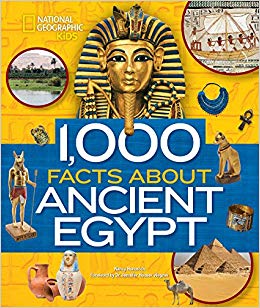
1000 Facts About Ancient Egypt, by Nancy Honovich (February 2019, National Geographic Kids), $14.99, ISBN: 978-1426332739

Ages 8-12

The 1000 Facts series from NatGeo Kids is almost as popular as the digest-sized Weird/Gross/Silly Facts books in my library. These are the books that prove that kids LOVE nonfiction! There are fast, bite-sized facts all about Ancient Egypt in this book: facts about the Egyptian gods and goddesses; facts about the Nile River; about making mummies and about the most famous mummy of them all, Tutankhamun; facts about inventions and temples; facts about hieroglyphics. There’s so much here, presented in compulsively readable, memorable chunks and illustrated with photos of artifacts. Back matter includes a glossary, a look at a tomb excavation, a timeline of Ancient Egyptian civilization, an index, and further resources. Have history fans? Is Ancient Egypt on the schools’ report list this year? Get this book on your shelf.


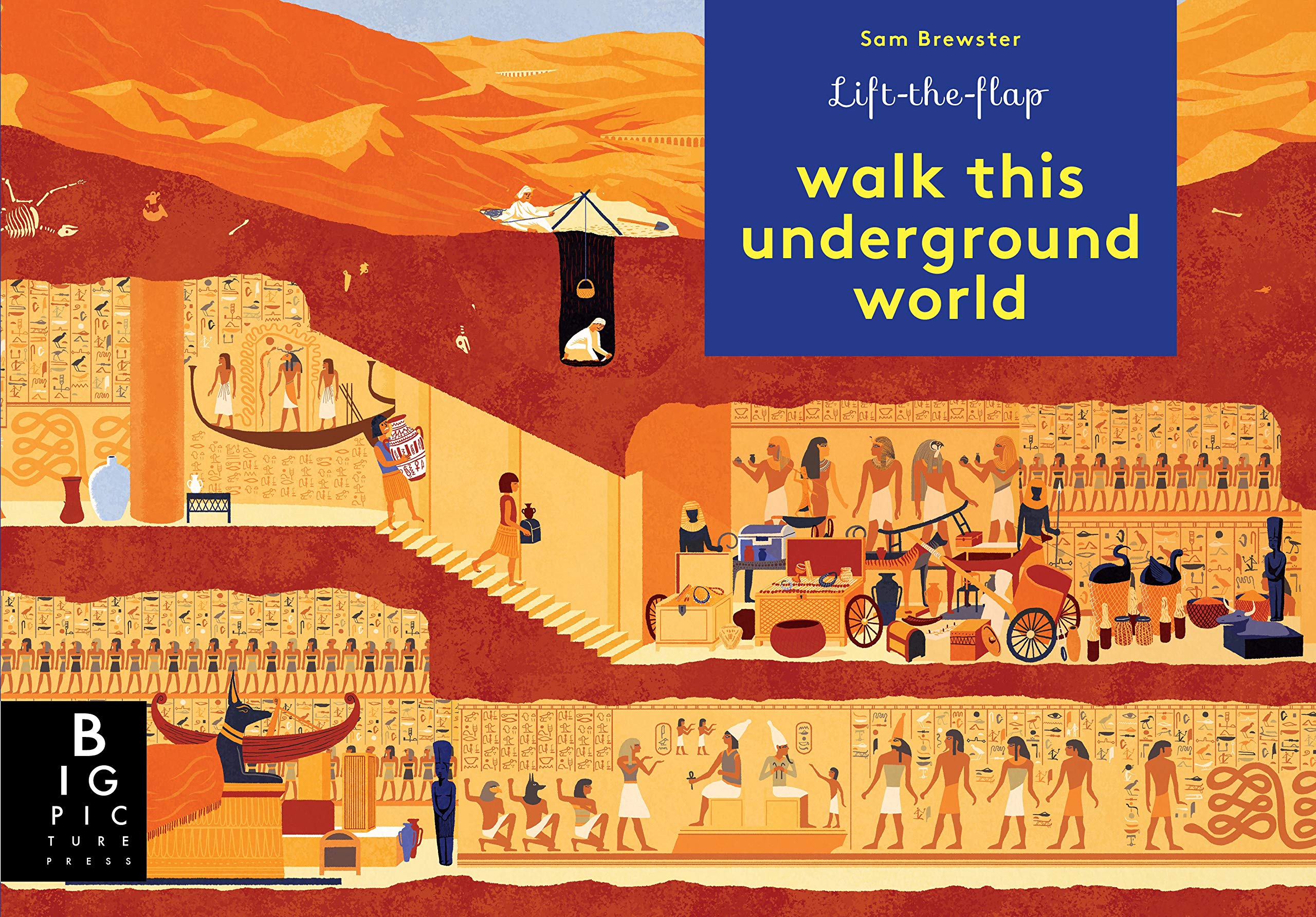
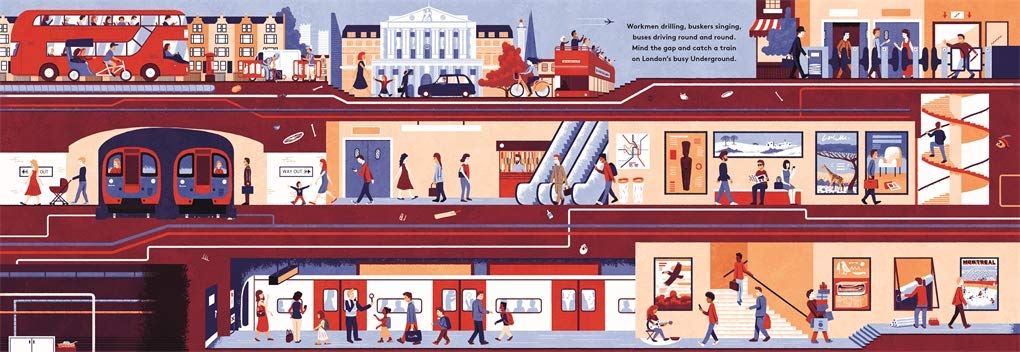
Walk This Underground World, by Kate Baker/Illustrated by Sam Brewster, (Oct. 2019, Big Picture Press), $19.95, ISBN: 978-1536208566

Ages 5-8

Lift the Flap fun! Readers can wander through underground worlds, from Montreal’s famous underground city to the ancient, underground tombs of Ancient Egypt. Wander the hidden natural world and see prairie dog dens, ant cities, and naked mole rat burrows. See Australian fortune hunters and Poland’s salt-rock mines; the bustling London Underground and the sleek underground train stations in Tokyo. There are 12 spreads with over 80 flaps to discover, making this a great gift book for the kiddos in your life. Definitely not going to last in circulation, but you could score a few copies for a program on underground ecosystems or travel.

That’s all for now – I have to get this copy of Walk This World back into my son’s room before he notices it’s gone!

Posted in picture books, Preschool Reads

Room On Our Rock shows two sides to the story

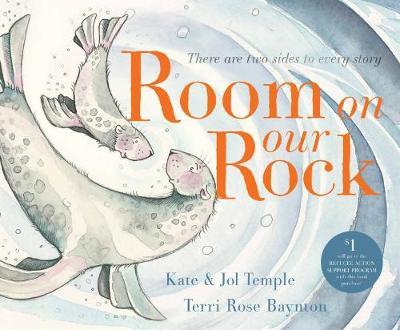
Room On Our Rock, by Kate & Jol Temple/Illustrated by Terri Rose Baynton, (July 2019, Kane Miller), $12.99, ISBN: 9781610679022

Ages 4-8

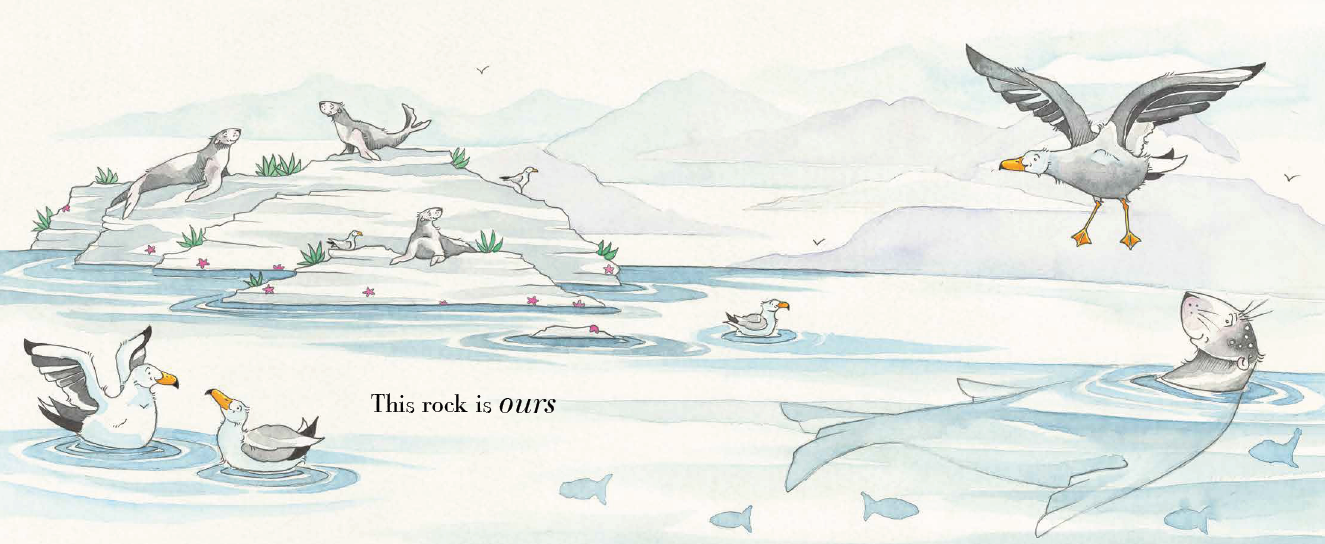
Two seals bask on a rock when a mother seal and her calf show up, in need of a new home. In a heart-rending turn of events, the mother and calf are berated, told there’s no room on the rock, despite there being a wealth of space. Told to go back their own rock, we see tumultuous, dangerous waters await the two… but is this the real story? The book invites readers to back to front for a different point of view, and a very different story emerges. The mother and calf flee their home, in search of a new place to live, where they are warmly welcomed by seals who wouldn’t dream of turning them away.

Room On Our Rock is a touching, clever look at empathy, compassion, and perspective, presenting two points of view to topical events: refugees and immigration. Fleeing catastrophe, a mother and child hope to find safe harbor elsewhere. Will they be welcomed and sheltered, or turned away? Where will this family find compassion?The story takes a human dilemma and uses animal migration to illustrate the two divided schools of thought. The sparse text brings readers into the issues at the heart of the refugee crisis, showing either – depending on which side of the story you’re reading – an astonishing lack of compassion or empathy, or a heart-stirring wealth of benevolence and welcome. The illustrations add to the well of emotion created by the text, giving life to the words by giving us churning waters and the expressive faces of a desperate mother and child. There is a motion to the artwork that creates an urgency in the reader: those seals have to get out of there!

I loved Room on Our Rock and plan to read this at my next storytime. My son loves the concept of the two-sided story, and has gone back to this book several times. This is a good book about an important topic that seems to be its own endangered species: empathy.

Originally published in Australia in 2018, Room on Our Rock has been shortlisted for the Australian Book Design Awards in the Picture Book category, and for the New Zealand Post Book Awards in the Best Picture Book category. You can find downloadable discussion questions and activities.


Posted in Conferences & Events, Early Reader, Graphic Novels, Intermediate, Non-Fiction, Non-Fiction

Kevin McCloskey, Giggle & Learn, Ants and Pigeon Poop: It’s all good here!

Kevin McCloskey is one of my favorite graphic novelists. What does he draw, you ask? Spidey? The Avengers? X-Men?

Nope. He creates science graphic novels for the little ones, examine such subjects as snail goo, pigeon and worm poop, and foot-long goldfish. Sometimes, he paints his pictures on recyclable grocery bags, because he believes in recycling. Most importantly, he creates nonfiction that speaks to young learners in a way that engages their minds and their funny bones, talking about the funny, gross, and awesome parts of nature and making them equally… amazing.

Ants Don’t Wear Pants!, by Kevin McCloskey, (Sept. 2019, TOON Books), $$12.95, ISBN: 9781943145454

Ages 4-7

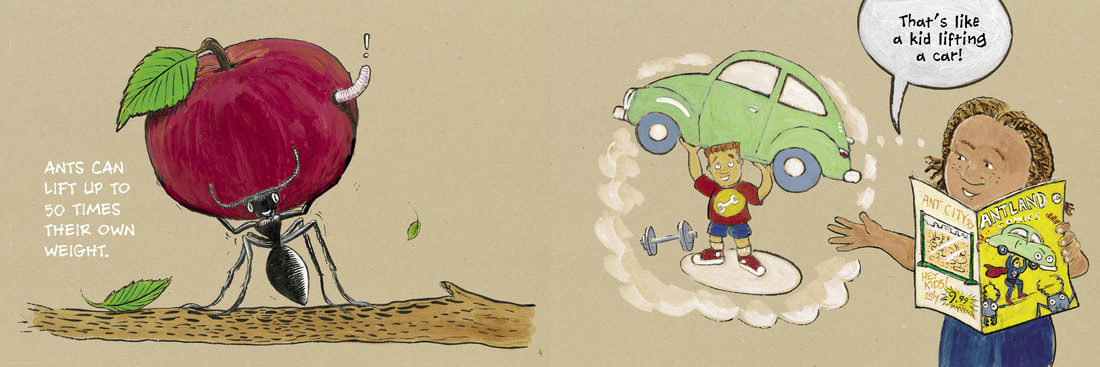
Who here hasn’t been told, “You have ants in your pants!” while growing up? With that phrase, Kevin McCloskey sets readers off on the study of ants: biology and physiology, life cycle, food, kinds of ants, and what they eat. The book is loaded with fun facts and illustrations, like the one of an ant bench pressing an apple, combined with a picture of a child lifting a car, to bring home the fact that an ant can lift up to 50 times its own weight, and what that would mean to us human folk. The front endpapers have hundreds and hundreds of ants, with one magnified under a magnifying glass, greeting readers and inviting them to come and learn. This is the newest in Kevin McCloskey’s Giggle and Learn series of graphic novels for young learners, published by TOON, and I love it. My kiddo’s first McCloskey book was We Dig Worms (2015), which I read to him when he was barely out of the toddler years, and he loved it, because the material is accessible and fun. A lesson plan is coming soon!


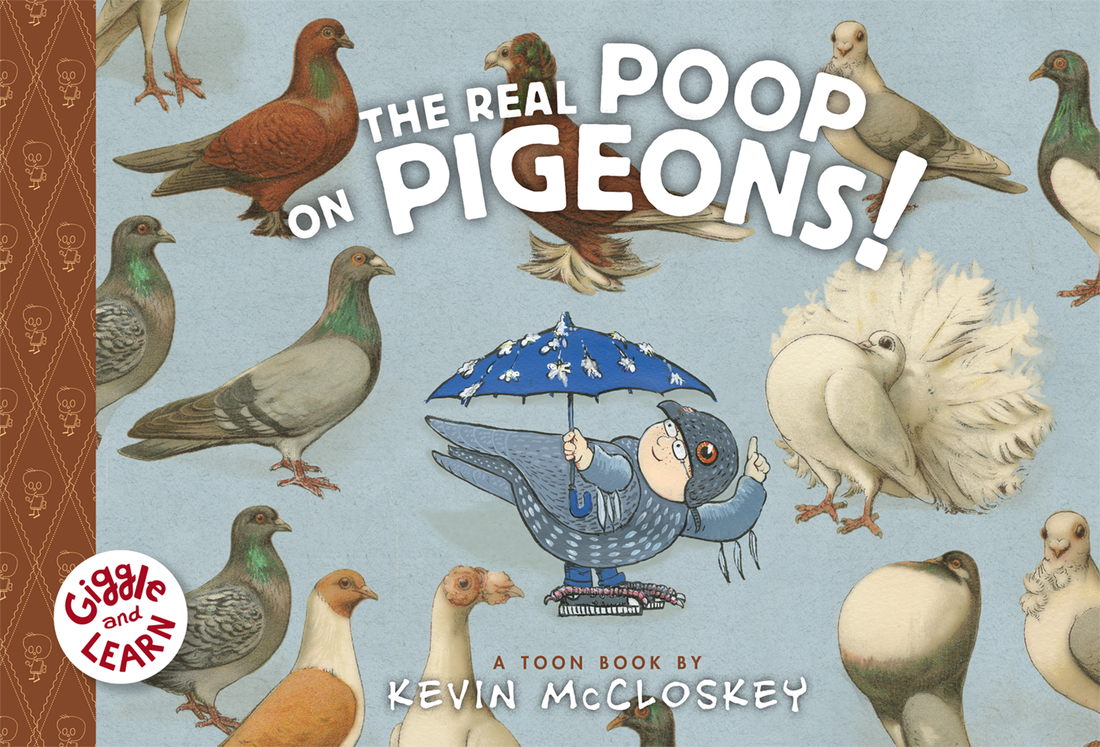
The Real Poop on Pigeons!, by Kevin McCloskey, (Sept. 2019, TOON Books), $6.99, ISBN: 9781943145430

Ages 4-7

Originally published in 2016, The Real Poop on Pigeons! is coming to paperback. When a man sitting on the park bench starts shooing pigeons away, a group of children, dressed as pigeons, show up to school him – and us readers – on pigeon history – they carried the first airmail! – and biology, breeding, and pigeon milk. (Read the book. You can’t buy this in Stop & Shop.) There are some great pigeon family tree revelations here, like the fact that the Dodo was a member of the pigeon family. A three-foot pigeon! Ever wonder why you haven’t seen a baby pigeon? Read the book! The Real Poop on Pigeons is yet another win from Kevin McCloskey, and another win for young readers.


Posted in picture books, Preschool Reads

Operation Photobomb: Smile! (Plus, a giveaway!)

Operation: Photobomb, by Tara Luebbe & Becky Cattie/Illustrated by Matthew Rivera, (Sept. 2019, Albert Whitman & Co.), $16.99, ISBN: 9780807561300

Ages 4-7

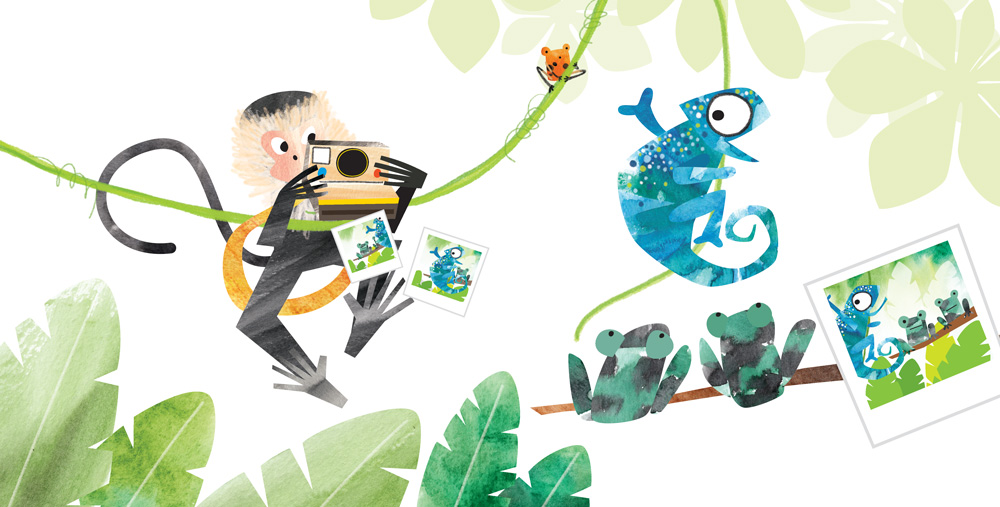
Monkey and Chameleon love when jungle tours visit their jungle: they get toys! This time around, Monkey finds a camera and starts snapping away. Chameleon loves the spotlight a little too much, though, and when Monkey starts taking photos of their other jungle friends, Chameleon can’t resist a good photobomb. This gets on everyone’s nerves pretty quickly, so the animals plan a little comeuppance of their own.

This book is guaranteed to bring the snickers. Most people, certainly most kids, know what a photobomb is these days, and love doing it. They’ll love Chameleon’s spotlight-stealing presence, and they’ll get a kick out of the other animals’ retribution. There are a good discussion points to be found here, too, the biggest being to think about how one’s actions can affect others. Ruining other people’s pictures, other people’s fun? Not very nice. Talk about jealousy, and how that motivates Chameleon – what could he have done to let others know he was feeling left out? Light-hearted and fun, the story gets its point across without being preachy or melodramatic. The bright and bold illustrations feature striking colors and bold fonts, making this a storytime winner.

Speaking of storytime, Operation Photobomb went over well at storytime here, and a little too well at home: my little guy already appreciates a good photobomb; now I fear for his older brother even more. Stay tuned.


Tara Luebbe and Becky Cattie are sisters and collaborators. Together they’ve written several picture books, including I Am Famous and I Used to Be Famous, illustrated by Joanne Lew-Vriethoff, and Shark Nate-O, illustrated by Daniel Duncan. Visit Becky and Tara online at www.beckytarabooks.com.

Matthew Rivera began drawing animals when he was old enough to hold a crayon. His parents still prize the toucan he drew when he was five. He earned his degree in Fine Arts from the University of Arizona. Visit him on Instagram @matthewdidit, or at his website, matthewdidit.com.


Want a shot at winning your own copy of Operation Photobomb? (U.S. addresses only, please!) Enter the Rafflecopter giveaway!

Posted in Intermediate, Middle Grade, Non-fiction, Non-Fiction, Teen, Tween Reads

Wild History! Books about prehistoric animals

Kids love dinosaurs. This is a known fact, and my groaning 567.9 section is proof positive of it, but I like to branch out a little and get kids checking out what other prehistoric animals there are to learn about. There are several great new books out that will give my 567 section a nice boost.

Forgotten Beasts: Amazing Creatures That Once Roamed the Earth, by Matt Sewell, (July 2019, Pavilion), $19.95, ISBN: 9781843653936

Ages 7+

Originally published in the UK in 2018, Forgotten Beasts contains over 45 illustrated portraits and profiles of birds and beasts that roamed the planet alongside and after the dinosaurs. There’s the Opabinia, a 2-inch arthropod from 508 million years ago through 1936, when the last Thylacine, a carnivorous marsupial, went extinct. There are some names kids will recognize, like the ginormous shark, Megalodon; the saber-toothed tiger, also known as the Smilodon Fatalis, and the Woolly Mammoth (for the Ice Age fans!). Each picture is skillfully rendered in muted watercolors, showing readers that prehistory wasn’t relegated to muddy greens, browns, and grays. Each profile includes the animal’s size, weight, time period, and diet, and a descriptive paragraph or two, and a timeline helps readers envision when these animals, alongside dinosaurs, roamed the Earth. Endpapers feature the stars of the book in miniature, parading across the pages. A nice book to beef up your non-dinosaur prehistoric collections.

Life: The First Four Billion Years (The Story of Life from the Big Bang to the Evolution of Humans), by Martin Jenkins/Illustrated by Grahame Baker-Smith, (Sept. 2019, Candlewick Studio), $24.99, ISBN: 978-1-5362-0420-9

Ages 10-14

The cover alone will make readers stop and give this book a look. Starting with the Big Bang, Life: The First Four Billion Years brings readers along on a journey through Earth’s first four billion years, ending right before we humans show up. Life starts off with foldout spreads that detail the beginning of Earth; from there, the book moves into the Ice Age, life’s beginnings in the water, its move to land, the ages of dinosaurs and of mammals, and the breakup of Pangea and formation of the continents, and the “Road to Us”: evolution of homo sapiens. Illustrations are the focal point of the book, and Kate Greenway Medal winner Grahame Baker-Smith is at the top of his game, creating landscapes both lush and stark, with black and white and color artwork of a prehistoric world. Award-winning author Martin Jenkins writes for upper middle graders and older, making the science of prehistory accessible to all ages. A glossary and illustrated timeline of the planet make this a stunning volume to have on your shelves.

Prehistoric: Dinosaurs, Megalodons, and Other Fascinating Creatures of the Deep Past, by Kathleen Weidner Zoehfeld/Illustrated by Julius Csotonyi, (Sept. 2019, What on Earth Publishing), $18.99, ISBN: 978-1-912920-05-1

Ages 7-11

Traveling backwards from present day to 541 million years ago, this slim volume is packed with illustrations, infographics, and easily digestible information about the earth through 17 eras. There’s information about climate change, ecosystems and extinctions. A running timeline at each right-hand page margin keeps readers up-to-date on the era and presents a visual representation of time covered as the book progresses.

Color illustrations are museum-quality; you can easily envision these bringing life to exhibits at any museum you may go to. Keeping in mind a younger and middle-grade audience, the information is broken up into short paragraphs, bold infographics, and callout facts. Back endpapers act as a visual table of contents. Keep Prehistoric in mind for your nonfiction sections; hand any of these books to your Apex Predators and Prehistoric Actual Size fans.

Prehistoric is produced in association with the Smithsonian’s National Museum of Natural History.

Posted in Middle Grade, Non-fiction, Tween Reads

The truth about cats and dogs (and gerbils, birds, fish, and other pets…)

Nat Geo Kids is all about the pets these days: they’ve just released Doggy Defenders, a series of books on working dogs, and they’ve also put out some great desk references about cats, dogs, and an Big Book to get younger readers excited about the world of animal companionship. Here’s a glimpse at some of the books out.

Cat Science Unleashed: Fun Activities to Do With Your Feline Friend, by Jodi Wheeler-Toppen/Photos by Matthew Rakola, (Aug. 2019, National Geographic Kids), $12.99, ISBN: 978-1-4263-3441-2

Ages 7-12

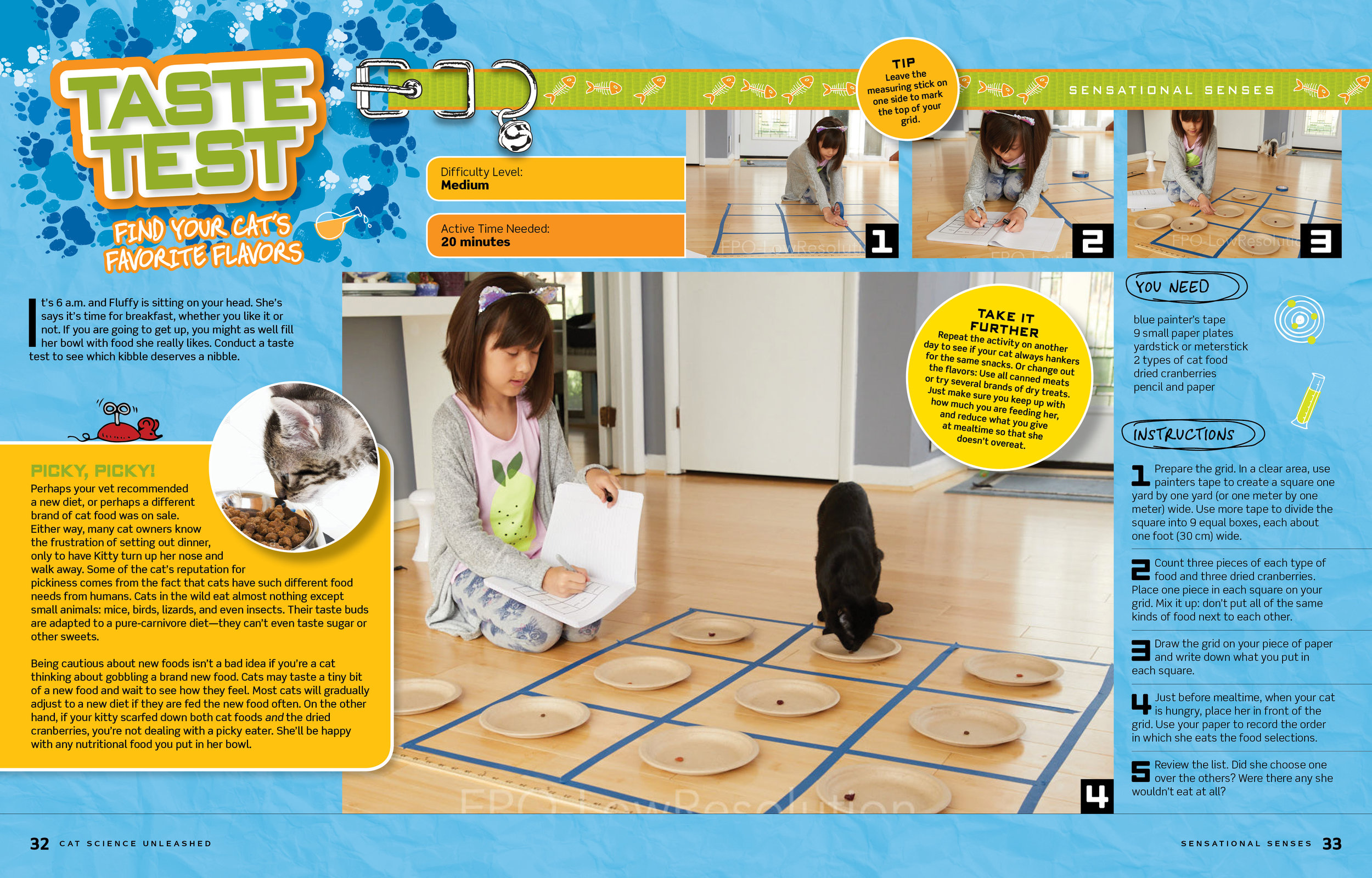
A companion to last year’s Dog Science Unleashed, Cat Science Unleashed is all about the cats, with a glimpse into cat biology and physiology, cat facts, and cat-tivities to engage the scientists in your life. Eleven kid scientists have tested their cats – you’ll meet them on a spread in the book – and invite readers to join them in discovering how cats see at night and how to discover their favorite smells. Activities include building a hiding spot for your cat’s toys (other than my living room floor? Have to get my kid on that) and making toys to test your kitty’s stalking prowess. There’s a glossary and list of further resources at the end A fun volume, and with a new science fair season on the horizon, this could be a fun way to give your kiddos’ cats the spotlight at school in addition to home.

Cat Breed Guide: A Complete Reference to Your Purr-Fect Best Friend, by Stephanie Warren Drimmer & Dr. Gary Weitzman, DVM, (Sept. 2019, National Geographic Kids), $19.99, ISBN: 978-1-4263-3439-9-

Ages 8+

This is a compact, thorough desk reference to cats, perfect for an animal lover, cat fan, and anyone either writing a report about felines or researching a new pet. The guide provides a look at feline history, with a cat family tree, a history of cats and how domesticated cats became household constants, even cat-related superstitions and folktales. There are profiles on more than 60 cat breeds, organized by short hair and long hair breeds, and each profile offers a quick “cat stats” box that provides notes on country of origin, size, coat, grooming, and “catitude”. There are gorgeous photos, fun facts, and general adorableness throughout, plus a section on cat-related careers, a glossary, and further resources. I’m always trying to keep my domestic animals/pets books stocked, so this one will be a nice add to my shelves.


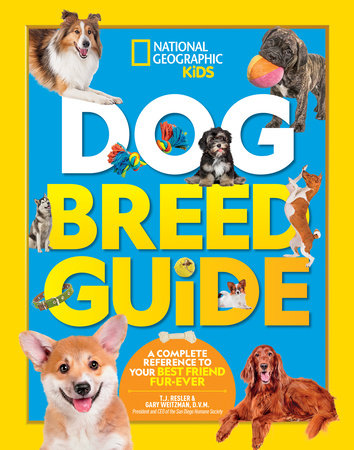
Dog Breed Guide: A Complete Reference to Your Best Friend Fur-Ever, by TJ Reser & Dr. Gary Weitzman, DVM, (Sept. 2019, National Geographic Kids), $19.99, ISBN: 978-1-4263-3445-0

Ages 8+

A companion desk reference to the Cat Breed Guide, Dr. Weitzman and TJ Reser team up to give readers a comprehensive guide to canines, from their wolfish origins to today’s modern breeds. Organized into 10 sections, dog profiles include full-color, squeal-worthy photos and stats-at-a-glance: country of origin, height, weight, coat, grooming, exercise needs, and K-9 qualities. There are sections on show dogs, canine senses, and how to talk to your dog, and a section on adopting and training a puppy. There’s a glossary and more resources.

Together, the Dog and Cat Breed Guides provide a handy reference for pet and animal lovers.


Little Kids First Big Book of Pets, by Catherine D. Hughes, (July 2019, National Geographic Kids), $14.99, ISBN: 978-1-4263-3470-2

Ages 4-8

I love the NatGeo Kids Little Kids First Big Book series! There are 17 books in the series now, and they’re great for pre-readers to look through, while emerging readers can more confidently navigate the pages. Words are bold, the pictures are big and bright, and there’s tons of fun facts, quizzes, and info to be found. The First Big Book of Pets is all about our favorite companions, from dogs and cats to birds, reptiles, fish, mice… you name it. Interactive questions throughout the book prompt discussion, games at the end of every chapter help reinforce concepts and give librarians like me an excuse to have fun, pet-related programming, and fact boxes give kids info at-a-glance about different pets. If you know a kiddo who wants a pet, but isn’t quite decided on what pet to get, hand them this guide – it’s geared toward educating kids about different pets’ needs, and our responsibilities to animals once we adopt them. A section for parents includes a recipe for baking dog biscuits, pet jokes and tips and ideas to engage kids about pets. There’s a glossary and list of additional resources. The Little Kids First Big Books are really popular with my library kids, so this one is another win for my shelves.

Posted in picture books, Preschool Reads

Counting, Colors, and Animals Eating – Concept Fun!

Two fun picture books give kids the giggles while inviting them to count, call out colors, and animals!

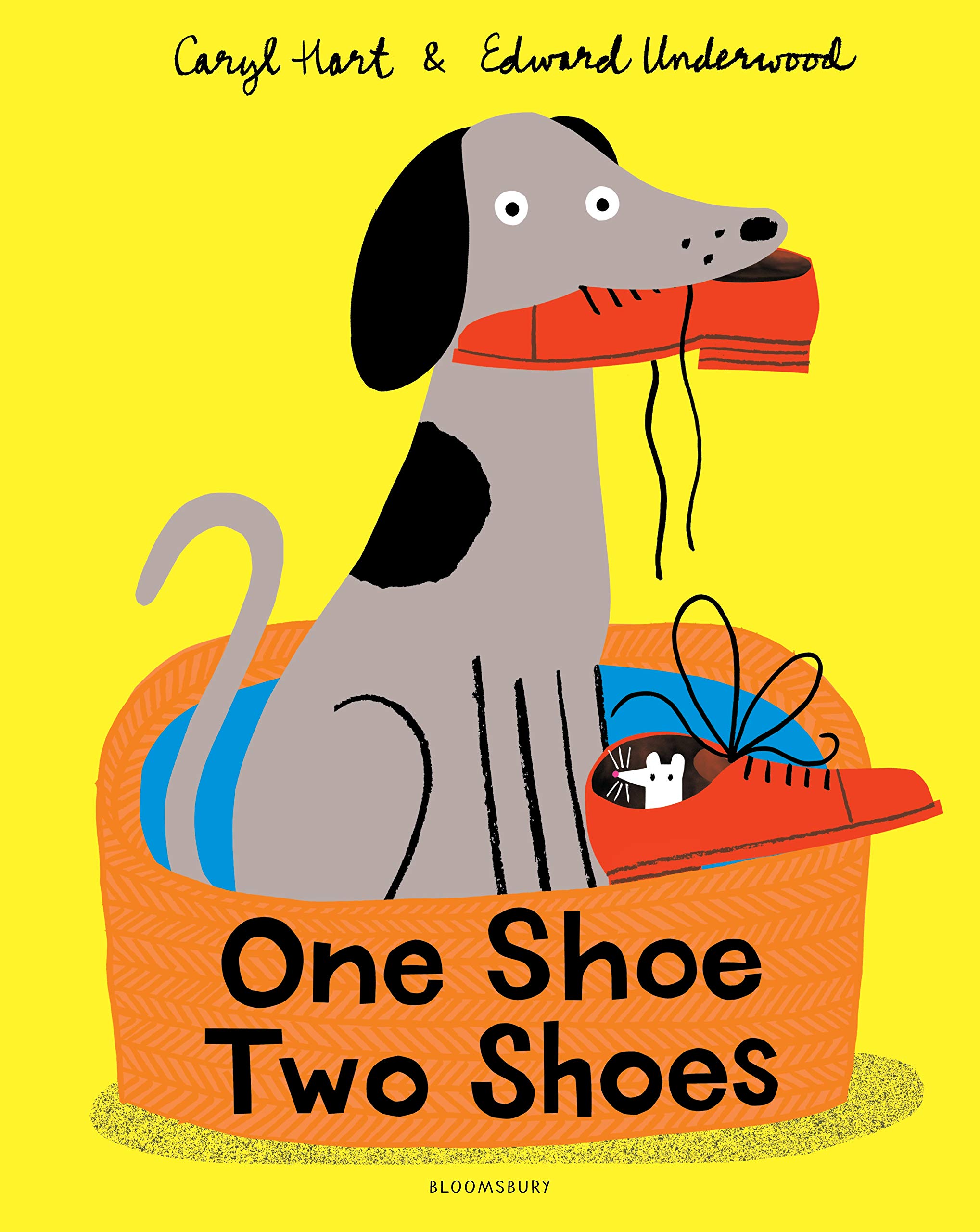
One Shoe Two Shoes, by Caryl Hart/Illustrated by Edward Underwood, (July 2019, Bloomsbury USA), $17.99, ISBN: 978-1-5476-0094-6

Ages 3-6

A dog and a bunch of curious mice explore all the shoes in their world in this adorable rhyming story. The rhyming pattern reminds me of Dr. Seuss’ classic, One Fish, Two Fish, Red Fish, Blue Fish – “Old shoes/New shoes/On their way to school shoes” – minus the wacky, new words. The pup notices shoes all around, both inside and outside the home, when…. wait! There are two mice, making a home in a pair of shoes! A few more scramble by the dog, and before you can say “shoelace”, there are 10 mice, all making their homes in various sneakers, skates, and boots.

Originally published in the UK in 2018, this is an absolutely fun concept book that would work nicely with felt board accompaniment. The pencil, ink, and digital collage artwork is bold and bright, with primary colors and bold black fonts. The endpapers are loaded with footwear. The rhyming, counting, and colors in this book make it a multitasker for concepts, making this a good add to your concept bookshelves and storytimes. Pair with Hart and Underwood’s companion picture book, Big Box Little Box for more concept fun!

Visit author Caryl Hart’s webpage for info about visits and, for aspiring writers, mentorship! Illustrator Edward Underwood features more of his artwork on his Instagram.

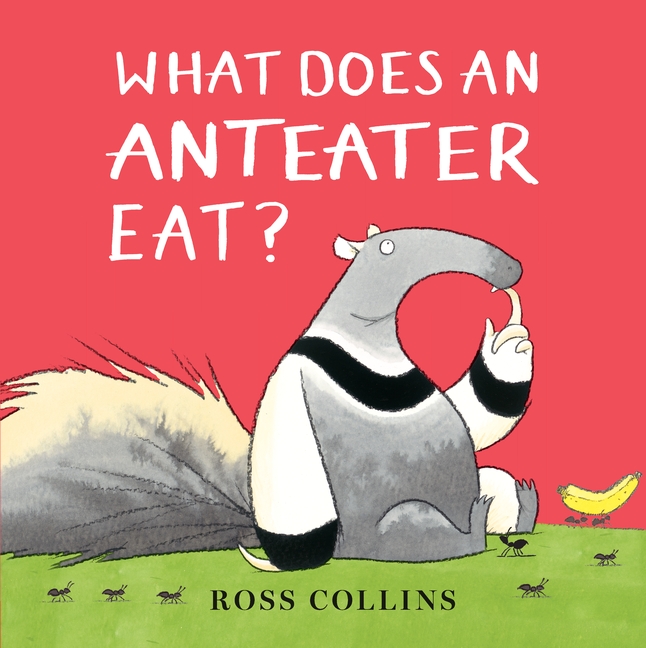
What Does an Anteater Eat?, by Ross Collins, (July 2019, Nosy Crow), $16.99, ISBN: 978-1-5362-0591-6

Ages 3-6

Anteater wakes up hungry, but there’s a bit of a problem. What does an anteater eat? He sets off to find out, asking sloths, snakes, bats, and cheetahs he encounters on his exploratory walk, all with different results. The book is one hilarious inside joke – we know what the anteater eats, and it’s a good bet that the ants scurrying across each spread in the story do, too – presented in Q&A format. The anteater asks every new animal he meets what anteaters eat, and the animals’ responses are colored by their experiences: the snake, belly bulging with its latest meal, cautions the anteater to chew its food; the cheetah hungrily eyes the anteater. The anteater’s questions are in bold font; the responses, in italics, signaling the chance in voice to your audience. The adorable, funny ending makes the book a storytime winner for toddlers and preschoolers.

Originally published in the UK in 2018, What Does an Anteater Eat? has the playfulness that make Ross Collins’ books so much fun to read. This one is another great candidate for felt board storytelling or puppet accompaniment. Collins’ artwork is cartoony and entertaining with a playful sense of joy added to each spread. The endpapers are in on the story’s joke, starting with an ant crawling across the front endpapers, and finishing with a pile of banana peels.

This one is a storytime winner. Ross Collins’ author webpage includes info about his books, and provides free, printable posters of his book covers and a few activity sheets.

Posted in Fantasy, Fiction, Graphic Novels, Middle Grade, Tween Reads

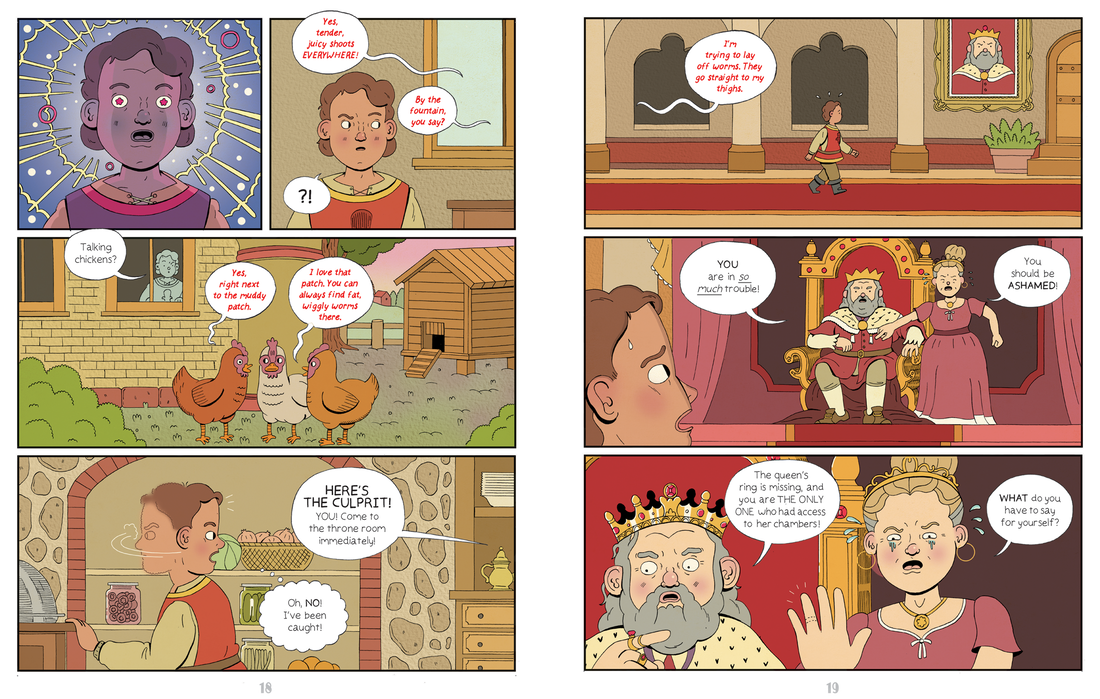
A classic fairy tale with modern-day sensibilities: The White Snake

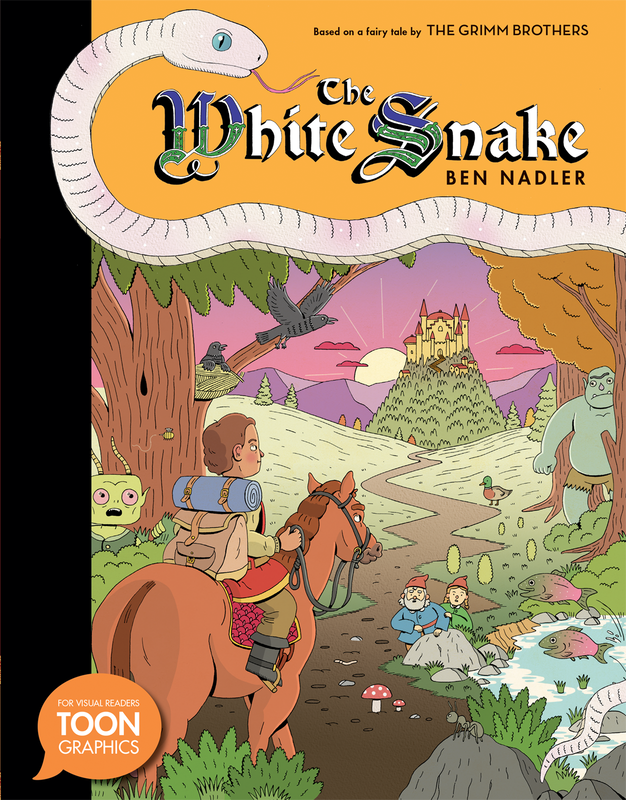
The White Snake, by Ben Nadler (based on a fairy tale by the Grimm Brothers), (May 2019, TOON Graphics), $16.95, ISBN: 9781943145379

Ages 8-12

Ben Nadler revisits The Grimm Brothers’ tale, The White Snake, with modern-day emphasis on themes including kindness to animals and pushing back against classicism, and sexism. Randall is a young servant for King Arnold, an indecisive monarch who seems confounded by the mere act of hanging a picture. He is an autocratic father, too, shouting down his daughter and refusing to consider letting her rule; choosing instead to find a suitor for her. King Arnold sends Randall to the neighboring kingdom of Borisylvania to spy and report back on why King Boris is beloved. In Borisylvania, Randall discovers Boris’ secret: he is able to communicate with animals by eating a meal of white snake. With this knowledge, Randall heads back home, showing kindness to animals along the way. This kindness pays off when Randall needs help to complete quests set by King Arnold in order to win his daughter’s hand – and save his own life.

Ben Nadler weaves themes of sexism and racism throughout the story. King Arnold is a brutish overlord who refuses to listen to his own daughter, and throws Randall in prison when he refuses to divulge King Boris’ secret. Princess Tilda come to his rescue by offering herself as bait; she tells her father to offer her hand in marriage as a contest prize. When Randall completes each quest the king sets before him, he refuses to let a servant marry his daughter and adds additional perilous tasks. When Randall finally helps King Arnold see the light, the story takes an upbeat turn and the message is loud and clear: “the animals talked to me. All I had to do is listen”.

Back matter includes an essay by graphic novelist educator Paul Karasik on retelling folk tales, and a bibliography of print and online resources. TOON has a free, downloadable educator’s guide available. The endpapers feature artwork of key figures in the story: birds, fish, horses, crowns, and apples, all arranged into a lovely design with a vintage feel. The artwork dives into surrealist territory in points, which will make you wonder just what is in that food. Randall is fair-skinned; King Arnold and Princess Tilda are brown-skinned.

A great add to your graphic novel and fairy tale collections. TOON has copies available in both hardcover and softcover. Check out the interview Smash Pages did with Ben Nadler!

Posted in picture books, Preschool Reads

Croc & Turtle are the BEST at being best friends!

Croc & Turtle! The Bestest Friends Ever!, by Mike Wohnoutka, (Feb. 2019, Bloomsbury Children’s Books), $17.99, ISBN: 9781681196343

Ages 3-6

Croc tells his buddy, Turtle, that he’s the strongest, fastest, highest jumper… but he gets proven wrong each time! When Croc starts to feel down on himself, Turtle knows that just won’t do: he’s the best friend to Turtle. And Croc assures Turtle that he’s the best friend to Croc. They’re both the best at something! Yay! A sweet story about not having to be “the best” at things to have value, Croc and Turtle! The Bestest Friends Ever is comical, entertaining, and delivers a valuable message.

Written as a dialogue between the two friends, with other friendly animals chiming in, this works for storytime, one-on-one, and individual reading. The text includes short and mid-length sentences, with sound effects and plenty of sight words for newly independent readers; toddlers and preschoolers will love the cartoony artwork and the big facial expressions; the gouache artwork is done in pastels and is very little kiddo-friendly. Croc & Turtle! The Bestest Friends Ever! is a good addition to your picture book collections, and I look forward to seeing more Croc & Turtle adventures.

Mike Wohnoutka is an ALA Notable book author; his books, Can’t Sleep without Sheep, Jack’s House, and This is NOT a Cat have been designated as Blue Ribbon selections by the Bulletin of the Center for Chidren’s Books.