Posted in geek, geek culture, Middle Grade, programs, Tween Reads

I had a BookPop! party and it was great!

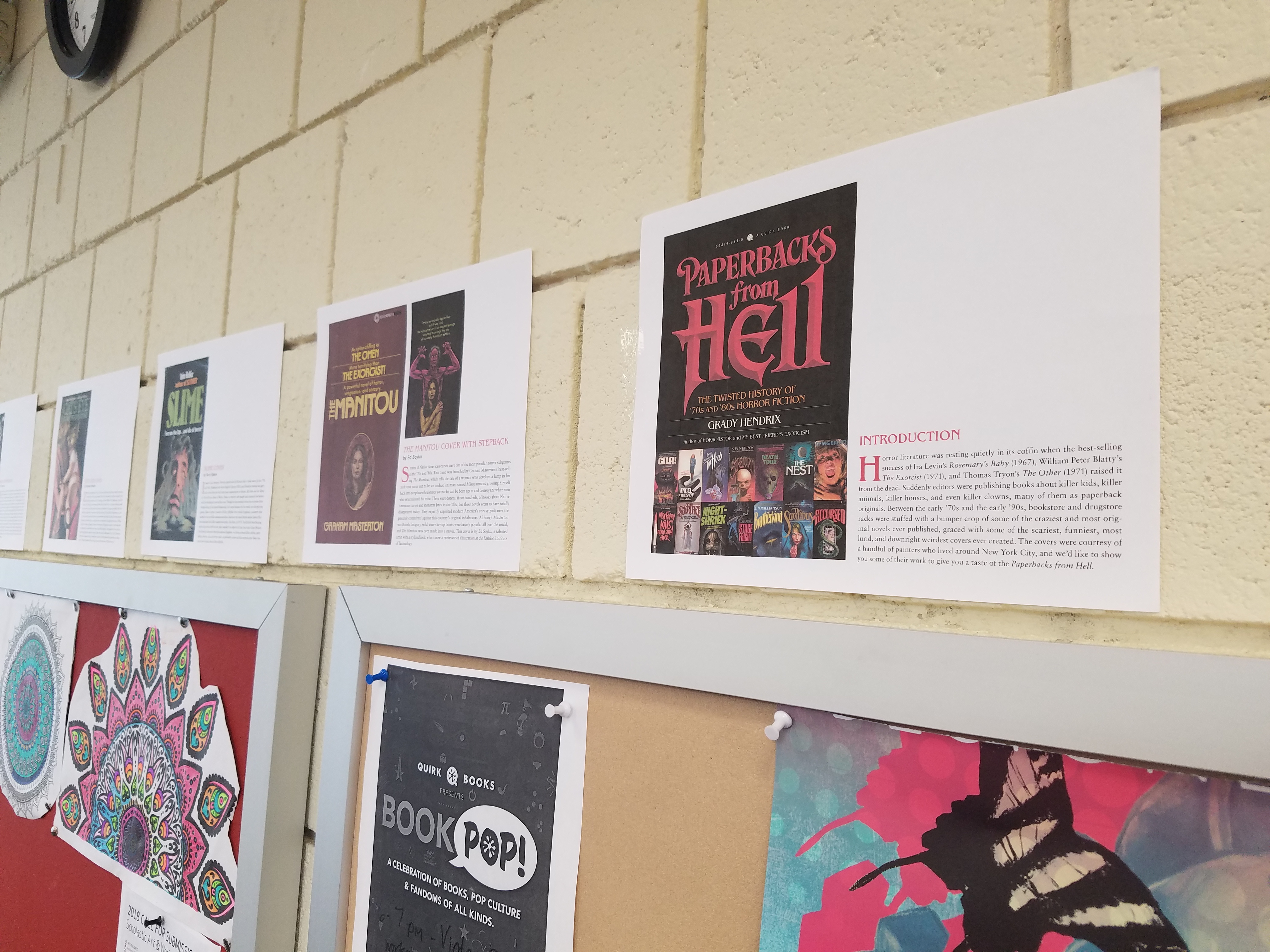
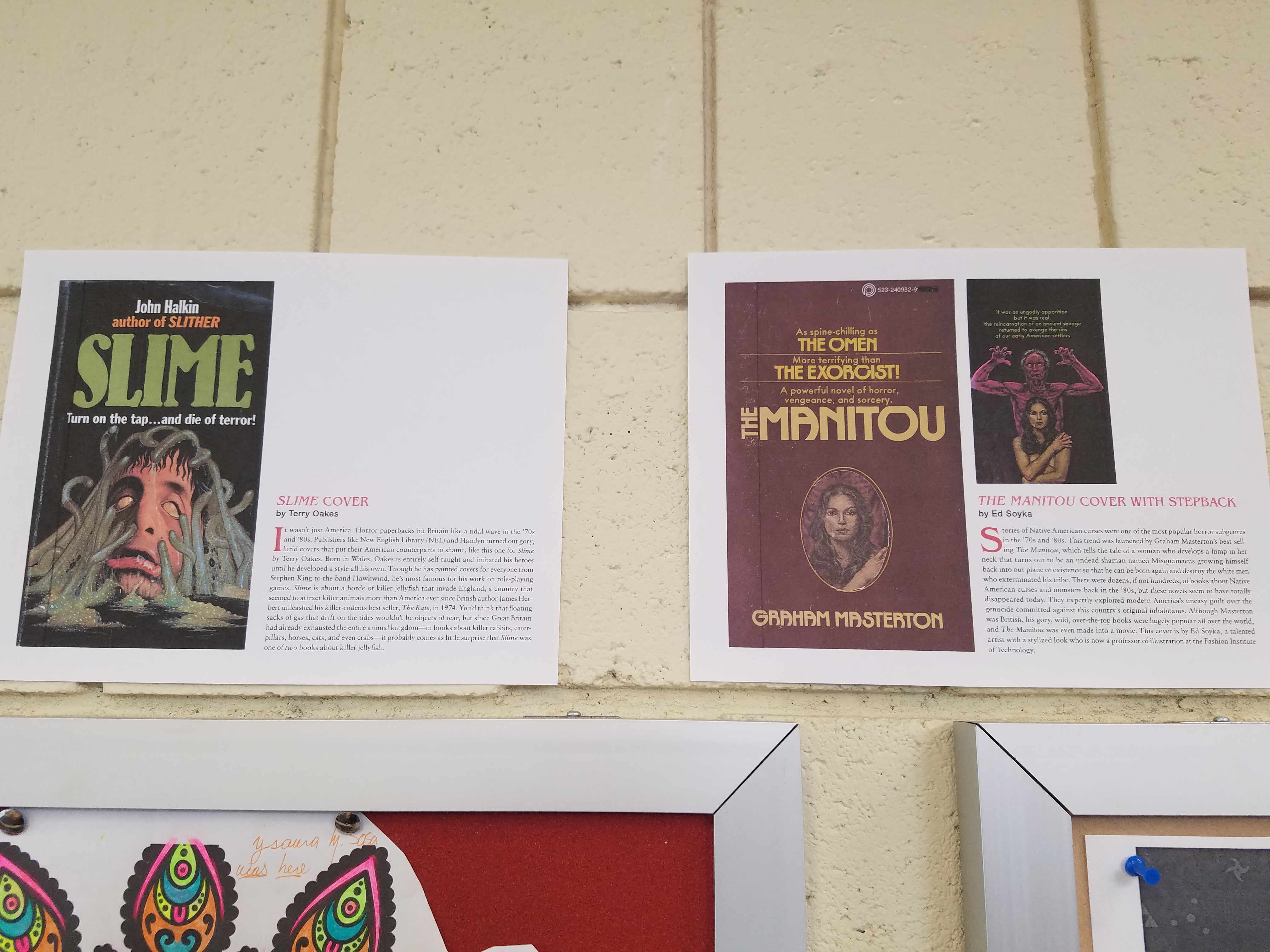
Quirk Books is a… well, quirky, fun book publisher that has a comic book writer and former YA librarian in their ranks, spreading the good word. It’s pretty awesome, because now, my library gets to do things like have a gallery dedicated to horror paperbacks of the ’70s and ’80s (Paperbacks From Hell), and have a mini pop culture con for my kiddos and tweens.

First up, my Paperbacks From Hell gallery, in my teen section. It’s garnering some looks, some chuckles, and some conversations: “What the hell is that?” “That is a giant gila monster. And watch your mouth.” (The display is in the teen area, but you know, little pitchers, big ears). The teens are pretty baffled, the grownups get a kick out of it, and it just makes me happy.
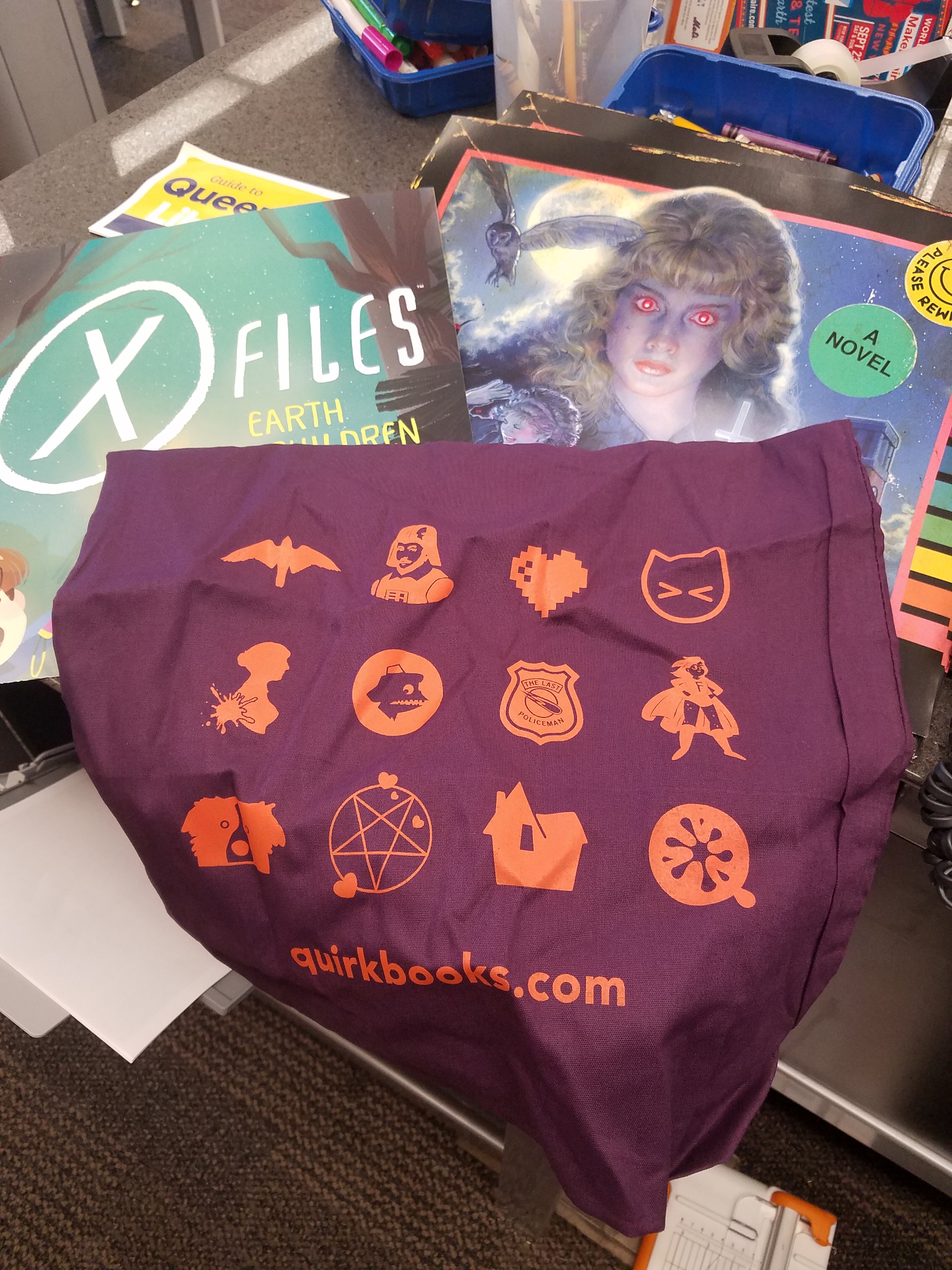
Next up, BookPop: Quirk’s traveling pop culture fest, happening in libraries and bookstores all over the place. I held mine late, because I thought it would be the perfect program to hold when the kids were out of school; last Thursday – since most of the families in my community don’t observe Rosh Hashanah – was the day. Quirk sent me a box o’swag, including ET: The Extra-Terrestrial tattoos (not in the picture: those babies were GONE); posters of the new kids’ books, X-Files: Children are Weird, and the YA novel My Best Friend’s Exorcism; and a spiffy tote bag to put everything in. I downloaded Quirk’s Geek Guides for putting on a great day of programming, and was ready.
First program of BookPop! Day was Superhero Storytime. I had a handful of kiddos and their parents attend, and we made masks and Geek Family Crests when we were done. The kids loved the masks – I downloaded some blank templates from First Palette, handed out scissors, markers, crayons, and lanyard to tie the masks, and the kids loved it. One little one even wore her mask through the next program…

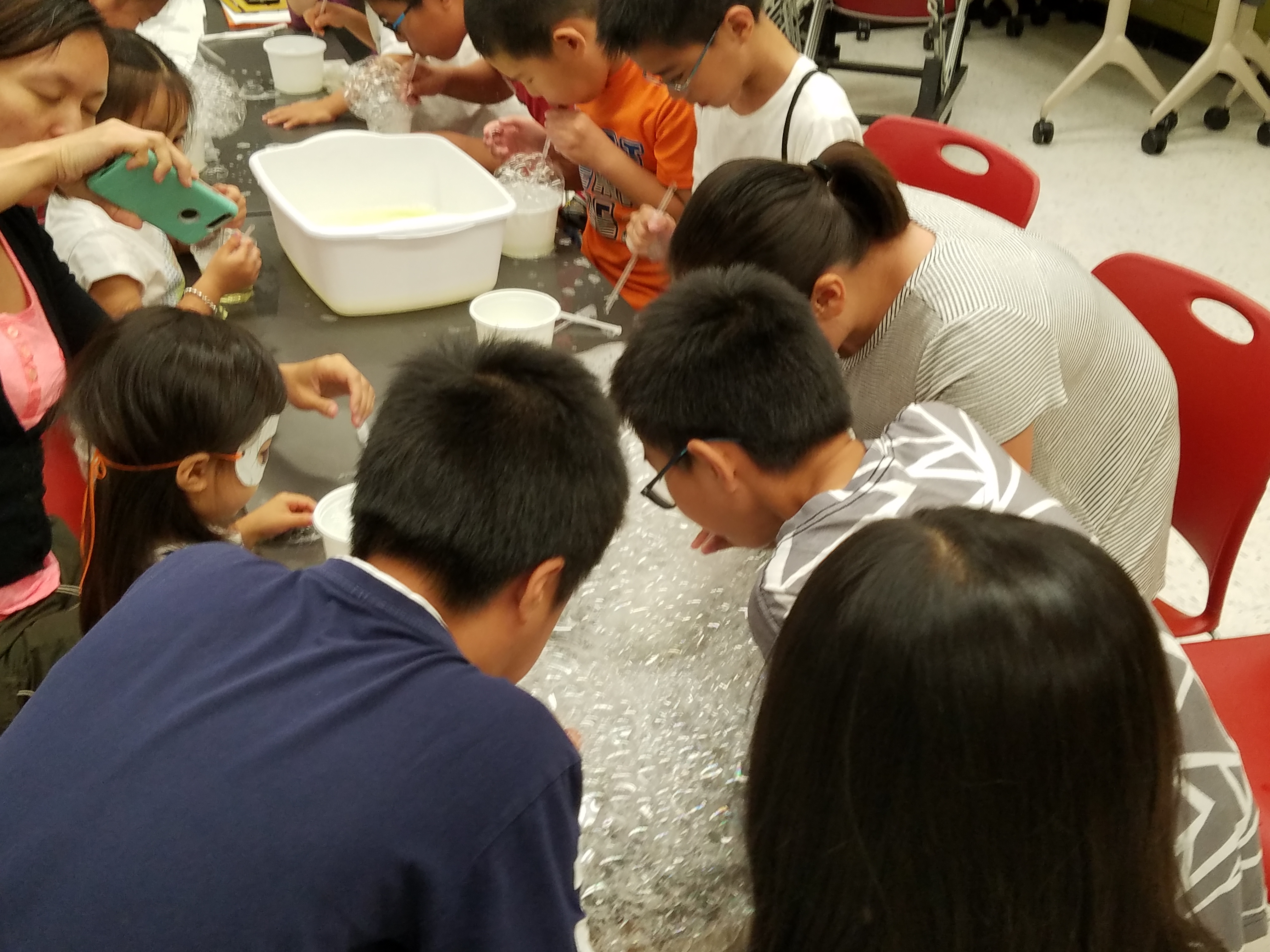
Nick and Tesla’s Science Workshop. The Nick and Tesla books are tons of fun and loaded with STEM experiments, but I wanted something that even my littler ones could do. Enter, bubbles. I told the kids that Nick and Tesla are a brother-sister team that solve mysteries and get out of trouble by creating great science projects, and that we were going to learn about surface tension, and the difference between bubbling your milk and bubbling water with a little dish soap in it. I had a gallon-sized tub filled with water, gave out droppers, straws, and cups, and we bubbled away. Then, I had one of the kids add a cup of plain old liquid dish soap, and they all took turns stirring it. I spread some water on the table and demonstrate how to blow a table bubble, and that was all the kids needed. Look at these bubbles!
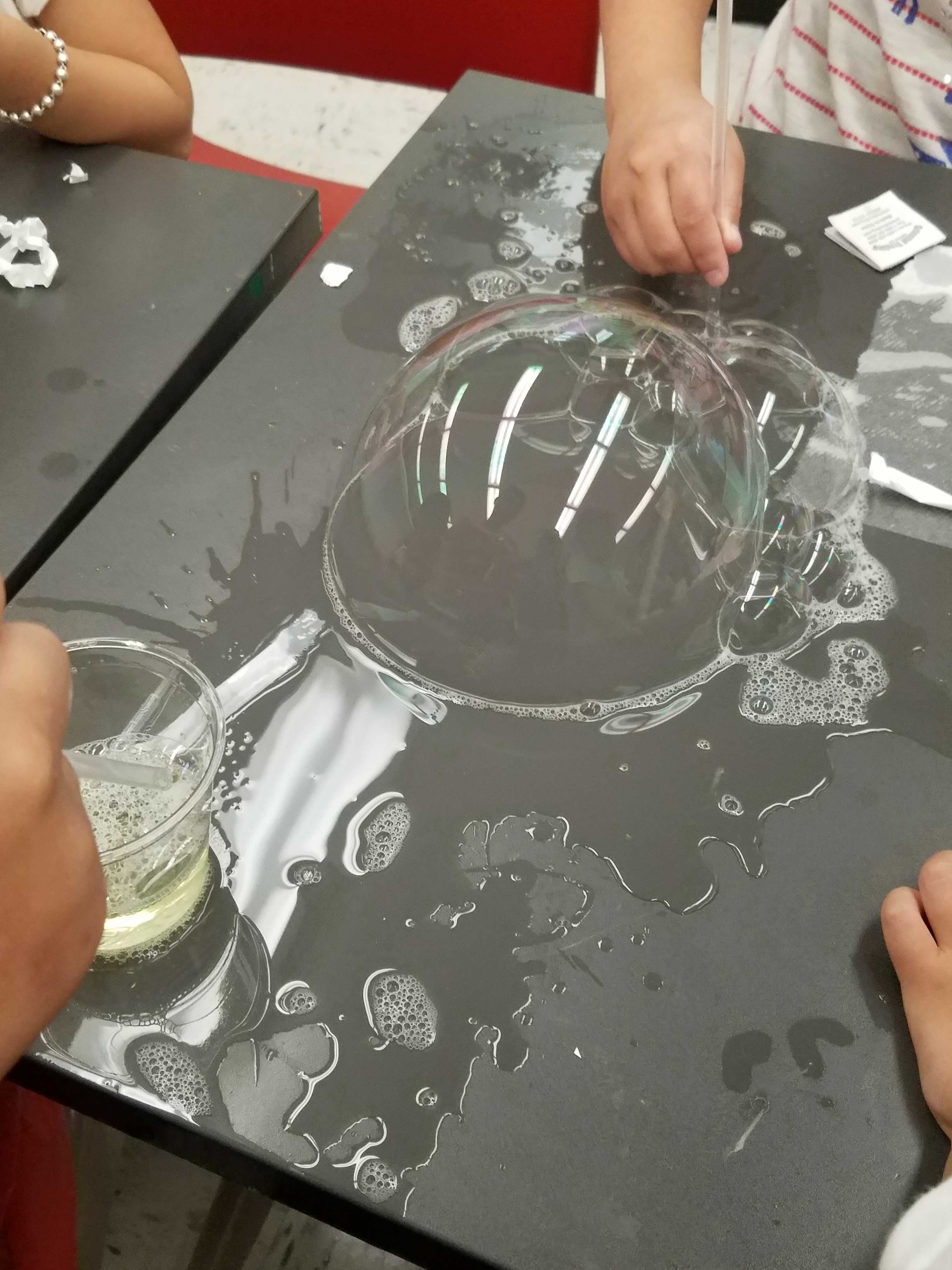
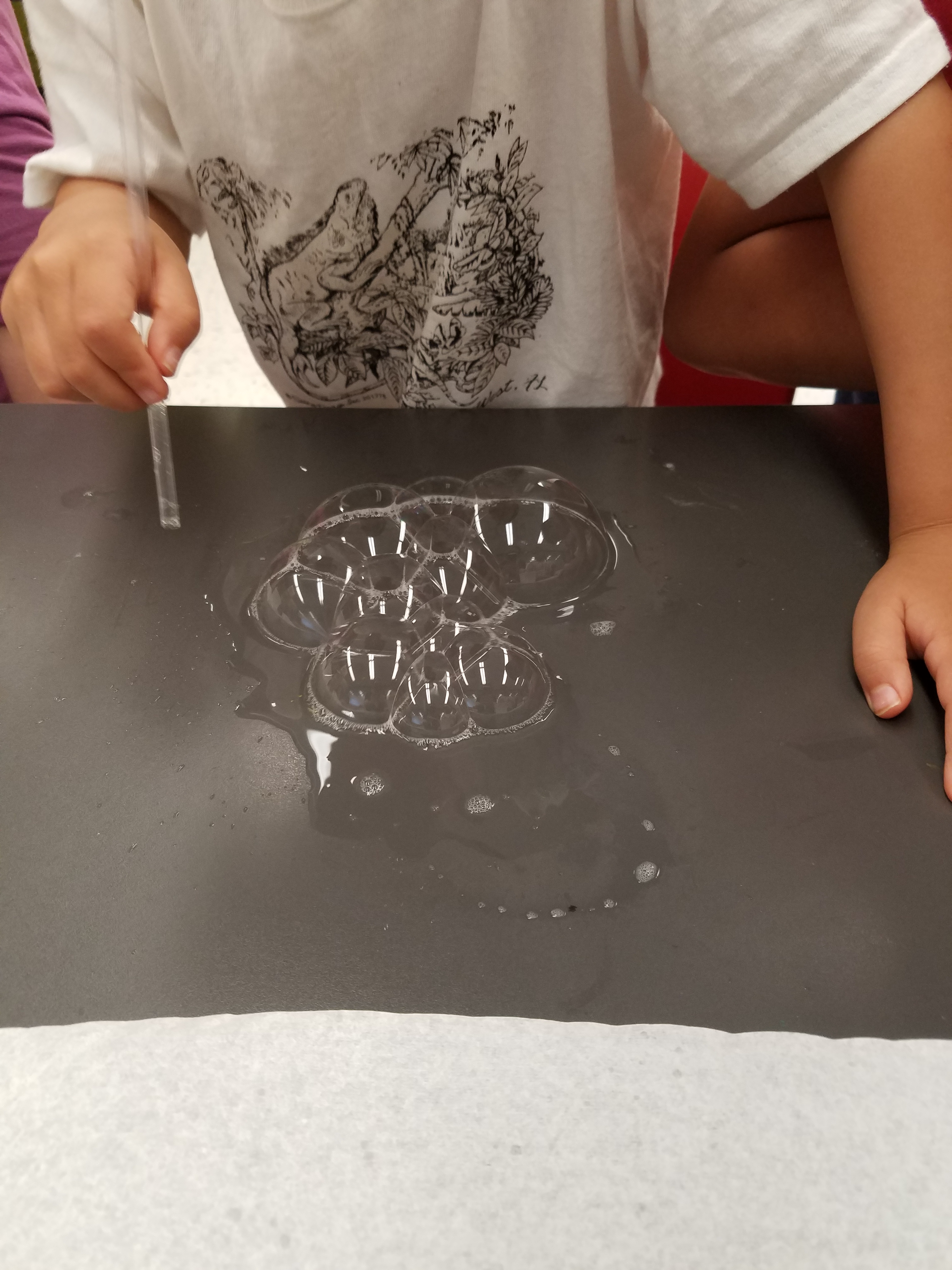
The entire table, at one point, was covered in bubbles. They loved it, I loved it, and they want more fun science programming, so win, all around. Next up was…

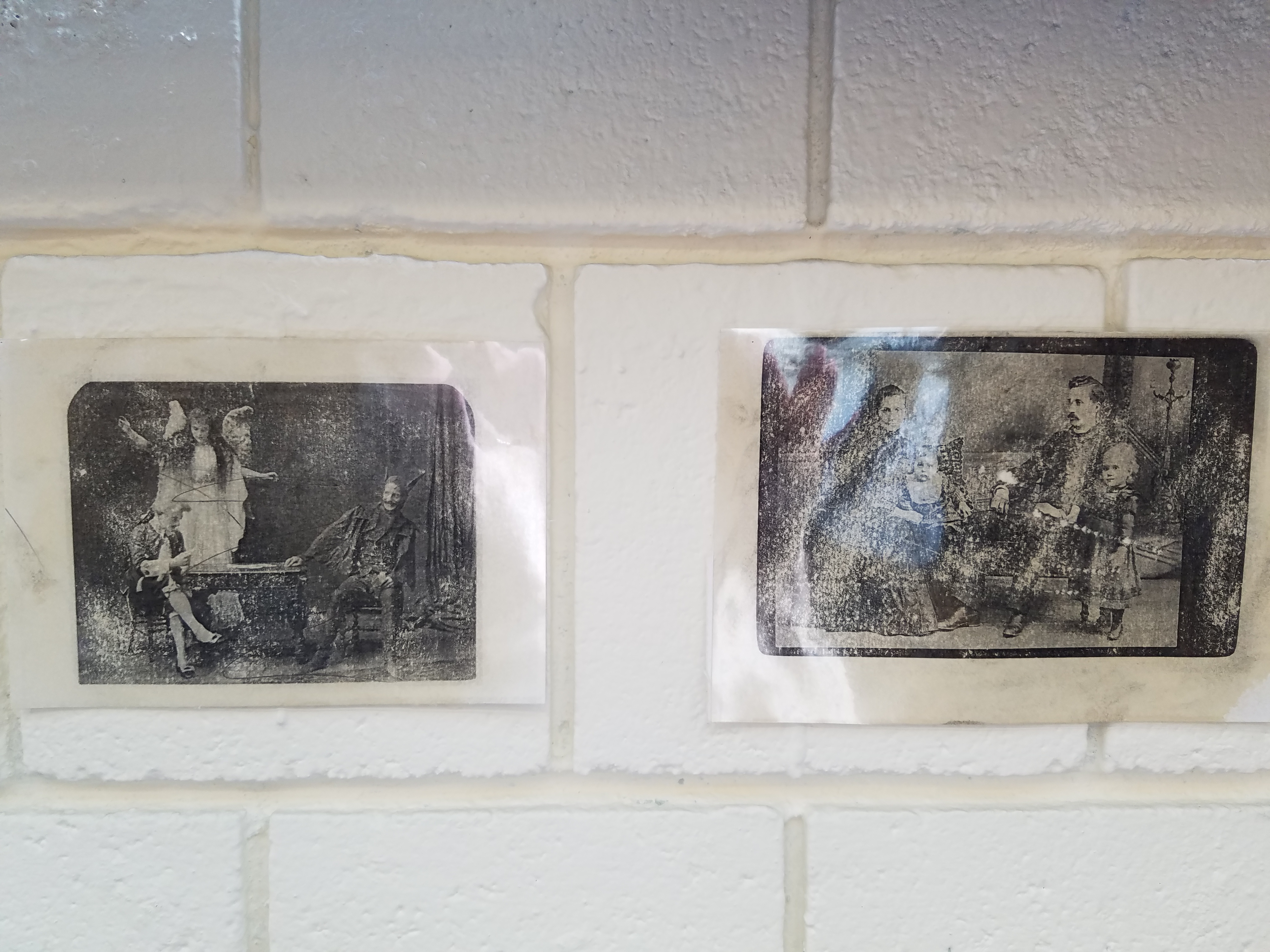
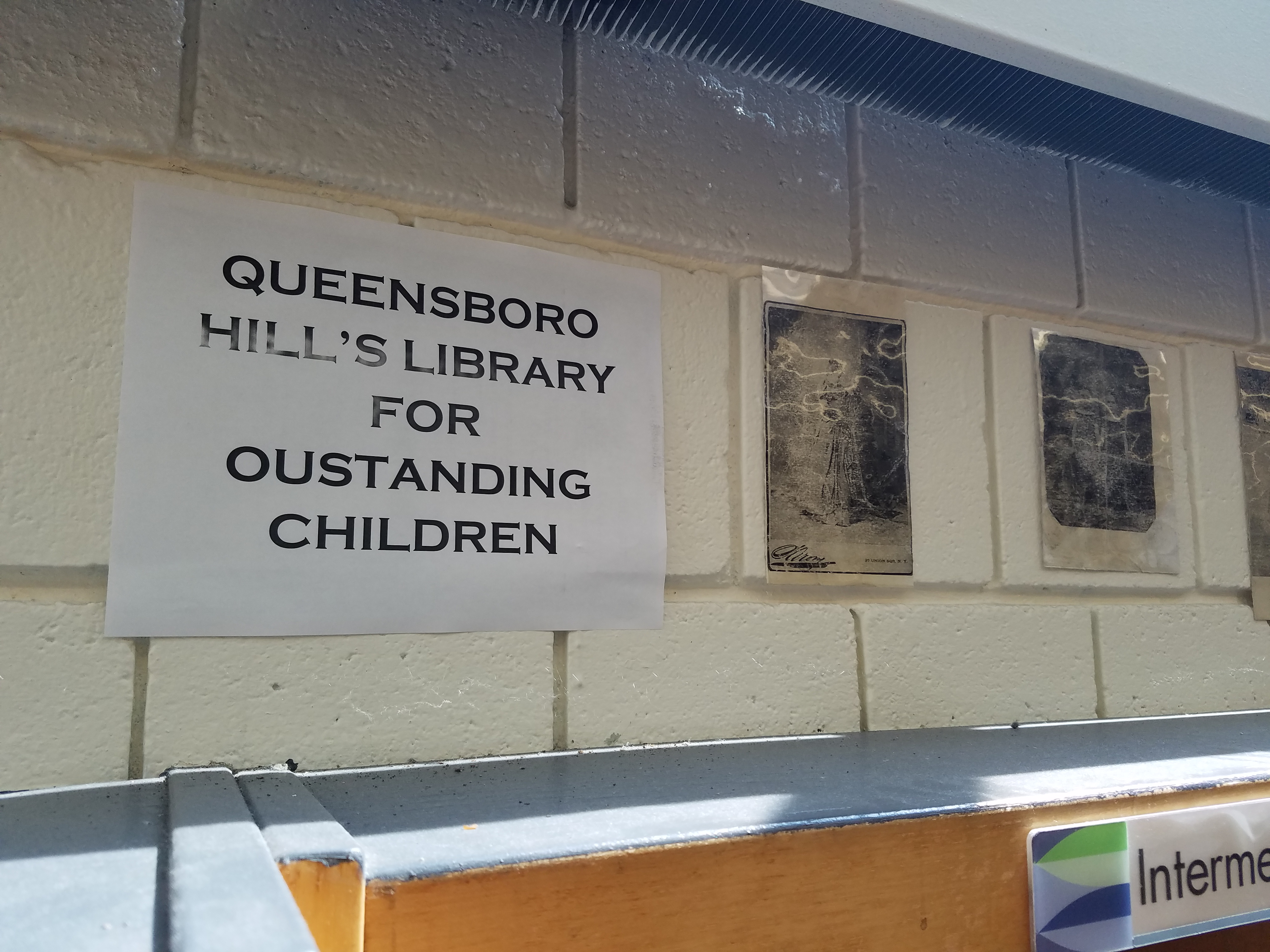
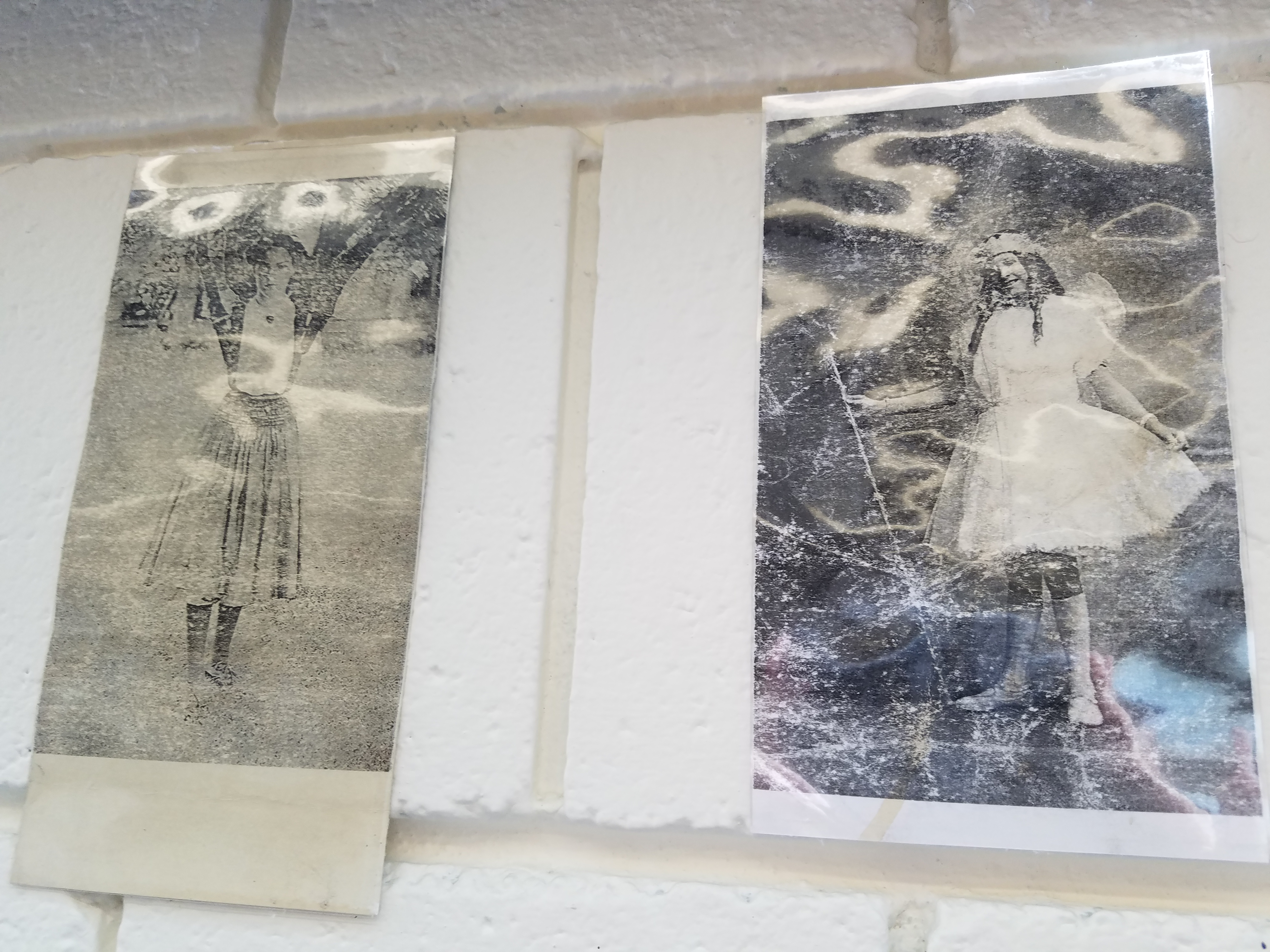
The Miss Peregrine Photo Workshop. Originally, I planned this for my teen patrons, but they weren’t interested – I had a group of tweens, though, who were all over it. We talked about the movie, I showed them the books, and brought out the equipment: photos I printed onto card stock from a Miss Peregrine-inspired Pinterest board (search on “vintage weird” and I guarantee you won’t be sorry), lots of paper towel, a spray bottle full of coffee, and two containers of coffee and tea. The kids loved aging their photos, and I was amazed by their creativity: one girl laid a paper towel over her photo to give it more texture as the coffee seeped through, and another tore the borders of her photo to make it look even older.
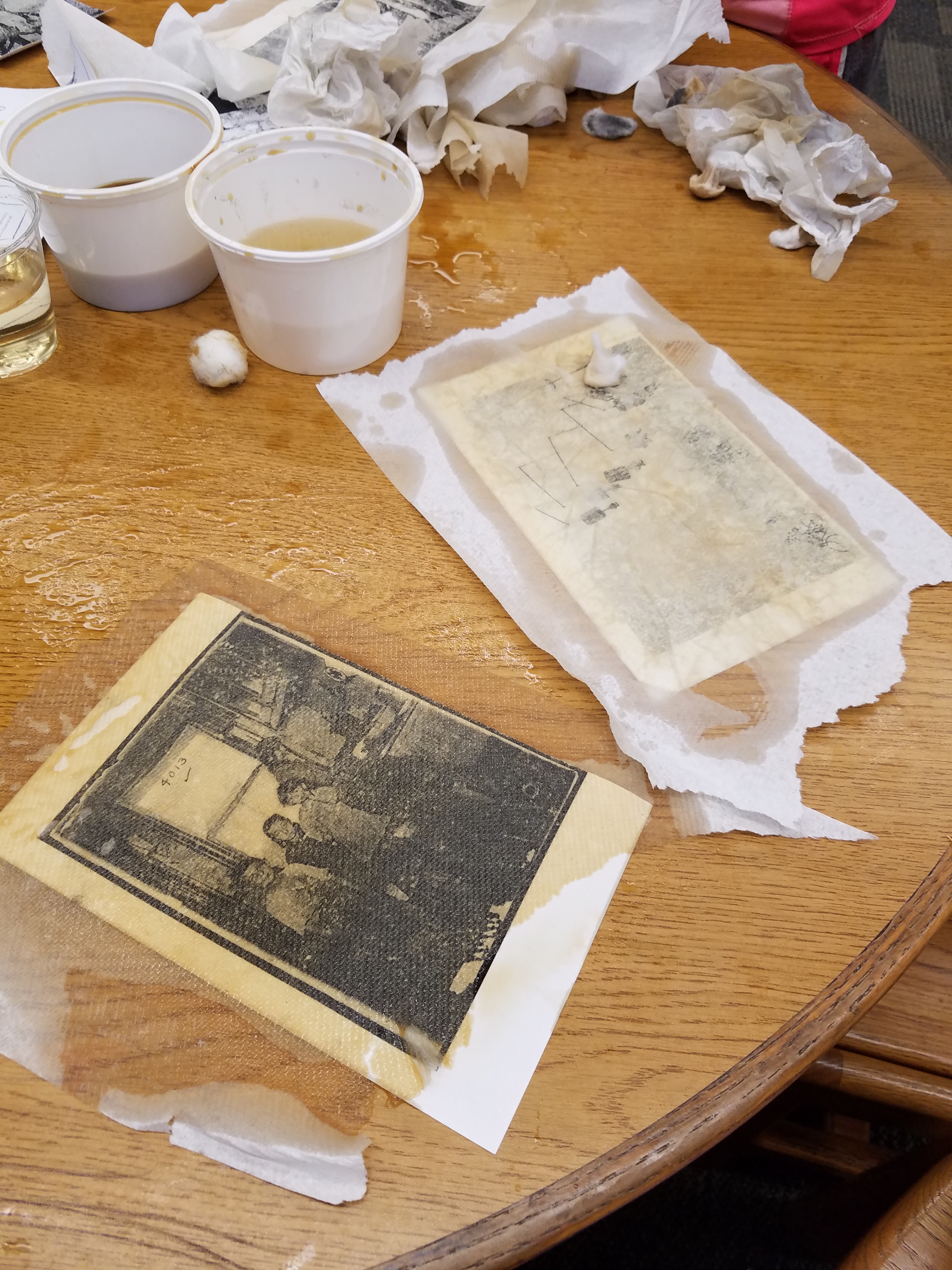
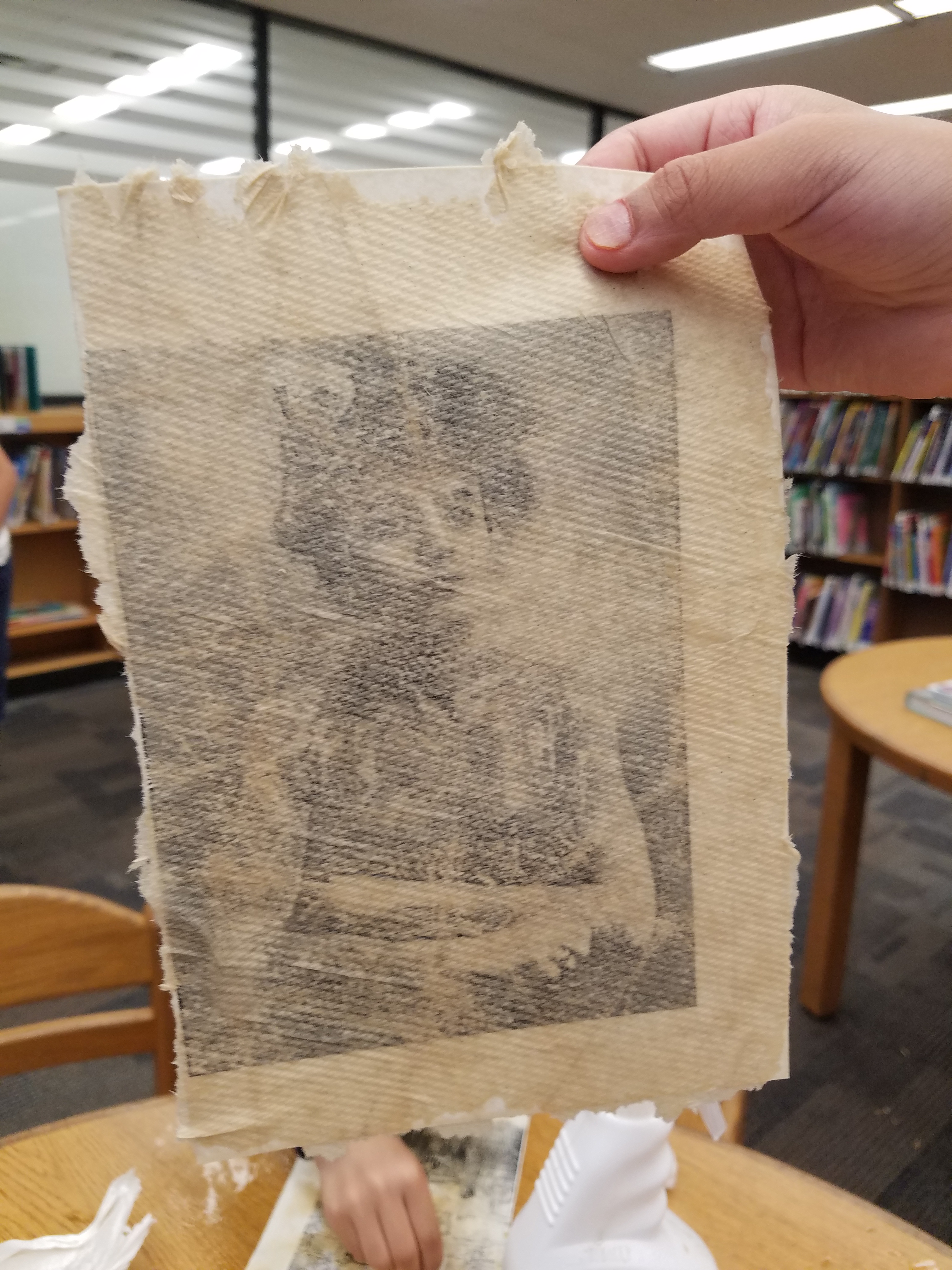
When I told them I wanted to create a photo gallery of their work, they all donated the photos to the library! So today, we have “Queensboro Hill’s Library for Outstanding Children” (forgive the glare, I laminated the photos so they wouldn’t deteriorate further):
I handed swag bags out for most of the day, and everything went except for one tote, two X-Files posters, and a handful of My Best Friend’s Exorcism posters, which will all be prizes for future programs. One kid couldn’t even wait to get home: he gave himself an ET tattoo sleeve, which was pretty fabulous.

I’d call our Queensboro Hill BookPop! a success.
Posted in Early Reader, Fiction, Fiction, Intermediate

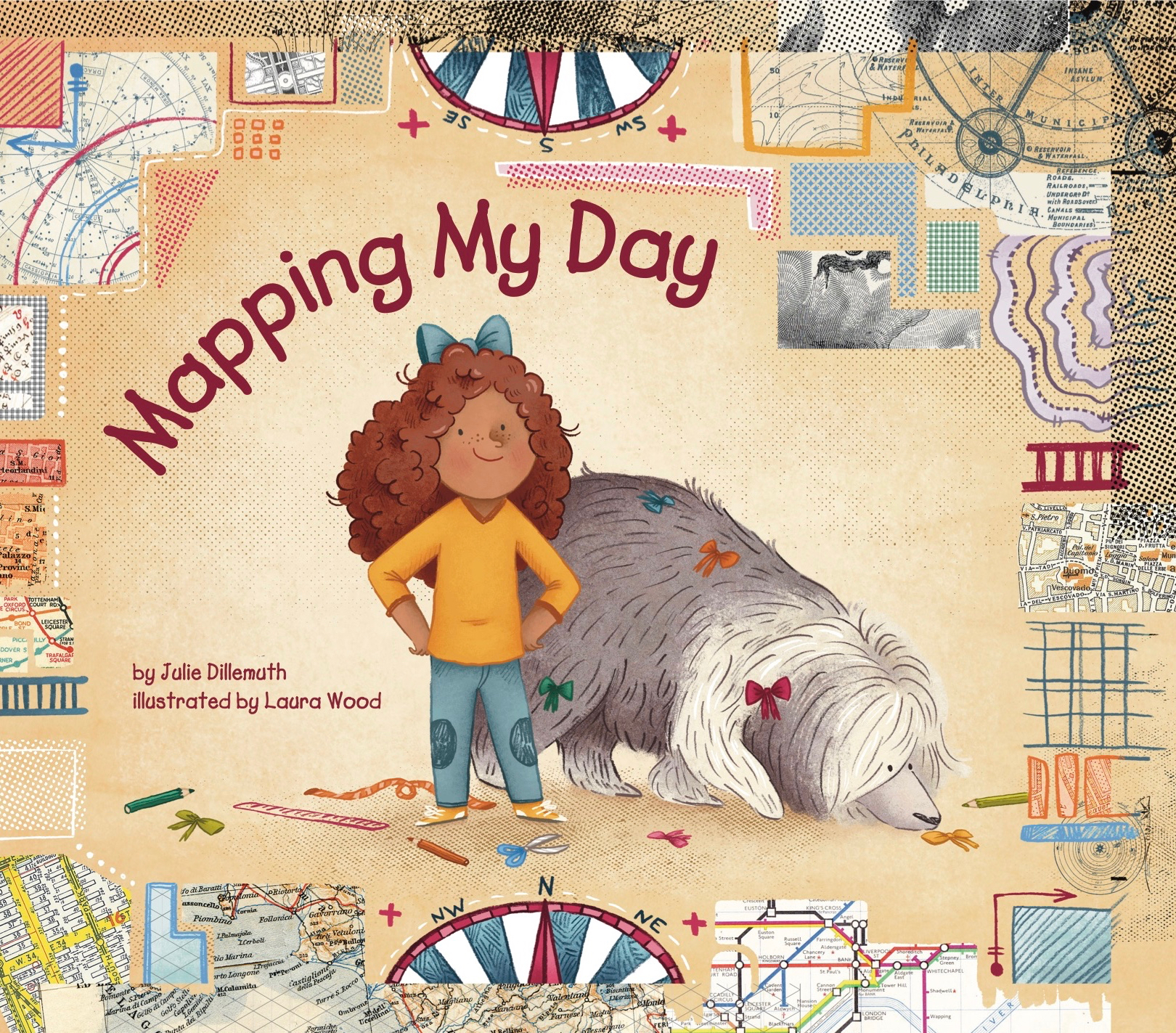
Mapping My Day brings back the lost art of mapmaking

Mapping My Day, by Julie Dillemuth/Illustrated by Laura Wood, (March 2017, Magination Press), $15.95, ISBN: 978-1-4338-2333-6

Recommended for readers 5-10

Flora is a girl who loves making maps. From sun-up to sundown, Flora maps her day and invites readers to see how she does it! Starting with an early morning wake-up thanks to the sun streaming through her bedroom window, Flora explains and illustrates terms like cardinal directions, map scales, landmarks, even seating plans.

I remember when I was a kid and learning about maps in Social Studies. That whole one inch = 1 mile thing made me want to bang my head against the desk in frustration. If I’d had a book like Mapping My Day to start me off, things would have gone a lot easier with those issues of Scholastic News. The book brings readers right into Flora’s circle. It’s like having a friend show you her journal, where she writes out how she watches her grandmother’s show poodles train on their obstacle course, or map out her school playground, or how she manages to beat her brother to the bathroom in the morning.

There are no frustrating measurements, no rulers necessary. It’s a great invitation to start mapping out our world – something that may be seen by some as a dying art in this age of GPS, but is a critically important skill to have. We should all know how to lay out a space; what our cardinal directions are and how to find them, and the importance of landmarks when you’re finding your way. For librarians and teachers, this is a lesson or a program in a book: the activities at the end of the book are even available for download so you can get a head start on planning. A note to parents, caregivers, and professionals explains the importance of mapping, diagramming, and understanding spatial relations, and includes ideas for incorporating them into kids’ play.

The art is friendly and fun. Flora is a biracial child from a multiethnic family. The family eats at the table together and enjoys time with extended family members. Spreads move between Flora’s story – driving in a car with family, eating at the table with family, playing at school – and Flora’s maps, which have a hand-drawn/handwritten appearance. Key words appear bolded.

Julie Dillemuth was mystified by maps until she figured out how to read them and make them, and it was a particularly difficult map that inspired her to become a spatial cognition geographer. She lives with her family and writes children’s books in Santa Barbara, California, where the west coast faces south. Visit her at her website: http://juliedillemuth.com.

One lucky winner will receive a copy of MAPPING MY DAY (U.S. addresses). Enter this giveaway for your chance!

https://goo.gl/forms/yiZyHr8CNDC7iVWg1

Posted in Fantasy, Fiction, Middle Grade, Tween Reads

Let your imagination run wild with your Fablehaven guide!

book-of-imaginationFablehaven Book of Imagination, by Brandon Mull, (Oct. 2016, Shadow Mountain), $14.99, ISBN: 978-1-62972-241-2

Recommended for ages 7-12

Fablehaven Fans, get ready! If you’ve ever wanted to draw your own magical preserve map, mix your own potions, or make an origami Olloch, the Fablehaven Book of Imagination is for you! It’s an activity book that has recipes, origami, writing prompts, and coloring pictures all through the book – anything to spark your creativity and imagination. There are quotes about imagination and creativity throughout the book; I was thrilled to see quotes from Neil Gaiman, JK Rowling, and JRR Tolkien, who may well be considered my personal trinity. Fans who are waiting patiently (or impatiently) for Dragonwatch, the new sequel series to Fablehaven, can track down a secret message from Brandon Mull, hidden throughout the book. A note at the beginning explains how.

Make this book yours – color in it, cut out and make the beasties, color and frame the quotes. This is your journal: you even get to write your name on it. Librarians already know that this isn’t the type of book we can put in circ, but we can have entire programs using this book as a guide – hello, summer reading in Fablehaven! – let your kids create codenames, place classified ads for help with their magical preserves, make magical webs – everything you need to run a successful Fablehaven program is in here if you’re a librarian, and it’s a great stocking stuffer for anyone whose imagination likes to run wild. (I’m totally coloring Neil Gaiman’s quote page to frame at my desk.) There are games online at the Fablehaven Preserve; there are also downloadable educators’ guides, and videos to prompt discussion.


Posted in Middle Grade, Non-Fiction, Non-fiction, Tween Reads

Give your brain a workout with NatGeo Kids’ MASTERMIND!

mastermindMastermind, by Stephanie Warren Drimmer/Puzzles by Julie K. Cohen, (May 2016, NatGeo Kids), $12.99, ISBN: 978-1-4263-2110-8

Recommended for ages 8-12

Loaded with over 100 games, tests, and puzzles designed to “unleash your inner genius,” Mastermind is huge fun – and you learn stuff, too.

Guided through the book by cartoon characters Ima Genius and her canine sidekick Astro, Mastermind is all about the brain: each section is devoted to a different part of our brains and features sections like How it Works, where readers are guided through a step by step process of each part of the brain makes operations like sight, muscle movement, smell, and memory happen; fun facts and wild photos help break it all down for readers. Time Trials challenge readers to solve puzzles while timing themselves, and a final quiz in each chapter, called Test Your S.M.A.R.T.S. (Superior Mental Acuity and Rationality Testing System), pop up in each section, so budding geniuses can witness themselves becoming smarter with each section. A fun Mastermind Meter lets you track the progression of your genius through the book.

I had a great time reading and playing the games in Mastermind. The facts and real-life stories are interesting and fun, and there’s a ton of information to be learned here. Each section of the book looks at a different part of the brain and how we use them, from our senses, to identifying sounds, to mental map making and memory. Beginning with a maze through a highlighted part of the brain (to get your brains ready, naturally), readers learn how animals use their brains for similar purposes, and Weird Science introduces us to people living with brain issues that make them see things differently; for instance, hemospatial neglect causes someone to ignore things on one side – imagine only shaving half your face?

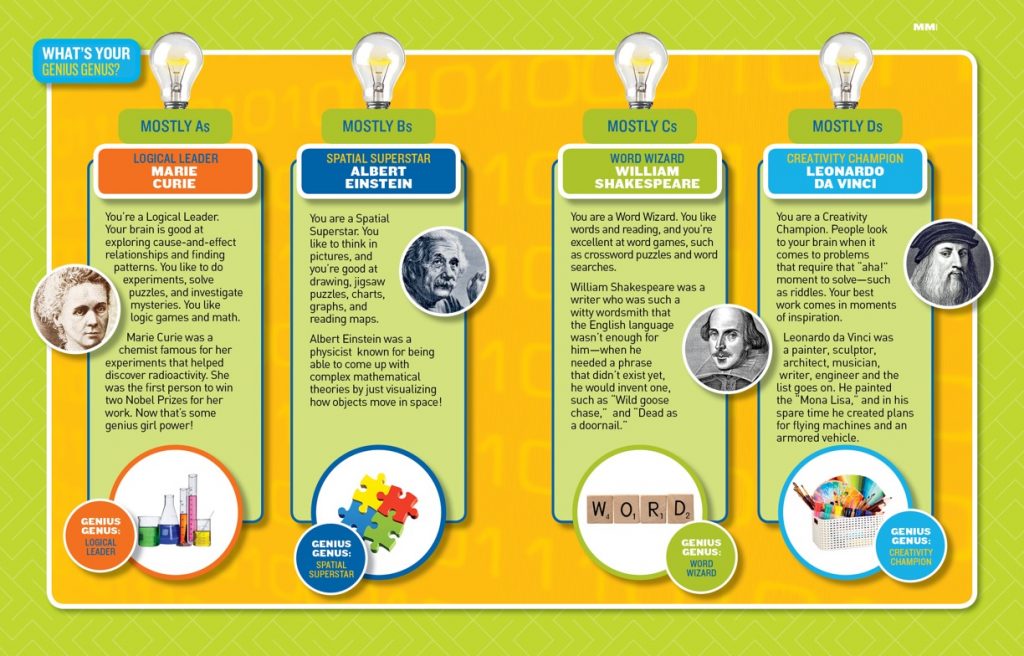
This will be destroyed in circ, because kids are meant to write in this book, but it won’t stop me from adding it as a great birthday or holiday gift to a few budding geniuses on my list. There are tons of ideas in this book for teachers and librarians, though; you can get the kids fired up with your own timed code challenges or have them figure out which genius they gel best with. The Mastermind website offers two downloadable puzzles, and a genius personality quiz kids can take online. All in all, Mastermind provides some fun and makes you think, which is really what learning should be all about.

mastermind_1

Posted in Uncategorized

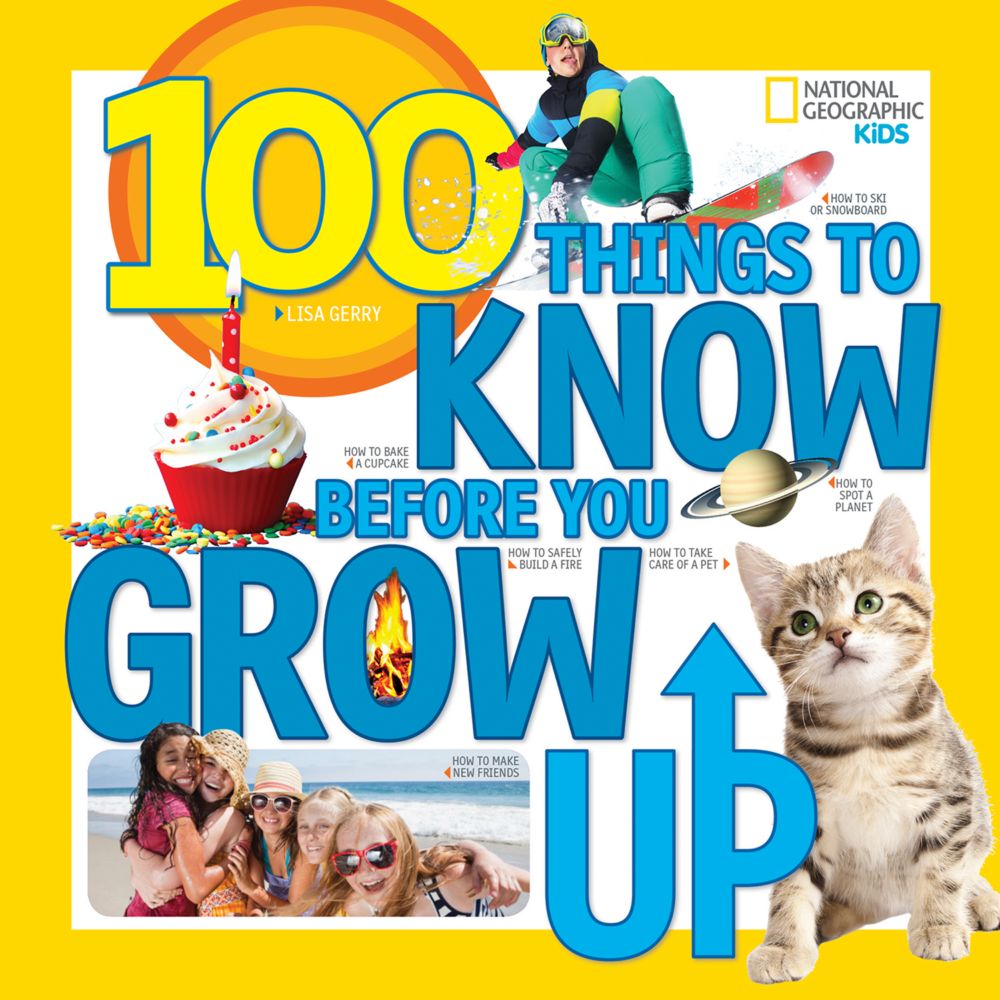
Know Before You Grow: 100 Things to Know Before You Grow Up

100 things to know100 Things to Know Before You Grow Up, by Lisa M. Gerry, (March 2016, NatGeo Kids), $9.99, ISBN: 9781426323164

Recommended for ages 8-12

It’s a NatGeo week this week, because their publicists were kind enough to send me a bunch of books to check out for my blog (and, by extension, my library collection). Today, I’m looking at one of the latest in their 100 Things series, 100 Things to Know Before You Grow Up, by Lisa M. Gerry. Think of it as a life skills primer: there are icons coding each of the 100 things, related to attitude (curiosity, responsibility, empowerment), skills (observation, communication, collaboration, problem-solving), and knowledge (our human story, our living planet, critical species, and new frontiers). Together, all of these things help readers become well-rounded, responsible teens and, eventually, adults.

There are fun skills, like making snow ice cream, how to fold origami, and how to create papier mâché; practical skills, like pumping gas, doing laundry, and writing checks, personal growth explorations like being tolerant, resolving conflict peacefully, and apologizing. Whether you see this as a summer challenge for your kids or patrons (complete any five skills for a prize this summer!), a bucket list for your pre-adolescence, or just a good guide to being the best person you can be, there are some great tips in here, combined with beautiful photos and interesting facts.

100 Things to Know Before You Grow Up is a good grad gift for elementary and middle schoolers, and it’s a good add to tween collections.

Posted in Guide, Intermediate, Middle Grade, Non-fiction, Non-Fiction, Tween Reads

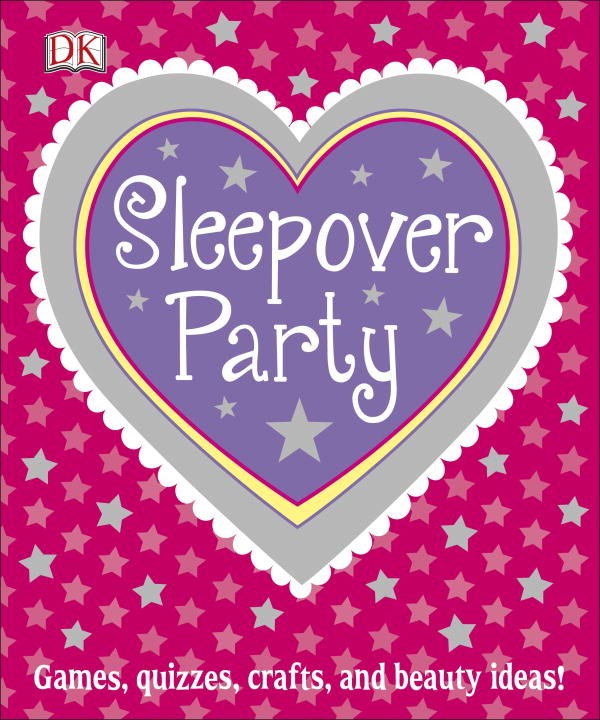
Sleepover Party is a great guide to a fun girls’ nights in!

sleepoverSleepover Party, by DK Publishing, (May 2016, DK Children), $14.99, ISBN: 9781465450975

Recommended for ages 8-12

Sleepovers are a part of life for tweens, especially tween girls. It’s socializing, it’s girl time, it’s just fun. DK’s new guide to sleepover parties is going to be a hit with the tween set: it’s got everything to plan sleepovers with five great themes: Pamper Party (aka, spa night), Campout, Fashion, Pop Star, and Movie Night. Loaded with games, activities, and craft ideas, this book is a hit for girls who want to kick their sleepover game up a notch.

I love DK books. I’ll say it a hundred times, and then, a hundred times more. I love their step-by-step guides to crafts, their detailed photos for everything, and their uncanny ability to make books that kids want to grab off the shelves. I love that I can use some of these ideas for my own Summer Reading programs (I am ALL over Fashion and Pop Star activities for the kids here). There are templates, recipes, and quizzes galore to get everyone talking, too – no lonely girl sitting on the bed with a cat while the others are chattering away and doing each other’s nails this time!

There are exclamation points throughout the book, used as callouts to let kids and parents know when cutting or use of sharps (like a needle, to thread candy for bracelets – YUM) is necessary and adult supervision may be required.

Add this one to your collection where you have tween girls who want some fun and crafty activities.

Posted in Non-Fiction, Uncategorized

Hands-On Science and Math makes learning fun!

9780876596500_a5605Hands-On Science and Math – Fun, Fascinating Activities for Young Children, by Beth R. Davis (July 2015, Gryphon House), $14.95, ISBN: 9780876596500

Recommended for educators and parents of preschoolers-age 8

I’m always on the lookout for books that have fun, easy activities for my younger patrons. Being a librarian in an urban, lower community  made up largely of working class and working poor families, I’ve got a lot of parents concerned about their kids’ progress in math and science. One thing I’ve been working on putting together is a series of science workshops for my younger patrons. I’m a bit clueless in this area, so I’ve been getting some help from my colleague at our Children’s Library and Discovery Center in Jamaica (seriously, go to this library and prepare to be amazed); I also keep an eye out for blogs, websites, and books that offer some ideas. Hands-On Science and Math is one of those books.

Loaded with experiments and ideas for kids from preschool to roughly third grade (you can skew older or younger, with easy tweaks on these experiments), Hands-On Science and Math gets kids thinking and using their five senses to explore the world around them. Each experiment comes with an explanation of the scientific concepts behind the experiment, STEM lessons to be gained from the experiments, and ways to link to the math and literacy in each one. I’ve already created a few sessions for the kids in my library, including using a Matchbox car, cardboard, a pile of books, and a measuring stick to learn about simple machines; examining the world around them using a magnifying glass, and the almighty baking soda volcano (I’ll be doing that one solo, but I’ll give them instructions they can try at home). I’ll be trying these out over the winter break!

Parents and educators can recreate these experiments on a small budget: most of the ingredients and objects can be found at dollar stores or are already in your home. There’s an appendix on graphing topics, a popular math and literacy link here, including questions with concrete answers you can use to graph results. Further resources are available for anyone who wants to read more about STEM activities and young children.

Author Beth R. Davis, EdS, NBCT, holds a bachelor’s degree in elementary education; a master’s degree in teaching English to speakers of other languages, or TESOL; and an education specialist degree in computer education. She is the director of Kids 4 Kids Academy preschool in Miami, Florida. I’m thrilled that she’s got experience in working with speakers of other languages; this talent comes through in her experimentation, and allows me to create these programs with my multicultural families. She offers more science activities for kids on her website, where you can also sign up to join her mailing list.